
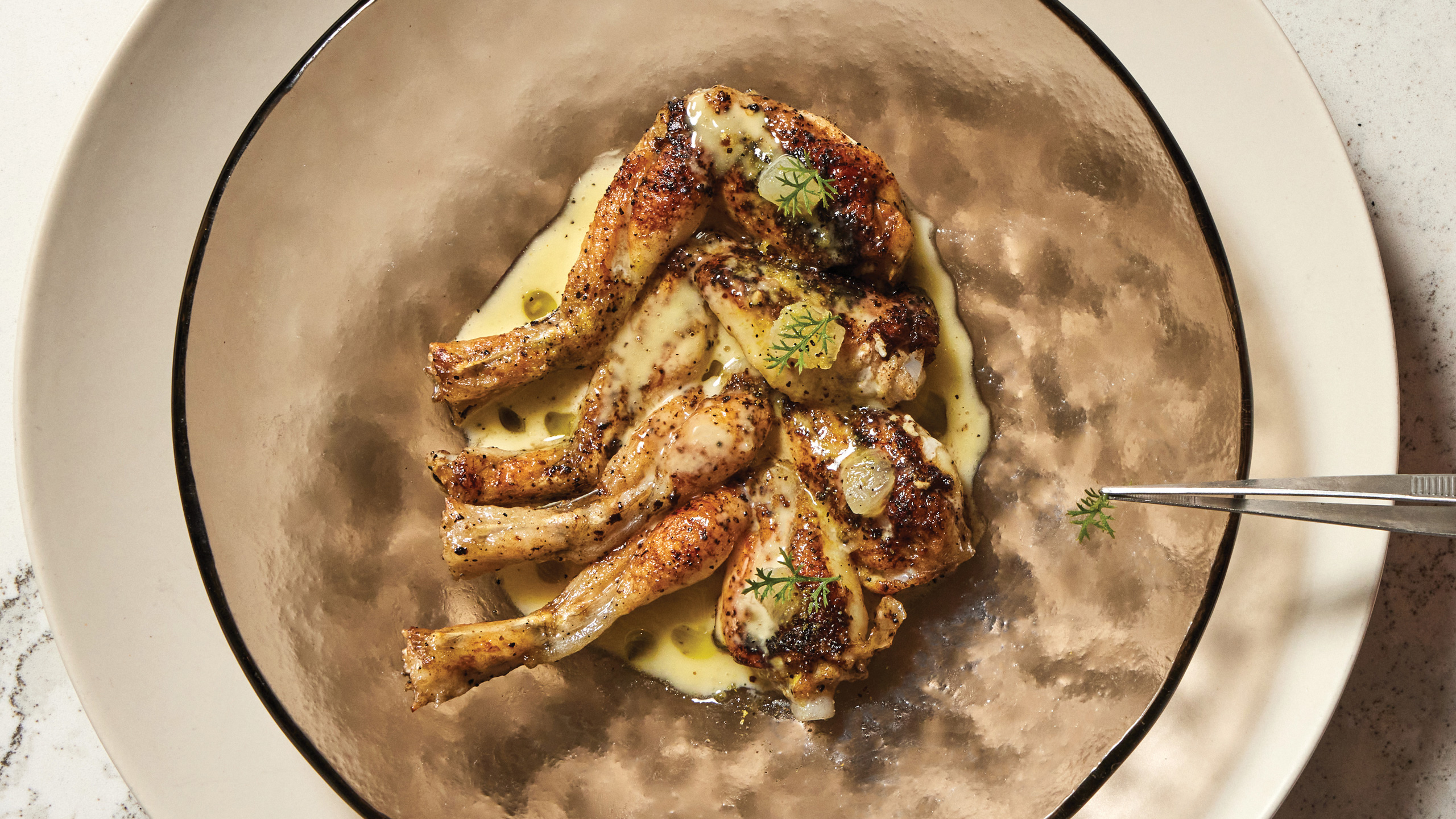
Frog legs, lemon pepper wet, at Avize
10
Dishes
that
Define
Atlanta
Now
The keyword here is now.
This is not a “Best” list—though all of these dishes are among Atlanta’s best. And they are by no means the only dishes that define Atlanta now.
No, each dish here reflects something deeper taking place in our city’s dining scene: the influence of immigrants, the global flavors embraced by new chefs, the predominance of seasonal cooking, the playfulness in fine dining, the loyalty to beloved Southern traditions, and our occasional obsessiveness when it comes to certain flavors.
Like a snapshot, together they all capture a moment in time.
Consider a similar snapshot taken 20 years ago. Rathbun’s, with its chargrilled corn and roasted bone marrow “canoes,” was but a year old. The “outré pizzas” at the circular dining room of Piebar on Monroe Drive had the late restaurant critic Cliff Bostock in a tizzy. Food bloggers were crazy about the beef wrapped in grape leaves and the shrimp spring rolls at Co’m Vietnamese Grill on Buford Highway. And the Beltline. What Beltline?
Two decades later, there are new dishes and places, along with familiar, older ones. Our tastes have changed—and they haven’t. Young influencers broaden our points of reference. And our palates, collectively, are seasoned by time.
These 10 dishes reveal how we are still evolving, always hungry for more.

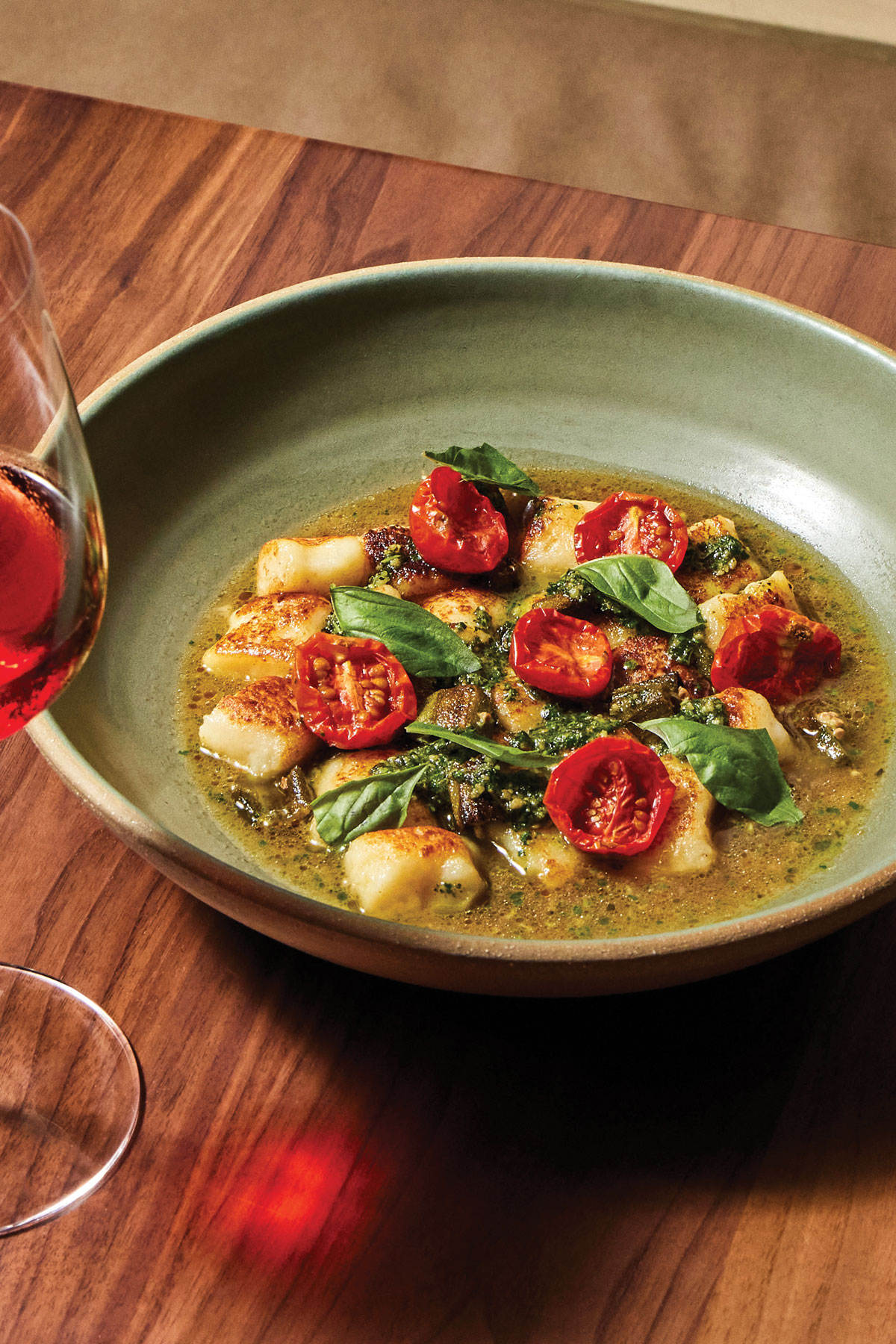
Gnocchi
 Madeira Park | Poncey-Highland
A prolific Atlanta food writer was recently asked about Steven Satterfield’s newest restaurant, to which she replied, “The first thing people ask me about Madeira Park: Have you tried the gnocchi yet?”
Since the wine bar and restaurant’s opening on North Highland Avenue earlier this year, the potato gnocchi quickly became an MVP. You could say the popularity of the pasta dumpling is akin to the seasonal vegetable plate at Satterfield’s Miller Union across town. People love it and won’t shut up about it.
After my first visit to Madeira Park in March, I returned to the office and asked a colleague, a restaurant-hopping bon vivant, if he’d tried the gnocchi. “Yes,” he said, nodding his approval. “It’s fancy mac and cheese.” Not exactly a winning menu description, but not far off the mark either.
Before Madeira Park opened, Satterfield—a James Beard Award–winning chef and cookbook author (his latest is Vegetable Revelations)—put together a team. Base camp was the backyard kitchen studio behind Satterfield’s home in Inman Park.
For weeks, chef de cuisine Oliver “Ollie” Honderd and his sous chef, Dave Mouche (known for his pop-up Jackalope), worked on creating a menu. The ethos of locally sourced, seasonal, and vegetable-forward cooking was a given. Satterfield was way ahead of the “produce-forward” curve and all its buzzwords.
Honderd says, “We wanted to have a pasta on the menu, and the gnocchi made sense because you can scale it up relatively easily, and we knew we wanted to do solid volume at a really high level . . . I was also really inspired by The Four Horsemen wine bar in New York, and they had a gnocchi dish in their cookbook that was really speaking to me.”
When asked, Honderd gives a long list of all the things that make preparing gnocchi “tricky.” “There are about 20 times during the process where you can mess it up, and we have seven or so people that make it regularly, so it’s a constant process of dialing it in . . . using slightly less or more flour, troubleshooting, teaching, etc.”
Honderd’s preferred gnocchi is potato gnocchi. “Other vegetables just don’t have the same qualities of starch and neutrality as a potato does, and I prefer to get the variations from everything around it while keeping the pasta more or less the same (no beets, sweet potatoes, or spinach here!).”
A late-summer visit to Madeira Park finds gnocchi served with parm brodo (broth), roasted tomato, greens, and pesto. The lighter version is perfect with an orange wine from France.
Recounting an earlier spring version—one that featured peas, pancetta, pecorino, cream, mint, black pepper, and lemon—Honderd says, “It’s a very classic and delicious combination of flavors in Roman cuisine and also very springtime-y.”
As for the debut version, the one that featured a rich cheese sauce (a fonduta) made with cream, fontina, Parmesan, white wine, and shallots, served with seasonal brassicas from local farms—kale, cauliflower, broccolini—and fried garlic chips on top . . . “The inspiration was broccoli mac and cheese,” says Honderd.
In the end, my colleague was right. —Vené Franco

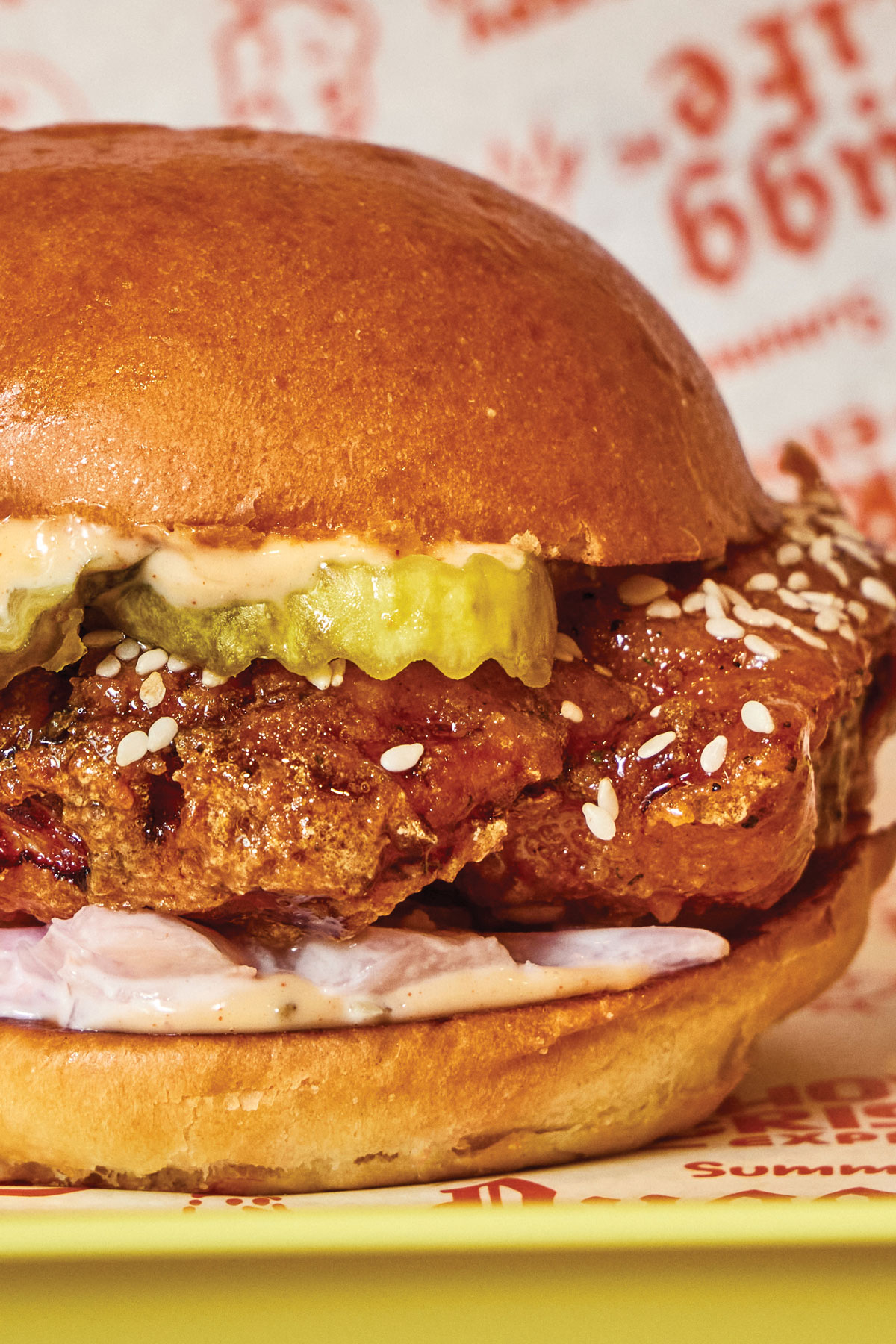
Honey Boi Chicken Sandwich
How Cripsy Express | SummerhillIn metro Atlanta, where the fried-chicken sandwich is said to have been invented and turned into a fast-food empire, and in the current day, when chicken sandwich options outnumber burgers on menus nationwide, it can be hard to stand out on the fowl front. But chef Will Silbernagel’s How Crispy Express officially entered the national “chick sammy” conversation when Guy Fieri’s Diners, Drive-Ins, and Dives profiled the Summerhill restaurant this past summer.
Silbernagel—who hails from Jonesboro—opened How Crispy’s brick-and-mortar Georgia Avenue location with partners Bart Sasso and Greg Best in 2022. Before that, during the Covid-19 pandemic, How Crispy took up space in the open-air upstairs of Summerhill’s Halfway Crooks Beer, trading customers’ payment details for chicken sandwiches lowered down from the open window in a bucket on a rope. (The sandwiches sold out often.)
Stunts aside, How Crispy’s growing fandom has more to do with surprisingly tasty sustenance. Among its offerings, How Crispy serves Classic, Lemon Pepper Wet, Tikka Boi, and Vegetarian Crunchy Boi sandos that have a way of silencing mealtime conversations. It’s Silbernagel’s artistry with the Honey Boi (we opt for the dark meat), however, that rises to the level of modern-day classic.
A General Muir pain de mie bun, sweet pickles, house-made coleslaw, and smoky lime mayo serve as the sandwich’s sprightly accompaniment. But it’s the generous hunk of dark thigh meat—marinated in a blend of buttermilk, lemon juice, tarragon, dill, and other secret spices, then double fried, dipped in garlic-honey glaze, and sprinkled with sesame seeds—that brings Conductor Silbernagel’s sweet, sour, umami-heavy, dripping-in-sauce symphony together.
In other words, Atlantans, let us herald the chicken news: A superior successor to that passé fast-food sandwich is born.
And it’s a Honey Boi. —Jamie Allen
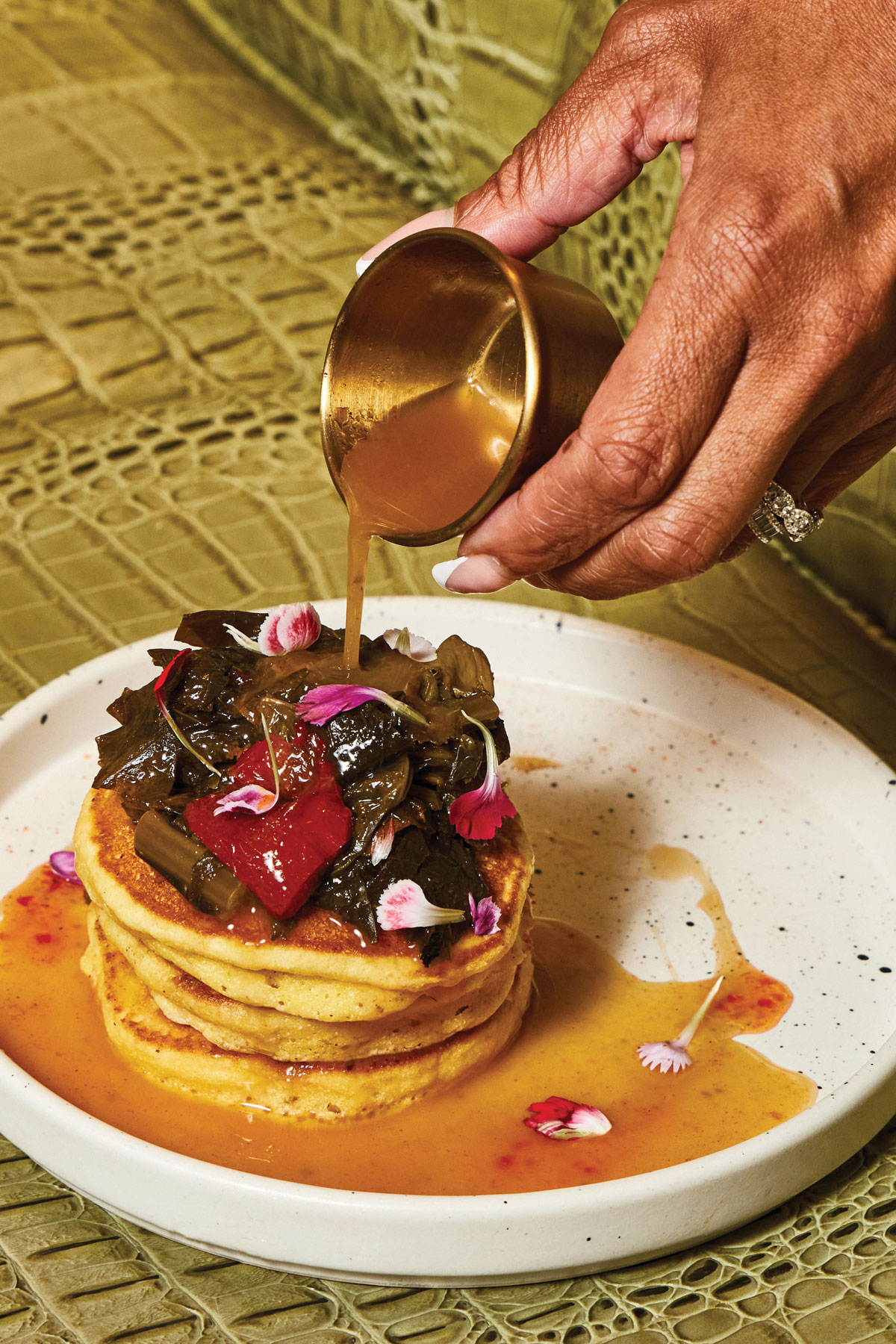
Hoe Cakes & Potlicker
Auburn Angel | Sweet AuburnListed under Lil’ Start on both the brunch and dinner printed menus, the Hoe Cakes & Potlicker (yes, potlicker—the chef’s intentional cheeky spelling) is Southern heritage on a small plate. The short stack of cornmeal crisp cakes is topped with braised jalapeño greens (collards with a kick from jalapeño peppers) and accompanied by red pepper jam and molasses butter. A serving of potlikker (the cooking broth from the collard greens, no meat added here) sits on the side. The whole dish is elegant yet humbly presented and incredibly satisfying—so much so that ordering a second serving will cross your mind before you down the last of your Cussin’ Granny cocktail or sup the last bit of broth from the golden tin.
Chef Robert Butts says he uses a tip from Jamaican cooks and adds a pinch of sugar to the collards while they cook. It’s the little things.
Considering collard greens’ respected place in Southern and Appalachian cuisine, it’s rare to see potlikker or hoecakes, sometimes called johnnycakes, on menus these days. It’s rarer still to see them presented with such reverence. (The name hoecakes goes way back to when the flat, broad cornmeal cakes were sometimes baked on the blade of a hoe.)
But back to modern times. The hoecakes at Auburn Angel set the stage for exploring other weekend brunch delights, such as Brulee French Toast, Them Ribs & Grits, or the exquisite Mushroom Hash, featuring Ellijay mushrooms, “kilt” greens, feta, collard chimichurri, and a fried egg.
At Auburn Angel, a polished bistro-style haven in the heart of the Sweet Auburn district, chef and co-owner Butts pays homage to the rustic hoecake and more classics, elevating them with his updated, artful spin.
Now 34, Butts grew up in southwest Atlanta. He earned a degree in mass communications, minoring in broadcasting, in Charlotte. He eventually left to follow the call of the culinary world. Though he was not allowed to cook alongside them, he has fond childhood memories of listening in on kitchen storytelling when his mom, grandmother, and aunts came together to cook for the holidays.
Something about those experiences resonated. After leaving his on-camera desk job, he flew (without an agenda) across the Atlantic, where he landed in a restaurant kitchen in the south of France, learning and training for a year and a half before making his way back to Atlanta. He worked in a few restaurants in the city, including 4th & Swift and Twisted Soul Cookhouse & Pours, under Deborah VanTrece. He eventually connected with Auburn Angel proprietor Asa Fain and took over when another chef left Auburn Angel last year.
Butts is also a founding member and creative director of The New South, a collective of top-tier Black chefs in Atlanta, including chef Demetrius Brown of Bread & Butterfly and chef Carlos Granderson of Southern National, who are melding their Southern and global influences—what Butts calls Southern food fusion—pushing beyond soul food tropes, reinterpreting beloved classics, and introducing new ones.
But make no mistake: On a warm afternoon you’ll likely find Butts happily chatting on the restaurant patio while tending to smoked baby backs and rib tips.
The question he asks himself and other chefs is, What is your story on the plate? —Vené Franco
Crispy Pork Banh Mi
Gene's | East LakeThere’s a long tradition of Asian influences on local barbecue. Think of the Big Green Egg, whose famous grills were inspired by Japanese rice cookers, or the celebrated pork sandwich at Heirloom Market BBQ, dressed with kimchi coleslaw in a Korean American twist.
Now we have this postcard of a sandwich rooted in Vietnam, New Orleans, and Georgia.
It started when Gene’s took shape as a pop-up at Decatur’s Kimball House restaurant. Matt Christison and his business partner Jon Ward tested dozens of recipes and were keen to come up with creative uses for yesterday’s meats. As Christison puts it, “How do we take leftovers and make them awesome the next day?”
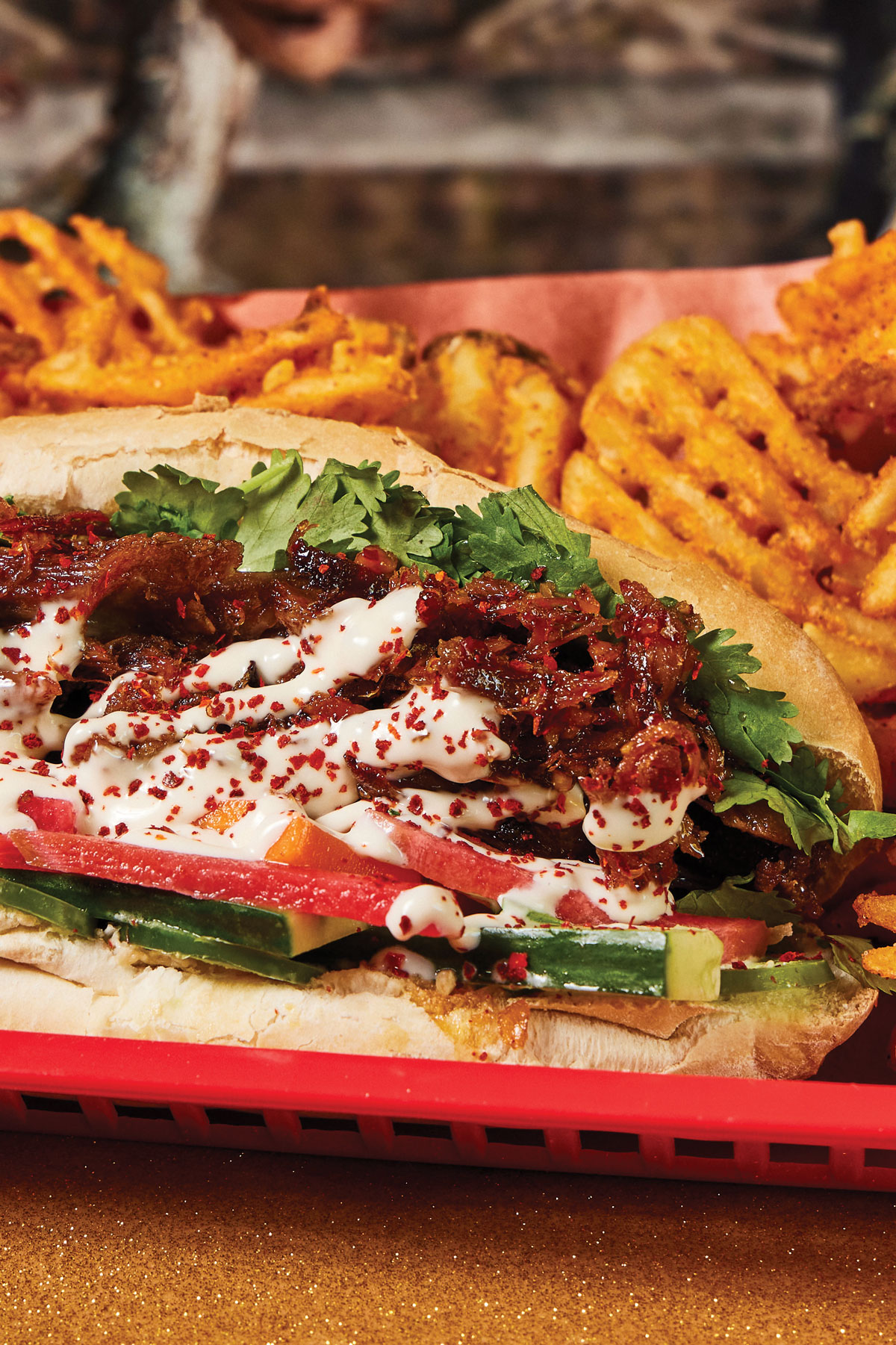
The banh mi begins with day-old pork shoulder, smoked for 12 hours, pulled, then lightly dusted with starch and flash-fried to give it a slight crisp. It’s dressed with jalapenos, cilantro, and daikon radishes and other pickled vegetables and doused with a white sauce. It’s all heaped into a split po’ boy bun, usually sourced from the Leidenheimer bakery in New Orleans.
The result is sweet, hot, smoky, crispy—a street festival for the mouth that’s so filling, I really ought to split the sandwich with my wife. But I don’t. It’s too good.
After I’ve eaten, I wander out to the patio and pay my respects to the hot-pink 18-foot smoker they call Barbie. She reminds me of the Pink Pig, the old Christmas ride for kids at Macy’s/Rich’s. Like those trains, Barbie’s banh mi leaves me smiling. —Jim Auchmutey
Longsilog
Kamayan ATL | Buford Highway, DoravilleAtlanta has always been a city of transplants, and it has blossomed into one of the most exciting immigrant-driven dining cities in the country. Buford Highway has been the backbone of that story, and Kamayan ATL is one of its stars. Owners Mia Orino and Carlo Gan have given Atlanta a Filipino restaurant that is equal parts gathering space and cultural hub. However, many people overlook one of the homiest aspects of Kamayan: its Sunday brunch menu.
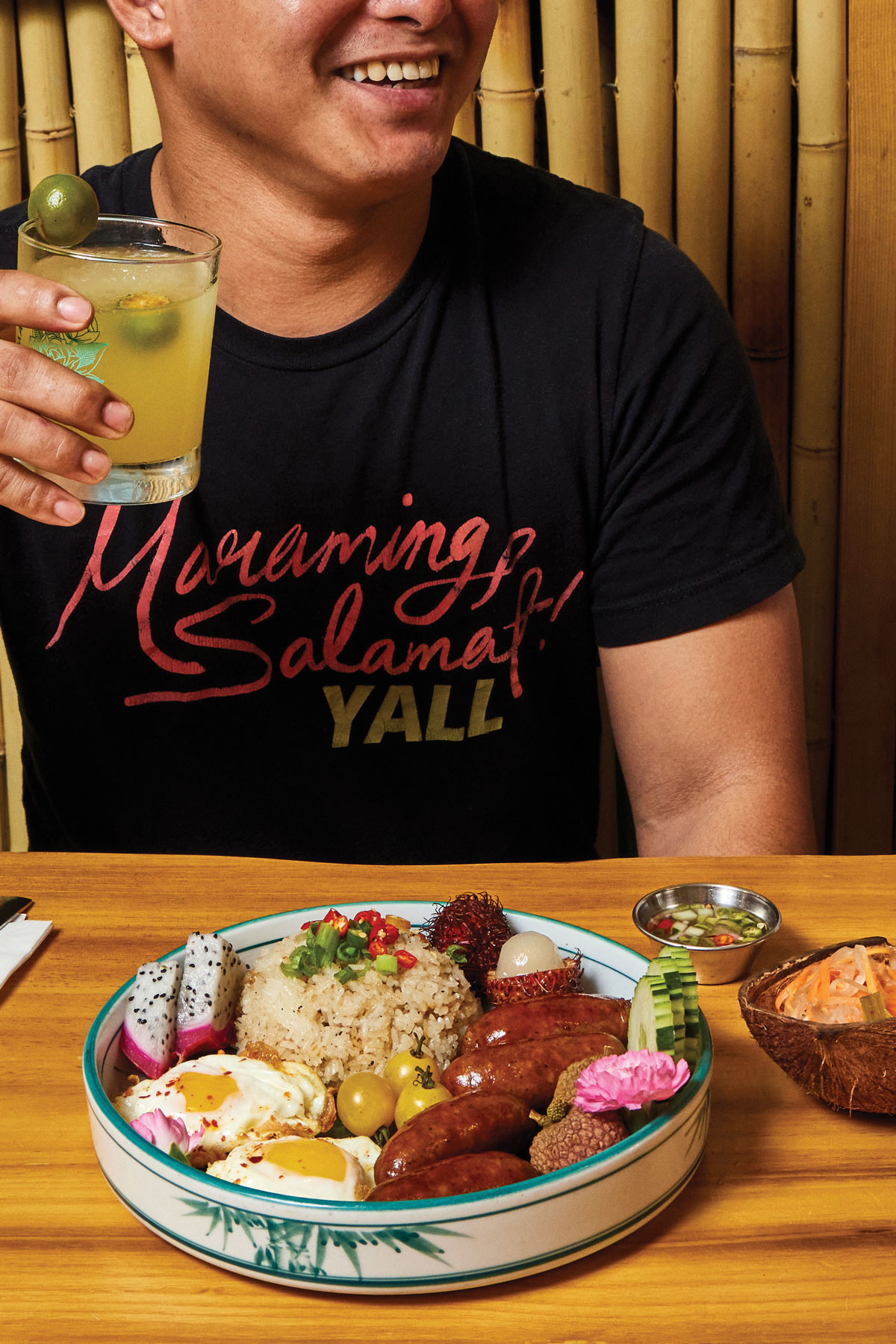
Sunday brunch at Kamayan feels like being folded into someone else’s family. The room hums with conversation, plates clatter out of the kitchen, and you instantly know you’re in the right place. Longsilog is a dish you must order. On its face, it’s straightforward: garlicky fried rice, a flawlessly fried egg, and sweet-savory longganisa sausage. But when the yolk breaks and spills into the rice, mingling with the crispy-edged sausage, it becomes one of those bites that makes you pause with delight.
Longsilog is comforting, familiar even if you didn’t grow up with it, and deeply satisfying. It’s a plate that’s at once rooted in tradition and welcoming to anyone who takes a seat. Eating it feels less like brunching out and more like brunching in—as if you’ve been invited into someone’s home. That intimacy makes this dish not just memorable, but also essential to understanding Atlanta today. —Jennifer Zyman
Frog Legs, Lemon Pepper Wet
Avize | West MidtownThe infusion of lemon and pepper, whether spice or sauce, is truly an Atlanta curio. And while I can’t say with any certainty that it originated here in “the A,” it’s pretty apparent we’ve put our collective stamp on it and made it our own. Thus, the zingy, piquant melding of the two flavors is firmly rooted in the culinary tapestry of eateries across the city.
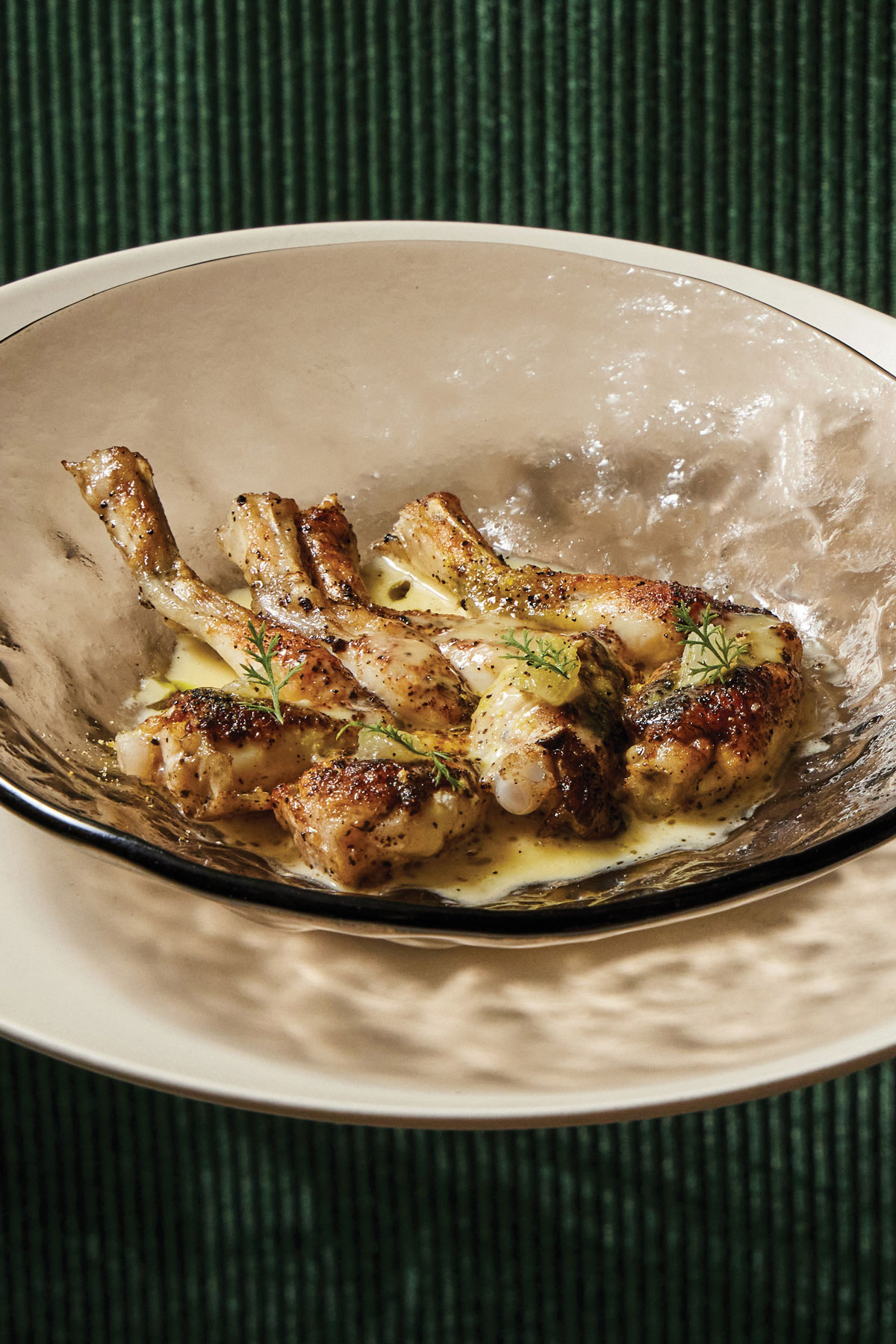
At Avize, chef Karl Gorline’s homage to the traditional lemon pepper wet uses frog legs instead of chicken, a tongue-in-cheek exchange that easily fits his Alpine-themed menu, which features more traditional European proteins, such as venison, duck, and halibut. The frog legs are seasoned and pan-seared, then plated lying in his lemon pepper wet, a beurre blanc–like sauce made with unsalted butter, white wine vinegar, roasted garlic, lemon juice, and lemon-pepper seasoning. The frog legs are velvety and tender, with just enough seasoning to hold their own, but it’s the sauce—oh my God, the sauce—that takes this well-executed dish to another level. With simple ingredients, Gorline constructs a “wet” that is bright, tangy, slightly savory, and lush. From the first bite there’s a citrusy richness, but there’s also a satisfying, sublime moment of clarity in which you know he understood the assignment: Take this flavor that uniquely embodies Atlanta, and make it your own. The frog legs make a memorable dish from start to finish that fits with Avize’s fine-dining aesthetic, with a clever nod to our city’s swagger. —Edward Adams
Shiny Dimes
Kimball House | DecaturIf you’ve been eating Gulf Coast oysters for a minute, you may recall them as barnacle-encrusted and mud-caked, perhaps packing a brackish taste consistent with their murky merroir. “Hence the need for cocktail sauce and crackers,” says Kimball House partner Bryan Rackley, referring to common accompaniments of the wild, shaggy bivalves that made Apalachicola famous and that he slurped as a Valdosta kid on vacation with his family in Panama City Beach, Florida, in the mid-’80s.
Today, Rackley and his colleagues tend oysters in floating cages just off the shore of the North Florida fishing village Spring Creek. They call their immaculate little beauties Shiny Dimes.
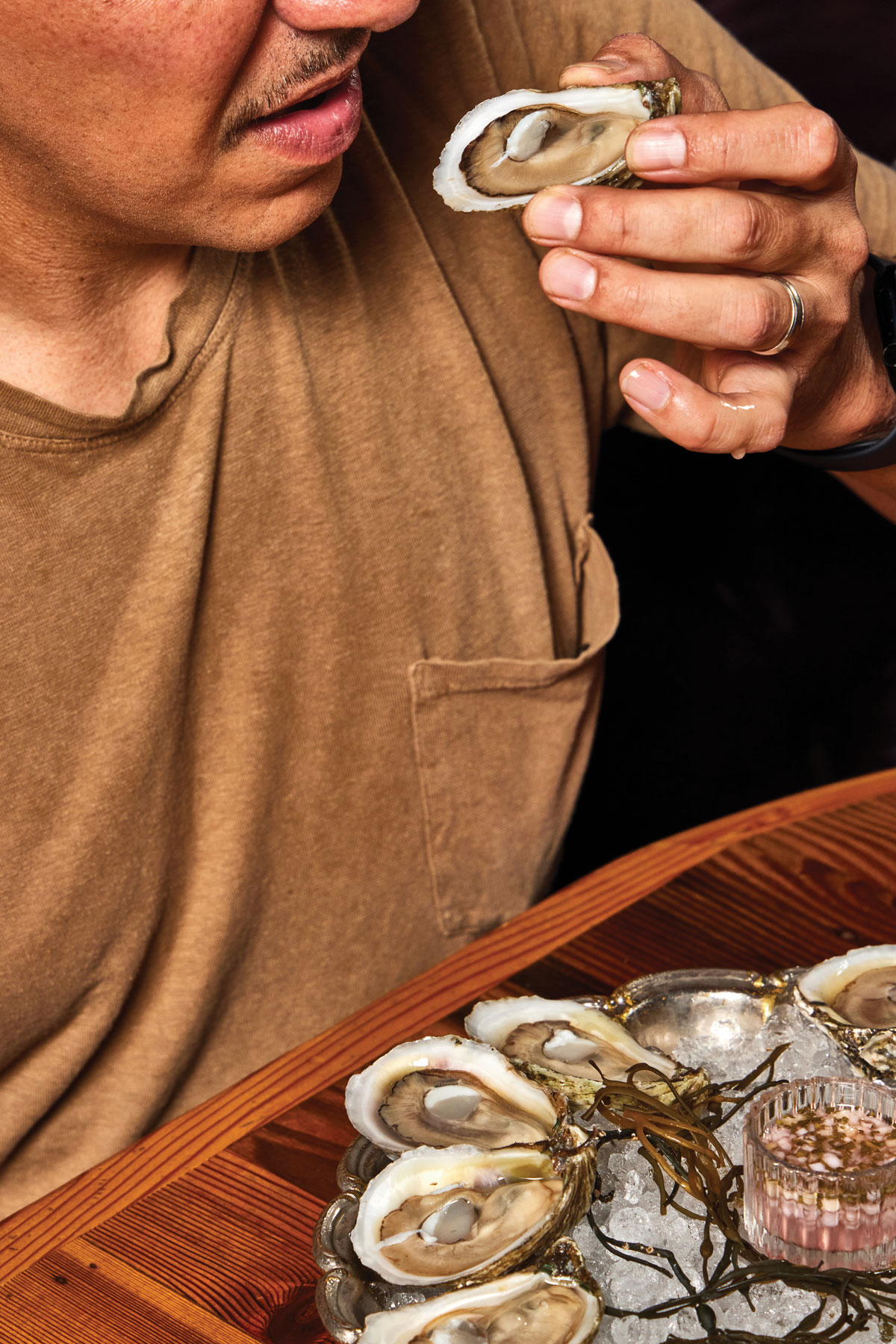
Order a tray. Suck one down “naked,” making sure not to spill the liquid; you’ll taste the earthy sweetness of Southern waters. Of the 20 or so oyster appellations on the menu of the Decatur saloon, Shiny Dimes will likely be the least saline, the least pungent, of the bunch.
If you prefer they glide down the gullet with an elegant, dry white wine, I won’t protest. But you’d be remiss not to sample beverage director Miles Macquarrie’s impeccable Kimball House cocktail, a modern martini made with Decatur-based Murrell’s Row Spirits’ Mignonette gin, a spirit intended to be fashioned into martinis and sipped with oysters.
In cultivating its own mollusks, Kimball House is in elite company: Only a handful of American restaurants can claim such a distinction; in most cases, the farm came first, not the restaurant.
Kimball has sold oysters since it opened in 2013—the same year the State of Florida allowed oysters to be cultivated in floating cages. But Kimball’s owners found the distribution process a hindrance. So they began to buy directly from growers, build relationships, visit farms, and school themselves in the art and science of oystering.
In 2016, Rackley and Southern aquaculture guru Bill Walton (then at Auburn University, now at Virginia Institute of Marine Science) cofounded Oyster South, a nonprofit that supports the region’s oyster-farming community. The organization’s signature event, Landlocked, draws farmers from across the nation to Atlanta every fall.
In retrospect, Kimball’s oyster-farming foray seems inevitable. Rackley pitched the idea to his partners in 2019. By spring of 2020, he was deep into planning the launch of Shiny Dimes Oyster Farm. Then came Covid. He didn’t launch until the summer of 2021. By 2022, the endeavor had rebounded, and by spring, the oyster-farming newbies from Decatur unbagged their first crop.
Arranged on a tray of glistening pebble ice, these Panhandle pearls look like oyster models, all polished and buffed. It takes time and stewardship to get them that way, though. “These are not coming off a 3-D printer,” Rackley snaps. “These are animals, and they change all the time. They change from season to season, as far as profile, taste, and appearance.”
In cooler months, Shiny Dimes taste impossibly clean and bright. By summer’s end, they’ll be fat on seaweed—evocative of herbs and hyssop, turnip and radish. To me, they’re a perennial delight. And if cocktail sauce and saltines float your boat, don’t be afraid to ask. It’s a tradition, after all. —Wendell Brock
Comfy Chicken Biscuit
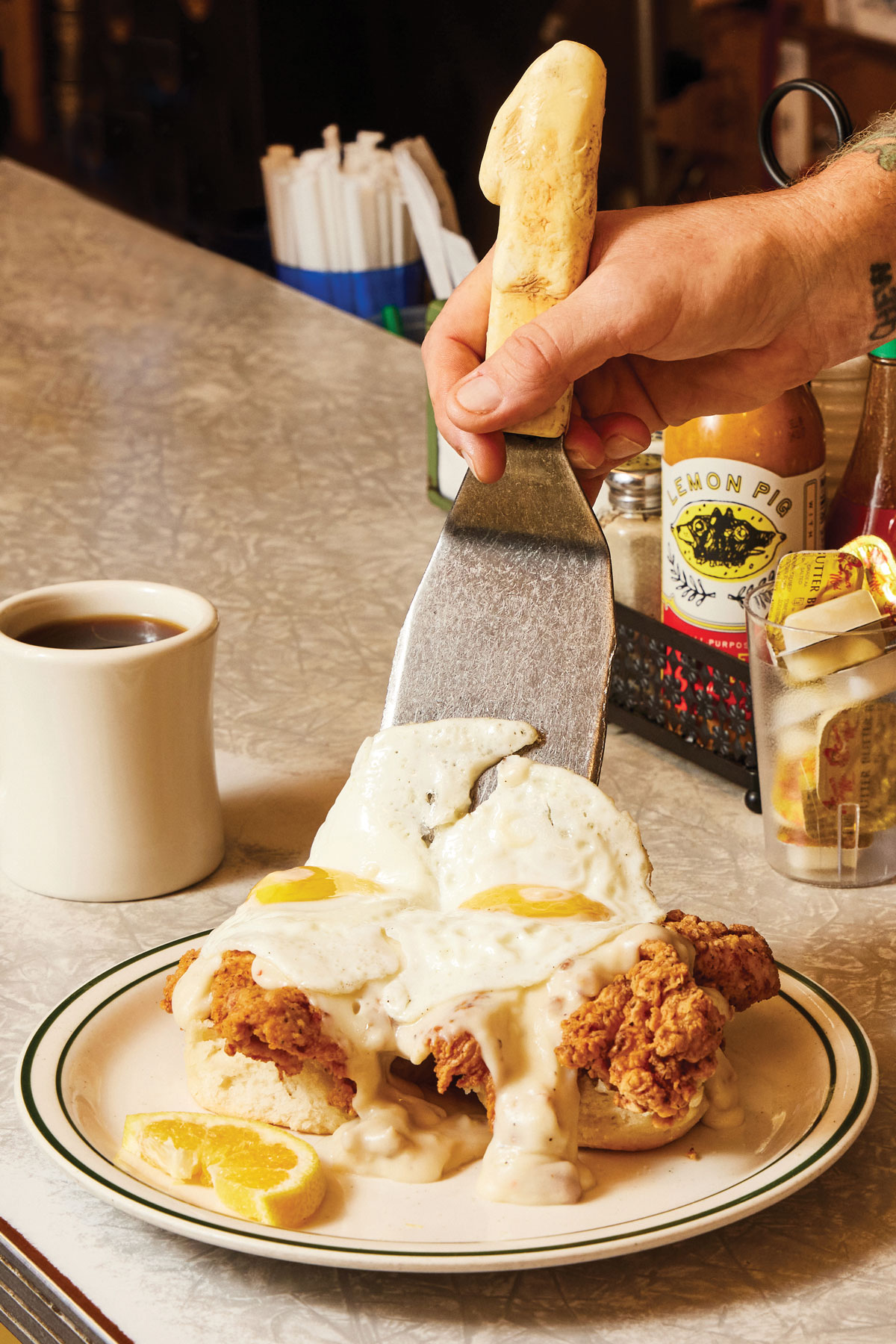
Home Grown | ReynoldstownHome Grown has always seemed like Atlanta distilled into a dining room: quirky, unpretentious, and stubbornly itself. Its counter represents a snapshot of Atlanta at any given time. You might sit next to a politician or a hip-hop star. At the center of it all is the Comfy Chicken Biscuit, a dish that is kind of a legend. In a city where beloved eateries disappear overnight, the “Big Comfy,” as it’s known, stands as proof that comfort and permanence matter.
It starts with a cathead biscuit the size of your palm, split open and piled high with golden-fried chicken. The chicken is brined, dredged, and fried with a fine-dining precision you wouldn’t necessarily expect in a breakfast spot. Nearly everything it uses is made or grown in the South, even the flood of unapologetically peppery and creamy Riverview Farms sausage gravy. It’s the kind of plate that you need a fork, knife, and a moment of surrender to tackle. It’s messy, indulgent, and a little over the top; it’s Atlanta on a plate.
The Comfy threads the needle between tradition and reinvention. It’s a Southern breakfast at heart, but one with layers of technique and care that speak to the city’s ambition. Recently, co-owners Kevin Clark and Lisa Spooner bought the building they’ve called home all these years. This was a victory for the owners and for everyone who loves Atlanta’s institutions. To know the eccentric little building will maintain its foothold on the ever-evolving street that is Memorial Drive is, well, comforting. —Jennifer Zyman
Omelette with Caviar and Crème Fraîche
Lucian Books and Wine | BuckheadLucian isn’t a place where you rush through a meal. Tucked into Buckhead’s shiny new skyline, it offers something far more intentional, and its service is the best in the city right now. Co-owners Katie Barringer and Jordan Smelt blended a half-bookstore, half-restaurant concept that is entirely unlike anywhere else in the city—well, really, the world. It’s a place that proved Atlanta isn’t just keeping up with global dining trends; it’s creating its own version of them.
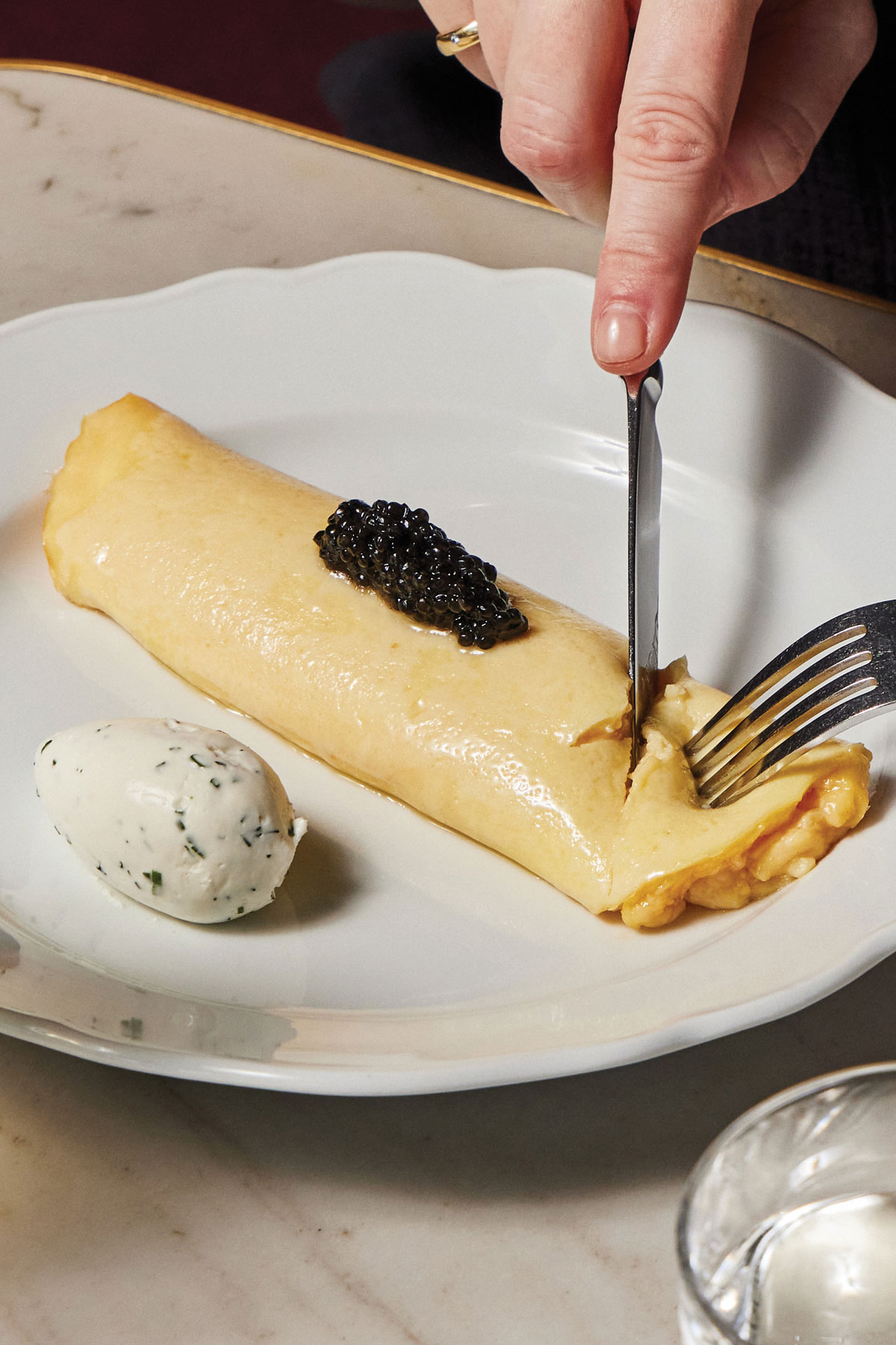
The omelette best captures the ethos of quiet luxury. It’s been on the menu for years. It arrives looking deceptively simple: a folded golden sheath so delicate that it almost trembles. Cut into it with the side of a fork, and it unwraps itself, revealing a warm, custardy filling. Add a touch of tangy crème fraîche, and the chilled richness paired with the warmth of the egg balances the dish. Perched on top is a generous spoonful of caviar—salty, briny, and practically electric against the buttery backdrop. Only a few granules are necessary to saturate the palate with the luxurious saltiness. It’s an egg dish I think of often.
Every time I eat this omelette in this jewel box of a restaurant, it always reminds me how much we’ve grown beyond being a city that needs to flex through big, obvious gestures. Lucian’s owners represent a new generation of restaurant owners who have cut their teeth with the big hospitality groups. The new Buckhead luxury is quieter, more thoughtful, more cultivated, and much younger. In a town where such spots can sometimes fall flat, Lucian seems like a work of art, just like the literary masterpieces it sells. They are in the process of opening a new restaurant, Sargent, which I am sure will be just as singular as Lucian. —Jennifer Zyman
Snack Tray
Whoopsie's | ReynoldstownStepping into Whoopsie’s, on the corner where Moreland Avenue meets Hosea L. Williams Drive, feels like unearthing a cherished secret that has always been there. A curated chaos of vintage bric-a-brac sets the scene in the low-lit playful drinking den. The glassware doesn’t match, but your bartender (and co-owner) Tim Faulkner is a true craftsman, mixing drinks using seasonal ingredients and classic technique, just as the kitchen prepares plates. For this, he and chef/co-owner Hudson Rouse accepted the restaurant’s Michelin Guide Bib Gourmand award, a distinction that honors high-quality food at a good value.
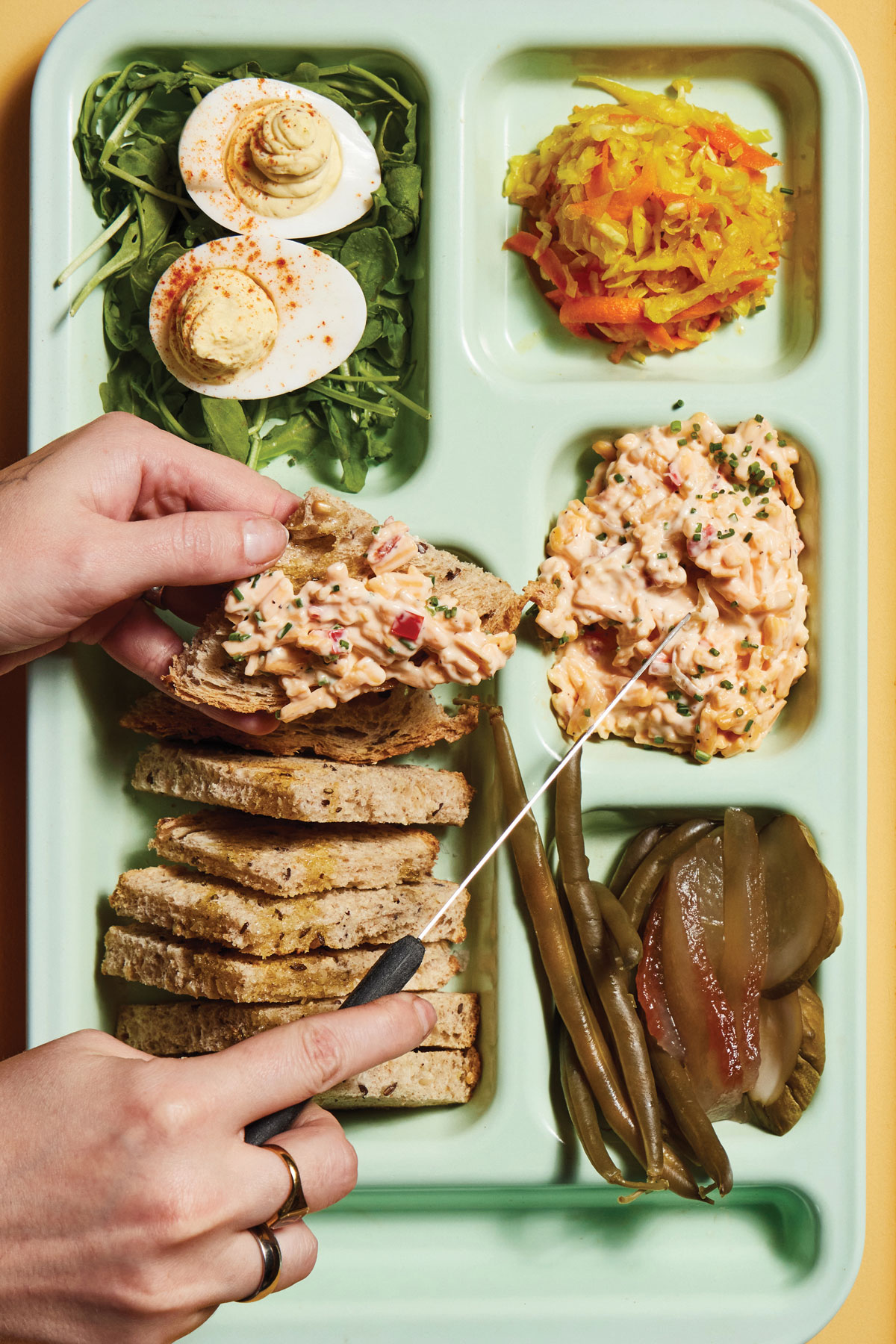
The Snack Tray is a conceptually simple yet altogether complex cold dish that steals the show. Served on a cafeteria-style partitioned tray, it offers a taste of comfort that’s both familiar and entirely new. Less about preserving the integrity of each flavor, and more about the nostalgic feel, the tray holds compartments of classic finger food with a Southern accent.
Featured selections change with the seasons, but the foundation stays the same. House-made chowchow in a tart-sweet brine is a crisp preservation of summer’s harvest. Tangy and creamy deviled eggs are easy to enjoy with a Moreland Mai Tai made with throwback Midori. A variety of tart pickles are fun to explore. A heap of sharp, thick pimento cheese offsets each tasty tidbit with richness. More than a mere vehicle, buttered toasty points of seeded bread are satisfyingly robust.
Each tray section presents a new discovery and encourages a playful, grazing style of eating in a retro design that bypasses formality and gets straight to the joy of a shared, unpretentious meal. “A little something for everyone,” Rouse says. —Angela Hansberger
10
Desserts
Compiled by Lauren Finney Harden