
Home 2026

Archives

Mirae in Brookhaven blends Korean tradition with modern ambition

0
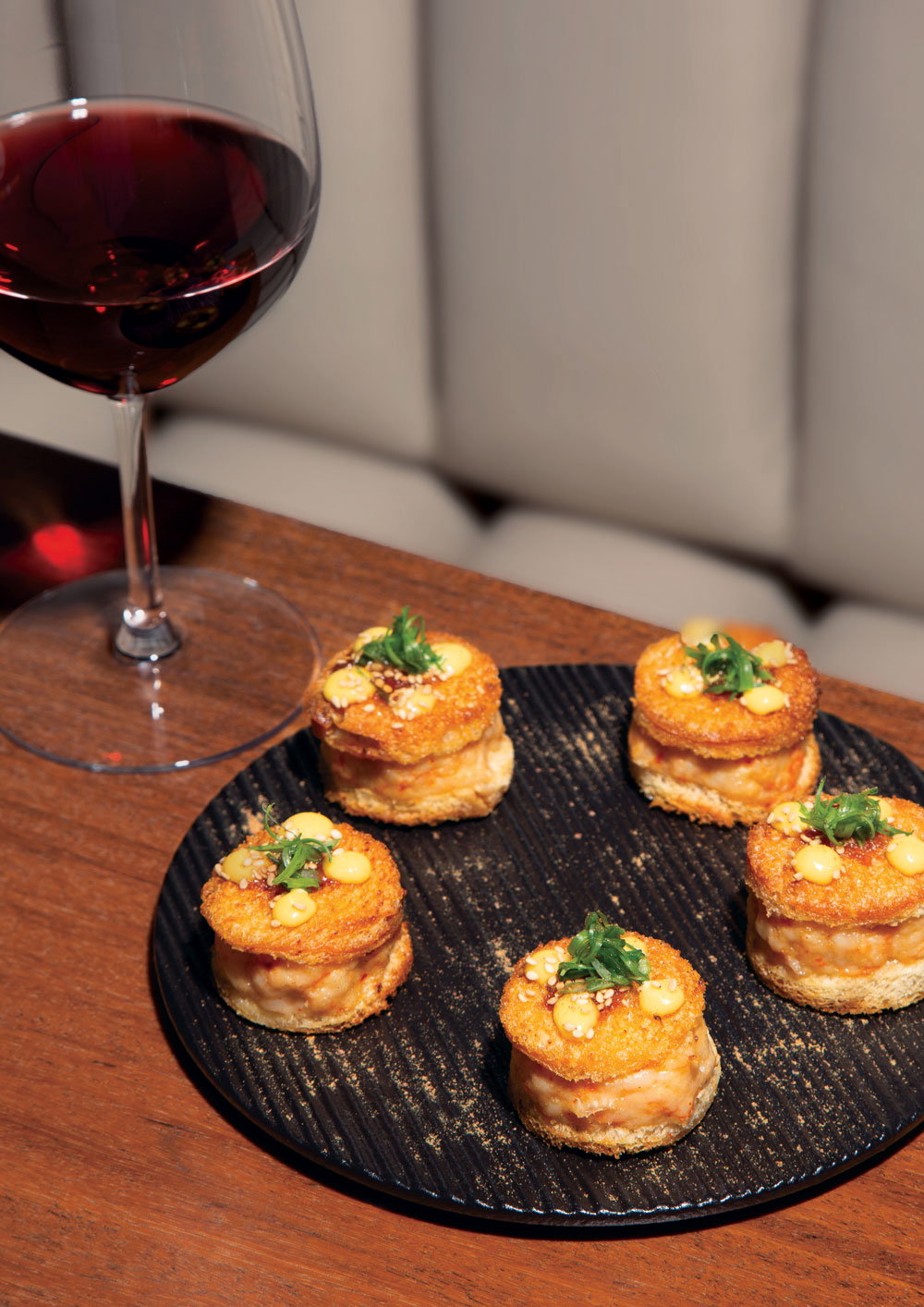
Five crispy rounds of shrimp toast on a plate next to a glass of red wine
Crispy rounds of shrimp toast with citrusy aioli

Photograph by Martha Williams

The moment the Shrimp Toast Menbosha hits the table, it’s clear Mirae operates at a different level. Minced shrimp is packed between bite-sized rounds of white bread, fried to a shattering crisp, and topped with tangy dots of yuzu aioli. Each crunch recalls both a Korean pantry and a Chinese dim sum cart. The $18 appetizer’s inspiration came from a similar dish the owners’ son loved on a recent family trip in Korea. Not only is the shrimp toast striking in texture and plating, it is also a mission statement: Mirae is rooted in Korean heritage and filtered through a cross-cultural lens with the precision of upscale dining.

Mirae, meaning “future” in Korean, opened in Brookhaven in January on Dresden Drive, a short distance from Buford Highway. Most dishes draw on the Korean upbringing of husband-and-wife team John and Grace Lee, owners of the always-packed Fudo in Chamblee. With Mirae, the Lees argue that Korean cuisine can anchor an upscale dining experience without being softened, simplified, or stripped of its identity.

The decor matches the restaurant’s intent. Although the space features exposed ceilings and concrete walls, it feels sexy and special. The glowing paper screens that take up much of one wall soften the atmosphere, and a large bonsai sits at the dining room’s center. An illuminated open kitchen demands attention in the dimly lit space. Servers offer guidance without being intrusive and seem genuinely excited about each dish as they tell its origin story. As dining here costs about $75 per person with drinks, that level of service is important.

A half cut piece of cabbage with a glass of white wine next to it
Confit cabbage salad

Photograph by Andrew Thomas Lee

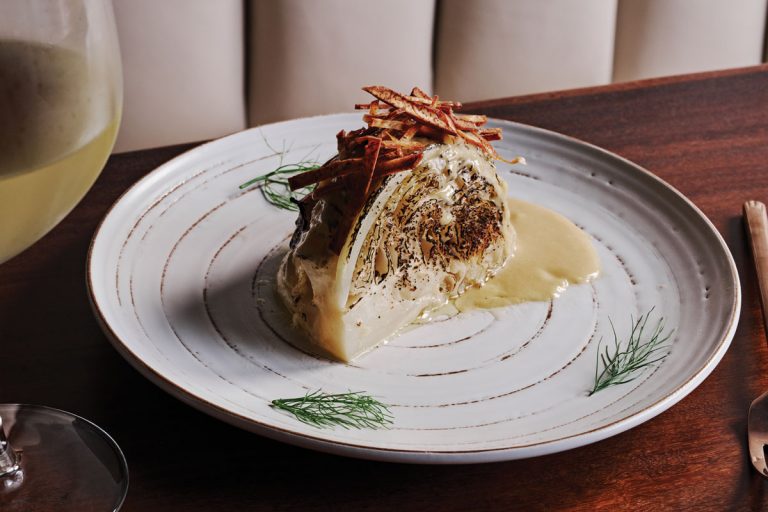
Though the confit cabbage salad ($12) isn’t strictly a salad, it’s a must for those who enjoy bold, bitter, and smoky flavors. Each buttery petal of cabbage is so soft, it can be twirled like pasta when swiped through the slick of umami-rich black-garlic puree and miso emulsion that accompany it. A hand roll of shoyu zuke bluefin tuna ($18) arrives with crisp seaweed, gochujang-flavored tuna filling, and caviar—thoughtfully cut into bite-sized pieces and arranged on a gold-latticed box. However, the palate quickly becomes overwhelmed by the powerful combination of flavors in the overly minced tuna filling. A rougher chop and less filling would give the hand roll the textural contrast it needs. The kitchen, thankfully, regains its footing with the main dishes.

The matsukasa yaki (market price) is a true stunner. A Japanese red snapper fillet on a bed of sliced king oyster mushrooms swims in a truffle-laden consommé. The rice crackers on top of the fish sizzle as servers pour hot oil on them tableside. It’s a sleeper hit with a side of showmanship. The claypot chicken ($26) has sliced chicken thighs served over a crispy, tahdig-like rice bottom, topped with Shanghai bok choy and truffled soy sauce that brings it all together.

Braised short ribs ($38), slow-cooked for six hours until they are soothingly tender, and served with wasabi mashed potatoes and candied carrots, evoke the same notes of anise and five spice you’d find in Chinese beef noodle soup. It’s a rich dish for meat lovers, but it can be too intense for some diners. Not every dish lands with equal force. The tofu steak, while adequately flavored with a spicy dark sauce, lacks texture and visual interest, putting it out of sync with the restaurant’s otherwise ambitious vision.

The black-sesame crème brûlée ($14) is a fitting finale, with an evenly brûléed top dotted with neat black circles of a miso emulsion that shine like jewels. Cracking it reveals a nutty black-sesame custard that is a clever, satisfying twist on a classic but not gimmicky.

A purple cocktail with a flower floating at the top
A lychee-infused cocktail

Photograph by Martha Williams

The beverage program keeps pace with the rest of the menu. The complex Whispers of Kyoto ($18), a Japanese whisky sour with amaretto, pineapple, and egg white, is a highlight. The wine and beer list complements the cuisine, featuring local drafts alongside the incredibly refreshing Japanese Echigo rice lager ($9), served in a tall glass. The wine selection is well-curated, with options from France’s Burgundy and Oregon’s Willamette Valley, along with a strong selection of sakes, soju, and shochu.

Mirae could have played it safe: casual format, lower prices, less to prove. Instead, the Lees have reimagined Korean cuisine with flavors sourced from memory and exploration. A few dishes need refinement, but the aspirations are clear, the cooking is confident, and the kitchen is challenging itself. Mirae doesn’t just argue for modern Korean cuisine’s place in Atlanta’s upscale dining scene. It’s helping define it.

This article appears in our June 2026 issue.
Unlike other Buckhead restaurants, Luella delivers substance with the show

0
A garden-inspired dining room

Photograph by Martha Williams

Buckhead has no shortage of restaurants built for spectacle, but few manage to deliver substance with the show. Luella, the new restaurant from brothers Jamey and Benjie Shirah, executes both better than many others in its vicinity. The Roswell Road space has had many lives, first as Carbo’s Cafe, a steakhouse and piano bar for 25 years, then as the brothers’ rowdy sports bar, The Ivy, which closed in 2024. Perhaps it was time to grow up.

The Shirah brothers reopened the space as Luella in late 2025, transforming the game-day hangout into a polished steakhouse with enough personality to stand out in Buckhead. The restaurant spans a lively bar, two dining rooms, and a private dining room. The dining areas resemble a series of European-inspired salons, with oxblood-velvet banquettes, black-and-white tile floors, and hand-painted wallpapers.

While these rooms offer varying levels of noise, the marble bar is where the energy peaks. It’s so consistently packed that finding a seat or place to stand can feel like a small victory. The cocktail menu is ambitious and playful, with flavor combinations that are both unexpected and satisfying. I was especially taken with the togarashi-thyme cocktail ($16), a mix of Japanese togarashi (a savory spice blend), fresh thyme, ginger beer, lime, and tequila blanco. It was crisp, refreshing, and not too sweet. The wine list is overly broad, with selections from around the world that read less like a range and more like a lack of focus. Many of the bottles are marked up very high, some as high as 300 percent more than retail. That’s in line with the overall pricing, where it’s easy to hit $200 for two people, sans alcohol.

Chef Stuart Rogers’s menu is expansive—perhaps too expansive. There are appetizers, oysters, sushi, salads, pastas, seafood, steaks, Wagyu selections, and a long list of sides. For the most part, the kitchen executes the menu well, but it could use some editing. The Wagyu croquettes, with braised beef and molten mozzarella filling ($15), were crisp and indulgent. However, the sushi section seems superfluous, and it’s the weakest part of the experience. The spicy salmon avocado roll ($22) and tuna veil ($23) were the most disappointing. The sushi rolls were gloppy with unnecessary sauces and add-ins, and the tuna veil was draped like a tablecloth over the other ingredients, making it awkward to cut and eat with chopsticks.

Fortunately, the menu regains its footing by the time you reach the salads and pastas. The Caesar salad ($16) is a showstopper, elevated by thin slices of house-preserved lemons that cut through the richness of the dressing and bring brightness to each bite. The spicy lobster rigatoni alla vodka ($45) arrives in a glossy pink sauce that’s sweeter than expected. I had to hunt and peck for lobster, which made the high price hard to justify. The hand-cut pappardelle ($32) is far more successful. Wide ribbons of pasta are coated in a creamy white Bolognese, studded with earthy truffle mushrooms and finished with grated Grana Padano cheese. It’s rich and deeply savory, but so restrained you may finish the whole plate.

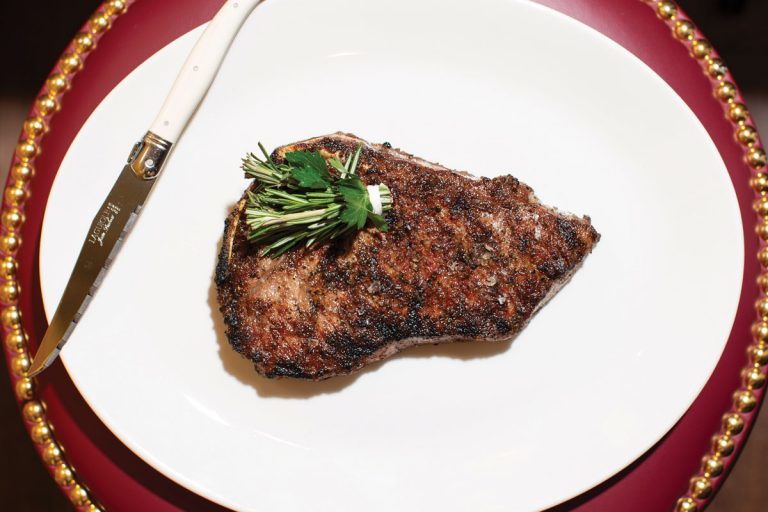
the 12-ounce bone-in dry-aged New York strip steak
The 12-ounce bone-in dry-aged New York strip steak

Photograph by Martha Williams

Luella is ultimately a steakhouse, and the kitchen seems most confident with its meat offerings. Steaks, such as the 10-ounce New York strip ($69) and 12-ounce bone-in dry-aged New York strip ($74), arrive smoky and perfectly cooked from the wood fire. They are two of the best steaks I have had in Atlanta.

The veal Parmesan ($60) is a textbook example of what the dish should be. The bone-in veal chop remains crisp beneath melted cheese and bright tomato sauce. It’s indulgent but balanced—the sort of plate against which other versions are measured.​ Spaghetti with meatballs ($32) was nearly flawless. The tender meatballs had the right balance of meat, breadcrumbs, and seasoning, and the spaghetti had enough bite to stand up to the dish’s heft. Unfortunately, the bright red sauce was the weak link—it was just too sweet.

The best pasta dish is actually a side dish. The cacio e pepe ($14) is a benchmark version of the Italian classic, with al dente spaghetti enrobed in a creamy pecorino sauce and just the right amount of toasted black pepper. Another popular side item was the Gouda fries ($15), crunchy, irregularly cut potatoes covered with a cloud of grated cheese. Nearly every table ordered them.

The Carrot Cake 2.0
The Carrot Cake 2.0

Photograph by Martha Williams

After such rich dishes, dessert may seem optional, but not here. Save room, because pastry chef Danielle Embery is a rising culinary talent to keep an eye on. Oftentimes, carrot cake can be cloying and heavy, but Luella’s version is anything but. The Carrot Cake 2.0 ($16) leans toward savory, with an ethereal swirl of cream-cheese frosting amplified by crushed freeze-dried raspberries. It’s the first dessert servers recommend, with the Bananas Foster Cheesecake ($16) a close second.

Most servers seemed to be trying to provide true fine dining in Buckhead. Our experience was mixed: One server was condescending, while another demonstrated the kind of intuitive hospitality that elevates an experience.

In a neighborhood full of pricey places built to put on a show, Luella not only impresses but also makes you want to return for more. It’s still refining its identity and doesn’t get everything right, but when the kitchen and atmosphere are in sync, Luella delivers. 

This article appears in our May 2026 issue.

Review: Pink Lotus is more than a pretty face, it’s a Westside standout in Atlanta’s Thai evolution

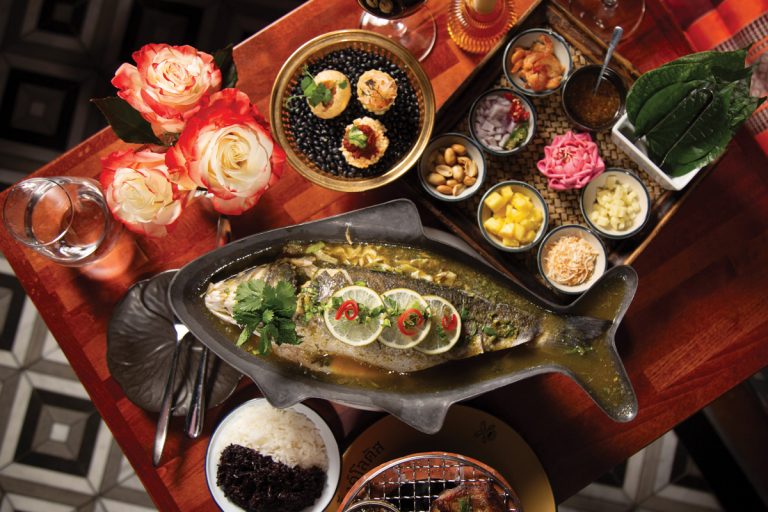
A spread of the whole branzino and the colorful components, including wrapping leaves of miang kham

Photograph by Martha Williams

Atlanta’s Thai scene has decisively shifted in the past two decades. If you asked me where to go for Thai food in the 1990s, my list would have included a handful of dependable spots for pad thai and standard curries. For so long, Little Bangkok reigned on Cheshire Bridge. That is, until the arrival of chef Nan Niyomkul and her late husband, Charlie, who opened Tamarind in 1998 and Nan Thai Fine Dining in the early aughts. Those early anchors helped cement the foundation of Thai food in Atlanta, but the real evolution occurred when homegrown restaurateurs and chefs began responding to diners’ growing demand for dishes with a point of view.

Today, Thai offerings in Atlanta are more regional, expressive, and personal. The growth is most evident in greats such as Tum Pok Pok on Buford Highway and Talat Market in Summerhill. Both helped prove Atlanta was ready for more complex Thai flavors and dishes. They pushed the dialogue forward, and now, Pink Lotus is carrying the conversation into the Westside.

the entry area popping with pink and the restaurant’s namesake flower

Photograph by Martha Williams

The restaurant’s location at the Stockyards Atlanta is savvy, given how few Thai restaurants exist in the industrial neighborhood. Owner Niki Pattharakositkul, the engine behind the ubiquitous 26 Hospitality Group, has built a reputation for approachable Thai across the metro area. The group’s dependable workhorse is 26 Thai; Pink Lotus is its shiny new jewel with a clear aesthetic and culinary identity. The restaurant educates diners about regional Thai dishes that are bold in color and intense in flavor, with a splash of drama.

The fuchsia-soaked restaurant’s name is a tribute to the Hindu goddess Lakshmi, who is also revered by Buddhists in Thailand. She is traditionally depicted standing on a giant pink lotus. Embodying an ethos of abundance, she watches over the dining room from a hand-painted mural that sets the mood for the plush velvet banquettes and gold accents throughout. The enormous custom lanterns in orange, green, and pink add warmth to the industrial space.

The menu, approachable and expansive, highlights Thailand’s main culinary regions—northern, southern, central, and Isaan. I knew this was a different type of restaurant the minute I saw the beautiful plating of the miang kham. The starter sets the mood early with neat piles of herbaceous betel leaves, coconut, lime, ginger, peanuts, and palm sugar syrup, all meant to be combined for a perfect sweet, salty, herbal, and sharp bite.

the three bite-size appetizers of the Lotus Signature Trio

Photograph by Martha Williams

Nearly every table seems to order the crispy tempura-fried kale mixed with ground chicken and punchy lime dressing. It arrives piled high, and it’s a crunchy bite that’s fun to eat and share. The restaurant offers numerous salads, such as papaya, as well as heartier options, including grilled pork jowl served on a mini tabletop grill. Skip the pad thai; there are more interesting dishes on the menu. Instead, order the branzino, either steamed or fried. We opted for the fried, which was perfectly greaseless and served with a vinegary, bright-green apple salad.

The crab fried rice, with its plump pieces of sweet lump crab, is a pricey splurge ($39) but worth it for any seafood lover. It comes with a green chili sauce for drizzling. The bone-in beef short rib looks like something out of The Flintstones. But it was the beef cheek curry served in a Southern Thai yellow-green curry sauce with eggplant that scratched the itch for something saucy and slightly spicy.

Not every dish is successful. The dry charcoal-grilled chicken lacked sufficient char. The khao soi was over-reduced: The sugar and salt were so intense that not even a trace of heat or a squeeze of lime could save it. (Otherwise, the soup of egg noodles and a chicken leg in a coconut-based yellow curry is well-constructed.) Service also needs improvement and the staff more training. One of our servers forgot to put in our order but played it off as managing the pacing.

The dining room artwork features the goddess Lakshmi holding a pink blossom.

Photograph by Martha Williams

A lengthy cocktail list from the gem of a bar, lined with colorful glass jars and clay vases, names inventive cocktails such as the Somtum Martini, a gin-based drink with flavors inspired by the tang of papaya salad.

Pink Lotus isn’t just filling a gap on the Westside; it’s raising the bar. As our city’s Thai food scene grows more varied and regionally expressive, Pink Lotus’s cooking and transportive design demonstrate how far we have come.

This article appears in our April 2026 issue.

Review: Spring 2nd Branch brings Korean nostalgia to Marietta Square

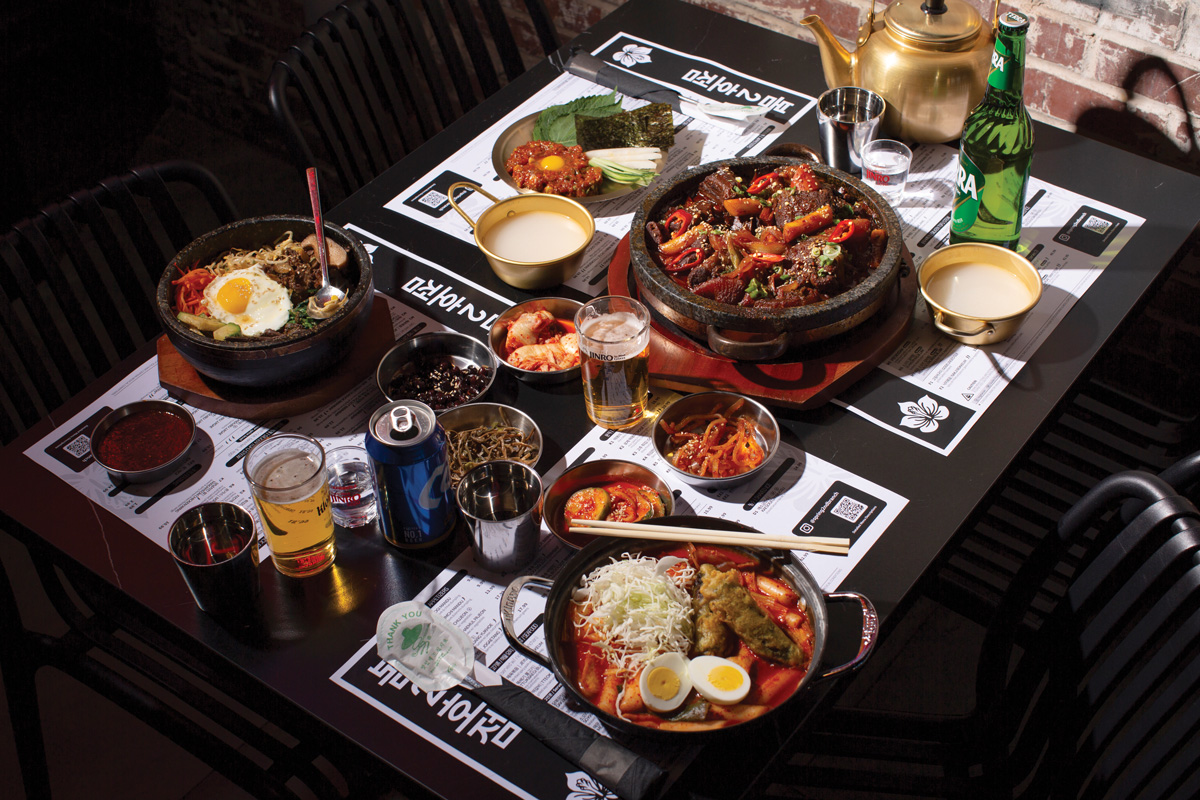
an array of dishes from Spring 2nd Branch
Menu faves include chile-coated rice and fish cakes, spicy stews, and savory meat and noodle dishes paired with Korean rice wine and beers and a pop of neon.

Photograph by Martha Williams

Brian So built a loyal following at his Marietta Square restaurant Spring, which has a Michelin star and multiple other accolades from the James Beard Awards and more. When the chef announced the restaurant would close for renovations, he didn’t deprive Marietta of his cooking for long. He opened his first Korean restaurant, Spring 2nd Branch, blocks away from his first location. Spring 2nd Branch is an entirely different restaurant from Spring, which has always had a boutique feel, with limited days and dinner-only hours. Spring 2nd Branch is the opposite of that. The restaurant is open for lunch and dinner, seven days a week, and takes no reservations.

Spring 2nd Branch was modeled after “the type of Korean restaurant that sent my generation to college,” So said over the phone. “This type of restaurant might not exist in 10 to 15 years. I don’t see many young people lining up to open a restaurant like this. It sounded like a worthwhile challenge.” Spring 2nd Branch remixes the broad menus of his youth with the trendy dishes of today. With a menu spanning stews, rice, noodles, snack-food standards, and hot pots, the food is energetic and rooted in the Korean restaurants that the chef-owner grew up with in Riverside and Marietta. Opening another spot in Marietta made sense to the restaurateur because there is a void of Korean food nearby.

the brick walls and neon sign above a table at Spring 2nd Branch

You enter the restaurant through a nondescript storefront with frosted windows that leads into a narrow hallway lined with dry goods. The dining room is moody and dim with black brick walls, neon signs, and TVs looping Korean music videos. The vibe is intentionally lively, a little chaotic, but it suits the menu and the seemingly always-full dining room.

The menu is intentionally large, like what you might have seen at a family-run Korean restaurant decades ago. There is something for everyone. So’s version is more modern, blending traditional homestyle dishes with such trending snack foods as crunchy, sweet, and spicy Korean fried chicken wings, and tteokbokki. The latter is one of my favorite Korean snack foods: chewy cylindrical rice cakes bathed in a red gochujang (Korean chile paste) sauce with slices of fish cake. It’s an exceptional iteration of the dish you get on the street in Korea. There is also a creamy “rose” version that looks like a vodka sauce, but the original is my favorite. Another favorite is an enormous, crunchy fried pork chop served with rice and shredded cabbage. It’s a showstopper with an addictive quality.

Gogi mandu (dumplings) are straightforward and satisfying, but the haemul pajeon (scallion pancake) is too greasy, dulling the flavors and making it hard to finish. Steamed souffle egg dishes offer a welcome pause between spicier plates. The chef wants to show Atlanta that there is more to Korean food than barbecue, even though he does serve a small selection of meat dishes, such as galbi and bulgogi, on sizzling cast-iron plates.

Hot pots and stews are the standout dishes and offer a range of flavors and textures. Among them is the deeply soothing gamja tang, a spicy pork neck stew with potato and perilla leaves, which is supposed to prevent hangovers. There’s also Army stew, a nostalgic and indulgent bubbling stew of Spam, hot dogs, baked beans, rice cakes, Ramyun noodles, tofu, and melted slices of American cheese. In contrast, the kimchi stew with pork ribs delivers spice without tipping into excess.

One of my favorite dishes, the so kkori kalbi jjim, is a soy- and sesame-laced stew of tender beef and oxtail with rice cakes, potatoes, carrots, and daikon. It’s a dish commonly served on Chuseok (Korean Thanksgiving), and it’s not cheap—it’s one of the most expensive shareable dishes on the menu—but worth every damn bite.

a dish that includes seeweed, egg, and other ingredients from Spring 2nd Branch

The kalguksu (soup with thick noodles) fell short compared to the rest of the menu. The broth was over-reduced, making the meal seem heavier than intended, and the packaged noodles lacked the texture and elasticity that handmade noodles would bring to a dish so dependent on balance. In a menu that otherwise is thoughtful, the kalguksu is a clear area for improvement.

Beverages are straightforward and well chosen. Makgeolli, soju, and Korean beers like Cass and Terra dominate, while wine is minimal, which matches the casual, high-energy style of the restaurant. Ice-cold beer with spicy Korean food is the obvious pairing, and the menu confidently leans into it. The sole dessert is a sesame bingsu (shaved ice) with a base of sesame ice cream. It’s a fun spin on the popular Korean dessert. However, I prefer brighter fruit-based versions at the end of heavy meals such as oxtail and fried chicken.

Service is still finding its rhythm. Running lunch and dinner daily with an extensive menu is a different challenge than operating the boutique dinner service at Spring. Some inconsistencies remain, but the staff’s enthusiasm and willingness to learn alongside diners make the growing pains forgivable.

For anyone who has been relying on Duluth for Korean food, this is a welcome alternative minutes from Marietta Square. Brian So is taking risks, leaning into dishes from his past, and proving that he can do more than precise, Michelin-starred tasting menus. It’s exciting to watch, and even with the kinks in service and the occasional dish that misses the mark, you come away impressed by the ambition and the heart behind it.

This article appears in our March 2026 issue.

Review: Auburn Angel brings worldly flavors to Soul Food Row

0
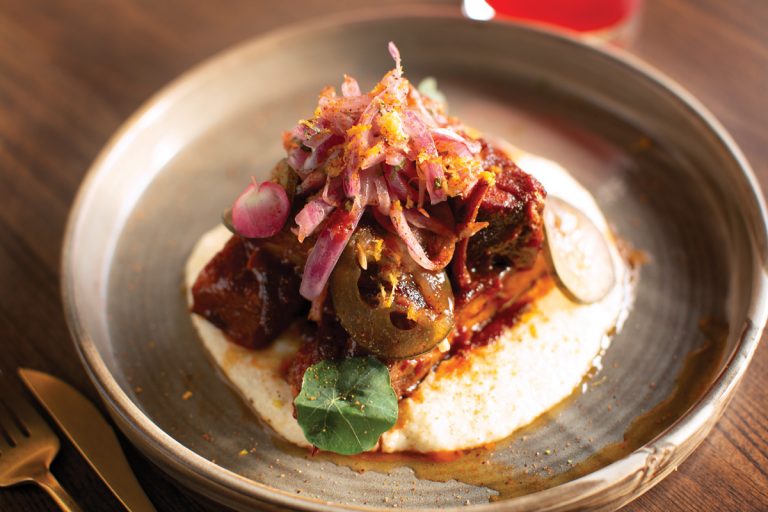
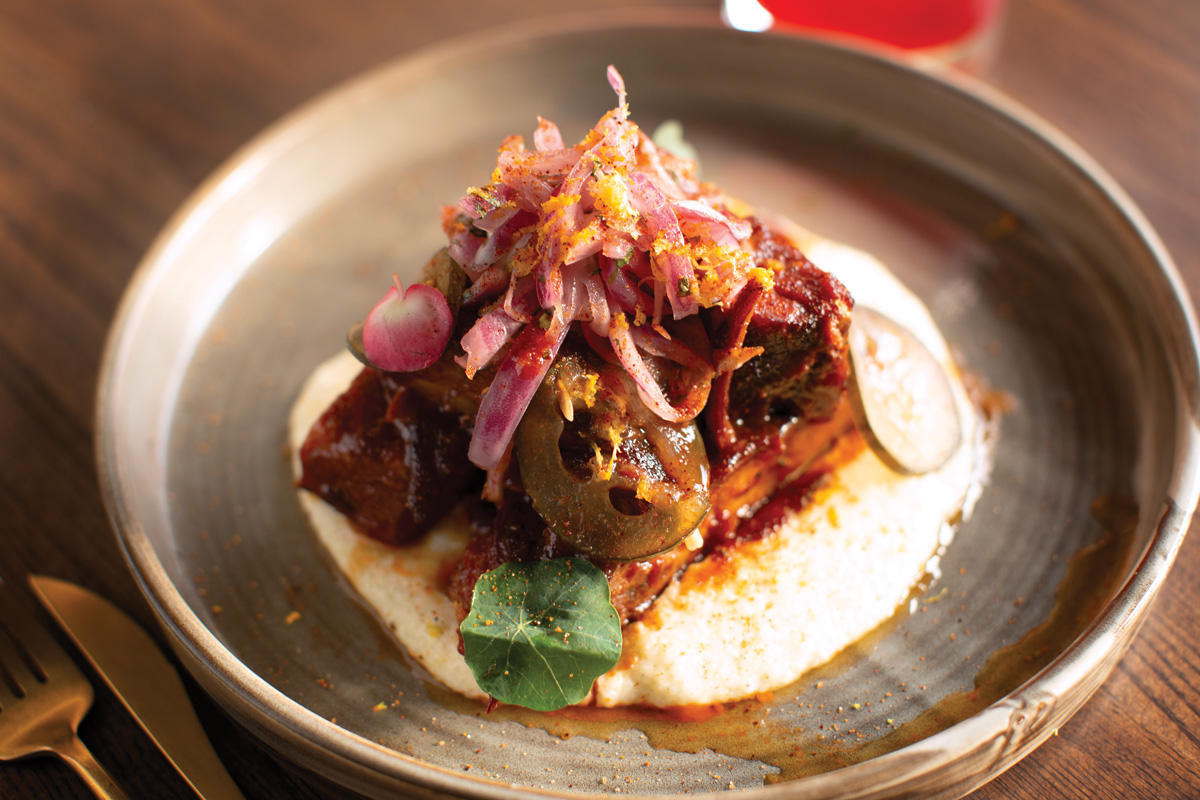
Them Ribs & Grits with pickle slaw

Photograph by Martha Williams

Despite my obsessiveness when it comes to tracking new restaurants, I consider myself an average Joe when exploring eats. Auburn Angel has been on my Places to Eat in Georgia list for about a year now, so when a friend invited me to brunch, I was excited to check it out. 

The restaurant is located where the Auburn Avenue Rib Shack used to be. I was curious what changes were made to the community staple that fed churches, businesses, and civil rights organizations for 30 years. Restaurateur Asa Fain bought the space in 2019 after the Rib Shack closed in 2014. The space was expanded and includes a covered patio where you enter the restaurant through a wrought iron gate.

Inside, the decor is bright and modern. Marble floors, an L-shaped marble-top bar, circular booths upholstered in chartreuse alligator, and large teal-blue Nitori chairs in the wait area complement the smoke-gray Shaker-style paneled walls and midcentury globe chandeliers in the main dining area. In the smaller loft dining space, long wooden pews salvaged from Ebenezer Baptist Church and bistro tables bank the two forest-green walls lit by pendulant lights. The intimate room is visible to passersby, who can see through the storefront windows facing Auburn Avenue.

We opted for a roomy corner booth so we could spread out a bit, knowing we’d have quite a few plates. We started with what the server described as one of the most popular dishes, the Hoe Cakes & Potlicker. We tried the Chicken n’ Doughnuts, a tender portion of fried chicken with an unexpected sweet and sour flavor from the lemon-pepper butter and sweet tea syrup, which I thoroughly enjoyed. We also ordered the Mushroom Hash, a delicious, savory vegan dish featuring Ellijay mushrooms, potatoes, and kil’t greens with a piquant collard chimichurri.

This was our first sampling of chef Robert Butts’s cuisine.

Butts, a Southwest Atlanta native, spent time abroad in France after finishing culinary school to hone his craft before returning to his hometown. He worked in well-known kitchens across Atlanta, including Saltyard, Simon’s, 4th & Swift, and Twisted Soul, then took a sabbatical to work in kitchens in New York City before taking over as executive chef at Auburn Angel. He is also a co-owner.

chef Robert Butts in the plant-filled foyer at Auburn Angel
Chef Robert Butts in the plant-filled foyer at Auburn Angel

Photograph by Martha Williams

Chef Butts’s menu reflects what he describes as international Southern food, a style that highlights local and regional meats and produce paired with ingredients and cooking techniques from around the world. While the cuisine on the menu highlights his cooking aesthetic, the chef shows his Atlanta pedigree with the names he’s chosen for some dishes and cocktails: Them Ribs & Grits on the brunch menu, for example, which features smoked spareribs coated in a blueberry- and sweet tea–infused barbecue sauce over Marsh Hen Mill grits—a regionally milled grain from Edisto Island, South Carolina—and topped with a house-made pickle slaw. The ribs are smoky, sticky with a mild sweetness from the sauce that drapes the creamy, seasoned grits. The pickles add just enough acid to pull it all together.

I do love good cocktails to pair with my food. The restaurant has a curated selection of award-winning wines, including one of my favorites, Be Human Cabernet Sauvignon (2020), and an impressive list of 12 beers and ciders, along with a small list of craft cocktails. Notable boozy quaffs include the Auburn Angel, the restaurant’s take on an old-fashioned, and the Cussin Granny, a margarita variant made with blanco tequila, cherry pepper, Cointreau, and yuzu.

I keep coming back for the Beef Rib Bourguignon. Butts starts this dish in traditional French fashion by braising the beef in his demi-glace, but he then adds bourbon and sorghum to finish the bordelaise sauce. The meat is buttery and fork tender. The sauce is rich and silky, with a slight sweetness that enhances not only the rib but also the confit mirepoix, charred broccolini, and enoki mushrooms served with it.

Butts purposely builds his plates by layering proteins, grains, fruit and vegetables, and sauces to create dishes with integrated flavors that stand on their own but work harmoniously, even considering the unexpected ingredients he uses.

At the bottom of the menu, there’s The Sweet Finish, the featured dessert that changes regularly. On my visit, I tried the blueberry corn cake, a hoe cake topped with fruit compote. It was unexpected to see the popular cake on the starter menu repurposed as a dessert, but it was a light and simple way to end my meal.

Good food aside, Auburn Angel is a relative newcomer to the area known as Soul Food Row (near the King Center corridor). Both Fain and Butts agree that the locale is an oasis, but not without its issues. While parking is available along Fort and Old Wheat side streets, with ample street lighting at night, friends who dined with me for brunch and dinner described parking as “sketchy” due to the homeless people who congregate at John Wesley Dobbs Park across from the restaurant. I’ve been several times and never had an incident.

That said, the co-owners are optimistic, working with community organizations to be an active member in the area while providing comfortable, inviting gourmet casual dining. What better way to pay tribute to the legacy of this iconic downtown address than by providing amazing food, firm in its local roots, with a heaping dose of Southern hospitality.

This article appears in our February 2026 issue.
Review: Nakato’s $2.4 million renovation gives it a fresh revamp to match its fresh menu

0
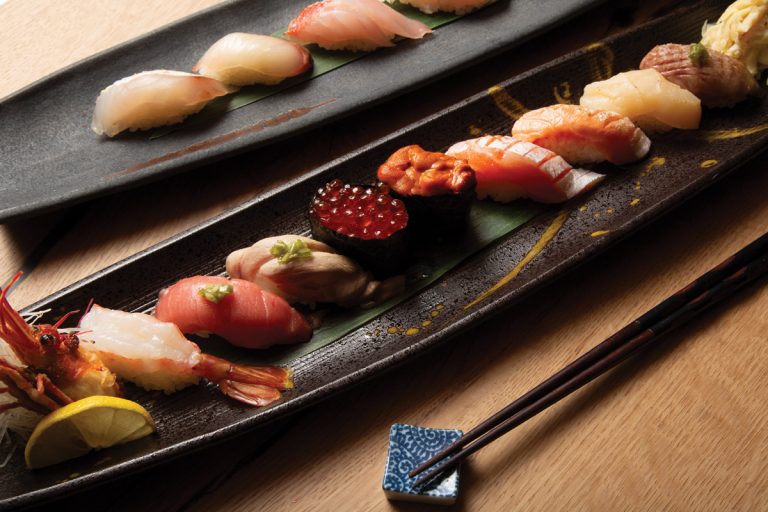
Assorted nigiri on the salvaged wood bar at Nakato

Photograph by Martha Williams

Some establishments merely occupy space in Atlanta. Then there is Nakato. For 50 years, this restaurant has been more than a fixture on legendary Cheshire Bridge Road. It has been a quiet anchor in the city’s culinary landscape. The Nakato family didn’t chase trends; they set a standard. The restaurant has always balanced traditional Japanese formality with genuine comfort. Generations have marked milestones here, confident that the food and service won’t disappoint. I have celebrated five of my own special occasions here over the years.

For many, Nakato is synonymous with the fiery onion volcano that ignites celebrations in the teppanyaki rooms. It’s an image many remember: the chef flipping shrimp and playing with fire while wearing a tall toque. Yet this is only the surface of the story. The real heartbeat of Nakato has always been the family that started it and their chosen family: the guests.

In a city where restaurants come and go, often defined by trends or Instagram moments, Nakato has remained steady for more than five decades. The service isn’t showy but instead offers the kind of consistency that comes from doing things right for a very long time. So, when third-generation owner Sachi Nakato Takahara announced a $2.4 million renovation, I wondered if it would change what makes Nakato special. In Atlanta, big restaurant makeovers sometimes mean losing history to a slick new look. But that’s not what happened here. The refresh was more like a respectful polish than a complete redo: brighter, more modern, and more comfortable, yet still completely Nakato at its core.

A chef lights a fire in the renovated grilling area

Photograph by Martha Williams

Every element of the renovation honors both history and place. The new bar top, carved from Druid Hills white oak, roots the restaurant firmly in its home soil. A custom Japanese Seigaiha wave pattern, painted in blue and gold and prominently installed in the space, evokes both luck and resilience—themes ideally suited to a restaurant that has survived and thrived. Even the practical upgrades carry weight: The 34-year-old teppanyaki grills, witnesses to countless celebratory moments, were replaced with new ones. The dining rooms are brighter thanks to a fresh coat of white paint, and the adjoining bar has been updated with illuminated decor touches. The changes make the restaurant seem lighter and more spacious, yet there is no sense of lost intimacy. Nakato still seems like itself, but with a bit of a much-needed glow-up.

The food remains an unchanged and dependable mix of sushi standards, homestyle Japanese dishes, and hibachi standards cooked on the teppanyaki grills. Hibachi chefs still command the stage with skill and flair, delivering moments of excitement without overshadowing the food itself. It is still a great place for special occasions, and when I was there, the foyer was already packed with Atlantans celebrating something, even if it was just the restaurant’s reopening after a four-month renovation.

The Garden Room remains my favorite place to dine. It not only has an exceptional sushi program, great for takeout or delivery, but also offers an enormous menu of hard-to-find classic Japanese homestyle favorites. This is what I come here for the most. I typically order sukiyaki and shabu shabu because it is difficult to find Japanese-style preparations of these dishes in Atlanta proper. Both are hot pot–style dishes, so you cook platters of thinly sliced beef, vegetables, and noodles at the table. The sukiyaki is cooked in a sweet soy-based sauce, and the shabu shabu is cooked in a broth and dipped in a duo of creamy sesame and ponzu sauces. It brings me great comfort because I used to get shabu shabu with my sister in our 20s on girls’ nights, and now I go with my daughter. Otherwise, I am ordering nigiri; the simpler, the fewer sauces, the better. They do, however, make great rolls, if that’s your thing.

Sushi continues to arrive pristine, and the fish is always excellent quality and flown in from Japan two to three times a week. Beyond the sushi, hibachi entrees, soba noodles with crispy crowns of shrimp tempura, and bountiful bento boxes, there is also a strong focus on seasonality, so look for special menus featuring in-season ingredients, such as a recent smattering of elegant appetizers with matsutake mushrooms, such as chawanmushi, an egg custard.

A tableside hot pot of shabu shabu

Photograph by Martha Williams

At the new bar, the somewhat-renewed cocktail program is bold but measured. The Dirty Dashi martini, with kelp-infused vermouth, is a perfect example: savory and nuanced. But I am most happy with a tall Orion beer and two tiny, frosted glasses, which my waiter changed out mid-bottle so we could have a fresh glass. That is the type of service one can expect here, because it is an arena in which Nakato thrives. The restaurant adheres to the Japanese concept of omotenashi—a selfless, anticipatory form of service central to the experience. Staff members always do a good job of attending to details with quiet confidence, ensuring guests feel cared for without ceremony or fuss.

Nakato has lasted this long because the family keeps making wise choices that respect where they came from while moving the restaurant forward. The renovation is an example of that. Now the space is fresh but still familiar. Nakato isn’t just another restaurant in Atlanta. It’s part of the city’s fabric where care, craft, and tradition have quietly thrived for generations. Hopefully, that continues for many more.

This article appears in our January 2026 issue.
Review: It’s time for Aria’s new chef and owner to move beyond the restaurant’s legacy

0
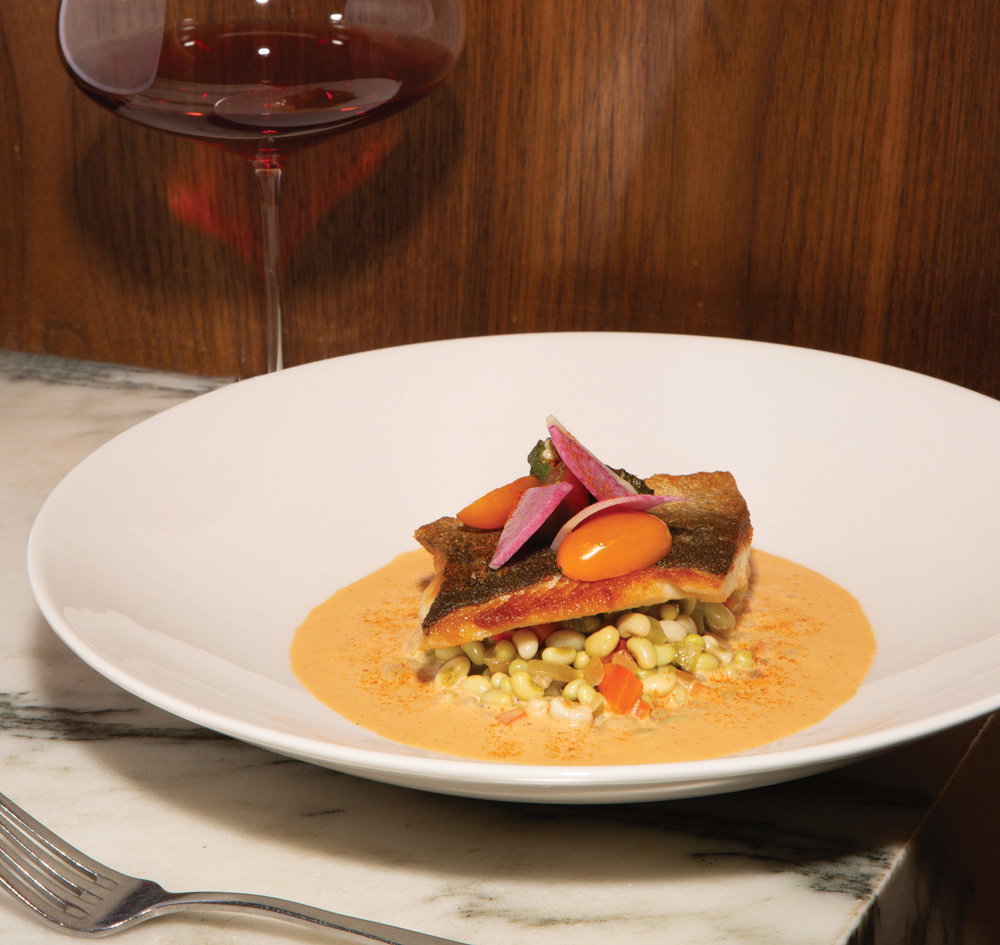
trout atop a seasonal vegetable mélange
In the bar, trout atop a seasonal vegetable mélange

Photograph by Martha Williams

Does a restaurant need to evolve, or can it stay a snapshot in time? That’s the question I kept circling back to after two visits to Aria, the Buckhead fine-dining institution long regarded as one of Atlanta’s most elegant dining rooms. For decades, chef Gerry Klaskala’s restaurant embodied a kind of polished, old-school Atlanta glamour: soft lighting, white tablecloths, gracious service, and a clientele that came to be seen as much as to dine. Now, Klaskala has retired, and longtime general manager and wine director Andrés Loaiza is the new owner. Joseph Harrison is at the helm as the new executive chef.

Aria’s role in Atlanta dining has always been more than just a restaurant. It was a blueprint for hospitality led by Loaiza and Klaskala’s gold standard. Harrison, a James Beard semifinalist formerly of Savannah’s Common Thread, and Loaiza are now tasked with keeping that standard alive. At the same time, they also need to find a way to project their own personas into the room. That’s not an easy task with a legacy this weighty. As a result, Aria seems to straddle two worlds: one foot rooted in the past and the other testing the waters of the future.

The dining room hums with Buckhead regulars: men in finance swapping loud gossip over bourbon, and women with perfect blowouts looking as if they’ve stepped out of an old Neiman Marcus ad. During my first visit, a man at a nearby table turned to his server and announced, somewhat mournfully, “Everything is different.” He seemed personally affronted that Aria had dared to change. Funnily enough, I was sitting there thinking the menu still seemed the same. The famous lobster cocktail I had wished would leave the menu was still there as a starter, with some tweaks.

That meal was more like a carefully curated exhibit than a live performance, and there were missteps not befitting the restaurant’s reputation, such as cold bread, napkins in need of replacement, and long lulls in the clumsy service. The food, though competently executed, lacked the kind of emotional spark that fine dining needs to be relevant. Such standards as steak frites were expertly prepared but unchanged. The yellowtail hamachi sashimi was lively on the palate with ponzu sauce, but the piped spirals of avocado felt ancient. A reimagined duck breast arrived tepid, and the skin was flabby, not crisped as it should be. The mountain trout with berbere spice, field peas, okra, tomato, and lemon pointed to the kind of evolution I hope to see more of: Southern ingredients reframed with restraint and curiosity.

Desserts by Kathryn King remain a bright spot, and she is still a treasure. Her fruit-forward desserts, such as the upside-down Georgia blueberry cake paired with vanilla ice cream, consistently satisfy the craving for something sweet that isn’t an elaborate art project. [Editor’s note: In mid-December, after this article originally went to press, King announced she would leave Aria to consult on pastry programs for other chefs and restaurants.]

Green bean Caesar
Green bean Caesar

Photograph by Martha Williams

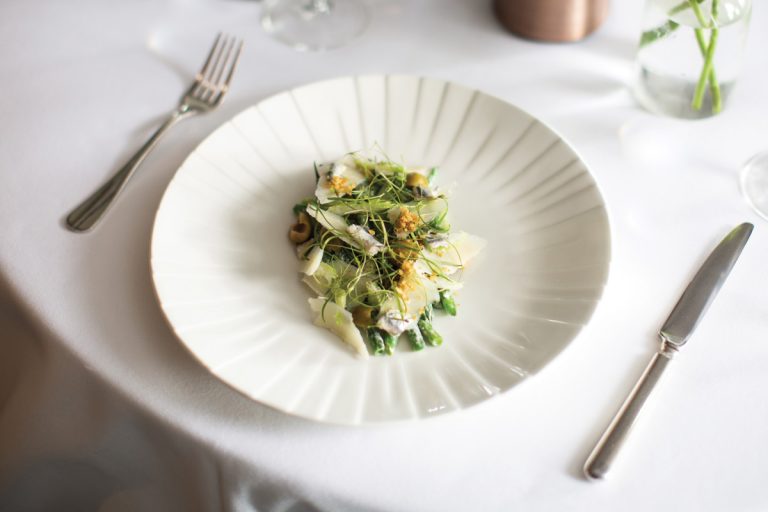
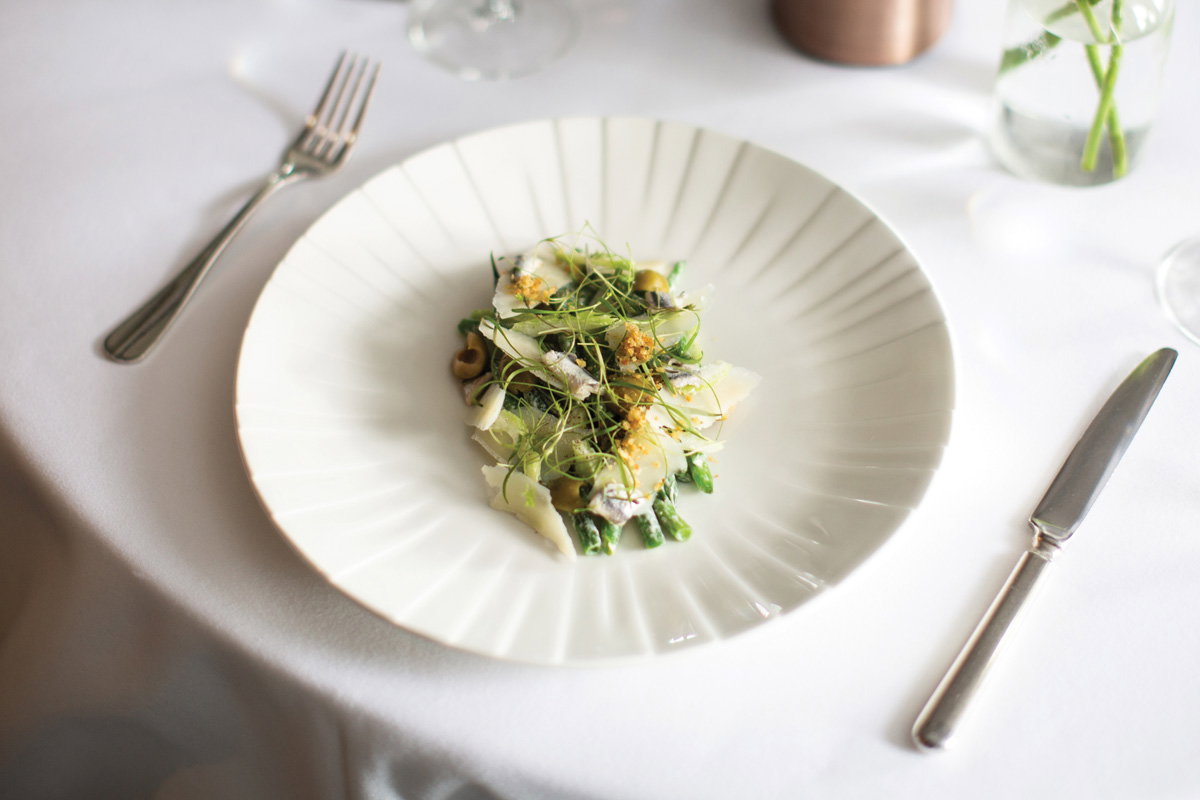
My second visit, thankfully, felt lighter and more confident. I skipped the dining room and sat at the bar, a move I now recommend. The service is much better and a better experience overall. The tone there is more hushed, more comfortable, and the menu a month later finally showed flashes of Harrison’s personality. But even beyond that, there were standouts I want to go back for. Namely, his green bean Caesar, which is excellent. It’s a clever play on texture, featuring bright, crunchy bites of celery and microherbs, including tarragon. It was the kind of salad you think about after the meal is done. The cabbage roll stuffed with duck confit is also enjoyable, a nostalgic nod dressed in new clothes, equal parts rich and theatrical. The flavors were Peking duck meets Polish grandmother. The food soothed my soul more this time.

There’s no denying Harrison’s technical talent and appreciation for ingredient-driven cooking. You can see glimpses of that in the menu, such as the lemon sole with shiitake and caper sauce. What’s missing, for now, is the confidence to break free completely. The food is careful, sometimes too cautious, as if the ghost of Buckhead fine-dining past is still looking over his shoulder.

I am rooting for Harrison. You sense his reverence for what Aria has meant to Atlanta, but he needs more freedom than is reflected on the menu at the time of writing. The dishes that moved the needle the most were those that broke the mold.

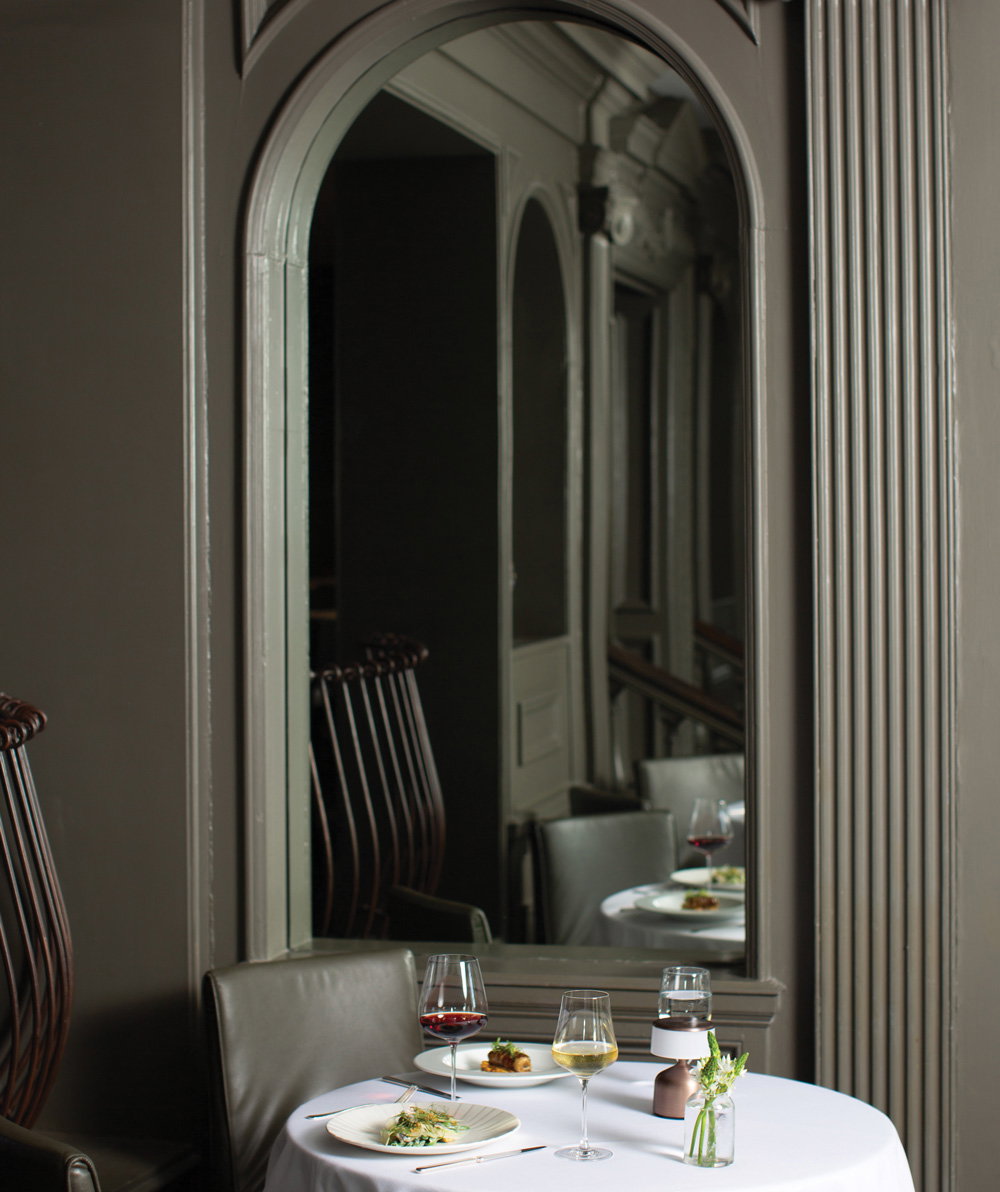
Seating in the Aria dining room

Photograph by Martha Williams

When Aria first opened, it was a different time, when fine-dining restaurants were abundant in Buckhead. Aria offered sophistication and warmth. It was where you went for anniversaries and celebrations or to feel as if you’d arrived. But it became too static, and this is its chance to finally evolve. That said, evolution doesn’t happen overnight. Aria is undergoing visible changes, with new china, glassware, and subtle cosmetic updates, all of which are good signs.

Aria has all the right ingredients: an experienced kitchen, a talented front of house, and a loyal audience willing to pay for the experience. What it currently lacks is a clear sense of risk. That could be the natural tension of a restaurant in transition that’s trying to respect its legacy while daring to redefine it. But Atlanta doesn’t need another temple to nostalgia. It requires restaurants that reflect our current state. Aria could do that—if it just got the nerve.

This article appears in our December 2025 issue.
Review: The Nan Thai mother-daughter duo redefines fine dining

0
Mango sticky rice
Mango sticky rice (Nan Thai Fine Dining, Midtown)

Photograph by Martha Williams

The first bite of Thai food I ever had was at Midtown’s Tamarind restaurant, and it began a love affair. Tamarind—widely credited with introducing Thai fine dining to Atlanta—was opened in 1998 by Chef Nan Niyomkul and her late husband, Charlie Niyomkul. That experience opened the door to a cuisine I now love so much that I cook Thai recipes at home with a wok.

Chef Nan remains a towering figure in Atlanta cuisine with her signature restaurant, Nan Thai Fine Dining, at the corner of 17th and Spring streets. But there’s a new Nan Thai in town, behind the St. Regis hotel in Buckhead, where Chef Nan’s daughter, DeeDee, is walking in her mother’s footsteps. The restaurants have similar names, similar menus, and the same core aesthetic: fine dining, Thai style. DeeDee Niyomkul originally opened the location as Chai Yo Modern Thai. Late last year, she rebranded it as Nan Thai Buckhead and worked with her mother to design the menu. Comparisons are inevitable, but the two restaurants—at their essence—are Nan Thai South and Nan Thai North.

My love affair with Thai food is a long-distance relationship (I’m planning my first visit to Thailand next year), so I get my fix through home-cooked meals and such restaurants as Tum Pok Pok. Since Tamarind, I hadn’t had another Thai fine-dining experience, so with Nan Thai Buckhead freshly opened, it seemed to be an opportune time for a refresher.

The restaurant made a great first impression. We were met at the door by a vivacious hostess and a warm “Sawasdee ka,” the traditional Thai greeting. The decor is Buckhead chic, with dark-tan fabrics and rich, dark wood anchoring the space. On the wall above my table hung a huge Burmese kalaga—an appliqué tapestry with an elephant motif brought from Thailand.

Coconut-lemongrass cocktail (Nan Thai Buckhead)

Photograph by Martha Williams

The cocktail we chose was a Chai Talay: vodka, coconut cream, and lemongrass topped with sprigs of Thai basil. It was a perfect drink for a sticky-hot Bangkok (or Atlanta) night, refreshing and not overwhelming. Aside from an oversauced crispy red snapper, the food was conceived with creative flair and well executed. A standout was Tom Kha Lobster Soup (Chef DeeDee used the dish to famously “beat Bobby Flay” on the Food Network show of the same name). The Larb Kai was also a star—it had just the right blend of minced chicken, herbs, onions, and spices. We told our server we wanted enough heat to bring a sweat, and the kitchen delivered.

But it was Chef Nan who inspired my passion for Thai food, and after the meal, I felt compelled to also eat at Nan Thai Fine Dining. Even though it’s been open nearly 25 years, I’d never been there, and I was unprepared for the “experience” I was about to have. Stepping through the front door was like taking a 9,000-mile step to enter a restaurant in the heart of Bangkok. I was immediately greeted by multiple “Sawasdee kas,” and the staff was almost all Thai.

The restaurant has been described as a palace, and it is. The open dining room is two stories high, and the white-and-beige color scheme says “elegance.” At one point, I spilled some fish sauce on the white tablecloth. Once that course was cleared, my server showed up with a white napkin, opened it up, and spread it out to cover the stain.

Larb KaI from Nan Thai Buckhead
Larb KaI (Nan Thai Buckhead)

Photograph by Martha Williams

beef short ribs (Nan Thai Fine Dining, Midtown)
Beef short ribs (Nan Thai Fine Dining, Midtown)

Photograph by Martha Williams

I started with a Mango Mai Thai: Don Q Rum, triple sec, mango, orange, pineapple, and grenadine. It was as refreshing as the Chai Talay in Buckhead, sweet and fruity with citrusy tones. This version of the larb salad included a section of cabbage on the side (a perfect cooling element for the heat of the dish) and a carrot peel shaped into a flower.

Chef Nan stopped by my table, and I told her I’d eaten my first Thai food at Tamarind. She smiled and thanked me; we chatted for a moment, and then she moved to greet another table before going back to the kitchen. A while later, as I took a succulent bite of slow-braised beef short ribs in green curry (I wanted extra heat, so my server suggested substituting in the green rather than the milder Panang version on the menu), out of the corner of my eye I saw movement to my left. I glanced over and it was Chef Nan, next to me bending down to pick up a small herbal leaf that had fallen on the floor.

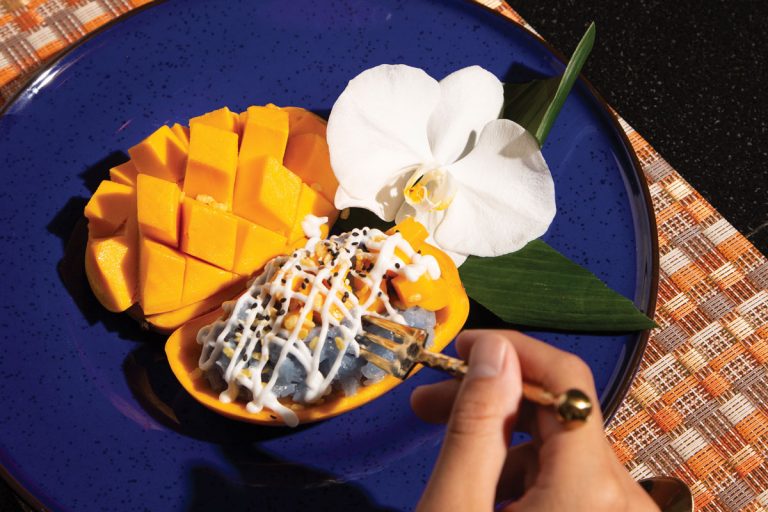
I ended the evening as I had started: with mangoes. My server suggested the mango with sticky rice dessert because it’s a seasonal item on the menu. The fruit was sliced and presented in what looked like an abstract goldfish shape, perfectly ripe and served at room temperature to accentuate the flavor. The sticky rice was infused with coconut cream and tinted blue with butterfly peas, a traditional Thai technique to produce a slightly floral flavor.

A parked tuk tuk
A parked tuk tuk (Nan Thai Fine Dining, Midtown)

Photograph by Martha Williams

Both restaurants are excellent. When it comes to mother and daughter, the mango didn’t fall far from the tree. But Nan Thai Fine Dining is more than a meal; it gave me the illusion that I was no longer in Atlanta. It was a shock to my state of culinary nirvana when I walked out and saw Midtown sprawled out before me. Then I turned to my left and smiled. A bright-red tuk tuk was parked in front of the restaurant, as if all I had to do was hail it, and it’d take me any place I wanted to go.

This article appears in our November 2025 issue.
Review: Yeppa & Co. is finding its stride on the Eastside Beltline

0
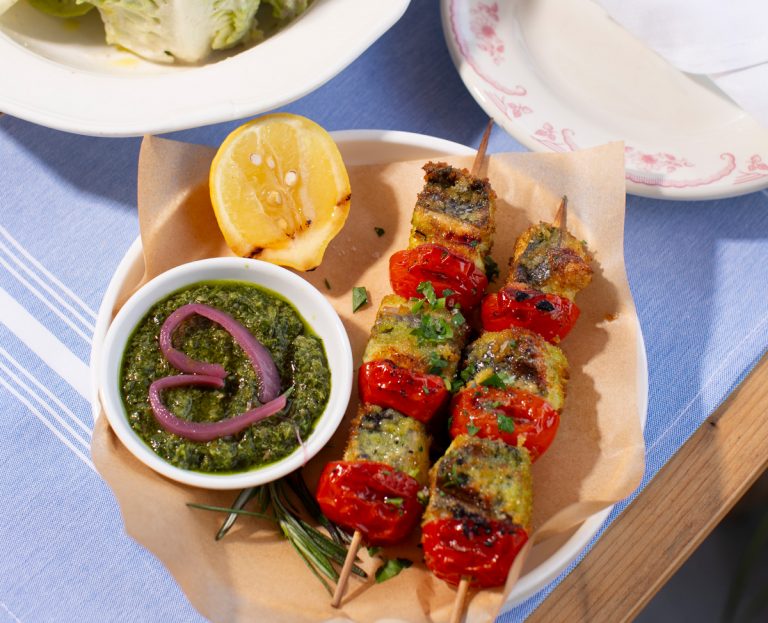
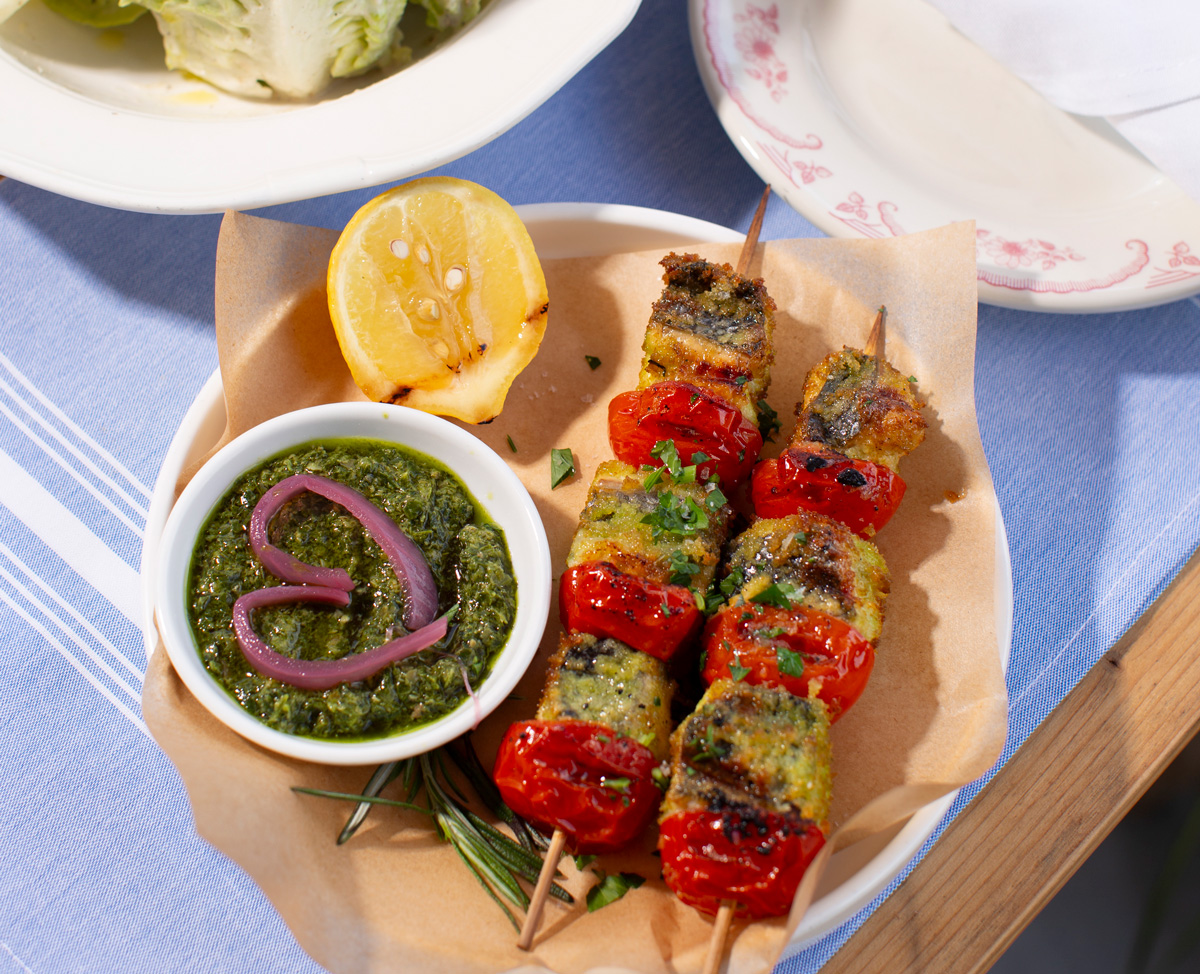
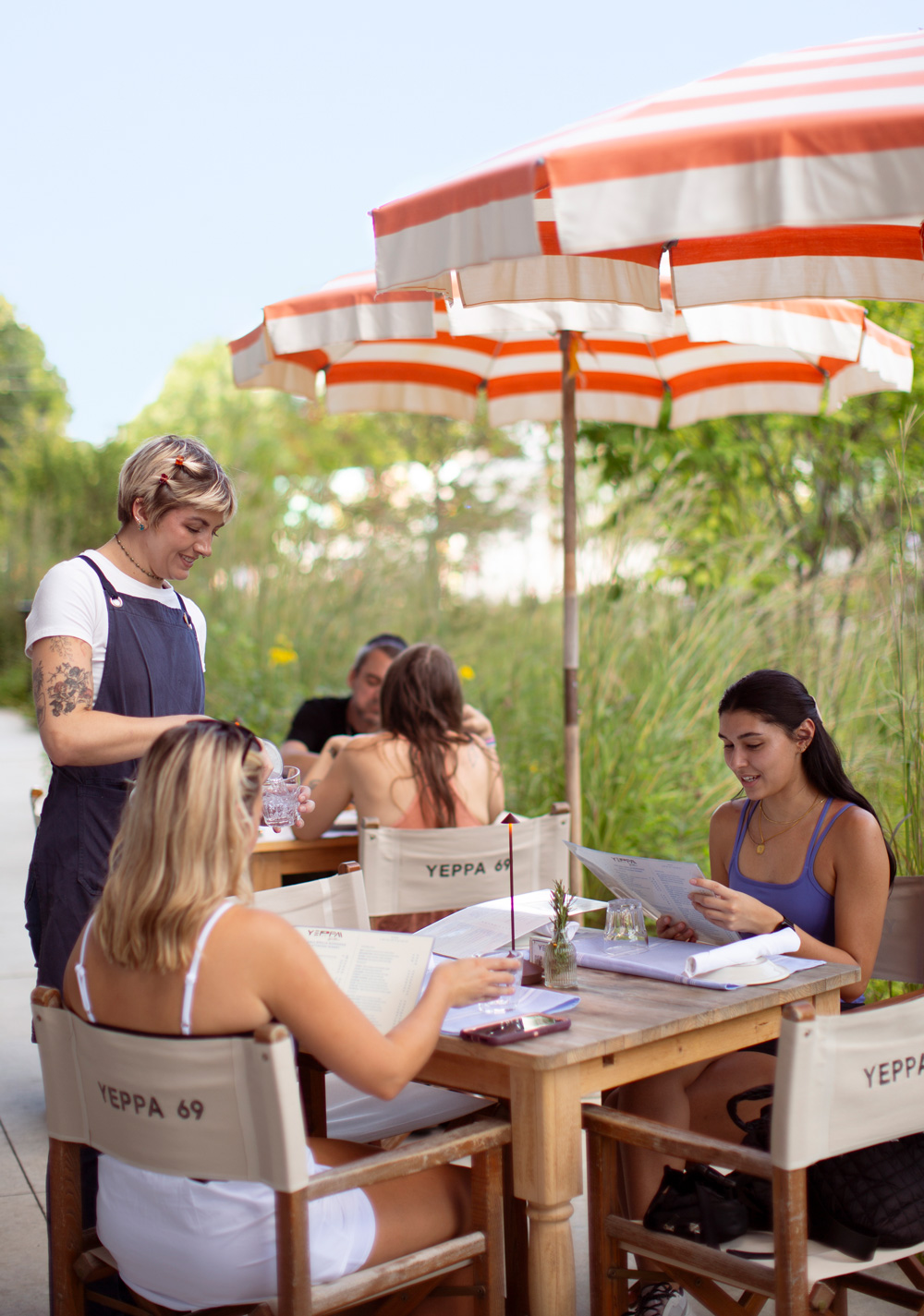
Sunny seafood skewers with salsa verde and charred lemon on Yeppa & Co.’s patio
Beltline views and sunny seafood skewers with salsa verde and charred lemon on Yeppa & Co.’s patio

Photograph by Martha Williams

One of the first things they teach you about opening a restaurant in culinary school: location, location, location. And is there a better location in Atlanta than the Beltline? No other place has as much foot traffic in our otherwise car-dependent city. A restaurant here can become a hot spot—if its food and space deliver.

Yeppa & Co.’s new Beltline outpost has been open since May, but it seems as if it’s been there much longer—perhaps because of the name recognition from its wildly successful Buckhead Village location (an offshoot of Storico Fresco fame). The restaurant’s name pays tribute to a beloved figure from cofounder Stephen Peterson’s childhood: a family friend and restaurateur known for his charisma and for shouting “Yeppa” when excited. Peterson and co-owner Pietro Gianni, a former race car driver, set out to bring Italy to the bustling pathway.

Situated on the Eastside Beltline, around the corner from Krog Street Market, Yeppa features multiple seating areas and a massive U-shaped bar in the center. From the moment you walk in, the vibe is pure, unadulterated Italian charisma. The space is ample, featuring an open kitchen as well as seating both indoors and out on the expansive patio, which comprises most of the restaurant. White curtains with printed outlines of blue fish conceal the backstock of liquor bottles on the bar. The decor leans into a distinct, seaside-inspired theme, a sharp contrast to the sleek, neon, F1-racing aesthetic of Yeppa’s other location in Buckhead.

The most coveted real estate is the patio. Even on a hot Atlanta day, it’s a pleasant place to be, thanks to industrial-sized standing fans and a steady breeze coming off the Beltline. The view of the bustling trail is lovely, and the scenes of Italian beaches and courtyards projected onto a wall add to the transportive feel. A reservation is strongly recommended, but there is a communal table on the patio and a bustling bar for walk-in guests.

My visits to Yeppa’s new home were a study in contrasts, particularly when it came to the service and drinks. On one visit, we ate inside, and the service was attentive and polished. Our server even crafted a limoncello spritz for me off the menu when I found that others we ordered (including the much-lauded espresso martini, presented in a fancy, towered carrier when ordered in multiples) were too sweet. The service was noticeably slower on the patio during another visit, and the noise level made communicating difficult. But the patio’s vibe and chilled glasses of the P’s Rosé, a mineral proprietary rosé from Emilia-Romagna, softened the annoyance. Our drinks were significantly less sweet during our second visit; the passion fruit margarita was a highlight because it was the one drink I tried that wasn’t cloying.

Some people enjoy the patio seating under orange and white striped umbrellas

Yeppa distinguishes itself with its food, and the kitchen operates at a high level for such a new restaurant. Among the appetizers, the prosciutto and melon made me feel as if I were knee-deep in an Italian summer in some coastal town. Slices of prosciutto crudo di San Daniele, pink and vibrant and unmarred by oxidation, were draped like throw blankets over cantaloupe wedges that were perfectly firm and fragrant. The grilled fish spiedini (skewers) were smoky, tender, and remarkably fresh. The meatballs were tender, perfectly seasoned, and balanced by just the right amount of acidity from the tomato sauce. The tuna carpaccio delivered a fun twist on a seaside classic, with a finely chopped mix of pistachios and briny capers adding complexity and crunch. The cacio e pepe salad, though wetter than Buckhead’s version, proved to be a bold, peppery, and satisfying alternative to a Caesar. It’s a salad trend I love seeing on menus across the country.

Pasta and focaccia pizza offerings take center stage, all of which are made in-house. The lasagna was thankfully free of the ricotta overload that often bogs down towering American versions. This was more like lasagna you’d find in Italy, tightly packed with silky layers of pasta and intensely flavored Bolognese. The same robust Bolognese sauce was the star of the show when served over twirled ribbons of tagliatelle in another dish. The cacio e pepe pasta was less successful; it was so rich that eating more than a few bites was challenging. This classic pasta sauce should rely primarily on starchy pasta water, Pecorino Romano cheese, and ground pepper for its velvety emulsion, but chitarra pasta seemed weighed down by an excess of cheese and fat.

My favorite bite was the margherita focaccia—a masterclass in simplicity and execution. It arrived with a crisp, greaseless crust that was airy and light, fresh whole basil leaves, exceptional mozzarella that was milky and round on the palate, and a perfectly balanced tomato sauce. There are fewer meat and fish options than pasta dishes, which make up a large portion of the menu. Expect such standards as branzino and tagliata di manzo (steak). The boneless steak, although well-cooked and flavorful, was a surprisingly modest portion. It was tasty, but there are better items to order on the menu. Desserts stick to Italian comfort classics: scoops of assorted gelato and a warm, homemade focaccia slathered with chocolate spread.

Yeppa’s Beltline location is not perfect because some dishes and service could use fine-tuning, but it’s already a huge hit, and I loved being there. I’ve already asked friends to go back to the patio for a glass of rosé and a plate of pasta. If planning a return visit is not a good indication of a restaurant’s success, I don’t know what is.

This article appears in our October 2025 issue.

Review: Ryokou wants to take you on an edible trip through Japan

0
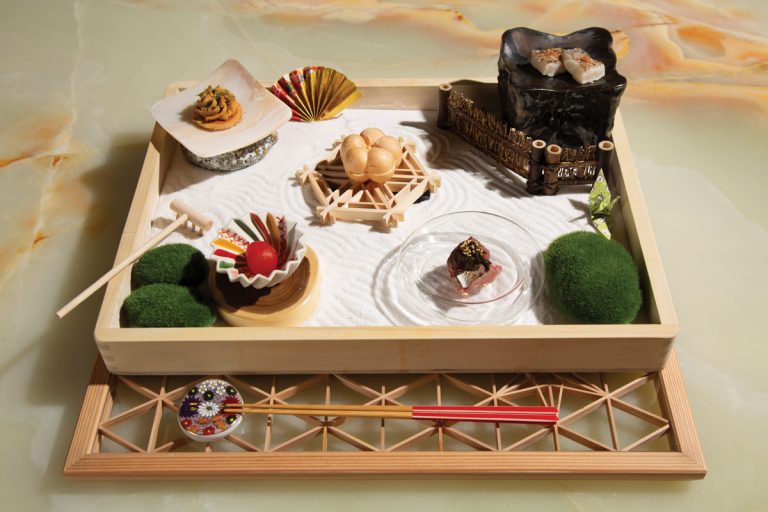
A personal “Zen Garden” offers each diner a few moments of meditative play before dishes arrive.

Photograph by Martha Williams

Atlanta’s high-end Japanese scene didn’t build slowly. It landed fully formed right after Covid, which is a dining prediction I could not have foretold given the intimate nature of most omakase dining. In just a few short years, the city has evolved from having a handful of high-end Japanese restaurants to boasting multiple Michelin-starred omakase restaurants, which offer a fixed menu the chef chooses. Those starred establishments are: Mujo, Hayakawa, Omakase Table, and O by Brush. What was once a niche genre has become a defining part of the city’s fine-dining culture, taking over last year’s Michelin awards to the chagrin of some people. Not me.

Along with that recognition came the prices. There are numerous omakase places where someone can eat for less than $150, but a typical high-end experience now starts around $200 per person before drink pairings, pricey add-ons, and service charges. Hayakawa is $315. At that level, we diners expect more than just the best seafood and precision. Sure, the nigiri is expertly made, the uni luxurious, and the toro glistening with perfect marbling. However, after a while, everything starts to blend, and the meals can sometimes feel interchangeable.

Ryokou, a new kappo-style restaurant in Adair Park (just south of Mercedes-Benz Stadium) is owned by chef Leonard Yu who also owns Omakase Table. The restaurant builds its identity by sharing its passion for knowledge and exploration. Kappo means “to cut and to cook” in Japanese. Guests can expect a multicourse meal crafted by chef Paul Gutting, featuring both cooked and raw items. Hidden inside the Abrams Fixtures development, the restaurant is hard to find without help, and we wandered around before a suited staff member ushered us through a series of doors. The industrial exterior gave way to a calm, warm space with just the right amount of exposed brick, an onyx counter, and a glowing cabinet of twinkling bottles of illuminated liquors. It felt like a hidden secret, and the feeling echoes Ryokou’s theme. The name means “travel” in Japanese, and the restaurant leans into the concept, but it’s not heavy-handed.

Beverage options include two sake pairing tiers along with a small selection of sakes by the glass and the bottle, cocktails, wines, one beer, and curated teas. A tea pairing is also in the works, which is delightful for guests who would rather avoid the sugar in mocktails. A flute of junmai sake adorned with cherry blossoms was elegant and floral. A sparkling tea from Copenhagen, with soft acidity and notes of hibiscus, was so good that I wished I could take a bottle home to drink on a hot summer day.

Rather than a traditional sushi-only omakase, Ryokou offers an eight-course kappo-style tasting menu (versus the 20-course meal at Omakase Table) with optional add-ons, such as shaved truffles, that explores Japan’s regional cuisines, allowing you to experience each dish as if you were on a culinary road trip. Each dish focuses on ingredients and techniques from a specific prefecture, served alongside an explanation—a Yu hallmark.

Our journey began in Kyoto with a course featuring a personal “Zen Garden” tray complete with sand and a mini rake for you to play with before the dishes arrive. It was our favorite course because, rather than wait, you’re given something interactive. Suddenly, servers start placing each dish in the open spaces on your tray. Tiny dishes and shells filled with delicacies from the sea—such as otoro and ikura, grilled tachiuo, creamy ankimo—and seasonal pickles create a landscape to explore.

It’s a quiet and delightful start. An explanation accompanies each course, detailing the origin of the ingredients, their importance to that part of Japan, and how they’ve been prepared. Hokkaido follows with a cold seafood trio of kuruma ebi (shrimp), nama uni, and scallop, paired with mozuku seaweed. Tokyo’s influence is evident in a classic nigiri trio of tuna: chutoro, akami zuke, and otoro; each piece is presented with meticulous balance and precision.

The grilled saba from Oita, served with maitake mushrooms, sweet onion, and lime, was one of the most memorable dishes of the night. It was simultaneously smoky, earthy, and bright, and the bites of sauced saba and onions, soaked to lessen their spiciness, were a change from having it as nigiri. Another crowd-pleaser, this time from Nagasaki and Niigata, was a gorgeous bowl of thin capellini noodles dressed in kegani crab miso and topped with Kaluga caviar.

A delicate clam broth made from two types of miso from Fukuoka reset the palate before the final savory stretch: a perfect handroll filled with negitoro (chopped fatty tuna and scallions) and rice studded with uni. The smokiness of the sukiyaki course featuring Wagyu strip, ikura (cured fish eggs), and shimeji mushrooms was deeply comforting without being heavy. Dessert was not listed but arrived quietly. The custard with a gelee topping was a soft, fruit-forward finish to an intentionally crafted meal.

Service at Ryokou is conversational and inviting. Each dish is introduced with context—where it comes from and why it matters. It’s not just performance; it’s education. Unlike some omakase restaurants that expect guests to sit silently, Ryokou encourages curiosity and conversation. Questions are welcome, and the staff is attentive without hovering. Gutting works quietly behind the counter and only occasionally narrates his own experience. However, his food speaks for itself, and the beverage director leads the evening.

The pacing between dishes was generally smooth, although a few pauses between courses lasted longer than necessary for this diner, who gets antsy after an hour sitting on a stool. Still, the evening never lost momentum, and the meal felt like a thoughtfully mapped journey. And it should, because it is one of the most expensive nights out in Atlanta. My tab easily hit $600 after our meal for two, including two glasses of sake, two beers, and the tip, which is automatically added. This is not an everyday occurrence, although I overheard one diner remark that they’d already visited multiple times.

As Atlanta’s upscale Japanese dining scene grows more polished and expensive, Ryokou offers something that is becoming increasingly hard to find: a point of view. It doesn’t try to outdo its peers, and it is not about chef worship. It’s more like hanging out with a friend who is a total nerd about Japanese food and wants to tell you about it while feeding you. That passion, combined with its respect for tradition and precision, is what makes the biggest impression. There are excellent omakase restaurants and sushi experiences for less. And Yu, now a bona fide restaurateur, even has a new “entry-level omakase experience” called Neko (meaning “cat”) in Omakase Table’s former space in West Midtown for $150.

This article appears in our September 2025 issue.

Follow Us

69,386FansLike
144,836FollowersFollow
493,480FollowersFollow

NEWSLETTERS