


Photograph by Dominique Baker/ @thedronegoat
When the fire alarm went off, Kala Millian Scott was in her apartment unit on the top floor of the Reserve at LaVista Walk, just below the clock tower. She had just hopped in the shower after finishing an Uber Eats delivery shift that she worked after her day job.
Between the screeches of the fire alarm, Scott could hear her two sons, Kaleb, 9, and Kaden, 7, playing in the living room. Staying in the shower wasn’t exactly irresponsible of her at the time—it was the third alarm at the complex that week. False fire alarms at the complex were so common that residents had learned to shrug them off.
When the sounds of her sons roughhousing grew louder, Scott stepped out of the shower and wrapped herself in a towel. “Quit it! We have neighbors,” she shouted into the living room.
“That’s not us,” Kaleb said.
“Momma is losing it,” Kaden said.
Scott then realized the noise was coming from the hallway. It sounded like people running.
She looked at her phone, and she had several missed calls from her neighbor, who watched her sons during the day. Another call came in, and she picked up. “You need to get out,” yelled her neighbor, who had already evacuated onto LaVista Road. She could see the fire above Scott’s apartment.
“I froze, thinking about everything I needed to grab, for probably 30 seconds,” Scott said. “To this day, I ask myself, Why didn’t my fight-or-flight skills kick in right away? Why didn’t I grab anything?”
✚ ✚ ✚
On that cold night of November 10, 2023, an Atlanta apartment complex went up in flames. The Reserve at LaVista Walk was at the corner of LaVista and Cheshire Bridge roads in the Lindridge–Martin Manor neighborhood, a small pocket between Buckhead and Midtown.
It was built in 2007 amid a boom of construction to house Atlanta’s intense population growth. The Reserve labeled itself as luxury apartments on the cheap. Many of the residents were families, students, and young adults trying to find their footing in the city.
The complex was constructed as two podium buildings (also known as a five-over-one) with a stone first floor for businesses and four wood-frame stories of apartments above. The Reserve’s beige facade had a prominent clock tower on the top floor that made it look like a landmark. Its apartments wrapped around a patio with a pool, a fountain, and a gazebo.
There was also a four-level parking deck adjacent to the main building of apartments, with its top floor connected to the apartment complex’s rooftop, which was meant to be off-limits. In a civil lawsuit filed by residents, they alleged that they had reported multiple rooftop parties and instances of fireworks set off there to the leasing office, but no actions were taken to restrict access—and, indeed, the fire started when a resident set off fireworks on the roof for her birthday.
Those birthday fireworks turned into a three-alarm fire that burned through building one’s third and fourth floors and left the first and second uninhabitable. The second building was also unlivable due to smoke and water damage. The fire displaced the Reserve’s more than 300 residents. For a day or two, the blaze was all over the news: Another Atlanta apartment complex had burned to the ground.

Photograph by Dominique Baker/ @thedronegoat
The Reserve’s charred facade remained in the public eye for months after the fire because of its inconvenience: The fire rendered the structure unstable, putting it at risk of collapsing into the street. The Atlanta Fire Rescue Department shut down LaVista Road, which runs east toward Druid Hills and Emory University, for 166 days.
Over the past two years, Atlanta magazine has interviewed more than a dozen people who are either connected to the events at the Reserve or involved in the ongoing federal lawsuit residents filed against the complex. The magazine has also obtained depositions, plaintiff complaints, defendant responses, and Atlanta Fire Rescue incident reports to establish a narrative of the fire. In the lawsuit, residents allege the apartment complex neglected resident safety and failed to repair and maintain the Reserve and thus is responsible for the failures that led to the fire’s destruction of the complex. Silverpoint, the ownership behind the Reserve, denies the residents’ allegations but has refused to comment on specifics.
It is evident that the City of Atlanta’s fire prevention processes failed. The already documented underfunding of Atlanta Fire Rescue and the notorious Atlanta water main issues also played out in real time during the response to the Reserve’s fire.
The city’s failings are not unique to the Reserve and have contributed to other apartment fires that have displaced nearly 1,000 Atlantans in the past five years.
✚ ✚ ✚
Sometime before 10:30 p.m., Charnelle Gunn hopped onto the roof of the Reserve with Robert Stokes to celebrate her 35th birthday. As Gunn live-streamed on social media, a small fire started on the roof when they set off fireworks. According to the lawsuit, a resident called a leasing agent, Deyse Mejia, to notify her of the fire. Mejia and another employee, Jennifer Sequeira Tercero, rushed to the roof. Tercero brought a small fire extinguisher from her apartment and attempted to put out the fire, which at that point was a small ring of flames.
The lawsuit alleges that Tercero had never received the required training from the complex on how to use a fire extinguisher. She also was not informed where other extinguishers were at the complex. When her fire extinguisher ran out, she rushed to find another but couldn’t locate any nearby. An inspection following the fire found that there were no fire extinguishers in several storage cabinets on the parking deck or the roof, which is required by local, state, and federal law. The lawsuit alleges that if Tercero had located additional extinguishers, she could have put out the fire. (Tercero could not be reached for comment for this story. Mejia declined to comment.)
At 10:30 p.m., 911 was called. At 10:43 p.m., Mejia sent a video of the fire to a leasing office group chat, showing a ring of flames on the roof. According to the lawsuit and Atlanta Fire Rescue’s report, the fire suppression system did not automatically activate as it should have, so neither the alarm nor any sprinklers were initially triggered.
More than a year before the blaze, according to the lawsuit, the Reserve had failed an inspection of its fire suppression system. There were faulty fire alarm sensors and two broken control valves, which prevented adequate pressure from reaching the building’s sprinklers. Normally, this would result in fines or a shutdown of the building until the proper fixes were made. According to the lawsuit, the property brought in Century Fire Protection to make repairs, but the company halted its work when the Reserve failed to pay an invoice to the contractor. (Century Fire Protection declined to comment for this story.)
Multiple residents told Atlanta magazine that they complained to the leasing office about the halted repairs and exposed sprinkler pipes. In October 2023, one month before the fire, a resident, Shanaya Dessin, wrote in a Google review that the “absence of a working sprinkler system” had “put the entire building at risk of being engulfed in flames within minutes.”
At 10:43 p.m., Atlanta Fire Rescue arrived and noted that the fire alarm was not sounding. Three fire trucks initially responded, with teams of firefighters immediately assigned to the roof via the parking deck. There, they saw that the fire had already entered a fourth-floor apartment unit.
Atlanta Fire Rescue Captain S. Levell Mahone initially called for an offensive strategy against the fire, meaning direct action to extinguish the fire at its source. Firefighters attempted to connect to standpipes (internal water access in the building) on the fourth floor and the parking deck, but at 10:46, they reported that both were dry. They then tried to tap the City of Atlanta water main through the closest hydrants on LaVista Road, but those didn’t have enough pressure to fight the fire.
Mahone called for more responding trucks. One of the first to answer was Truck 15, which was dispatched but broke down from a transmission malfunction en route to the scene. This caused further delays.
By then, the fire had spread throughout the apartment roof’s attic. Mahone was forced to call off the offensive and switch to a defensive approach, one focused on containment.
Residents were unaware of the fire until an alarm, which the lawsuit alleges a leasing agent manually pulled, sounded inside the complex at 10:53 p.m. Many residents ignored it, thinking it was just another false alarm.
✚ ✚ ✚
After freezing up for a second in her bedroom, Scott came to. She threw on a dress and slides and grabbed her purse. She heard banging on her door and a firefighter yelling, “Get out now! Come on, get out!”
Scott and her sons had moved in July 2023 from Gwinnett County to the Reserve for a new start. After experiencing bullying in Gwinnett, her sons started at a public school in Buckhead; Scott had just opened a new salon and spa, Millian Styles, in Lilburn. Scott remembers enjoying the Reserve for those first few months, but problems such as false fire alarms and homeless people in the halls were becoming concerns.
Scott rushed her sons out of the building and joined dozens of other residents looking up from the sidewalk of LaVista Road. Her wet hair dripped conditioner on her shoulders, and she hugged her sons for warmth.

Photograph by Dustin Chambers
Ethan Manotas, 19, lived on the fourth floor too. Manotas had just moved into his apartment that July, after leaving his parents’ house. He had taken off that weekend from work to hang out with his roommate, Ash.
That night, Manotas was on his phone and got up to go to the bathroom when he saw red-and-blue lights coming from his bedroom window. He opened it, poked his head out, and saw hundreds of people outside. A firefighter on the ground spotted Manotas and pointed his flashlight at him.
“Get out now!” the firefighter yelled. “Get you and your animals out!”
Ash put their cats in a cage and gathered up their documents, while Manotas grabbed their jackets and a purse. As they rushed down the stairs, people pushed past them, heading back up to their apartments to grab more of their belongings.
Manotas, wearing a big fur coat, and Ash joined a restless and growing crowd of residents outside. “Everyone was clueless, and when anyone asked questions to the firefighters or police, they said nothing,” Manotas said. “They just told us that we had to move across the street because it wasn’t safe next to the building.”
When Atlanta Fire Rescue moved the crowd to the Publix parking lot across the street, Manotas had a better view. He saw black smoke and sparks of flames coming from the roof, just above the clock tower.
Vincent Leija, 24, was a leasing agent who lived in an apartment unit at the Reserve. When the fire started, he was at a church event in Duluth with his friends, and he received a FaceTime call from his neighbor, who showed him flames spreading on the roof. “I was freaking out,” Leija said. “I was flying down 85 and getting calls from everyone I knew in the building.”

Photograph by Dustin Chambers
The Reserve, at the time, was owned by Silverpoint, a New Jersey–based property management company with properties throughout the country. It owned more than a dozen modern mid-rise apartment buildings in Atlanta, including The Alexander at the District in West Midtown, Creekside Apartments in Doraville, and Chatsworth Apartments in Chamblee. In 2021, according to Fulton County property records, Silverpoint purchased the Reserve at LaVista Walk for $90 million and started a company called Avenium to manage the complex.
Silverpoint pitched the location of the Reserve as ideal for investors. In an investor video, Yakov Stein, the founder of Silverpoint, called the complex an “A-plus-plus asset” for a plan to “increase rents and force-appreciate” the property, and said that “from a deferred maintenance perspective, these units can survive another 10, 15 years the way they are.”
Lawyers for the residents allege this was Silverpoint’s wider playbook. At Silverpoint’s Atlanta complexes alone, there have been six lawsuits, including a complaint of negligent security leading to a wrongful death.
Security was a repeated complaint at the Reserve. According to the lawsuit, the property manager at the Reserve—Melvin Coleman—wanted to add seven-day-a-week security, but Silverpoint declined to provide the funds for it.
Fire safety was another issue brought forth by residents. In the summer of 2022, a car had crashed into the Reserve and hit pipes that operated the fire suppression system, causing flooding from control valves and damaging fire alarm wiring. The lawsuit alleges that Avenium never repaired them and instead secured them with a bike lock.
Leija moved from San Antonio to Atlanta in January 2023 to train new Silverpoint leasing agents for the company’s complexes in the area. His home base was the Reserve. “I said, ‘Hell yeah.’ I get a little bit more of a city life with a free spot to stay,” Leija said. “But when I first got there, the property had so many vacancies, maybe 50 percent occupancy, so they made my mission to lease the Reserve up.”
Leija soon discovered practices that he disagreed with: The lawsuit alleges Avenium leasing agents would misrepresent a “renters’ insurance policy” to sell to new signees. Residents often thought the policy covered their personal items, but it covered only damage to Avenium’s property. Leija says he steered tenants away from this insurance.
After living in the building for a few months, Leija dealt with the same issues other residents did, but even more closely as the only live-in agent. False fire alarms were constant, and according to residents, some hallways had holes in the wall where sprinkler repairs had started, but were left unfinished. He always walked the property before he went to bed to make sure property gates were closed, as homeless people often entered the building. Leija said that when he brought up these issues to one of the Reserve’s property managers, nothing was done.
“I would get shut down because moneywise, Avenium had different priorities instead of repairing something that was important,” Leija said. “Money was going to remodels, common area furniture or decorations, just to make things look nice.”
Because he lived at the Reserve, Leija was the one who often dealt with the false fire alarms. The closest fire station on Cheshire Bridge would respond within 15 minutes to turn off the alarm. However, if there were multiple alarms, those waits for Leija turned into an hour or more.
When he arrived at the Reserve on the night of the fire, he spoke with Mejia for a minute and then ran into the building. “I wanted to make sure my neighbors were safe,” Leija said. After knocking on doors on the fourth floor, he also checked on his own apartment. “But I didn’t grab anything because it seemed like the fire department had it under control.”
He says he exited the building and spoke to firefighters on LaVista Road, who told him the sprinklers weren’t going off. His next 30 minutes were a whirlwind. Fire trucks blocked the parking garage, where residents tried to flee with their cars, so Leija went car to car to tell people to leave their cars behind and evacuate the garage. He also went into the leasing office with a police officer to access security footage. “We saw immediately what happened and who started the fire,” Leija said. “Which was crazy because I walked by her after I parked my car.”
Charnelle Gunn and Robert Stokes were arrested on the scene. Both were charged with second-degree arson, and on November 12 this year, Gunn entered a plea deal of 10 years of probation and restitution of $500 per month. In Stokes’s case, the state filed a nolle prosequi motion on January 5 to dismiss all charges. Terrell Dark, an attorney for Stokes, says, “Every aspect of the evidence showed . . . Stokes committed no crime and was merely there. While we understand the state, police, and fire agencies had a job to do, it is disappointing that it took this level of effort for them all to finally see what he has maintained at all times: He committed no crime and was just there.” (Gunn could not be reached for comment.)
Atlanta Fire Rescue first responders were evacuating every person and every animal from the apartments. One of the doors they knocked on was that of Atlanta Police Department Officer Maurice Chandler, who lived at the Reserve and joined firefighters to inform residents that there was a fire in the building. Chandler has been credited with saving many of the lives on the third and fourth floors, but he did not have time to grab his own belongings or his cat, who perished in the fire. (Chandler was honored in March 2024 for his heroic actions by Mayor Andre Dickens.)
After trying unsuccessfully to source water from the building and the closest hydrant, firefighters discovered another nearby hydrant that they could use to pump water into their hoses. Truck 21 was one of the engines that set up an aerial ladder to fight the fire on the roof, but it had to shut down operations due to a missing nozzle tip. This caused water pressure loss, and another truck had to replace it. According to the incident report, consistent water was finally on the flames “after an extended time with no water.”
At this point, the fire had spread throughout the third and fourth floors, but the firefighters now had it under control. Chandler’s cat was the only fatality; 17 residents were treated for smoke inhalation and minor injuries.
In a press conference, Atlanta Fire Rescue Chief Roderick Smith said that Truck 15’s transmission breakdown and the delayed fire suppression system “did not affect” the outcome. “It was a full response,” he said. “We went to three alarms, which ended up with upwards of 80 firefighters on the scene.”
That night, in the cold, Scott was told by building maintenance that her apartment was one of the first lost to the fire. She called her brother in Gwinnett, who picked up her sons, Kaleb and Kaden. With her kids safe, she slept at a friend’s house.
Manotas stayed and watched the fire spread toward his apartment. “Each apartment before ours would light on fire, and then the windows would blow out of the building,” Manotas said. “It looked like the fire was eating away at everything.” Before his parents picked him up to drive back to his family home in Lawrenceville, he saw his fourth-floor bedroom fill with flames and then explode like a bomb.
After helping firefighters, Leija watched the fire from the Publix parking lot. Dozens of residents came to him to ask him what to do, but he had no answers and was told to speak to no one. “All I could do was apologize,” he said.
A friend in Snellville offered his couch, and while Leija waited to be picked up, he pulled out his phone to take a photo of the fire.
“Everything finally hit me because I could see in the photo that my unit was on fire. I just moved here, you know, a fresh life, and after just months, it’s all gone. I just broke down.” —Vincent Leija
✚ ✚ ✚
Following the fire at the Reserve in November 2023, the complex’s more than 300 residents were displaced. Atlanta Fire Rescue Chief Smith called the fire “a complete anomaly” because it started on the roof and in the attic, which hindered Atlanta Fire Rescue’s response. Since 2020, however, there have been three major fires in Atlanta, counting the Reserve, that have started on the roofs of modern apartment buildings.
Across all three, there are recorded breakdowns of communication between the City of Atlanta and its contracted inspectors who are charged with ensuring buildings are up to code. There are also consistent examples at fire scenes of Atlanta Fire Rescue equipment failures and watershed management issues, such as low-pressure or faulty hydrants, that have inhibited firefighters.
Around noon in August 2020, the apartment complex Avana on Main, located across from the Lindbergh MARTA station, caught fire on or near the roof. The fire spread through the attic quickly. Like the Reserve, Avana was built in 2007 as a podium building, with four stories of wood-framed apartments. Investigators still don’t know what started the fire. The building was a total loss, and more than 200 residents lost their homes.
A now-settled lawsuit against the complex by the displaced residents alleged that an employee started the fire while working on HVAC units on the roof, which was accessible only to management. It also alleged the complex failed to update its fire protection systems after inspection turned up faulty fire alarms and expired fire extinguishers. According to court documents, the complex has denied these allegations and settled with many of the Avana on Main residents.
According to the lawsuit, the Reserve at LaVista Walk also failed inspections on its fire suppression system in February 2022 because of broken control valves and low water pressure. Atlanta Fire Rescue declined to comment on any specifics, such as the failed inspection, equipment failures, or the lack of pressure from the City of Atlanta water main. In an email, Atlanta Fire Rescue’s director of communication and media Ali Slocum writes, “While the investigation is complete, the adjudication process is not, so I am unable to answer questions at this time.”
In July 2024, Bell Collier Village, off Howell Mill Road, caught on fire during a rooftop party when a resident lit charcoal in a gas grill, which set fire to the rooftop deck. The apartment complex was built in 2015, also a podium building, with four stories of wood-framed apartments.

Photograph courtesy of Alyssa Greene and Elijah Ballew
As the fire spread, Atlanta Fire Rescue experienced several equipment failures that delayed putting out the fire. Firefighters initially assessed that if the first responding fire truck could have accessed water, they “would have [had] the fire out in a short amount of time,” but the hydrant they tapped was broken. Another responding truck came to supply water but was delayed by traffic. A third truck’s nozzle was broken and had to be replaced by another truck. Atlanta Fire Rescue evacuated more than 250 residents, and all apartments were rendered a total loss due to the fire’s spread and subsequent water damage.
When Matt Hinds-Aldrich started with Atlanta Fire Rescue as a senior management analyst in 2014 in its inspection section, he was tasked with modernizing how the department prioritized inspections and captured data about those inspections. During his tenure, he began to see fixable failures in the department’s process for inspections. State and local law dictate that each building should receive a fire inspection annually, but the inspectors Hinds-Aldrich spoke with guessed they got to only 10 percent of buildings every year.
“And it wasn’t like you did a different 10 percent the next year,’ he said. “It was the same 10 percent every year. It’s sort of an open secret for Atlanta and across the nation that budgets and personnel are just never enough to get to every single property.”
With data science graduate students from Georgia Tech, Hinds-Aldrich developed the Firebird network, an open source code that organized Atlanta building addresses and also helped identify high-risk buildings that need inspection. According to Hinds-Aldrich, following the publication of their research, a change in Atlanta Fire Rescue administration meant the Firebird’s inspection process was not fully implemented.
“It was disappointing but not surprising,” said Hinds-Aldrich, who left Atlanta Fire Rescue in 2016 and now works as a senior risk strategy lead at the American Association of Insurance Services. “Unfortunately, that sort of thing speaks to how fire departments do inspections and how spread thin personnel are.” Several data science teams have now used his code from Firebird to make data-driven inspection protocols for other cities, such as Pittsburgh and Baton Rouge, Louisiana.
In 2021, state law expanded fire inspections so that municipalities could contract third-party services to address departments’ shortcomings. For City of Atlanta inspections, once an inspector is licensed, payments are between them and a building’s owners. “Third-party inspections are a great thing so that more inspections happen, but what often happens is that things fall through the cracks,” Hinds-Aldrich said. “Third-party services lack an enforcement mechanism, and the whole process falls apart if they find an issue and don’t get that information to the city in a timely manner, which has always been a problem. A building can just say OK, and not make any fixes.”
Following the Bell Collier Village fire in August, Chief Smith announced a new Multiple Occupancy Task Force intended to address large apartment fires by identifying and reinspecting recreational areas of rooftops. The task force comprises 15 people to increase rooftop deck inspections from the usual schedule of two years to annually. However, this does not address apartment complexes, such as the Reserve or Avana, which don’t have rooftop decks ostensibly open to residents. An Atlanta Fire Rescue spokesperson said that inspections are underway.
Also in August 2024, the City of Atlanta’s City Auditor’s Office released a Fire Fleet Maintenance report taken from 2018 through December 2023 that found that nearly a third of the fire engines and ladders were beyond their life cycle. It found that on any given day, between two and 20 trucks were out of commission due to mechanical issues, and stations were sharing trucks.
The 2026 proposed budget includes a 12 percent increase in funding, to just over $181 million, to address some of these issues and acquire new vehicles and trucks. That still pales in comparison to similarly sized city populations. Memphis’s fire and rescue annual budget is $223 million; Miami spends more than $268 million a year; Kansas City spends $320 million.
✚ ✚ ✚
Residents of the Reserve say that after the fire in their building on Friday, they received no communication from Avenium until Monday, when they were told to come pick up their cars.
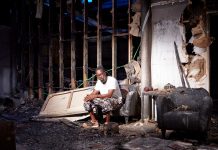
Scott returned that weekend to try to get her car from the parking deck. She stood in the parking lot waiting, as smoke still billowed from the interior of the building. The windows of Scott’s fourth-floor apartment were shattered, and behind them, where their bedrooms once had been, was nothing but sky.
She hoped to talk to someone about the renters’ insurance policy she signed with the Reserve. But Scott says she couldn’t find any Avenium managers or leasing agents to answer questions. News crews interviewed residents, some of whom were sleeping in their cars, and the Red Cross set up a station offering clothes in the Publix parking lot.
Manotas also came back on Saturday. “I needed my car to go to work,” he said. “But nope, I heard nothing on when I can get my car, nothing on my apartment, nothing on the rent I had just paid for that whole month.”
Avenium started a GoFundMe for donations to go to the residents. The page’s stated goal was $5 million, but the lawsuit alleges that residents have not received any of those donations. It also alleges management failed to provide adequate security immediately after the fire, and many residents who lived in building two and building one’s first- and second-floor apartments, which weren’t touched by the fire, say their units were looted and trashed.
On Monday, two at a time, Atlanta Fire Rescue firefighters escorted residents to their cars.
Scott was able to get her car, but she also learned that the renters’ insurance policy she signed with the Reserve covered only the property and not her possessions. Her apartment was a total loss. “I was under the impression I had [personal property insurance] from when I first rented the apartment, but apparently not,” Scott said. “I lost everything: birth certificates, IDs, passports, all new furniture, some I financed, so now I’m paying off things that no longer even exist.”
When Manotas got his car and went to the top floor, he peered over the edge to where the roof once was.
“The whole building . . . like, every floor was sunken into one another. My apartment unit was down there, burned, and I could see the outline of where my bed was. It was the craziest thing I have ever seen.” —Ethan Manotas
Leija also came back to the Reserve on Monday. He had spoken to no one since the day of the fire, effectively quitting. His apartment was also a total loss. When he arrived, Leija became upset, as some residents confronted him when he walked into the building with new clothes; they assumed he hadn’t been affected by the fire.
In the parking lot, another resident, Alyssa Greene, approached him. She told him there were plans to sue the building’s owners, and she added him to a resident group chat.
Leija says that, days after the fire, Mejia called and offered him a gift card to get him back on his feet.
“She told me I had to sign this paper first, though, to get the gift card, and it said that
I can’t sue them if I accept it,” Leija said. “I told her that that wasn’t right at all.” (According to the lawsuit, some of the residents were initially told they had to sign a similar liability release from Avenium before they could enter the building and get their belongings.)
On November 20, 10 days after the fire, four residents, including Leija and Greene, filed a class action lawsuit against Avenium, citing its negligence to fix its fire suppression system as a reason to reimburse residents for damages and their belongings.
That lawsuit is still ongoing. It’s in the discovery process, when plaintiffs and defendants exchange information to gather evidence. More than two years after the fire, a federal judge on November 19 motioned to give the residents class action certification to decide the liability for the fire.
Attorney R. Matt Shoemaker of Macon-based law firm Jones Cork, who represents Silverpoint and Avenium in the lawsuit, says, “[My clients] have and continue to deny liability for the fire and that many of the allegations that have been made about them and the property, both in the lawsuit and through the media, are either false or have been mischaracterized.”
Shoemaker declined to comment on specific questions that were emailed to him.
One of the attorneys for the residents, Ken Brosnahan, says that he feels confident the residents will get justice. “The claims we’ve asserted in the complaint we are proving, so if we don’t resolve the case [by settlement], then we’ll try the case,” he said.
The residents’ attorneys have yet to specify an amount for damages, but they are seeking claims for personal property, life disruption, emotional distress, and other general damages.
In an email to Atlanta magazine, another attorney for the residents, Doug Dean, says, “For damages, we think the apartment should give the insurance and land sale process (that some people have said exceeds $100 million) to the approximately 300 residents who lost their homes as a result of a fire that wouldn’t have happened but for the owners’ greed.”
It has been almost two years since the fire at the Reserve. Avenium hired BluSky Restoration Contractors, a construction company, to demolish the building. The residents’ legal team alleges the company did so before they had a chance to inspect the property.
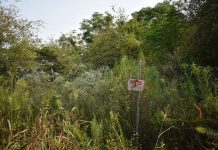
The remains sat as rubble for several months before being cleared. It’s now an empty lot. In March, Silverpoint sold the property to Atlanta-based real-estate firm Varden Capital Properties for $33 million. Since the fire, Silverpoint has sold or divested from all of its properties in Atlanta.
✚ ✚ ✚
According to the American Psychological Association, anxiety, depression, and PTSD are all very common with fire victims, akin to other natural disasters. Most renters’ insurance policies do not include any compensation for emotional distress after a fire.
Leija spent two months couch-surfing with friends and went through a “dark period” of heavy drinking. Before the fire, he had just moved from San Antonio, away from family, away from the place where his mother had died when he was 16, to start a new life in Atlanta. “The fire essentially forced me to start over again,” said Leija. “I thought about that night every single day, like what more could I have done, and yeah, it got dark for me.”
A job at another local apartment complex was what he needed to correct things. He started again as a leasing agent in Decatur at an apartment complex where he could also live. The first time a fire alarm went off in the new complex, Leija sprinted to his apartment to grab his belongings, then went door-to-door to make sure the residents were okay. It ended up being a false alarm. “I was in a complete panic,” he said. “My coworkers took care of me and just had to say, ‘Vincent, it’s okay.’”
He keeps his clothes from the night of the fire as a reminder and still talks regularly with some of the other Reserve residents whom he was friends with during his time there.
“Even now, almost every single day will stutter to a stop, and I’ll think about the fire. I struggle to not cry.” —Vincent Leija
Leija recently got a dog, Luna, whom he considers his therapy dog, and a tattoo on the inside of his arm. It reads, “No one can feel your pain.”
When he moved to the Reserve, at 19, Manotas hoped he could skip college and support himself for the first time. He worked at a Mellow Mushroom and started taking on clients as a nail technician. “It was everything I wanted, living with a great friend and having my own place,” he said. “I had this plan for my life, and then it burned down.”
After the fire, Manotas moved back to his family home. He had independent renters’ insurance, so he was able to claim most of his possessions. In the fire, he lost his grandmother’s dresser, his entire wardrobe, a large collection of crystals, and nail equipment.
“I was able to replace things, but for months I would wake up and immediately think, This isn’t my room, this is not my stuff, this is not me,” he said. “I had to deal with the realization that my life died, but I didn’t, you know. I’m here, but the me I used to know isn’t here anymore.”
Seven months after the fire, he quit his job at Mellow Mushroom. “I just left on the spot on a Saturday because I felt stuck,” he said. “I guess it’s from the fire, but I just have this attitude now that if it’s something I don’t like, then I don’t have to deal with it.”
Today, Manotas still lives at home with his parents; he has worked at Chipotle and as a nail stylist, a DJ, and social media marketer. He is planning to move to New York City in 2026, in hopes of a fresh start. “I still think the fire was the universe telling me to get out of Atlanta and try something new,” Manotas said.
Scott started a GoFundMe page herself and stayed in a hotel close to her sons’ school for two and a half weeks. By the end of December, she had moved into another apartment complex in Buckhead, which had even more intense problems than the Reserve. Rats and cockroaches were common in the hallways, and false fire alarms were also frequent. “My kids would just freak out and cry when it would go off,” she said. “They’d ask me, ‘Mom, are we going through this again?’”
Scott and her family were able to settle at another complex in Buckhead. “It’s so much better, and the boys are starting to do well in school again,” she said. “I know they feed off of me, so I’ve just been trying to stay positive for them . . . But this is such a test of faith. I just tell myself, What I lost in material, I gained in strength. And I lost everything, but I am still here, breathing.”
Scott is one of the many residents involved in the lawsuit who could be eligible for compensation. “I feel like we will win, and maybe I can finally pay back all the debt I’ve been in to recover from this,” she said. “But I don’t see myself feeling any closure.”
This article appears in our November 2025 issue.
This story was updated on January 7, 2026 with new details on Stokes’s legal case.