



Photograph by Gabriella Valladares
Before the High Museum of Art was shadowed by a forest of office towers and apartment skyrises. Before mentions of the High were ubiquitous selling points for the 140 new Midtown developments that have sprouted like a SimCity creation since the year 2000 alone. Before the museum counted nearly twice as many household memberships as there are people in the city of Decatur, and before its collection welcomed names such as O’Keeffe and Monet. Before any of that, the High was just a donated house far from downtown’s bustle—albeit a grand home among the storied, bygone mansions of Peachtree Street.
The High Museum of Art opened 100 years ago this month as the city’s first art museum, laying the foundation for an institution with global renown today. For Atlanta, the mid-1920s were indeed a roaring era. The city’s commercial and cultural bedrocks—Delta Air Lines, Atlanta History Center, and Hartsfield-Jackson Atlanta International Airport—have recently turned a century old. The High now joins that centennial club, having played no small role in Atlanta’s transformation, both at the museum’s doorstep and far beyond Midtown’s now-cosmopolitan streets.
“This is an institution that grew apace with the times, with the sense of what was important, and I think we’ve evolved,” says Rand Suffolk, the museum’s director since 2015 and the ninth in its history. “We’re also blessed with killer real estate.”
Atlanta newcomers—or longtime residents—may be surprised to learn the High’s name is no reference to high art, high society, or highfalutin anything. It’s a nod to Harriet “Hattie” High and her husband, Joseph M. High, who in early-20th-century Atlanta owned furniture and daily goods stores called J.M. High Company.
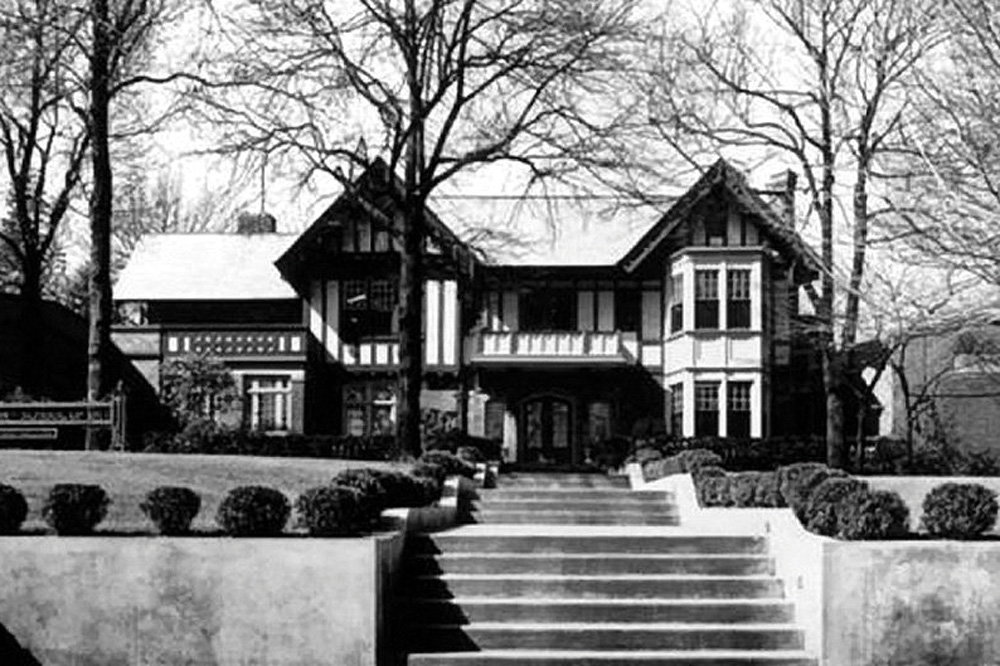
Hattie High wasn’t involved in the Atlanta Art Association, which was founded in 1906, but after her husband died that year, she was inspired by an essay in a Atlanta Chamber of Commerce publication advocating for an Atlanta art museum. In May 1926, she donated a sprawling, 24,000-square-foot Tudor-style residence on Peachtree Street between 15th and 16th streets to serve as that space, where the High’s 12-acre campus stands today.
“The timing was right, and [Hattie High] wanted to do something great in memory of her husband and for her city,” says Julia Forbes, the High’s associate director of institutional research.
In those days, the High was considered to be in the boonies, relatively speaking. Still, some artists made the trek: In 1931, celebrated Black painter Hale Woodruff made the bold move of simply walking in the High’s front door after he’d arrived in town, caught a streetcar, and rode it to “some kind of a museum way out on Peachtree Street.” (Today, several of his murals are on display at the High.)
“There were just a few people living out there in the country,” Forbes says. “I think Midtown grew up around [the High] because, in a lot of senses, the museum came first, and these beautiful neighborhoods . . . were just starting. We’re like a lynchpin.”
Courtesy of the High Museum

Courtesy of the High Museum

Courtesy of the High Museum
The High’s campus grew to include three other estates over time, plus a fourth home converted into an art school just south of the High house. All of those were demolished between 1954 and the early 1960s to make room for new buildings; the first to go up was a museum building that opened along Peachtree Street in 1955.
That was seven years before 106 Atlantans—including much of the city’s arts community leadership—died in the Orly Field plane crash outside Paris following a 27-day European museum tour. Forbes says the tragedy, which has been described as “the day Atlanta wept,” proved a powerful motivator for public fundraising for the High and the Atlanta Arts Association.
Those contributions helped fund development of the landmark Atlanta Memorial Arts Center (now the Woodruff Arts Center), which opened in 1968, complete with Auguste Rodin’s The Shade sculpture, a gift from France. The High, the Alliance Theatre, and the Atlanta Symphony Orchestra were able to operate under one roof, so to speak—forming a true artistic hub.
The High famously leveled up in 1983 when its stand-alone building designed by Richard Meier opened. Now called the Stent Family Wing, the Meier building drew rave reviews, including from The New York Times, which called it “a strong and potent work of architecture in itself, yet seems completely to understand and respect the works of art within it.”
In the late 1990s, celebrated Italian architect Renzo Piano was invited to expand the High’s campus. That resulted in three sleek new buildings centered on a piazza and designed under the slogan “A new High for Atlanta.” It debuted in November 2005, tripling the complex to a total of 312,000 square feet, as it stands today.
Suffolk says those landmark additions have stood the test of time as both architectural jewels and dynamite spaces for showcasing art. “Invariably we hear that [international traveling exhibitions] look better at our place,” Suffolk says. “It did scale [the museum] up physically, but it also scaled our ambitions.”
By 2024, Midtown Alliance, a nonprofit organization of leaders in the neighborhood, estimated that 60 new people were moving into the area every week. Suffolk says a goal at the High has been to translate that growth to higher consistent patronage, and it appears to be working: Over the past decade, the number of membership households has ballooned by 80 percent, surpassing 47,000 last year.

Photograph from footage by Alex Gerhardt, courtesy of the High Museum
Photograph by Alphonso Whitfield
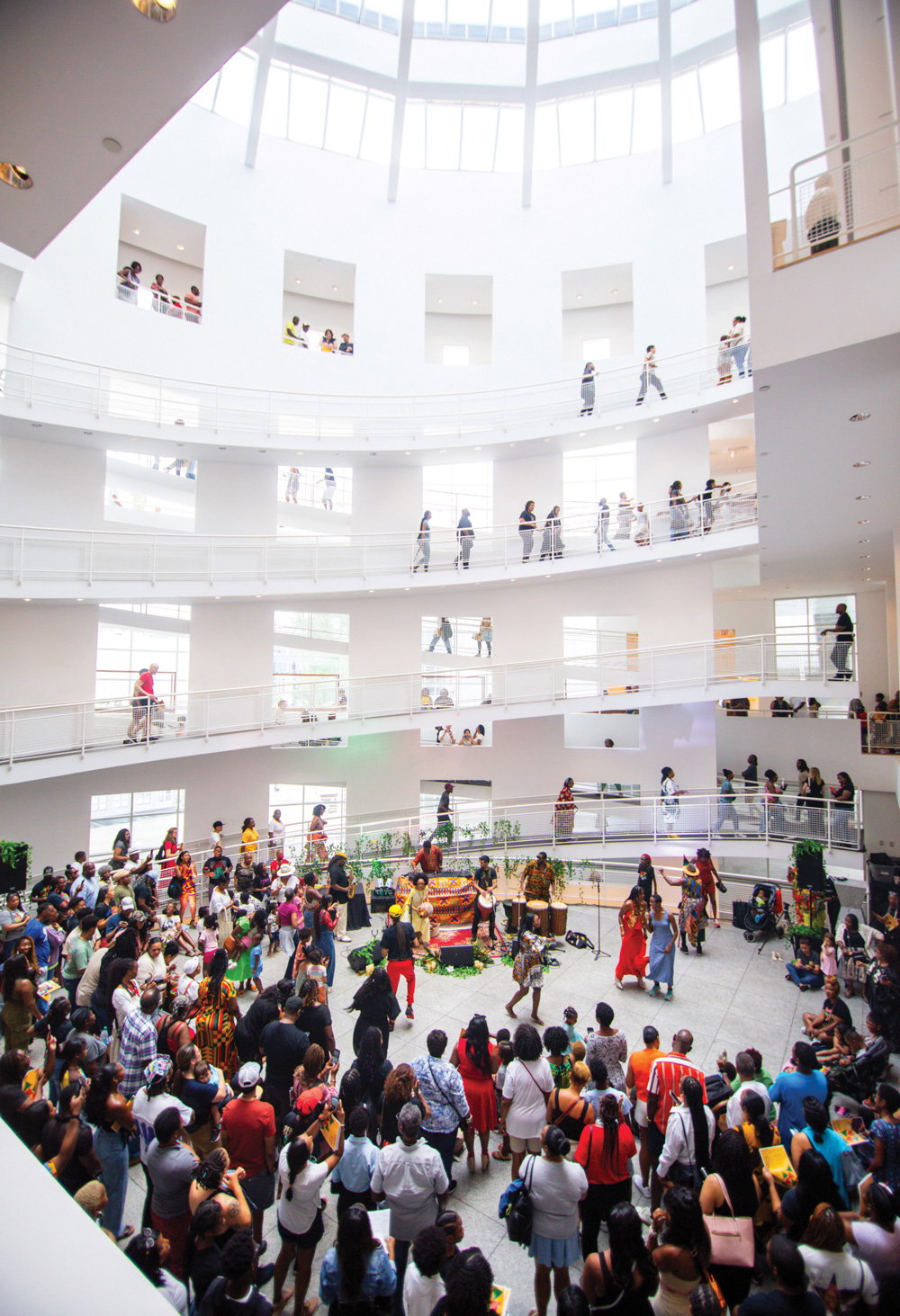
A key to that success, as Suffolk sees it, is a tactical shift during his tenure from more blockbuster exhibitions to ones that dovetail with the interests of Atlanta’s growing, diverse, intown community. Exhibitions this fall include sculptural work from Martin Puryear and photo illustrations from Walter Wick, creator of I Spy. The High has also started to host more than museum visits, with regular events such as High Frequency Fridays (happy hours with a DJ). “My [predecessors’] goal was to build a place physically,” Suffolk says. “What we’ve tried to do is fill the place with extraordinary investments in our collection and by inviting all of Atlanta to come in on a very consistent basis.”
To commemorate the centennial, the High is planning a full season of celebrations immersed in the neighborhood it has helped transform. That includes a block party that will close a section of Peachtree Street (October 18), a day of free admission for all (October 21), a Halloween shindig (October 30), and a Centennial Holiday Market before Thanksgiving (November 20 and 21).
Robin Howell, a High board member for two decades and past chairperson, says Midtown would be an entirely different place if not for the museum. “Midtown would certainly have grown [without the High],” Howell says, “but I don’t think it would have the same identity or energy.”
This article appears in our October 2026 issue.