

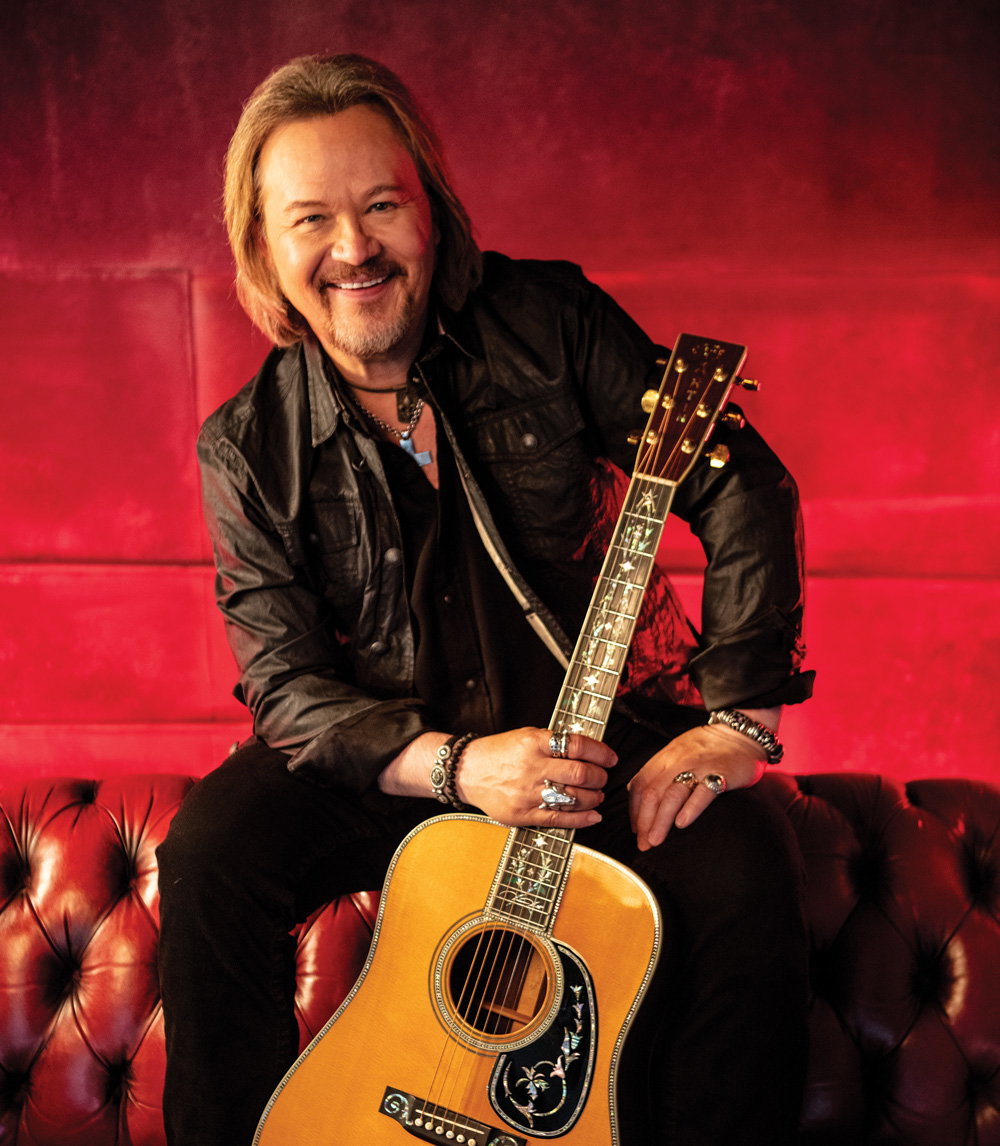
 In the early 1980s, Travis Tritt was a blue-collar HVAC repairman pulling long hours in a wholesaler house in Marietta. One night, after punching out, he rolled into a bar to grab a beer and saw a man onstage playing acoustic guitar, just an amp and a drum machine by his side. “I sat there for three hours just listening to this guy,” Tritt recalls. “And the one thing that kept coming to my mind was, I could do this job.”
Tritt, 63, relays this anecdote in his welcoming Southern drawl during an afternoon phone call from his 75-acre farm in Hiram, just west of Atlanta. He bought the property in 1992, two years after the release of his platinum-selling debut album, Country Club. That record launched Tritt to stardom, alongside a wave of other artists—including Garth Brooks, Clint Black, and Alan Jackson—who infused a Southern-fried rock sound into country music. He’s now a two-time Grammy winner and four-time Country Music Association Award winner and has sold more than 30 million albums worldwide.
At the outset of his burgeoning career, Tritt would clock out of a 12-hour shift, go home to shower, and head back out to perform at local venues. Most weeks, he played Monday through Saturday, 8 p.m. to 3 a.m. The lifestyle, he says, nearly killed him. “[But] I was happy,” he adds, “because I was doing what I absolutely love.”
By 1986, Tritt’s music career was looking promising enough that he gave his notice at the HVAC shop. His boss vowed that if the whole music thing didn’t pan out, he could always have his job back.
Fortunately, Tritt didn’t have to go far to make good on his dreams: His training ground was basically his backyard. “Atlanta was just a wonderful place to be if you were a musician in the mid-to-late 1980s because we had tons of places to play,” Tritt says, rattling off beloved former local venues such as Miss Kitty’s, Mama’s Country Showcase, the Buckboard Country Music Showcase, and Cowboys. “You could play pretty much every night of the week and never leave the area. I was always within 15 miles of my house.”
Tritt’s experience grinding on the local circuit also taught him how to connect with live audiences. As a “human jukebox,” he would cover everyone from Hank Williams Jr. to Lynyrd Skynyrd; the mix of country, rock, blues, and honky-tonk he mastered became part of his own music identity.
After his star shot skyward with Country Club, his place in the firmament never slipped. Seven of his albums have gone platinum, including It’s All About to Change (1991) and T-R-O-U-B-L-E (1992). He’s an inducted member of both the Grand Ole Opry and the Georgia Music Hall of Fame.
Today, Tritt’s legacy is assured. But he’s keenly aware of how much has changed. To start, many of the old haunts where he cut his teeth as an up-and-comer are long gone. “It’s sad, because younger musicians now have a harder time getting their foot in the door,” he says.
Still, he recognizes that technology has opened new avenues—he discovered one of his favorite new Atlanta-based singer-songwriters, 16-year-old Rocco Gorelik, through Instagram. “With social media,” he says, “young artists can record music fairly inexpensively without having to go into a major studio. That helps tremendously.”
But some lessons can only be learned the old-fashioned way. “Every time you get a chance to perform in front of an audience, you should take that opportunity,” Tritt says. “That’s where you learn.”
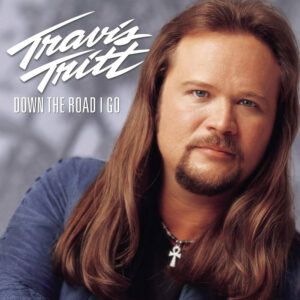 Biggest hit
“Best of Intentions” from Down the Road I Go (2001) reached No. 1 on Billboard’s Country Singles chart
Year inducted into the Georgia Music Hall of Fame
1999
Betcha didn’t know
Tritt not only wrote the theme song for the 1994 buddy comedy The Cowboy Way, starring Kiefer Sutherland and Woody Harrelson; he also makes a cameo as a bull rider.
Catch him live
Friday, November 13, at State Farm Arena, alongside The Red Clay Strays and Brent Cobb
Instagram
@realtravistritt
Back to “Legends Look Ahead.”
This article appears in our November 2026 issue.