



Rendering courtesy of the Atlanta Opera
On Monday, the Atlanta Opera pitched a big red-and-blue circus tent on the lawn of its new home at the historic Bobby Jones Golf Course Clubhouse. It was the same tent the opera set up in the middle of an Oglethorpe University baseball field during the pandemic in 2020, when it was one of the only active art organizations performing in the country. Executive and artistic director Tomer Zvulun credits that “inflection point” with driving renewed interest back into the Atlanta Opera.
Zvulun dusted the tent off and out of storage for Monday’s occasion to break ground on a new $72 million campus, with Mayor Andre Dickens in attendance. A $25 million gift from Arthur M. Blank Family Foundation propelled the project, and the facility will be named after Arthur’s late mother as the Molly Blank Center for Opera and the Arts. The construction will preserve the historic property with further plans of a modern addition featuring a theater, offices, classrooms, and a recital hall. Set to open in fall 2027, the center overlooks the Northside Beltline and Atlanta’s skyline.

Rendering courtesy of the Atlanta Opera

Rendering courtesy of the Atlanta Opera
“Today is the second inflection point of the Atlanta opera in the 2020s,” Zvulun said at the groundbreaking. “In opera, we have to take risks, and this building embodies that. We will break the boundaries between art and nature, art and people, by placing ourselves here and presenting art everyday on the Beltline.”
The Bobby Jones Clubhouse was built 1941 in a Grecian revival style and in use until 2016, when the golf club constructed its modern home. The Georgia Trust for Historic Preservation listed it as a “place in peril,” and noted possible plans to demolish it for a driving range.
The Atlanta Opera’s renovation will use the original clubhouse as a lobby for the 200-seat recital space, Rosemary Hall. The rear of the current building will instead act as the entrance, with Atlanta architecture firm Post Loyal designing a modern addition facing the Beltline. This choice, said Zvulun, is to attract people to walk in from the trail so that it’s a space beyond performances. Other than Rosemary Hall, there are plans for an immersive 6,000 square-foot theatre, a film studio, costume shop, administrative offices, and food and beverage options. Cobb Energy Centre will continue to host Atlanta Opera’s major productions.

Rendering courtesy of the Atlanta Opera
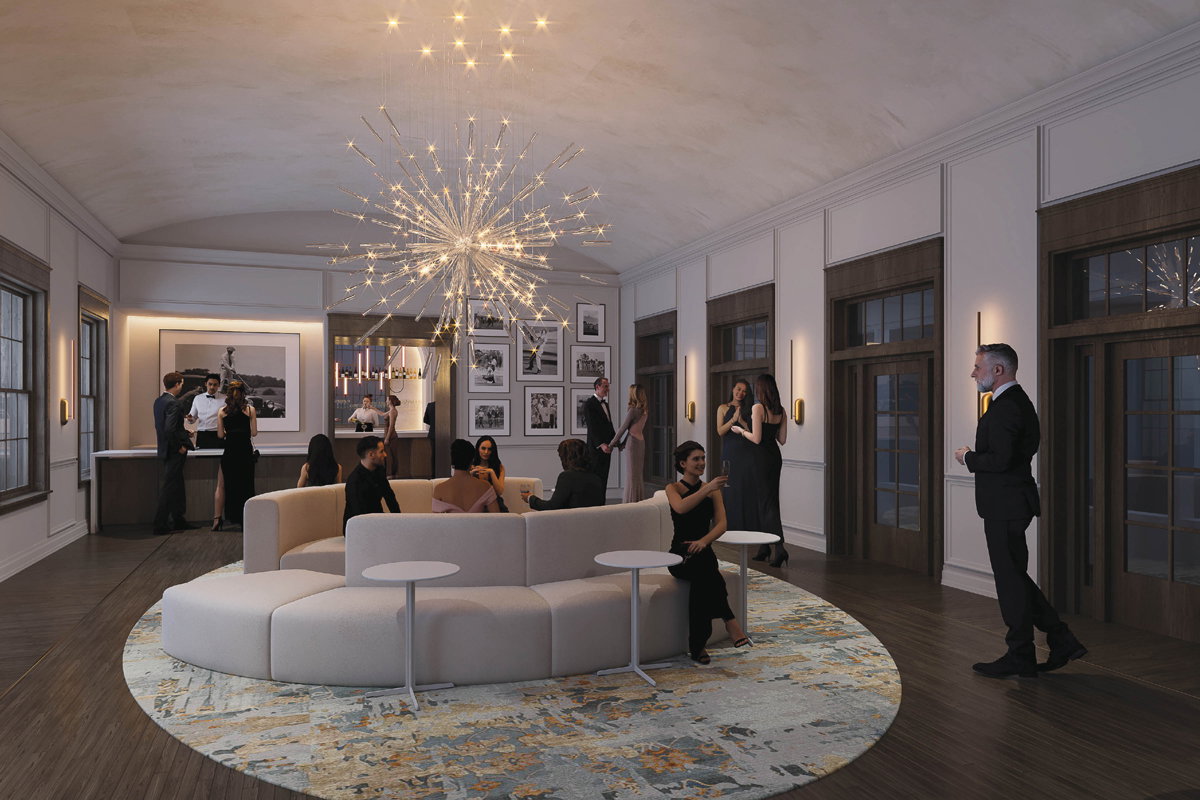
Rendering courtesy of the Atlanta Opera

Rendering courtesy of the Atlanta Opera
The Molly Blank’s signature feature will be a floor-to-ceiling glass window that functions as the back wall of Rosemary Hall. “That huge window will overlook all of the nature surrounding the golf course and Beltline, so not only will the audience enjoy the view, but also people from the trail can look in,” said Micah Fortson, managing director at the Atlanta Opera.
But with a glass wall in a performance hall, there comes the challenge of acoustics. The opera has partnered with consultant Akustiks and Theater Projects so that “you can hear a pin drop in the space,” Forston said. “There will be two layers of glass to absorb the sound, and we can also use a curtain to dampen the sound for certain performances.”

Rendering courtesy of the Atlanta Opera

Rendering courtesy of the Atlanta Opera

Rendering courtesy of the Atlanta Opera
The Atlanta Opera will lease the property from the State of Georgia for 50 years and will also use City of Atlanta land to increase parking and access the Beltline. “We wanted to be a part of the opera’s permanent home and its connection to our community and neighborhoods,” said Mayor Dickens. “This will be the first art center headquartered on the 22-mile loop of the Atlanta Beltline, and it’s important that it connects our people to the arts.”
The Atlanta Opera joins a wider trend of major cultural institutions planning direct access to the Beltline. Another project slated for 2027 is the Atlanta Botanical Gardens master plan expansion with a new visitors center connected to the Northeast Trail in Piedmont Park.
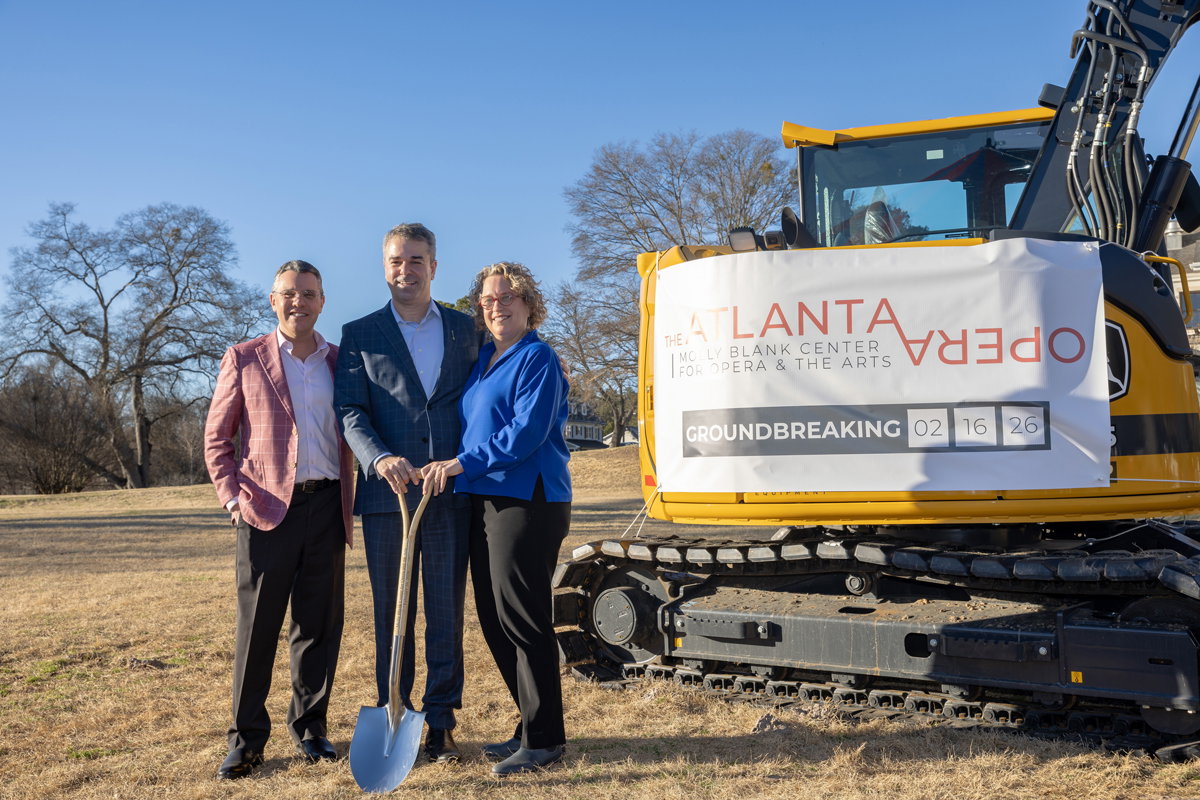
Rendering courtesy of the Atlanta Opera
The groundbreaking is on the back of Atlanta Opera’s growth with a budget of now $15 million and its new status as a “Budget One,” or top ten opera company in the United States. In recent years, the opera has also taken on more major productions, such as its production of all four parts of Richard Wagner’s Der Ring des Nibelungen, or, as it’s commonly called, the Ring, concluding this spring with performances May 30–June 7 of the Twilight of the Gods
“I want to work tirelessly to break the boundaries of opera and take risks,” says Zvulun. “Bringing the art to the people is the future, and we want to bring that to life here.”