


Courtesy of Town at Trilith
In 2013, Brennen Dicker sat on a hill in Fayette County eating a picnic lunch with Dan Cathy, chairman and former CEO of Chick-fil-A. Dicker, a longtimer in Georgia’s entertainment industry, listened as Cathy gestured across a construction site 25 miles south of Atlanta where he envisioned a brand-new moviemaking town.
“He’s like, ‘Over here will be the stages. Over here, I’m going to make a restaurant and hotel area. Over on the other side, I’m going to do a development where creatives can stay,’” says Dicker, who held leadership roles at several production companies before joining Georgia State University in 2018 as executive director of the Creative Media Industries Institute. “I thought, Good God. This guy is making this whole community down here. How do you even know if that’s going to work?”
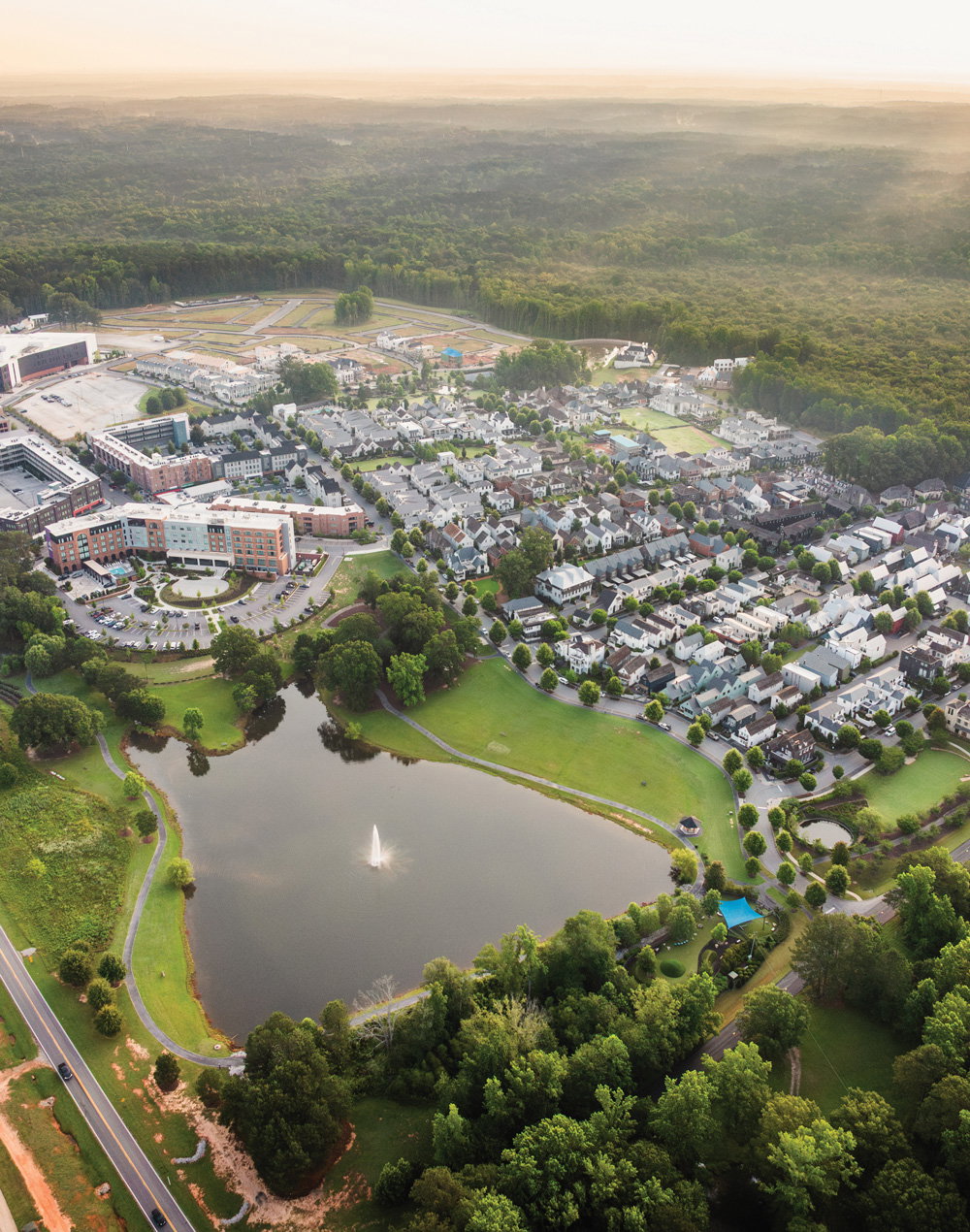
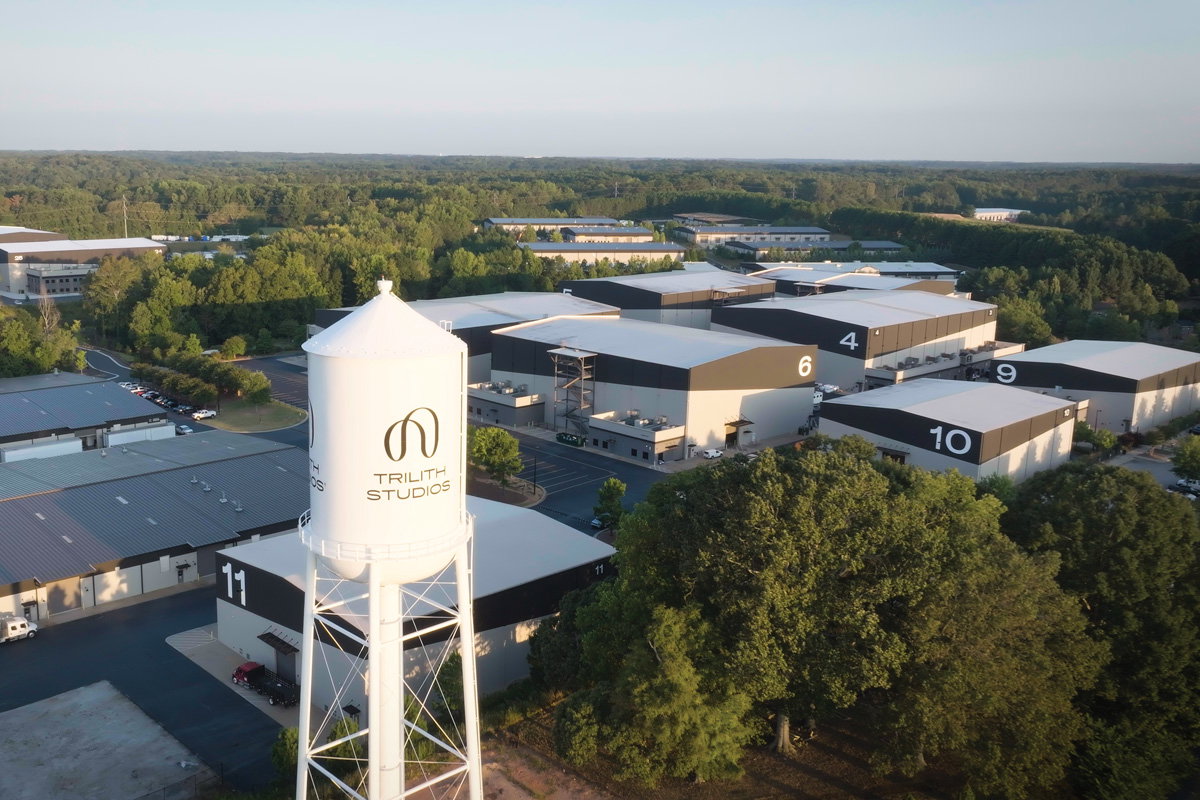
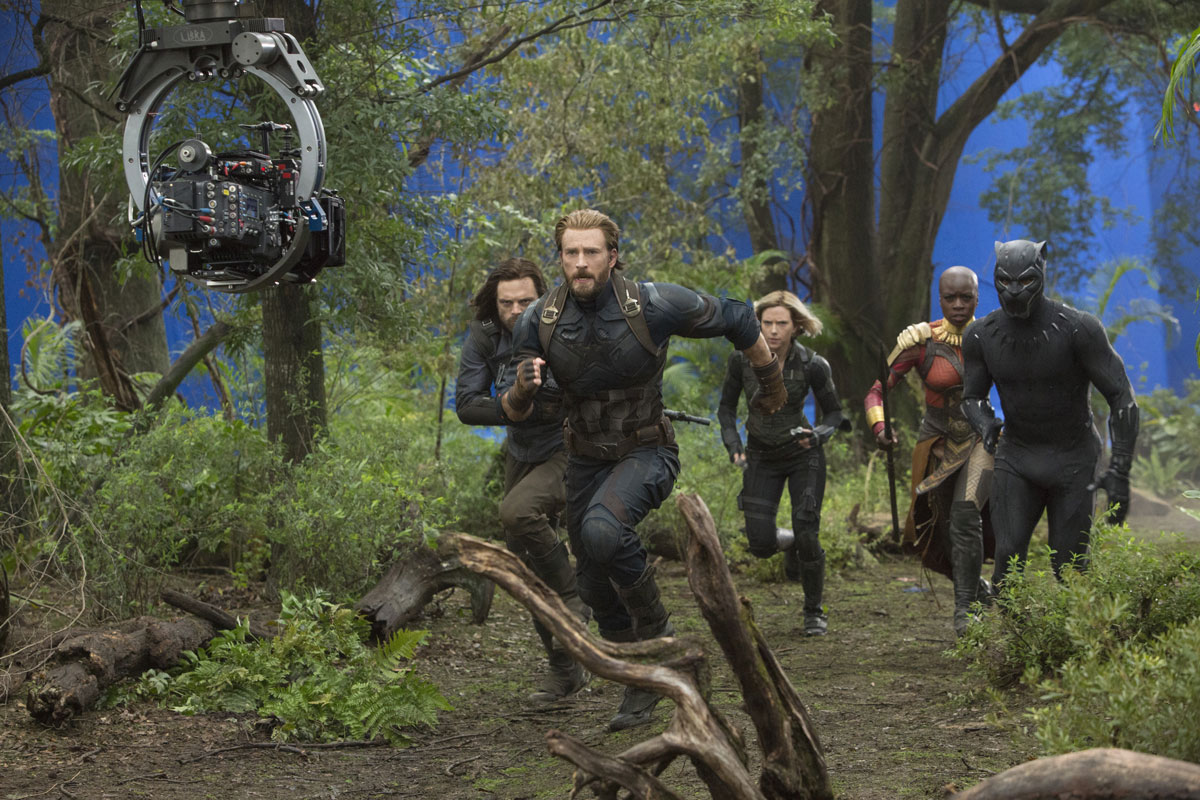
Thirteen years later, much of what Cathy described exists. Trilith Studios stretches across more than 700 acres and has 30 sound stages, which, for a decade, hosted Marvel Studios productions such as Avengers: Endgame and Spider-Man: No Way Home. The company calls itself “the largest purpose-built film and television studio campus in North America.” Next to the sound stages, more than a thousand people live in the Town at Trilith, a 234-acre master-planned community. Its main street has a dozen-plus eateries and shops, and 15 miles of trails connect the town’s green spaces.
Courtesy of Trilith Studios

Courtesy of Town at Trilith

Courtesy of Town at Trilith
Trilith came to life just as Cathy envisioned it, but the film industry it was built for has cratered, with many movie and TV studios pulling up stakes and heading for other markets. According to the Georgia Film Office, the state’s film and television production spending has fallen from a record $4.4 billion in fiscal year 2022 to $2.3 billion in fiscal year 2025. Marvel, once the lifeblood of Trilith, shifted most of its production abroad to London in 2024. The moviemaking town now needs to adapt to survive.
Trilith Studios began as Pinewood Atlanta Studios in 2014—a partnership between the British film-studio company Pinewood Group and local investors, including a Cathy family trust. Marvel was there from day one: Ant-Man was the first production filmed at the new studio.
Cathy’s vision for the area extended beyond sound stages. In 2016, the studio announced plans for Pinewood Forest, a mix of retail, condos, and single-family homes. The Cathy family trust bought out Pinewood Group’s stake a few years later, and in 2020, Pinewood Atlanta Studios was rebranded as Trilith Studios, and the surrounding Pinewood Forest community became the Town at Trilith. Georgia Public Broadcasting reports that the Cathy family trust owns both Trilith Studios and Trilith Development, the separate entity behind the Town at Trilith.

Photograph by Kevyn Bashore

Photograph by Murphy Weed
Some of Trilith’s residents are actors and other types of film professionals. Jared Leland Gore, a 39-year-old actor who also works as a stand-in on set for bigger stars, moved there in 2022 with his parents and brother while working on Guardians of the Galaxy Vol. 3. The move gave him a walking-distance commute between work and home. “I would describe it as like a modern-day Mayberry,” says Gore, who just wrapped up work on the latest Superman film, a DC Studios production filmed at Trilith. “Everybody knows each other, and it’s so tight-knit.”
During the boom years of Georgia’s film industry, Trilith’s studio lots brimmed with activity. Marvel was Trilith’s most prolific customer but hardly its only one. Over the years, the studio has hosted productions from Disney, Warner Bros./DC, Sony, Netflix, and others. “We were fighting over [Trilith’s] stages on a daily basis because there just wasn’t enough room for Marvel and whatever other show was trying to film,” Lenzi Sealy, a professional location scout, told The Wall Street Journal this year.
The pandemic disrupted production everywhere, but Georgia’s industry was making a comeback when a combination of other forces dragged it backward. In 2023, strikes of writers and actors halted productions nationwide, and studios and streaming companies scrambled to cut spending. Competition also intensified, as states such as California and countries including the United Kingdom expanded their tax incentives.
Photograph courtesy of Marvel

Photograph courtesy of Marvel
At Trilith, Marvel’s 2024 departure to London left a large hole. The company had shot more than a dozen films at Trilith before it moved, and rentals by other film production companies haven’t made up the difference. Earlier this year, Trilith Studios CEO Frank Patterson told The Wall Street Journal that the complex, fully booked in 2024, had seen bookings fall by half by 2025. The downturn has forced Trilith to reckon with a future unfolding in a very different film economy. “Rather than waiting on Hollywood’s slower green-light cycles, Trilith has diversified,” says Dicker, who has no professional ties to Trilith. “It’s really about building a broader, more resilient entertainment ecosystem.”
That broader ecosystem includes Trilith Live, a 530,000-square-foot entertainment complex in the Town at Trilith, which opened this year. It includes a 2,200-seat theater, two live-audience sound stages, and a nine-screen luxury cinema. The complex is also home to an outpost of the Atlanta-based megachurch Passion City Church.
Photograph by Trilith Institute
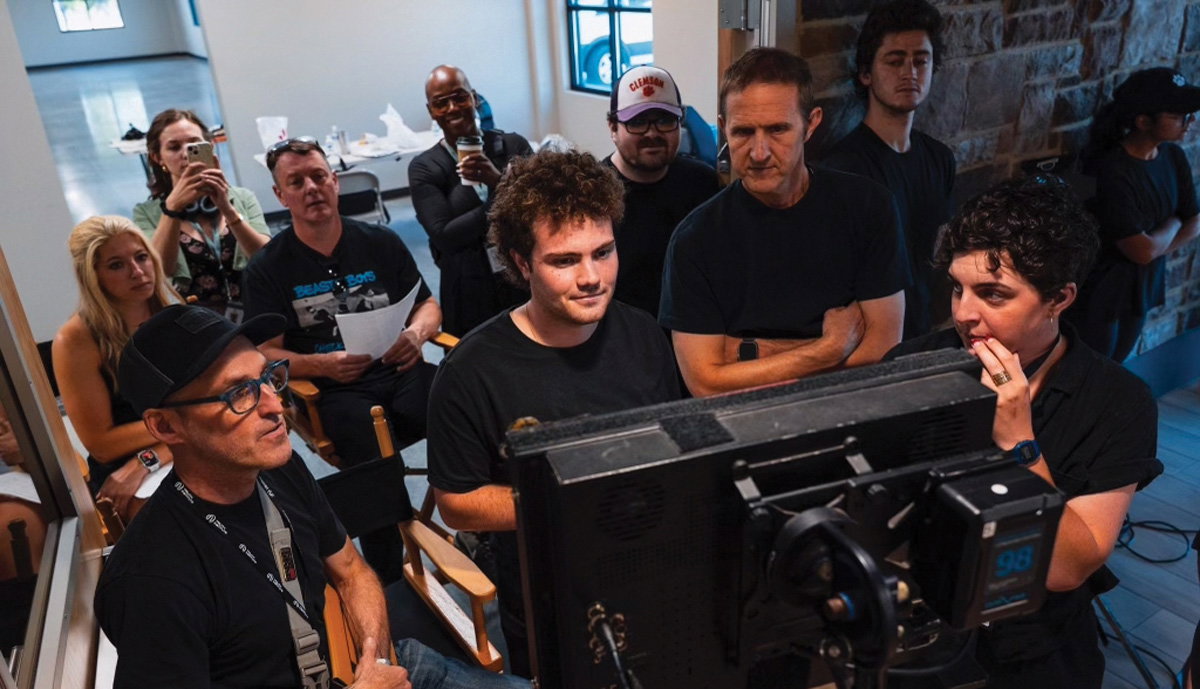
Another pivot is the Trilith Institute, an educational nonprofit launched in 2024 to offer professional training in filmmaking. The institute’s Semester at Trilith program, which invites students to live and study there, has about 100 participants. Jeffrey Stepakoff, the institute’s cofounder and CEO, says the program hopes to develop storytellers who then stay and make films in Georgia. “We built our production industry over the last 15 years,” Stepakoff says. “Now we want to have a complete entertainment industry from script to screen.”
Trilith also stands to benefit from the recent relocation of U.S. Soccer, which moved its headquarters last year to a site neighboring Trilith, on land donated by Cathy. No official collaborations have been announced yet, but the proximity to U.S. Soccer could help Trilith capitalize on an emerging boom in sports media, says Asante Bradford, a former member of the Georgia Department of Economic Development. “Now it’s the sports teams and the brands [that are] creating their own shows and movies,” he explains. “So it’s smart for Trilith to transition into more of the sports media play.”
Whether these investments can fill Trilith’s Marvel-sized hole remains to be seen. But for residents like Gore, the economic uncertainty hasn’t diminished the sense of community. “I love it,” Gore says. “Moving here was the right choice, and I still feel like it. I’ll be here forever.”
This article appears in our November 2026 issue.