


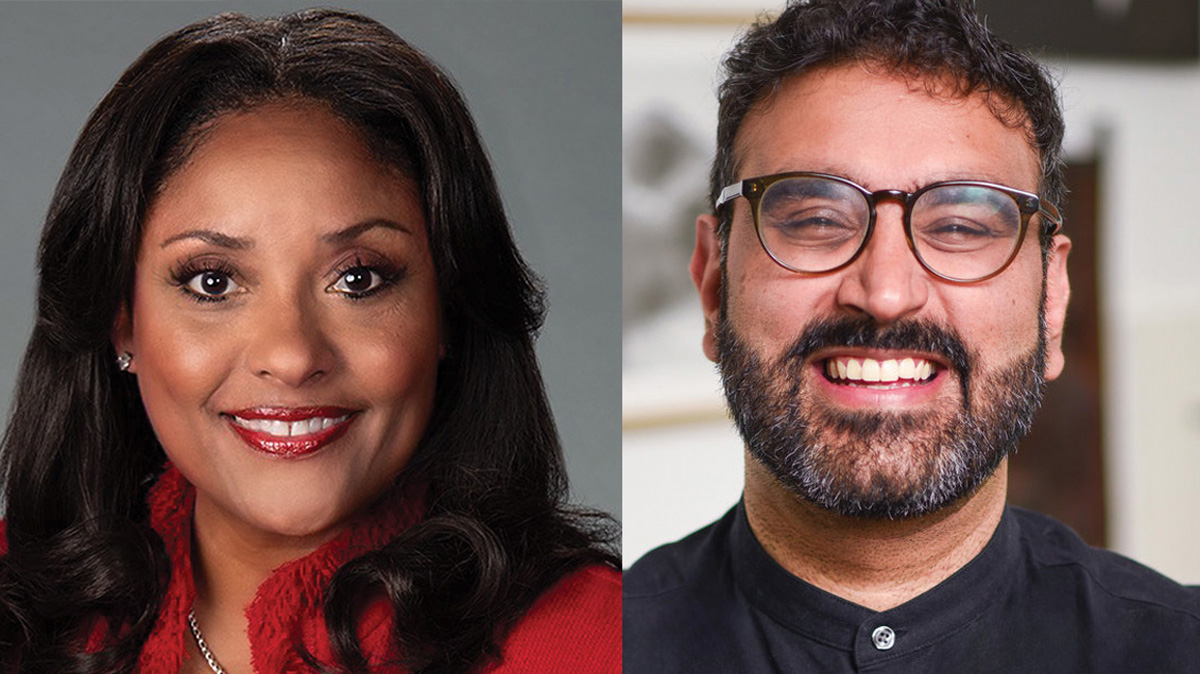
Photograph of Marci Collier Overstreet by Atlanta Headshots and Photo of Rohit Malhotra courtesy of Rohit for Atlanta
Every four years, Atlanta voters choose a mayor—and a city council president. The mayor gets more attention, but insiders know the council president can quietly steer the city’s agenda. This November, that gavel changes hands.
Current Council President Doug Shipman, elected in 2021, isn’t running for a second term. His successor will preside over a 15-member body that drafts and passes all city laws, controls the budget, and can override mayoral vetoes. The president doesn’t usually vote but runs meetings, breaks ties, and serves as the council’s guiding voice.
“It’s a front-row seat to the city’s heartbeat,” Shipman says. “You see the Eastside neighborhood meetings, the new nonprofit in Midtown, the small business on the south side, and you get a sense of how it all fits together.”
The role can be pivotal in moments of controversy. Shipman presided last year when the council faced 14 hours of public testimony over funding for the controversial public safety training center in southwest Atlanta. (The funding was approved.) His predecessors oversaw equally defining debates, from Beltline funding in the early 2000s to divisive policies over homelessness and spending before the 1996 Olympics.
The council president also sets the tone for how the body interacts with the mayor’s office, business leaders, and neighborhood groups. “If the president is effective, they can be a bridge—or a roadblock,” says one longtime City Hall observer.
Two contenders want Shipman’s job. Marci Collier Overstreet, who currently represents District 11, points to her track record of constituent service. “I can see in real time how my calls and visits translate into a better quality of life,” she says.
Her opponent, Rohit Malhotra, founder of the Center for Civic Innovation, has built his campaign around a single message: “Economic mobility, economic mobility, economic mobility.” He calls the nonvoting nature of the role “a blessing” because “it means the vote is not for sale.”
The real battle may be getting voters to care. In 2021, the council president’s runoff drew 4,000 fewer votes than the mayor’s. In some districts, fewer than 1 in 10 registered voters showed up to cast a ballot. Shipman says part of the problem is that people don’t understand what the job does.
“I joke that I should start a podcast called Who Should I Yell At?” he says. “In Georgia, responsibilities are split between the state, county, and city, and most people don’t know where those lines are.”
This November’s race decides who holds the gavel—and, who, in quiet but powerful ways, helps decide where Atlanta goes next.
This article appears in our October 2025 issue.