
The enormous, harbor-facing property next to Waterfront Park has been the talk of Charleston since breaking ground in 2020. Now open after impressive efforts to elevate it beyond the city’s already renowned hospitality scene, the Cooper, with its 7,000-square-foot spa and private marina, proves it was worth the wait.
Though brand new, the facade feels classic Charleston, with green shutters and iron Juliet balconies. Rooms at the swanky, 191-key hotel are airy and modern. Rattan furnishings, white shiplap walls, and a muted palette inspired by the marshes and tidal waters nod to the Lowcountry and create a calming atmosphere that provides a nice departure from the hustle and bustle of the main thoroughfares. Escape to the fourth-floor deck, which features an infinity-edge pool with enviable harbor views, as well as Bar Marti, a poolside hangout exclusively for hotel guests. Luxury perks abound, from amenities as high-end as a Hinckley yacht available for private charters to the simple pleasure of complimentary snacks in each room.
The Crossing
Photograph courtesy of the Cooper
The Cooper’s other dining options include a retro-themed smashburger spot, a coffee-to-cocktails all-day brasserie, and fine-dining anchor the Crossing, a Mediterranean-influenced raw bar and seafood restaurant. It can be hard for a hotel eatery to stand out in a city known for its culinary offerings, but the Crossing has emerged as a hub for signature martinis, flavorful mezze spreads, and simple, fresh crudos.
As Charleston’s only waterfront hotel, the Cooper is already regarded as a worthy place to stay, but with its luxurious touches and impeccable service, it’s sure to become a top choice in a city of plenty.
INSIDER INTEL Catherine Woods, vice president of marketing, shares her Charleston highlights:
Shop Till You Drop “The boutique offerings on Lower King Street have become really exceptional, with local favorites like Madison Mathews and Croghan’s Jewel Box, a 100-year-old family-owned jewelry store, mixed in with nationally known shops.”
Flower Power “When I want to slow down, I head to American Gardens. It’s one of those places where you can wander at your own pace, taking in the greenery and beautiful fountains.”
Safari Supper “My favorite way to dine in Charleston is by having a progressive dinner. Start with a glass of wine at Bin 152, then head to the bar at 167 Raw for some oysters, and end the night at Vern’s or Merci, two intimate restaurants tucked into downtown neighborhoods.”
This article appears in the Summer 2026 issue of Southbound.
White bread and juicy summer tomatoes never had a better friend than Duke’s Mayonnaise. A cornerstone of Southern pantries, the condiment was crafted in 1917 by Eugenia Duke, who spread it on homemade sandwiches she fed to recruits at Camp Sevier, a World War I training ground outside Greenville, South Carolina. Word traveled, production scaled up, and the entrepreneur began jarring her creation at an old carriage factory, still standing today as Wyche Pavilion, a popular events venue. Over a century later, the flagship formula remains untouched: egg yolks (no whites), oil, salt, and a splash of apple cider vinegar for its unmistakably bright, “twangy” flavor.
The company produces around 365,000 jars of mayo a day using roughly 70,000 pounds of egg yolks.
Twenty Greenville restaurants along theDuke’s Mayo Trail include Duke’s in special menu items—mixed into the smoked fish dip at the Jones Oyster Co., slathered on the Dirty Rotten Scoundrel Burger at French restaurant Scoundrel, or drizzled over beef carpaccio at Fork and Plough.
Duke’s also sells a line of Southern sauces with ties across the region, such as Mississippi Comeback Sauce (a spicy remoulade originating in Jackson) and an assemblage of barbecue sauces, from Carolina Gold and Alabama White to Tennessee Smoke & Whiskey.
Trek through Greenville’s picturesque Falls Park for historical stops associated with the brand. Eugenia Duke Bridge extends over the Reedy River and offers a primer on its namesake, while Wyche Pavilion, the original manufacturing plant, punctuates the landscape only minutes away.
Say hi to the brand’s mascot, a bushy-browed mayo jar named Tubby, at the Duke’s Mayo Bowl, an annual postseason college football game in Charlotte, North Carolina. In place of a Gatorade shower, the winning team’s coach gets doused in a bucketful of mayo.
This article appears in the Summer 2026 issue of Southbound.
This year marks the 101st Chincoteague Pony Crossing, an annual event occurring on the last Wednesday in July, when Saltwater Cowboys—local volunteer firefighters—saddle up to escort the wild ponies and their foals from Assateague Island, Virginia. They swim the channel to Chincoteague Island for a pony auction the following day. The sale of the horses helps with herd management, and proceeds support the Chincoteague Volunteer Fire Company, which tends and provides medical care for the ponies throughout the year. Legend has it the original ponies arrived on the mid-Atlantic barrier islands during the 17th century after surviving the wrecking of a Spanish galleon. They thrived in the harsh coastal wetlands. Whatever their origin, they are an enduring symbol of the islands and immortalized in Misty of Chincoteague, the classic 1947 children’s novel by Marguerite Henry, which brought worldwide attention to the ponies and the iconic swim. Tens of thousands of visitors from around the world flock to the Assateague Channel to watch as the wild herd of palominos, bays, and white-and-brown pintos splash into the slack, smooth waters for the five-minute crossing. It’s the highlight of Pony Penning Week, which includes twice daily showings of Misty, the 1961 film based on the book, and a parade on the Chincoteague Carnival Grounds, where visitors can ride on a merry-go-round, eat crispy, fresh-cut pony fries (with Old Bay and vinegar), and enter for a chance to win the first foal to come ashore.
This article appears in the Summer 2026 issue of Southbound.
I knew nothing about Oxford before I ended up going to school there. I hadn’t even visited the school—I just showed up at orientation and was like, well, I guess I’m going to be an Ole Miss Rebel. I completely fell in love with the town, though, and it ended up being the best four years of my life. I even met my husband through one of my best friends at Ole Miss.
It’s like this utopic society in the middle of nowhere. It’s my home away from home, especially now that I own a second home there. I usually pick one or two football games to try to get to, but I think spring is the best season in Oxford. What’s cool about the city is that there’s a ton of art and history, and it’s got good music and food. There’s an art festival called Double Decker where my mom always brings her art. It’s this beautiful hub of culture.
Start your day by going to Big Bad Breakfast, and order something covered in gravy. The coffee is the best ever, too. For lunch, you’re going to City Grocery, and whatever is on the menu for the day, that’s what you’re going to eat. Go to Saint Leo for dinner for the best pizzas and a great vibe. After that, we’re going to go sit at the Library Sports Bar, one of the biggest sports bars in the SEC world. It’s the greatest bar on the planet. It’s a place where the community comes together. You start at the sports bar, but you’ll end your night on the patio, dancing to DJ Mario. He’s been the DJ since I was in college, and that was 20 years ago. He’s a legend.
I always say that Southerners make the best storytellers, so I love sitting in a bar, getting lost on a Saturday talking with a local. You can have a conversation with anybody in Oxford, and it’ll be one of the most wonderful, rich conversations. I absolutely pre-judged Mississippi before I got there, but Oxford is truly a perfect little town. They call it the Velvet Ditch because it’s this really comfortable, loving community that, once you fall into, you never want to leave. I agree.
• • •
HEATHER MCMAHAN is a stand-up comedian, podcaster, and actress. For her latest tour dates, check out heatherontour.com.
A lone boat glides through the misty waters of Lake Martin, a rookery for herons, egrets, and spoonbills in Louisiana
Photo by Ben Pierce
SILENCE IS GOLDEN
Morning mist rises off the tranquil water. A slight breeze ruffles the veils of Spanish moss draped from the gnarled bows of ancient cypress and tupelo. The stillness belies what’s going on all around. This Louisiana swampland, Lake Martin, is an epicenter of bayou wildlife. The trees above are a year-round rookery for a rainbow of waterfowl, including great blue herons, bright-yellow prothonotary warblers, snowy egrets, black-crowned night herons, white ibis, and roseate spoonbills. In the murky waters below nests a burgeoning population of alligators. Boats motor or paddle past, a camera shutter clicks. But soon all is swallowed again by the loaded silence.
An aerial view captures the layered blues and greens of the Atlantic meeting the sandy shore along South Carolina’s 187-mile coastline
Photo by Mark Staff
TIDES OF TIME
Along 187 miles of South Carolina coastline, the ocean takes on different personalities. The 60 sandy miles of the Grand Strand from Little River to Georgetown is dotted with resorts centered on Myrtle Beach and has welcomed generations of vacationers. The Santee Delta near Charleston holds a great deal of history as a commercial hub and key port for the transatlantic slave trade. Then there are the sea islands of the Lowcountry, like Hilton Head, where humans try to keep their presence in check and harmonize with nature as the green sea laps up on the pristine white beaches.
Water cascades over moss-covered rocks at Spruce Flats Falls near Gatlinburg, one of more than 500 waterfalls found across Tennessee
Photo by Mark Van Dyke
SONIC FALLS
In Tennessee, water is a sound. Steady rainfall feeds thousands of miles of trickling streams, babbling creeks, and rushing rivers. The flow gradually cuts through the hard limestone and sedimentary rock, eroding a soft layer of shale beneath, creating steep slopes and sheer drops. The state has more than 500 waterfalls, with over 100 in the Great Smoky Mountains alone, including Spruce Flats Falls just outside of Gatlinburg. The result is a range of natural tones, from the pitter-patter of small cascades to the thunderous white noise of great falls—culminating in one sonorous mountain chorus.
Longleaf pines reflect in the still waters of Western Lake, one of the rare coastal dune lakes found in South Walton, Florida.
Photo by Michael Blachly
GATEWAY TO THE GULF
A coastal dune lake is an aquatic borderland between two worlds. Shallow freshwater Western Lake stands mere feet from the salty Gulf of Mexico. When heavy rains fall, sea levels rise. The barrier berm is breached, allowing water to spill between lake and ocean. The storm breaks. The sky turns a surreal golden hue above a rare brackish wonderland of freshwater and saltwater fish and flora. How rare? Dune lakes are only found in the most biodiverse places in the world: New Zealand, Australia, Madagascar . . . and South Walton, Florida.
A boat cuts a wake through Alabama’s Mobile-Tensaw Delta—260,000 acres of river, marsh, and swamp where eight rivers converge east of Mobile
Photo by John E. McDonald
THE AMERICAN AMAZON
In Alabama, just east of Mobile, eight rivers (and 250 smaller tributaries) spill into 260,000 acres of the wildest habitat in North America. Dubbed the American Amazon, the Mobile-Tensaw Delta features 500 species of plants, 300 birds, 126 types of fish, 69 reptiles, 46 mammals, and 30 amphibians. No matter which way you steer, you’re bound to encounter brown pelicans diving for pigfish and sardines. Bald cypress and tupelo trees provide shade for carnivorous pitcher plants and rare orchids. American alligators patrol the riverbanks for plump nutria and muskrats. But it’s the pitch-black of night and the maze of rivers, creeks, and swamps that make you speed home before dark.
A lone mangrove stands in the calm, shallow waters of the Lower Florida Keys
Photo by Paul Marcellini
LOW-KEY VIBES
The calm, clear wetlands of the Lower Florida Keys do more than disarm—they lull and subdue. Islands of tangled mangrove, shallow sandbars, and thickets of seagrass encourage a slow paddle on board or kayak. Just beneath the water’s surface lies the only living coral reef in the continental U.S., which took thousands of years to grow. Wild Key deer leave silent tracks in the sand on secluded beaches. At sunset, take a breath and gaze into the infinite pink skies.
Anglers wade the rocky shallows of the Chattahoochee River, which supplies 70 percent of metro Atlanta’s drinking water
Photo by Kevin Garrett
LIFE ON THE WATER
Water is the stuff of life. When most people consider the ecosystems of our natural waterways, they think of wildlife: fish, reptiles, plants, and the birds and mammals that feed on them. But humans rely on them, too. Originating in the Blue Ridge Mountains, the Chattahoochee River flows southward toward the Gulf of Mexico through Georgia, providing 70 percent of metro Atlanta’s drinking water; 16 of the Chattahoochee River Basin’s 22 hydroelectric power–generating plants are located along the river’s main stem. The Chattahoochee River National Recreation Area also improves quality of life with opportunities for fishing, tubing, kayaking, and boating.
This article appears in the Summer 2026 issue of Southbound.
George Washington spent his life in Virginia. Though military campaigns would take him beyond its borders for more than a combined decade—first as part of the French and Indian War and later during the American Revolution— most of his 67 years saw him surveying, defending, and developing the land of his birth. It’s altogether fitting during this year celebrating the 250th anniversary of American independence, that we take to the road across Northern Virginia and follow in the footsteps of the Father of Our Country.
The journey begins in Winchester, a former frontier town in the Shenandoah Valley that witnessed Washington’s beginnings in the three careers that would define his life: surveyor and landowner, soldier, and elected official. The trip continues east, over rolling hills commanded by sprawling horse farms and vineyards, to the village of Middleburg and a centuries-old tavern visited by a young Washington, then turns north to Great Falls on the Potomac River. Here, the route joins the George Washington Memorial Parkway and rolls through Arlington, Alexandria (his adopted hometown), and ultimately to Washington’s longtime home and final resting place, Mount Vernon.
• • •
Old Town Winchester
Courtesy Visit Virginia
George Washington’s Office Museum Built in 1748 as a workspace for itinerant professionals, this small log structure is among the oldest in Winchester. From the fall of 1755 until the end of 1756, Washington used its middle room as his office while he oversaw the construction of Fort Loudoun, which would become the site of his regimental headquarters during the French and Indian War. Displays and artifacts trace Washington’s time in the town from his arrival in 1748 to survey land for British Lord Fairfax through his election to the Virginia House of Burgesses in 1758.
Museum of the Shenandoah Valley Museum benefactor Julian Wood Glass Jr. was a direct descendant of Winchester founder James Wood, who also served as Washington’s campaign manager in his 1758 run for the Virginia legislature. Following Glass’s death in 1992, the family’s ancestral home, Glen Burnie, was opened to the public, and in 2005, the museum was built on the grounds of the estate to showcase his collection of 18th- and 19th-century American and European furniture and art as well as Washington artifacts. Several Washington-related objects, among them an iconic portrait by Rembrandt Peale, will be on display as part of the museum’s Revolutionary Valley exhibition.
Old Town Winchester The civic and commercial hub of Winchester has served as a meeting place and marketplace since Washington’s time. Today, visitors will discover a wealth of 18th-century buildings and a bustling four-block pedestrian mall along Loudoun Street filled with smart shops and boutiques, including century-old men’s clothier Bell’s and independent bookstore Winchester Book Gallery. Not to be missed is lunch at Water Street Kitchen, set in a former dry goods store and lauded for its grilled cheese sandwiches. And unrivaled accommodations are steps away at the George Washington Hotel, a stately institution dating to 1924.
Red Fox Inn & Tavern
Courtesy Visit Loudoun
The Red Fox Inn & Tavern The tony village of Middlebury, set in the heart of Virginia’s horse and hunt country, lies midway between the cities of Winchester and Alexandria (thus its name) and was a regular stopping point for travelers between the two towns, including a young Washington. He also visited this storied tavern, established in 1728 as Chinn’s Ordinary. The lovely fieldstone inn later played host to a glittering array of contemporary notables, from Jacqueline Kennedy Onassis and Elizabeth Taylor to Paul Newman and Tom Cruise, who, like today’s guests, enjoyed countryside pursuits, classic yet cozy quarters, and intimate meals in the historic tavern’s firelit dining rooms.
National Sporting Library and Museum
Courtesy Visit Virginia
National Sporting Library & Museum Founded in 1954 by four fox hunters who combined their personal libraries of sporting titles, this Middleburg institution is today the repository of more than 20,000 books on equestrian sports, fishing, shooting, and wildlife. Three historic volumes examine the sporting life of Washington, an avid hunter and angler who was also regarded as the greatest horseman of his day. The museum was added in 2011 to display sporting paintings and sculptures, as well as related artifacts such as trophies and dog collars. A special exhibition, America 250: Sports at the Founding, includes the model that renowned equestrian sculptor Herbert Haseltine used to create his bronze statue of Washington now on the grounds of the National Cathedral.
Great Falls Park
Courtesy Visit Virginia
Great Falls Park At this national park site in McLean, the Potomac River courses through a series of rocks and boulders then tumbles into a narrow gorge before flowing on to Washington, D.C. and into the Chesapeake Bay. As a young surveyor, Washington came to regard the river as the best route west, and decades later, in 1784, he organized the Patowmack Company to construct a series of canals to allow navigation of the river, ultimately opening land west of the Allegheny Mountains to a young America. In addition to taking in the falls, visitors can view the remnants of Washington’s canals.
Arlington House
Arlington House Between 1802 and 1818, George Washington Parke Custis, the step-grandson of Washington, built this Greek Revival mansion as a family home and the nation’s first memorial honoring the president. In 1831, Custis’s daughter, Mary, married Lieutenant Robert E. Lee in the home’s parlor; the couple would live in the house with their children until forced to evacuate at the outbreak of the Civil War. Today, the house (designated as a memorial to Lee in 1955) stands on a hill in the northwest quadrant of Arlington National Cemetery and offers tours of the storied structure, as well as panoramic views of Washington, D.C. from the columned portico.
The George of Old Town
Courtesy The George
The George of Old Town Though its claim to fame lies in its origins as a property once owned by Washington, this boutique inn may be best recommended for its central location in Alexandria, a block away from the city’s historic and vibrant King Street. The townhouse, thoughtfully reconstructed in 1960 by a former Virginia governor, promises large suites flooded with light and common areas touted as “Mount Vernon with a twist,” featuring psychedelic Washington portraiture alongside historically inspired scenic wallpaper.
Gadsby’s Tavern
Courtesy Visit Alexandria
Gadsby’s Tavern Occupying two historic structures in Old Town Alexandria, the 1785 tavern and a 1792 hotel, this establishment was a regular meeting place for Revolutionary era luminaries, including Washington, Thomas Jefferson, and John Adams. Its ballroom hosted birthday parties for Washington as well as Jefferson’s inaugural banquet. Today, the tavern welcomes diners for candlelit meals in period dining rooms (try Washington’s favorite peanut soup), and the adjoining museum illuminates the lives of its patrons and the amenities and entertainment they enjoyed.
Christ Church
Photo by Whitney Tomasino
Christ Church This Episcopalian church in Alexandria has been active for 253 years and was attended by Washington for more than a quarter century until his death in 1799. The box pew he purchased at the time of the church’s opening in 1773 remains intact (though the other original box configurations were replaced by bench pews in the early 1800s). Eleven U.S. presidents have visited since 1900, perhaps most notably Franklin D. Roosevelt, who was joined by British Prime Minister Winston Churchill for services on January 1, 1942.
The George Washington Masonic National Memorial
Courtesy Visit Alexandria
The George Washington Masonic National Memorial After a decade of work by Freemasons, this 333-foot tower erected in Alexandria in honor of Washington was dedicated in 1932, the bicentennial year of his birth. Inspired by the Lighthouse of Alexandria in ancient Egypt, the neoclassical landmark serves as both a memorial to Washington, America’s best-known Mason, and a museum. Exhibits explore Freemasonry’s origins and influence in the history of the country, as well as the life of Washington (a highlight is his personal Bible, one of the first printed in America).
George Washington’s Mount Vernon
Courtesy Visit Virginia
George Washington’s Mount Vernon In the 44 years Washington and his family lived on the estate eight miles south of Alexandria, he transformed the farmhouse constructed by his father in 1734 into the 21-room neoclassical mansion visitors see today. He also developed the surrounding plantation, and the estate’s multiple outbuildings, gardens, and heritage-breed farm animals speak to his commitment to farming. In fact, while he’s best known as a military and political leader, Washington thought of himself first and foremost as a farmer and believed America’s future success lay in agriculture. On December 14, 1799, he died here, and his on-property tomb is the site of a daily public wreath-laying ceremony.
This article appears in the Summer 2026 issue of Southbound.

The Pirates’ House Savannah, Georgia
True to its name, this restaurant near the Savannah River was an inn for sailors and buccaneers when it opened in 1753. Like any good pirate tale, the place is full of lore, from the haint blue doors and shutters (the color is believed to ward off evil spirits) to the alleged tunnels that run under the building to the river. Some say it inspired Robert Louis Stevenson’s Treasure Island—framed early-edition pages of the book hang in one of the dining rooms. Fried chicken topped with honey-pecan sauce is the specialty here, but the menu also includes Lowcountry favorites like she-crab soup and shrimp and grits.
The Tavern at Rainbow Row Charleston, South Carolina
Rainbow Row’s pastel-hued historic buildings attract a steady stream of selfie-snapping tourists, but many don’t realize that the street is also home to a local gem with a history that’s even more colorful. Open since 1686, the Tavern at Rainbow Row is the country’s oldest liquor store—it even survived Prohibition by masquerading as a barber shop. Stop in for a bottle or a tasting (local, rare spirits are its specialty) at the cozy bar and admire the original hardwood floors and brick walls.
The Old Talbott Tavern Bardstown, Kentucky
Built in 1779, this stone building on the town square was once a welcoming respite for pioneers heading west in stagecoaches. Today, it’s a storied stop on the Kentucky Bourbon Trail known for its extensive spirits list (with 200 types of bourbon), award-winning burgoo (a meat and veggie stew native to the state), and the famous names who’ve passed through its doors, including a young Abraham Lincoln, as well as Jesse James—who reportedly left bullet holes in the walls and, according to employees, may still haunt the place.
The Tavern Abingdon, Virginia
Beautifully preserved buildings dating back to the 18th century line both sides of Abingdon’s charming Main Street, but none are more legendary than the Tavern. Built in 1799, the town’s oldest building has led many lives: It’s been a bank, general store, barber shop, bakery, private home, Civil War hospital, and a post office (the mail slot is still intact). Now it’s a beloved spot for strong cocktails, steaks, and traditional German fare like Wiener schnitzel.
Lafitte’s Blacksmith Shop Bar New Orleans, Louisiana
Bourbon Street has no shortage of bars, including one of the oldest in the United States. The building was constructed between 1722 and 1732 as a blacksmith shop that served as a front for a smuggling operation run by pirate Jean Lafitte and his brother, Pierre. The tavern’s brick walls, wood beam ceilings, and stone fireplace look untouched by time, but the drink menu, which includes frozen Voodoo Daiquiris (aka Purple Drank) and dill pickle vodka shots, says otherwise.
This article appears in the Summer 2026 issue of Southbound.
Annual Fourth of July celebrations at Old Salem Museum & Gardens
Courtesy Winston-Salem
Lexington and Concord, Boston and Philadelphia, the Delaware River and Valley Forge. When we reflect on the birth of the nation, these are the places that naturally come to mind. But as we celebrate the 250th anniversary of the signing of the Declaration of Independence and America’s beginning, we want to give the South its due. Travelers will find America’s Revolutionary history preserved in four cities that played crucial roles in the early development of our nation: Williamsburg, Virginia; Charleston, South Carolina; Salem, North Carolina; and New Orleans, Louisiana.
• • •
Governor’s Palace at Colonial Williamsburg
Courtesy Visit Williamsburg
Liberty Takes Root
Williamsburg, Virginia, proved a fertile ground for the seeds of a new nation
It’s not a stretch to say that without Williamsburg, Virginia, the United States may not have become a nation. The colonial city, positioned on the Virginia Peninsula between the James and York rivers, was a hotbed of revolutionary thought in the late 18th century. There, along the cobblestone streets, Patriots and Founding Fathers Thomas Jefferson, George Washington, and Patrick Henry—all native Virginians—met to discuss what could be, if the 13 colonies broke free of British rule. In 1773, Jefferson and Henry, along with Francis Lightfoot Lee and Dabney Carr, met to develop the intercolonial Committees of Correspondence, establishing shadow governments and resistance networks around the would-be nation.
Courthouse on Duke of Gloucester Street
Courtesy Visit Williamsburg
As the capital of Virginia from 1699 to 1780, Williamsburg was a linchpin for the American Revolution, serving as an epicenter of social, political, and military planning, as well as a hub for fiery debates. On May 15, 1776, it hosted the vote that moved Congress to officially declare independence on July 4 in Philadelphia. Neighboring hamlet Yorktown became the site of the war’s final major showdown, and the place where General Washington negotiated an unconditional surrender from General Lord Charles Cornwallis on October 19, 1781.
Today, the southeastern Virginia city offers plenty of opportunities to walk in those transformative footsteps. Along Duke of Gloucester Street, Colonial Williamsburg’s main corridor, visitors can engage with costumed interpreters—including the Founding Fathers themselves—who share well-researched historical insights into the city’s Revolutionary past. Travelers can take part in a worship service at Bruton Parish Episcopal Church, established in 1684; reserve one of the 11 cozy rooms at the restored Market Square Tavern, built in 1749 (and patronized by Thomas Jefferson); marvel at the intimacy of the reconstructed Raleigh Tavern’s Apollo Room, a frequent rendezvous point for Henry, Jefferson, and other firebrands; and enjoy some of Washington’s favorite dishes, such as Virginia peanut soup and baked fish at the King’s Arms Tavern, a lodging house established in 1772. More than 300 restored or reconstructed buildings make up this colonial capital, including 89 original to the 1700s, plus more than 30 historically accurate gardens.
Great American Birthday Quit at the Colonial Williamsburg Regional Visitor Center
Courtesy Visit Williamsburg
Beyond the main thoroughfare, Revolutionary history comes alive around town. The Art Museums of Colonial Williamsburg feature beautifully displayed pieces of decorative and folk art as well as antiques from the colonial period. Those on a Revolutionary War pilgrimage should seek out the nearly 9-foot-tall, circa-1780 portrait of Washington, painted by the era’s preeminent portraitist, Charles Willson Peale. Visitors hoping to see the work that goes into uncovering and preserving our nation’s history up close will want to check out the newly opened Colin G. and Nancy N. Campbell Archaeology Center, which is part museum and part working laboratory. Admission is free, and guests are invited to engage in hands-on activities in this state-of-the-art space designed to house a staggering 60 million-plus artifacts excavated over the past century, from ceramics and silver spoons to wig curlers. For a more contemporary commemoration of America’s 250th birthday, head to the Colonial Williamsburg Regional Visitor Center to see the Great American Birthday Quilt. Led by artist Steve Prince, the project invited thousands of individuals, community groups, and artists from around the nation to contribute hand-stitched squares to create the massive quilt that measures 500 feet long and five feet wide.
The spirit of forward-thinking change is still alive and well in Williamsburg, one of the cradles of the United States, and still home to William & Mary, a public research university founded in 1693 (U.S. presidents Thomas Jefferson, James Monroe, and John Tyler were graduates). Just this spring, an enthusiastic young man pulled a red wagon festooned with American flags, as he collected signatures to petition to change the official tourism slogan from “Virginia is for Lovers” to “Virginia is the Birthplace of America.” He passionately explained to passersby that the state is where the United States was born and raised, and that Virginians deserve a slogan reflecting that historical gravitas. It’s easy to envision a similar zeal two and a half centuries ago when revolutionary thinkers walked these streets.
Fort Moultrie
The Critical Port in the Revolutionary Storm
Charleston, South Carolina, the wealthiest city in the colonies, was the ultimate prize for both sides
At the dawn of the Revolutionary War, Charleston was a bustling port city with a thriving plantation economy dependent on the labor of enslaved people, who made up half its population. Then known as Charles Town, named after King Charles II, it was the wealthiest city in the colonies as well as one of the largest. This prosperity made it a prime target for the British army.
The first major attempt by the Redcoats to seize Charleston took place during the Battle of Sullivan’s Island, beginning on June 28, 1776. The campaign proved to be significant: It was one of the first decisive victories by the Continental Army, earning the island its nickname “the Obstinate Daughter.” The unique construction of Fort Sullivan, later renamed Fort Moultrie in honor of the battle’s triumphant commander Colonel William Moultrie, helped keep it secure. Made from sand and spongy palmetto logs, it was able to withstand the British cannon fire, absorbing the impact rather than shattering. (So celebrated was this feat that the palmetto tree has enjoyed pride of place on the South Carolina state flag ever since.)
Middleton Place
Courtesy Visit Charleston
This victory ensured the city remained a Patriot stronghold up until the 1780 Siege of Charleston, the biggest Patriot defeat of the Revolutionary War. Five thousand soldiers were captured, and Charleston fell to the British, becoming its army’s southern headquarters. The clever and unexpected use of guerrilla warfare strategies by Patriot officers Nathanael Greene and Francis Marion, aka the Swamp Fox, ultimately drove out the British, who evacuated in December 1782.
From the cobblestone streets to the colonial homes to the clip-clop of horse-drawn carriages, Charleston hums with centuries of history; the past is always very much alive. But for a deeper dive into the history of the Revolutionary War, book a guided war-themed walk with Bulldog Tours—or opt to visit a handful of significant sites at your own pace.
The John Rutledge Home
Courtesy Explore Charleston
Many pivotal figures in our nation’s founding lived in Charleston at this time, including a handful of Declaration signers and Constitution drafters whose homes allow visits. Built in 1772, the Georgian-style Heyward-Washington House was the home of signer Thomas Heyward Jr. The property features the only colonial-era kitchen open to the public and an esteemed collection of Charleston-made furniture, including the spectacular Holmes Bookcase—considered one of America’s cabinetmaking masterpieces. John Rutledge, South Carolina’s first governor, served a crucial role as chairman of the five-person drafting committee for the Constitution. Today his private home is an inn where you can bed down under the same roof where he pored over what would become our nation’s supreme law—as well as dine where George Washington breakfasted during his 1791 visit. A short drive northwest of the city center and set alongside the Ashley River, verdant and sprawling Middleton Place was home to Declaration signer Arthur Middleton and his family. The nearly 300-year-old plantation features America’s oldest landscaped gardens and shares generations of stories, including those of enslaved laborers as well as Continental Congress members.
For an up-close look at the fortifications that withstood British assault during the Battle of Sullivan’s Island, head to Fort Moultrie in Charleston Harbor, where you can check out reproduction cannons and take in panoramic views of Fort Sumter across the water. More military history can be found at the Powder Magazine, South Carolina’s oldest public building, constructed in 1713, that stored gunpowder during the Revolution. A few blocks away, the Old Exchange and Provost Dungeon, built in 1771, offers a look at the dark (literally) underbelly of the war with its cellar dungeon, where the Redcoats housed military and political prisoners, including Declaration signers Middleton, Heyward, and Edward Rutledge. Upstairs at the Exchange, a self-guided tour reveals the building was also used to host South Carolina leaders as they debated and ratified the U.S. Constitution.
Pottery from Edgefield, South Carolina, on display at the International African American Museum
Courtesy Explore Charleston
Once free from British occupation, Charleston flourished—but at the expense of thousands of Africans brought in bondage. Charleston’s International African American Museum, located at the docks where nearly half of the country’s enslaved peoples disembarked, shines a spotlight on the complex and paradoxical history of colonists fighting for freedom while suppressing the liberties of the laborers who built their wealth. In addition to important contextual displays, the museum houses artifacts from the colonial era, the Revolutionary War, and the antebellum period, such as handmade earthenware, a freedman’s badge, and shackles from the Middle Passage. With an economy and way of life so reliant on enslaved laborers, it’s no surprise that Charleston became the cradle of secession in 1860, leading efforts to divide the nation and ignite the Civil War with the Battle of Fort Sumter.
Old Salem Museum & Gardens
From Ambivalence to Embrace
Salem, North Carolina, maintained neutrality until war’s end—then quickly integrated into America
In the deep, forested backcountry of the American colonies, removed from the patriotic fervor along the coast, the Revolution was often greeted with ambivalence. Many settlers valued their personal independence above all and simply wanted to be left alone. This was doubly the case in Salem, North Carolina, founded in 1766 by Moravians, a German-speaking Protestant sect established in Bohemia (today the Czech Republic) that held fast to the principle of pacifism.
Heirloom Gardens at Old Salem
Courteys Visit Winston-Salem
Like other religious groups, such as the Puritans and Quakers, the Moravians had fled persecution in the Old World and established communities in Pennsylvania and North Carolina. Their aim was political and economic self-sufficiency, which allowed them the freedom to practice their religion and the opportunity to raise money for the church.
At the time of the Revolution, Salem was a bustling town, the most prosperous in the North Carolina backwoods. As such, it was valuable to British and Patriot forces alike. In the hope of being regarded as neutral, the Moravians committed themselves to helping anyone in need. If an army were moving through, soldiers would be fed and housed, but their presence in the town was certainly unwanted. Understandably, this noncommittal stance bred antipathy from both sides, as well as suspicion by their neighbors outside the community. Still, the North Carolina legislature supported their exemption from bearing arms and honored the title to their land throughout the war. Salem—the very name of which means “peace”—stood.
Jacob Joinery, a historic interpreter at Old Salem, demonstrates woodworking
Courtesy Winston-Salem
Visitors to Winston-Salem (as the city has been known since the merger of the towns in 1913) will discover the historic village of Old Salem wonderfully intact and buzzing with activity. Craftspersons and historic interpreters in period dress stroll the brick and stone sidewalks, tend heirloom gardens, and ply their trades—weaving, baking, leather tanning—in many of the nearly 100 restored structures on the 100-acre site. To delve more deeply into Revolutionary-era Salem—and hear the stories of how the Moravians responded to the war—visits to three of its oldest structures are a must. Begin at the Single Brothers’ House. Constructed in 1769 to provide housing for unmarried Moravian men, it also served as the community’s trade school and today showcases demonstrations of the skills learned there. A couple of blocks south stands the tavern, which has been transformed into a museum that tells the story of the town’s connections to the larger world, as well as the visit of President George Washington, who stayed here during his 1791 tour of the Southern states. Just up the street, the Miksch House affords a glimpse of domestic life in this family home built in 1771.
While visiting Old Salem Museums & Gardens, stop in at MESDA, the Museum of Early Southern Decorative Arts, to view a varied collection of artifacts—from household items to artworks—that further illuminate the experience of the Revolution. For a still deeper dive, book a vault tour of theMoravian Archives, which houses a wealth of period books, maps, letters, and manuscripts, as well as a first edition of “The Star-Spangled Banner.”
Log house at Bethabara
Courtesy Visit Winston-Salem
A short drive north of Old Salem lies Bethabara, the Moravians’ original settlement in North Carolina. Established in 1753, it had become a thriving community before the church established a new civic and administrative center in Salem. By the time of the Revolution, it had become a relatively sleepy village, and today little remains of the town. However, guided tours of the archaeological ruins and presentations by interpreters speak to Bethabara’s wartime role as a hub of military activity, a place soldiers on both sides of the conflict sought food and shelter, particularly after the 1780 Battle of Kings Mountain, a Patriot victory that served as a turning point of the war in the Southern colonies.
Old Salem Spring Festival
Courtesy Visit Winston-Salem
As a community dedicated to religious freedom, Salem’s contribution to this core American tenet is obvious. However, the Moravians also demonstrated a very real commitment to the pursuit of happiness, as the church’s unofficial motto makes clear: “In essentials, unity; in nonessentials, liberty; in all things, love.”
Salem’s gifts to a young nation were also specific and concrete. The town welcomed America’s first educational institution for women, Salem College, in 1772, and witnessed the composition of the nation’s first classical score in 1789. But perhaps most notably, in 1783 (two months before the signing of the Treaty of Paris, which ended the war and established the new country) Salem hosted the first documented Fourth of July celebration in America—which is reenacted in grand fashion annually on Salem Square.
Cabildo in New Orleans
Foreign Capital, Indispensable Ally
The port city of New Orleans was vital to America’s founding—even if it wasn’t technically American
At the time of the American Revolution, New Orleans was governed by Spain, having been ceded by the French in the aftermath of the French and Indian War. (Echoing its centuries-long feud with England, France gave the territory to Spain rather than deliver it to the British.) With its well-planned city center, thanks to its French founding in 1718, New Orleans was a multiracial, multiethnic metropolis, bustling with 4,000 residents, making it larger than many cities in the British colonies.
As the Revolutionary War was fought, New Orleans supported the 13 rebelling colonies, both as an ally of France—and, by extension, Spain—and as a source of supplies. In early 1777, for example, munitions were shipped to New Orleans from Spain and then smuggled northward to aid the Revolution, while gunpowder was brought in from Mexico. Notable fighters included members of New Orleans’s free Black militia, which sent troops to support the American cause. Their numbers included Noel Carriere—born into slavery in New Orleans in 1745—who was decorated as a war hero for his post as a commander in the militia and his role in battles fought by Spain in support of the rebelling colonies.
St. Louis Cathedral
Courtesy New Orleans & Co.
When visiting New Orleans during this semiquincentennial year, a must-stop is the immersive exhibition American Revolution, which will be at the Historic New Orleans Collection through January 2027. Created by the French firm Histovery, the interactive exhibit covers key events of the nation’s founding and also includes local history, including the campaign of Spanish governor Bernardo de Gálvez, who led volunteer forces comprising Indigenous peoples, Acadians, and the free Black militia and captured four British forts, in Baton Rouge, Natchez, Mobile, and Pensacola. Dive deeper into the governor’s story with Gálvez and Louisiana in the American Revolution at the Cabildo, part of Louisiana State Museums, which uses personal accounts, artifacts, and stories to chronicle the diverse forces from New Orleans that aided in the Revolution. You’ll also get a sense of the city’s time as Nueva Orleans, during your visit to the historic structure on Jackson Square. The Cabildo served as the seat of Spanish government and was the place where the Louisiana Purchase was signed in 1803, making Louisiana part of the United States.
Historic New Orleans Collection
Courtesy Historic New Orleans Collection
To live and breathe history outside a museum’s walls, there is no better opportunity than strolling the streets of historic New Orleans. The 66-block grid of streets and squares along the Mississippi River was engineered by the French, who established La Nouvelle-Orleans in 1718. (The city’s history as a European colony pre-dates some of the original 13 colonies.) Its planned streets and squares can still be followed. Step into buildings such as St. Louis Cathedral, originally erected in 1724, and look at its murals and collection of religious art, or sip a cocktail at Lafitte’s Blacksmith Shop Bar, which occupies a 1770s building purported to have belonged to the swashbuckling blockade runner Jean Lafitte.
Goldring Woldenberg Riverfront Park
Courtesy New Orleans & Co.
New Orleans history traces the watery paths and passes from Lake Pontchartrain to its harbor on the Mississippi. Walking the waterfront today is an excellent way to absorb the city’s influence in the life of our country, and Goldring Woldenberg Riverfront Park, which opened this spring, offers acres of greenspace and trails along the river still traveled by ships from around the world. After all, it’s the city’s role as an international port, an entry point for peoples and ideas, as well as goods, that contributed to its ethnic diversity and cultural richness—and it’s those treasures that represent perhaps the city’s greatest legacy to a young nation.
This article appears in the Summer 2026 issue of Southbound.
Vast longleaf pine forests dominate the landscape of Hattiesburg, which sits in the heart of South Mississippi’s Pine Belt region. In the late 1800s, as rail and logging industries began developing the area’s resources, the city emerged as an economic hub. Named for Harriet “Hattie” Hardy, the founder’s wife, it went on to become home to the University of Southern Mississippi and eventually a bustling city of 50,000 people. Trains still play an active role (it’s a stop on Amtrak’s Crescent Line), but it’s also an easy road-trip exit off Interstate 59. Nearby De Soto National Forest and annual arts and music events, such as FestivalSouth and Hubfest, make it a worthy addition to any Southern bucket list.
FRIDAY
Longleaf Piney Resort
Courtesy Visit Hattiesburg
CHECK IN ➞ In a town built on yellow pine timber, it makes sense to sleep among the trees. Enter: Longleaf Piney Resort, a glamping retreat featuring eight tiny homes, two larger cabins, and a small lake, all tucked in the woods and surrounded by countryside. All accommodations come with a firepit, Wi-Fi, heat/air, and basic modern amenities. Despite the secluded feel, it’s a straightforward drive from downtown Hattiesburg and a stone’s throw to mile marker 10 of the Longleaf Trace, a 44-mile paved “rails-to-trails” path frequented by runners, bikers, walkers, and horseback riders.
Big Trouble
Courtesy Visit Hattiesburg
EVENING ➞ Come ready to chow down on creative Asian fusion fare at Big Trouble. Taking its name from the 1986 film Big Trouble in Little China, the restaurant is the latest endeavor for chef Jeremy Noffke, who also serves as head chef of Southern Prohibition Brewing (a popular brewpub also worth a visit). The steamed buns and familiar favorites like orange chicken are excellent, but Noffke’s quirky takes on fried rice—either “dirty” (with shrimp, sausage, and pork rinds) or “BCB” for bacon cheeseburger—favor the bold. An artfully designed seating area adds to the experience, but a stool at the bar offers a prime view of the lively open kitchen.
Saenger Theatre
Courtesy Visit Hattiesburg
Follow dinner with a show at downtown’s Saenger Theatre. Originally a 1920s movie palace, it’s one of only a handful of century-old theaters still standing and is a beloved venue for all manner of performing arts. Catch a (Not So) Silent Movie event to experience the sounds of the massive pipe organ reverberating through the 978-seat theater while a vintage film plays on the big screen.
SATURDAY
MORNING ➞ Grab a complimentary pedal bike from Longleaf Piney Resort, and enjoy a ride on the Longleaf Trace, which stretches from Hattiesburg to Prentiss, Mississippi, and winds through large tracts of farmland and small communities. Pause to watch for wildlife at Denbury Beaver Pond, or stretch your legs on a short hike at the Lake Thoreau Environmental Center.
Pocket Museum
Courtesy Visit Hattiesburg
Afterwards, fuel up with a plant-based breakfast atBirdie’s, set in the demonstration kitchen of an old appliance store, where former MasterChef contestant Katie Dixon prepares fresh and nutrient-packed smoothies, hearty bowls, and sandwiches.
For the remainder of the morning, check out stops along the Hattiesburg Public Art Trail, which features abstract sculptures, nearly 70 murals, and vibrantly painted utility boxes. Don’t miss downtown’s Pocket Museum, a delightfully playful alleyway that invites visitors to peer into the miniature worlds of a pocket-sized art gallery, theater, and other whimsical vignettes.
Smith Drug Co.
Courtesy Visit Hattiesburg
AFTERNOON ➞ Sit down for a blue-plate lunch alongside locals at the Midtowner. The fried chicken gets a lot of love, but any meal that comes with a cathead biscuit is sure to please. Afterwards, set your navigation for the Mobile-Bouie neighborhood to delve into Hattiesburg’s Black history. Within the Sixth Street Museum District, you’ll find historical spots such as the EurekaSchool, one of the state’s first brick schools for African American students, and Smith Drug Company, a former pharmacy built in 1925 where you can grab a malt or milkshake from the soda fountain while browsing old photos and memorabilia. Nearby, the Lucky Rabbit is a treasure trove of antique finds that fill every nook and cranny of its 40,000-square-foot space. Be sure to check out the “Pyrex Bus” stocked with the colorful vintage containers.
When happy hour calls,Twin Forks Wine + Provisions answers with complimentary wine and cheese tastings on Fridays and Saturdays. Take a seat on the outdoor patio, or bring your wine for a walk, as the establishment is located within the city’s “to-go cup” district.
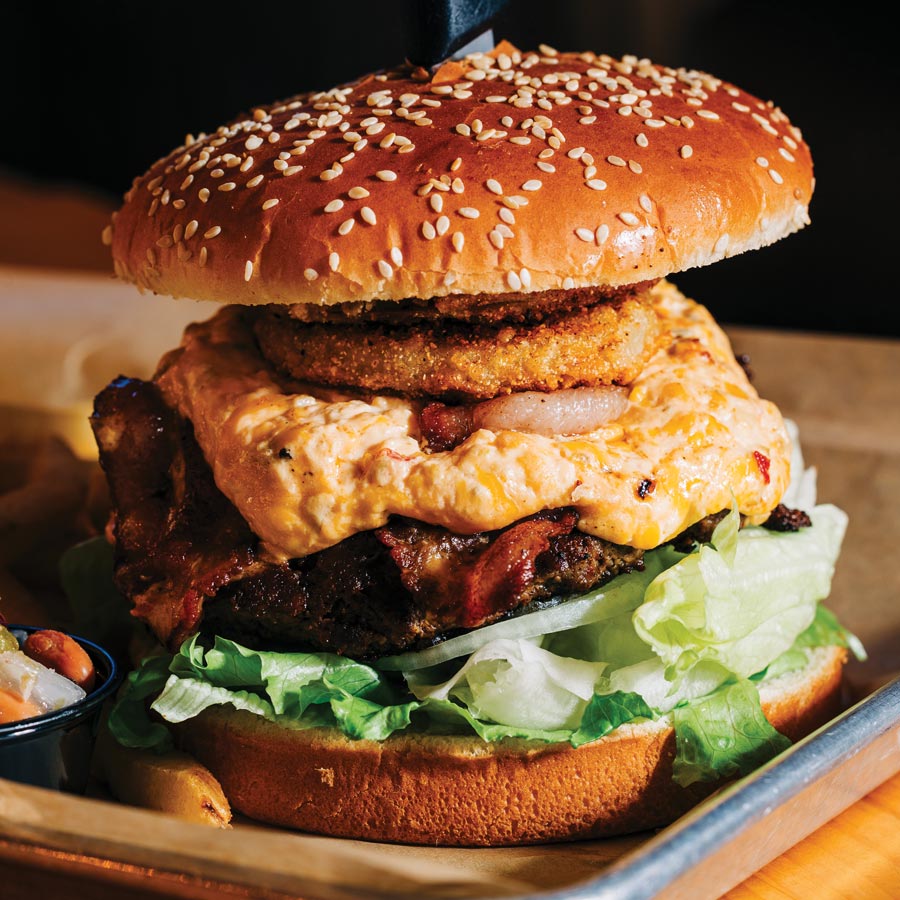
EVENING ➞ Let dinner plans include a much-loved stop on the Hatties(Burger) Trail. Though there are more than 30 restaurants from which to choose, Sully’s has an intriguing bare-knuckle boxing backstory. Order the quarter-pound Light Weight or the robust Knock Ya Silly Philly burger that comes topped with shaved sirloin and sauteed veggies, all dripping with queso. While you wait for your meal, delve into details of the epic 75-round fight between Hattiesburg native John L. Sullivan and Jake Kilrain in 1889. Before you call it a night, head to the Mahogany Bar(aka the Hog) in Midtown for laid-back ambience and excellent mixed drinks. Located inside Crescent City Grill, it continues to win FestivalSouth’s annual Best of the Pine Belt awards.
SUNDAY
Hattiesburg Zoo
Courtesy Visit Hattiesburg
MORNING ➞ Rise and shine with a fresh bagel from retro-themed Southbound Bagel and Coffee Shop. Favorite flavors range from sweet (chocolate chip) to savory (cheddar jalapeño). Don’t skip town before dropping by T-Bones Records and Cafe for a midmorning latte or London fog and a browse through the vinyl bins, merch, and books. The vaunted shop has been around for 20 years, and people come from miles away for its Record Store Days, open-mic nights, and listening parties. Close out your Hub City weekend with a visit to the Hattiesburg Zoo in Kamper Park. In addition to featuring animals from all parts of the world (from Malayan tigers to Chilean flamingos), it also offers a splash pad, ropes course, and areas where you can pet and feed wallabies, emus, giraffes, and more.
• • •
DAY TRIPS Three Mississippi towns worth the drive
Laurel Laurel’s starring role on HGTV’s Home Town sparked a major transformation to its quaint downtown. Begin at the Lauren Rogers Museum of Art, and make time to visit Laurel Mercantile Co. and sister stores Scent Library and Scotsman General Store—all of which are owned by the hosts of the show.
Meridian This walkable city is home to Mississippi’s oldest restaurant, Weidmann’s, open since 1870. It’s also where you’ll find the nation’s longest-running music festival, dedicated to favorite son Jimmie Rodgers, the Father of Country Music.
Gulfport Ancient live oaks, fresh seafood, and sandy stretches make Gulfport a great introduction to the coastal region. Peruse the Arts Center, then enjoy dinner and drinks at the brand-new Siren Social Club inside Hotel Vela.
This article appears in the Spring 2026 issue of Southbound.
Marvin Allen shook up cocktails at New Orleans’s Carousel Bar for 21 years. These days, he serves as its beverage-control manager and official historian.
Courtesy Hotel Monteleone
Situated inside Hotel Monteleone in the French Quarter, the Carousel Bar has lured thirsty passersby to its 25-seat rotating bar since 1929. Marvin Allen joined the party in 2002, quickly learning how to hop over the bar top to start his evening shift (there’s no door or entryway) while patrons clapped and cheered. “It’s like the changing of the guard at Buckingham Palace,” he says. “People love it.” What they don’t love is the rare occasion when the bar’s historic engine acts up and the rotation grinds to a halt. “People get really upset,” he says. “But if you give them good drinks, they forgive it.”
History Lesson “Over a year ago, I started offering something for hotel guests called the Carousel Bar Experience. An hour before we officially open, we let 25 people sit at our bar, have a cocktail, and learn about this place. I share how the hotel came into being; the history of the Carousel Bar; Prohibition and its impact on cocktail culture; and what makes a great drink. It’s $100 per person, and when we open, you can stay in your seat as long as you want.”
The rotating bar
Courtesy Hotel Monteleone
Grab a Chair “Our best seats are the 25 at the rotating bar; it takes 15 minutes for them to complete a full circle. I’ve seen people try to pay for them; one guy paid $500 for two seats. I’ve also seen two people scope out the same seat, and when it opened up, they tried to pull each other off it. They both ended up getting ejected. My advice is just to be alert, walk around a little bit, and be patient. If it’s not too busy, bartenders can help with a nod or a wink.”
Drink the Square “The Carousel Bar originated the Vieux Carre cocktail. Vieux Carre means ‘old square’ in French—it’s a reference to the French Quarter. We created it here in 1935, and some of its ingredients are a tribute to the ethnic groups living in the French Quarter at that time. For the French, there’s cognac and Benedictine; for the Americans, there’s rye whiskey; the Italians were acknowledged with sweet vermouth; and those from the Caribbean had Angostura bitters.”
A Toast to Growth “I’ve seen the Carousel Bar go from being a local novelty to becoming an international destination. It attracts celebrities like Jessica Lange, Jeremy Irons, and Cuba Gooding Jr. A couple of episodes of NCIS: New Orleans were filmed at the bar. Overall, it’s a great place for people-watching. Not a day goes by that I don’t meet interesting people.”
This article appears in the Spring 2026 issue of Southbound.