

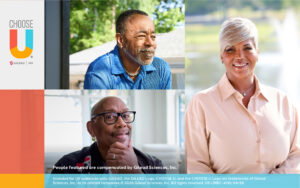
For Georgia residents Malcolm, Stewart and Toi, living with HIV has meant getting comfortable with change. While their individual stories may differ, they all reflect the resilience, self-advocacy and connection that can play a role in shaping a person’s HIV journey.
Malcolm and Stewart, a married couple living in Decatur, Georgia, were both diagnosed with HIV in 1997, a time when an HIV diagnosis carried profound uncertainty. Malcolm remembers attending funerals for friends who died due to complications related to HIV. Stewart recalls an HIV-related bout of bronchitis that left him in a coma for two months. Their memories underscore how different the landscape was nearly three decades ago — and how far HIV care and treatment have come.

The couple disclosed their HIV statuses to one another early in their relationship. That openness became a foundation for supporting each other through the many decisions that followed. HIV care and treatment have been an ongoing part of their lives, but they have not always looked the same.
As people living with HIV age, their needs may evolve based on different factors, such as chronic conditions, use of multiple medications, and changes to physical and mental well-being. For example, at one point, Malcolm was uncertain about managing his HIV treatment but knew the importance of staying on HIV treatment. Conversations with his doctor led him to seek care from an HIV specialist, enabling him to take an active role in his treatment plan. Meanwhile, Stewart has navigated HIV care alongside colon and prostate cancer. Open conversations with his cancer specialist and the rest of his care team enabled him to stay engaged with HIV treatment.
These opportunities are not equally available across Atlanta. According to 2023 AIDSVu data, among Black Atlantans diagnosed with HIV, 75.5% received medical care while only 63.1% achieved viral suppression. Viral suppression is when the amount of virus in a person’s blood sample is undetectable, meaning that there is so little virus in the blood that a lab test can’t measure it. According to research, taking HIV treatment as prescribed and getting to and staying undetectable prevents HIV from spreading through sex.
Those numbers reflect many possible barriers to HIV treatment: internal and external stigma, lack of insurance, financial obstacles and negative experiences in healthcare settings. Caring for individuals living with HIV requires recognizing that a person’s well-being is shaped by more than just medication or lab results.
Newnan, Georgia, resident Toi understands this reality firsthand. Diagnosed with HIV in 2009 while incarcerated, she has navigated HIV treatment as a Black woman of Trans experience. Her journey inspired her to found the Trans Women of Color Healing Project, an organization that supports and connects Trans women of color through advocacy, education and community.
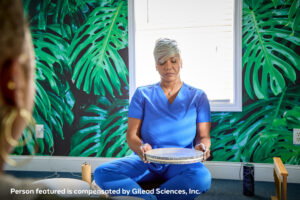
For Toi, who takes a holistic approach to her well-being, affirming care begins with being seen and heard as a whole person. She emphasizes the difference healthcare providers can make when they listen to people with HIV and understand the realities of someone’s life.
“Two things I would tell doctors, nurses or practitioners treating Trans and gender-diverse individuals would be to treat Trans and gender-diverse individuals with care,” Toi says. “Respect our identities. Make sure that you are creating safe spaces where we’re able to self-identify and be ourselves. Make sure that you are allowing us to self-identify, and understand that you’re not the experts of us, and you’re only able to provide the best service for us when you are asking us or centering us. So, having person-centered approaches when providing services for us.”
As Choose U ambassadors, Malcolm, Stewart and Toi share their unique perspectives to empower people to prioritize their needs and make decisions about their lives and well-being. Choose U, a global storytelling campaign launched by Gilead Sciences in September 2025, was created in collaboration with people living with HIV around the world. By encouraging education, reducing stigma and supporting open dialogue with healthcare providers, Malcolm, Stewart and Toi center a simple but essential idea: people living with HIV deserve an active role in their care. Adhering to HIV treatment as prescribed is important — and so is finding care that aligns with a person’s changing health needs, identity and goals.
At the upcoming U.S. Conference on HIV/AIDS, taking place September 17-20, Malcolm, Stewart and Toi will share their stories at the Gilead Sciences booth to highlight how progress in HIV care requires more than treatment availability. It requires equitable access, respect, community and the power to speak openly about what each individual needs.
For anyone living with HIV, a conversation with a healthcare provider can be the most meaningful place to start.