

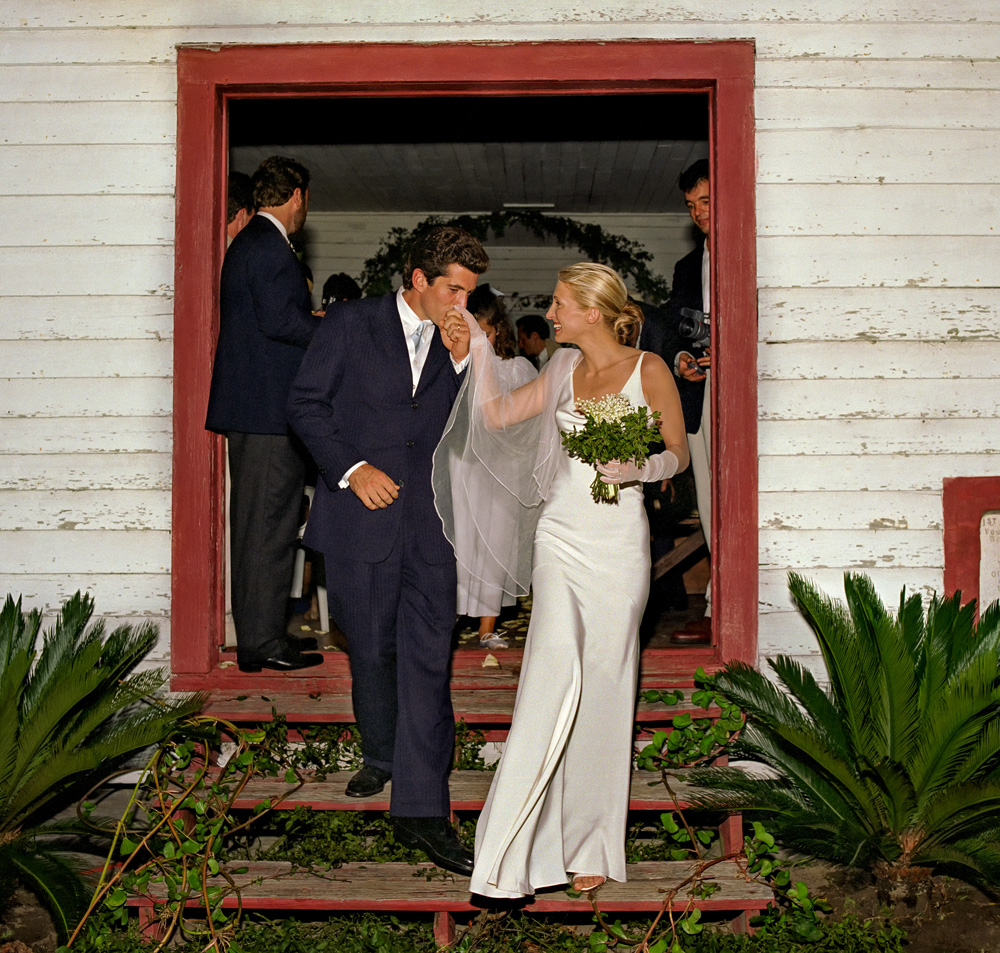
Photograph by Denis Reggie
“How many dwellings were constructed is not known, however a log building that served as both church and school was constructed in 1893 on two adjoining lots designated as church lots in a plat of the area. The present First African Baptist Church stands on the same property. Little is known of these first residences, all of which have disappeared.”
—National Register of Historic Places Inventory, 1978
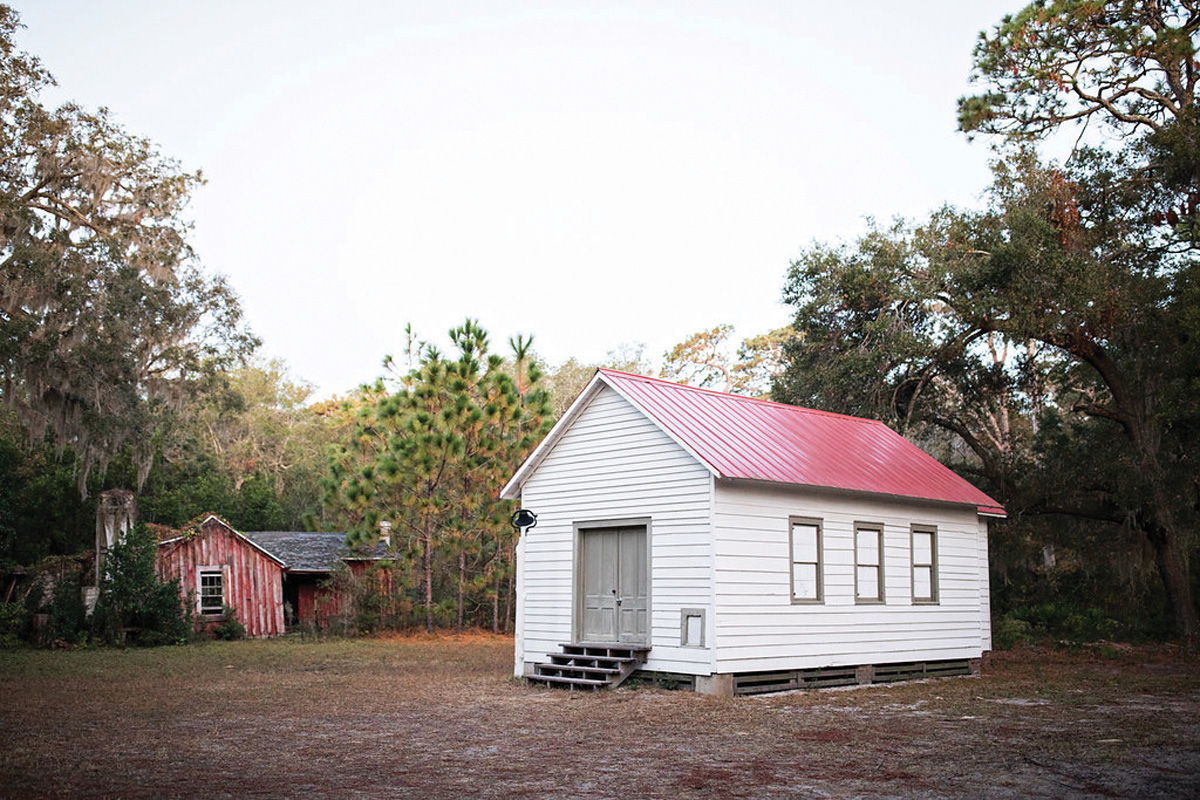
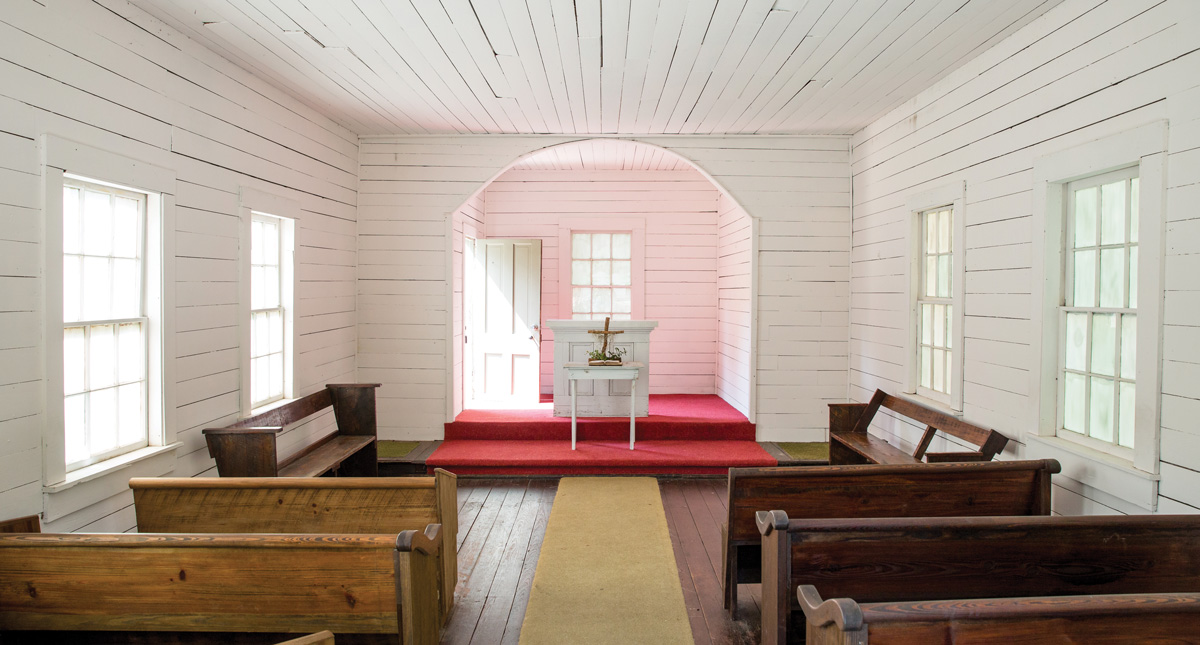
THE WOODEN STEPS HAVE BEEN REPLACED, but the windows remain painted over, and the small cross made of sticks and twine still rests discreetly on the altar, a little off plumb. In this tiny chapel on the north end of Georgia’s largest barrier island, there’s no running water or electricity; just 10 simple pews and a delicate arch cut into the white weatherboard siding. The doors creak when they open.
Thirty years ago, only a handful of people knew the First African Baptist Church on Cumberland Island existed. Those who did probably either lived or worked on the island (whose year-round population is still fewer than 40 people). Then came the fall 1996 photo—her gloved hand outstretched, him kissing it, both newlyweds beaming in the candlelit doorway—and the tabloid feeding frenzy the couple never fully escaped. The entire world focused its gaze on First African Baptist and Cumberland Island because both places were now connected to them: John F. Kennedy Jr. and Carolyn Bessette-Kennedy, the brightest and most reluctant stars in the ’90s parasocial firmament.
Photograph by Andrew Cebulka
Photograph by Hunter Mcrae
That reluctance informs much of Love Story, Ryan Murphy’s 2026 multipart TV drama, which reimagines the couple’s relationship before they died in a tragic 1999 plane crash off Martha’s Vineyard, along with Carolyn’s sister Lauren Bessette. It is the most-watched limited series in FX history, with more than 65 million global streaming hours. Predictably, the show has reanimated the media’s obsession with the Kennedys, spawning gauzy listicles on everything from John’s headbands to Carolyn’s favorite shade of lipstick. Some critics have praised the show for its nuance and sensitivity. Others have panned it as a “forgettable elegy for Gen X.” The surviving Kennedys, who weren’t consulted for the show, aren’t happy about any of it—Jack Schlossberg, John’s nephew, called it a “grotesque display.”
So, as I stand under the chapel’s red tin roof on a rainy morning, I’m thinking about what we remember, what we forget, and what endures either way. I am also thinking about the meaning, the fascination, and the nostalgia this church holds for thousands of people who have never been here—not because of the hands that built it, but because of a single flashbulb moment. How it lit a screen onto which the world projected its fantasies and fairy tales.
Up ahead, several members of a tour group mull over the show’s plot points, some of which are accurate, many of which are not. (The wedding episode wasn’t filmed here, but in a replica chapel the crew built in upstate New York.) Did the couple wake up on the beach the day of the wedding? (No. They stayed in separate private houses before moving to the island’s only hotel, Greyfield Inn.) Was John late to the ceremony? (Yes, he forgot his father’s cuff links.) What about Carolyn’s difficulty with her famous slip dress? (The designer, Narciso Rodriguez, slid it over her head using a silk scarf to avoid disrupting her makeup. To borrow a phrase from local tour guide Jona Kennison, “Y’all, to try to put on a slip dress is like trying to put on a wet bathing suit.”)
This is what we do to celebrities—what we’ve always done, and what we can’t help but do—we make them into paper dolls we can cut out and carry with us. And it is what we have always done to the Kennedys, from the most superficial details of their lives to the most unspeakable losses, whether they participated in their own celebrity or not.
Which brings us to what we remember: The wedding. The photo. The cover of People magazine. An event that required a level of discretion unprecedented for the time. John’s assistant, RoseMarie Terenzio, printed the programs after hours at the offices of George magazine; the food and wine were shipped to the island under secret names. The 40 guests didn’t know where they were going until they arrived at the dock in nearby St. Mary’s and were ferried nearly two miles across an intracoastal waterway.
The person most responsible for the wedding’s success was John’s friend, the artist and jewelry designer Gogo Ferguson. Ferguson is the great-great-granddaughter of industrialist Thomas Carnegie (the younger brother of Andrew Carnegie) and his wife, Lucy, who once owned 90 percent of the island. As Gogo explained to one of John’s biographers in 2021, “The only gift we could actually give them is their privacy.”
“She kept it quiet, and she didn’t even tell me,” Gogo’s brother, Jamie Ferguson, told me recently. “But as soon as word got out, there were helicopters. It was crazy.”
Jamie smiled patiently when I asked him about the occasion. He wasn’t on the island for the wedding, but even if he had been, the family has generally agreed not to talk about it. “I seek out ignorance,” he said about that particular topic. “And if I don’t seek it, it’s there kind of naturally.”
Indeed. For a place that has been occupied for at least 4,000 years—first by the Timucua and other Indigenous peoples, then by the Spanish, the French, the British, and the Gullah Geechee—one wedding is the blink of an eye.
• • •
If you are looking for privacy, Cumberland Island remains one of the only places where you can find it. Despite being larger than Manhattan, it has never been commercially developed. There are no golf courses, condos, shops, or restaurants. There are no bridges to the mainland and no paved roads. The only way to get here is via boat or private plane. When Congress designated the island a national seashore in 1972, the National Park Service capped the number of visitors at 300 a day; it typically receives less than 60,000 a year. (To put that in perspective, Amelia Island, just south of Cumberland, gets more than 1 million visitors, and Jekyll Island, to the north, welcomes more than three times that.)
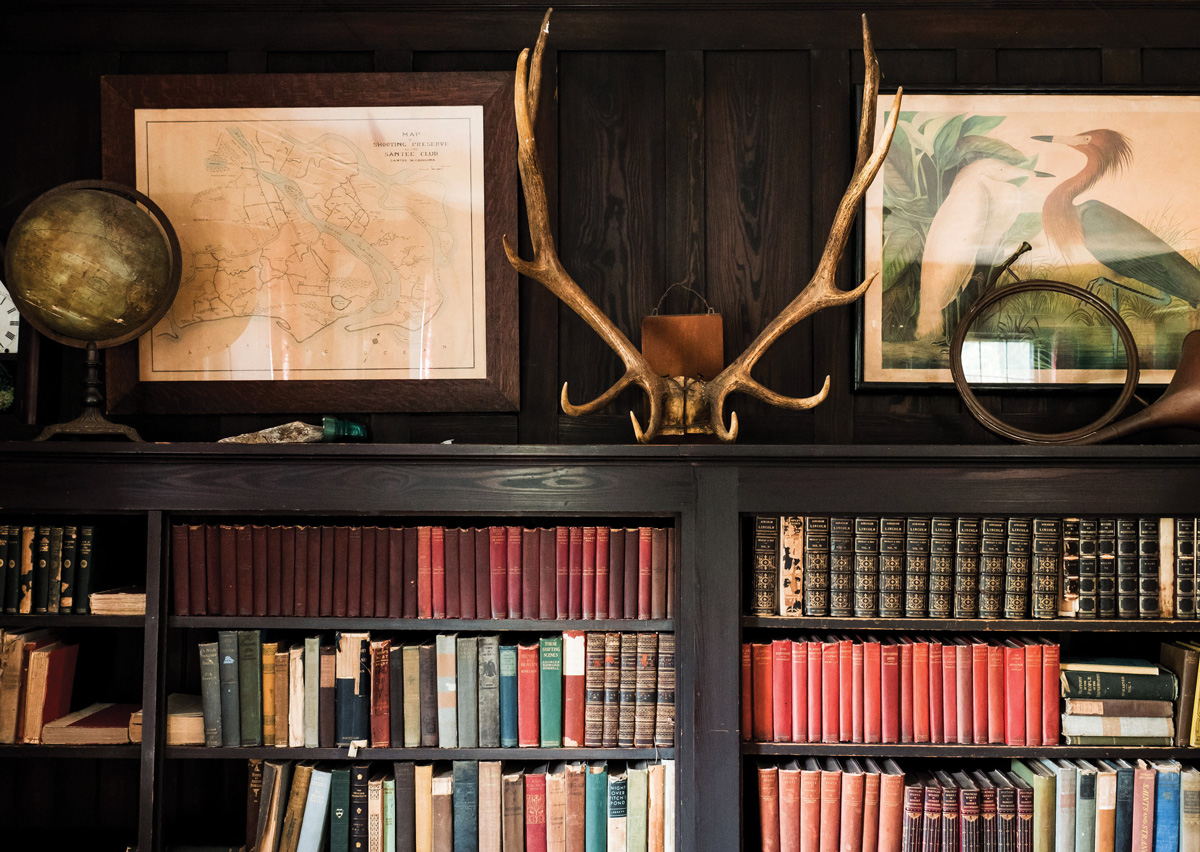
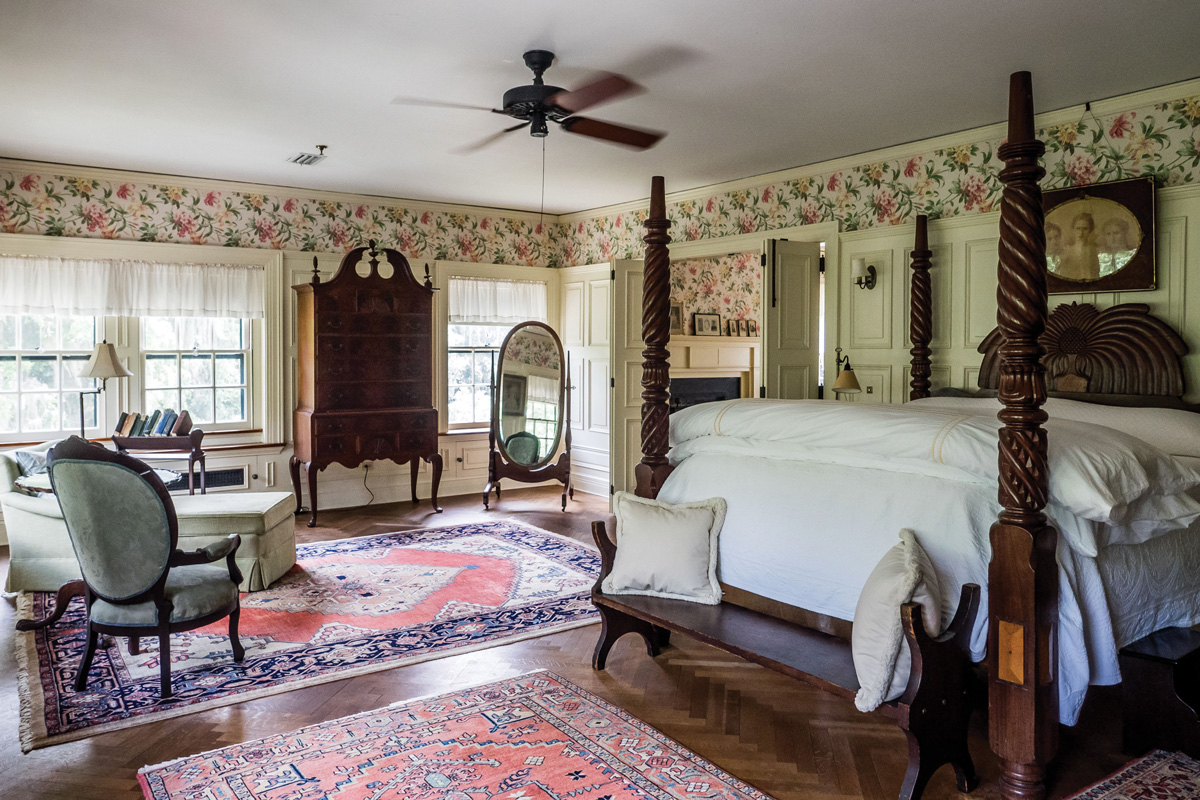
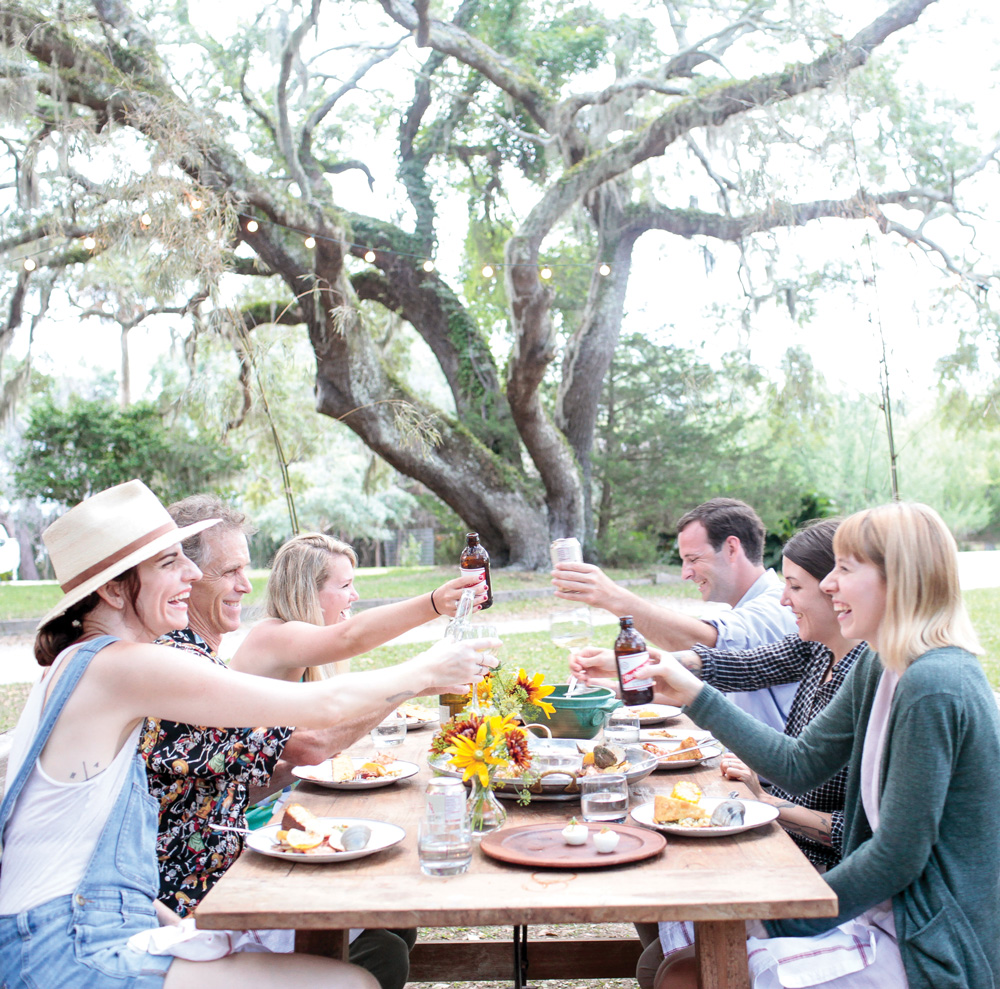
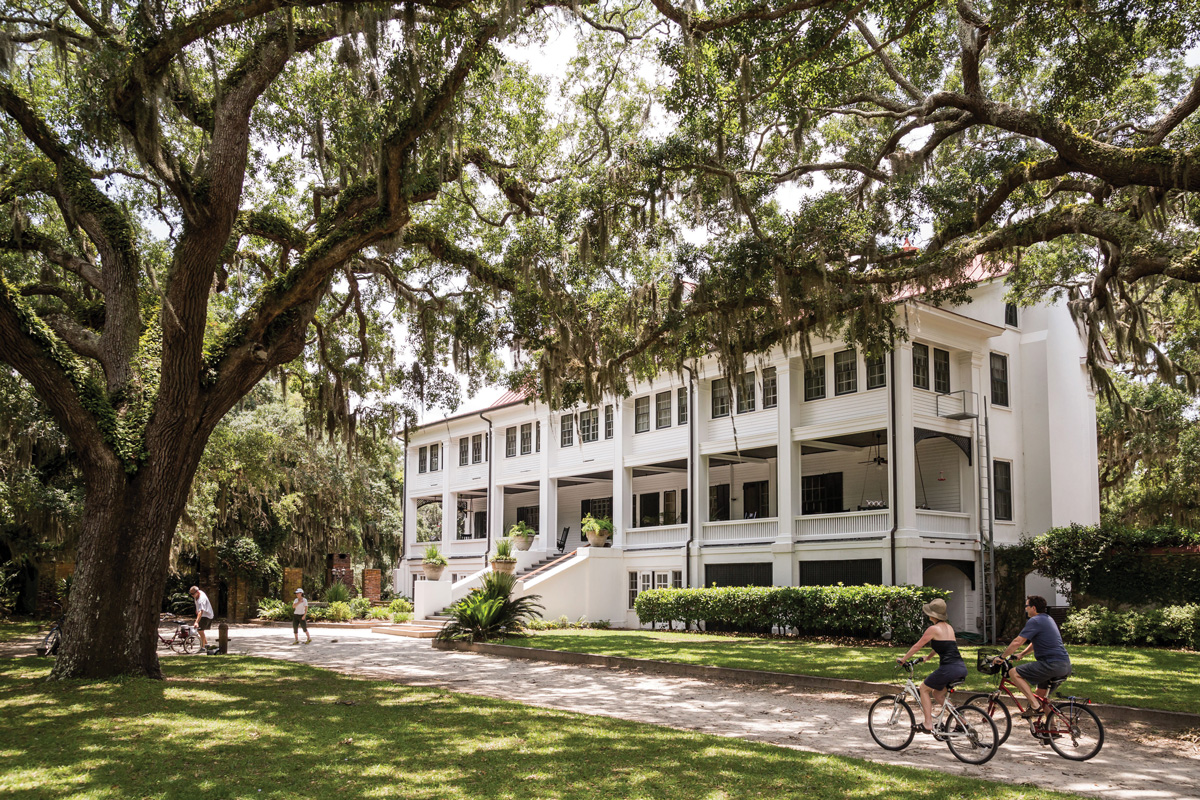
Overnight visitors have two types of lodging options: campground sites, which require permits and reservations, or the aforementioned Greyfield Inn, which accommodates 32 guests at a time. With its moody private library and candlelit multicourse dinners, Greyfield is as beautifully appointed as you could ask for—maybe even more so, as there are no TVs or Wi-Fi. According to Ava Ferguson, Jamie’s daughter and the inn’s current manager, there never will be. “It’s just so different from the rest of the world,” she tells me, “and I think people can feel that as soon as they step off the boat.”
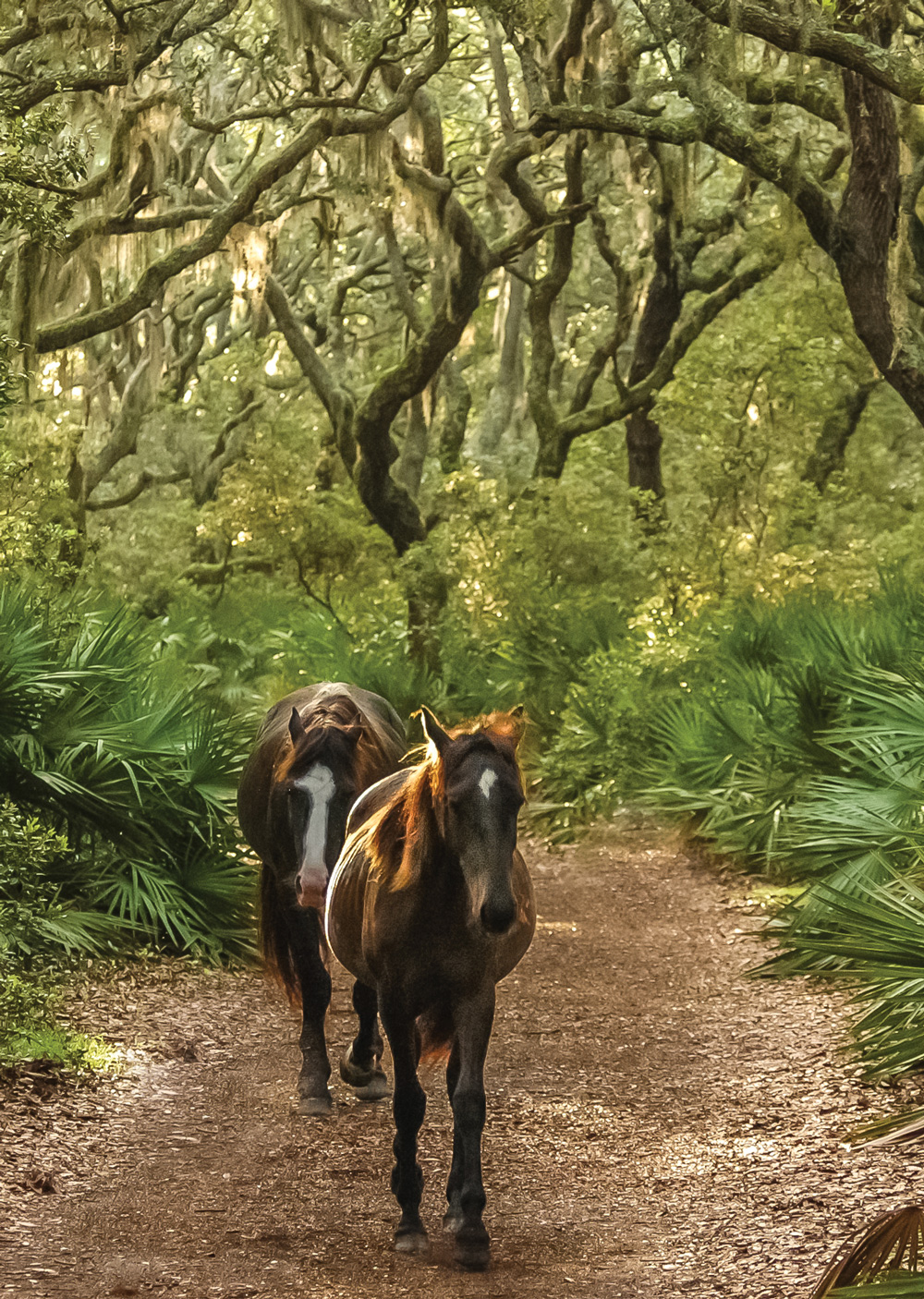
You are more likely to encounter wild horses or armadillos on the forest paths of Cumberland than you are other people. Traveling here is like cutting a cord; whatever happens in the rest of the world stays there. “The island teaches you the value of patience,” Sam Candler, a Cumberland landowner and the great-great-grandson of Coca-Cola founder Asa Candler, told The New Yorker’s John McPhee in 1971. “The sea oats come back. Dunes that are washed down will return. You’ve got to have some places that are hard to get to.”
Photograph by Peter Frank Edwards
Photograph by Peter Frank Edwards
Courtesy of Greyfield Inn
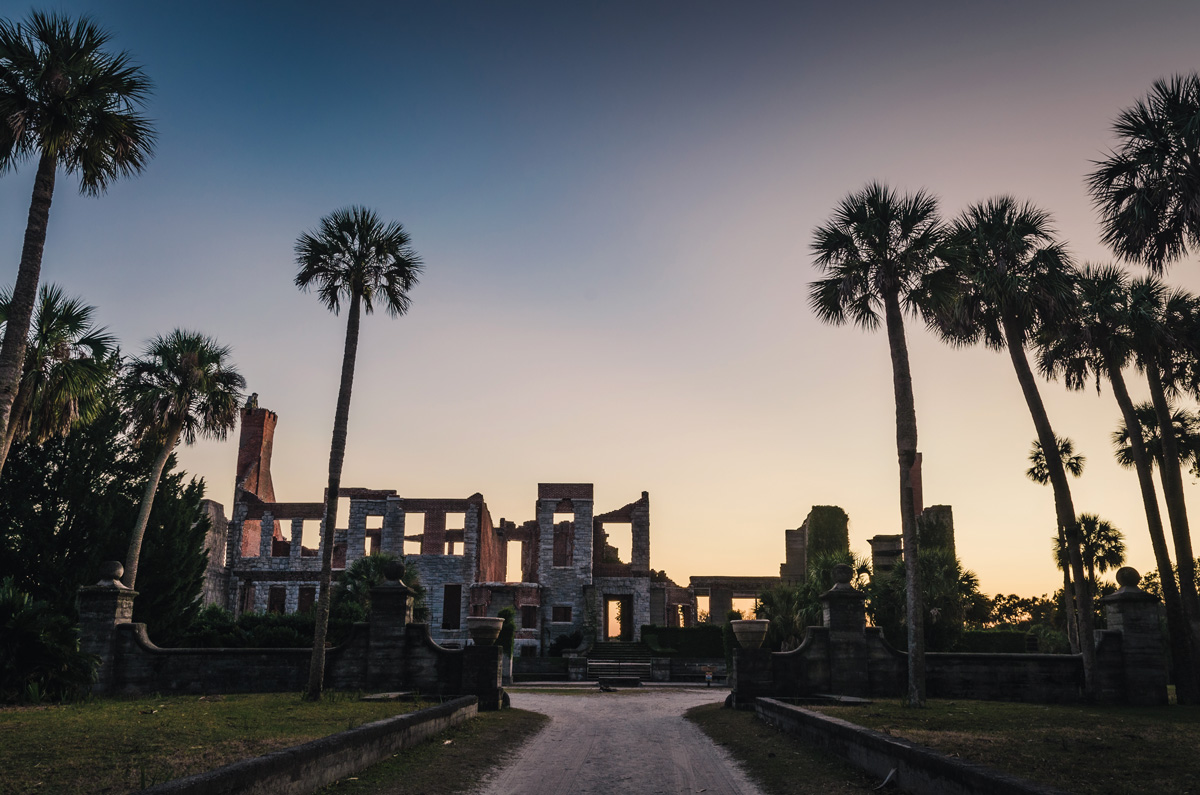
All of that is by design, because the modern history of Cumberland Island is also the history of extraordinary privilege. During the 1880s, it became a favored retreat for the titans of the Gilded Age, most notably the Carnegies, who built lavish mansions among the live oaks. The largest, Dungeness, rambled over 36,000 square feet before it burned down in 1959, leaving behind an eerie skeleton of ruins.
Two Carnegie mansions are still very much intact and open to the public. They rise, Brigadoon-like, from the green shade. When Thomas Carnegie died at the age of 43 in 1886, his widow, Lucy Carnegie, consolidated her husband’s landholdings and bought up almost everything else, effectively turning the island into her own private empire. She built a staggering estate for each of her children, in hopes they would stay close. The first, Plum Orchard (22,000 square feet), was built for her son George in 1898. The second, Greyfield (15,000 square feet and now the Greyfield Inn), was built for her daughter Margaret in 1900.
The Kennedys could have been married in either of these places (or at High Point, the 1,000-acre Candler compound on the island’s northern tip). All would have been easier than putting, say, Ted Kennedy and Christiane Amanpour in pickup trucks with Chippendale chairs in the back and shuttling them to a church almost 20 miles north of Greyfield. The bumpy journey took them along sand-lane roads, over several rickety bridges, across swamps and salt marshes, through a tunnel of live oaks and cat palms to a wooden chapel at the center of a vanished community.
So, why this church?
That’s the story the tabloids didn’t tell. That’s the part we forget.
• • •
It’s still raining when I wrap a green poncho around my shoulders and step outside, into a muddy clearing surrounded by a few garden plots and former animal pens. These are the last remnants of the village once known as the Settlement, which was established by formerly enslaved Gullah Geechee people after the Civil War. Built in 1937, this building is not the original First African Baptist Church—that was a rough-hewn log cabin erected on the same site in 1893, which eventually crumbled.
The church’s roots can be traced to the late 18th century, to Catherine “Caty” Greene-Miller, the widow of Revolutionary War general Nathanael Greene, and her second husband, Phineas Miller, who transformed Cumberland from a strategic military outpost into a sprawling Sea Island cotton plantation. Other plantations followed, all worked by enslaved people. By 1861, Cumberland’s population had swelled to more than 500 residents, at least 400 of whom were Black. They spoke their own language, later known as Gullah or Geechee, and retained their African ancestors’ spiritual practices as best they could, gathering in small cabins known as “praise houses” and cloaking their rituals in Christian symbols. Many either fled Cumberland or were displaced when Union forces occupied nearby Fernandina, Florida, in 1862.
What little we know of their lives, we know because of figures like Primus Mitchell, who was born into slavery on Cumberland’s Rayfield Plantation sometime around 1825. He was nine years old when he, his sister Judah, and 51 other enslaved Gullah Geechee people were sold to the island’s wealthiest planter, Robert Stafford. According to historian Mary Bullard, Judah was likely the mother of at least two of Stafford’s children.
Primus appears to have been highly devout and worshipped at a community church two miles north of Stafford’s plantation. At least once during the Civil War, he had the opportunity to leave Cumberland and didn’t, even as Confederate raiders roamed the island, and the rest of his family had to flee. “I think Mitchell considered the old church his responsibility and tried to protect it,” Bullard writes in Cumberland Island: A History.
Photograph by Getty Images
Between 1862 and 1864, Mitchell did leave—or was forced to. He served on two Confederate warships before Emancipation. After, he fought for the Union aboard at least two other ships. But Mitchell returned to Cumberland in 1874. Letters and archival documents refer to him as an exhorter, or lay preacher, who blended Baptist Christian doctrine with his own charms and divinations. “This journey from and back to the island tells me that he was a man that took the Exodus to freedom that he was aware of from the Bible,” Marquetta Goodwine—who, in 2002, was elected Queen Quet, chieftess of the Gullah Geechee Nation—explained to me recently. “However, he may have found that going out into the rest of the area was not the ‘Promised Land’ that he expected.”
By then, only a handful of Mitchell’s fellow freedmen were left on Cumberland, and many were tenant farmers in a community they called Brick Hill. They didn’t stay there long. Within a few years, their White landlord, Silas Fordham, kicked them all out, hoping to sell his holdings to the new generation of wealthy White industrialists.
They moved farther north and paid $16 each for lots 50 feet long and 100 feet wide. On this five-acre tract, they raised hogs and chickens and grew corn, melon, and okra. Some worked for what was then the High Point Hotel. Thus, the Settlement was born.
But it had no church, which Primus desperately wanted. “As his cultural world crumbled around him,” Bullard writes, “Primus struggled even harder to uphold his religious values.”
So imagine what it must have meant to him in 1893, when he and his sons-in-law scraped together the money to buy two lots for a new chapel, which they built from scavenged logs and timber. To know, after a lifetime of displacement, that he and his neighbors could worship as they wished on land no one could take from them.
Photograph by Getty Images
Primus died in 1917. By the 1930s, the original First African Baptist was crumbling. Its pastor, Reverend L.S. Morrison, was a Jamaican immigrant who married a Gullah Geechee woman from Florida. Morrison and his congregation designed and built the current First African Baptist with wood repurposed from a house razed in nearby High Point.
Which is how we arrive at the answer to the question: Why this church?
Because of April 4, 1968. The day Martin Luther King Jr. was assassinated in Memphis. Then-presidential candidate Robert F. Kennedy delivered one of his most famous and passionate speeches to a mostly African American crowd in Indianapolis, urging all his fellow citizens to turn back the cresting wave of hatred that threatened to engulf them. Three months later, he, too, would be dead—shot in the kitchen of the Ambassador Hotel in Los Angeles. According to a story his nephew John F. Kennedy Jr. was told years after, the people of Cumberland Island gathered at First African Baptist to remember him.
That’s why this church meant something to John.
Is that story about the church gathering true? We don’t know. The recorded history of the Settlement began to fade in the mid-20th century as its residents either died or moved to the mainland. Some people’s lives are exhaustively chronicled; others dissolve from the ledgers.
So, if you arrived from the mainland, as I did, knowing very little about this place or this church beyond the two famous people once captured in its doorway, remember all the people who passed through that doorway before them, and the ones who came after. After nearly a century of quiet obscurity, punctuated by one moment of dizzying fame, this old church remains.
Photograph by Peter Frank Edwards

Greyfield Inn
Cumberland Island, Georgia
Getting there
Fly to either Brunswick, Georgia, or Jacksonville, Florida, then take one of two ferries to Cumberland Island. The first runs from the visitor center in downtown St. Mary’s, Georgia, and the second, which is reserved for guests of Greyfield Inn, departs from the dock in Fernandina Beach, Florida. Both require reservations in advance.
Where to Stay
Greyfield Inn. Room rates include overnight parking in Fernandina Beach, private ferry to and from Cumberland Island, all meals, pantry snacks, guided tours, and the use of bicycles and kayaks (dinner wine pairings and use of the inn’s honor bar are additional). Rates begin at $995 per night; a two-night minimum stay is required.
Worth Noting
Cell reception is very limited on the island, and there is no Wi-Fi at the inn, but landlines and office internet are available for emergencies.
Don’t Miss
While it is possible to see First African Baptist Church via bicycle, the ride is very long (almost 20 miles from the inn, one way) and winds through rough terrain. The best way to visit it is on Greyfield’s North End Natural & Cultural History Tour (four hours, lunch included, reserved for Greyfield guests) or the Land & Legacies Tour ($65, five to six hours, open to the general public).
This article appears in our August 2026 issue.