


Courtesy of WABE
There was a time when seeing a movie meant more than pressing play on a remote. It entailed showing up at a packed theater on opening weekend, waiting eagerly in the box office line, then racing inside to snag a seat with the best view.
Cinema Social, a monthly screening series from NPR-affiliate station WABE, tries to capture that experience again. The event, launched in February, is an expansion of one Lois Reitzes used to host for the station’s arts and culture program City Lights.
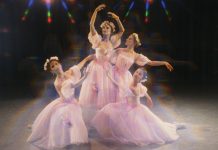
“Once a quarter, we’d invite WABE listeners and Lois fans to come watch a movie with her,” says Sherri Daye Scott, WABE’s arts and culture editor, who curates the new series. When Reitzes retired in 2025, the station expanded the program into Cinema Social, held on the second Saturday of each month at either The Tara or the Plaza Theatre. This month’s pick is Miss Juneteenth, the debut feature from filmmaker Channing Godfrey Peoples, which follows a former pageant queen as she prepares her unenthusiastic daughter to compete in the same pageant. The screening, on June 13, connects to this month’s Juneteenth holiday commemorating the end of slavery in the United States.

Courtesy of WABE
Recent Cinema Social screenings include Mississippi Masala, The Joy Luck Club, and the documentary Food, Inc. Each screening is accompanied by a conversation with local filmmakers, artists, or other subject-matter experts, who share reflections on the film or discuss its connection to Atlanta. Before the March screening of Frida, for instance, the artist Monica Campana, cofounder of the public mural project Living Walls, spoke about some of Frida Kahlo’s life and inspirations, as well as her own experience as a working artist.
Cinema Social also offers a potential new revenue stream for the station; the Trump administration’s cuts to the Corporation for Public Broadcasting, which funds National Public Radio and its affiliate stations, eliminated roughly 13 percent of the station’s budget. Programs like the new film series, Scott says, are both a new source of funding—the first few screenings have each brought in about $2,000 of take-home revenue for WABE—and a creative way to engage Atlanta audiences. “Our goal is always to be giving something back, even when we’re asking for support,” she says. “I think everyone on the team sees it as a love letter to Atlanta.”
In the modern era, home viewing has rapidly outpaced cinema attendance. A 2025 poll found that roughly 30 percent of U.S. adults stream a new release at home once a month, compared with 16 percent who catch them in theaters. Cinema Social’s community aspect, then, is a big draw. “What I love about showing classics at a classic landmark theater is, it’s not just the feeling the film creates but also the audience, the energy, the sense of camaraderie,” says Annie Jacob, an actor and producer and regular attendee. “That collective experience is what makes cinema cultural, rather than just consumable.”
This article appears in our June 2026 issue.