


Courtesy of Capturing the Spirit of Oakland
A gravestone can tell you when someone was born and when they died, but what about everything in between: the family the person raised, the work they did, hardships they survived, and the moments they might have spent wondering what would become of Atlanta?
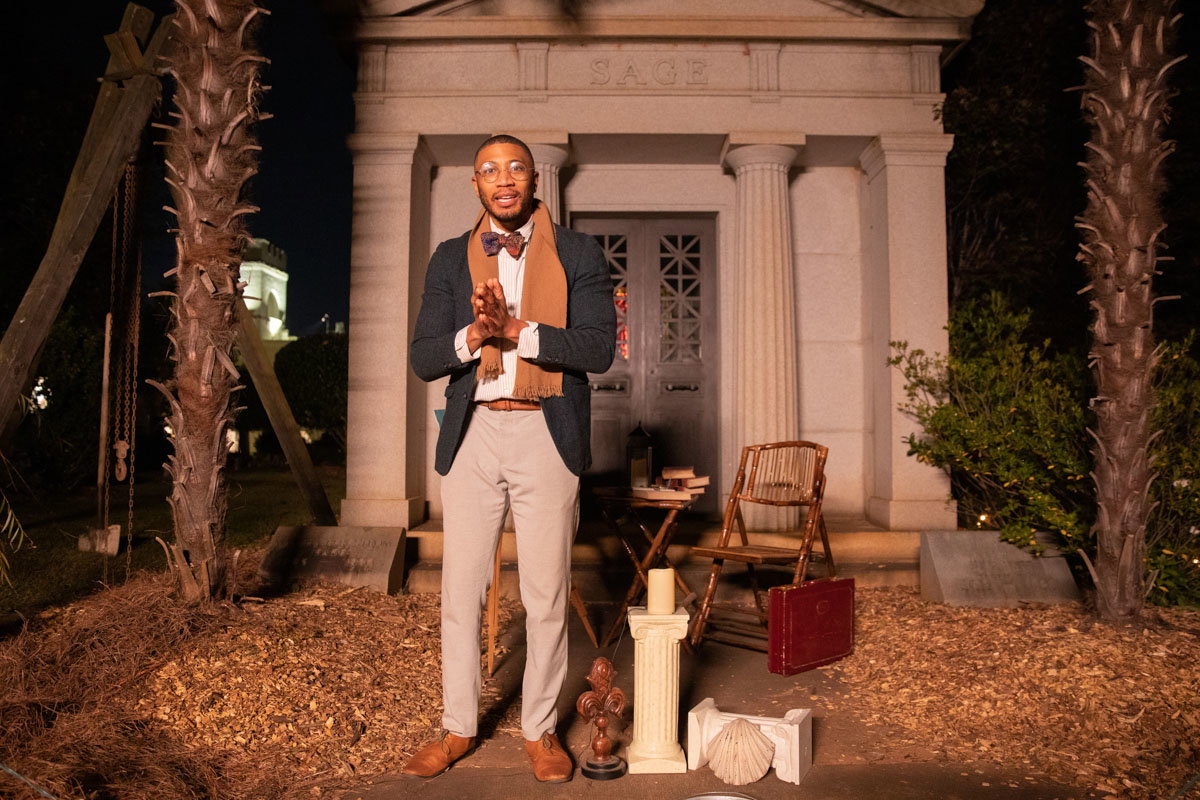
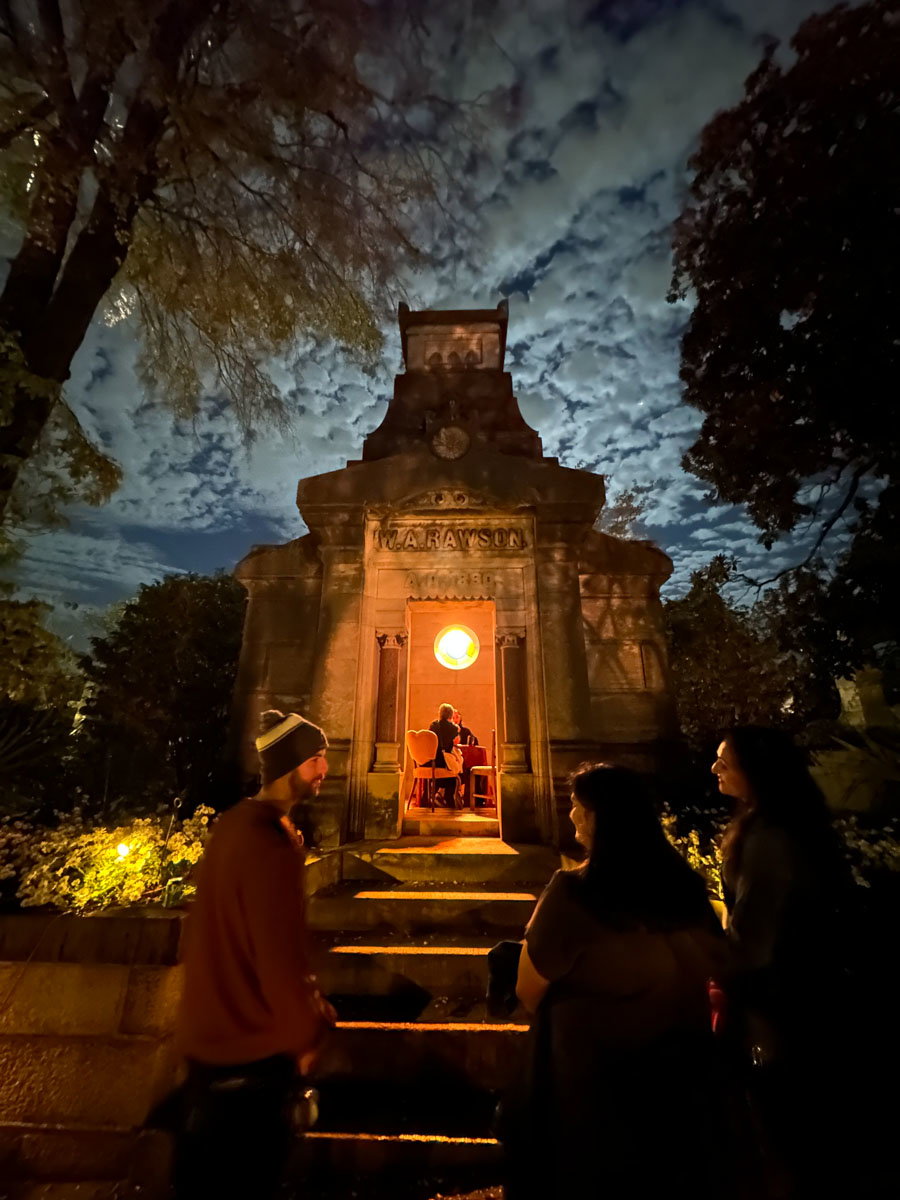
At Oakland Cemetery, those are the stories historians, playwrights, and actors go digging for to create an annual show called Capturing the Spirit of Oakland. Celebrating 20 years, the October event has invited visitors to ‘meet’ the people behind the names etched in stone. This year’s theme, Essential Atlanta, features nine residents whose lives illuminate the city’s history, from the slave-owning antebellum era, through the rise of Atlanta’s commercial institutions.
The event’s anniversary coincides with the 50th anniversary of the Historic Oakland Foundation, the nonprofit that runs Oakland Cemetery. Rather than focusing solely on the city’s leaders or VIPs, the production is increasingly interested in the unrecognizable names buried in the cemetery.
Courtesy of Capturing the Spirit of Oakland
“When the event began, they were really only beginning to make the case: these people are important! Atlanta history lives here,” says Sandy White, director of adult programs and volunteers who helps produce the event. “We did a lot of sensational and spooky stories, and the occasional Atlanta celebrity. We’re much more focused now on the extraordinary ordinary people that are buried at Oakland.”
A few of this year’s featured stories include: Franklin Garrett, Atlanta’s only official city historian and a founding member of Historic Oakland Foundation; Nellie Calhoun and Dr. Helen Nash, a great-great-grandmother and granddaughter whose stories span five generations of Black Atlanta history; photographer Thomas Askew, whose photos chronicling Black life following reconstruction are in the Library of Congress; and Harrison Coles, an ethical undertaker who respectfully buried Atlanta’s most underprivileged regardless of race or religion.
Bringing those lives to the outdoor stage begins with genealogical research. Volunteer historians compile detailed portfolios using census records, city directories, newspapers, gravestones, and other historical sources. White then assembles the research with relevant secondary sources before professional scriptwriters develop the monologues, often conducting additional research of their own. The process can uncover contradictions, including errors in census records, or even on gravestones. For Black Atlantans whose lives were often poorly documented or overlooked altogether, piecing together a biography can be particularly challenging.
“We don’t let the fact that the story might be incomplete or potentially inaccurate keep us from highlighting these residents,” White says. “If we did, we’d be perpetuating the same disrespect in death as what was shown to them when they were discriminated against in life.”
Courtesy of Capturing the Spirit of Oakland
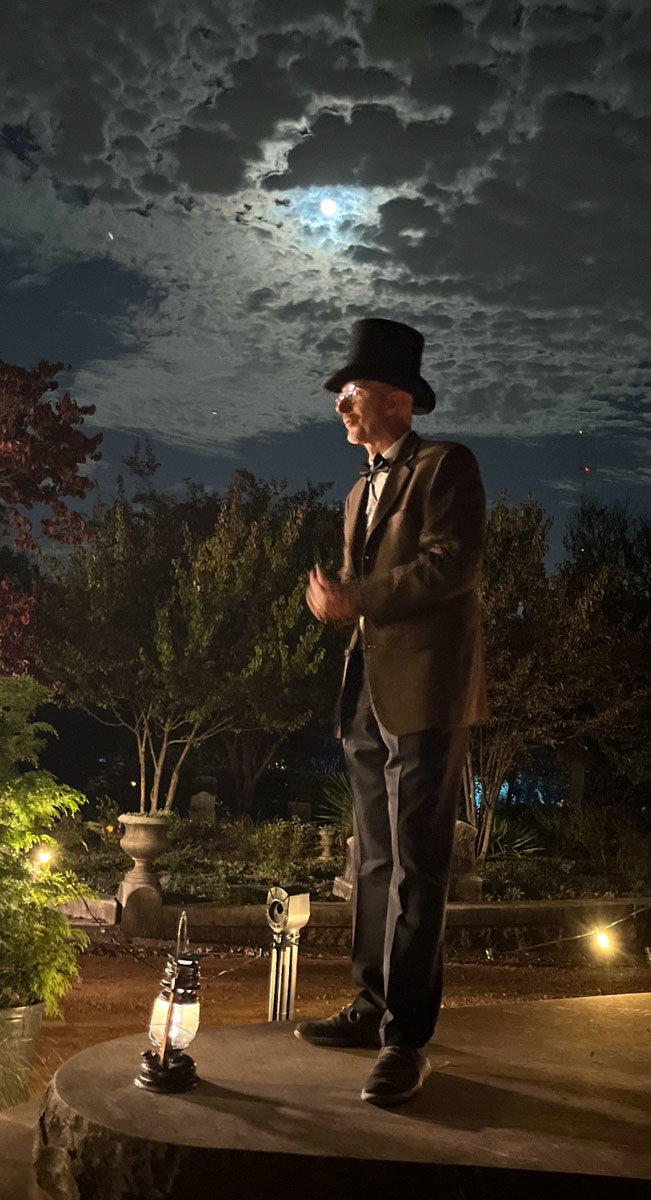
The challenge is transforming that research into a six-minute performance that feels like a life, not a mundane recited biography. Writers draw on historical context to imagine what a person might have felt during moments of triumph or grief, incorporating their own words whenever letters, interviews, or other firsthand accounts survive. Matt Huff, the event’s director and the director of theatre at Oglethorpe University, works with performers to move beyond reciting historical facts and find the feelings underneath them.
“We strive to create a living, breathing, thinking, feeling human being,” Huff says. “I want the audience to feel as if they are meeting the resident and not an actor playing a role.”
For the actors, inhabiting these characters requires tapping into an intimacy with the past. Rick Perera, one of four actors portraying department store pioneer Morris Rich, seeks out physical spaces his character might have experienced by visiting museums like Atlanta History Center and, most importantly, the character’s gravesite, to contemplate their life.
“I don’t believe in ghosts per se, but sitting ‘with’ my character in this beautiful place helps me appreciate them as a flesh-and-blood human being, not just a story on a page,” Perera says.
Fellow actor Tyler Krug, who also portrayed Morris Rich, looks to Rich’s gravestone for clues about his personality. It’s plain, understated design helped him imagine a man who was analytical and appreciated fine lines. The contrast with his brother Emanuel Rich’s more elaborate marker, decorated with bold lettering and floral carvings, offered another way to distinguish the two men.
Courtesy of Capturing the Spirit of Oakland
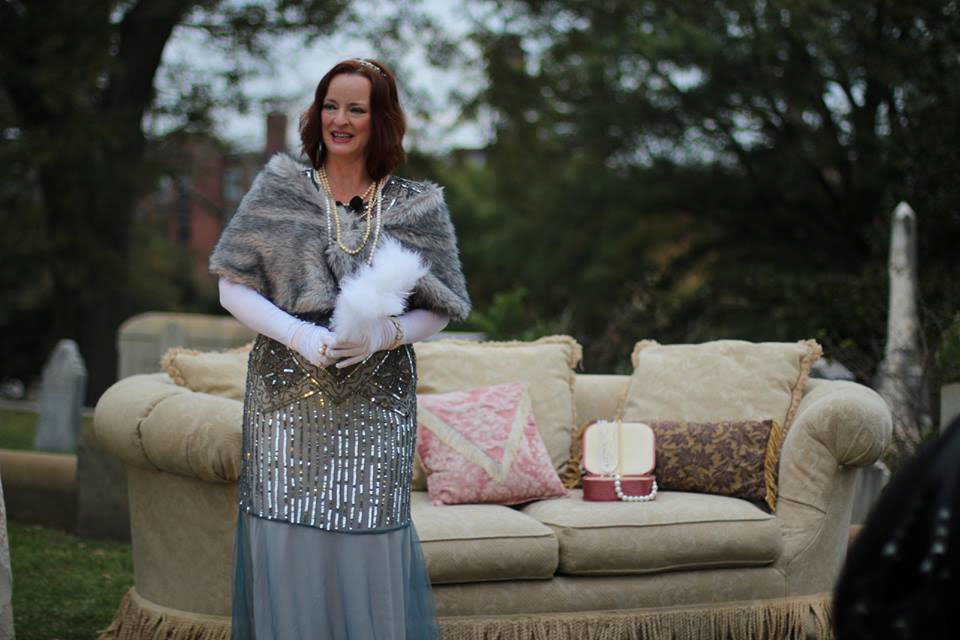
Whitney Nelson, who portrays entrepreneur and tailor Isabella Beale, researches family connections and the circumstances of her character’s life before repeatedly revisiting the script. The goal, she says, is to discover a voice that honors the person behind it.
This year, new artwork by Atlanta printmaker Jamaal Barber and a collaboration with Atlanta History Center bring additional dimensions of the city’s culture to the cemetery. The latter includes Priscilla, the beloved Pink Pig from the former Rich’s department store, connecting the history of the Rich family to a holiday tradition familiar to generations of Atlantans.
The result is a reminder that Atlanta’s history belongs not only to its celebrated figures, but also to the people whose names rarely appear in textbooks, museums, or on monuments. At Oakland, a single newspaper mention or a weathered gravestone can open a door into a life that invites us to consider how much of the city’s story remains waiting to be heard.
The final tours for the 20th Anniversary of Capturing the Spirit of Oakland are October 22-25 from 7-11 p.m.. General admission tickets start at $45 for adults and $30 for children (ages 4-12).