


Photograph by Olivia Bowdoin
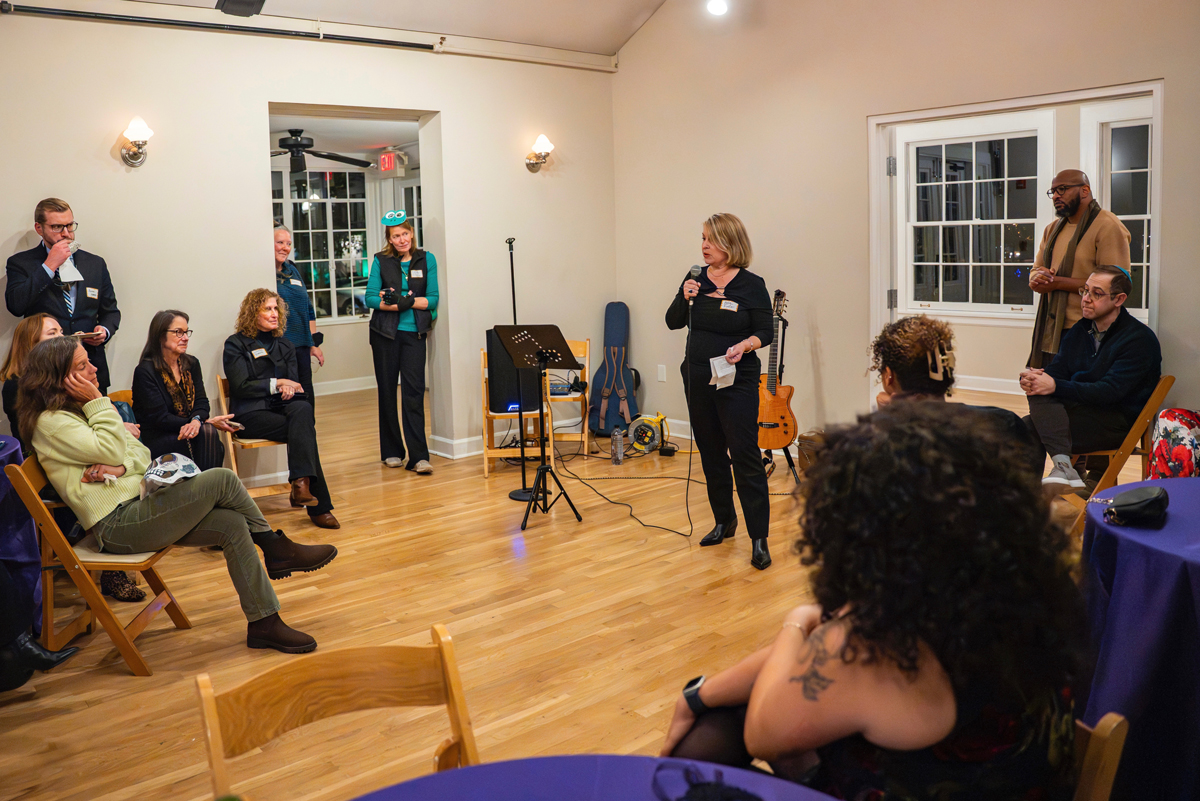
On a November night inside a Decatur event venue, the crowd included politicians and hopeful candidates—but that evening, the stage belonged to a group of people who’d never planned to be political at all. In between sets of acoustic music about “making good trouble” and “finding our better angels,” supporters listened as former CDC workers—some wearing masquerade-style masks to protect their identities—shared their stories of finding a deep sense of purpose in their work at CDC, only to be abruptly fired en masse in April. After years of working in suicide prevention, tribal health, and other specialties, these workers now found renewed purpose in a field that they’d meticulously avoided in their former roles: politics.
That evening was the fundraising launch of Public Service to Public Power, a new initiative providing former federal workers with hands-on training to work on political campaigns. The goal isn’t just to help displaced federal workers find new employment, but to strengthen Democratic campaigns with well-trained staff—particularly as Democrats look toward flipping Georgia’s state legislature in 2026.
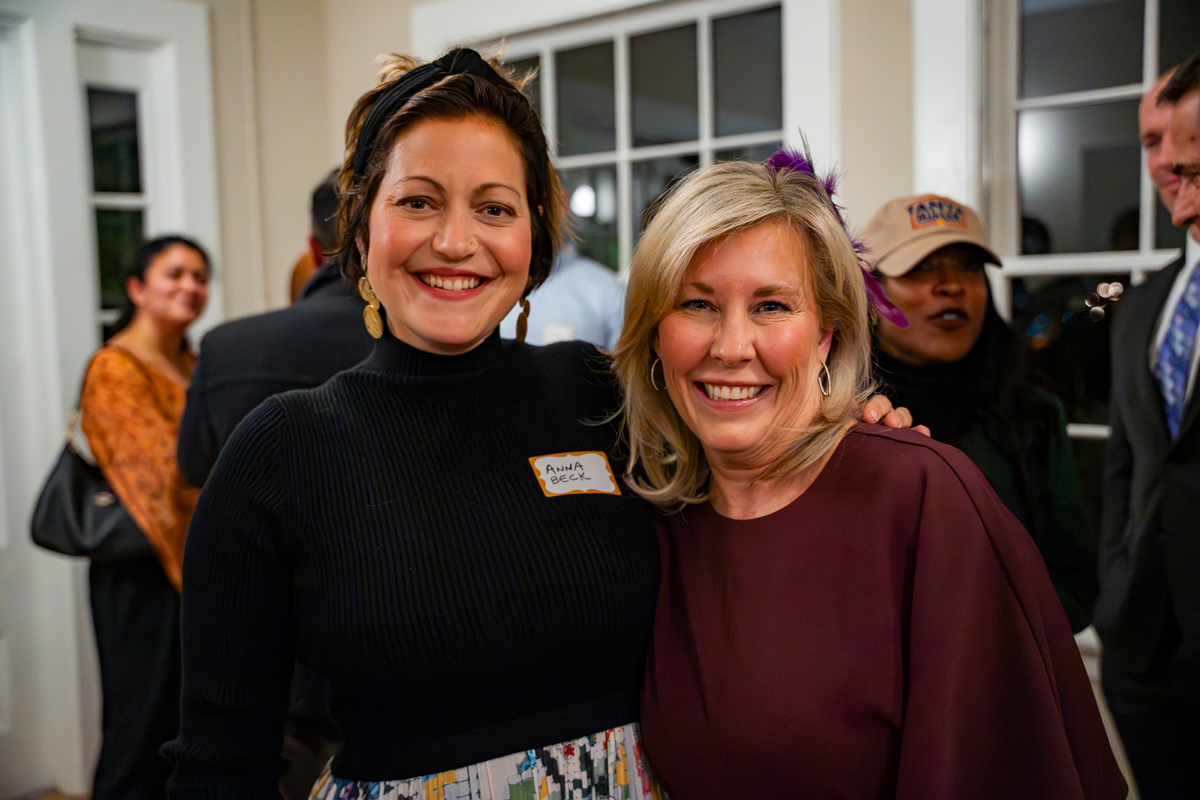
“The biggest takeaway that we had last [election] cycle is that there’s just not a big enough bench of well-trained campaign staff,” says Shea Roberts, a Democratic member of the Georgia House of Representatives who launched the program via her progressive organization, United for Georgia Women. The idea was inspired in part by the lessons Roberts learned on the campaign trail in 2020, when she flipped her Sandy Springs district’s seat. “You can have the best candidates in the world, but if they can’t find good staff, then they can’t get over the finish line,” she says. Roberts is working with Anna Beck, an Atlanta-based political fundraising consultant, to build and run the program.
So far, the group has hosted three training sessions in campaign management and campaign finance for 14 former federal workers, whom they now hope to place in paid positions on campaign teams across the state. Almost all of the trainees are former CDC workers. Roberts says she was struck by how naturally their skillsets as public health professionals translate to campaign work: in their old roles, she says, “they would go into diverse communities, they would have to communicate complex policies in an understandable way. When a problem was thrown at them, they would have to work as a cohort to move fast and figure out how to fix it.”
One of those trainees is Stacey Willocks, who worked in public health for over two decades and joined the CDC in 2016. Working through the first Trump administration was challenging, she says, but it only took hours after Trump’s second inauguration for the atmosphere to shift, with restrictions on language, fears of DOGE surveillance, and executive orders that undermined the work her own team had accomplished with Native American tribes. “It got really dark,” Willocks says. In April, she and nearly her entire team received RIF notices. “I told my husband, ‘I don’t know what I’m going to do,’” she says. “‘But it’s going to be part of the resistance.’”
Months later, a friend pointed Willocks toward the free campaign training. At the first meeting, she felt something she hadn’t experienced since before the layoffs: possibility. After months of grieving the loss of her work, “that meeting was where I first felt like myself again,” she says. “It was the first time that I really felt hopeful, and that I could dust myself off and fight another day.”
During that same meeting, Roberts mentioned an open state House seat in Sandy Springs and asked whether anyone knew a potential candidate. Willocks immediately thought of one person.
The person she had in mind was Beth Fuller, a longtime colleague in public health who’d also been affected by the cuts. Fuller, an independent consultant with a background in health policy, spent years contracting with the CDC on projects including its Policy Academy, where she taught CDC staff the fundamentals of policymaking. She and Willocks first met through the Georgia Health Policy Center more than ten years ago. Willocks texted her on the spot: Want to run for the Georgia State House? Not kidding.
After several weeks of consideration and research, Fuller announced in early December that she would run to represent HD-53 in the state House, challenging incumbent Deborah Silcox. Willocks signed on to help run her campaign.
“I’m really interested in how policies shape lives, and I’ve studied that and taught about it,” Fuller says. “And so it makes sense to me to also try to craft it.” In conversations with district residents, she hears recurrent concerns about health insurance affordability, cost of living, and community safety—issues she considers fundamentally tied to health. “Everyone should have access to health,” she says. To make that possible, “we need to look at how lots of different populations can be healthy, and the way to get there is by talking to people and figuring out what they need, and what their priorities are.”
Photograph by Olivia Bowdoin
Despite their enthusiasm for Public Service to Public Power, Fuller and Willocks are quick to point out that the CDC isn’t a pipeline for political candidates of any party. “Most people at CDC are there for science—they don’t think politics,” says Fuller. “In an ideal world, there is a line between science and politics, and historically there has always been that line at CDC. They have held that line passionately and firmly.”
For those who, like Willocks, see their work in public health as inherently linked to social justice, Roberts and Beck are gearing up to train additional cohorts—and to fundraise so that campaigns can afford to hire program participants (whom they call Power Partners). Campaigns often face a “chicken-or-the-egg” dilemma, Roberts says: they need staff to raise money, but they need money to hire staff. “If we can take that initial financial burden off campaigns by providing a well-trained campaign finance person at the start, they’ll be able to build from there and fund the rest of their campaign effectively.”
Equipping campaigns with competent staff, she adds, will be critical for Democrats as they attempt the steep climb toward a state majority in 2026.
For some ex-CDC workers, the stakes are more personal. “They have a public servant’s heart, and everything they believed in was ripped away from them,” Roberts says. “And they have expressed to us that this is the first opportunity they’ve felt to be able to continue to use their public servant heart and their skills and really fight back.”