



Photo by Greg Mooney
Hype preceded the October 16 world premiere of Like Father at Alliance Theatre’s Hertz Stage. Songs from the coming-of-age, true-crime musical had already garnered 150,000 streams on platforms before the play ever hit the stage. Its social media posts had organically reached more than 1.5 million people. The production had been in the works for four years. And on opening night, the buzz was palpable as VIPs posed for pictures on a red carpet, and every seat filled in the house while a standby line waited for any vacancy.
“Thank you for making this the hottest ticket in Atlanta,” says Chris Moses, the Jennings Hertz artistic director of the Alliance Theatre, before the proverbial curtain rose.
Did Like Father live up to the hype?
In a word: yes.
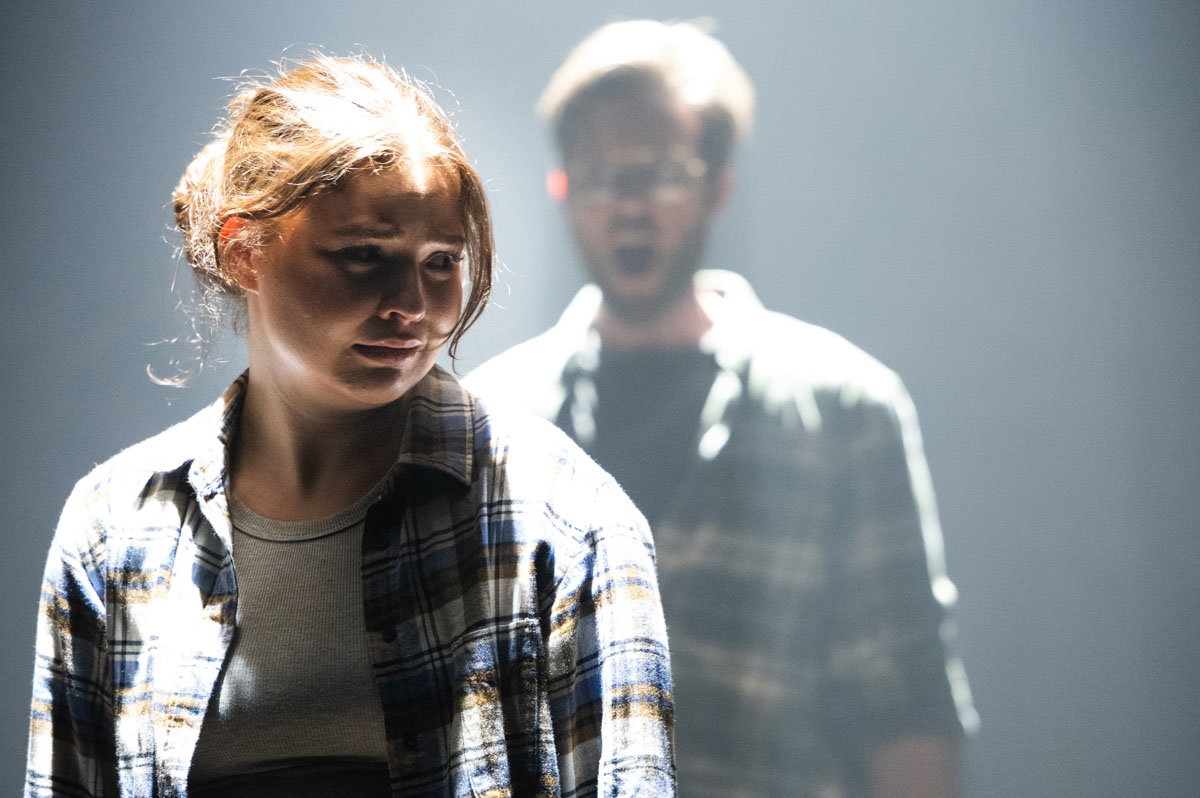
The musical’s premise is intriguing from the get-go. Seventeen-year-old Christina Grady (Sophie Pollono) is just learning to drive. Her doting father John (Billy Harrigan Tighe) films the milestone on a camcorder. But just as she gains some speed, she is pulled over by police. John is shockingly arrested and charged with murdering 23 young boys. Their bodies are found buried under the floorboards of his and Christina’s suburban family home in Illinois.
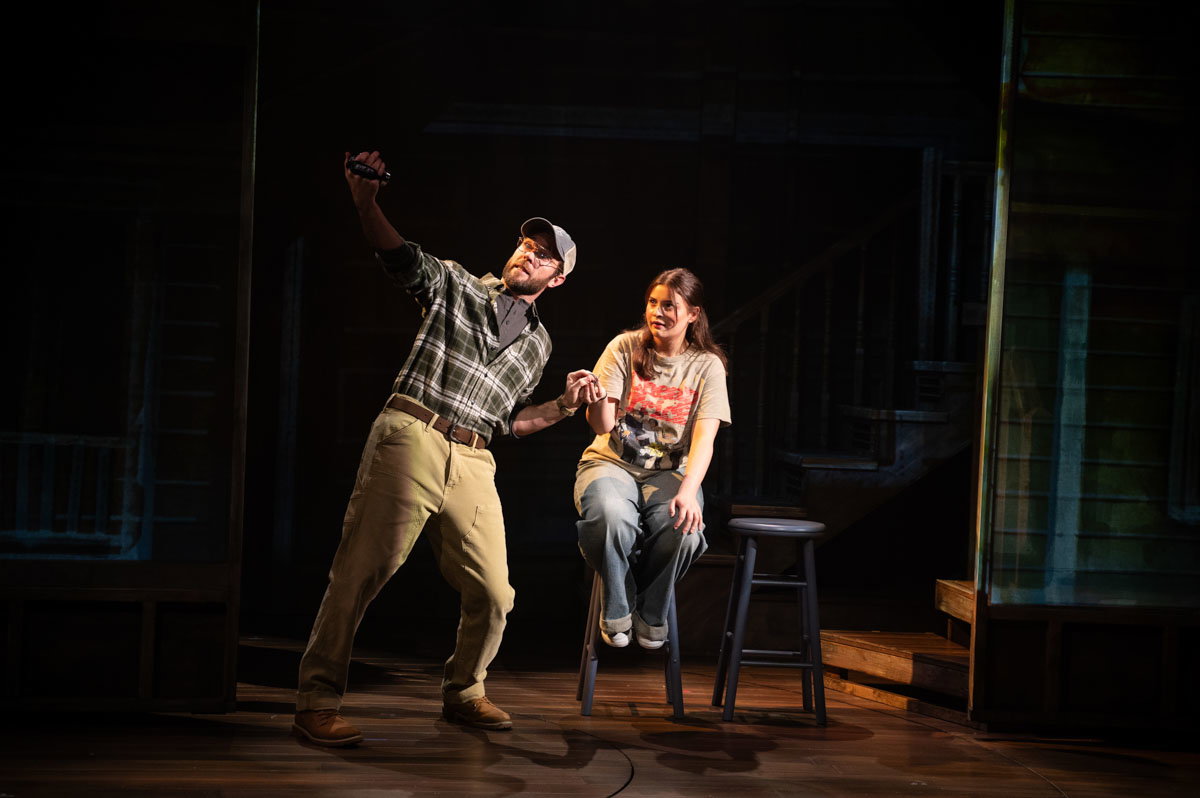
Photo by Greg Mooney.
Could it be true? She wonders. Has Christina stored away traumatic memories in some dark recess of her mind? Was her dad the man she loved—the one who adored her and took hours of home videos of her as a child (a number of which are later projected on stage)? Or was he a secret monster? Was he both?
Christina wrestles with two contradictory truths: that her father both loved her, and was, likely, a murderer. How can she grieve someone she has such unresolved feelings about? How much of her dad is in her? Is she like father?
To some degree, we all wrestle with some version of these emotional complexities: grieving people we had complicated relationships with, coming to see our parents as flawed humans and wondering if we are bound to become them (or if our kids are bound to become us), struggling to find peace with the traumas of our pasts. The powerful songs throughout the show, which are performed with full-bodied soul, make the audience resonate with Christina’s feelings even if we can’t relate to her circumstances.
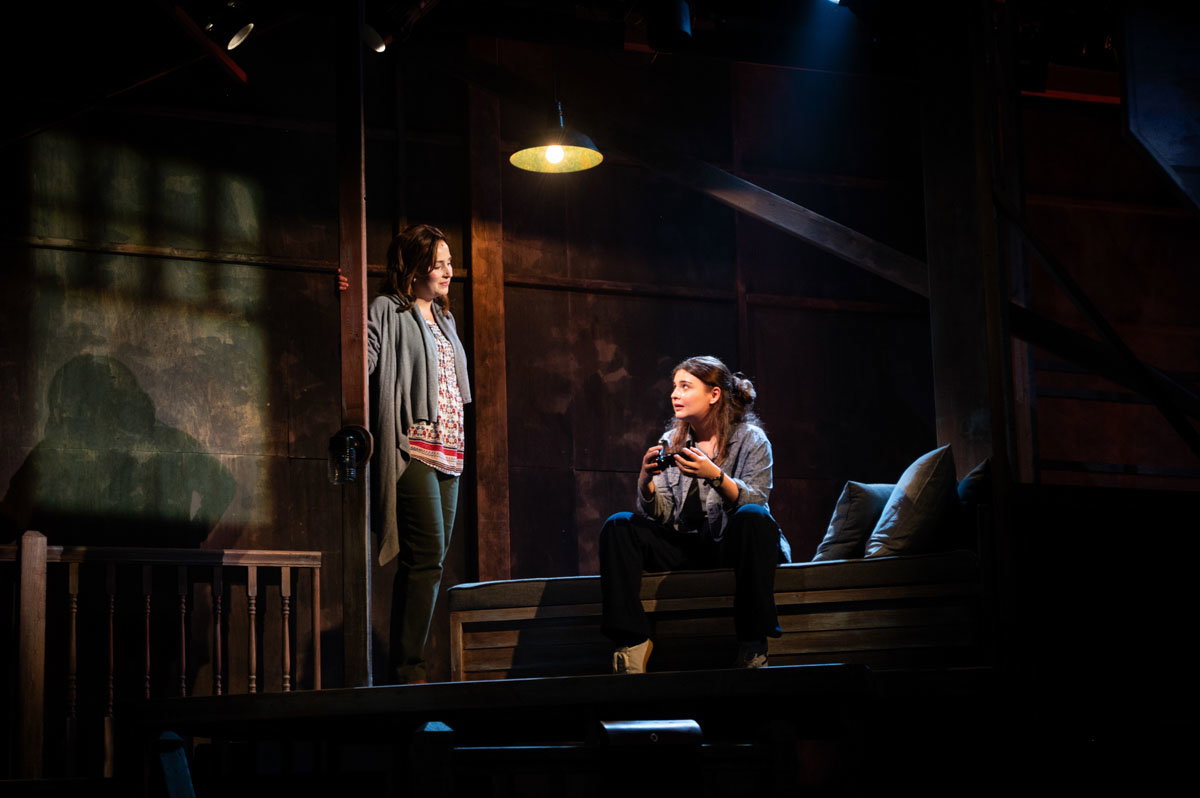
Photo by Greg Mooney
While her dad is imprisoned, Christina—who stubbornly goes by Chris now—is sent to live with her biological mother, Michelle (Hannah Elless), a Rose Byrne lookalike who’s warm when we meet her, packing chocolate cake in Chris’s lunch and trimming flowers. She has a very likable boyfriend, Ben (Benjamin H. Moore), who is supportive and charming.
But to Chris, her mother is also the one who abandoned her, leaving her with her father when she was just a baby. Cue more complicated feelings.
Chris moves into a bedroom in the attic. Her new next-door neighbor is a quirky, lovable, and flamboyant teen named Trevor (Frankie Rodriguez) who befriends her. He lost his father to a terminal illness.
Together, the two fatherless social outcasts bond while trying to come of age in small-town Dahlonega. (Yes, the musical, created by Atlanta native Jacob Ryan Smith, is set in Dahlonega.) They connect over a shared obsession with Bloody Good, a true-crime podcast hosted by Lillian Clarke (Charity Angél Dawson), a buttery-smooth Brit who, side note, sounds exactly like Lady Whistledown from Bridgerton.

Photo by Greg Mooney
That’s it. That’s all the characters. An intimate cast of six. All are played brilliantly, and almost all are built with dimension.
The only character who would have benefited from a bit more backstory was John, who, for most of the play, remains a specter haunting Chris’s memories. It would have been nice to know how he became (if the charges are true) a psychopath capable of both loving a daughter, and murdering boys.
Beyond a fabulously written book and won’t-leave-your-head songs (both co-created by Smith and Caroline Pernick), there are a few standout things to love and know about Like Father.
First, the musical unfolds in one sweeping, continuous action without pause (the intermission an exception). When film directors started shooting long sequences, or even entire films, in a single unbroken shot (think Alejandro G. Iñárritu’s The Revenant and Birdman, or Sam Mendes’s 1917), we called it bold, virtuosic, and immersive. Like Father does the single-shot equivalent in stage form.
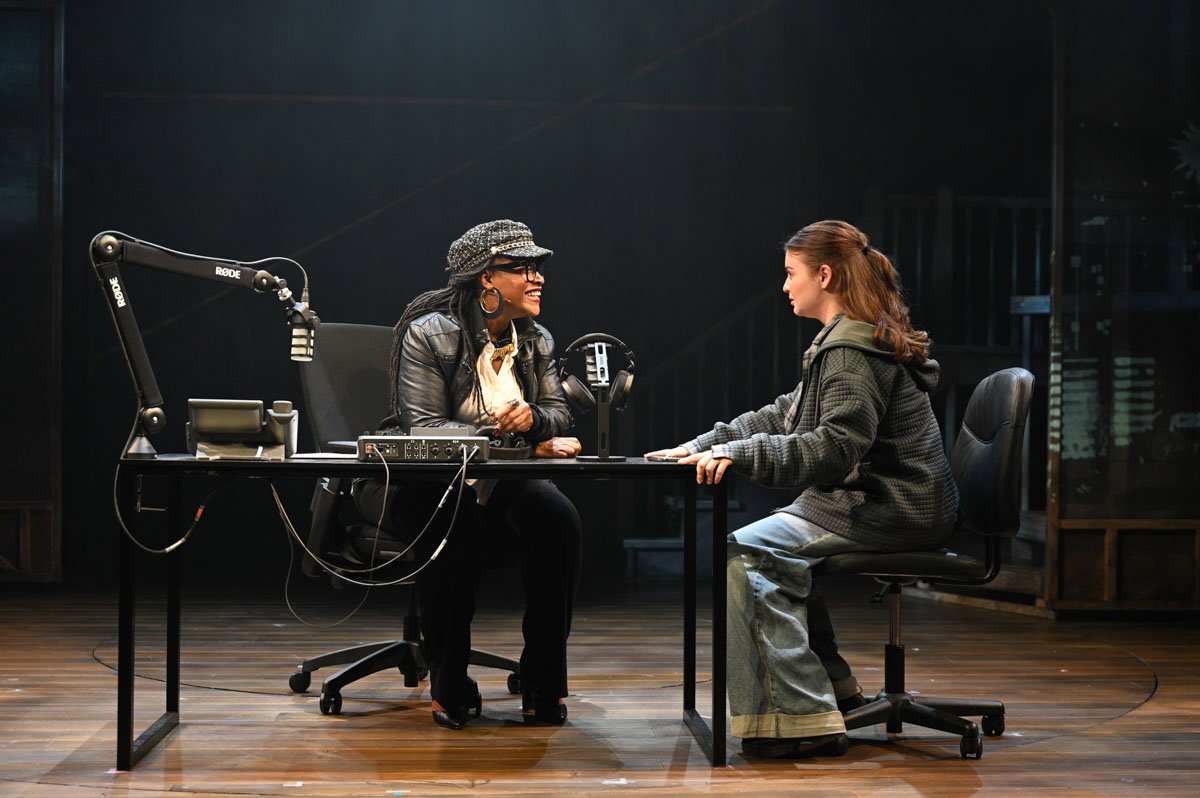
Photo by Greg Mooney
It does this by putting much of the action on rotating discs, like a giant turntable built into the stage floor, that move the characters and set pieces as the story unfolds. Because of this seamless flow, the musical takes on the quality of watching a film or television series.
The choice of venue heightens that effect. Smith chose to premiere the show on the Alliance’s intimate Hertz Stage (his hometown favorite), where the audience is close enough to see beads of sweat on the bridge of a nose. While the turntables supply the tracking shot, the small house supplies the close-ups. Between the two, the audience can’t look away.
That could be exhausting if not done right, but in this case it absolutely works. And for a culture used to doom-scrolling and binge-watching, a musical that pulls one in and doesn’t let go is fresh.
Moments of relief do come, just not from pauses in the action. They come from emotional shifts and comic relief, the latter delivered mostly by Trevor, who is like a cleansing breath every time he enters a scene. His physical comedy and witty bits had the audience hysterical more than once. Lillian Clarke runs a close second for laughs.
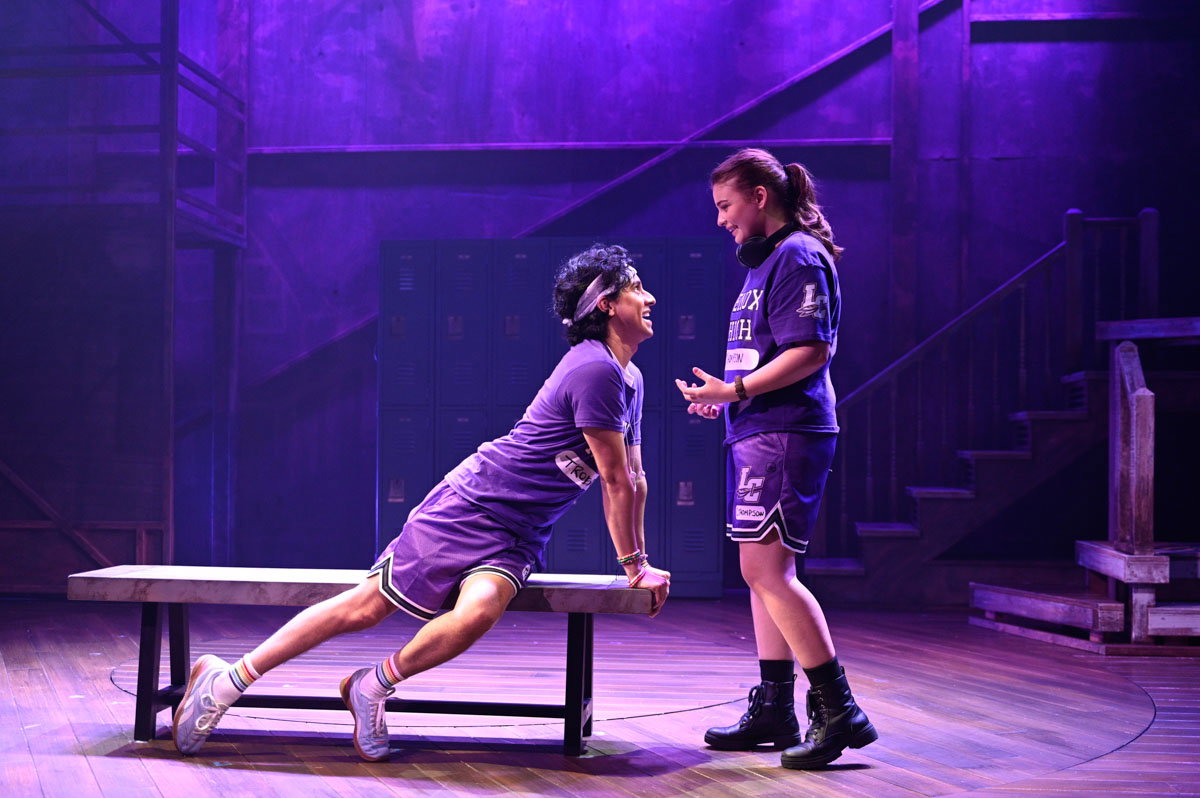
Photo by Greg Mooney
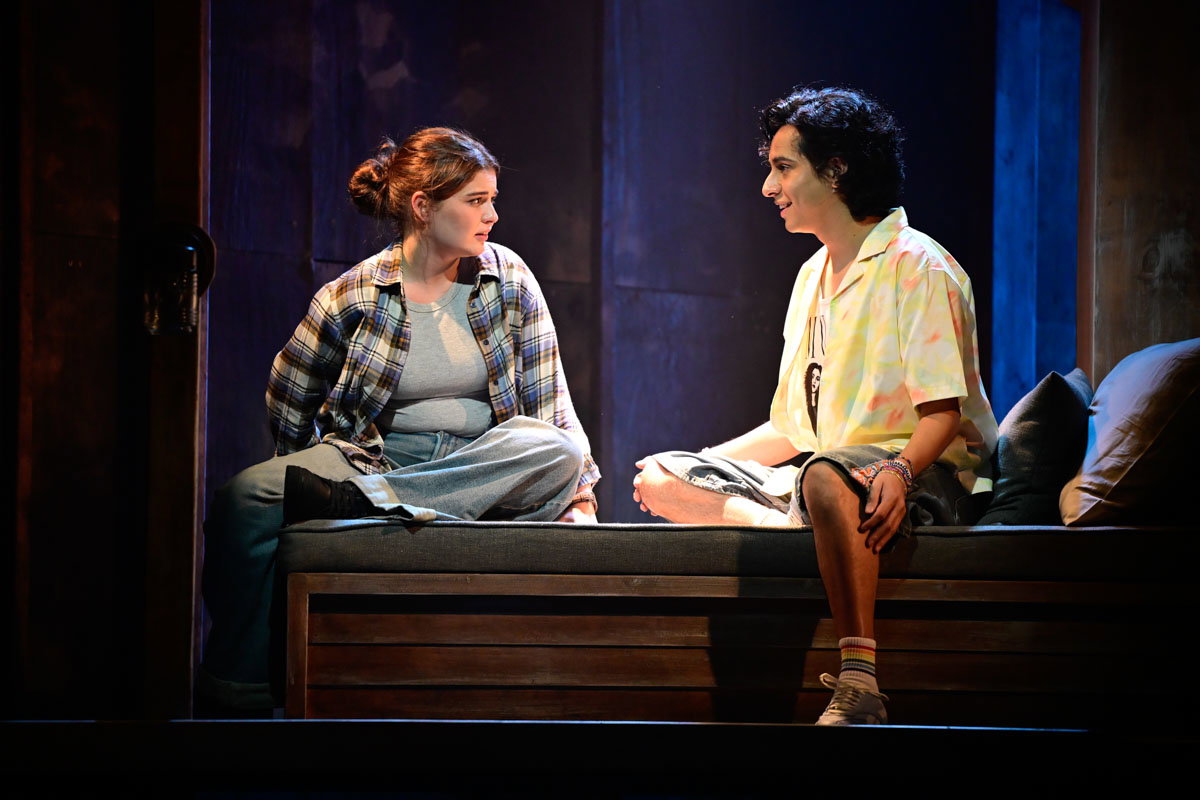
Photo by Greg Mooney
A few dream sequences add some pizazz: In one, the cast performs a Moulin Rouge-esque number with black-and-red showgirl fans; in another they dance with blood-drenched umbrellas.
While on the surface this musical cashes in on our culture’s obsession with true crime, its depth comes from the relationships between the sets of characters—Michelle and Ben, Trevor and Chris, mother and daughter. Those bonds create the emotional arc and linger after the final bow.
Like Father asks big questions about what we inherit, what we forgive, and whether the sins of the father must be ours to bear. But it does so in a thoroughly entertaining, totally engrossing, and often comical way.
To borrow from Lillian Clarke: It’s bloody good.
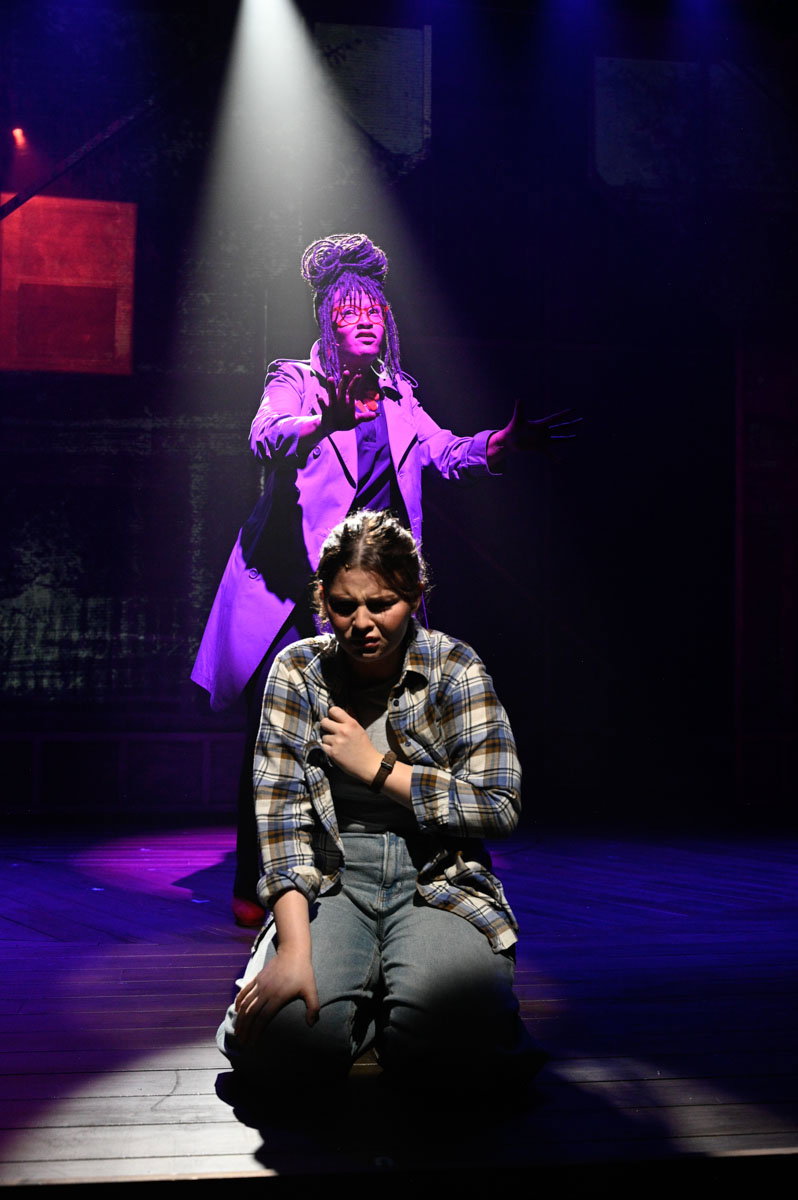
Photo by Greg Mooney