


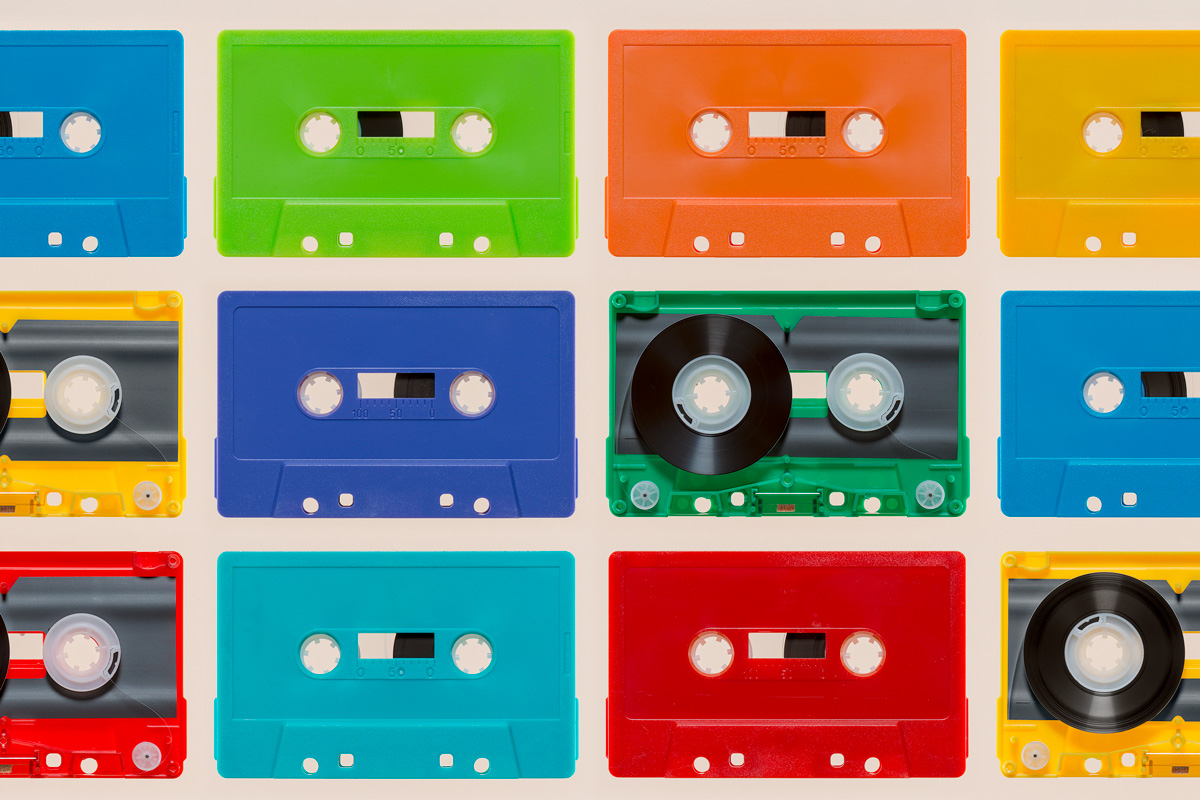
Photograph by Bartholomew Cooke Trunk Archive
Last holiday season, I took a chance and gifted my 15-year-old daughter, Cristina, a portable cassette player I purchased on Amazon. As a child of the ’80s, I’d owned dozens of them over the years; I thought she might enjoy a vintage way of listening to music that was completely new to her.
I was right.
Cristina, a self-declared computer “techie” and avid video gamer, has taken to the old-school format with gusto. She can’t quickly skip a song she doesn’t like or jump ahead to her favorite tune. But that’s part of the appeal. “It gives a retro vibe,” she says.
She’s not alone. For young people like my daughter, accustomed to a world where music is streamed instantly and endlessly, cassette tapes seem almost rebellious. Holding an artist’s music in their hands and listening to an album straight through is completely new to their generation. Across the country, younger consumers are driving a cassette comeback: In 2023, Billboard reported that cassette sales had shot up more than 440 percent over the past decade, which includes used tapes and new releases.
Around Atlanta, local music-shop owners confirm they’ve seen the shift. “Young kids, teenagers, and people in their early 20s will come in and go straight over to the cassettes,” says Eddie Bruce, owner of RocknShop in Cartersville. “It’s pretty cool.”
RocknShop’s display cases are filled with dozens of cassettes from the peak of the format’s popularity. On a recent visit, U2’s War, Enya’s Watermark, and Beauty and the Beat, the 1981 chart-topper from The Go-Go’s, sat side by side in neat rows of plastic cases. But Bruce says his biggest cassette sellers tend to be classic rock and heavy metal: “Especially Pink Floyd, the Eagles, Mötley Crüe, anything Metallica.” Cassette sales, he notes, have begun to outstrip CDs for the first time, though vinyl is still his biggest moneymaker.
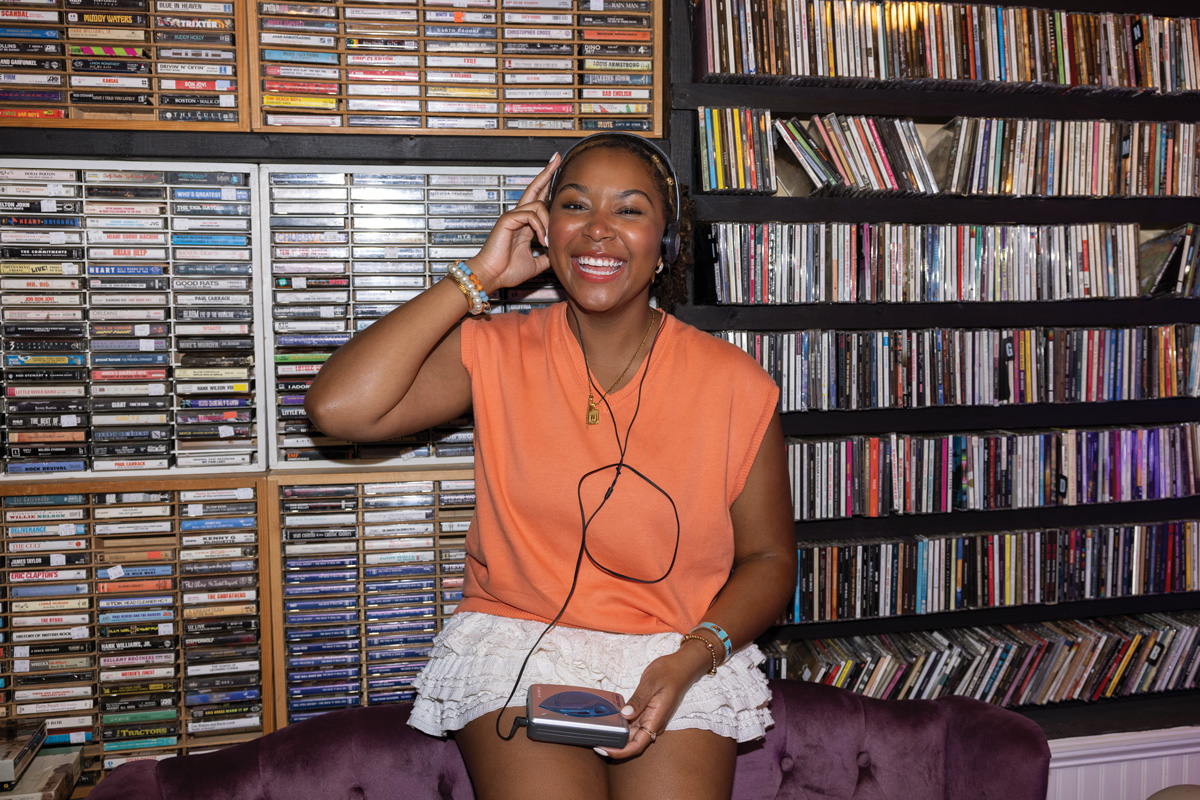
Photograph by Kendrick Brinson
Ryan Blankenberger, owner of Acworth Vintage & Vinyl, has a theory on the cassette’s comeback: “Kids are realizing they don’t own anything digitally,” he says. “If the internet goes out, if the cloud goes away, if streaming goes away, everything that everybody puts their money in digitally is gone. They want physical things.” At his store, younger shoppers gravitate toward ’90s alternative and rock tapes, including bands like Deftones, Limp Bizkit, and Korn.
Another reason for the cassettes revival might be Marvel’s blockbuster Guardians of the Galaxy. In the film, protagonist Peter Quill (Chris Pratt) fights intergalactic battles while blasting mixtapes from his blue-and-gray Sony Walkman. “People ask me all the time, ‘Do you have a Walkman like that?’” Bruce says. (Market research suggests sales of cassette players are inching up, too; serviceable new models are available at Best Buy and Amazon for about $30, but for better quality, music hounds look for out-of-production used players on eBay and Craigslist, where a used Sony Walkman like Quill’s goes for as much as $149.99.)
Metro Atlanta high school student Camille Walker, 17, learned about cassettes from another pop-culture source: the Netflix series Stranger Things, which is set in the 1980s and has inspired a cultural renaissance of the the era for a younger generation. In one pivotal scene, troubled teen Max escapes a supernatural villain while her Walkman headphones play Kate Bush’s “Running Up That Hill (A Deal with God).” After it aired, the song—originally released in 1985—shot to number one on the Billboard Global 200.
Before watching Stranger Things, Walker had seen the “plastic boxes” at estate sales and thrift stores. “I knew they played music and you can put them in a car,” Walker says. “But I didn’t know how they really worked.”
Now she’s a fan. “I think cassettes are revolutionary,” Walker says. “They’re good if you don’t want to be on your phone for everything and want a less technical life.”
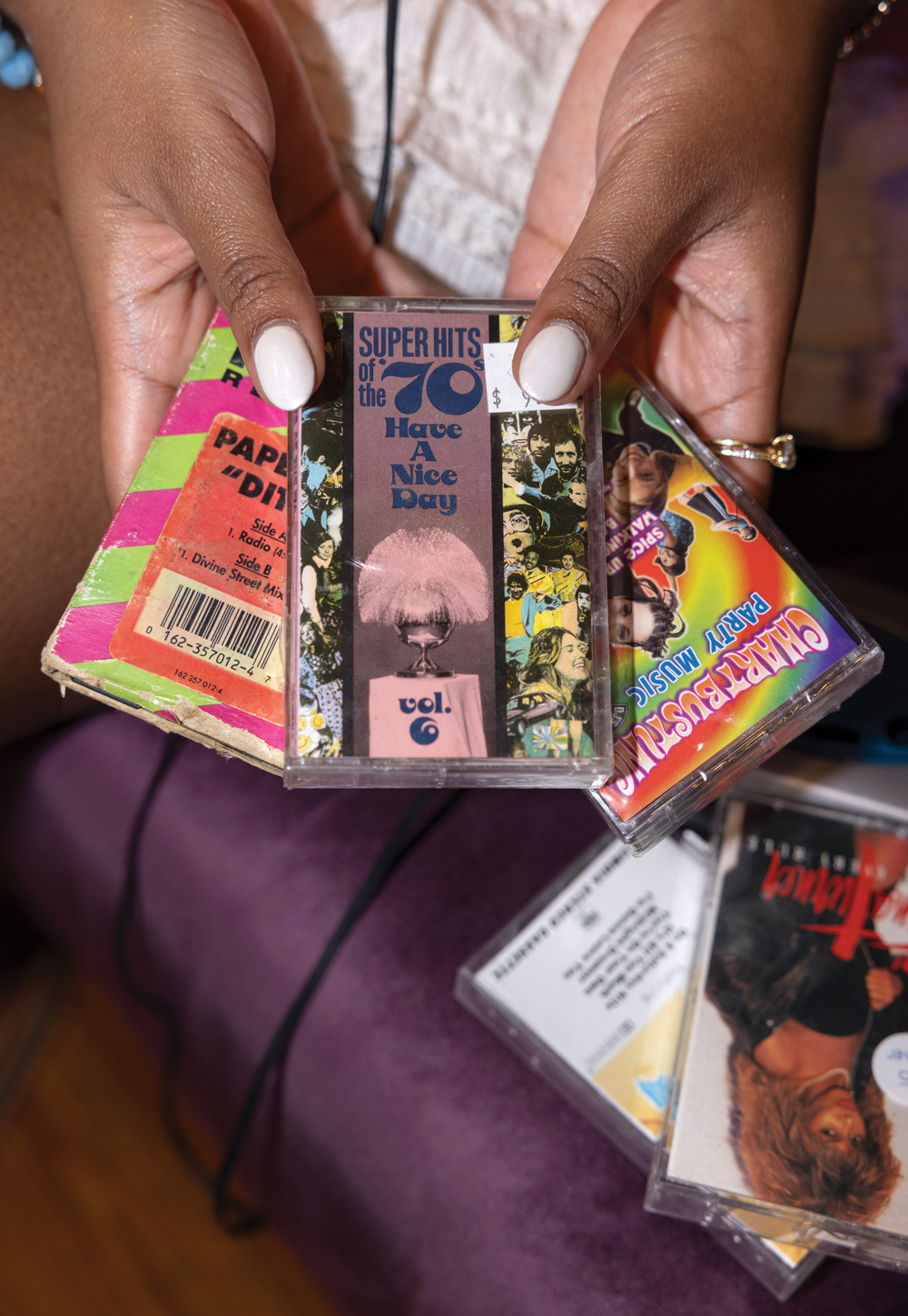
Photograph by Kendrick Brinson
Due to the renewed interest, mainstream artists like Taylor Swift and Sabrina Carpenter have started releasing cassette versions of their albums alongside streaming and vinyl formats. But tracking down a wider variety of used tapes still requires some old-fashioned sleuthing—the kind of analog music hunt that defined my teen years, long before every song was available at the touch of a button.
“These kids didn’t realize that their parents were so cool,” Blankenberger says, “and now they’re trying to relive their glory days.”
Cristina, however, assures me her music taste has little to do with me.
“I like the authenticity of the sound,” she says, before popping in an Adam Ant tape and pressing play. “Plus, I feel like it makes me look cooler when I have a cassette player out in public.”
This article appears in our June 2026 issue.