


Courtesy of the Academy for Innovation in Medicine
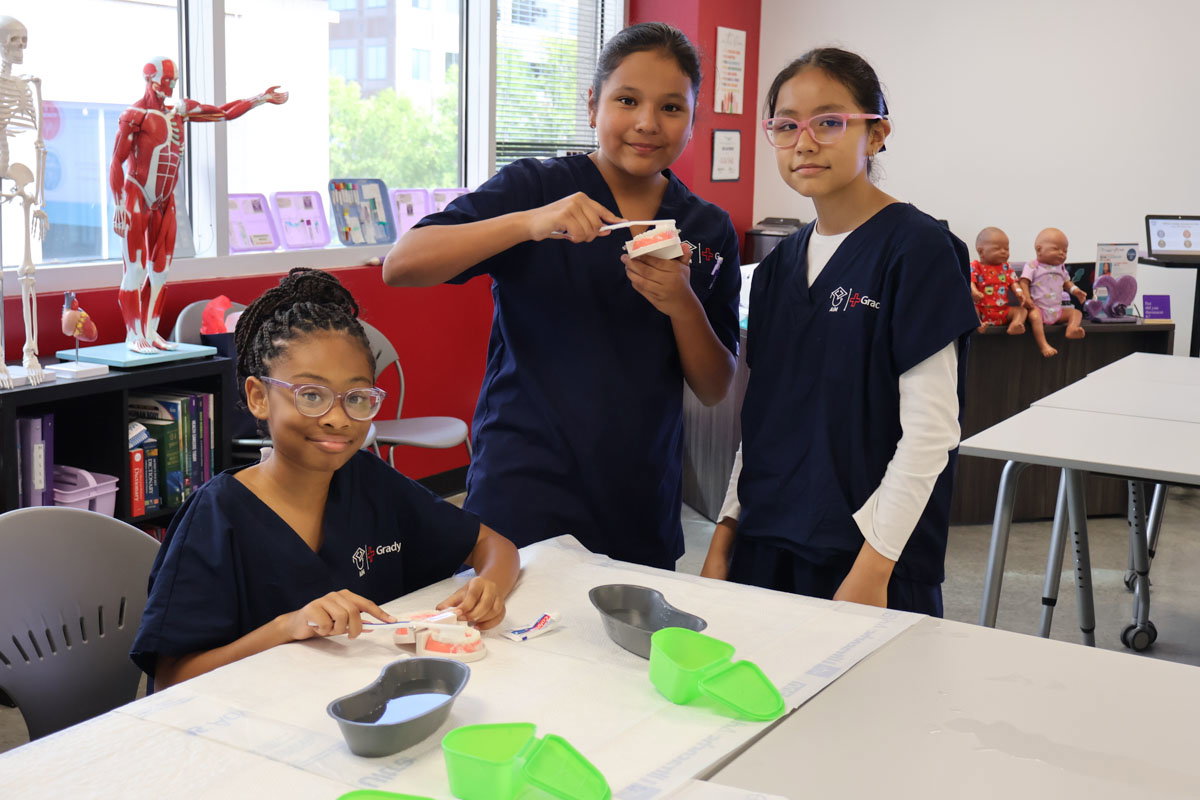
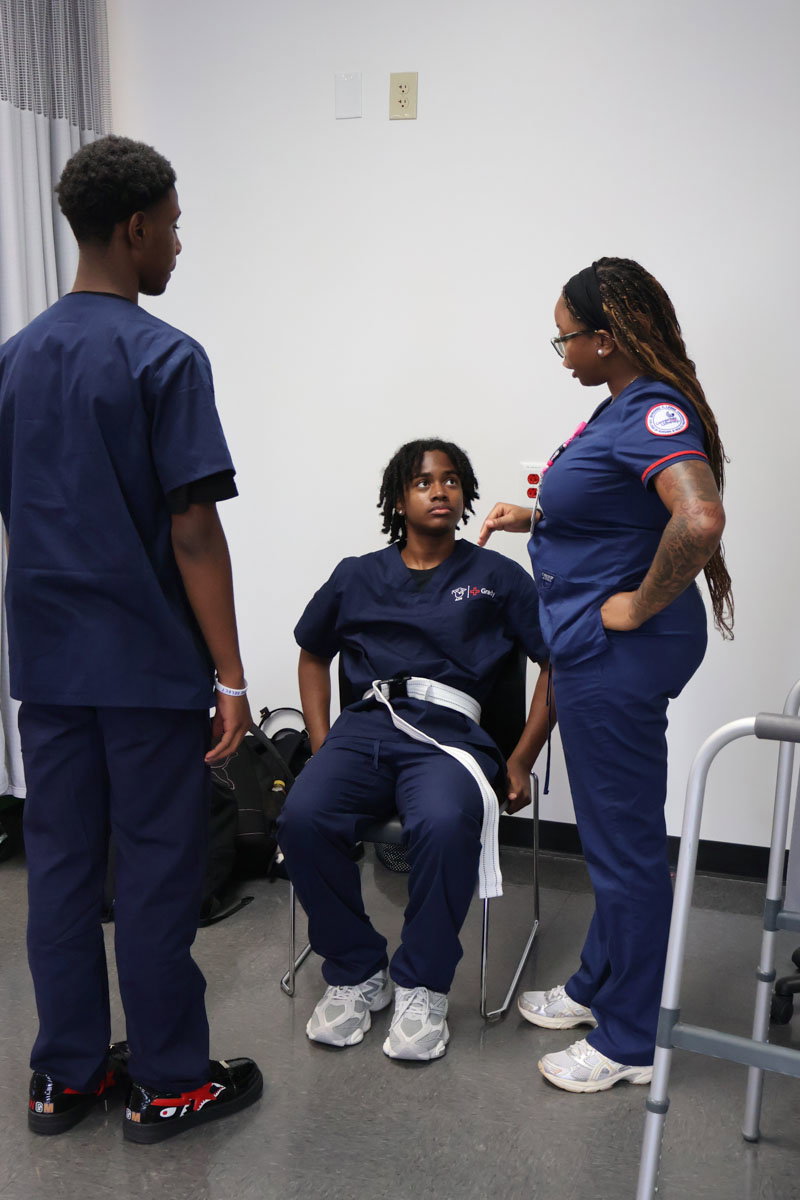
Every Wednesday, sixth-grader Tafari Bradford and his classmates sport a different sort of uniform for school: navy blue medical scrubs embroidered with a Grady Health System logo.
When they arrive at their school—a new Atlanta charter school called the Academy for Innovation in Medicine (AIM), which opened in July and has partnered with Grady—they join Grady staff members visiting to conduct the school’s clinical immersion program. One day, a session might include a deep dive into the Cyclospora parasite outbreak; another, might take students to tour an EMS vehicle.
“Ever since I’ve been here, there’s things that I’ve been able to build on,” Bradford says of his new school. “I’ve had more access to resources. This is a place where they let you shine.”
As an adolescent, Bradford admits he didn’t even know what medical scrubs were before coming to AIM. Now he’s dressing the part for a potential career. The new school is on a mission to prepare students for healthcare jobs at a time when the industry is experiencing a critical workforce shortage.
“We are missing the boat [if we wait] until high school,” says Dr. Kristy Beam, lead founder of AIM, which she notes is trying to reach students earlier and touts a curriculum focused on science, technology, engineering, mathematics, and medicine (STEMM).
Courtesy of the Academy for Innovation in Medicine
In its inaugural year, the school is starting with sixth and ninth graders. It will likely expand to include grades 6-12. The coursework is aligned with the Georgia Standards of Excellence, but with a health and science twist. For example, a social studies lesson on genealogy connects an individual’s lineage to their personal health outcomes. Students gain hands-on experience in simulation labs, and paid healthcare internships.
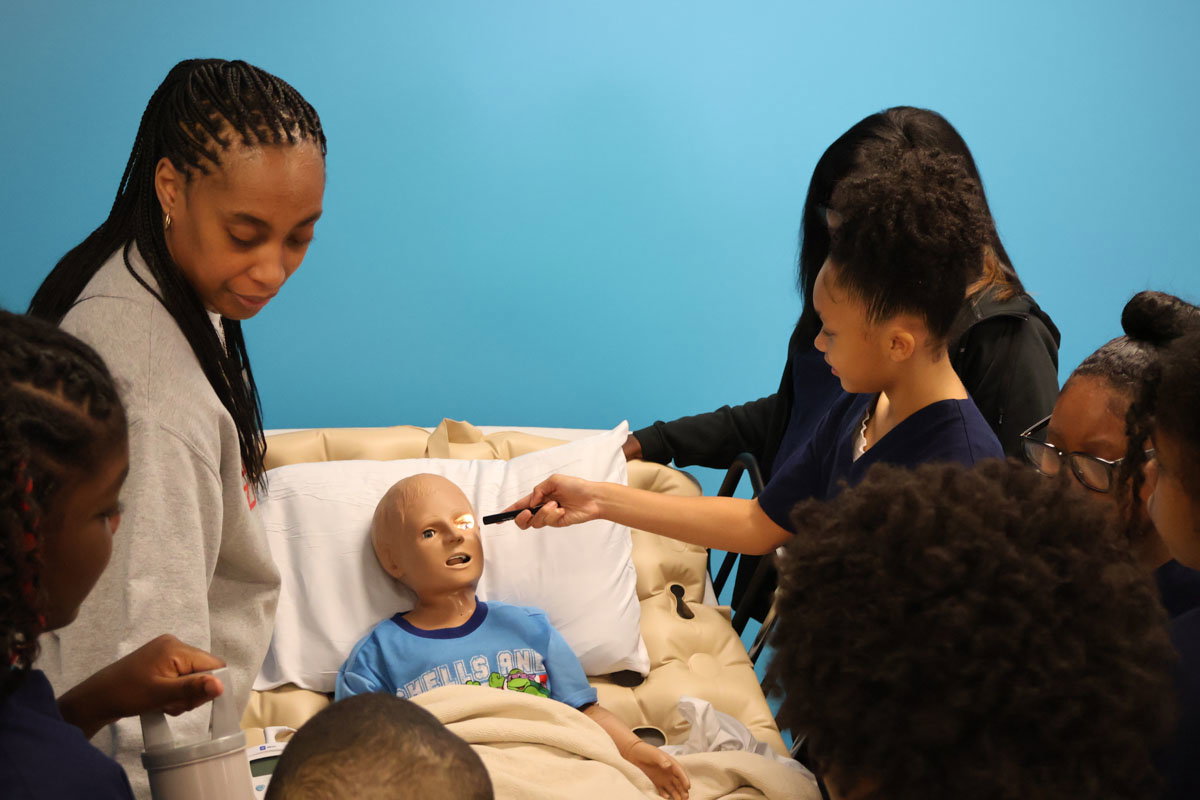
“You’re seeing mannequins … You’re seeing [students] role play,” explains Lauren Wright, the director of health education and career pathways at Grady. “You’re seeing them actually use the things that we are teaching them.”
AIM’s partnership with Grady was a “no-brainer,” Wright says, given the workforce shortage and Grady’s role as a teaching hospital. Staff visit AIM weekly. Some hospital employees have even enrolled their own children.
“Grady is not just a logo on a sheet of paper,” Wright explains. “We are embedded into the curriculum.”
The collaboration also influences the school’s career pathways. Emergency medicine, radiology, pharmacy, and nursing were all chosen based on critical need. Federal data predicts Georgia will have one of the nation’s worst nursing shortages by 2038.
Courtesy of the Academy for Innovation in Medicine
AIM students earn their high school diploma, but can also pursue an associate’s degree and other certifications. The program exposes students to a wide range of careers with average salaries starting at roughly $50,000.
“We have a lot of very high performing, very bright students who come in saying, ‘You know, I want to go to Harvard Medical School.’ Great. We’re going to get them on the track and do everything we can to get them there,” Beam says. “However, we have a number of students as well that are struggling. The idea of leaving high school work-ready … and being able to make a living wage is huge.”
With that in mind, equitable access to the school is key. The program is tuition-free and located on Piedmont Road, a block from the Lindbergh MARTA station. Enrollment is ongoing and open to students in the city of Atlanta, along with Clayton, Cobb, Dekalb, and Fulton counties (Henry and Gwinnett may be added next year).
Supported by groups like education nonprofit RedefinED Atlanta, and Bloomberg Philanthropies, the school is also part of a cohort of more than a dozen healthcare-focused schools across the country, which Beam says routinely meet to share ideas.
“The challenge of starting from scratch is incredible,” Beam says of AIM’s launch. “But it’s been just so wonderful and rewarding to see the children in the building, to see it coming to life.”