

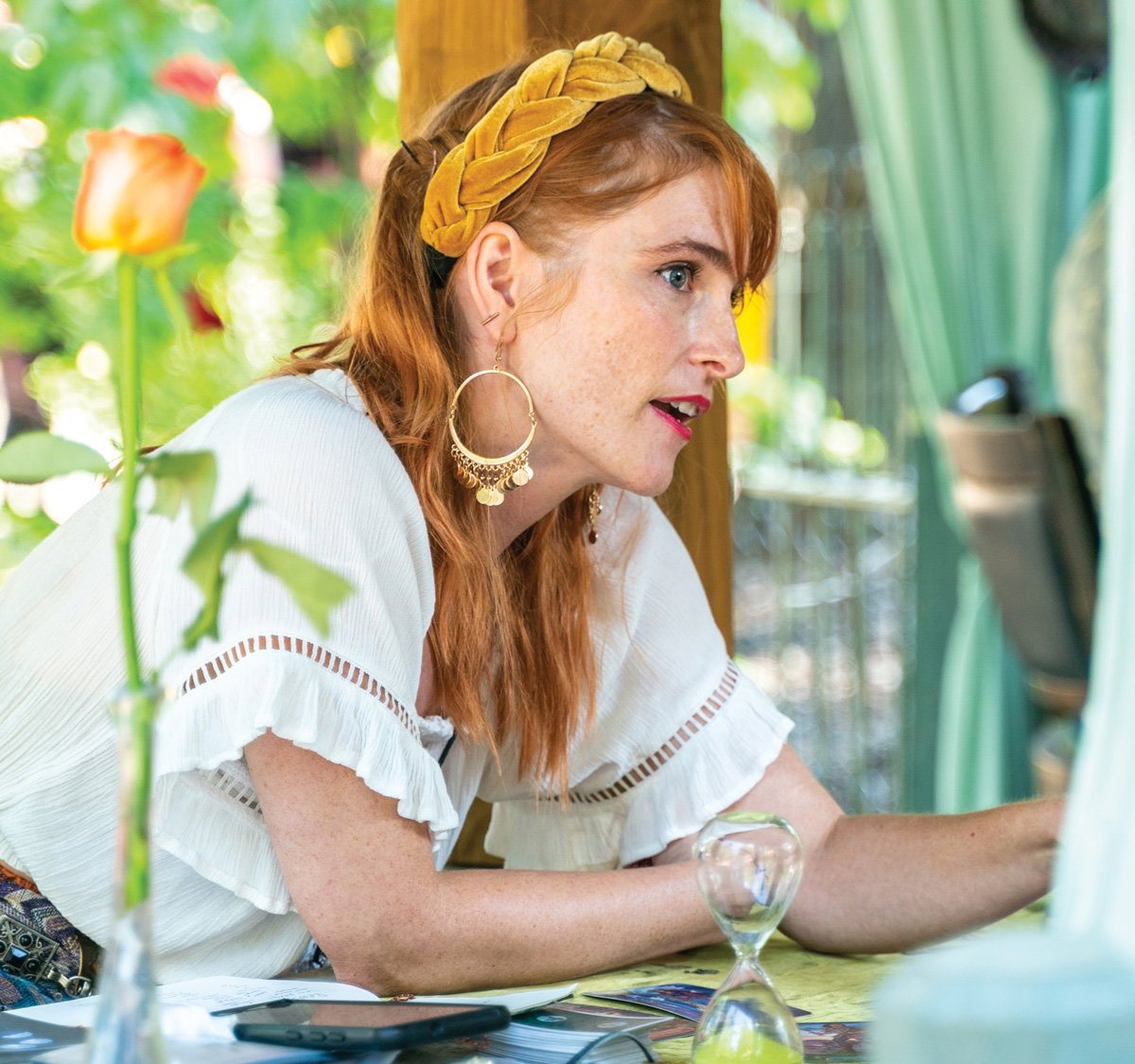
Photograph by Wes Carter
On a Thursday afternoon, tarot reader Nick Newell hands off a well-worn deck, urging his client “to give the cards a shuffle” while he sips coffee. Newell conducts private sessions and reads on Thursdays at Books & Brew in Tucker, a bookstore and bar that started bringing in tarot readers in January and now sells tarot cards.
Tarot, originally a 15th-century Italian parlor game that occultists adapted into a fortune-telling tool, has exploded in popularity since the Covid-19 pandemic. The estimated global market for tarot cards has grown by more than 60 percent since 2020, according to Deckaura. In Atlanta, tarot readings have expanded beyond metaphysical stores to coffee shops and bookstores; festivals also partner with readers to host tarot events.
Sierra Wallace, owner of the Decatur shop Odd Bird Gifts, started hosting readings in July 2025 in response to requests from customers. “We now host monthly readings with two different practitioners, and our sales of decks have increased quite a bit,” she says. “I think people are always trying to make sense of things they don’t understand, and this is one path to do so.”
Some modern readers use the cards, which often feature unique illustrative designs, to guide their clients to heed their inner voice rather than predict the future. Janie Hitchcock, who practices at Odd Bird and the Georgia Renaissance Festival, takes this approach. “If you tell people what’s coming, they will orient their lives around it,” she says. “And I want to empower my clients.”
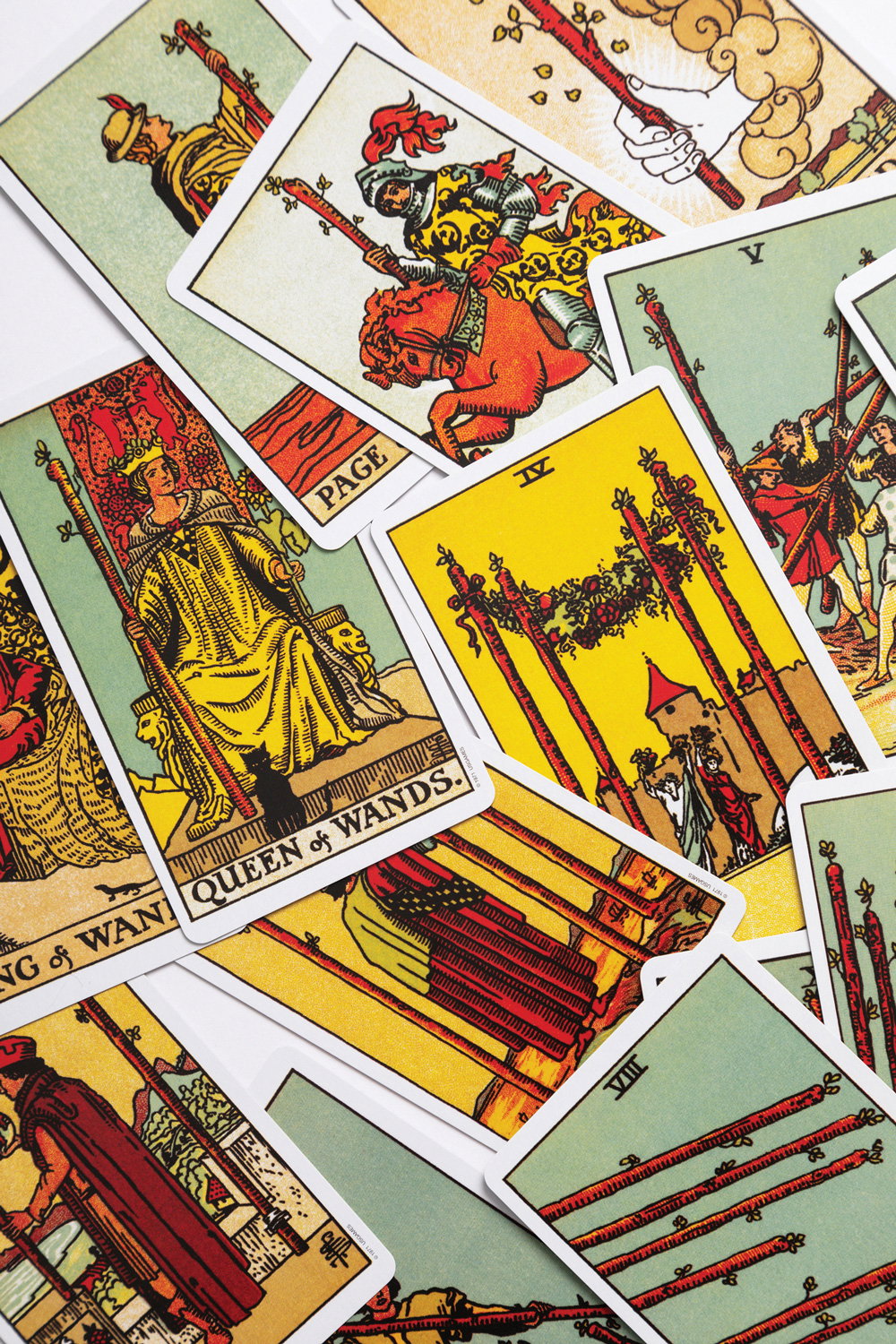
Photograph by Unsplash
Other nontraditional venues hosting independent tarot readings include rock shop Seed to Star Collective in Decatur, Phoenix and Dragon Bookstore in Sandy Springs, and Taproom Coffee in Kirkwood.
Many practitioners offer their own distinct spin. At Seed to Star, Leah Tioxon, a cofounder of the Atlanta Tarot team, includes astrology in her readings, and Megan Volpert, another cofounder, focuses on helping creatives clarify their paths.
Volpert says tarot’s growth in nontraditional settings is a boon for her industry. “I wouldn’t say it’s become trendier, but we’re collaborating more effectively,” she says of the relationship between practitioners and venues. “Instead of working in isolation, we’re getting out into the community.”
This article appears in our October 2026 issue.