


Photograph by Megan Varner/ Getty Images
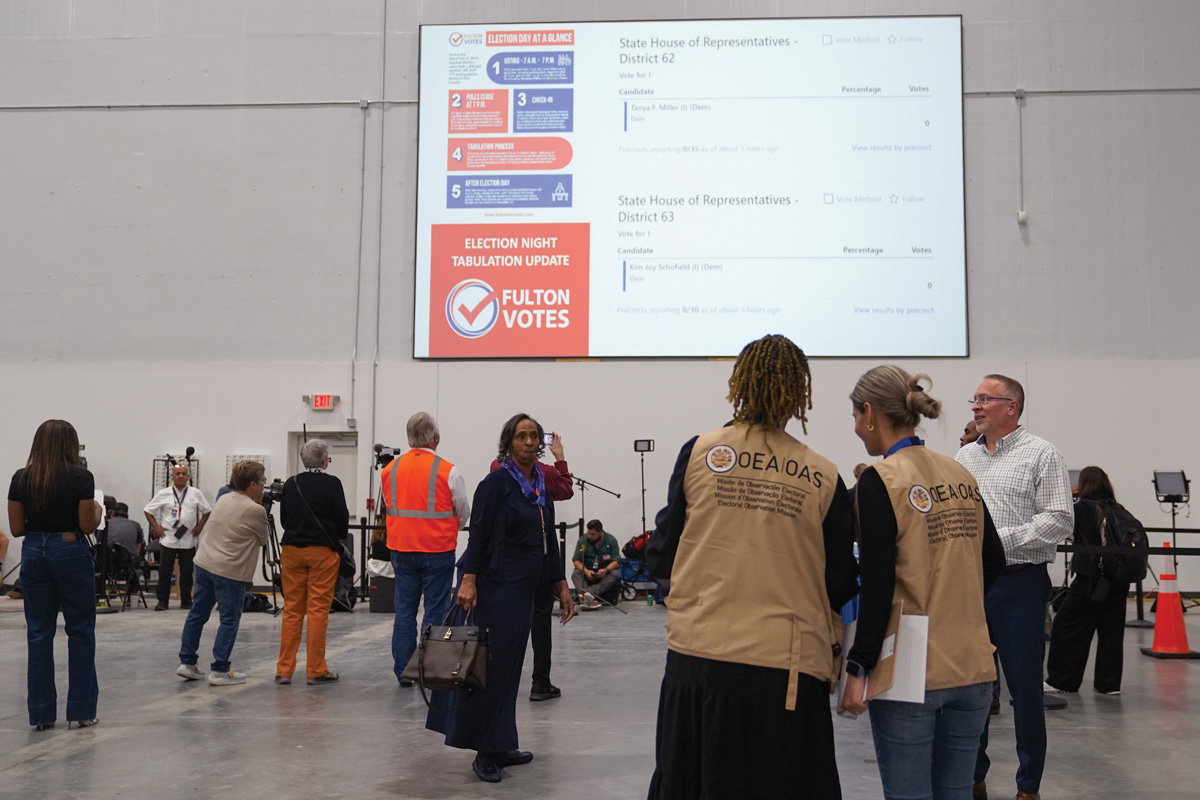
As the past decade transformed Georgia from reliably Republican into one of the nation’s most closely watched swing states, Fulton County has emerged as a major power player. Since 2020, the heavily Democratic Atlanta district has been at the center of Donald Trump’s efforts to challenge his election loss in Georgia—with disputes over ballot counting and, most recently, the FBI’s seizure of 2020 election records.
The attention reflects how consequential Fulton has become—but the county wasn’t always so politically powerful.
Since 1932, when it absorbed two neighboring counties, Fulton has been the most populated county in Georgia. Today it boasts nearly 10 percent of the state’s population. Yet for much of the 20th century, its political power did not reflect its size. Before 1962, Georgia used a so-called county unit system in statewide primaries, rather than a popular vote, which diluted the influence of populous, majority-Black urban counties like Fulton. “The state was very much oriented toward rural interests, rural concerns, rural voters,” says Charles Bullock III, a political science professor at the University of Georgia.
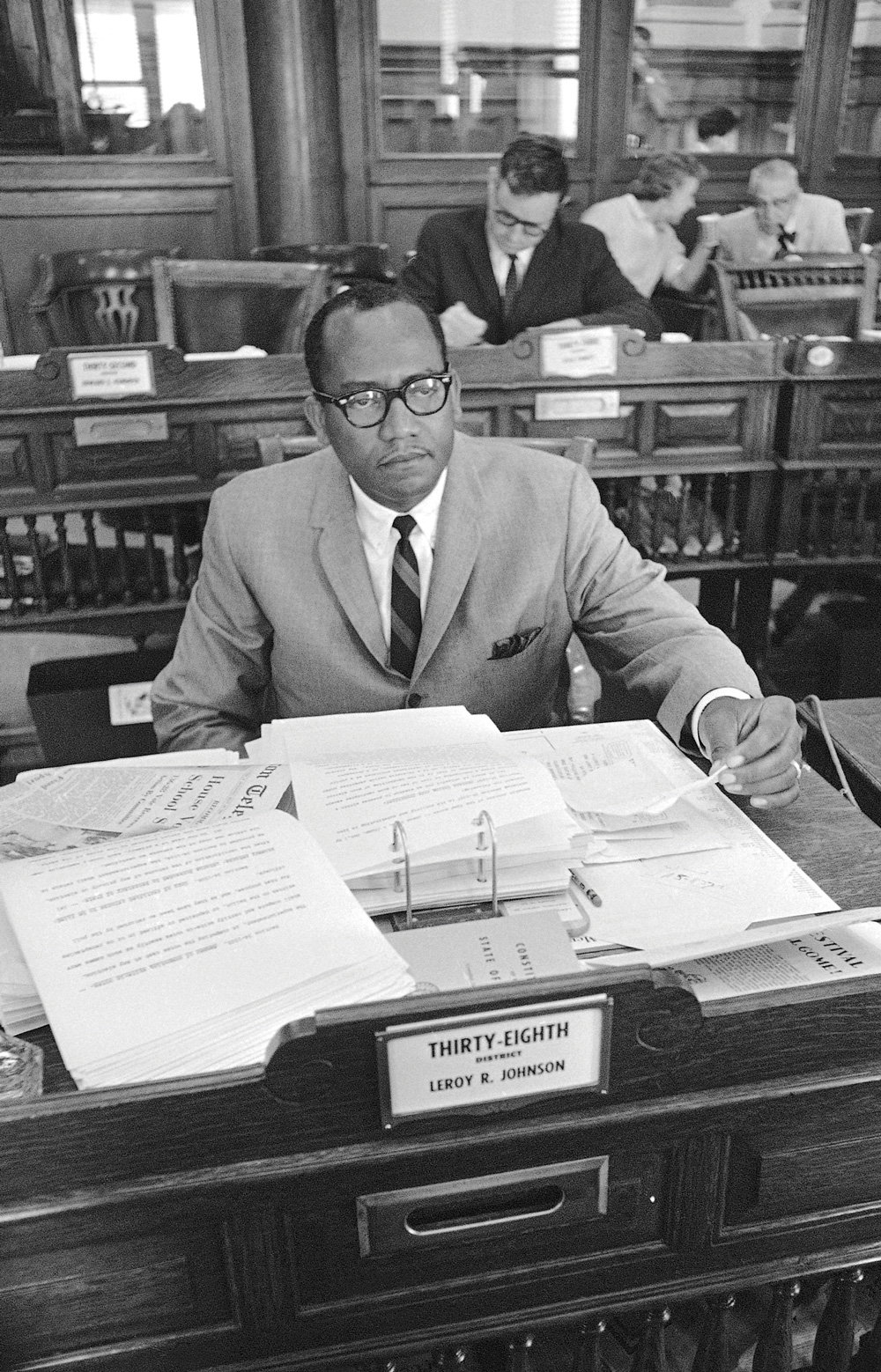
In 1962, a major ruling by the U.S. Supreme Court invalidated county unit systems and established a “one man, one vote” principle, which forced Georgia to adopt a statewide popular vote and create new proportionate districts. The balance of power shifted immediately: That year, Fulton went from having one state senate seat to eight. One of those seats was won by Leroy Johnson, Georgia’s first Black state senator since the Reconstruction era.
Photograph by Associated Press
At the same time, Atlanta—the most prominent city within Fulton—was also developing a distinct political identity. “Atlanta was more progressive on race relations than the rest of the South and certainly more than the rest of Georgia,” Bullock says. To win his mayoral race in 1949, William Hartsfield made Black voters an essential part of his coalition—a highly unusual political dynamic then for a White politician in the South, and one that reflected the power of the city’s Black voters. In the decades that followed, those same voters helped send Andrew Young to Congress and made Maynard Jackson the city’s first Black mayor. “Atlanta has been a pacesetter in terms of race relations,” Bullock says. “Not just for Georgia, but for the South.”
Decades later, the political power centralized in Fulton County has taken on even greater significance as Georgia emerged as a battleground state. Fulton County Commissioner Dana Barrett has watched that evolution firsthand. “We are the largest county with [one of] the heaviest concentration[s] of Democrats in a swing state,” she explains. “Counties like ours are so critical in the outcome of what’s going to happen.”
This article appears in our October 2026 issue.