



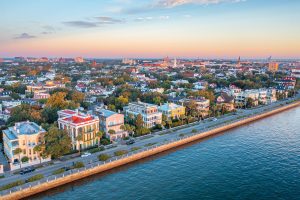
Courtesy Explore Charleston
Forget long flights and security lines. If you’re itching to get away from it all—a different culture, dramatic landscapes, charming architecture—you needn’t travel as far as you may think. We’ve found six destinations here in the South that evoke the vibes of popular travel locales hundreds or thousands of miles away. From the rolling hills of Southern wine country to the brick-lined streets and centuries-old coquina-shell buildings of America’s oldest city, this list proves that captivating lands are just a drive away.

Courtesy Chattanooga Tourism
Dreaming about outdoor adventure in Boulder, Colorado? Try Chattanooga.
Over the past two decades, Chattanooga has emerged as a mecca for outdoor adventure, earning the nickname “Boulder of the East.” Tucked into a rugged pocket at the foot of the Appalachians, it offers world-class recreation just steps from a bustling cultural hub, where adventurers and artists mingle.
Courtesy Chattanooga Tourism
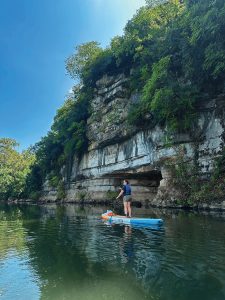
Instead of a hike up the famed Flatirons of Boulder, trek up Sunset Rock Trail on Chattanooga’s beloved Lookout Mountain and take in expansive views of the leafy gorge below, or traverse more than 60 miles of wooded trails on Signal Mountain that crisscross lakes, streams, and overlooks. Mountain bikers will find more than 100 miles of singletrack within 20 minutes of downtown; beginner riders can tackle Stringer’s Ridge, a city park with multiuse trails that cater to all levels. Instead of tubing down Boulder Creek, launch a kayak on the Tennessee River, which cuts right through downtown and meanders below majestic bluffs (one topped dramatically by the cantilevered Hunter Museum of American Art). You’ll also float beneath the pedestrian-only Walnut Street Bridge, which connects restaurants and galleries on both sides.

Courtesy Chattanooga Tourism
In Boulder, climbers flock to destinations like Eldorado Canyon State Park, but Chattanooga boasts even more routes than that Western town—hundreds within a 45-minute drive of downtown. From the Tennessee Wall to Rock Town, the craggy Southern sandstone beckons, and trad climbers, sport climbers, and boulderers answer the call. It’s such a climber’s paradise that the city-run program Outdoor Chattanooga engineered a beginner-friendly climbing wall on a limestone pier beneath Walnut Street Bridge, allowing the public to rope up and scale its walls.

Courtesy Thomas Jefferson Foundation
Thirsting for a jaunt to northern California’s wine country? Sample Charlottesville, Virginia.
If your idea of a perfect vacation calls for rolling hills, sophisticated small towns, and award-winning wineries, there’s no need to fly to Napa Valley or Sonoma. With more than 300 wineries across 10 wine regions and eight prestigious AVAs (American Viticultural Areas), Virginia is a buzzy destination for crushed grapes—plus, it boasts thinner crowds and lower price points.

Courtesy Visit Charlottesville
The Monticello AVA—an area that includes Thomas Jefferson’s historic plantation home, Monticello, where he famously planted wine grapes 250 years ago—was recently dubbed the wine region of the year by Wine Enthusiast. Row upon row of vines cover sunny slopes and valleys, offering bucolic vistas that rival any in Napa Valley. While California wine country is anchored by rustic but refined towns like Yountville and Healdsburg, Virginia’s wine regions are centered on the sophisticated college town of Charlottesville, with a brick-lined historic pedestrian mall of posh boutiques and upscale dining options (try intimate French spot Alley Light or bistro Cafe Frank).
From Charlottesville, follow the Monticello Wine Trail, with more than 40 wineries within 25 miles of the town center. Sip a Bordeaux blend at 900-acre Barboursville Vineyards, founded in 1976 by Italian Gianni Zonin, who is widely credited with sparking Virginia’s modern wine movement. You can also tour the ruins of a mansion Jefferson designed in the early 1800s for then-governor James Barbour. At Blenheim Vineyards, founded by musician Dave Matthews in 2000, taste estate-grown sauvignon blanc and albariño. While you’re in the area, don’t miss sampling lesser-known varietals that thrive in Virginia’s more humid climate and unique terroir—with styles that skew more European than Californian—like the spicy petit manseng at Early Mountain and Michael Shaps Winery.
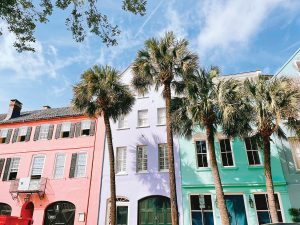
Photo by Tyrone Sanders
Copenhagen is famous for its colorful seaside architecture and fine dining. So is Charleston.
It’s no stretch to compare the 18th-century, pastel-hued Georgian rowhomes on Charleston’s wharfside Rainbow Row with the colorful strip of 17th-century buildings along Copenhagen’s iconic waterfront district, Nyhavn. The latter once beckoned sailors to rest and knock back ale; today, it bustles with cafes and pubs along a picturesque canal. Meanwhile, Rainbow Row—once a strip of shops that catered to maritime workers—is just steps from the shops and restaurants on lively King Street. Both port cities still buzz with a celebrated naval history: In Copenhagen, tour the yellow-hued seafarers barracks at Nyboder and the decommissioned Cold War–era naval ships at Nyholm, while in Charleston, check out Patriots Point Naval & Maritime Museum featuring the Word War II–era aircraft carrier USS Yorktown in Charleston Harbor.

Courtesy Explore Charleston
Like Copenhagen, Charleston is famously walkable. Get lost wandering narrow cobblestone alleyways exploring architecture that could fool you into thinking you’re in the Old World. Don’t miss a stroll along the Battery, the city’s historic defensive seawall flanked by stately antebellum mansions.

Photo by Cameron Wilder
Foodies flock to Copenhagen for world-class restaurants, but Charleston is a dining destination in its own right. Longtime standouts include Southern mainstay Husk, which pioneered upscale country ham and pimento cheese, and FIG, where local seafood shines. The town’s Michelin-starred options include homey but elevated Vern’s and Wild Common, which offers a tasting menu that ranges from pho to eggs benedict with Ossetra caviar.
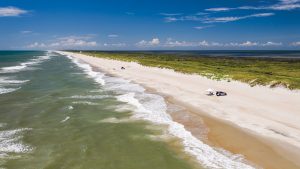
Photo by Chris Hannant
Eyeing the wild coast and surf culture of England’s Cornwall? Hang ten in North Carolina’s Outer Banks.
The Outer Banks, a narrow string of barrier islands stretching 200 miles along the Atlantic Coast, can feel like the edge of the world. Its salt-sprayed villages and wild shorelines—spits and shoals, dune ridges and crashing waves—make it an apt stateside substitute for England’s far-flung Cornwall. The British peninsula beckons serious wave-seekers and those willing to trek to the country’s westernmost point for untouched beaches and quaint hamlets.

Courtesy Outer Banks Visitors Bureau
Cornwall’s rugged north coast lays claim to famous surf towns like Newquay and St. Ives, but the Outer Banks is consistently ranked the best surf spot on the United States’ Atlantic Coast. It packs a walloping punch at Cape Hatteras, whose point juts out 30 miles from the mainland, where mammoth waves from the north and south converge. Hit Old Lighthouse Beach in Buxton—home to the tallest lighthouse in the country—where surfers file in year round at sunrise to catch the swells peeling around the bend.
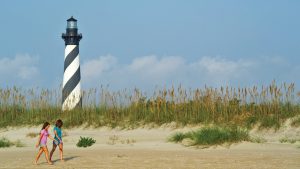
Courtesy Outer Banks Visitors Bureau
Just as legends of mermaids and sea creatures shape Cornwall’s mystical appeal, the Outer Banks is no stranger to the salty folklore of pirates and shipwrecks, which still colors the culture. Its unruly waters have been dubbed the Graveyard of the Atlantic, as thousands of ships were lost off its coast—some of which can still be explored by snorkelers and kayakers today. Discover swashbuckling secrets on remote Ocracoke Island, where a slangy Elizabethan dialect known as hoi toider (or high tider) endures. There, Blackbeard the pirate hid out during the final months of his life before meeting his end in a dramatic naval battle off Springer’s Point, now a 122- acre maritime forest preserve.
Want a taste of old Spain? Visit St. Augustine, Florida.
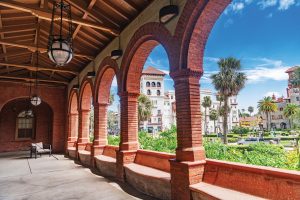
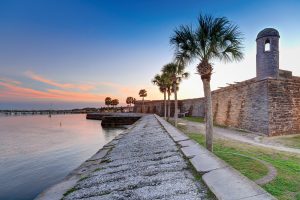
St. Augustine is America’s oldest European settlement, founded by the Spanish in 1595, so it’s no surprise it conjures the aura of its former mother country. Head to the artsy historic district to wander the narrow, brick-lined streets, which follow the 16th-century colonial grid, or rest your feet at the grassy, tree-lined Plaza de la Constitución, the original public square of the colonial city, dating to 1573. Some 36 buildings remain from the first Spanish Colonial period—mostly humble tabby and clapboard houses with overhanging balconies, but also the dramatic Castillo de San Marcos fortress, built of local coquina rock composed mostly of seashells.
In the Gilded Age, industrialist Henry Flagler, inspired by the town’s Spanish history, developed grand hotels in the Spanish Colonial Revival and Moorish styles, with red-tile roofs, stucco walls, arches and loggias, and decorative ironwork—a style that came to define the city. (The era’s masterpiece was the ornate 1888 Ponce de Leon Hotel, now the heart of Flagler College.) This architecture, combined with white-sand beaches and relaxed seaside vibes, could easily transport you to the Balearic Islands off the coast of Spain, known for their sparkling coves and tranquil seaside towns.
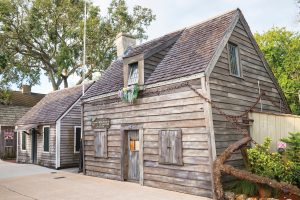
Adding even more Mediterranean flavor is St. Augustine’s sizable Minorcan population, which has heavily influenced the city’s cuisine. In 1777, a group of indentured servants brought to America from Minorca—Mallorca’s smaller neighbor—fled a nearby colony and settled in St. Augustine. Restaurants like O’Steen’s and Aunt Kate’s serve traditional Minorcan dishes like pilau (spiced rice) and tomato-based, spicy clam chowder incorporating datil peppers, which Minorcans are said to have brought to the country. Tour the Oldest Wooden School House, a late-1700s, sun-bleached bald cypress and cedar plank building where Minorcan children were taught, now a historic museum and gardens.
Courtesy Play Coastal Mississippi
For high-stakes waterfront entertainment, your mind might go to Nassau. But no passport is required for Biloxi, Mississippi.
Where can you roll the dice at a waterfront casino, play a top golf course, and devour a plate of fresh-off-the-boat seafood? There are Nassau resorts like Baha Mar and Atlantis, sure, or you can leave your passport at home and place your bets in beachside Biloxi.

Courtesy MGM Resorts
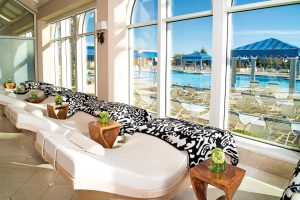
There, the waterfront Beau Rivage Resort & Casino takes top billing, looming large over the Gulf Coast. Developed by Steve Wynn of the Bellagio and owned by MGM, it was designed to rival anything in Las Vegas with its 1,200 slot machines, 75 table games, high-stakes lounges, luxe pool and spa, and live entertainment from the likes of Blue Man Group and LeAnn Rimes. Next door, find the Hard Rock Hotel & Casino, and Harrah’s is less than two miles down the beach. All told, there were at least 29 six-figure winnings at Mississippi-coast casinos in 2025.

Courtesy Play Coastal Mississippi
In Nassau, Baha Mar is home to the top-ranking golf course in the Bahamas, but in Biloxi, you can tee up at the stately, championship-caliber Fallen Oak golf course, designed by Tom Fazio and consistently named a top course by Golf Digest. Biloxi also competes on the seafood front: While Nassau is known for its conch, the Gulf Coast is shrimp country. Try the fried-shrimp platter at the beachside Reef, shrimp imperial (jumbo shrimp stuffed with crabmeat) at elegant Mary Mahoney’s Old French House, or a shrimp po’ boy at family-owned Taranto’s. Or follow those in the know lining up at the docks beside the Hard Rock in the early mornings during shrimp season to fill up their coolers.
This article appears in the Spring 2026 issue of Southbound.