



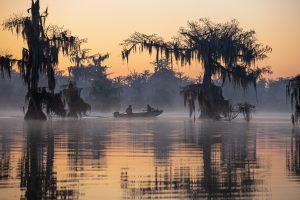
Photo by Ben Pierce
SILENCE IS GOLDEN
Morning mist rises off the tranquil water. A slight breeze ruffles the veils of Spanish moss draped from the gnarled bows of ancient cypress and tupelo. The stillness belies what’s going on all around. This Louisiana swampland, Lake Martin, is an epicenter of bayou wildlife. The trees above are a year-round rookery for a rainbow of waterfowl, including great blue herons, bright-yellow prothonotary warblers, snowy egrets, black-crowned night herons, white ibis, and roseate spoonbills. In the murky waters below nests a burgeoning population of alligators. Boats motor or paddle past, a camera shutter clicks. But soon all is swallowed again by the loaded silence.
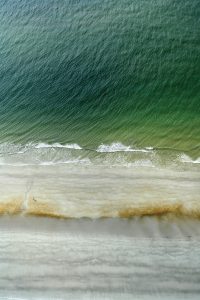
Photo by Mark Staff
TIDES OF TIME
Along 187 miles of South Carolina coastline, the ocean takes on different personalities. The 60 sandy miles of the Grand Strand from Little River to Georgetown is dotted with resorts centered on Myrtle Beach and has welcomed generations of vacationers. The Santee Delta near Charleston holds a great deal of history as a commercial hub and key port for the transatlantic slave trade. Then there are the sea islands of the Lowcountry, like Hilton Head, where humans try to keep their presence in check and harmonize with nature as the green sea laps up on the pristine white beaches.

Photo by Mark Van Dyke
SONIC FALLS
In Tennessee, water is a sound. Steady rainfall feeds thousands of miles of trickling streams, babbling creeks, and rushing rivers. The flow gradually cuts through the hard limestone and sedimentary rock, eroding a soft layer of shale beneath, creating steep slopes and sheer drops. The state has more than 500 waterfalls, with over 100 in the Great Smoky Mountains alone, including Spruce Flats Falls just outside of Gatlinburg. The result is a range of natural tones, from the pitter-patter of small cascades to the thunderous white noise of great falls—culminating in one sonorous mountain chorus.
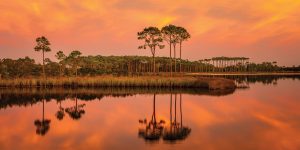
Photo by Michael Blachly
GATEWAY TO THE GULF
A coastal dune lake is an aquatic borderland between two worlds. Shallow freshwater Western Lake stands mere feet from the salty Gulf of Mexico. When heavy rains fall, sea levels rise. The barrier berm is breached, allowing water to spill between lake and ocean. The storm breaks. The sky turns a surreal golden hue above a rare brackish wonderland of freshwater and saltwater fish and flora. How rare? Dune lakes are only found in the most biodiverse places in the world: New Zealand, Australia, Madagascar . . . and South Walton, Florida.
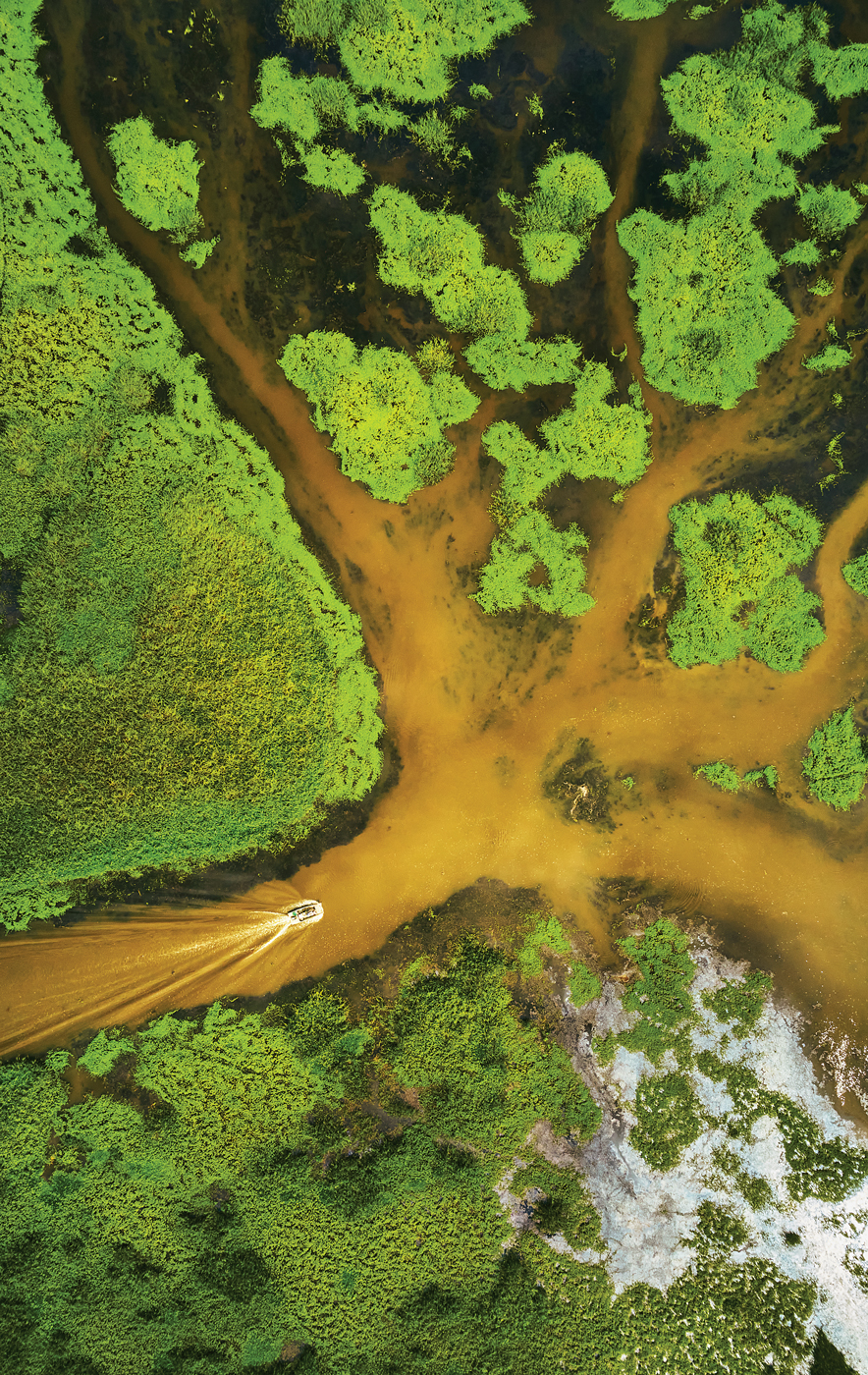
Photo by John E. McDonald
THE AMERICAN AMAZON
In Alabama, just east of Mobile, eight rivers (and 250 smaller tributaries) spill into 260,000 acres of the wildest habitat in North America. Dubbed the American Amazon, the Mobile-Tensaw Delta features 500 species of plants, 300 birds, 126 types of fish, 69 reptiles, 46 mammals, and 30 amphibians. No matter which way you steer, you’re bound to encounter brown pelicans diving for pigfish and sardines. Bald cypress and tupelo trees provide shade for carnivorous pitcher plants and rare orchids. American alligators patrol the riverbanks for plump nutria and muskrats. But it’s the pitch-black of night and the maze of rivers, creeks, and swamps that make you speed home before dark.
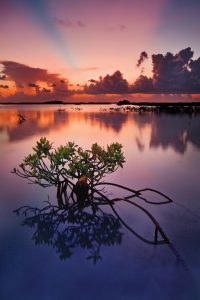
Photo by Paul Marcellini
LOW-KEY VIBES
The calm, clear wetlands of the Lower Florida Keys do more than disarm—they lull and subdue. Islands of tangled mangrove, shallow sandbars, and thickets of seagrass encourage a slow paddle on board or kayak. Just beneath the water’s surface lies the only living coral reef in the continental U.S., which took thousands of years to grow. Wild Key deer leave silent tracks in the sand on secluded beaches. At sunset, take a breath and gaze into the infinite pink skies.
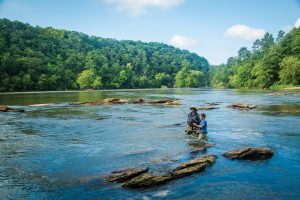
Photo by Kevin Garrett
LIFE ON THE WATER
Water is the stuff of life. When most people consider the ecosystems of our natural waterways, they think of wildlife: fish, reptiles, plants, and the birds and mammals that feed on them. But humans rely on them, too. Originating in the Blue Ridge Mountains, the Chattahoochee River flows southward toward the Gulf of Mexico through Georgia, providing 70 percent of metro Atlanta’s drinking water; 16 of the Chattahoochee River Basin’s 22 hydroelectric power–generating plants are located along the river’s main stem. The Chattahoochee River National Recreation Area also improves quality of life with opportunities for fishing, tubing, kayaking, and boating.
This article appears in the Summer 2026 issue of Southbound.