Home 2012

Archives

The Atlanta BeltLine

In the center of an old railroad bridge in Reynoldstown, a man pedaled a unicycle, arms outstretched. An odd-looking chap, he had spindly fingers made from motorcycle foot pegs and a red taillight heart that gleamed, E.T.-like, under horseshoe ribs. Visitors to last year’s Art on the Atlanta BeltLine exhibition could bring him creaking and clacking to life with a separate set of foot pedals. Will Eccleston’s Uniman is gone now, dismantled in the artist’s backyard, just as the overgrown grass and rusted tracks will someday be transformed. But for a moment, Uniman was part of an unfolding history.

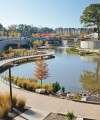
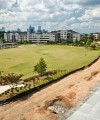
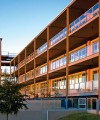
If you’ve ever wondered whether you’ll be dead and gone before the BeltLine comes to fruition, take heart. Six years into the twenty-five-year work plan to repurpose old rail corridors into a twenty-two-mile loop of streetcar transit, trails, and greenspace, good things are happening. Inner city parks, every bit as pretty as their renderings promised, have replaced garbage-strewn blight. New walking trails connect neighborhoods with historic landmarks and each other. A former slaughterhouse in Westside shines like a beacon of realized potential; the old Sears building on the eastside is on the brink.

In his now-legendary 1999 Georgia Tech master’s thesis, Ryan Gravel, who grew up in Chamblee, described Atlanta as “adolescent,” evoking not just the city’s youth but its arrested development in the wake of suburban sprawl. His proposal turned yesterday’s mistakes into rosy possibilities; how many major cities, for instance, can still build a 300-acre park at their center? Says Atlanta BeltLine spokesman and native New Yorker Ethan Davidson, “New York is a city that’s constantly finishing itself. They’re redeveloping the waterfront, the High Line. But they could never do one project to change the face of the city.”

Dr. Catherine Ross, director of Georgia Tech’s Center for Quality Growth and Regional Development and longtime spreader of BeltLine gospel, calls the project “a link from where we are to where we aspire to be”—and right now, we’re somewhere in the middle. Our children may reap the fruits of our aspirations, but we can tell them we were there when Atlanta grew up.

This article originally appeared in the August 2012 issue.

The Enterprise Innovation Institute

As you read this, programmers hover over laptops and lattes at the Technology Square Starbucks, designing the Next Big Thing. It has never been so easy (or so cheap) to turn a good idea into a global product. So they devise apps to entertain you, devices to save you energy and time, and stuff you won’t know you need until they invent it. Technology Square is the heart of Atlanta’s start-up community and site of the Advanced Technology Development Center (ATDC) of Georgia Tech. Stephen Fleming, a former venture capitalist, runs this incubator and the overarching Enterprise Innovation Institute.

Fleming sports a lapel button with a red slash over the word “Valley.” Atlanta is not Silicon Valley, he says. It will never be Silicon Valley. So don’t even ask him when Atlanta is going to become the next Silicon Valley. Instead he’s helping Atlanta create its own identity as a center of entrepreneurship. “This is a once-in-a-generation shift,” he says. “You’re now at the point where an undergraduate with a good idea and the ability to raise a few thousand dollars can build a product or service that can scale to a global level.”

But creating a successful start-up is not easy. It requires networking, attracting investors, a workable business model—an education in Start-up 101. That’s where Tech’s Enterprise Innovation Institute comes in. “We connect the ecosystem. That’s what we’re about,” says Fleming. Georgia Tech nurtured Suniva (maker of high-efficiency solar cells) and Pindrop Security (a phone call analyzer that detects and mitigates fraud). The university has helped Georgia advance in the areas of healthcare technology, payment transaction processing, and mixed signal semiconductors (putting wireless signals on silicon chips). The National Science Foundation selected Tech as one of three universities that will teach budding entrepreneurs who receive NSF funding how to build companies around their new technologies.

If the start-up world is the Wild West of business, you’d expect its techno cowboys to be a bunch of cagey loners, afraid someone will steal their ideas. But Atlanta’s start-up community is collegial. StartupDrinks holds monthly networking events for entrepreneur wannabes. StartupChicks helps women entrepreneurs learn from and support each other. StartupLounge connects entrepreneurs with early-stage investors. ATDC serves as a hub for this community and hosts an annual showcase that draws hundreds of entrepreneurs. “The energy and the enthusiasm are just overwhelming,” says Jennifer Bonnett of StartupChicks. While the entrepreneurs dream of Facebook-scale glory, even modest success is a boon for Atlanta. “If you’re looking for high-wage job growth, you need young technology companies because that’s where the jobs are,” says Fleming.

This article originally appeared in the August 2012 issue.

Rosalynn Carter

Rickey Wingo, fifty-three, suffered from schizophrenia and got agitated due to a side effect of his medicine. The final time it happened, workers at Northwest Georgia Regional Hospital pinned him to the ground and beat him to death, according to the state’s chief medical examiner, who ruled Wingo’s death a homicide. No staffers were charged or punished. Wingo’s case was just one of 115 suspicious deaths and incidents uncovered in a five-year Atlanta Journal-Constitution investigation of Georgia’s state psychiatric hospitals. No, this wasn’t Jack Nelson’s 1960 Pulitzer Prize–winning exposé about abuses at Milledgeville’s Central State. This series was published in 2007. Do you remember it?

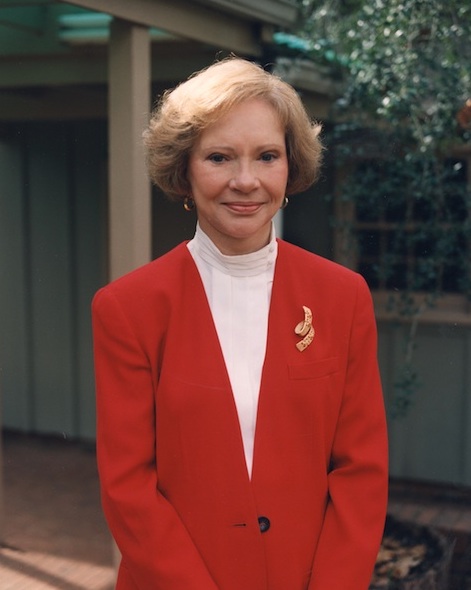
If you don’t, you’re not the only one. We can be apathetic about mental healthcare, a particularly paradoxical mind-set given that a mental disorder strikes one in four Americans every year. When the 2007 AJC series met a resounding local silence, Georgians were fortunate that the world’s most prominent mental health advocate lives right here. Once again, as she has done for more than forty years, Rosalynn Carter fought for people with mental illnesses.

In 2009 the federal Justice Department sued Georgia for failure to protect citizens in state custody. Negotiations were headed toward an untenable resolution when the Carter Center’s Mental Health Program—founded in 1991 by Rosalynn—got involved. The center helped broker an agreement between Georgia factions; after two years, the vested parties hashed out an unprecedented settlement agreement.

“Before the settlement, people were being discharged inappropriately to homeless shelters and automobiles,” she said during the seventeenth annual Rosalynn Carter Georgia Mental Health Forum, held in Atlanta this May. “It is important to remember there is a real cost to doing nothing. Untreated depression costs billions of dollars in lost productivity, billions. Given the difficult economy, many states have stopped trying to improve their public mental health system at all. Because of our suit, we got some funding. Georgia can be a model for the country.”

The first improvement was pulling behavioral health out of the monolithic Department of Human Resources and creating the Department of Behavioral Health and Developmental Disabilities (DBHDD). The new department then closed Northwest Georgia Regional Hospital, beginning a statewide effort to move adults out of large psychiatric hospitals and into community care. To serve those consumers, the department added peer counseling centers, mobile crisis units, and other services; it also contracted with local hospitals for acute care. In just one year, the region’s readmission rates went from nearly twice the national average to below average. Typical hospitalizations have gone from forty-seven days to fewer than five.

Despite start-up costs, the department is hopeful the new structure will cost no more than the former approach, if not less, says DBHDD commissioner Frank Shelp, M.D., M.P.H. The goal is rolling out the system to the entire state by 2015, when the settlement agreement expires. There are still formidable difficulties. The agreement doesn’t apply to children, adolescents, or the elderly. And Medicaid reform presents challenges to hard-won progress. But so far, the Georgia legislature remains committed to the agreement.

“Without the Carter Center, I don’t know if the settlement would have happened, but I do know that without the Carter Center, the settlement would not be nearly as strong. Nor would there be the trust and relationships on all sides to work toward successful implementation,” says C. Talley Wells, an Atlanta Legal Aid Society attorney and key negotiator on behalf of consumers.

Carter has been an international voice for equitable mental healthcare since her husband’s first run for governor. “Every day I campaigned, people would ask me what my husband would do for a mentally ill loved one at Central State Hospital. It’s so exciting to me what has happened since I began.”

This article originally appeared in the August 2012 issue.

Louis Corrigan

As evidence for the maxim that one person can indeed make a difference, consider that, all by his lonesome, arts enthusiast Louis Corrigan gave more money to local arts groups last year than the entire Atlanta Office of Cultural Affairs. Corrigan, a successful investment firm research analyst, is the majority funder of Flux Projects, which sponsors creative installations and performances around the city, and he provides about 40 percent of the backing for professional dance troupe gloATL. But he’s not simply a modern Medici seeking a tax write-off; in keeping with his financial background, Corrigan leverages his assets so the grassroots community gets the biggest bang from his bucks. Through his nonprofit foundation, Possible Futures, he targets grants to enable arts journalism websites artsatl.com and burnaway.org to cover and promote local goings-on. Through Flux and his support for gloATL, Corrigan underwrites public arts projects in such highly visible venues as Freedom Park and Centennial Olympic Park, with the aim of reaching audiences that might not otherwise seek out experimental visual art, photography, or dance.

Although he’s directly involved in ArtsATL’s finances as a board president, Corrigan typically offers strategic matches to additional organizations, spurring them to develop other funding sources. He says that support is always intended to give arts groups the breathing room to develop sustainable models for supporting themselves going forward. In launching the annual Castleberry Hill Flux nights—mark your calendar for October 6—showcasing giant projections, large-scale installations, and performances featuring dozens of artists, Corrigan achieved his goal of creating a “galvanizing event.” Atlanta’s cultural life reaps dividends from Corrigan’s canny investments.

This article originally appeared in the August 2012 issue.

EUE/Screen Gems

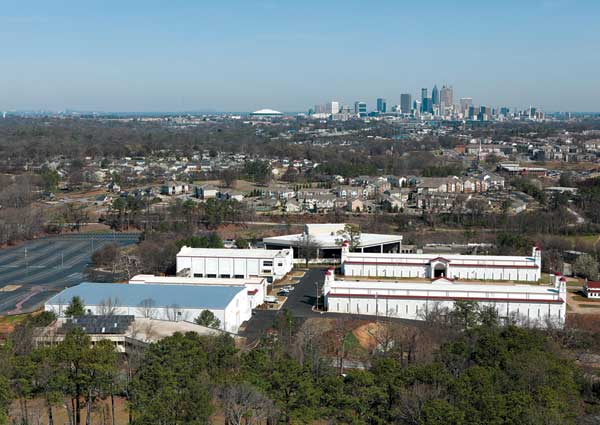
The folks behind the decision to transform the old Lakewood Fairgrounds into a thirty-three-acre film and television production campus want you to know two things: Part of the reason they came here was because of Georgia’s vaunted tax incentives for moviemakers, but no, their company doesn’t get a break on its own taxes. The crucial point is that, by creating the largest studio and soundstage complex in the state, EUE/Screen Gems has made it possible for lots of other filmmakers and TV networks to take advantage of the state’s tax deals.

While the incentives upped Georgia’s popularity as a destination for location shooting, there were few large local studios. Since Screen Gems opened in 2010, it has brought new business and bustle to town. The studio hosted production of the upcoming film The Watch, starring Ben Stiller and Vince Vaughn, as well as TV shoots by USA Network, Hallmark Channel, and Disney Channel. Stage 4 is booked through the end of 2012 for BET shoots.

Last year Screen Gems spent $15 million to build Stage 5, one of the largest soundstages east of Hollywood, a 37,500-square-foot structure boasting forty-foot ceilings. Without interior columns, it is an ideal venue for shooting large-scale action and special-effects scenes. When the Robert Zemeckis–directed Flight opens this fall, theatergoers will watch Denzel Washington crash-land a commercial jetliner without a clue that the sequence was filmed indoors.

This February the campus expanded with the opening of Stage 6, a 30,000-square-foot facility that sits on the hill once occupied by the fairground’s Greyhound roller coaster. (Movie trivia: That coaster was demolished in the climax of 1980’s Smokey and the Bandit II.) Screen Gems now has a total of nearly 150,000 square feet of dedicated studio space to help attract film productions and commercial shoots to Atlanta, a lure that is aided by on-site grip and lighting services.

Don’t be surprised if the Lakewood campus itself appears on a movie screen near you. According to Screen Gems executive vice president Kris Bagwell, who oversees the complex, the Spanish Mission–style architecture of the restored 1916 fairground buildings is so reminiscent of a golden-era Hollywood studio lot that several production clients have shown interest in filming exterior scenes.

This article originally appeared in the August 2012 issue.

GATSBII

Meet GATSBII. He’s a sturdy fellow who weighs about 450 pounds and stands at four foot four—unless he needs to reach something and extends to five foot five. He looks just like the classic robot of your imagination: a broad, rolling base that contains two operating computers; arms with clawlike pincers; a laser scanner that hums up and down; and a row of cameras and an Xbox Kinect atop his head. (Yes, we know you shouldn’t use personal pronouns for a robot, but who can resist? Just look at him.)

GATSBIIGATSBII—which stands for “GATech Service Bot with Interactive Intelligence” and is pronounced like the Fitzgerald hero—currently has the intellect of an infant, although unlike a baby, he comes with an on/off switch. But he’s learning fast. He resides in the Aware Home at Georgia Tech, an ultrawired facility where he practices chores like picking up a bar of soap and dropping it into a bin. With an aging population that will need healthcare and other assistance, and a scarcity of trained younger humans, robots like GATSBII are seen as a smart solution to a labor shortage. While there are robot tests being conducted elsewhere, the Tech experiment uniquely fuses robotics and psychology and already has established one important fact: Older people aren’t creeped out by the prospect of having robot helpers.

In a Tech focus group, older adults said they’d prefer a robot over a human to help them pick up things they drop, hand them medication, empty the dishwasher, and perform other tasks. The seniors met and interacted with GATSBII, and they liked him. “They did not seem intimidated by it at all, which was quite exciting,” says Wendy Rogers, professor of psychology and director of Tech’s Human Factors and Aging Laboratory.

Today a robot like GATSBII costs about $400,000. But like all new technologies, robots will get cheaper when commercialized. Rogers and her colleagues will work with assisted-living facilities in Atlanta to test robot use. She foresees robots doing more exerting and less pleasant tasks (cleaning, sponge bathing), allowing human caregivers to socialize with residents, and says, “I could envision Atlanta being one of the early adopters of this technology.”

This article originally appeared in the August 2012 issue.

Georgia State University

Bulldogs and Yellow Jackets may have the more distinguished histories among local colleges. But Atlanta’s future may very well rest in the hands of the Panthers of Georgia State. That’s because the classes graduating from the lower-profile research university in Downtown Atlanta mirror the emerging demographics of the surrounding city—diverse both in terms of ethnicity and socioeconomic background. In fact, GSU graduates a higher rate of African Americans, Latinos, and Asians than any of its in-state rivals and in 2011 awarded more bachelor’s degrees to African Americans than any U.S. non–historically black college.

Over the past twenty years, GSU, which turns 100 next year, has worked to transition from commuter school to an urban campus attracting traditional-age collegians. Its physical investment—dorms, classrooms, and sports fields—helped transform the core of the city. But GSU’s investment in human capital will have a greater long-term impact on Atlanta.

The university’s success at graduating its diverse student population is no accident. About a decade ago, GSU administration confronted the problem that plagues most American institutions of higher learning: The young people underneath the mortarboards were overwhelmingly white. But while some colleges tried to identify the varying roadblocks to graduation for blacks and Hispanics and Asians, GSU decided to dedicate its limited resources to finding problems that all the underrepresented groups had in common.

The administration found around 30 percent of students were the first in their families to attend college. “These students had no frame of reference for college,” says Tim Renick, associate provost and chief enrollment officer. “That meant they were having more trouble navigating the system.” So, Renick says, the administration coordinated offices “that are often islands”—admissions, financial aid, the registrar, student accounts, student retention—under one associate provost office, which Renick currently occupies. Then the school selected courses with the highest failure rates and enlisted work-study and scholarship students who had done well in those classes to serve as supplemental instructors and peer mentors.

Lack of financial means was another commonality. A third of the student body came from households earning $30,000 a year or less, and 70 percent of GSU’s incoming classes were enrolling with the HOPE Scholarship. When they lost that aid due to falling grades, most dropped out. In response, GSU started Keep HOPE Alive, a program that provides former HOPE scholars with a $500 life jacket for two semesters, during which they are required to attend financial literacy and study-skill workshops and meet with advisers. Renick says 60 percent of students who go through the program reclaim HOPE.

Georgia State’s graduation rates matter because the school enrolls a diverse population to start with. According to College Navigator, just 37 percent of GSU’s student body is white, compared to 61 percent at Tech and 77 percent at UGA. The 8,400-plus African American undergraduate enrollment represents more than the combined undergrad populations of Spelman, Morehouse, and Clark Atlanta. In the future our city will be more diverse than ever, and the jobs that will be available will require advanced education. Thanks to Georgia State’s efforts, it seems certain that its classes of 2013, 2020, 2030, and beyond will be well prepared.

This article originally appeared in the August 2012 issue.

Linda Matzigkeit

Desperate times call for desperate measures. Children’s Healthcare of Atlanta has admitted patients who weigh more than 500 pounds, and the pediatric facility treats type 2 diabetes, hypertension, liver disease, and sleep apnea—diseases once seen only in adults. When Children’s started asking questions, it was stunned to discover that although 40 percent of Georgia children were overweight or obese (second worst only to Mississippi), more than 70 percent of parents considered their kids’ weights normal.

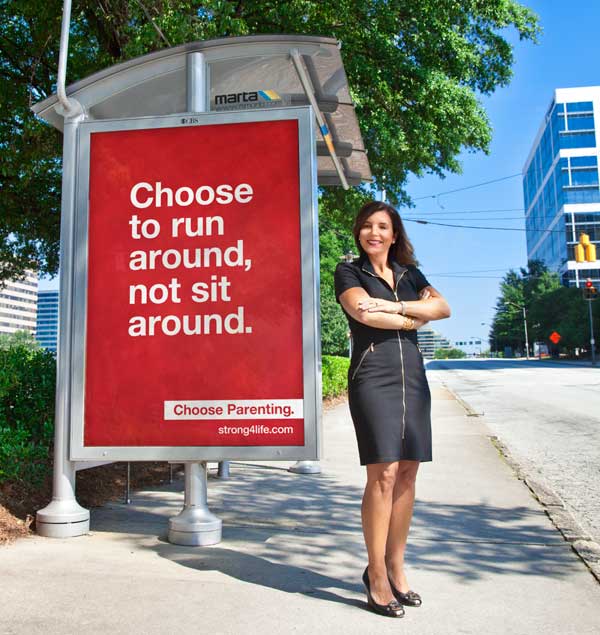
0812_Feature_LindaMatzigkeit“We needed to wake up Georgia,” says chief administrative officer Linda Matzigkeit, who helped spearhead a controversial public awareness campaign of billboards, television spots, and social media with stark black-and-white portraits of heavy kids and hard-hitting messages like “It’s hard to be a little girl if you’re not.” Children’s did not aim for shock value, but it was clear conventional messages weren’t getting through, says Matzigkeit. “Most of the parents were in denial,” she explains. “This is a very serious medical crisis that, if we don’t address it now, is going to be so out of control that it’s going to tax our healthcare system like we’ve never seen.”

The campaign—called Strong4Life—drew outcries from groups like the National Eating Disorders Association as well as media buzz. (Sample headlines: “Harsh,” NPR; “Shocking,” Washington Post WonkBlog; “Fat-Shaming,” Gawker.) But the campaign worked. Today it’s estimated that 93 percent of Atlantans are aware of the childhood obesity crisis here.

Strong4Life has moved into a second phase: Stop the Cycle. One element is a sensational time-lapse YouTube video that traces a man’s life from a heart attack at age thirty-two back to his unhealthy childhood—and has attracted nearly 200,000 views. However, billboard and social media messages are softer now: “Choose fruit, not fruit flavoring.”

Children’s has committed $25 million to the effort, with plans to raise another $25 million from sponsors. The goal: to knock Georgia out of the top-ten childhood obesity ranks in five years.

Whatever you think of Matzigkeit’s inflammatory approach, she catapulted a frightening public health crisis into daily conversation. Even more impressive, she got her own house in order first. In 2008 Matzigkeit launched an employee wellness program, also called Strong4Life. Children’s banned smoking, filled vending machines and cafeterias with healthy foods, added walking trails and gyms to all major locations, and created dozens of programs to help workers get fit. So far the hospital’s 7,000 employees have lost nearly 49,000 pounds. The initiative helped earn Children’s numerous regional and national top employer awards.

“No one loves kids more than Children’s Healthcare of Atlanta,” says Matzigkeit. “Our intent is not to harm. Our intent is to start a dialogue . . . As the largest pediatric healthcare provider in the country, it is our responsibility to stand up and tackle this issue.”

This article originally appeared in the August 2012 issue.

K. Rashid Nuri

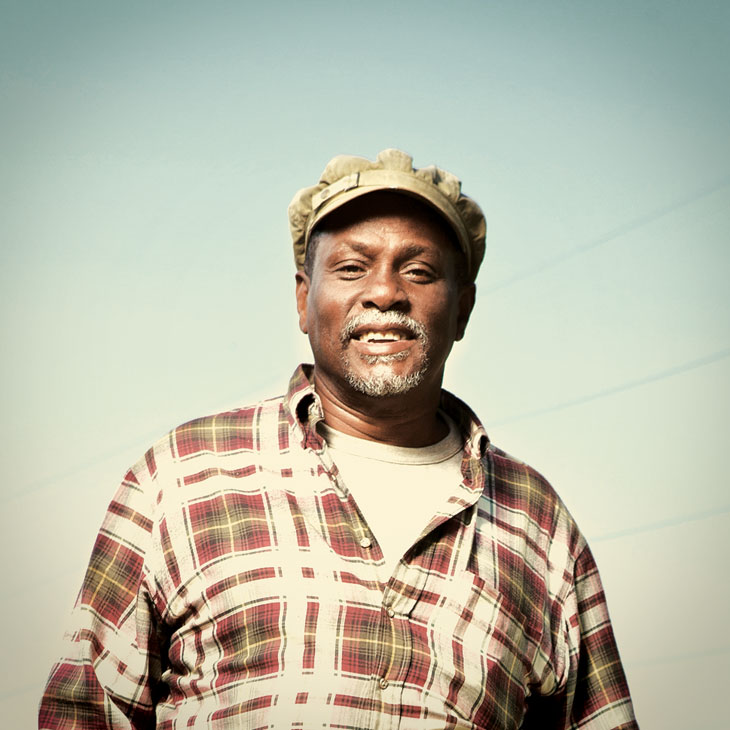
The older man steps out of a gray Chrysler Grand Voyager. He wears a tan fisherman’s cap and a brown tee topped with a plaid workshirt. People chat as they fill baskets with carrots, chard, kale, collards, lettuce, onions, cabbage, and mustard. The man briskly moves from person to person, hearing the day’s news or making sure necessary tasks are completed. He stoops to take a quick check of the soil. Feels it run through his hands. Almost everything is planted in raised beds; concrete makes it impossible to plant directly into the ground.

Meet K. Rashid Nuri, one of the country’s foremost minds on urban farming. Former appointee to the United States Department of Agriculture, Nuri is a lover of jazz, expert on lunar cycles, and creator of the nonprofit Truly Living Well Center for Natural Urban Agriculture. His urban farms bring fresh food to areas of Atlanta where rubble, history, and poverty are cross-pollinated.

The sun beams down, making it hard to see Wheat Street Baptist and historic Ebenezer looming over this farm as weighty reminders of what once was. Martin Luther King Jr. and his wife lie in eternal rest a few blocks east. Interstates 75 and 85 cross historic Auburn Avenue to the west. The Old Fourth Ward, the neighborhood that surrounds Nuri’s Wheat Street Garden farm, is rich in history but bereft of basic services. It is a food desert, designated by the USDA as an area with limited access to affordable and nutritious food, particularly an area composed of predominantly low-income neighborhoods. The 700-plus-acre Old Fourth Ward district is bounded by Ponce de Leon and Decatur/DeKalb to the north and south and the Connector/Piedmont and the BeltLine to the west and east. More than half of the residents are low income. The only nearby places to shop are gas station convenience stores or small markets. Sure, just outside the O4W borders, there’s a Publix on Piedmont, a Kroger on Ponce de Leon, and the historic Sweet Auburn Curb Market on the other side of the Connector underpass. But because 75 percent of O4W residents do not own cars, those stores are not easily accessible. The nearby convenience stores carry Twinkies, Snickers, sodas, beer, and lottery tickets, but not much else. The Exxon station on Edgewood, the newest and nicest store around, has produce—if a handful of lemons, three black bananas, and two oranges can be called produce.

According to the USDA, lack of access to fruits and vegetables is contributing to health problems. Obesity, high blood pressure, and diabetes are rampant in food deserts, causing medical issues that add financial strain to already-tight budgets.

Nuri wants to make food available and, more importantly, educate people about where food comes from. This summer the farm held a camp. Four two-week sessions, at $365 each, taught kids about gardening, sustainability, and more. Through a partnership with the Year of Boulevard project (see page 91), scholarships went to dozens of children who live in nearby Section 8 housing. Throughout the year, schools and parents bring their city kids to the farm to see what a tomato or pea plant looks like.

A city kid himself, Nuri took awhile to find his calling as a farmer. He was born in Boston. His father was an educator; his mother, a community activist. Young Rashid wrote a paper for school on what he hoped to do with his life: He wanted to explore the world while merging science and politics. That curious intellect brought him to Harvard in 1966. The time was “crazy,” he recalls. African colonies were gaining their freedom and the civil rights movement was in upheaval. During his college years, Nuri met his future wife, whose parents took him to Wilson Farm, a 128-year-old farm just outside of Boston. It was there that ideas began to germinate. He imagined the possibilities and opportunities of urban agriculture, an unusual occupation for an Ivy Leaguer. Nuri realized Harvard could teach him how to be a doctor, lawyer, or businessman, but it couldn’t teach him how to farm. So, after graduating with a degree in political science, he began to think about ways to merge his field of study with farming. He went to the University of Massachusetts and earned a master’s in plant and soil sciences. Eventually he worked for Cargill, the international food producer and marketer. He traveled to thirty-five countries to develop food systems, including a 1987 stint in Nigeria where he ran thirteen cotton gins and traded maize, sugar gum, and native vegetables.

In the early 1990s, Nuri snagged an appointment as deputy administrator of the Farm Service Agency and Foreign Agricultural Service for the USDA. He worked in Washington, D.C., for four years during the Clinton administration.

In 2006 Nuri, with partners Eugene Cooke and Ernest Dunkley, came to Atlanta and started Truly Living Well. They began with an experimental plot in a Riverdale backyard, then expanded: a farm on Harbin Road in southwest Atlanta; one on Washington Road in East Point; and Good Shepherd Farm, in partnership with Good Shepherd Community Church, on Lawson Street in southwest Atlanta.

In 2010 Truly Living Well began looking for a fourth location and lucked onto the O4W lot, which is still owned by Wheat Street Baptist, the historic congregation known for a century and a half of activism. In December 2010, with the help of a $50,000 grant from the Atlanta Falcons Youth Foundation, Wheat Street Garden was launched. The farm occupies a four-acre plot that previously housed another innovative project, Wheat Street’s low-income housing development built in partnership with the federal government in the 1960s.

The farm now yields thousands of pounds of fresh food annually. Some of that food is sold to local restaurants; during a recent visit, I watched chefs from the Ritz-Carlton, Atlanta shop for produce. Some is sold at the market held every Friday. Some is delivered to people who buy subscriptions to a Community Supported Agriculture (CSA) program. Participants in the SNAP and WIC food programs can get produce at two-for-one prices.

Kwanza Hall, Atlanta city councilmember for District 2, lives in the area and shops at Wheat Street Garden. He says people cross racial, economic, and educational lines when they come together around the farm. “The farm is filling a huge void in our community,” says Hall, who believes the Old Fourth Ward, along with Truly Living Well, can become a national model for sustainably battling food deserts.

The farm is not just worthy; it’s beautiful. The verdurous beds contrast with the boarded-up buildings encircling them. Poblano peppers, Pension bush beans, kohlrabi, Nepal tomatoes, and a plethora of flowers flourish. Everything is symbiotic: Scraps enter vermicomposting bins. A colony of bees pollinates the plants and produces sweet honey. Chickens cluck while roaming a large wooden pen. All within a stone’s throw of Downtown.

Nuri has big dreams for the next five years. His goal is to extend Truly Living Well’s farms to forty acres throughout the city. He wants the farms to be educational tools, creating agricultural entrepreneurs who will start their own farms elsewhere, transforming blighted lots into oases of fresh food.

This article originally appeared in the August 2012 issue.

Ponce City Market

On August 2, 1926, Sears threw a party and 30,000 Atlantans showed up, frantic to peek inside the new 750,000-square-foot retail center on Ponce de Leon Avenue, where all of the 35,000 items in the iconic Sears Roebuck catalog were on display. “If ever there was a doubt in the minds of Atlantans that the company actually kept in stock the thousands upon thousands of articles . . . that doubt was erased after a tour through the building,” enthused an Atlanta Constitution reporter. It was built in a record six months by more than 2,000 workers, and Sears pumped $2 million into the construction job market. That’d be $26 million today; no wonder Mayor Walter Sims was on hand to hoist a flag atop the 232-foot tower.

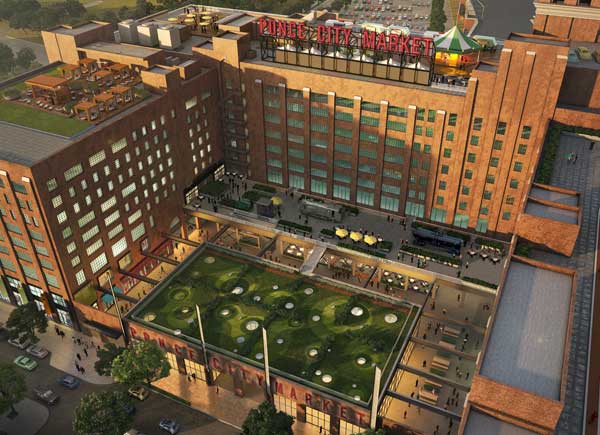
Now another massive crew is at work on the site, in the throes of a project that will have an even larger impact on Atlanta. Sears closed the retail-merchandise distribution center in 1989, and in the ensuing years the cavernous compound—eventually expanding to 2 million square feet, the largest brick structure in the Southeast—was dubbed City Hall East and housed the police department and other city government offices as well as various nonprofits. In 2011 Atlanta-based Jamestown Properties, best known for developing New York’s Chelsea Market, bought the property for $27 million and is sinking a reported $180 million into an office-retail-residential conversion called Ponce City Market. Plans include a food hall with farm stands and restaurants, an organic garden, and rooftop entertainment hearkening back to the old Ponce de Leon Springs amusement park—think carousel rides with a skyline view.

Merry-go-rounds are cool, but what’s thrilling about this twist on the live-work-play cliche is that Jamestown is reusing a landmark. “We feel a responsibility to save what’s special about this place—at the most granular level, like making sure people aren’t disturbing the wood floors or damaging the signature columns,” says Jim Irwin, vice president of development, who’s overseeing the project and whose grandmother grew up around the corner on Glen Iris.

Ponce City Market is at the confluence of neighborhoods that are established (Midtown, Virginia-Highland), transitional (Old Fourth Ward), and still blighted (the Boulevard Corridor). For Jamestown CEO Matt Bronfman, the prospect of serving as a catalyst for transforming the area is what’s most exciting. “We were the largest landlord in the meatpacking district in New York when it was not the most desirable. The same when we invested in Times Square. We’re building that sense of community on Ponce,” he says. This includes deliberately hiring people from the surrounding area.

The market, scheduled to be completed in 2014, is adjacent to the Historic Fourth Ward Park and the eastside spur of the BeltLine. A trestle that used to bring freight cars into the Sears distribution center will be reincarnated as a pedestrian bridge. That’s a nice symbolic nod to the area’s history, but it’s more significant from a forward-looking perspective: As a structure that might have been demolished in Atlanta’s old bulldoze-and-rebuild mind-set, Ponce City Market is at the center of an effort to get us out of our cars and back on the sidewalk.

This article originally appeared in the August 2012 issue.

Follow Us

69,386FansLike
144,836FollowersFollow
493,480FollowersFollow

NEWSLETTERS