


At first glance, a link between beer and literacy appears a bit of a stretch, and Matt Stevens admits it. The senior director of community impact for Creature Comforts Brewing Company spends much of his time explaining the connection.
Stevens starts by recounting how he was hired eight years ago to focus solely on the Athens-based business’s philanthropy.
“Our founders launched Creature Comforts 11 years ago with the understanding that business can be a force for good in the world,” he says. “There was especially a desire for the community of Athens to be demonstratively better off. But back in 2014, I don’t think anybody knew what that would look like.”
What his colleagues did know was that they wanted to match the company’s philanthropic resources with community priorities. So rather than becoming known for tackling food insecurity, cancer research, or any number of worthy causes, they decided to support what the locals saw as the area’s most pressing needs.
In 2021, after gathering an advisory council of area leaders from government, education, and nonprofits, and holding focus groups with school leaders, teachers, and librarians, one priority stood out: literacy. “At the time, just 19 percent—one in five—of third graders were reading on level,” says Stevens. “But we thought it was possible to see a 60 percent improvement.”
The Athens-Clarke County area wasn’t, and isn’t, the only part of the state with low literacy scores. In 2022, the National Assessment of Educational Progress showed that only 32 percent of Georgia fourth graders were reading at or above proficiency levels. In 2024, that number was down to 30 percent.
“Generally, we were pretty stagnant in third-grade reading for the last 10 to 11 years,” says Joy Hawkins, executive director of the Governor’s Office of Student Achievement. “We took a dip and now are inching back up to 31 percent.”
Improving students’ literacy isn’t just a matter of improving education, Hawkins adds. The skills of reading, comprehension, vocabulary, and fluency ripple across every aspect of life, including the workforce.
“Literacy is the baseline,” she says. “If a child can’t read proficiently by third grade, it’s very hard to ever catch up. Even with word problems and math equations, you have to be able to read, so if students are struggling in fourth grade, it’s a double whammo. That’s why the metric of reading on level is so important.”
Skills for Now, Skills for Later
TestGorilla, an HR support program that offers skills-based testing to find the most qualified candidates, produced a well-documented article on the connection between early education and its impact on the workforce. With information cobbled from 28 research studies, it showed that investing in early childhood education (ECE) initiatives pays off in two key areas: return on investment and a stronger hiring pool.
According to the National Forum on Early Childhood Policy and Programs, every dollar invested in ECE initiatives produces an ROI from $4 to $9. Additionally, that investment works to teach kids the key skills they’ll need to be effective employees: problem solving, motor skills, emotional regulation, social skills, and the ability to not just read but also understand content and think critically about it.
Hawkins also points out that reading is not taught as a subject after third grade, so finding resources to address weak literacy skills becomes a challenge. Additionally, studies have shown that students with poor reading abilities are more likely to drop out of high school and live in poverty. That long game of getting kids out of school and into college or the workforce was one Creature Comforts was ready to underwrite.
In 2022, the company launched a two-year pilot program aimed at improving reading skills for students at Athens’s Howard B. Stroud Elementary, a school identified by the Clarke County district as needing literacy support.
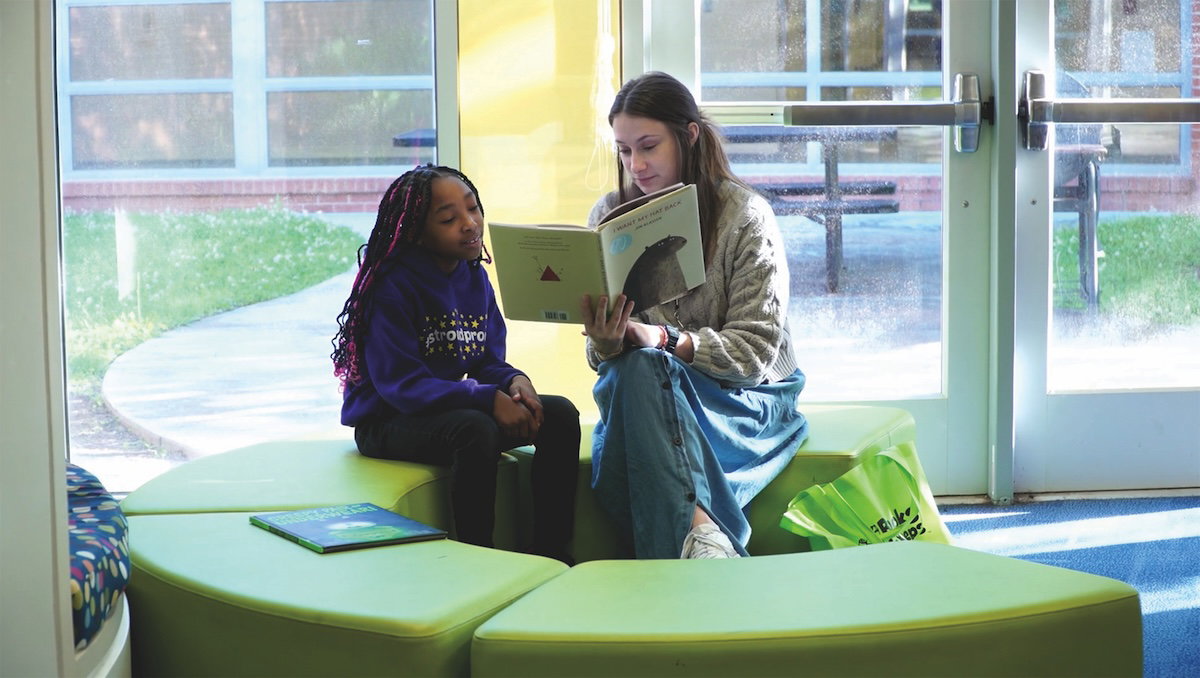
Through a partnership with the literacy nonprofit Books for Keeps, trained support staffers were sent into classrooms for one-on-one, hourly sessions with struggling students. A University of Georgia research team tracking results from state tests recorded significant improvement.
“We saw incredible gains compared to control schools,” says Stevens. “Students were 37 percent more likely to test as proficient on the [Georgia Milestones Assessment] and two times more likely to be reading on level as compared to control counterparts. It was a wildly successful pilot.”
Businesses Step Up
Creature Comforts isn’t the only Georgia company getting behind early childhood education initiatives. And they’re doing it for more than philanthropic reasons. While investments in kindergarten through eighth grade are certain to enhance an organization’s reputation as a community partner, they also serve as part of the long game to enhance the state’s workforce.
COURTESY CREATURE COMFORTS
“Literacy is critical to workforce readiness,” says Lisa Olens, who for 10 years has been the education manager at Georgia Power. “Once you get to third grade, you are reading whatever you’re learning, and reading level is an indicator of success in school. It’s critical we get those basics down.”
Georgia Power underwrites a team of 16 education coordinators for pre-K through 12th grade classrooms around the state to deliver hands-on, STEM-based lessons. The coordinators, who live in the communities they serve and already have relationships with local schools, provide programs that align with state standards and reinforce what students are learning. Since starting in 2011, the teams have worked in more than 150 school districts and with 1.3 million students, 900,000 of whom are in kindergarten through eighth and living in areas of the state that often don’t have funding for support materials or personnel.
“When we started, we were in grades three, five, and eight—where the testing is done,” says Olens. “From there, we expanded into other grades and high schools.
In the early grades, the focus is on literacy, and we read STEM-based stories on energy and energy efficiency.”
The company’s Look Now, Wonder Wow book is distributed during Georgia Pre-K Week, an October event sponsored by the Georgia Department of Early Care and Learning to promote early childhood education, and is read in pre-K centers by Georgia Power volunteers. Other books, including one on solar power written by Decatur storyteller Carmen Deedy, have been developed for higher grades. Hands-on programs revolve around electricity, circuits, heat transfer, and simple machines.
“The lessons always give real-world examples of how things fit into our world,” says Olens. “That gets students excited about how what they’re learning can be used and gets them thinking about jobs they didn’t know about and the training and skills they’ll need. I think a lot of employers have positions they can’t fill, and students are looking for careers but don’t know how to make that connection. We can make that connection with those interested in the energy field, and hopefully, we can encourage other companies to get involved as well.”
Cultivating Interest and Aptitude Early
Elementary school is not too early to get youngsters thinking about careers and what it will take to get there, be it certifications, technical training, or a college degree. That’s the position taken by Accenture, an international company with about 770,000 employees worldwide, including 4,000 in Atlanta, who specialize in technology and strategy consulting. Accenture volunteers work with public middle school students in Atlanta and Gwinnett County classrooms to demystify coding, showing students how easy it is to code on their phones and letting them discover that coding isn’t “nerdy.”
“It starts with a soft touch in middle school then builds on that to get students into high schools with more IT training,” says Gina Rude, who has led Accenture’s U.S. corporate citizenship programs since 2011. “It also gets our people involved in Junior Achievement, Boys and Girls Clubs, and Scouts, and gives students more exposure to Accenture.”
The company has also been part of STEM and field days and has invested in buses at the Boyce L. Ansley School, a tuition-free private school for homeless pre-K through fifth graders on the northern edge of downtown Atlanta. The company also supports over 200 nonprofits that dovetail with its main philanthropic goal: to promote the skills students need to succeed in life and the workforce.
“The work we do in the community is a pipeline for talent, but it’s not the main reason we do it,” says Rude. “I think of Accenture as a huge network of collaboration, and our community work weaves through that. We give our support any time we can.”
In fact, that support has paid some workplace dividends. Rude cites interns who have come through the company’s community partnerships or have been mentored by an employee at a Boys and Girls Club. Some learned about Accenture through the coding session volunteers or other programs where they explore different career paths and connect to training and jobs. They hear about what it’s like to work for a global firm and also learn about financial literacy.
Cows and Community
One company early learners are likely familiar with is Chick-fil-A . Through financial and in-kind donations (think chicken biscuit breakfast fundraisers), the company promotes community partnerships with a common theme.
“We’re always looking at ways to care for people and the community,” says Carol Waddy, who has been the company’s director of community affairs for nine years. “It’s not always direct, but that’s our priority area.”
One direct, ongoing collaboration Chick-fil-A has made is with the Atlanta Public Schools, where the company sends out 60 staffers from the digital technology team to run “challenge days” for middle schoolers around restaurant-related robotics and coding. Through that relationship, the company was invited to adopt a cluster of Southside schools and to work with counselors who identify individual student needs.
“We were the first corporation to adopt an entire cluster,” Waddy says. The company invested in programming at KIPP Metro Atlanta (public, tuition-free charter schools) and awarded a $200,000 grant to help teachers and leaders in the City Schools of Decatur find new ways toward equitable student achievement. And it’s underwritten Kennesaw State University’s “Call Me Mister” program to develop male educators in schools and supported the YMCA of Greater Atlanta’s early learning center. “The goal for us is to come alongside and support organizations already doing great work in the schools and communities to prepare young minds to step into the workforce,” she adds.
It’s Elementary: By the Numbers
+47
Georgia’s Teacher Morale Index
Highest in the nation (national average: +18), according to an Education Week report released in March.
$14,660
Public K–12 spending per student
Annual public education spending per pupil in Georgia.
1.7 Million
Students enrolled
Georgia students attending public schools statewide.
56%
Third graders below proficiency
Georgia third-grade students who cannot read proficiently and are more likely to drop out of high school.
1 in 10
Adults with low literacy
Projected to earn approximately $1 million less over their lifetimes than literate adults.
3×
Poverty rate
Adults without a high school diploma experience poverty at three times the rate of graduates.
75%
Future jobs
Of Georgia’s projected 261,000 new jobs by 2028, 75% will require at least a high school diploma.
Back to Beer
Being a resource is also the approach of Creature Comforts. The company coordinated the funds for a partner nonprofit to put one-on-one literacy mentors in the local schools. “We are empowering them to do the work,” Stevens says. “They recruit and train literacy mentors for students identified by the school for intervention, and they meet every week for an additional hour during the school day for the entire year. In the end, students are getting up to an additional 27 hours of one-on-one literacy support during the year.”
Stevens says the program’s new goal is to expand into more than the two schools it currently serves. And after two years, he has the resources to make it work.
“We’re finding the earlier we’re intervening, the better the gains we’re seeing,” he says. “There is a pile of scholarly literature taller than I am that talks about the correlation between students’ ability to read on grade level at third grade and high school dropouts who become dependent on their communities.
“We can either be investing in this work to the tune of a few hundreds of dollars over the next few years or spend untold millions on housing and clothing later,” Stevens continues. “If we can get students reading on level at this critical point, where they transition from how to read to reading to learn, we can keep the gap from growing.”
— BY H.M. CAULEY
Early Investment in the Future
The Georgia Chamber Foundation is focused on policy development and driving research to support Chamber initiatives. Here, Research Director Savannah Taylor shares more about why literacy and childhood education are inextricably linked to workforce development and how the Chamber is helping advance the cause.
COURTESY GEORGIA CHAMBER FOUNDATION
How and why are early childhood education and literacy important for the health of the future workforce?
Third grade, in particular, is important because that’s the age and benchmark to make sure that students are ready to start learning material through their reading skills. Early investments are so important because you’d rather spend a little bit more time and money making sure that students are really well prepared, instead of trying to catch them up in, say, fourth or fifth grade when they’re also missing out on comprehension and content because they can’t read.
In terms of workforce development, it’s twofold for us. First, the future workforce component: If our children can do well in early grades, that drastically improves the chances they’ll do better in school and have more options. Bolstering the talent workforce pipeline is vital. The second component is working parents. If they know that their children are in school and have access to those early opportunities to learn, they can focus on their careers and jobs. That’s one less thing for that parent to worry about.
How is the Chamber encouraging member companies to invest in early childhood education initiatives?
When we have member companies that are doing things particularly well, we convene those stakeholders. Perhaps a smaller business doesn’t have the resources to provide early childcare services to the parents in its workforce. If we know another company is doing something in that space, we connect them.
This year, we partnered with Georgia Early Education Alliance for Ready Students to allow Georgia companies to take a survey for a program called “Best Place for Working Parents.” After answering a few questions, it gives them a rating and an idea of where they stand in relation to other companies of similar industry and size in terms of how they’re supporting their families with literacy and early childhood care. And then we have access to that backend data so that we can see all of the different things that companies are doing and use that to help further connect companies and give them ideas for initiatives.
The Chamber has a partnership with the Georgia Department of Education. Can you share some of the results?
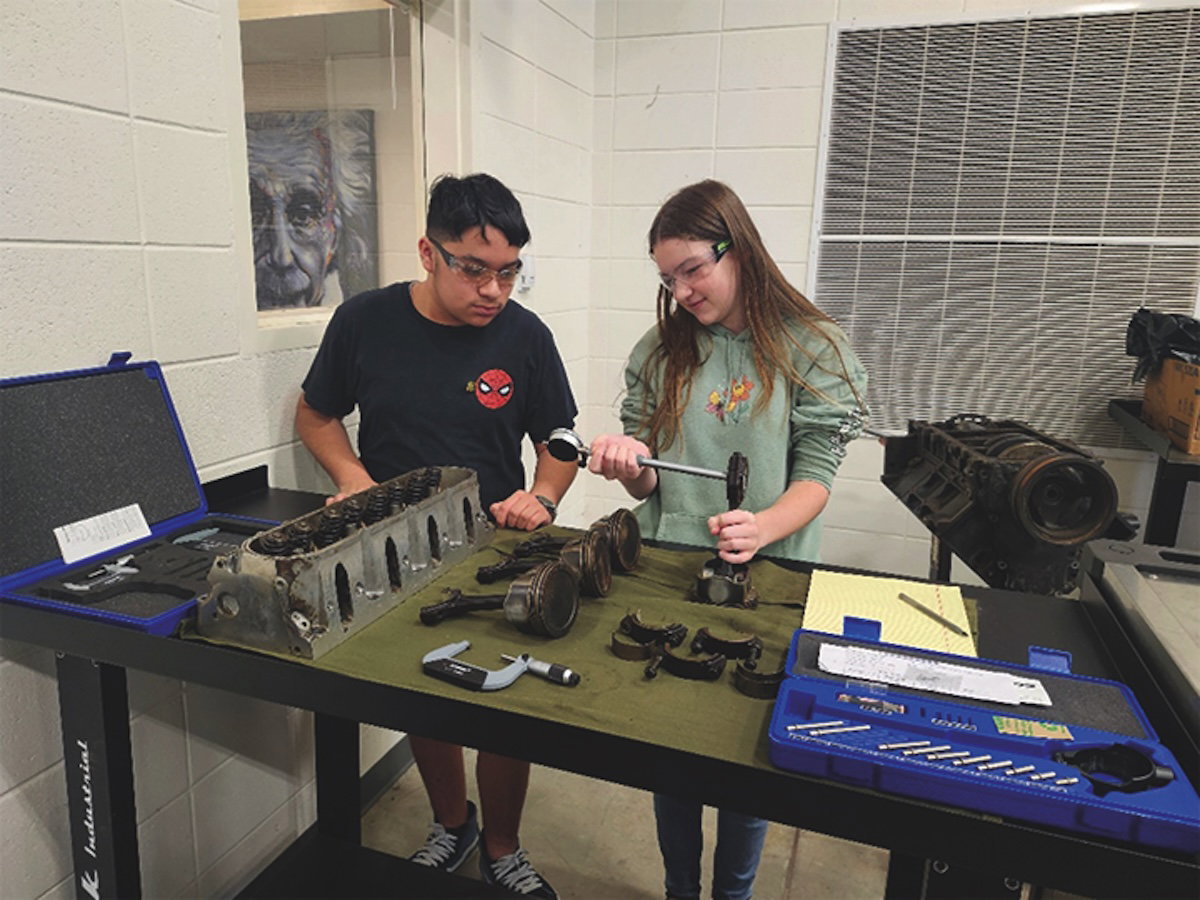
Our Center for Rural Prosperity, which supports all of our rural chambers and businesses, had some federal funds and wanted to partner with us for workforce development grants for K-12 systems. The partnership awarded $2.1 million in grants that supported 17,000 students in 64 rural school districts.
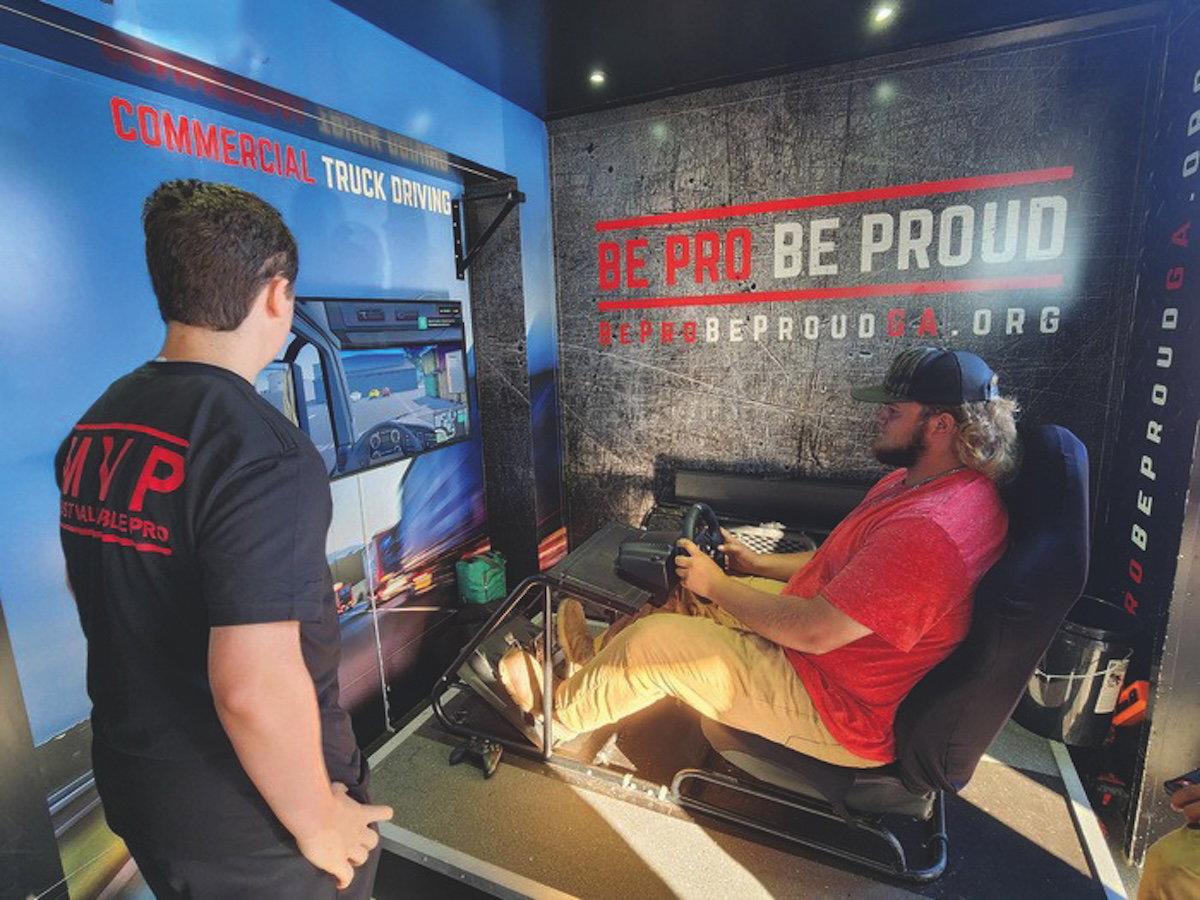
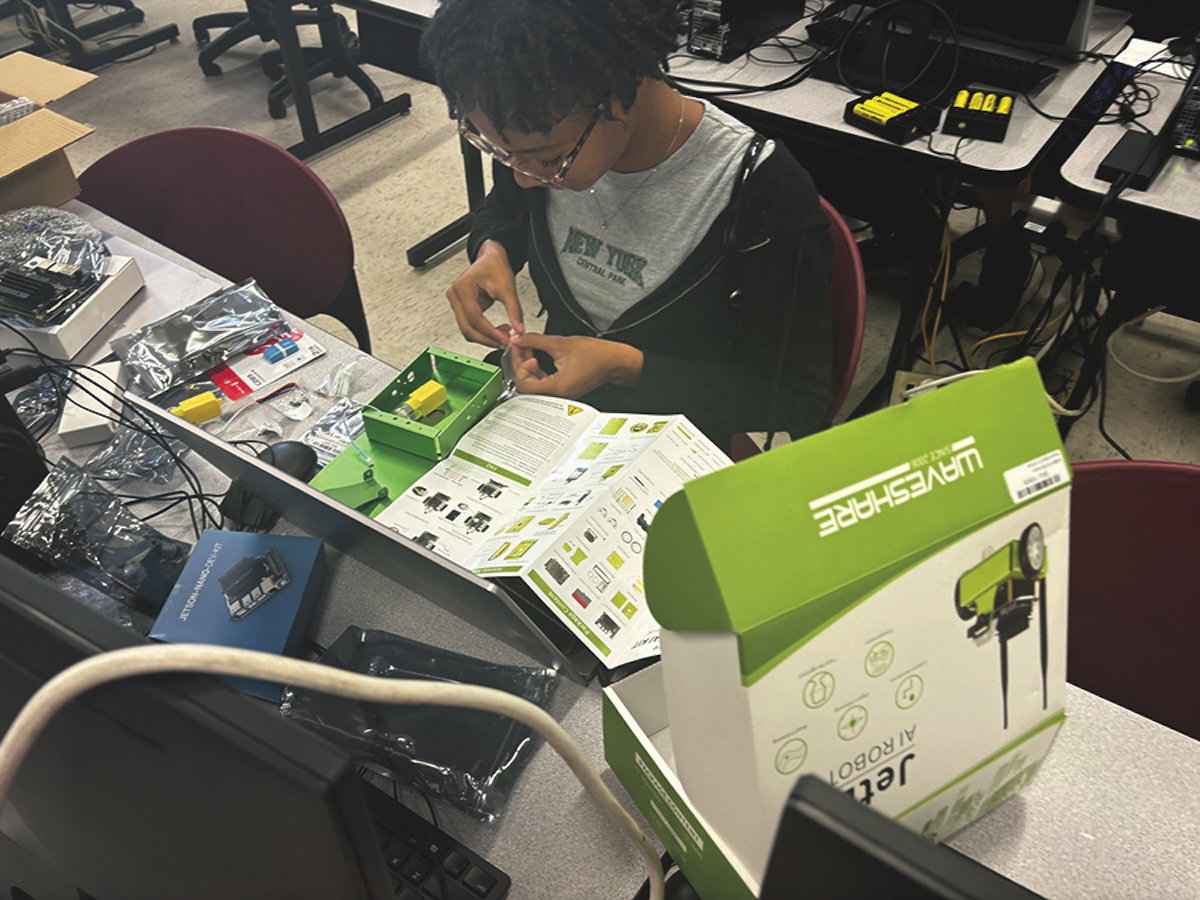
One school system had a lot of students who were interested in medical tracks but weren’t performing to get into medical programs through either the Technical College System of Georgia or the University System of Georgia. They were able to pay for online training programs and equipment for the students to use in high school classrooms to better prepare them with hands-on experience. One school system did a criminal justice track, where they brought in equipment, materials, and online resources for students who were looking to pursue law enforcement. The most common grant requests were geared towards heavy equipment manufacturing or robotics. It’s a concrete way for students to get involved, both with equipment and training and then site visits with employers.
—JENNIFER BRADLEY FRANKLIN
See this entire feature in GaBiz Summer 2025 here.