


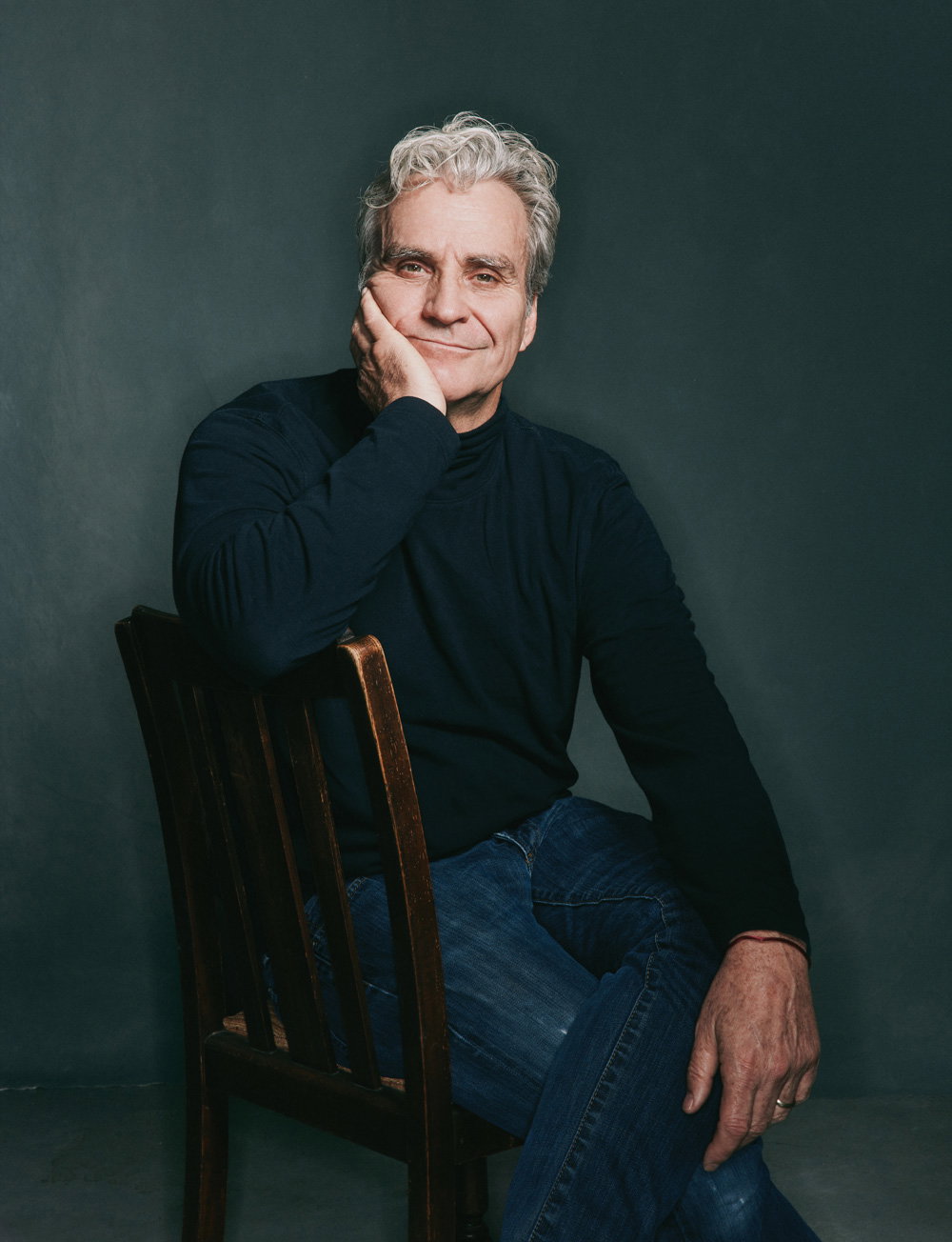
 Tom Junod recalls taking his elderly father out on the town in Long Island, two distinguished men of the world, attempting to bond after a lifetime of existential friction.
“I remember we were drinking grasshoppers, which were ‘in’ at the time, when this 81-year-old woman just walked up and gave him her number,” Junod says. “I asked him, ‘Is this what it was like in your prime? Women handing you phone numbers?’ I was wonderstruck. He said, ‘Tommy, Tommy, Tommy, I couldn’t walk down Fifth Avenue without a woman propositioning me.’”
And Big Lou Junod, as he was known, was always stalking down that fashionable thoroughfare, a hound among pigeons. So his son pressed on:
“How many of them did you sleep with?”
“I’m a gentleman. I won’t say . . . Not all of them.”
“Give me a percentage.”
“25 percent.”
The math was painful. For 59 of those years, this unrepentant swordsman was married to Tom’s mother, Frances. His animal magnetism was, in his son’s word, “terrifying.” Big Lou’s conquests included not just one, but two of the Gabor sisters.
“Then I just had to ask,” Tom Junod continues with the story, “‘Did you fall in love with any of them?’ My father pointed his finger and said, ‘One.’ And I knew I was [screwed]. The old man still had one more trick up his sleeve, and the repercussions of that moment would consume and alter the rest of my life.”
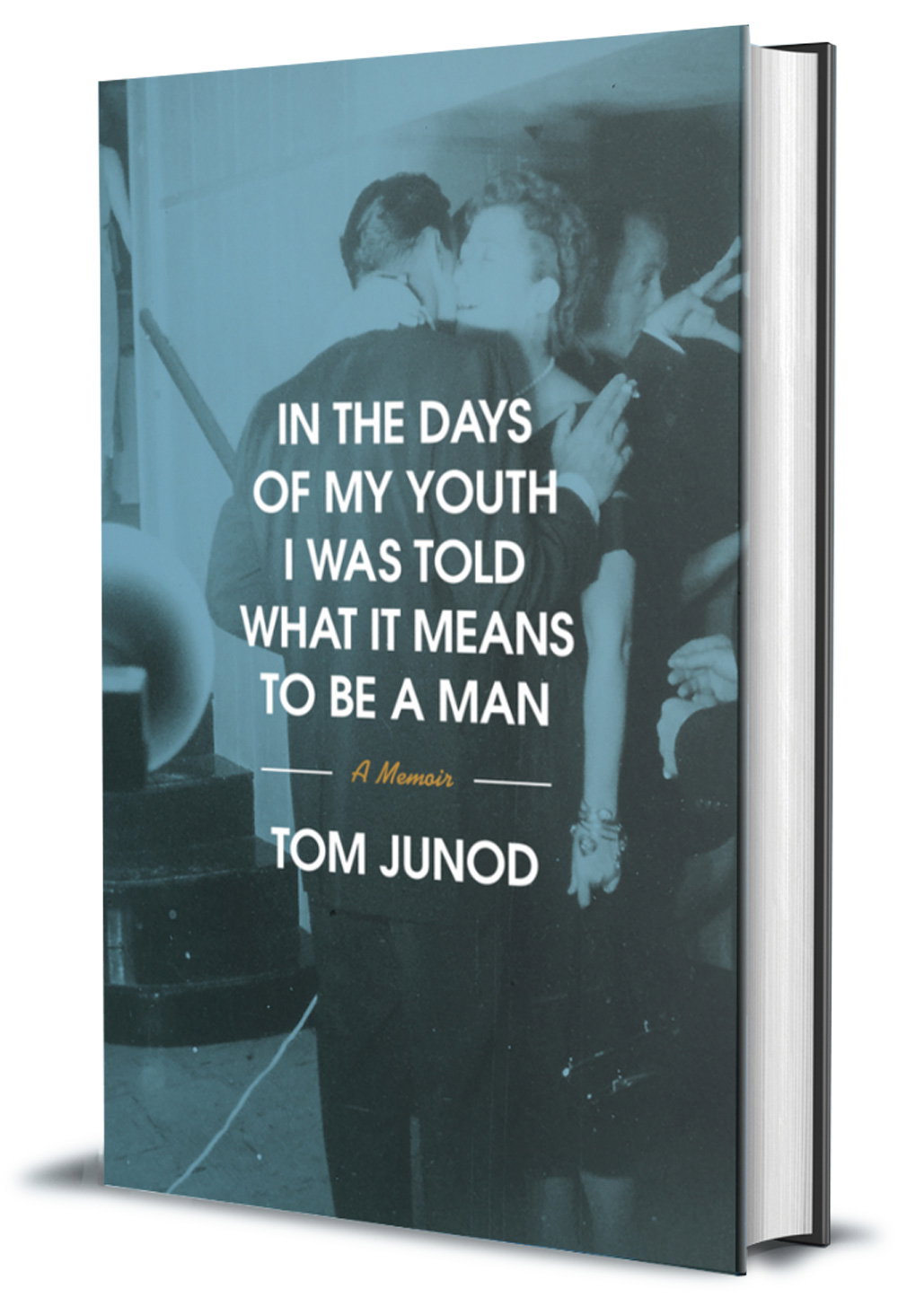
Courtesy of Doubleday
Junod has been snooping through his father’s life ever since discovering, with a kind of awe, his father’s stash of porn when he was 16. He thought he knew everything, in louche detail. But . . . love? This was late-breaking new information.
“I knew I had to know more,” he says.
Junod, 67, who lives in Marietta, always has to know more. He’s the most celebrated magazine writer of his generation. Doubleday has just published his memoir, 10 years in the making, with the title In the Days of My Youth I Was Told What It Means to Be a Man, from the first line of the first song of the first Led Zeppelin album. (The official launch is an event presented by A Cappella Books at The Carter Center on March 10 at 7 p.m.)
The cover photo is how Junod remembers his problematic patriarch; it’s a shadowy shot of Lou Junod embracing a woman who is smiling gaily, as if she’s just heard a risqué joke. Who is the woman? Who knows? There were always too many of them fluttering around to count. But it is not Frances Junod.
• • •
No quick beach read, this memoir is a sprawling, dense book, richer than a terrine of foie gras, which, as with the goose, entailed much suffering. Junod, a two-time National Magazine Award winner currently a senior writer at ESPN, applied his reporting skills to his priapic father’s life and produced a stylized and searing meditation on masculinity, sexuality, and consanguinity that is Proustian in its scope.
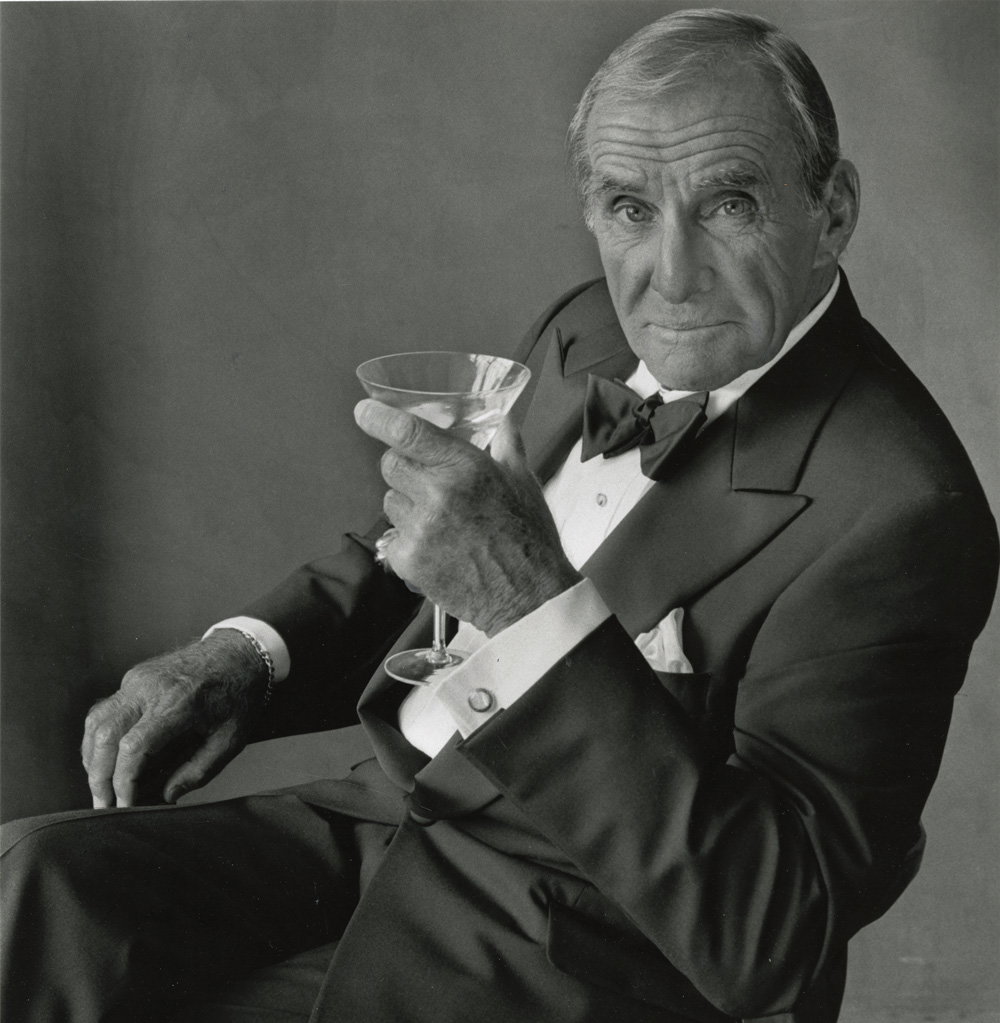
Courtesy of the personal collection of Tom Junod
Big Lou Junod was an avatar of what pop psychologists would call toxic masculinity. “F—–g around was integral to who he was,” his son says. “But it was more than just lust. His lust was power.” Hence the old Great Man problem: How does a gentle son escape the shadow of such a towering figure and establish an identity of his own? He rebels with a faithfulness that rivals his father’s infidelities (Junod is still married to his college sweetheart). And he becomes a writer so that he’ll always have the last word. In fact, Junod writes with the insinuating persuasiveness of a great seducer because he was raised by one.
“It’s that he was sexual, in a way uncommon in 1956,” Junod notes in the opening to his book. “He was a tough guy, a rough customer, a man’s man . . . but he flaunted himself. He left no doubt about his intentions, and so had a talent for connecting with people across any room he entered, male and female alike, men, because they saw him as an ideal or a rival; women, because they saw him seeing them.”
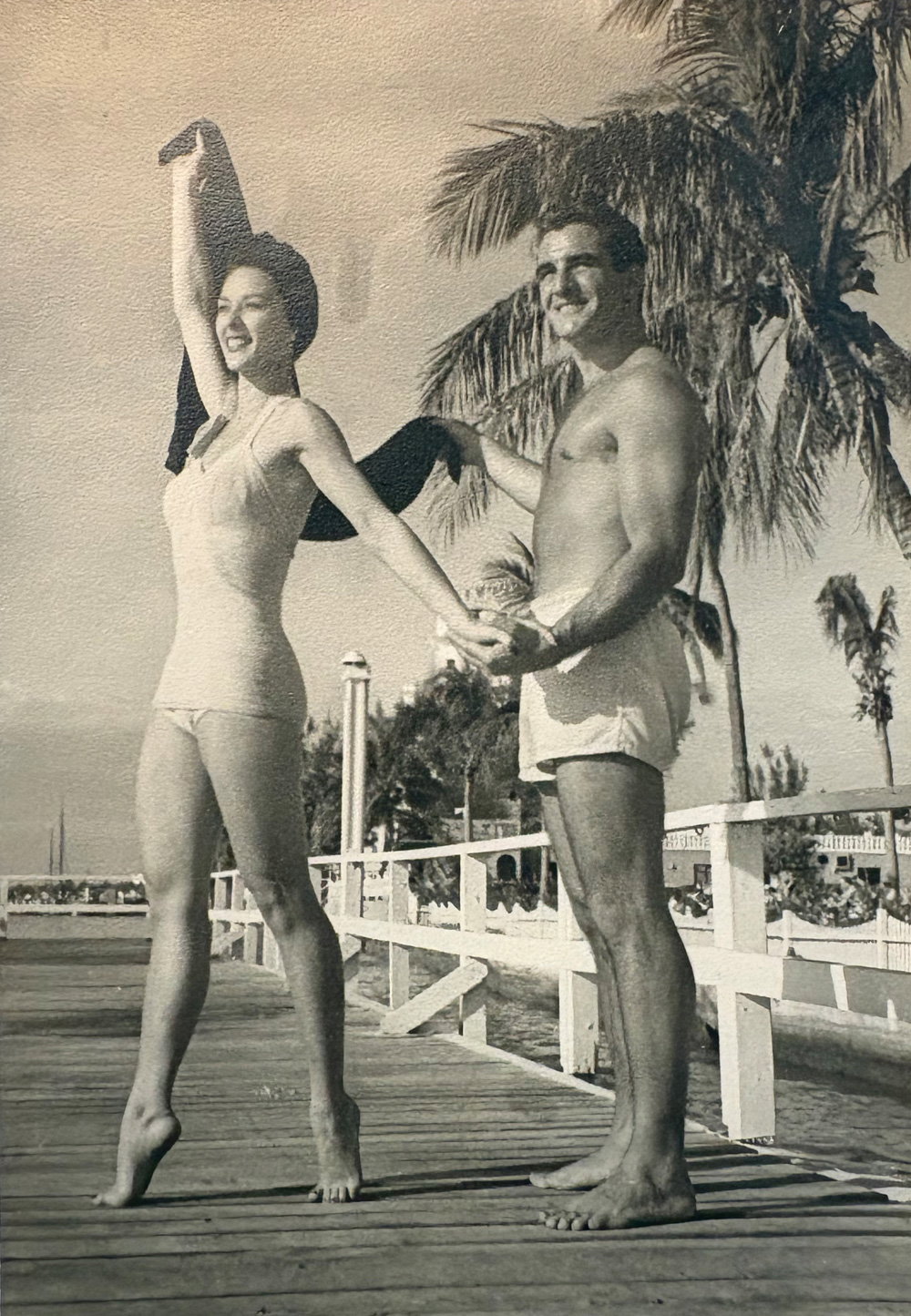
Courtesy of the personal collection of Tom Junod
Junod once wrote about a similar progeny, Frank Sinatra Jr., another beta male given to pedantry, and observed, “No matter what he knows, all anybody really wants to talk about is the Old Man. Can you blame him if he builds a bunker of facts, an enormous fallout shelter of facts, and climbs into it? At least the facts are his. At least they are not his father’s.”
With In the Days of My Youth, Junod has constructed a fortress of impregnable facts. “I wanted to have my father dead to rights,” he says. A perfectionist, Junod initially wrote 230,000 words—then chucked the manuscript and started over.
The book opens with a short declaration: “Everybody knew.” Big Lou never bothered to hide his cherchez-la-femme indiscretions. Junod interviewed scores of people across the country, including old “wing men” and his father’s many-splendored mistresses, aging beauties bemused by his unflinching curiosity. He combed through public archives and libraries; spat saliva into vials for genealogical search engines; dove deep into a lifetime’s worth of journals; and pored over yellowing letters, photos, and home movies, unearthing shocking, salacious family secrets—murder, illegitimacy, sexual abuse—going back several generations. (Lou Junod, it turns out, may have come by his proclivities honestly; he is not the only character in the clan who couldn’t keep it in his pants.)
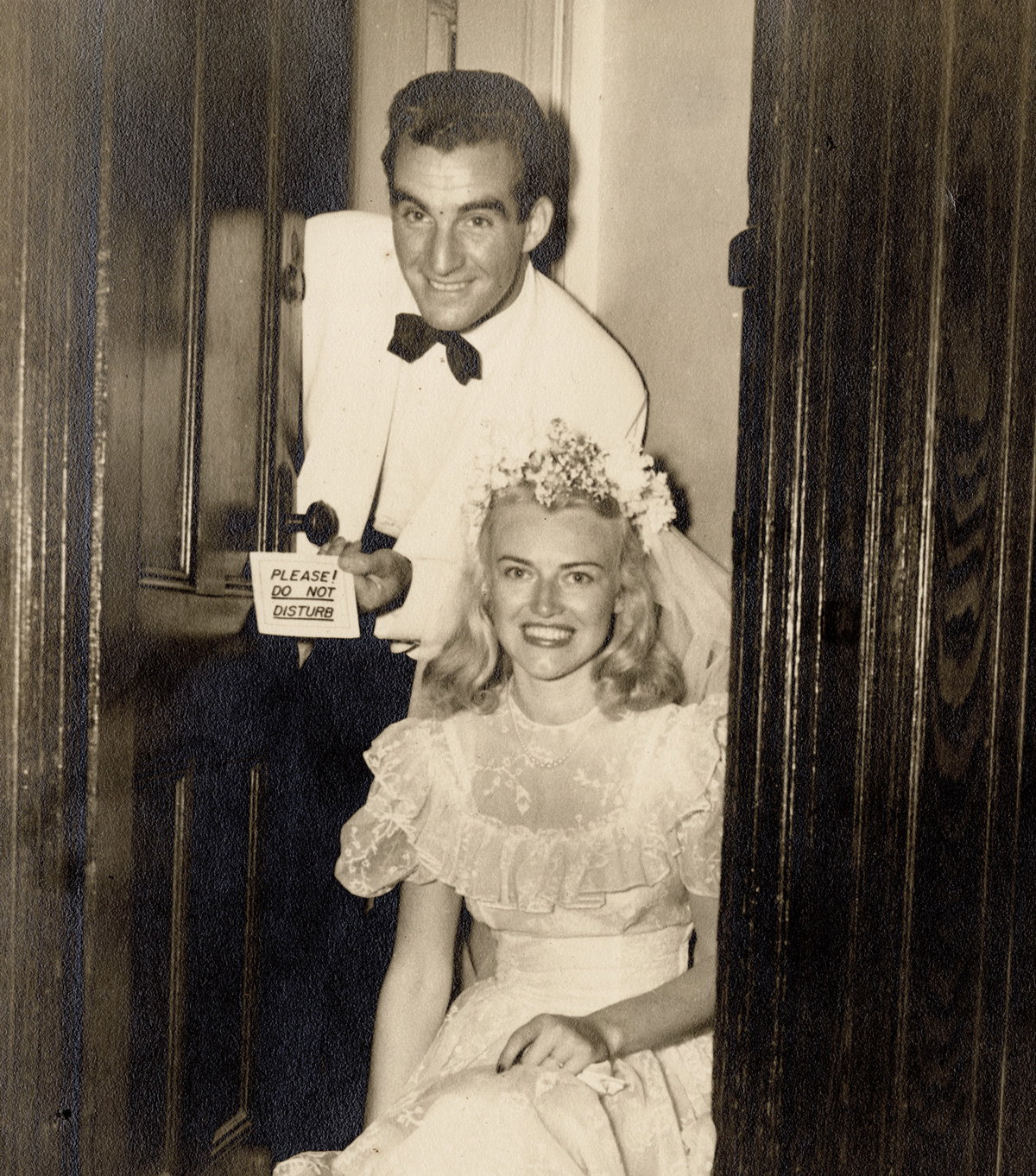
Courtesy of the personal collection of Tom Junod
“The way Tom writes is that he builds,” says David Granger, who edited Junod’s magazine pieces for 24 years at both GQ and Esquire. “He starts with a simple, straightforward fact. Then he patiently builds on that. And builds. Then there is this revelatory explosion of fireworks that takes you by surprise.”
Several big reveals take place near the end of the book, and to say much about any of them risks spoiling a complex plot. He ultimately learns much more than he ever bargained for, about his own identity—just how much of a “Junod” he really is, in genetic fact and in spirit—as well as his father’s mysterious interior life, and he is transfigured by it. Other people, too, have had their lives upended, in real life, by this book. “I literally reengineered my family,” he says. “It was one entity in 2015. It’s another entity now. I wanted to put one family tree in the beginning of the book and another at the end. It’s been taken apart and put back together again.”
This highly anticipated memoir, Junod’s first book, gratifies with a tear-jerking conclusion.
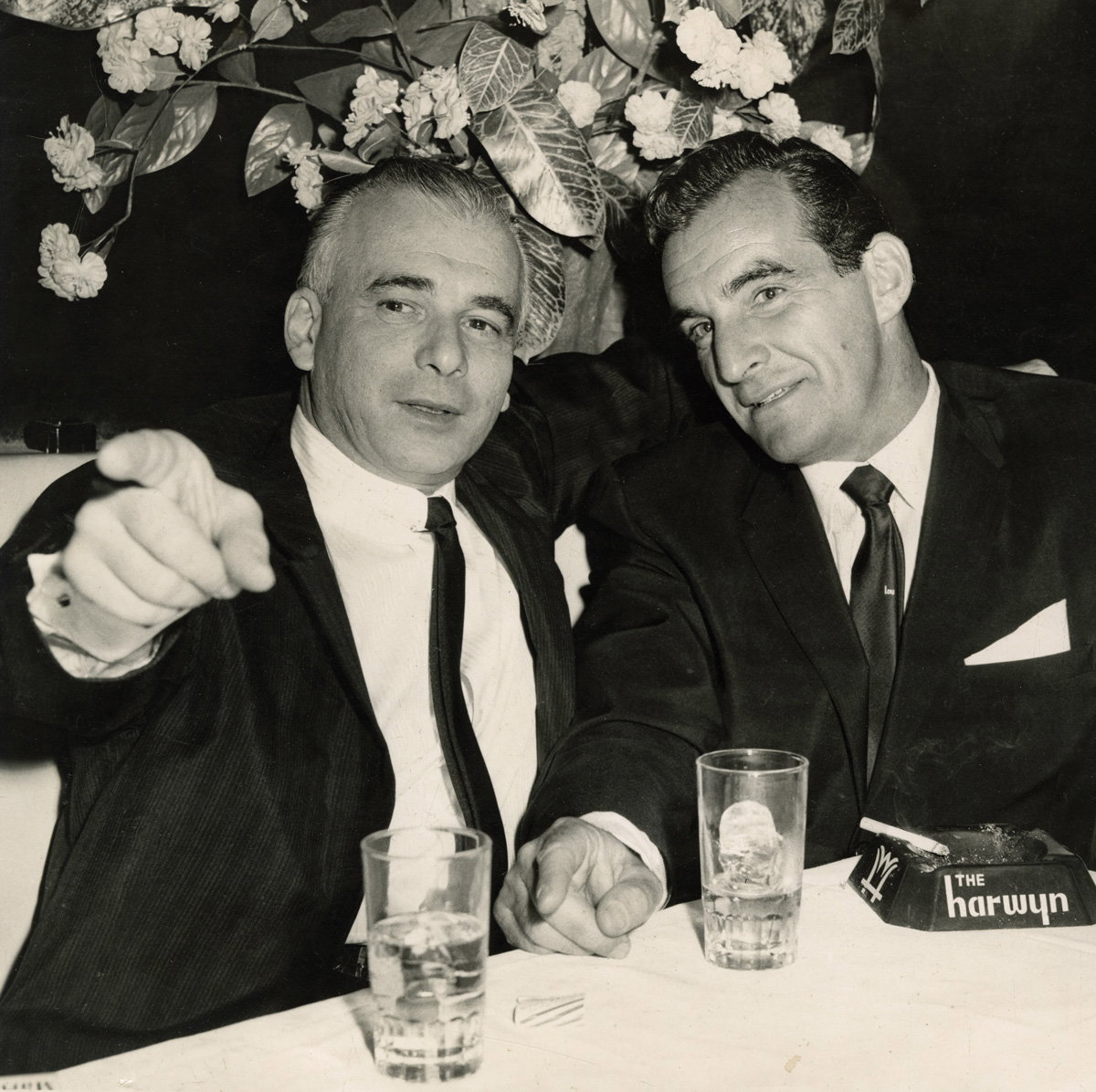
Courtesy of the personal collection of Tom Junod
“The story changed several times over the years as Tom discovered more and more secrets about his father and his family,” says Bill Thomas, publisher and editor in chief of Doubleday (he also edited Junod’s book). “We began with a conversation in a Manhattan bar when Tom knew the basics—his father was a world-class philanderer and an overwhelming personality in Tom’s life, along with a few details about some of his father’s lovers. The more he explored and learned the angle of the approach, the structure necessarily changed.”
Junod handed in his first draft in August of 2024. Thomas methodically pruned 37,000 words from it.
“Tom Junod started out to write a book about manhood,” Thomas says. “At several moments during his reporting on his family’s history, Tom uncovered things that were profoundly disturbing and unsettling. He ended up writing a book about a much deeper and universal subject: how the love of family can save a human being.”
• • •
On its shiny, sunstruck surface, Junod’s childhood looked idyllic.
He grew up in a turquoise split-level in Wantagh, Long Island. His daddy traveled, selling ladies’ handbags, while his pretty mother tended to him and his older brother and sister. The adults were gregarious people who enjoyed socializing over martinis at house parties and in the tony cafe society of Manhattan, where they always got the best table because they were that good-looking. Often Big Lou leapt up to sing; he was a “crooner” in the vein of Perry Como, a gifted saloon singer. Junod’s parents regularly took the kids to the beach. The older man cultivated a sepia tan in his tight, black bikini briefs that showcased every blessed bulge of his physique.
A Mad Men enthusiast, Junod says, “Sally Draper was Don’s daughter and one of the stars of the show. Bobby Draper was younger and sort of off to the side. We mostly saw him watching TV. My first pitch for my book was: Bobby Draper’s memoir.”
The boy grew accustomed to his father turning heads, both men’s and women’s, wherever he went. “He wanted to be a celebrity, and he carried himself like a celebrity, so people were always wondering who he was,” Junod says. “He would come home from the Copacabana or some other club, his skin as dark as soy sauce, and talk about how stars like Ava Gardner and Elizabeth Taylor ‘couldn’t keep their eyes off . . . your father.’ And I wondered the same thing: Who in the hell are you?”
The senior Junod’s standards for physical appearance—for himself and others—were exacting, intimidating, and never-ending. He made a cult of personal vanity, which he projected onto his son.
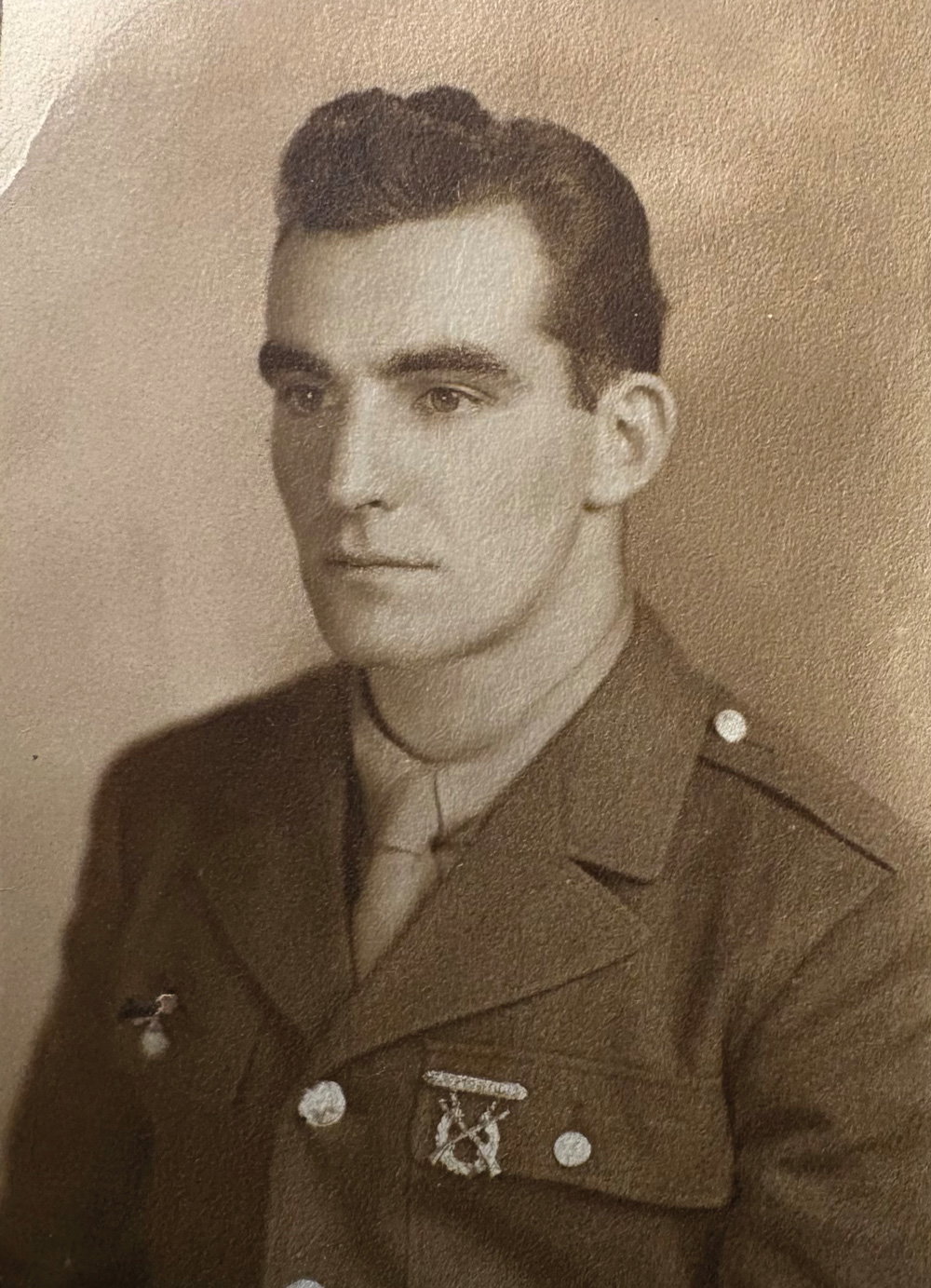
Courtesy of the personal collection of Tom Junod
Beneath the gloss of this prosperous glamor, though, Junod, who is as attuned to others’ emotional tremors as a seismograph, sensed tensions. While Big Lou could not have been a more robust alpha dog, the littlest of the Junods was a frail, sickly child who wept often, a real “mama’s boy” who his father thought required toughening up. Hard-ass fathers with soft sons have always generated misery. Even when Junod was a kid, the older man began drilling him with sartorial commandments that still ring loudly in Junod’s ears—most notably, “A turtleneck is the most flattering thing a man can wear.” It became a mantra around the house, and it stuck. To this day, Junod wears one.
“He was trying to turn me into another version of himself,” Junod says. “My father was such an overwhelming force, so omnipresent even when he was absent. I thought he was omnipotent.”
Junod, who bears a passing resemblance to actor Billy Crudup, has enviably chiseled features. His once dark hair is slate now, but still thick and curly with a Superman forelock. Slender and willowy, he stands an even six feet. Sources look into his brown eyes, flecked with green and warm with empathy, and magically open up. Nicole Kidman once flounced into bed with him, prompting tabloid rumors in the British press, and he talked his way into witnessing an abortion, for one of his stories that won the National Magazine Award.
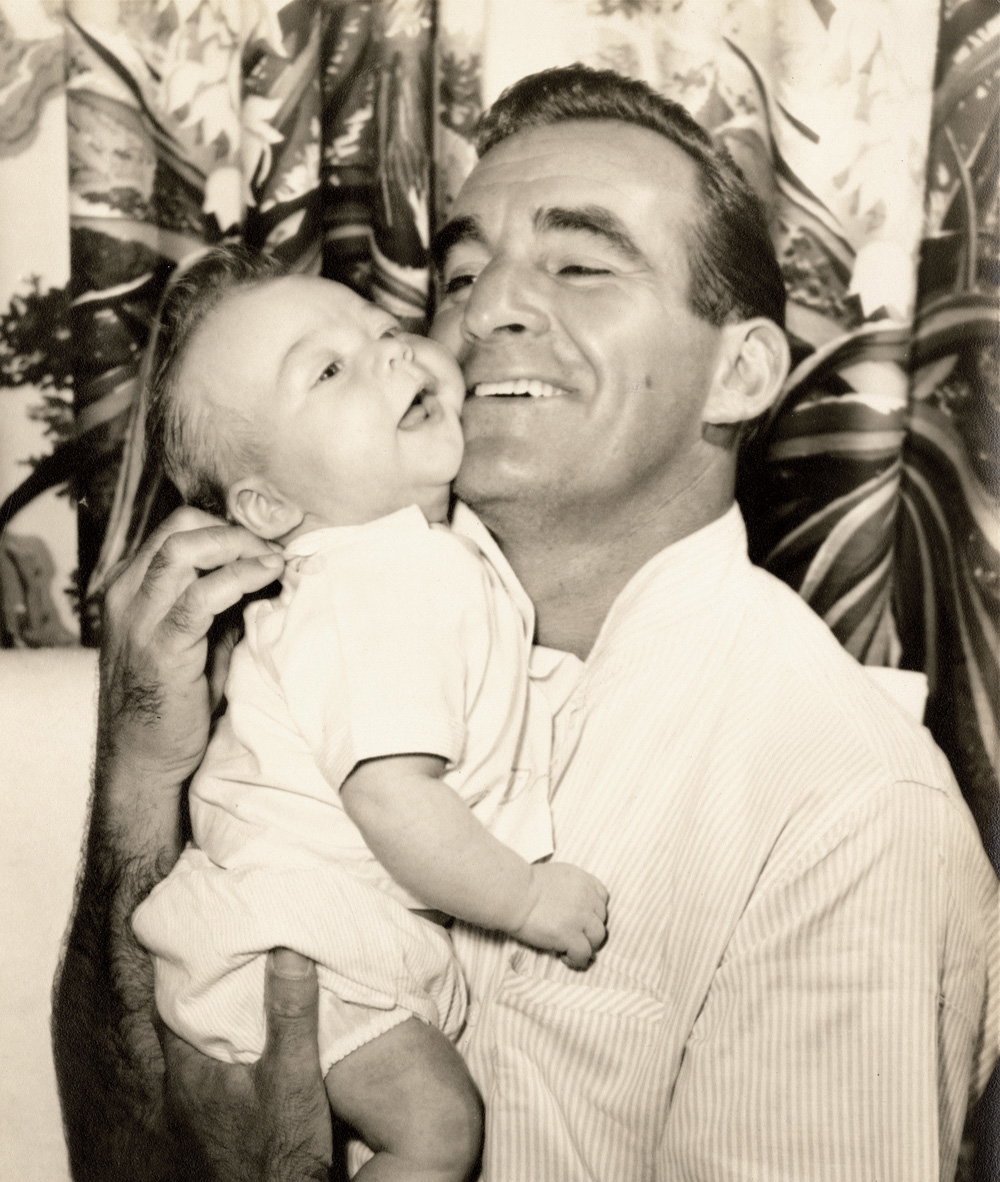
Courtesy of the personal collection of Tom Junod
Call it what you want—game, mojo, rizz—he has an easy way with women. (If you’re female, expect him to get the car door for you: “I learned that from the old man,” he says with a wink.) A natural smoothie, he easily could have become a swaggering “chip off the old block.” Did he? Surely not, but that question haunts Junod throughout the book.
• • •
Like many professional salesmen, his father turned his charm on and off like a spigot. He could be blunt, callous, and unfeeling toward the more vulnerable people around him.
“He was cruel to my mother, telling her to shut up,” Junod says. “I was very much my mother’s ally and confidant. I knew in ’61 when I was three years old that there was something very wrong with my parents’ marriage. For the book, when I interviewed a woman who was having an affair with my dad that summer, she wondered why I was so hell-bent on finding answers. She said I must have been very intuitive because I was just a baby at the time. But I knew.”
Junod noticed that Big Lou got openly, brazenly handsy with other men’s wives, who frankly did not seem to mind. There was plenty of genial grab-ass at those cocktail parties. It proved confusing for a wide-eyed boy loyal to his mother, who endured these indignities with the pained reticence of so many women of her generation. Junod turned inward and started keeping a journal. “I responded to my father by staging my own silent resistance,” he says, “and that was the beginning of my writing.”
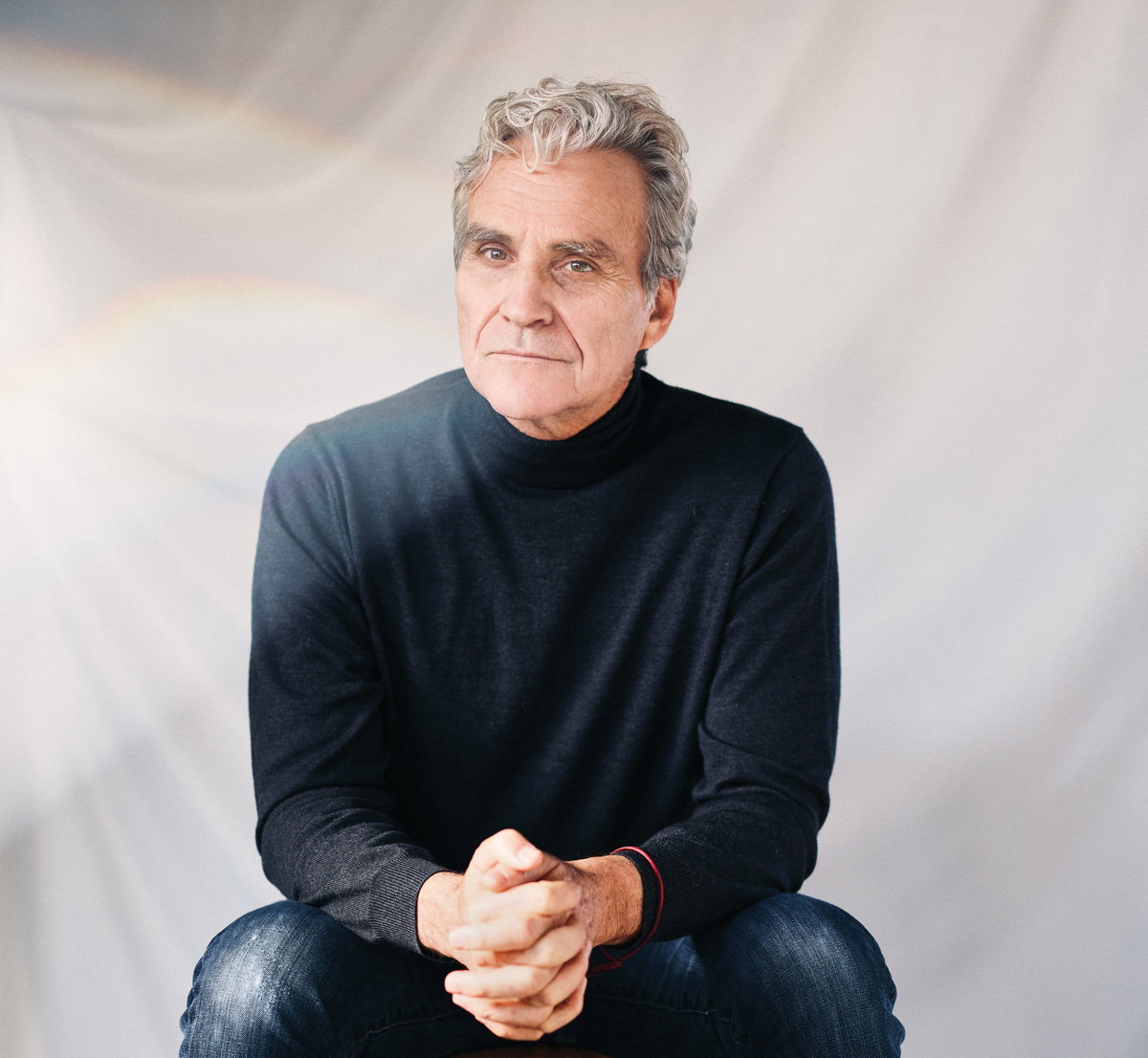
Photograph by Ben Rollins
An essay he wrote in high school was so precocious that teachers wrongly accused him of plagiarism.
When Junod left for college at the University at Albany (SUNY), his father told him he had some important advice. Was he about to be nurtured, finally? Junod perked up. What Big Lou said, though, was this: “Do yourself a favor and date a Jewish girl. They’re all . . . nymphos.” Single-minded as ever.
At college, Junod reinvented himself as a meditating mystic, handy with a bong. He majored in English. And he changed his name. Like Stephen Colbert, he Frenchified it. His father was Big Lou Ju-nod. The aspiring scribbler, in a burst of “pretentious” rebellion, became Tom Ju-know. One day during his freshman year, he spied a young woman reading John Updike. Her name was Janet Folk. He writes in his memoir, “She is the most American girl I’ve ever seen, beautifully plain and plainly beautiful, hippieish in affect but preppy in style . . . so white bread she’s almost exotic.”
They stayed together through college, and Junod followed his old man into handbags. Out on the road, he once got mugged, held for about an hour at gunpoint in his motel room, a harrowing chapter in the book. He quit that job, and he and Janet followed his brother to Atlanta in 1981. She worked at the Institute of Industrial Engineers, and Junod wrote dry copy for trade magazines.
“There was an IBM Selectric in my brother’s basement, so I wrote about the robbery,” Junod says. “I never sold that piece, but it let me know what I wanted to do.”
His friend, editor and novelist Charles McNair, calls Junod as a writer “sui generis,” but Granger demurs, saying, “Tom did not emerge from the womb a full formed writer. He has written thousands of words in his journals. He practices and works out like a great athlete. He made himself a great writer. In fact, he has practiced so much that you can’t know or see the work he has already put in, as with any great athlete.”
Junod kept scribbling at night and sending off stories on spec while he toiled away writing medical press releases at Emory University. He was 29 and had concluded his dream of being a writer was dead. One night in the summer of 1987, he spotted Lee Walburn, then editor in chief of Atlanta magazine, at Manuel’s Tavern. Junod chased Walburn into the parking lot and begged for an assignment.
“He told me to come by the office, and when I did, he asked me if I thought I was the right writer for a story about the pressures mounting on children to achieve—to establish some kind of precocity,” Junod wrote years later. “As one who was laggard instead of precious, and whose sole accomplishment since graduating college was the blessing of my marriage, I told him that he had found his man.”
When Junod stopped by the office to turn in the story, Walburn told him to sit down and asked Junod how old he was. “Don’t you think it’s about time you worked as a staff writer for a magazine?”
From a pay phone on Roswell Road, Junod called his wife with the news that he’d gotten the job of his dreams. But by the time he got home, he wasn’t sure anymore whether it was a job offer or whether Walburn was simply asking Junod if he thought he was ready for a full-time writing job.
He called Walburn. “Did you really just offer me a job or were you just messing with me?”
Under Walburn’s wing, Junod blossomed as a writer. His brother’s kids attended the Cobb County school system, and he proposed a story about high school. Coauthored with Melissa Harris, another staff writer, the story was a finalist for a National Magazine Award. “That was a harbinger of Tom’s approach,” says Chris Wohlwend, who worked with Junod at Atlanta. “His ideas and executions always zeroed in on the profound effects of common experiences that were seemingly simple. Such stories led to larger opportunities in magazines with much larger circulations.”
Junod caught the eye of David Granger, an editor at GQ, and began writing for that magazine. In 1997, he became the subject of a bidding war; he could choose a split contract between GQ and The New Yorker for $300,000, or less money offered by Esquire, where Granger had migrated. He stayed loyal to Granger and went with Esquire. “It was the right thing to do,” he says. At this stylish redoubt of the Y chromosome where masculinity is dissected like a specimen on a slide, Junod found himself in a role he had been preparing for his entire life. (He had the requisite turtlenecks.)
“I was going through a sort of coy, cocky ‘look at me’ phase during that time,” Junod says, and he wrote a story he lived to regret: Junod essentially outed Kevin Spacey, and Hollywood responded with a chilly boycott. The #MeToo movement has since tarnished Spacey, but Junod concedes his actions were “in bad faith.” He went through a slump, worried he’d lost his voice.
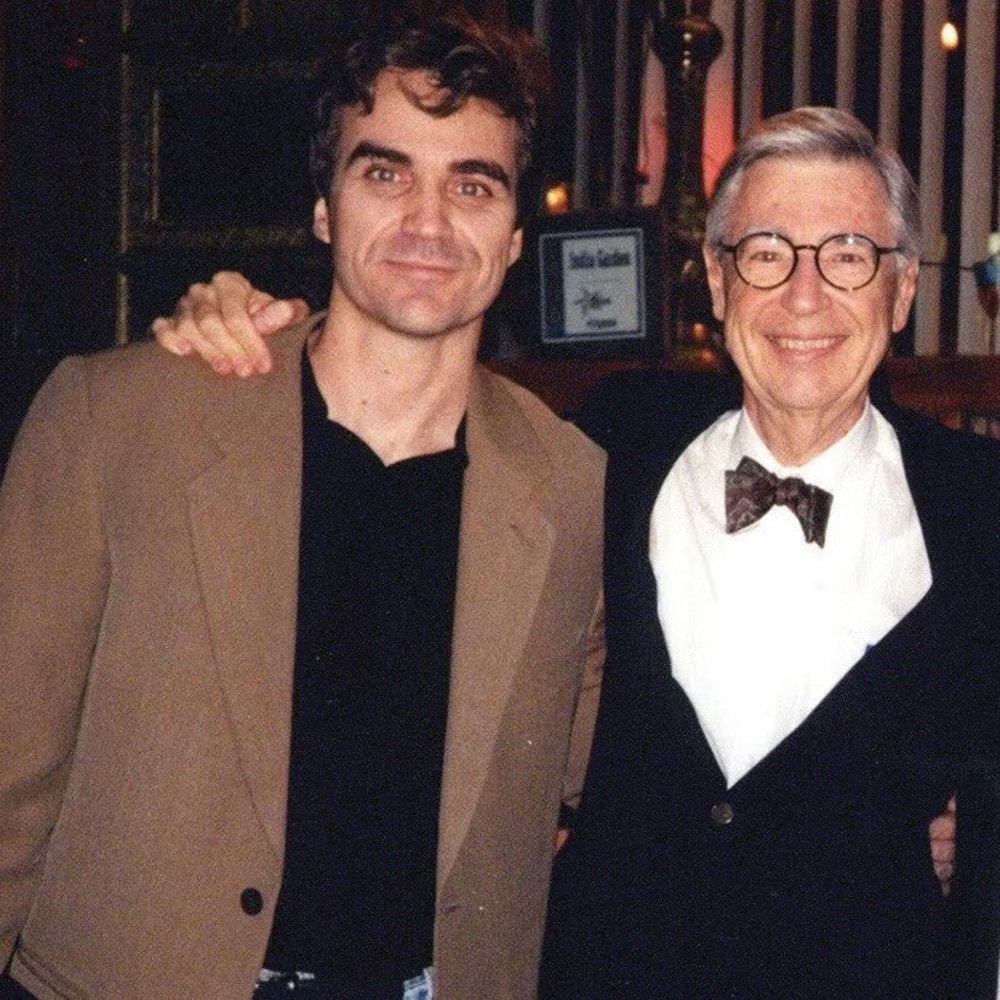
Courtesy of the personal collection of Tom Junod
Then he got the assignment that redeemed him: his heartfelt cover story of children’s entertainer Fred Rogers, headlined “Can You Say . . . Hero?” It was adapted into a fictionalized biopic, A Beautiful Day in the Neighborhood, in 2019. Here was another kind of man entirely, attuned to children, respectful of women, endearingly asexual. The last person who would play grab-ass at a cocktail party. The story changed Junod, and the men remained close friends until Rogers’s death in 2003. “Fred saw something in me, some potential to be kind that opened me up,” he says. “It made me a kinder, more beneficent writer. Fred’s influence is all over my book, the love in it. The first draft I wrote lacked that love.”
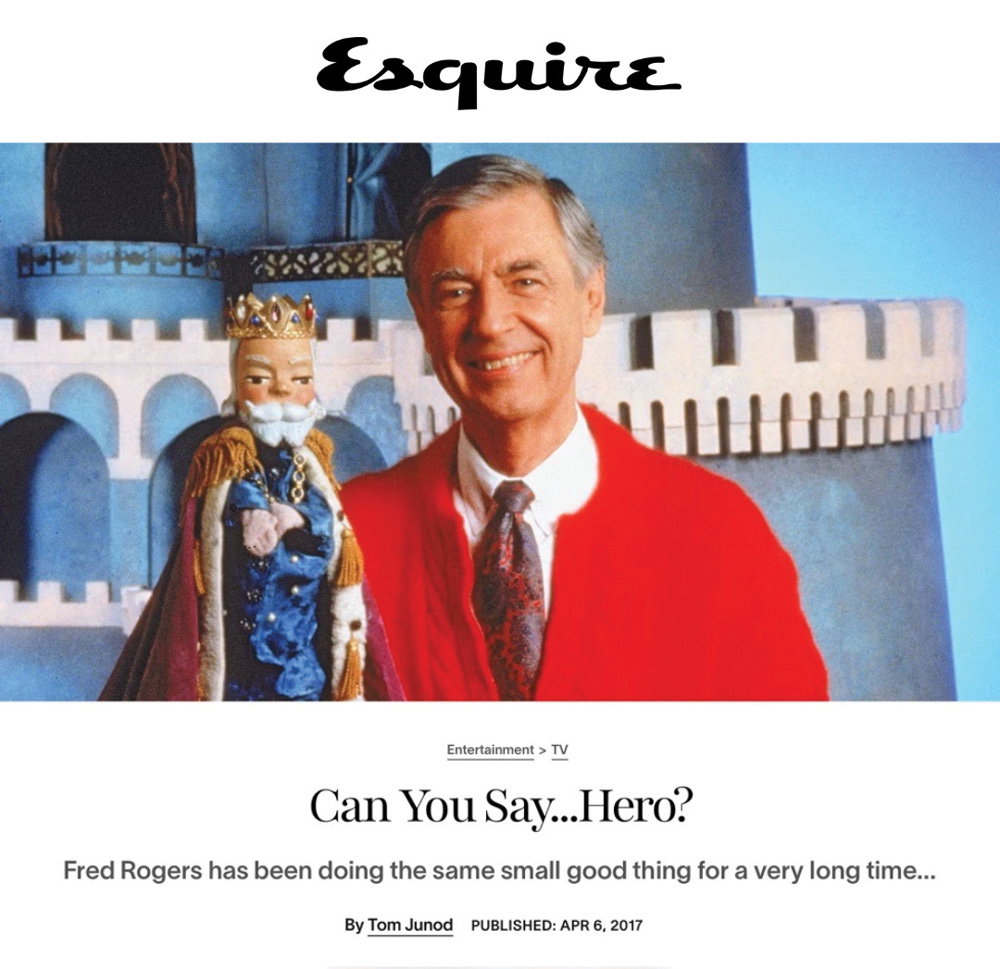
Courtesy of the personal collection of Tom Junod
The most influential story of Junod’s magazine career, though, has been “The Falling Man,” which became an urtext of 9/11. Junod did what he does best—latched on to an image that became a metaphor for lyrical extrapolation, in this case the haunting photograph of a man jumping from the World Trade Center. Junod chronicles his journalistic quest to identify him while confronting the photograph’s taboo nature and its symbolism of personal agency in a mass tragedy, concluding the man represented “you and me.”
“I’m not sure I understood what he was going for, at first,” says Granger. “And I’m not sure he knew what he was going for, either, at first. But it’s about grace. You can’t leap into the arms of God—you have to fall.”
• • •
Junod has an aura of hipster intensity. He likes to sweat while eating Sichuan food, and he loves pit bulls. (The current occupant of his couch is a lantern-jawed dog named Jacques.) His personal computer holds hundreds of thousands of tunes he listens to for inspiration, from T. Rex to Leonard Cohen. A hardcore audiophile, he has compiled a Spotify list of 32 songs to accompany his book. “Each song constitutes a mini memoir,” he says.
He flashes back to a moment when he was six years old. His father put him on the phone with a woman in Florida and demanded he sing “Fly Me to the Moon.” The boy, as always, obeyed in his tinny voice but, with his uncanny intuition, sensed this woman was more than just a disembodied voice over the phone.
“Her voice sounded kind,” he recalls. “She said she hoped she would meet me someday. I believe now that she was the ‘one’ my father spoke of that night. She was probably the love of my father’s life. I learned that she and my dad had planned to run away together once I got into college, but she died, under mysterious circumstances, falling down a flight of stairs. I learned she had some kids, and I vowed, at first, that I would not track them down and wreck their lives. I can still hear her voice in my head after all these decades. It took me 30 years to be able to sing again. I felt such shame at the time. Not because
I didn’t want to be my father, but because I couldn’t be.”
When Junod’s mother faced cardiac surgery in November 1999, she offered her final assessment: “He’s a mean, nasty little man. And he’s no one to idolize.”
“Well, Mom,” Junod replied, “I’m not idolizing him anymore.”
This article appears in our March 2026 issue.