


Photograph by Gabriella Valladeres
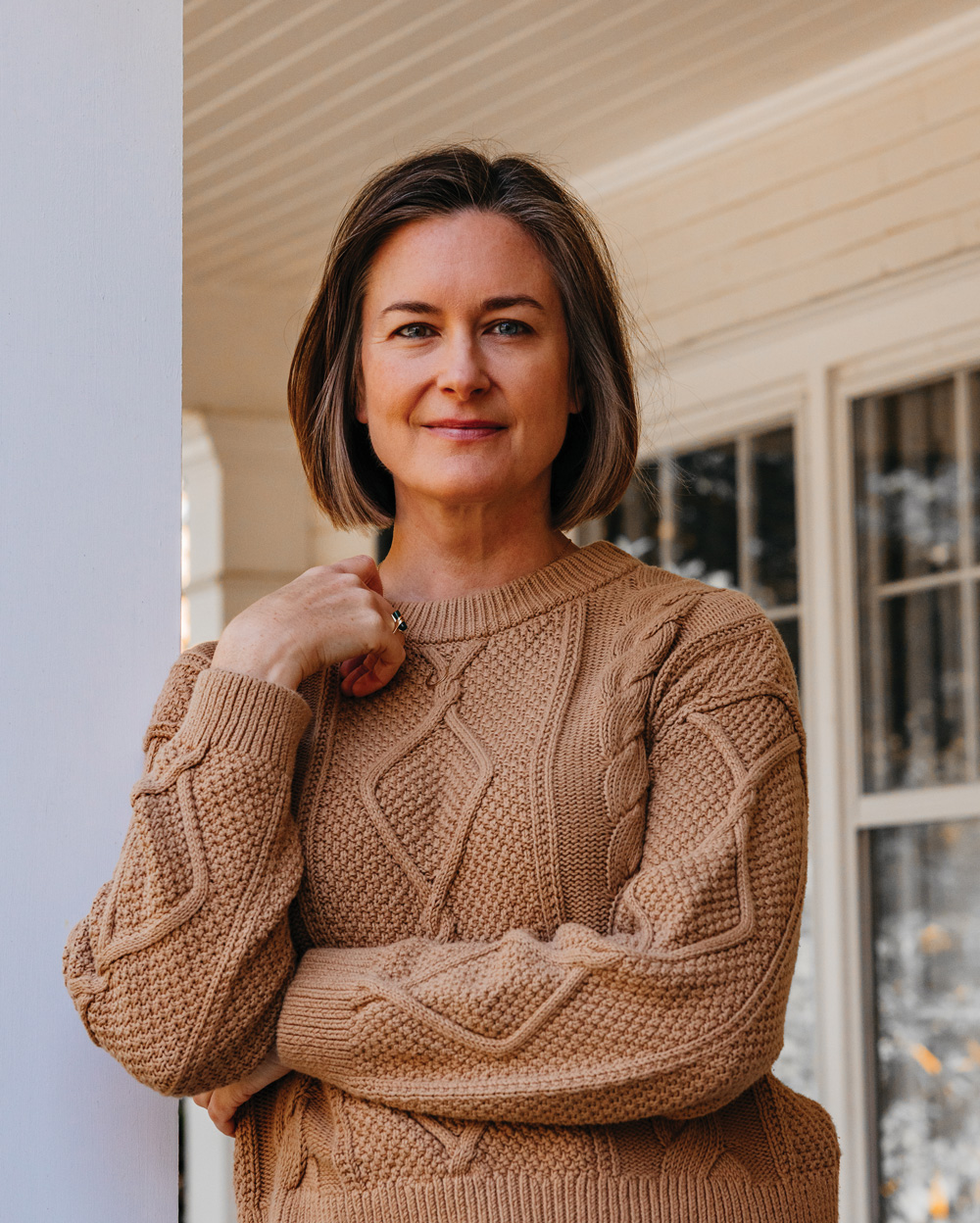
When Katharine Wilkinson feels overwhelmed by distress about climate change, she goes to her favorite water oak tree in Ansley Park, presses her back against its bark, and begins to breathe. The ritual grounds her and reminds her that action begins in the body. “Remembering that home is right here,” she says, placing her hands across her solar plexus, “gives me the power to act.” More often than not, that action leads her back to writing—sometimes tucked into a small window booth at Manuel’s Tavern.
Wilkinson, a writer and climate change researcher with a doctorate of philosophy in geography and environment from Oxford University, exemplifies that embodied approach in her forthcoming book, Climate Wayfinding. Rather than treating climate change as an abstract problem, the book invites readers into a communal practice complete with reading group guides and creative exercises designed to help people identify their own roles in a collective response. In keeping with these practices, the May 4 book launch held at the Jimmy Carter Presidential Library and Museum will include film, poetry, music, and interactive experiences.
Since the 2020 publication of All We Can Save, a bestselling anthology on climate-change action that Wilkinson coedited, the climate movement has seen major wins and rapid reversals. That the Biden administration’s watershed climate legislation was almost entirely unraveled once President Trump took office, Wilkinson says, exposed a central problem: “When the paradigms don’t shift, policy wins are fragile.”

Courtesy of Andrews McMeel Publishing
Climate Wayfinding aims to change those paradigms by helping readers recognize their own “node” for healing the climate crisis. “Because everything is impermanent,” she says, “anything can be undone—or done.”
Wilkinson cohosts the podcast A Matter of Degrees and runs The All We Can Save Project, which focuses on individual and local climate action. Raised in Atlanta, she returned to the city in 2010 after earning her doctorate, then stayed to help care for her father, beloved Atlanta Journal-Constitution sports journalist Jack Wilkinson, after his Alzheimer’s diagnosis.
She also serves on the board of directors for the nonprofit Chattahoochee Now, which is working to develop a protected, publicly accessible stretch of the Chattahoochee River. Wilkinson sees the river as an entry point for people to foster a deeper connection with climate issues. “Lawsuits are important,” Wilkinson says, “but we also need a cultural shift toward care and celebration for this river that brings us all life.”
After Jack Wilkinson passed away in June of last year, his celebration of life was hosted at Manuel’s—right next to the booth where Katharine often writes. Community spaces like these are where she hopes that groups of friends, family, or neighbors will gather to “climate wayfind” together. “Given your unique talents, values, resources, and community, there’s no shortage of important things to do.”
This article appears in our April 2026 issue.