


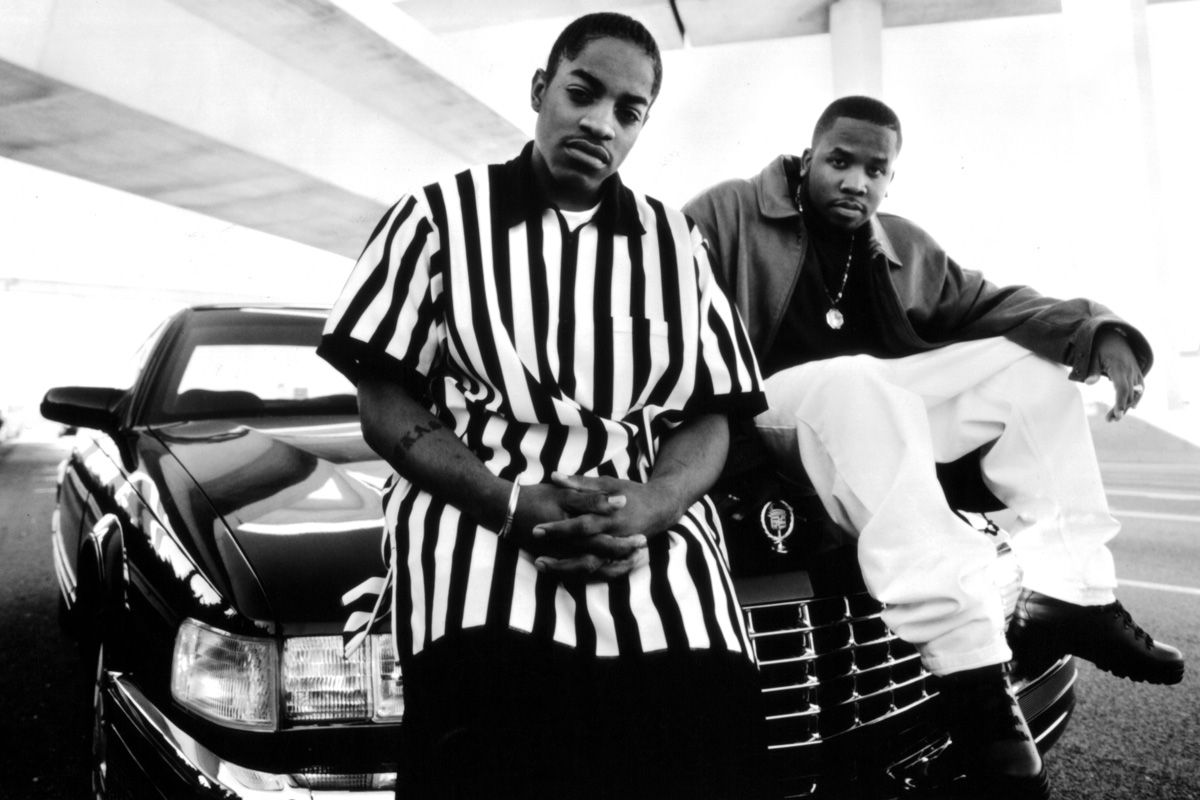
Photograph by Michael Ochs Archives/Getty Images

Illustration by Graham Smith
For seven days in July 1968, Jonas Bernholm pounded the Atlanta pavement in search of rhythm and blues. Bernholm, a Swedish-born music journalist, knew Georgia was brimming with talent, thanks to James Brown, Otis Redding, and the like. But he noticed that “all these fine Georgia singers” he saw performing at Atlanta’s Black clubs and churches were unsigned.
“If I was working as a talent scout in the South,” Bernholm wrote in his book Soul Music Odyssey U.S. 1968, “I would certainly look into Atlanta.”
William Bell was working on it. The Stax Records soul singer had recently relocated to Atlanta, where he launched a record label to promote fellow local musicians. Peachtree Records set up shop on Glen Iris Drive and started producing tracks by local acts such as Gorgeous George and James Fountain. It was a rare example of the music industry coming to Atlanta, not the other way around, as when Gladys Knights and the Pips decamped to Detroit to sign with Motown.
But Atlanta would soon have its day. Bolstered by its growing reputation as the Black mecca, the city began investing in its music industry: In 1973, the new Atlanta mayor, Maynard Jackson, established the Mayor’s Office of Cultural Affairs to boost the city’s local arts scene. That same department still hosts the Elevate and Atlanta Jazz festivals to this day.
Perhaps even more important, in 1974, Jackson’s then-wife Bunnie Jackson (later Jackson Ransom) founded her public relations firm First Class Inc., whose music clients—including Brick, Cameo, and The S.O.S. Band—helped make Atlanta a hub for R&B and funk. These artists were aware of the city’s raw potential: Cameo frontman Larry Blackmon grew up in New York City’s Harlem, but he told Ransom he moved to Atlanta in 1982 because “it was virgin territory in the music industry,” according to historian Maurice Hobson’s The Legend of the Black Mecca.

Photograph by Michael Ochs Archives/Getty Images
Later, Ransom represented Kris Kross, the teenage rap duo who toured with Michael Jackson in 1992. And it was Kris Kross’s label boss, Jermaine Dupri, who launched So So Def Recordings in 1993 with dreams of rivaling legendary Motown founder Berry Gordy. The label’s highlighter-yellow billboard off the Downtown Connector—“Atlanta: Home of So So Def Recordings”—was inspired by Gordy’s sign outside the Motown studio in Detroit.
Thanks in no small part to Dupri, Atlanta’s music industry has since achieved some of its glittering ambitions. LaFace Records signed Bobby Brown, Whitney Houston, and OutKast out of its Buckhead offices. Today, Atlanta is home base for hip-hop and R&B labels like LVRN, which reps Summer Walker, and Quality Control, home to Migos and Lil Yachty.
But, as a longtime music journalist, I think the bigger story than our music business is Atlanta’s talent for making a global impression even without industry support. T.I. and Jeezy launched their careers with the help of Gangsta Grillz, the mixtape empire that DJ Drama ran out of his house in the early 2000s. Major record labels were happy to leverage Gangsta Grillz to boost their artists but had no qualms abandoning him in 2007, when their industry trade group convinced Georgia officials to send a SWAT team to the Gangsta Grillz offices and charge Drama with bootlegging and racketeering.

Photograph by Scott Gries/Getty Images

Photograph by Johnny Nunez/WireImage
For years, I’ve covered how radio and record-label execs flock to Atlanta’s Black strip clubs in search of the next superstar, like Future. I also remember when local radio caught on to “Old Town Road” after Atlanta’s Lil Nas X—this generation’s Soulja Boy—got people talking with TikTok memes. In 2025, I was stuck on Pluto and YK Niece’s song “Whim Whamiee”—Atlanta rap’s most triumphant moment in years, created before a label ever sought them out.
These are the stories that come to mind when I consider how R&B and rap became the most listened-to music genre in the United States—and how Atlanta made that possible.
More on Atlanta music

Photograph by Sandlin Gaither
“To me, Atlanta has always felt like a place where there’s an earnest appreciation for the DIY music scene. That has not changed. I go to shows, and it’s just younger versions of all of us who got our start in the ’80s. Even though Atlanta’s music scene is much bigger, there’s still that same support and community vibe. My frustration was always that everything felt so racially segregated. I wondered how we could make events and venues more inclusive. But I think that is changing; it seems like the scene is mixing a lot more. Atlanta is a progressive city in a lot of ways.” – Indigo Girls member Amy Ray
Back to 65 Years of Atlanta Magazine
This article appears in our May 2026 issue.