

Tag: 65th anniversary

Editor’s Journal: What Atlanta has gained—and lost—along the way
I do think my father-in-law would be proud of the essays we’ve assembled and the contributions we’ve received from Atlanta icons such as Andrew Young. He’d be happy that his hometown magazine is still printing away after 65 years. Most of all, he would say he’s glad he spent his life in Atlanta, a city that grew up right alongside him but always managed to feel like home.

Built to last: More than 65 years later, these Atlanta restaurants are still serving
As Atlanta magazine marks its 65th anniversary, we’re looking back at some of the city’s most enduring restaurants—places shaping Atlanta’s dining before this publication even existed.
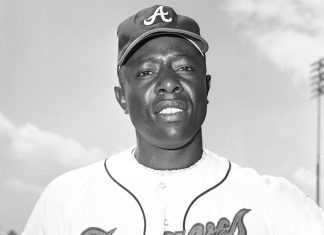
When fate brought together Hank Aaron and Martin Luther King Jr.
In 1961, Martin Luther King Jr. was as potent with his civil rights movement nationally as he was in his native Atlanta. Henry Louis Aaron was also shining during his eighth Major League Baseball season with the Milwaukee Braves and his seventh consecutive season as an All-Star. Fate brought them together five years later.

The evolution of the shopping capital of the South
Legendary retailer Jeffrey Kalinsky recently announced he would open a second iteration of his designer fashion and accessories boutique, Jeffrey, which closed in 2020. When I was a teenager growing up in the suburbs, Jeffrey was central to my experience, but it wasn’t the only retailer elevating Atlanta to its moniker of “the shopping capital of the South” over the past 65 years.
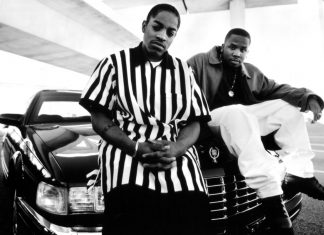
Atlanta, the city of self-made music superstars
For years, I’ve covered how radio and record-label execs flock to Atlanta’s Black strip clubs in search of the next superstar, like Future. I also remember when local radio caught on to “Old Town Road” after Atlanta’s Lil Nas X got people talking with TikTok memes. These are the stories that come to mind when I consider how R&B and rap became the most listened-to music genre in the United States—and how Atlanta made that possible.

Holding out hope (but not holding our breath) for trains in Atlanta
With the exploding popularity of cars in the ’50s and ’60s, people stopped riding passenger trains. Car fever led to the destruction of Atlanta’s two downtown train stations, the Union and the Terminal, in the early 1970s. The late Atlanta historian Franklin Garrett called it “municipal vandalism.”

The business blueprint for the Atlanta we know today
In the 1960s, most decisions in Atlanta could be traced to a dozen or so business leaders who called the shots. All were men. Today, many executives are transplants to Atlanta; CEOs tend to have shorter tenures, and they exert less influence. But that also means business has become more diverse, both in staffing and scope.
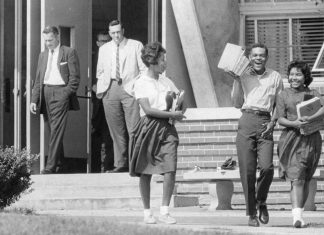
How Atlanta media shaped our understanding of the civil rights movement
Journalism still has the power to shape the world we live in and, perhaps more importantly, shape our understanding of this place. We must hope—or perhaps demand—that Atlanta’s media can lead us to a sort of narrative renaissance.

Atlanta’s arts scene makes our city greater—if we choose to sustain it
One of the most gratifying aspects of my years at WABE was connecting listeners to our city’s cultural events. A vibrant arts community can uplift and enrich the lives of Atlantans. The challenge today is to help these organizations thrive: Funding is essential from various sources. With money allocated to the arts, we can all take pride in a city made greater by its cultural organizations.

Atlanta’s long reckoning with urban renewal
Obsessed with reinvention since its inception, Atlanta today is witnessing a more piecemeal changeover, as I’ve personally seen over more than a dozen years of covering the city’s physical evolution. Instead of entire districts being flattened, it’s a row of older bungalows, an aging apartment complex, a shuttered factory—all broadly described as gentrification. But is that a gentler way of saying urban renewal never really ended?
NEWSLETTERS