


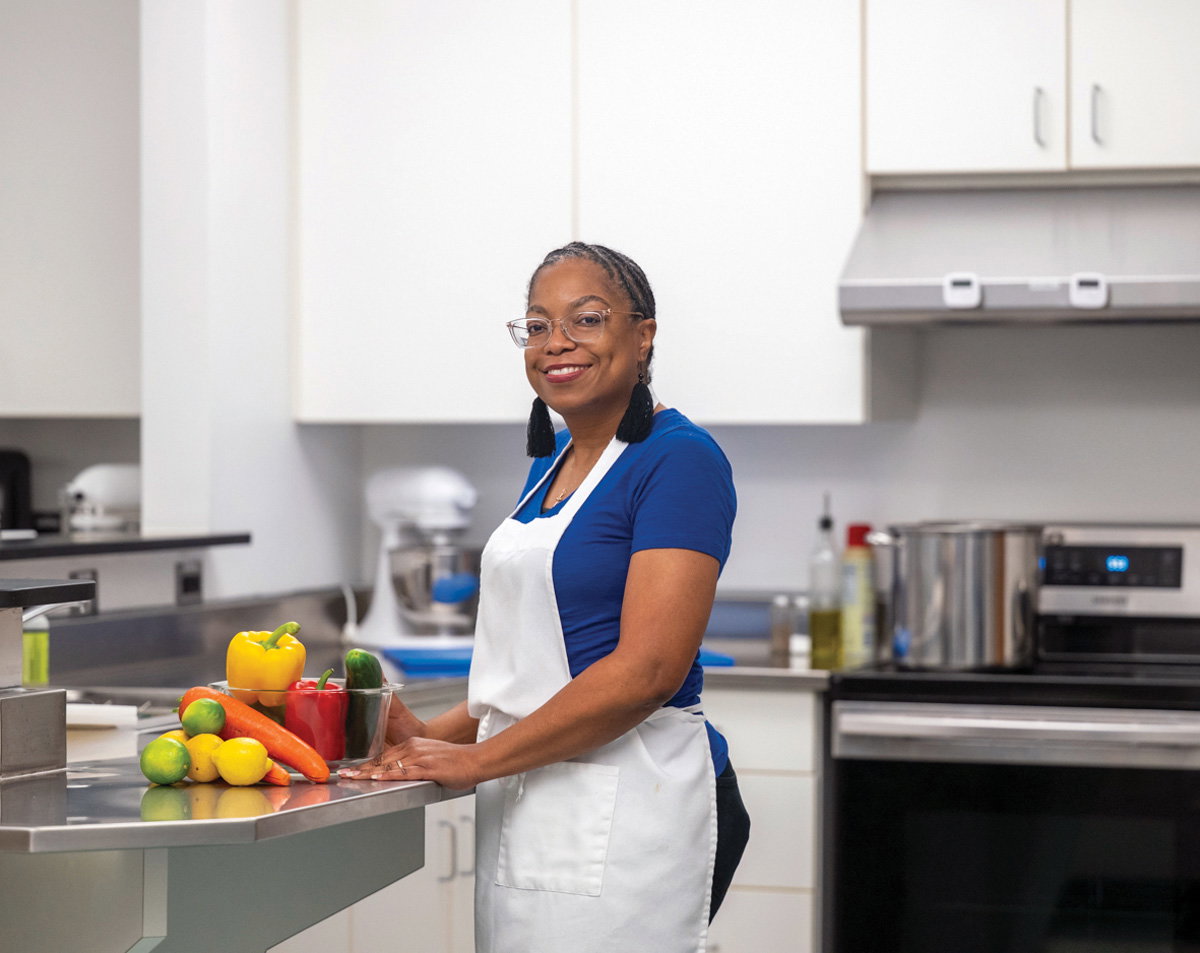
Photograph by Meg Buscema
“An apple a day keeps the doctor away”: It’s a 150-year-old maxim nodding to the link between food and health. At Georgia State University’s Byrdine F. Lewis College of Nursing and Health Professions, nursing students take that knowledge one step further—into the kitchen, where they dice avocados and chop onions as part of a fast-growing, hands-on approach to conveying the critical link between diet and disease.
The university’s Health Meets Food curriculum is part of an effort to address the alarming health impacts of America’s eating habits. Poor diet contributes to chronic diseases, such as diabetes and cardiac disease, that combined kill more than 1 million Americans each year. The issue is well-known, but it hasn’t been a priority in medical training. A 2022 study found medical students received an average of 1.2 hours of nutrition education per year.
“If you’ve personally cooked healthy food, then you would be more likely to be able to advocate for your patients’ nutritional needs,” says Dr. Jessica Ann Marcus, a professor of nursing at Georgia State University.
The federal government is working to better integrate nutrition into medical education. Earlier this year, Health Secretary Robert F. Kennedy Jr. announced that 73 of the nation’s roughly 160 medical schools would increase their nutrition education to 40 hours a year. Georgia State University’s in-kitchen program, which launched in 2020, was several years ahead of the curve.
The class partners with the Nutrition Department’s culinary medicine program, teaching students how to apply general nutrition principles to assist their unique patients. It covers topics such as cooking on a budget or following dietary restrictions tailored to a specific diagnosis. For a diabetic patient who needs to limit carbohydrates, for instance, students may learn how to modify a recipe for macaroni and cheese by swapping regular pasta for whole-grain pasta and adding veggies to the sauce. Later, students take what they’ve learned in class and design an alternative recipe for a favorite meal to improve their own nutrition.
“If you can find some personal value in it, then you can tell your patients, This is doable for you,” Marcus says. “These small changes will make a big impact in your healthcare.”
This article appears in our September 2026 issue.