

Tag: Georgia State University

Georgia State University is teaching nursing students to cook
At Georgia State University’s Byrdine F. Lewis College of Nursing and Health Professions, nursing students take their knowledge into the kitchen, where they dice avocados and chop onions as part of a fast-growing, hands-on approach to conveying the critical link between diet and disease.
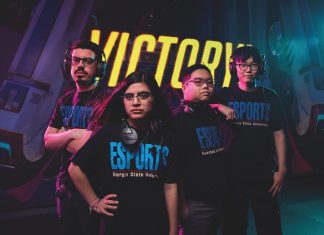
Changing the Game
Atlanta has become one of America's leading esports destinations. From DreamHack and ESL Challenger tournaments to Georgia State University's nationally ranked varsity program, Georgia is building a thriving esports ecosystem that is creating jobs, driving economic growth, and preparing students for careers in gaming, technology, and digital entertainment.
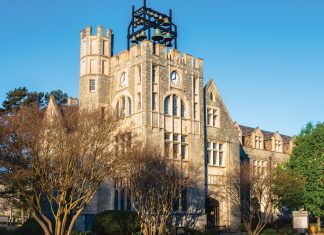
By the numbers: quirky facts from colleges around Georgia
This month, nearly 300,000 college students will file back into classrooms across Atlanta. The metro area is home to more than 70 colleges and universities. Here are a few fun facts about Atlanta’s collegiate life.

30 years after hosting the Olympics, Atlanta has transformed into a sports powerhouse
Hosting the FIFA World Cup 2026™ is the latest chapter in a 30-year transformation that began with the 1996 Olympic Games, which accelerated the city's growth, strengthened public-private partnerships, elevated its cultural and culinary profile, and established Atlanta as one of the world's leading destinations for major sporting events.

Can U.S. birthright citizenship be overturned? This GSU law professor unequivocally says: No.
Lately, Georgia State University law professor Anthony Michael Kreis has become a go-to source on questions about President Donald Trump’s frenzied efforts to reshape the federal government—the main question usually being, "Can he do that?" When it comes to Trump’s executive order overturning the constitutional right of birthright citizenship, Kreis’s reply is unequivocal: No, he cannot.
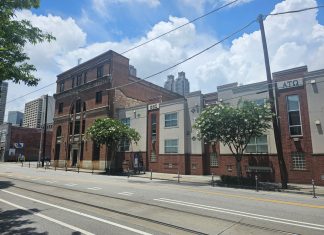
Georgia State and historic preservationists are at odds over the fate of a century-old building
With a goal of making Georgia State University's campus more walkable, welcoming, and safer, a $100-plus million plan calls to raze the Sparks Hall classroom building and close off part of Gilmer Street to make way for the 15-acre “Panther Quad,” expanding GSU’s new Greenway corridor that weaves through downtown’s grid system. But blueprints for open, pedestrian-friendly spaces also call for the demolition of a century-old building at 148 Edgewood Avenue. A small army of intown historians and activists finds that part problematic.

An Atlanta entrepreneur developed an app to empower people with disabilities
When Angad Sahgal was born with Down syndrome 23 years ago, doctors told his parents that he’d never be able to walk or talk. Assumptions like these vastly underestimate the abilities of those with Down syndrome. People with this genetic condition are congressional lobbyists, triathletes, actors, and much more. Sahgal himself is a college student and an entrepreneur: With his father, Amit Sahgal, he developed an app called Let Me Do It, named for the phrase he repeated often as a child.
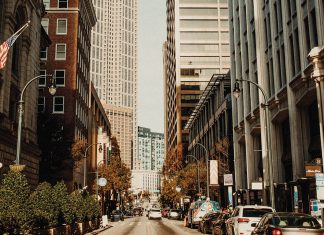
There’s a new picture of downtown Atlanta emerging—but who will it be for?
The excitement about new development obscures an awkward fact that the city and developers have to reckon with: Downtown already has more buildings than it has people who want to occupy them. It already has more road, rail, and bus capacity than any eastern U.S. downtown south of Washington, D.C. On weekdays, there are plenty of people there. The problem is that, at 5 p.m. on Fridays, the place clears out. Downtown Atlanta is often filled with a large, diverse group of people, but not many of them are residents.
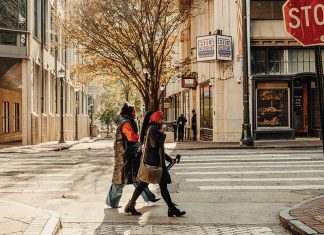
What makes a good downtown?
Darin Givens—cofounder of ThreadATL, a nonprofit advocacy organization that aims to influence city planning and policy—explains why this cross-section of Forsyth and Poplar streets in the Fairlie-Poplar District has it all.

In his new book, GSU professor Dan Immergluck explores the “highly racialized gentrification” that changed Atlanta
Dan Immergluck’s new book, Red Hot City, describes an Atlanta that’s a good place to do business—but increasingly out of reach for many of its longtime residents. In his book, out this month, he details paths taken—and not taken—by policymakers that he says have resulted in a housing crisis that is forcing lower-income, and often Black, families further and further out from the transit, hospitals, and jobs in the city’s core.
NEWSLETTERS