


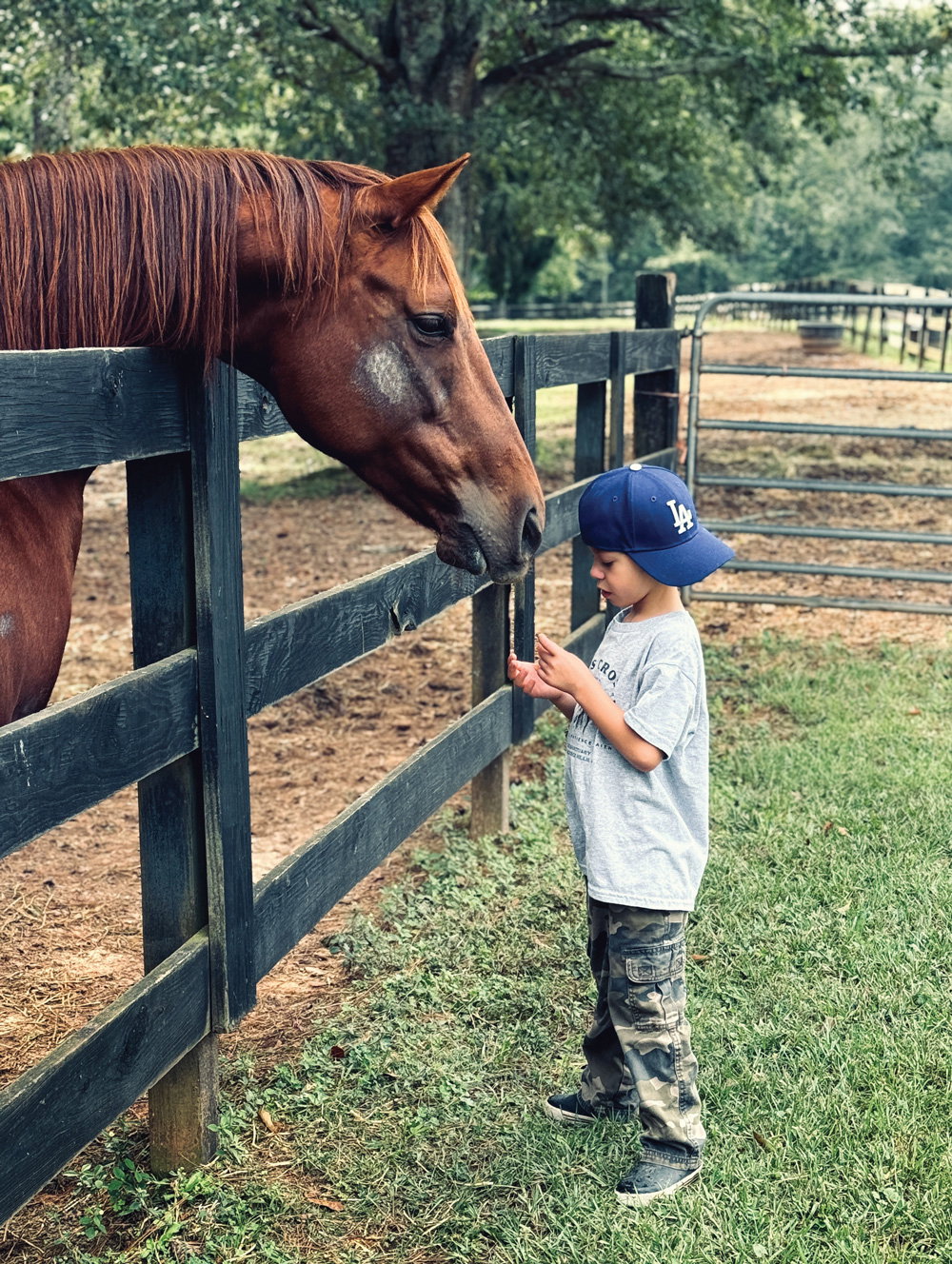
Photograph by Okami Maison
When Jennifer Astrop’s son was six, he experienced a complex medical issue that required him to regain his motor skills. After his neurologist prescribed therapeutic horseback riding, he spent a year at Chastain Horse Park in Buckhead riding a Welsh pony named Zorro. The therapy not only improved his motor skills but also earned him a new best friend. “Zorro is a trickster,” Astrop says. “He makes everyone laugh, but most importantly, he makes our son laugh.”
When Zorro retired from the therapeutic program, the Astrop family made a big move: They adopted Zorro and purchased a 69-acre farm in Chattahoochee Hills, which they turned into a horse sanctuary named in his honor. Eleven horses now call Zorro’s Crossing home, many of them rescued racehorses. This fall, in a full-circle moment, Zorro’s Crossing will begin offering equine therapy.
The program is run by K-Equine, a mental health practice specializing in a specific form of therapy called equine-assisted psychotherapy (EAP), in which people do not ride the horses (hippotherapy) but rather interact with them on the ground alongside a licensed therapist. “Horses are always scanning the environment for safety and survival,” says K-Equine founder Kelly Stephens, who launched a similar program at Chastain Horse Park in 2023. “This makes them ideal partners in therapy because they have an innate ability to read emotion in humans and respond to it.”
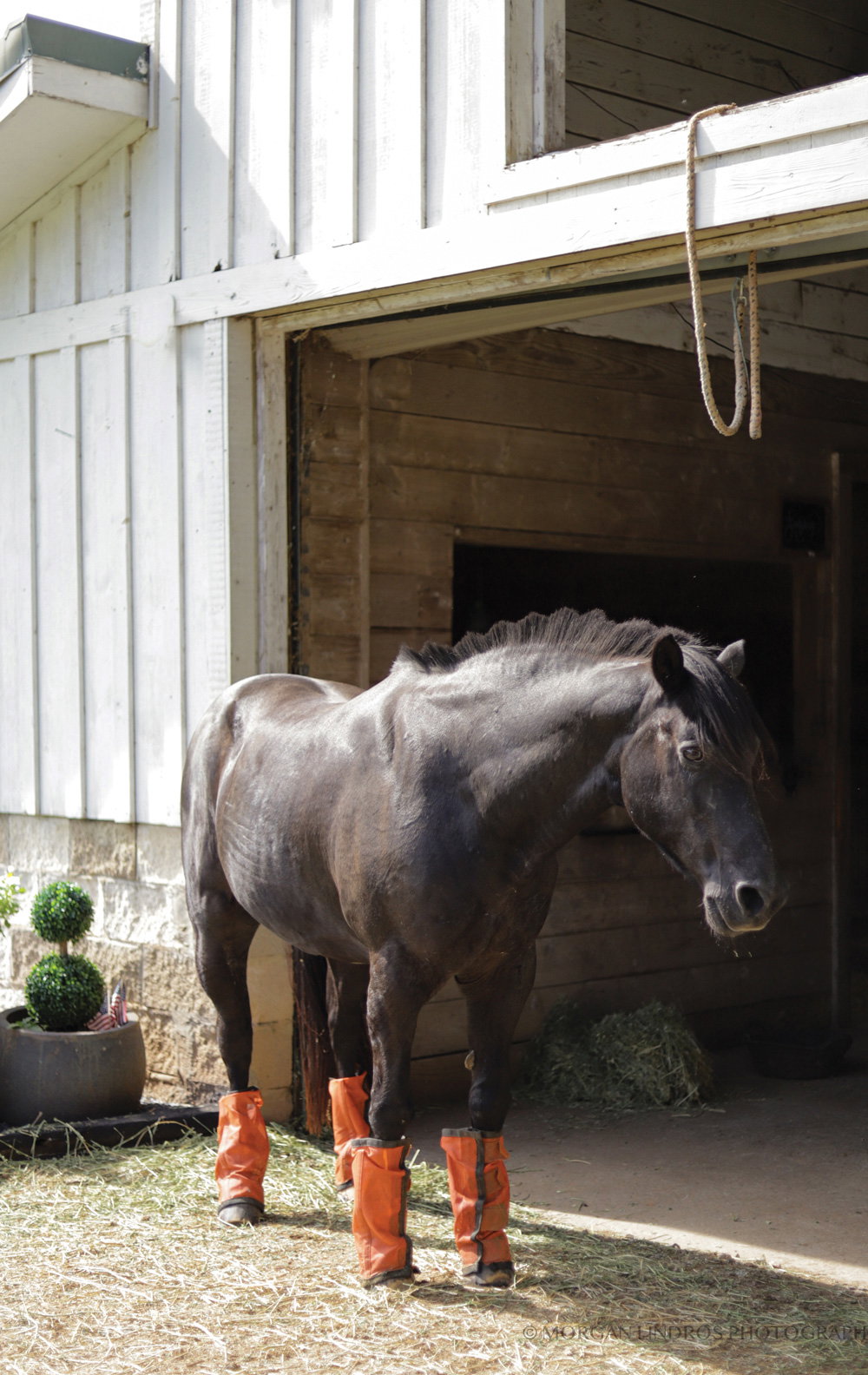
Photograph by Morgan Lindros
While hippotherapy is often used for clinical medical treatments, including physical therapy, EAP is more of a mental health treatment, ideal for conditions such as anxiety, depression, or post-traumatic stress disorder. For someone working through grief, for instance, a session may involve creating a “pathway of loss” in the horse arena using pool noodles or Hula-Hoops, then leading a horse through this pathway. “Being hands-on with the horses offers a different way of processing,” Stephens says.
For Astrop, the partnership is an opportunity to share the healing power of horses with more people. “We all hold on to so much,” she says, “but the horses teach you to be joyful.”
This article appears in our October 2026 issue.