

Photograph by Andrew Thomas Lee
The concept of quiet luxury—things that are exceptionally fine but not ostentatious—has been a part of Japanese culture for centuries. The term for it is iki, and the local embodiment may well be Koshu Club, the new Japanese steakhouse in Buckhead.
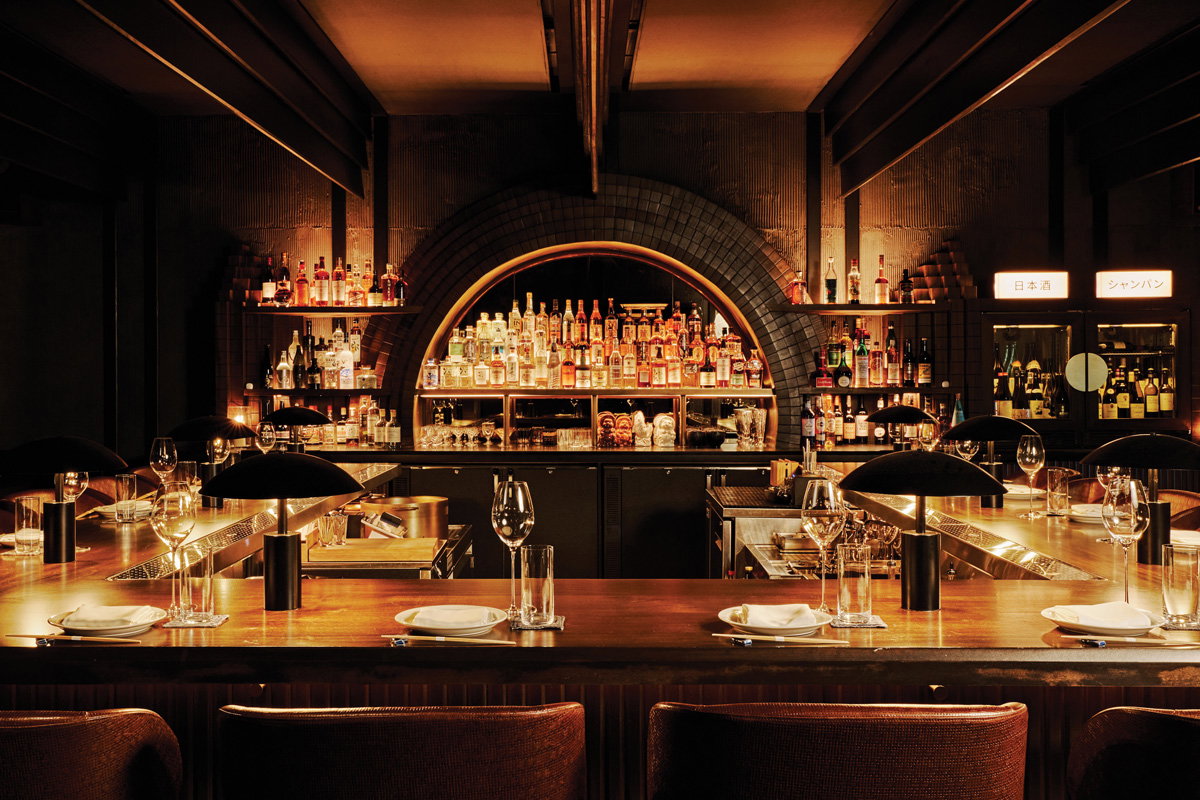
Guests arrive through a discreet entrance on West Paces Ferry and are ushered into a dimly lit dining room. The cozy space accommodates 50 guests between the plush banquettes and stylish bar. Scraped concrete walls lean into the perfectly imperfect wabi-sabi design ethos. The Japanese supper club mood—marked by intimate environments and an unhurried dining experience—is set by an eclectic playlist that, during one course, might include big band music, Billy Idol, and Wu-Tang Clan. I was pleasantly surprised to find that, while the vibes were high, the din was quiet enough to have a conversation at a normal decibel.
The specialty cocktail list offers an intriguing start to the evening, as you’ll see classics with a twist, such as the Night Ripper ($23), a tiki-inspired riff on a margarita with the addition of lemongrass shochu, coconut, and herbal liqueur. The Tiger by the Tail ($19) features rye, lime, allspice, and mildly tongue-tingling sansho peppercorn served over an embossed ice cube. Housemade cordials and ingredients such as pickled myoga ginger and salted honey keep things interesting. On any given night, guests can leverage the expertise of two affable sommeliers, one dedicated to wine and one to sake, who help diners navigate the nearly 800-bottle program.
While Koshu Club’s Michelin-starred sister restaurant, the omakase-only Mujo, shares an executive chef in J. Trent Harris, the concepts smartly diverge. Here the focus is on Wagyu steak and steakhouse-style accompaniments. Between two visits—one solo at the bar and one with a guest—I was able to order a significant portion of the tightly curated menu’s 20 or so dishes (though additional permutations can be created with add-ons, from osetra caviar to uni). At every turn, servers and bartenders were friendly, attentive, and eager to explain the nuances of the largely Japanese ingredients.
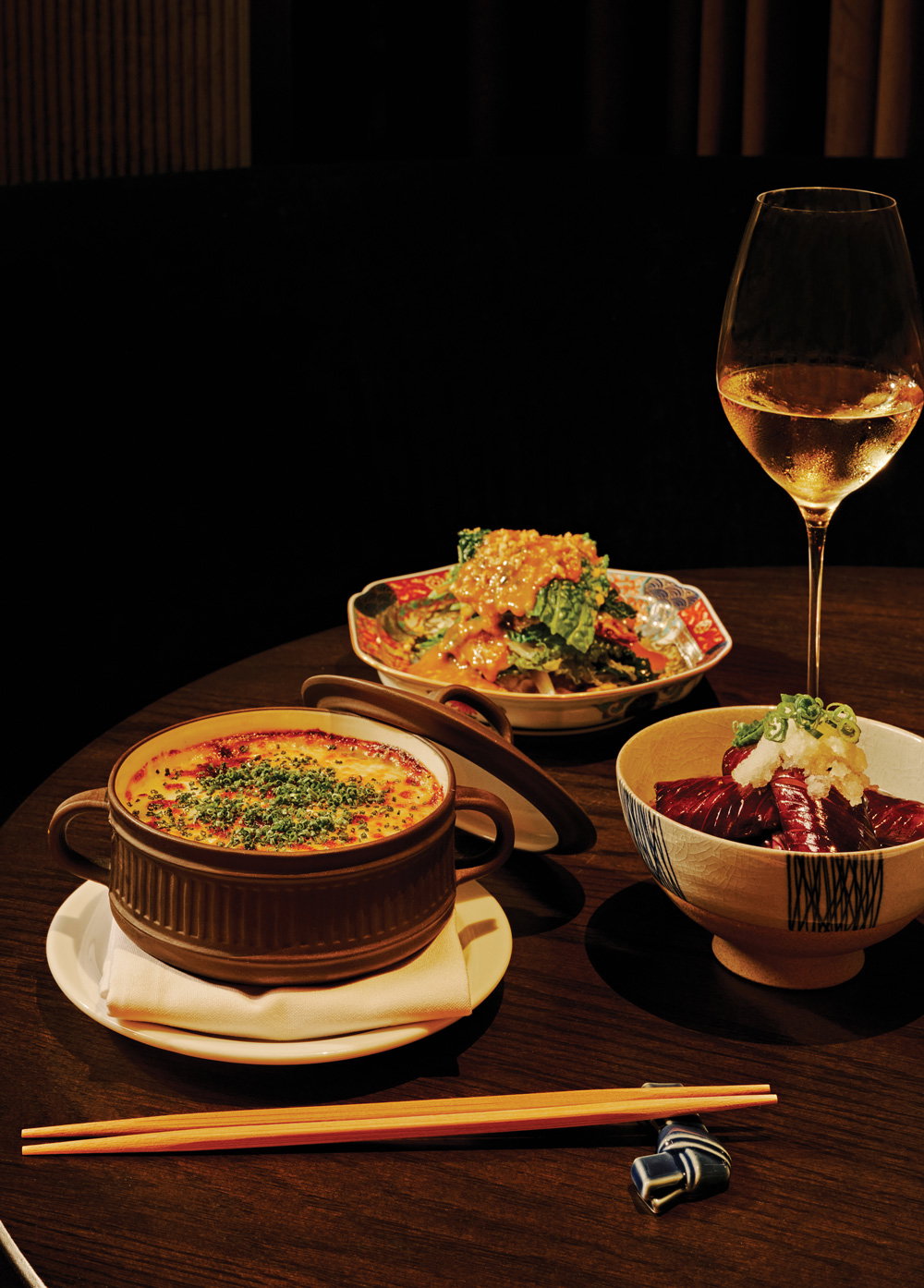
A favorite was the Edo Caesar ($22), one of the few dishes that truly was large enough to share. Our server called it a “destination Caesar salad,” an apt description, since I’d gladly return for the crisp romaine dressed with Japanese pantry staples including dashi, fried baby anchovies, and nori, plus cured egg yolk and Parmesan. It hit all the right salty, savory, and umami notes. The menu’s raw offering, the Kaisen Moriawase ($65) platter of sashimi, is a stunner with four types of seasonal seafood sourced from Tokyo’s Toyosu Market. The box of chipped ice came topped with melt-in-your-mouth Japanese sea bream, scallop, bluefin tuna, and soy-marinated yellowtail.
Not everything was flawless. Though the concept of the Wagyu Menchi Katsu Sando ($23), a small sandwich with a fried beef cutlet, was fun and (as multiple team members told me when I ordered it) nostalgic for kids growing up in Japan, the execution was less than perfect. I loved the pillowy toasted milk bread and layered flavors of Japanese pickles, mayo, Dijon, and tangy-sweet tonkatsu sauce. Sadly, the fried cutlet of house-ground A5 Japanese and American Wagyu was dotted with several pieces of tough gristle I picked around.
Photograph by Andrew Thomas Lee
The menu quickly regained its standout status in the entrees. One of only two seafood mains, Gindara Misozuke ($45) is a filet of buttery Pacific sablefish marinated in two kinds of miso and grilled to a lacquered shine thanks to the marinade’s residual sugars. The fish comes cloaked in an herbaceous sauce verte with shiso, dashi, and garlic. A dollop of grated daikon radish with chili adds extra brightness.
Not surprisingly, the menu’s largest section is dedicated to steak, with three American Wagyu cuts and three A5 Japanese Wagyu offerings, the latter of which are available in portions ranging from four to eight ounces (from $91). My six-ounce American Wagyu filet ($85) arrived perfectly medium-rare, cooked over clean-burning white binchotan charcoal. With its caramelized crust and juicy interior, it was so tender that a knife proved superfluous.
Sides are petite. Mushroom Rice Doria ($16) arrived in a large ramekin, packing a serious flavor punch thanks to shimeji and maitake mushrooms mixed with Koshihikari rice and bechamel and covered with a delightful Parmesan crust. For dessert, the Basque cheesecake ($13)—made with the addition of caramelized satsumaimo sweet potato and topped with juicy cherries—was a sweet send-off.
The check climbs quickly. Case in point: My solo bar visit with one cocktail, an appetizer, and a side dish was nearly $80 with a tip. Still, Koshu Club delivers luxury at every turn, from genuinely welcoming hospitality to dishes made with exemplary, often creative ingredients. It all comes together to create a memorable night out, a luxury in and of itself.
This article appears in our November 2026 issue.