


Photograph courtesy of Explore Asheville
About five minutes into my flameworking lesson at North Carolina Glass Center, a nonprofit public-access studio in Asheville’s River Arts District (RAD), my instructor, John Long, reassures me that the medium is remarkably resilient. Glass is synonymous with fragility, but in an artist’s hands (or in this case, under an artist’s close supervision), it is pliable. The tip of the glass rod I hold in the torch, glowing orange where the flame turns blue, can be easily molded, stretched, pressed, pinched, and twisted. If something goes awry, I return the rod to the fire and melt away the mishap. As long as the raw material stays intact, the molten mass can be reshaped until the creative vision is realized.
But I’m struggling to focus on that vision. The next room is packed with people watching glassblowers pull long steel punty rods out of the hulking furnace, while browsers peruse the adjacent gallery, vibrant with colorful glass sculptures, vases, jewelry, and drawers of tiny glass trinkets and charms. The overhead doors are open to release the heat, and I can hear cars, bicycles, and pedestrians going up and down Roberts Street. Across the road, folks spill in and out of Wedge Studios, three stories of labyrinthine studio space where 30 of Asheville’s 750 or so artists prop their easels and display their work. Thirsty tourists mingle with locals descending the stone stairs to the river-level Wedge Brewing (the glassworkers’ favorite hang) where they can lounge in the tree shade and sip housemade ales. Next door, collectors finger through stacks of vinyl at Records in the RAD in search of rare finds while nodding their heads to whatever tunes are spinning.
It’s only when he notices my distraction that Long mentions the storm. “You see that white car?” he says, pointing to an SUV parked practically at the glass center’s doorstep. “The water came up to there.”
Bridges and roads were washed away. The very ground gave way, triggering more than 200 mudslides that roared down the Blue Ridge and Great Smoky mountains, burying the landscape in muck and debris.

Photograph courtesy of Adobe Stock
“The water” is the French Broad River, which currently flows at a tranquil pace some 250 feet away. On September 27, 2024, Hurricane Helene dropped record-shattering rainfall on this region. Rivers breached their banks, flooding streets, businesses, and homes. Bridges and roads were washed away. The very ground gave way, triggering more than 200 mudslides that roared down the Blue Ridge and Great Smoky mountains, burying the landscape in muck and debris. The storm wreaked $59.6 billion in damage, the most devastating natural disaster ever in this part of the state; 107 North Carolinians died.
In Asheville, the French Broad River, whose flood stage is nine feet, quickly crested at nearly 15 feet. The brewery, the record store, and dozens of other businesses and homes were underwater. Many have yet to return; some never will.
After massive cleanup efforts, weeks without power, nearly two months without potable water, and a nationally politicized debate about federal aid, Asheville and its neighbors faced their most intractable challenge yet. Tourism had been a $7.7-billion industry in Western North Carolina, $3 billion in Asheville and Buncombe County alone. Mid-September through November, when weather is brisk and fall foliage ablaze, is the area’s busiest time.
“Our businesses took their cash and invested into that coming busy season,” says Jeffrey Burroughs, local jewelry artist and Asheville City Council member. “So, they didn’t have cash on hand to offset the loss, and they didn’t get the busy season to replenish that investment. There were a lot of people just trying to break even and keep staff employed.”

Photograph courtesy of Visit NC Smokies
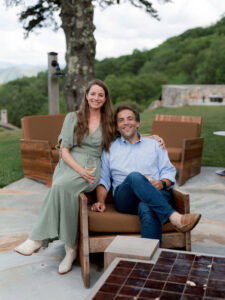
The lingering shadow of the storm stretched beyond the areas that were directly impacted. “Some visitors thought it was a wasteland they didn’t want to visit; others thought everyone was in crisis and they shouldn’t add to their burden,” says Annie Colquitt, who along with her husband, David, owns the Swag and Cataloochee Ranch, both luxury mountaintop resorts in neighboring Haywood County. “But most of the square footage of Western North Carolina was not destroyed. The region needs tourism—and not just the hotels, but the brewers and coffee roasters that supply them and the residents who work at these places. It was hard to tell people that we need your donations, but we also need your tourism dollars.”
Two years later, Asheville and the region are still struggling to inform the world: Western North Carolina is open for business.
• • •
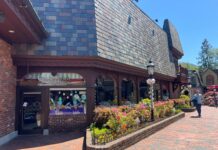
Thirty minutes west of Asheville, set amid the Great Smoky Mountains, Waynesville, North Carolina, has the feel of a small-town paradise. Main Street in June is lined with rainbow Pride flags as traffic sleepily rolls, stopping periodically for pedestrians to cross back and forth between the Main Street Diner, the Mast General Store, Village Framer, or Green Hill Gallery. The charm, which borders on bohemian, continues downhill in the adjacent Historic Frog Level commercial district, so named because of its proximity to Richland Creek.
In September 2024, the creek flooded these streets and buildings with three feet of water, knocked out power, and damaged the sewer systems. Many of these businesses, including Frog Level Brewing Company, Roll-Up Herbal Bar, Panacea Coffee Company, the Funky Fern Emporium, and Soul Sisters Depot, were forced to close temporarily. But once the infrastructure was up and running, people here had a major obstacle aside from cleanup and rebuilding: access to capital. Waynesville and Haywood County didn’t have the national spotlight Asheville did, making it even more challenging to solicit help.
“Asheville already has a special place in the hearts of a lot of people,” says Colquitt. “There was definitely less of a focus on Waynesville and Haywood County. But one advantage of being a smaller place: Neighbors could step up and take care of each other.”
“But one advantage of being a smaller place: Neighbors could step up and take care of each other.”
Photograph courtesy of the Swag
The Colquitts were among the first to pitch in. That first week after Helene, they committed $2 million to recovery. They let each of their employees and contractors, 198 people total, direct $1,000 to a charity of their choosing. These causes included schools, churches, an animal shelter, neighborhoods, and dozens of organizations the owners had never even heard of. Then, with their properties gratefully undamaged by the storm, they reopened quickly in October 2024, pledging to match every dollar of revenue to hurricane relief, bringing their total contribution to $2,807,000.
The Haywood County Chamber of Commerce also linked business owners with small business recovery grants of up to $25,000 through the Haywood Advancement Foundation. Thanks to these efforts, and time and work donated by neighbors and volunteers, many Frog Level shops have been able to open, if not in their original buildings, then in nearby neighborhood properties.
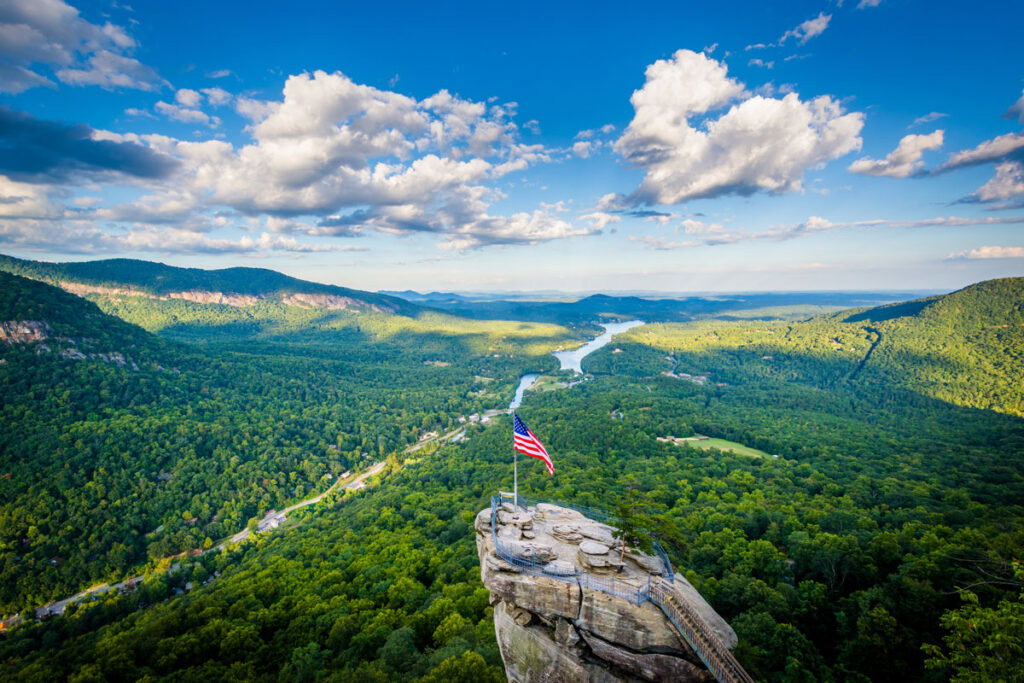
Other communities have not been as fortunate. About an hour east of Asheville sits what’s left of Chimney Rock, a village of about 140 people that was nearly swept away entirely when the French Broad River broke its banks. Today, driving through the area entails carefully navigating a maze of construction crews, heavy equipment, closed and one-lane roads, orange pylons and reflective tape, and piles of white stone that make it seem as though humans are carving out a new settlement from the ancient mountain. I pass structures split open, hollowed innards visible from the road, and a red clapboard building laying on its side.
Photograph courtesy of jonbilous/Adobe Stock
But progress has been made. More than 2,000 volunteers, including a crew of carpenters from an Amish community in Pennsylvania, have helped rebuild homes here and in nearby Bat Cave. The businesses that have reopened, namely Chimney Rock Smokehouse and Riverwatch Bar & Grill, are packed on the day I visit. The same goes for Chimney Rock State Park that contains the namesake 500-million-year-old rock formation. While the main entrance that spans the river is still closed, visitors can access the park via a temporary bridge. And once you switchback up the mountain, it’s an easy elevator ride up 26 stories. From there, a mere 44 wooden steps take me to the top of the Chimney, some 2,280 feet above sea level. From this vantage, the valley below shows no visible scars or alterations—just majestic mountain beauty.
But reminders of Helene are everywhere. On my way down, I stop in the gift shop for a bottle of water. I ask the clerk if he has any suggestions for lunch in the village. He looks down and says: “There are a lot of recommendations I would have made before that I can’t make now.”
• • •
Photograph courtesy of Explore Asheville
Meanwhile, Asheville has returned to some semblance of normalcy. Explore Asheville, Buncombe County’s tourism organization, says that the city is slowly bouncing back.
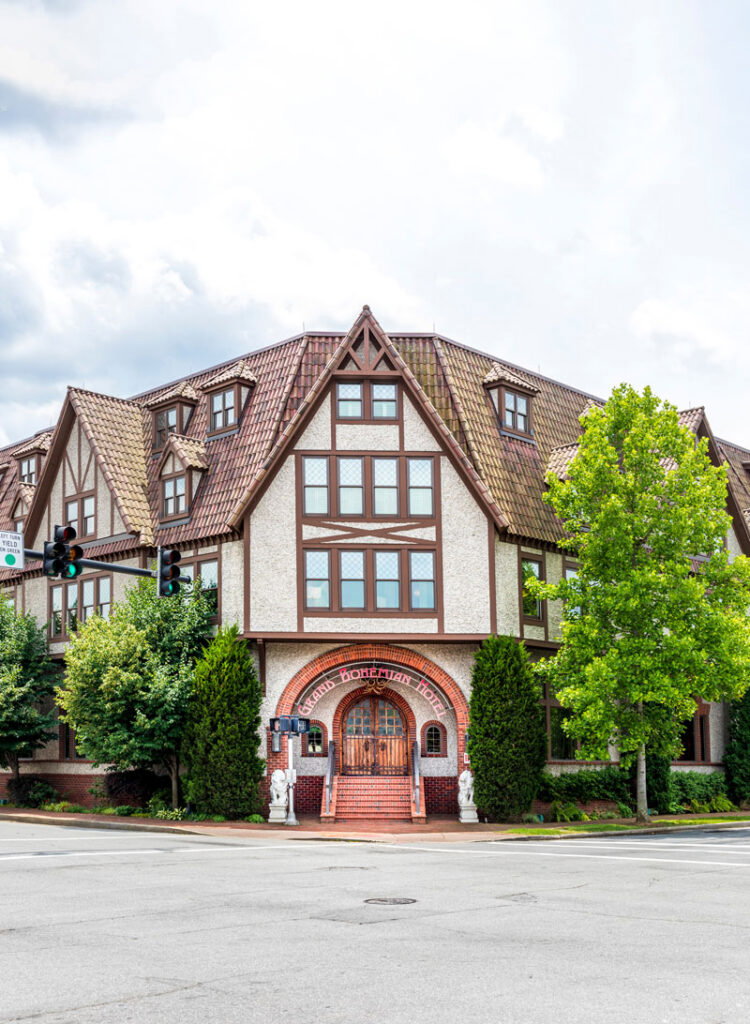
Much of Biltmore Village, the historic community outside the gates of the eponymous estate about four miles southeast of the RAD, was submerged when the Swannanoa River surged to 27 feet above flood stage. Today, iconic businesses including brunch hotspot Corner Kitchen, Grand Bohemian Lodge, and furniture and pottery hub New Morning Gallery have reopened.
The Biltmore Relief Fund committed $2 million, along with food donations, drinking water, canopies, and other supplies, to Asheville and surrounding areas. While the Biltmore Estate itself suffered minimal damage, the grounds outside the famous 131-year-old manse were flooded. Today the old tulip poplars near the estate’s main entrance have been replaced with new trees, lighting, and brick walkways.
A few miles away, I cross the train tracks to walk the sidewalk along Lyman Street, running parallel to the sleepy French Broad River. I pass Hi-Wire Brewing RAD Beer Garden, which built back from Helene even bigger, welcoming Ace & Eagle social sports club to its campus with pickleball courts, golf simulators, and billiards. The Flying Bike e-bike tours also have a hub on the bright pink and blue campus. Past a few abandoned and graffiti-adorned warehouses and the washed-out husk of a car, construction crews continue to work on a campus that already houses the reopened Wedge Brewery at Foundation, Foundation Woodworks, and Marquee, a 50,000-square-foot warehouse converted into an art fair–type setup with individual booths for more than 350 artists to peddle their wares.
While local businesses, officials, and tourism boards seem almost desperate to enter a future where Helene is no longer associated with Asheville, the artisans who are the backbone of this community seem more reflective. For instance, along the river stands a mural painted on two stacked shipping containers. The top of the lower container, which reads “Helene 2024,” marks the high-water mark for that area. A pink wolf bites at the line beneath the top container, which reads “RAD RISING.”
Burroughs, the jewelry maker, will never forget driving to the RAD the morning after the storm with the windows down and being able to hear the raging water nearly a mile from the bridge. Upon arrival, unused beer cans, wine bottles, paint supplies, and scattered shards and sheets of art were visible, being swiftly swept away. “Some people might’ve looked at that and just seen stuff,” says Burroughs. “I saw hopes and dreams. We risk everything to be artists; it’s a hard life. To see everything you’ve risked your livelihood to build come down a river . . . you just think, ‘Oh my gosh, who’s going to save us?’”

Stephan Pruitt
The people of Asheville didn’t wait for a savior. Once the water receded, they immediately banded together to clean up and rebuild. They relied on each other—and embraced the unique perspective that could only spring from a community of artisans. Even the most accomplished artists experience disappointment. A completed work, whether it’s a triumph or failure, is never the end. Painters, sculptors, brewers, chefs, craftspeople, and glassworkers shift focus to the next experiment or spark of inspiration. They don’t discard the past—in fact, they may revisit themes and continue to refine the same ideas. But at its core, art is about moving forward.
“Artists are innately resilient,” says Burroughs. “We’re natural pivoters, primed to be people at the center of revisioning and rebuilding. That’s what we do—we take our vision and creativity and bring them to life.”
Asheville Reimagined
In the wake of Helene, the city is a mix of vaunted institutions, hot new spots, and repurposed spaces. Here are some highlights to add to your itinerary and give you a feel for this boho mountain metropolis.
Check into The Radical, a repurposed 1920s cereal factory turned hipster boutique hotel turned hurricane hero when it welcomed first responders, dished out free meals, and served as a supply hub. Reopened in January 2025, this hotel is a balance of punk-art vibes, luxury amenities, and a convenient location in the heart of the River Arts District. Next door is the new Rad Rendezvous, home to 40 working artists and two retail spaces, as well as the official RAD welcome center—the place to get info, recommendations, and tips for a day packed with gallery-hopping.
Venture up the road to grab a juicy double cheeseburger from Baby Bull and a side of French fries with tangy house aioli before heading downhill into the heart of the RAD. Asheville’s artistry is evident all over. Hit up the city’s historic downtown, itself a work of art, the site of some of the best-preserved art deco architecture in the U.S. One original storefront is home to Horse + Hero, a charming neo-Appalachian art and craft gallery. Peruse the tasting bar at The Bee Charmer, with 50 varieties of local and regional honey. Add some zest at Spicewalla, a fresh spice shop founded by multi-James Beard Award-winning chef Meherwan Irani, also the founder of Chai Pani.
Back in the RAD, dinner at Crusco should start with housemade focaccia with whipped feta before a creamy campanelle with zucchini, cultured butter, and delightfully crunchy peppercorns. Cap the night at Joyful Noise, a listening lounge spinning all genres of vinyl and shaking up house cocktails, like the Abraxas, with reposado tequila, corn liqueur, smoky mezcal, and mole bitters.
This article appears in the Fall 2026 issue of Southbound.