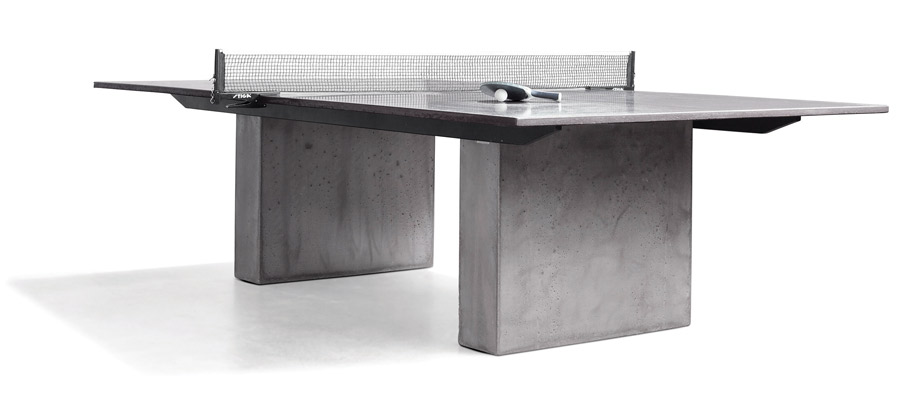
Buckhead’s new Cambria Gallery is more like a fine jewelry store than a dusty stone yard. This slick, polished space—owned by Construction Resources, the region’s exclusive Cambria fabricator—showcases all 126 of the firm’s natural quartz surfaces. Large slabs help customers envision the differences between patterns, many of which closely resemble marbles. Kitchen and bath vignettes provide inspiration, as do installations like backlit counters and custom-designed tables (check out the disco-like coffee table illuminated from beneath with red and blue bulbs). One alcove is topped with a curved quartz canopy. And don’t worry about getting carried away: Cambria’s virtually maintenance-free surfaces are priced identically (from $81 per square foot, depending on variables such as thickness and type of installation), so you can let your imagination run wild. 3096 Roswell Road, 404-419-1250
Translated from Japanese, bonsai simply means a tree in a pot. However, the techniques used to grow such a plant are a bit more complex. “Bonsai is the art of making a tree look older,” says Rodney Clemons, a nationally respected bonsai master and teacher from Stone Mountain. Each planting tells nature’s story in miniature—evoking live oaks twisted by ocean winds or maples reaching straight for the sky through drifts of snow.
Tropical varieties are those best suited for indoors, but native species are often easier to grow, notes Clemons. Evergreens are the most conventional, but deciduous trees make lovely bonsai, especially when their leaves turn colors in the fall.
Kennesaw’s Smith-Gilbert Gardens, a 16-acre public botanical garden, features one of the region’s top bonsai collections, renovated this year. (Clemons curates both Smith-Gilbert and a garden at the Monastery of the Holy Spirit in Conyers.)
Although big-box retailers may sell bonsai (aka “con-sai”), Clemons recommends purchasing plants from specialty nurseries such as the Monastery of the Holy Spirit, Full Moon Bonsai in Marietta, Plant City Bonsai in Clermont, or Clemons’s own Allgood Bonsai in Stone Mountain.
You can find small bonsai for as little as $25, but Clemons says beginners should go for more established trees that are 12 to 18 inches tall (typically $75 to $125). Ficus and juniper are two relatively easy varieties to cultivate, he says.
Bonsai is 80 to 90 percent horticulture, and the rest is art and technique, says Clemons. The practice teaches how plants feed, grow, and react to the climate.
Counter to popular belief, bonsai are not always dwarf specimens. They are often regular species trained to produce small leaves by techniques such as manual defoliating and timely pruning of branches and roots. Many trees and shrubs can be trained—even magnolias, oaks, and azaleas. Amazingly, tiny fruit trees will produce full-sized blossoms and fruit: A 12-inch-tall apple tree will yield normal-sized apples.
Get involved: Atlanta Bonsai Society has flourished since 1963 and offers many opportunities for bonsai study, shows, and workshops. Find the society at JapanFest at the Gwinnett Center on September 19 and 20.
This article originally appeared in the Fall 2015 issue of Atlanta Magazine’s HOME.
Last year Atlanta joined the dozen or so cities served by Homepolish, a New York–based interior design firm that charges by the hour. Its revolutionary fee structure (from $50) is designed “to make the luxury of having a personal interior designer accessible to a larger market,” says cofounder and CEO Noa Santos.
Working for a high-end interior design firm in Manhattan, Santos discovered that he loved transforming homes but hated the industry’s “opaque” commission structure. “If your compensation is tied to the price of an item, then you’re always incentivized to have your client buy the more expensive item,” he says.
So Santos started his own firm, where he met Will Nathan. The former investment banker had recently bought a flat in Chelsea, but every designer he interviewed scoffed at his $30,000 budget. Says Santos, “In any other industry, if you come in with $30,000, you get waited on hand and foot.” The two collaborated so well that they launched Homepolish in 2012. Currently the firm has four designers in Atlanta. (They accept less than 5 percent who apply.) Homepolish also passes along many trade discounts so its clients can get in on the fun of decorating.
This article originally appeared in the Fall 2015 issue of Atlanta Magazine’s HOME.
The Made Again storefront may be new to Inman Quarter, but the gallery has been a source for sustainably produced handmade goods since 2013, when founder Margeau Bull created the incubator as an online marketplace operating out of her garage. An entrepreneur with a background in advertising, Bull started Made Again to help local artisans by managing the business side of their operations and offering a digital retail platform. The new brick-and-mortar gallery showcases furniture, lighting, jewelry, fine art, home decor, paper goods, and even apothecary items; also expect stylish, unusual finds like a giant turbine turned into a chandelier and hand-stitched wallets. Made Again has even added a design service, with three interior designers on hand to help customers furnish environmentally conscious homes. 229 North Highland Avenue, 404-893-0300
This article originally appeared in our September 2015 issue.
We asked Hannah Yeo, Benjamin Moore color and design specialist, to explain why porch ceilings are often painted blue. Her answer: This practice has been a tradition in Southern states for centuries and has now spread across the country. A soft blue hue, often known as “haint blue,” is believed to ward off evil spirits. Others believe it keeps bugs away. Design-wise, blue ceilings match the color of the sky and visually extend the daylight. Benjamin Moore colors that help achieve this look are Palladian Blue HC-144, Arctic Blue 2050-60, Yarmouth Blue HC-150, and Clear Skies 2054-70. Paint the trim Cloud White OC-130 to draw your eyes upward.
This article originally appeared in the Summer issue of Atlanta Magazine’s HOME.
Geode coasters and agate bookends are in every gift shop these days, but designer Tish Mills was way ahead of the trend when she made her first quartz lamp for a show house nearly 10 years ago. Mills grew so enamored with natural stones that she started sourcing some of her material at the sprawling Tucson Gem & Mineral Show (think of it as a sort of Bonnaroo for rock hounds), which annually draws more than 50,000 visitors.
“Everybody loves rocks,” says Mills simply, when asked why people are drawn to the lamps, candle holders, and other stone accessories she creates as a sideline to her design business, Harmonious Living. “People either collected them as a kid or have some type of rock story.”
Quick facts
Mills finds that Arkansas white quartz, which makes a dramatic statement with its clear, white prisms, is the most popular mineral for designers.
Sometimes minerals grow together; Mills has specimens of amethyst with quartz spreading across the top.
Mills’s accessories are available through her firm as well as at Steve McKenzie’s.
Margaret Russell, then editor of Elle Decor, once picked up one of Mills’s candle holders at ADAC. It was blue sodalite and quartz, a combination that represents problem-solving and clarity—good qualities for an editor, notes Mills.
Known for its metallic flecks, pyrite, or fool’s gold, is popular for both jewelry and home accessories.
A specimen that has broken open is a druzy. If it’s sliced, it’s a cathedral form.
This article originally appeared in the Summer 2015 issue of Atlanta Magazine’s HOME.
“The backsplash tile is a seriously kelly green that is the best friend of pink in the preppy world,” says Katie Rosenfeld, an interior designer from Boston who worked on this renovation for her Atlanta friends.
Photograph by Emily Followill
A new-to-look-old butler’s pantry is part of an addition to the house by architect Frank Neely. Honed marble countertops are from Alabama; cabinets are painted in “Rosemary Green” from Benjamin Moore.
Photograph b Emily Followill
Pink and green in a historic Druid Hills kitchen? Bring it on, says homeowner Katie Newsom, who has always loved preppy colors but didn’t expect to use them in her kitchen. She and her husband, Sedgie, originally planned a white kitchen, as would be traditional for their Mediterranean Revival house. “We wanted to make a modern version of a 1920s kitchen but still keep the historic feeling of the house,” says Newsom.
However, Newsom had bonded with her interior designer, Katie Rosenfeld, partly over a mutual love for bright colors. Rosenfeld is actually based in Massachusetts, but the two met online through a blog about chinoiserie. Surprisingly, they found they had both graduated from Boston College and had friends in common. Working long distance, the two Katies fell in love with a striking Osborne & Little fabric, “Maharani,” and its whimsical hot-pink-and-green pomegranate pattern became a starting point for the kitchen’s distinctive style.
“After we picked that fabric, I suggested to her that the backsplash be green,” says Rosenfeld. “It had that preppy vibe Katie loves, and looked great against the white.”
Stand-out features in the breakfast room include lush draperies with tropical fabric that’s repeated in the kitchen, a Saarinen tulip table, and hoop-back chairs from Century Furniture covered in a green faux leather crocodile print. The vintage brass chandelier is from homeowner Katie Newsom’s family.
Because Sedgie (a dentist by day) is the main cook in the family, Newsom jokes that it’s his kitchen, and she just had the pleasure of decorating it. In other words, function and form were his-and-hers priorities. The original kitchen in the house—as was customary for the time period—was a small, dark space, which has now been remodeled into Katie Newsom’s home office. To create a light-filled, more efficient new kitchen, architect Frank Neely designed a multiroom addition on the back of the house. The oversized island, double dishwashers, and top-of-the-line appliances accommodate entertaining, says Newsom, such as Sedgie’s famous New Orleans–style dinners or her annual “Southern Supper” for friends and family.
Newsom, who is a lawyer, says her tactical skills came in handy throughout the process, as she and Sedgie negotiated features important to each of them. She got the green backsplash; he got a Thermador range. They both appreciate the large island and plenty of workspace.
Rosenfeld is also a fan of the spherical brass-and-white pendants. Brass accents appear throughout the kitchen as a nod to retro style. And Newsom loves to see the vintage brass bamboo chandelier—originally purchased by her mother in the 1970s— hanging in the breakfast room.
Love that preppy style? Here’s where you can find similar furnishings.
Saarinen oval dining table, from $5,081, Design Within Reach, 2451 Peachtree Road, dwr.com
Rohl Country Kitchen single-handle faucet in polished chrome, $718.05, Ferguson Bath, Kitchen & Lighting Gallery, 764 Miami Circle, ferguson.com
Classic cast iron brass cup pull in polished nickel, $8.19, House of Antique Hardware, houseofantiquehardware.com
I see design in a very specific way. My personal preference is for spaces that are spare yet luxurious—unique, with forceful identities. I love interiors that captivate the senses and transport the viewer with a bit of wonderment.
I believe that my role as an interior designer is to command and fulfill the eye, not provide it with endless distractions. To do this, I rely on what I call “simplicity.” But there is nothing simple about this concept. Indeed, it is a puzzle of complexity.
The 19th-century poet Henry Wadsworth Longfellow said, “In character, in manner, in style, in all things, the supreme excellence is simplicity.” I side with Longfellow.
To achieve simplicity, it is necessary to pare away excess and select just what is essential and meaningful. Design icon Albert Hadley said, “The designer must develop an overall concept and stick to it.” Early in my career, I was on a quest for this “concept” that Hadley spoke of. At the time, I was struggling with the design of my own living room. A friend asked, “Can’t you just make it pretty?” I thought, Well, yes. But I want it to be something more. Pretty was not enough.
By chance, a friend gave me a book on the legendary Gabrielle “Coco” Chanel. If there was ever a designer with a unique style, it was Chanel. She fascinated me. I began to learn about her—and her famous “little black dress.” When Vogue printed an illustration of her first little black dress in 1926, the editors called it Chanel’s “Ford.” Like the Model T, it won high praise. Both were new, simple, sleek, and black. Both changed the world.
Today the little black dress is a wardrobe must, a long-standing concept in fashion. Chanel was famous for saying, “Scheherazade is easy; a little black dress is difficult.” What did she mean? Simply that ornament, decoration—“the fancy stuff”—is entertainment. It’s fun. It’s pretty (there’s that word again). It’s diverting. But that little black dress—it’s serious. It’s complex. It’s a challenge. It’s simplicity. In 1923 Chanel told Harper’s Bazaar, “Simplicity is the keynote of all true elegance.”
I have now learned, with a great deal of work and experience, that this simplicity has structure, rules, and guidelines. I have developed my rules, my guidelines, which I call elements of design. Every project, regardless of its style, involves these elements. And there is a definite hierarchy. In order of importance, they are: architecture, composition, proportion and scale, color, pattern, texture, and craftsmanship.
I am often asked to explain the “how” and “why” of these principles. Each time, I find myself thinking about Chanel and her little black dress. For me, the LBD is a simple, powerful, dynamic gesture of one’s individuality. It is something to rely on, something comfortable, something to fill you with ease and confidence. It is for the body what the home should be for the family.
Interestingly, my elements of design parallel the success or failure of the little black dress. The fashion designer’s challenge is to translate these elements into the perfect human fit. The interior designer’s challenge is to translate these same elements into the design of a home—and, like Chanel, to do it simply, straightforwardly, and without gimmicks. Let me show you how I apply these elements to both fashion and interiors.
Photograph by Simon UptonIllustrations by Mekel/The Jacky Winter Group
Architecture For me, this is the most important element of design. It is the beginning, the sculptural skeleton of every project. Everything depends on the architecture.
In fashion, a well-constructed dress (left) has simple, strong dimensions. It might have subtle details like a fitted torso or a flared skirt. But it has straightforward, strong structure—in other words, architecture. The other dress (right) is shapeless and ill-fitted. No amount of accessorizing will redeem it.
The design master Billy Baldwin said, “I’ve always believed that architecture is more important than decoration. Scale and proportion give everlasting satisfaction that cannot be achieved by only icing the cake.”
The country room above has the kind of good bones that Baldwin spoke of: high ceilings, antique beams and boards, well-proportioned windows, and an intriguing arched passageway.
When architecture is true and powerful, the designer’s job becomes so much easier.
Photograph by Simon UptonIllustrations by Mekel/The Jacky Winter Group
Composition This is the arrangement of objects within a given space. Let’s see how it applies to the little black dress. On the right, the jewelry pieces—cuff, link bracelet and necklace, earrings—do not relate to one another. On the left, each piece reinforces and responds to the others, in material and style. The composition is happily balanced.
Every room contains numerous compositions. They begin with larger seating arrangements and extend down to smaller arrangements on a mantle or tabletop. Each part of an individual composition must complement each other and enhance the group as a whole.
The country interior derives its success from the aggressive use of symmetry and repetition, a compositional solution I use often. Two matching chandeliers; four wing chairs and a pair of identical sofas, covered in the same textured linen; all accented by a pair of boxwood topiaries. A simple and balanced composition.
Photograph by Simon UptonIllustrations by Mekel/The Jacky Winter Group
Proportion & Scale Proportion is the relationship of one part of an object to another. Scale is the size of an object, its parts, and its relationship to other objects and their parts. Look at how we’ve accessorized the little black dress. On the right, a large shawl, oversized handbag, and flat shoes visually alter the proportion and scale of the dress. We have successfully driven this LBD into the ground. On the left, the handbag and shoes are properly proportioned and scaled. There are no black hose to shorten the torso.
Eleanor McMillen Brown, a pioneer in interior design, said, “The basic rules of proportion and scale are unchanging. The most important element in decorating is the relationship between objects, in size, form, texture, color, and meaning.”
For example, in the contemporary study above, a boldy designed armoire persuasively states its presence with large proportion and scale.
Photography by Simon UptonIllustrations by Mekel/The Jacky Winter Group
Color Nothing in design is more compelling or personal than color. On the right, blue accessories engulf the LBD, but, a touch of red adds a happy bit of playfulness and focus on the left. The lesson here is easy to see. Color should always be helpful, not hurtful. One should always choose color to support the design intent. For pure potency, color beats everything else in the room. And don’t forget, as Coco Chanel said, “Black has it all; white too. It is the perfect harmony. Their power is absolute.” That is the color palette I chose for the contemporary room above, which appears on the cover of my book.
Photograph by Simon UptonIllustrations by Mekel/The Jacky Winter Group
Pattern
The number of patterns available to the designer is endless. Pattern is an element that must be carefully chosen, mixed with purpose, and artfully applied. Here are two different takes on one of my favorite patterns, spots, on the LBD. On the right, a spotted mess, I think. The patterns do not mix well, and they obscure the dress. The left’s dotted shoes combined with the dots on cuff bracelets show pattern that is restrained and artfully used.
Billy Baldwin said, “Great blends of pattern, like great dishes, must be carefully tasted. And constant tasting is what teaches a cook how to taste.” I’ve tasted a lot, and I’ve found that to be true.
If a room lacks a visual focus or is in need of visual jazz, pattern can provide it. But pattern should never overwhelm or disguise the object onto which it is placed.
Above, a flock of sheep happily graze amid the dots that playfully animate this contemporary children’s bedroom.
Photograph by Simon UptonIllustrations by Mekel/The Jacky Winter Group
Texture Every object has a texture that adds dimensionality: rough or smooth, diaphanous or hefty, matte or shiny. It is important to consider the purpose and function of the object onto which the texture is being placed to create a functional and happy marriage.
Look at the LBD on the right: It is weighted down by too much shine, too much straw—not a happy mix. On the left, we have matte and shiny again, but this time in a simple, elegant, restrained textural composition.
All objects, materials, and works of art tell us a great deal about what they are through their surfaces.
For example, natural textures, airy and lightweight, give the beach bedroom above a palpable softness. The chairs are abaca, the draperies are an open-weave linen, and the rug is woven of multiple grasses.
Photograph by Simon UptonIllustrations by Mekel/The Jacky Winter Group
Craftsmanship
Without highly skilled craftspeople, designers cannot turn their vision into reality. The more skilled the craftsman, the more successful the outcome.
The quality of workmanship is evident in clothing. The dress on the right is a poorly crafted garment that looks more like a sack than a dress. The unstructured bodice and uneven hemline tell the story. On the right, a designer dress has impeccable seaming and fit; it has couture-level craftsmanship.
This principle also plays a role in interior design. Craftsmanship can transform an ordinary space into an extraordinary one.
One craftsperson I admire is Robert Kuo, a Chinese artist whose work is in the Smithsonian. Inspired by organic forms, he reinterprets nature. Above, his copper toads travel to and fro across the stone—perhaps in search of a drop of water to drink?
This article originally appeared in the Summer issue of Atlanta Magazine’s HOME under the headline “Simplicity.”