

Photograph by Bailey Garrot
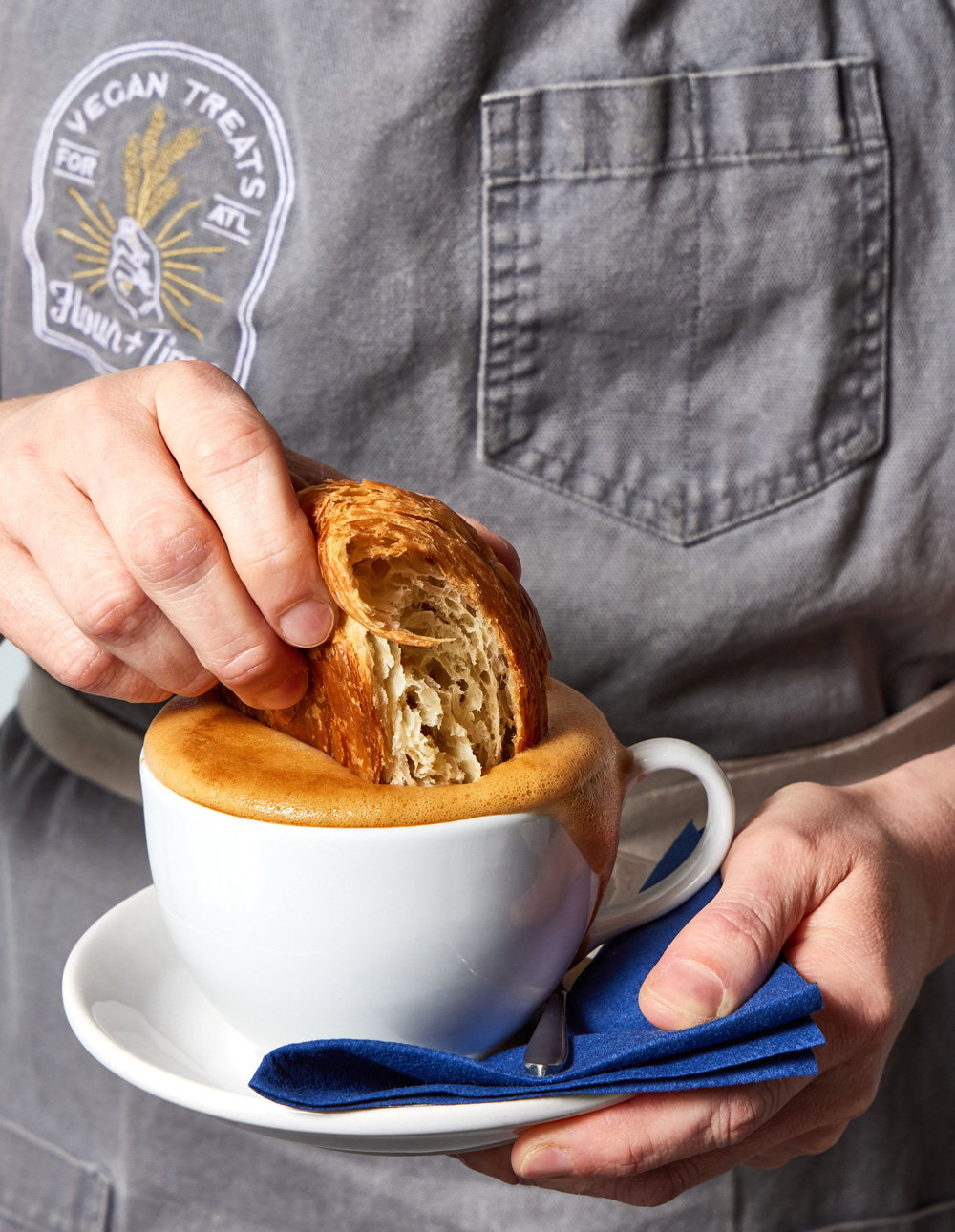
Around noon on a Friday, Michael Bajalia is out for his second round of deliveries. The co-owner of Flour + Time, a bakery on Huff Road in Blandtown, has spent the morning delivering pastries to coffee shops across the city. His phone rings: A customer wants to place a special order. Michael calls co-owner Leah Bajalia, his wife, to relay the request.
“More croissants?” Leah checks the clock. “I can have them ready by 1:45,” she says, resolute.
The pair work long days to keep up with the demand. Since they opened the brick-and-mortar shop in 2023, their list of wholesale clients has grown to more than 30. But when customers at those coffee shops are lured by the fluffy, flaky croissants, almond bear claws, and cheddar herb biscuits from Flour + Time in the pastry case, they don’t always realize it’s all vegan—free of animal products. No eggs, no dairy, no meat.
With some 50 fully vegan restaurants and eateries, Atlanta is among the world’s top 10 vegan-friendly cities ranked by the number of plant-based restaurants in relation to the population size. Finance sites WalletHub and PriceListo also rate it among the top U.S. cities for vegan-friendliness overall.
Some dishes at these restaurants use alternative proteins—soy, seitan (wheat gluten), or legumes—to mimic meat, while others put vegetables front and center.
Photograph by Bailey Garrot
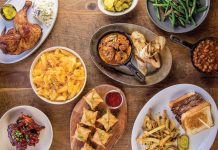
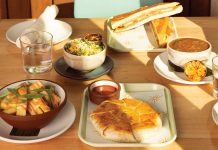
Those restaurants are a vibrant patchwork of flavors and global influences, and dishes are reimagined entirely from plants, though they often have the same names as their traditional counterparts. The tacos at Calaveritas Taqueria Vegana in Doraville turn up the heat with such fillings as carnitas, asada, and chorizo, all made from plants. Nearby, in Chamblee, Harmony Vegetarian (a fully vegan restaurant) satisfies a craving for classic American Chinese with dishes such as lo mein with konjac-based shrimp (konjac is a root vegetable grown in parts of Asia), or Mongolian soy beef.
In Duluth, Neek Vegan grills savory Persian kabobs and tosses fragrant herb-forward salads, while VeGreen’s huge, eclectic menu of Asian dishes, including Singapore noodles and Thai basil fried rice, is made for family-style dining. New spots are arriving on the scene all the time, such as Mission Burger Co., which opened last summer in the upper Westside with comfort foods such as brisket and lemon pepper chicken, all proteins made from plants. But there are also such long-standing community fixtures as Soul Vegetarian, which opened in the 1970s and still serves collards, cornbread, and beans in the West End and Poncey-Highland.
“There are more plant-based options than ever, and the quality of the options keeps getting better and better,” Bajalia says.
Soul Vegetarian is credited as the city’s first vegan restaurant, and several more followed in the predominantly Black West End long before vegan was a buzzword. Vegetarian and vegan lifestyles have long been significant in the history of Atlanta’s Black community and associated with social activism. These choices were sometimes a conscious rejection of former enslaved people’s access to only low-quality ingredients; other times, they came from a perspective of holistic compassion, rejecting animal abuse and systems of oppression.
Photograph by Bailey Garrot
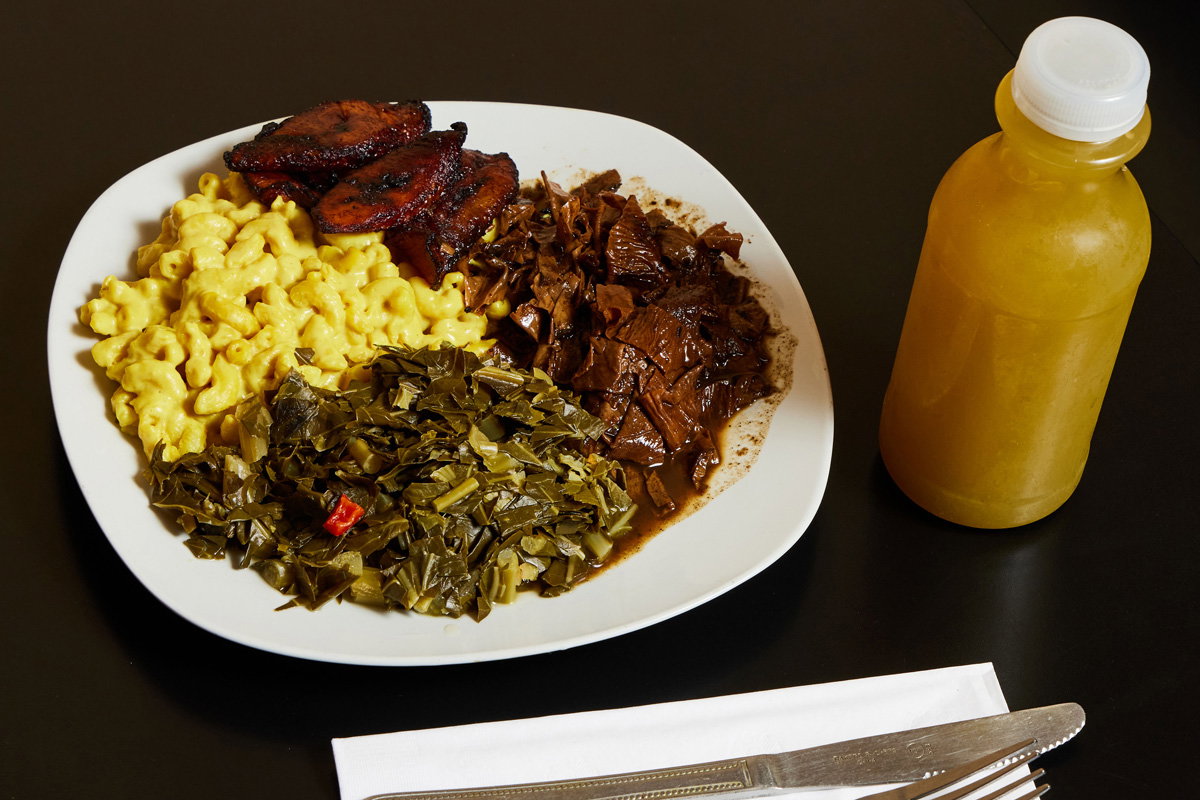
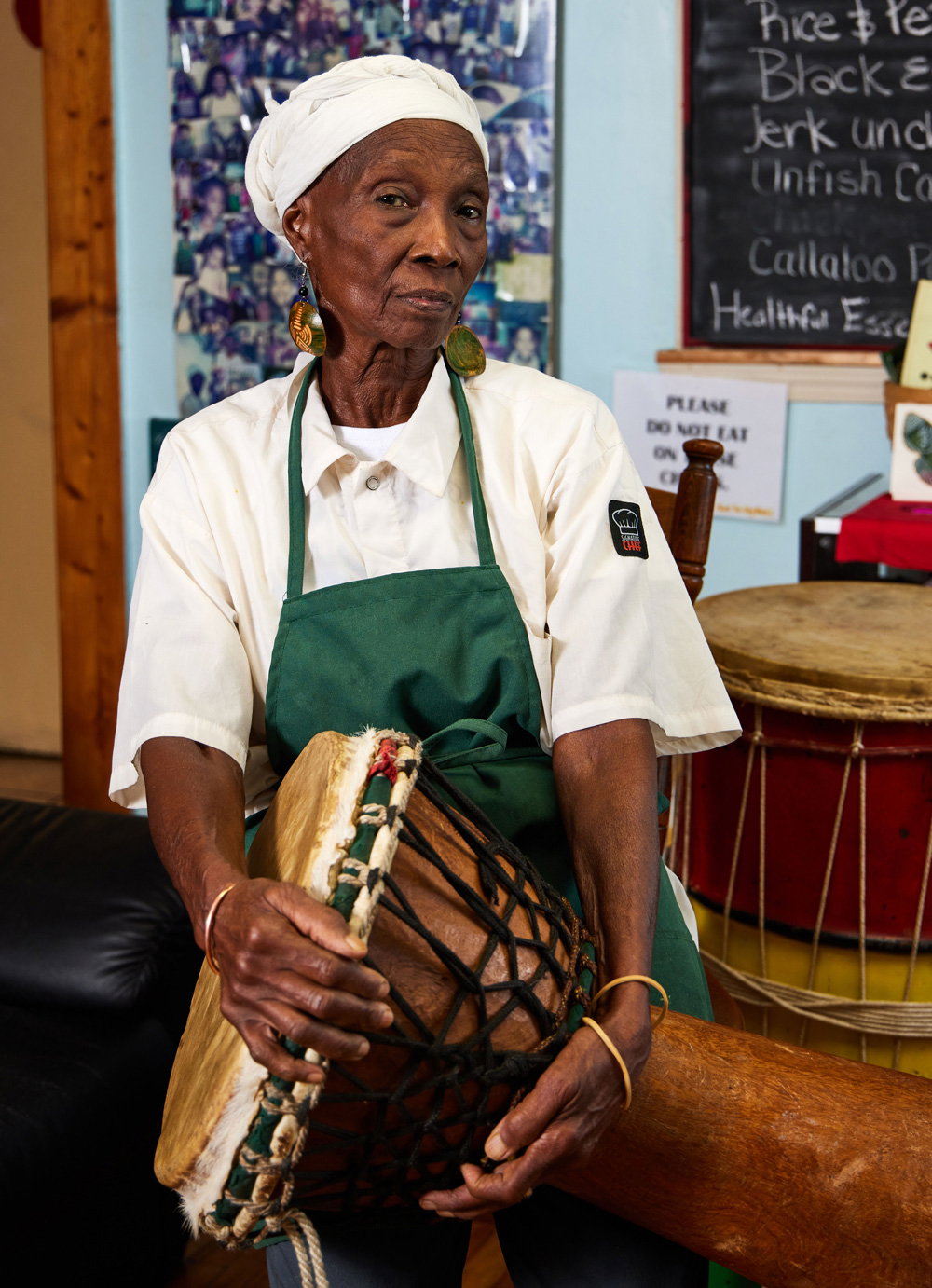
One of those is Healthful Essence, which Princess Rowena Dixon opened in the late 1990s. The restaurant moved among several Atlanta neighborhoods before landing in its current location about half a mile east of The Wren’s Nest in the West End. Dixon, originally from Guyana, was living in New York when a spiritual leader from Jamaica taught her to think of food as medicine. She learned how to combine ingredients in ways that are maximally beneficial for health, and this led her to become vegan. Healthful Essence is known for its Caribbean curries, stews, jerk seasonings, and fresh-pressed juices.
“I put the best I can in it. All my love in it,” Dixon says. “And everything is natural.”
Health is one of the leading motivations for people who choose to eat this way—whether for a lifetime or one meal. The dishes at Healthful Essence are nutrient-dense, packed with vitamins and fiber to support overall well-being.
“I’m 83 right now and I’m still going strong,” Dixon says. “I’m a living example.”
Plant-based foods have had their place here for a long time. But abundance and variety are not the only things that make Atlanta’s vegan scene unique; notably, it may be helping to shape the future of food.
A nonprofit called Reducetarian Foundation advocates for reducing the consumption of animal products for sustainability. Its fellowship program engages undergraduate students in three select cities: New York, Washington, D.C., and—as of 2025—Atlanta. It also chose Atlanta as the host city for its annual summit this past fall, drawing hundreds of people working in food-systems change and nutrition.
“Atlanta has a large and growing community of ‘reducetarians,’ but comparatively few resources, organizations, and events to support them,” says Atlanta-based staff member Peri Burton. “Bringing the fellowship and summit here helps bridge that gap.”
While the students and professionals in Reducetarian Foundation’s local network innovate within institutions like schools, La Semilla, a restaurant serving modern Latin cuisine in Reynoldstown, innovates cuisine itself and sets a new standard for plant-based dining. Last year it earned a spot among the Atlanta Journal-Constitution’s top 50 restaurants; in 2024, the New York Times’ ranked it among the 25 best restaurants in Atlanta; and when it opened, it was included in Condé Nast Traveler’s Best New Restaurants in the World: 2023 Hot List.

Photograph by Bailey Garrot

Photograph by Bailey Garrot

Photograph by Bailey Garrot
Co-owners Sophia Marchese Trapani and chef Reid Trapani don’t think of La Semilla as a great vegan restaurant. They think of it as a great restaurant that happens to be vegan. La Semilla is defined by its creativity and the quality of its ingredients, which are 70 percent sourced from Georgia farms. Vegetables reach the kitchen a few days after harvest, and edible flower garnishes bring the garden to the plate. Proteins are made in-house with a versatile seitan base that can be transformed into meatless carne asada, ham, or ground beef, depending on the seasonings and texture. Dairy-free cotija and queso fresco are made in-house from nut bases. Mushrooms are also pillars of the menu; the signature bistec de palomilla is an umami-packed steak of lion’s mane mushroom, served on yuca mash with caramelized onions and a mojo sauce.
La Semilla’s bar program is also a draw, with signature cocktails (including nonalcoholic options), Latin spirits, and a curated list of organic and biodynamic wines from renowned regions such as Argentina, Spain, and Chile.
“La semilla means ‘the seed,’” Chef Trapani says. “We wanted to plant a seed in people’s minds of what vegan dining can be by letting the food and the dining experience talk.”
This article appears in our January 2026 issue.