


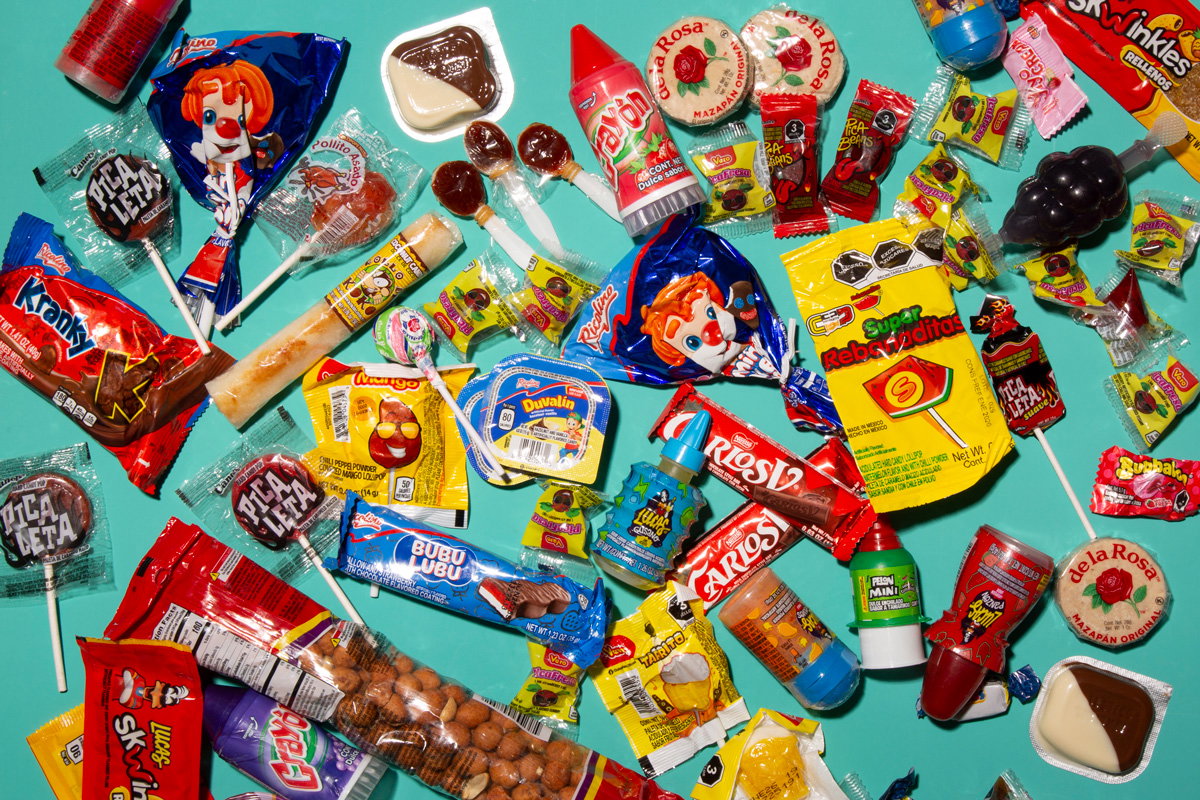
Photograph by Martha Williams
Growing up in Mexico, I thought candy was meant to be spicy, sour, and sweet all at once. In Mexico, both kids and adults love those bold, addictive flavors. Rooted in pre-Hispanic traditions and shaped by Spanish influence, Mexican candies are a flavor- and history-packed treat.
“Nothing tastes better than when it brings you back to a childhood memory,” says Ivan Solis, owner of coffee pop-up Recuerdos Cafe, who incorporates Mexican candy flavors into his crafted coffee drinks served around Atlanta.
While you’ll find these candies at many Mexican markets in Atlanta, Buford Highway is the mother lode. Stop by Buford Highway Farmers Market for bags of Mexican candy, or visit Dulce Fiesta & Party Rentals’ stall at Plaza Fiesta to grab a selection of individual treats.
From peanut mazapán to chili-coated lollipops and chocolate-covered marshmallow and strawberry bars, Mexican candies are worth trying at least once.
A good starting point is tamarind. The fruit grows on trees in Asia and Africa, but it spread to other parts of the world, including Spain and Portugal, before it was introduced to Mexico during the colonial era. The complex, sweet-and-sour taste of tamarind is the base for many Mexican candies. Its sticky, chewy texture is versatile and ideal for candy making.
Try its citrusy flavors with undertones of caramel in the Pulparindo, a small, sticky rectangular bar of tamarind mixed with chili powder. Red and yellow wrapping signals the level of spiciness (yellow is mild, while red is expert level).
Pelon Pelo Rico offers tamarind in a fun paste squeezed from a cartoonish head-shaped plastic tube. When you push down on the bottom, the paste squeezes out the top in thick strands. The joy is as much in the playful experience as it is in the eating.
If that sounds like too much work, opt for the Cucharita. The name translates to “little spoon,” and that is exactly what it is: a small plastic spoon filled with tamarind paste.
But spoons are not the only thing covered in tamarind; straws are too. Banderillas are a popular candy often served in a drink. A banderilla is a yellow, plastic straw covered in spicy tamarind taffy. Add it to a cocktail, beer mug, or fruit cup, or eat it off the straw.
The sweet, spicy, salty, and sour flavor profile in Mexican candy does not stop with tamarind. Other candies deliver a similar mouthwatering experience by using chili powder.
Pica Fresa (spicy strawberry) is a small but mighty individually wrapped candy the size of a marble: A spicy, sour paste covers a strawberry-flavored gummy candy. In a word: addictive.
Eating a lollipop is a different experience in Mexico, where fruit sweetness goes hand in hand with spiciness. Popular hard-candy paletas (lollipops) coated in chili powder include Mango, mango-shaped and -flavored, Elotes, corn-shaped but strawberry-flavored, and Rebanaditas, shaped and flavored like a watermelon slice. Trabalenguas flip the script, with chili powder hidden inside the bucket-shaped, cherry-flavored paleta, saving the heat for last. Look for the Vero brand name for all four paletas.
Mexican candy also exists without chili powder and sour notes.
For peanut lovers, the mazapán is a must. This sweet, crumbly candy made with peanuts and sugar is compacted into a solid, round shape. Part of the fun is trying to unwrap it without breaking it.
There is no childhood in Mexico without Duvalin, a staple of Mexican candy. In a tiny plastic square resembling a miniature dish, the icing-like candy comes in a combination of flavors: hazelnut, strawberry, and vanilla.
Another nostalgic candy is Paleta Payaso (clown lollipop), a chocolate-covered flat marshmallow lollipop with a gummy mouth and eyes. It doesn’t look like the clown on the wrapping, but kids love it.
Bubu Lubu has a similar flavor, with marshmallow layers and strawberry jelly coated in chocolate. Tip: Put it in the freezer the day before eating it.
For more chocolate, go for Carlos V, a beloved milk-chocolate bar with hints of vanilla and caramel. It’s named after the Roman emperor who brought chocolate to Europe from Mexico. The treat is best enjoyed slowly; let it melt in your mouth.
This article appears in our October 2025 issue.