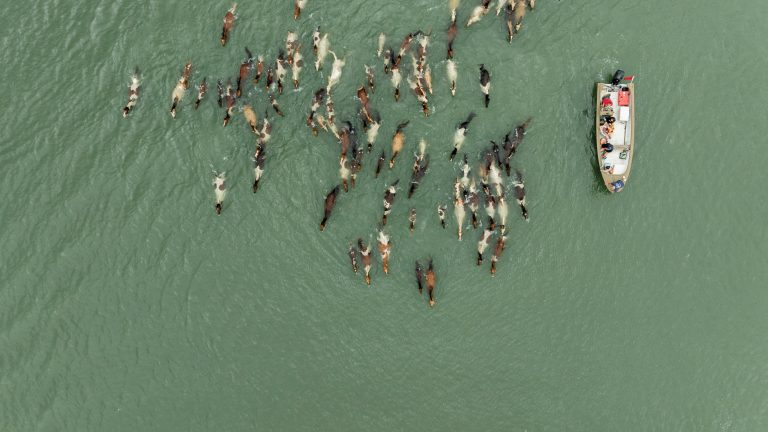
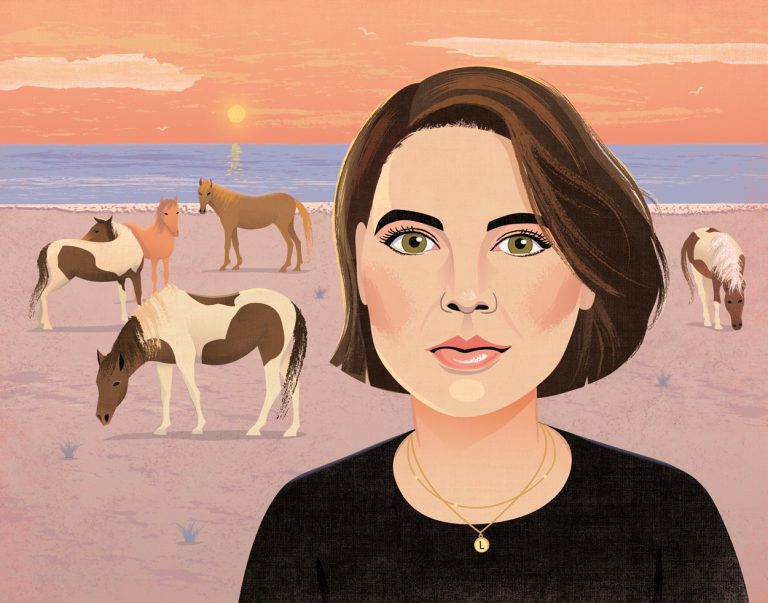
This year marks the 101st Chincoteague Pony Crossing, an annual event occurring on the last Wednesday in July, when Saltwater Cowboys—local volunteer firefighters—saddle up to escort the wild ponies and their foals from Assateague Island, Virginia. They swim the channel to Chincoteague Island for a pony auction the following day. The sale of the horses helps with herd management, and proceeds support the Chincoteague Volunteer Fire Company, which tends and provides medical care for the ponies throughout the year. Legend has it the original ponies arrived on the mid-Atlantic barrier islands during the 17th century after surviving the wrecking of a Spanish galleon. They thrived in the harsh coastal wetlands. Whatever their origin, they are an enduring symbol of the islands and immortalized in Misty of Chincoteague, the classic 1947 children’s novel by Marguerite Henry, which brought worldwide attention to the ponies and the iconic swim. Tens of thousands of visitors from around the world flock to the Assateague Channel to watch as the wild herd of palominos, bays, and white-and-brown pintos splash into the slack, smooth waters for the five-minute crossing. It’s the highlight of Pony Penning Week, which includes twice daily showings of Misty, the 1961 film based on the book, and a parade on the Chincoteague Carnival Grounds, where visitors can ride on a merry-go-round, eat crispy, fresh-cut pony fries (with Old Bay and vinegar), and enter for a chance to win the first foal to come ashore.
This article appears in the Summer 2026 issue of Southbound.
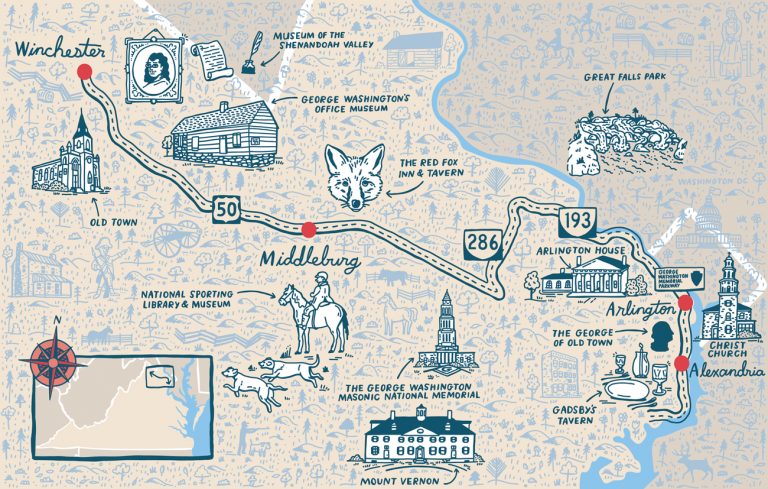
George Washington spent his life in Virginia. Though military campaigns would take him beyond its borders for more than a combined decade—first as part of the French and Indian War and later during the American Revolution— most of his 67 years saw him surveying, defending, and developing the land of his birth. It’s altogether fitting during this year celebrating the 250th anniversary of American independence, that we take to the road across Northern Virginia and follow in the footsteps of the Father of Our Country.
The journey begins in Winchester, a former frontier town in the Shenandoah Valley that witnessed Washington’s beginnings in the three careers that would define his life: surveyor and landowner, soldier, and elected official. The trip continues east, over rolling hills commanded by sprawling horse farms and vineyards, to the village of Middleburg and a centuries-old tavern visited by a young Washington, then turns north to Great Falls on the Potomac River. Here, the route joins the George Washington Memorial Parkway and rolls through Arlington, Alexandria (his adopted hometown), and ultimately to Washington’s longtime home and final resting place, Mount Vernon.
• • •
Old Town Winchester
Courtesy Visit Virginia
George Washington’s Office Museum Built in 1748 as a workspace for itinerant professionals, this small log structure is among the oldest in Winchester. From the fall of 1755 until the end of 1756, Washington used its middle room as his office while he oversaw the construction of Fort Loudoun, which would become the site of his regimental headquarters during the French and Indian War. Displays and artifacts trace Washington’s time in the town from his arrival in 1748 to survey land for British Lord Fairfax through his election to the Virginia House of Burgesses in 1758.
Museum of the Shenandoah Valley Museum benefactor Julian Wood Glass Jr. was a direct descendant of Winchester founder James Wood, who also served as Washington’s campaign manager in his 1758 run for the Virginia legislature. Following Glass’s death in 1992, the family’s ancestral home, Glen Burnie, was opened to the public, and in 2005, the museum was built on the grounds of the estate to showcase his collection of 18th- and 19th-century American and European furniture and art as well as Washington artifacts. Several Washington-related objects, among them an iconic portrait by Rembrandt Peale, will be on display as part of the museum’s Revolutionary Valley exhibition.
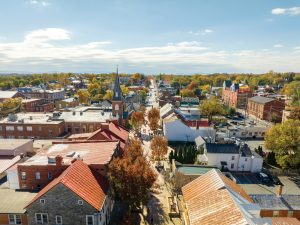
Old Town Winchester The civic and commercial hub of Winchester has served as a meeting place and marketplace since Washington’s time. Today, visitors will discover a wealth of 18th-century buildings and a bustling four-block pedestrian mall along Loudoun Street filled with smart shops and boutiques, including century-old men’s clothier Bell’s and independent bookstore Winchester Book Gallery. Not to be missed is lunch at Water Street Kitchen, set in a former dry goods store and lauded for its grilled cheese sandwiches. And unrivaled accommodations are steps away at the George Washington Hotel, a stately institution dating to 1924.
Red Fox Inn & Tavern
Courtesy Visit Loudoun
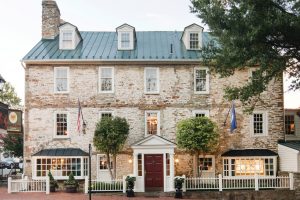
The Red Fox Inn & Tavern The tony village of Middlebury, set in the heart of Virginia’s horse and hunt country, lies midway between the cities of Winchester and Alexandria (thus its name) and was a regular stopping point for travelers between the two towns, including a young Washington. He also visited this storied tavern, established in 1728 as Chinn’s Ordinary. The lovely fieldstone inn later played host to a glittering array of contemporary notables, from Jacqueline Kennedy Onassis and Elizabeth Taylor to Paul Newman and Tom Cruise, who, like today’s guests, enjoyed countryside pursuits, classic yet cozy quarters, and intimate meals in the historic tavern’s firelit dining rooms.
National Sporting Library and Museum
Courtesy Visit Virginia
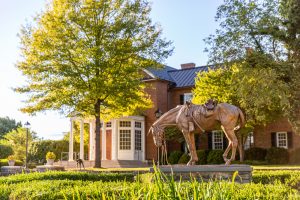
National Sporting Library & Museum Founded in 1954 by four fox hunters who combined their personal libraries of sporting titles, this Middleburg institution is today the repository of more than 20,000 books on equestrian sports, fishing, shooting, and wildlife. Three historic volumes examine the sporting life of Washington, an avid hunter and angler who was also regarded as the greatest horseman of his day. The museum was added in 2011 to display sporting paintings and sculptures, as well as related artifacts such as trophies and dog collars. A special exhibition, America 250: Sports at the Founding, includes the model that renowned equestrian sculptor Herbert Haseltine used to create his bronze statue of Washington now on the grounds of the National Cathedral.
Great Falls Park
Courtesy Visit Virginia
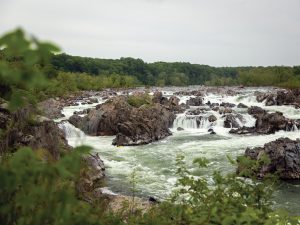
Great Falls Park At this national park site in McLean, the Potomac River courses through a series of rocks and boulders then tumbles into a narrow gorge before flowing on to Washington, D.C. and into the Chesapeake Bay. As a young surveyor, Washington came to regard the river as the best route west, and decades later, in 1784, he organized the Patowmack Company to construct a series of canals to allow navigation of the river, ultimately opening land west of the Allegheny Mountains to a young America. In addition to taking in the falls, visitors can view the remnants of Washington’s canals.
Arlington House
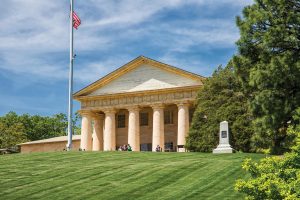
Arlington House Between 1802 and 1818, George Washington Parke Custis, the step-grandson of Washington, built this Greek Revival mansion as a family home and the nation’s first memorial honoring the president. In 1831, Custis’s daughter, Mary, married Lieutenant Robert E. Lee in the home’s parlor; the couple would live in the house with their children until forced to evacuate at the outbreak of the Civil War. Today, the house (designated as a memorial to Lee in 1955) stands on a hill in the northwest quadrant of Arlington National Cemetery and offers tours of the storied structure, as well as panoramic views of Washington, D.C. from the columned portico.
The George of Old Town
Courtesy The George
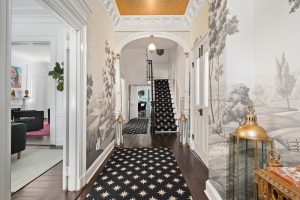
The George of Old Town Though its claim to fame lies in its origins as a property once owned by Washington, this boutique inn may be best recommended for its central location in Alexandria, a block away from the city’s historic and vibrant King Street. The townhouse, thoughtfully reconstructed in 1960 by a former Virginia governor, promises large suites flooded with light and common areas touted as “Mount Vernon with a twist,” featuring psychedelic Washington portraiture alongside historically inspired scenic wallpaper.
Gadsby’s Tavern
Courtesy Visit Alexandria
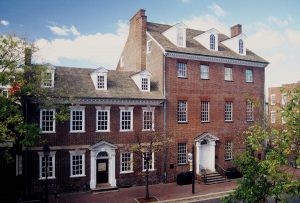
Gadsby’s Tavern Occupying two historic structures in Old Town Alexandria, the 1785 tavern and a 1792 hotel, this establishment was a regular meeting place for Revolutionary era luminaries, including Washington, Thomas Jefferson, and John Adams. Its ballroom hosted birthday parties for Washington as well as Jefferson’s inaugural banquet. Today, the tavern welcomes diners for candlelit meals in period dining rooms (try Washington’s favorite peanut soup), and the adjoining museum illuminates the lives of its patrons and the amenities and entertainment they enjoyed.
Christ Church
Photo by Whitney Tomasino
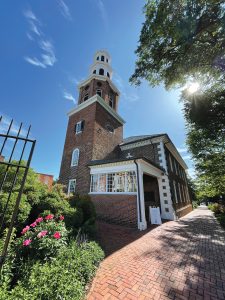
Christ Church This Episcopalian church in Alexandria has been active for 253 years and was attended by Washington for more than a quarter century until his death in 1799. The box pew he purchased at the time of the church’s opening in 1773 remains intact (though the other original box configurations were replaced by bench pews in the early 1800s). Eleven U.S. presidents have visited since 1900, perhaps most notably Franklin D. Roosevelt, who was joined by British Prime Minister Winston Churchill for services on January 1, 1942.
The George Washington Masonic National Memorial
Courtesy Visit Alexandria
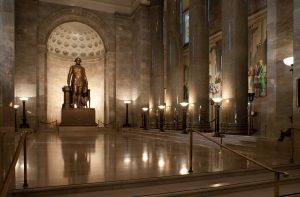
The George Washington Masonic National Memorial After a decade of work by Freemasons, this 333-foot tower erected in Alexandria in honor of Washington was dedicated in 1932, the bicentennial year of his birth. Inspired by the Lighthouse of Alexandria in ancient Egypt, the neoclassical landmark serves as both a memorial to Washington, America’s best-known Mason, and a museum. Exhibits explore Freemasonry’s origins and influence in the history of the country, as well as the life of Washington (a highlight is his personal Bible, one of the first printed in America).
George Washington’s Mount Vernon
Courtesy Visit Virginia
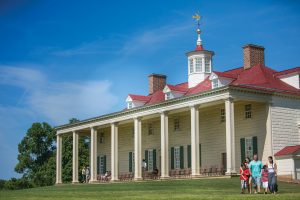
George Washington’s Mount Vernon In the 44 years Washington and his family lived on the estate eight miles south of Alexandria, he transformed the farmhouse constructed by his father in 1734 into the 21-room neoclassical mansion visitors see today. He also developed the surrounding plantation, and the estate’s multiple outbuildings, gardens, and heritage-breed farm animals speak to his commitment to farming. In fact, while he’s best known as a military and political leader, Washington thought of himself first and foremost as a farmer and believed America’s future success lay in agriculture. On December 14, 1799, he died here, and his on-property tomb is the site of a daily public wreath-laying ceremony.
This article appears in the Summer 2026 issue of Southbound.
Cradled in the Shenandoah Valley, Staunton (pronounced stan-ton) has built much of its modern appeal on a careful stewardship of its past. Longstanding commitments to adaptive reuse programs have preserved the charm of downtown’s streetscapes. Today, travelers will encounter more than 35 architectural styles over a few walkable blocks in this city that traces its history to 1747. The Beverley Historic District—awash with celebrated restaurants, independent shops, and hospitable locals eager to share their hometown—offers one of the clearest introductions. Any season is suited for a trip, but spring brings extra incentives, when the area dedicates roadways exclusively to pedestrian traffic from April to October and BaroqueFest (April 10–12) ushers in an annual tribute to classical composers.
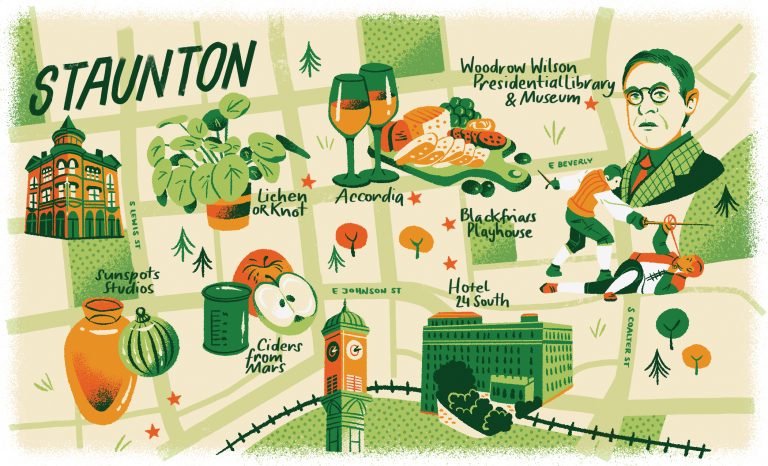
THE WORLD’S A STAGE An anchor of the city’s strong cultural scene, the American Shakespeare Center’s Blackfriars Playhouse is a faithful recreation of the Bard’s original indoor theater. Alongside Shakespearean productions, the company stages contemporary works and hosts panels led by theater experts and actors on Fridays.
LEGACY LODGING Hotel 24 South is a 102-year-old boutique stay housed in a landmark Georgian Revival–style building. Often called “Staunton’s Grande Dame” and renovated with modern amenities, the pet-friendly property features an indoor pool and a restored 1934 Wurlitzer organ on the second floor.
FROM CRADLE TO CABINET Begin a visit to the Woodrow Wilson Presidential Library & Museum at his birthplace, a 17th-century manse filled with family artifacts. Then, explore the museum for a nuanced look at Wilson’s years in office, as well as an immersive World War I trench exhibit and a restored 1919 Pierce-Arrow limousine, the oldest operational presidential car.
GLASS HOUSE Shop exquisite glass items—color-splashed vases, hummingbird feeders, jewelry—from local artisans at the Sunspots Studios gallery. In the back workspace, resident craftspeople perform live demonstrations daily and welcome questions. Book ahead to blow your own globe ornament or pumpkin (consider adding a glow-in-the-dark coating).
WINE AND DINE Though small in stature, Accordia’s wine program has a deep bench: more than 600 bottles and a well-versed staff to help you choose. The eatery’s share-style menu includes charcuterie boards and medleys of tapas, such as serrano ham with Manchego and curried South African chakalaka (a curried vegetable relish) served over a baguette.
APPLES AWAY The locavore-approved pours at Ciders from Mars are crafted from eight varieties of Virginia-grown apples, some harvested from the crabapple trees out front. Its signature brew, the semi-sweet Hellas Dry, is a must-try. Flights come in flasks and beakers, a nod to owner Nikki West’s background in geochemistry.
ALOE THERE Lichen or Knotis a verdant, meticulously curated boutique that sells indoor plants and homewares. Scoop up a succulent and an artful planter, or search for unexpected finds like plantable greeting cards, engraved pocketknives, and nature-inspired prints on handmade paper.
This article appears in the Spring 2026 issue of Southbound.
First-time visitors are often surprised by Virginia’s capital city, with its engaging combination of Southern tradition and urban style. Founded in 1737, Richmond developed as a tobacco port and helped spark the American Revolution. Once the most populous American colony, it later served as the capital of the Confederacy and went on to prosper after the Civil War with the development of Jackson Ward, an African American district once known as the Harlem of the South. These days, the city wins over guests with historic neighborhoods like Church Hill, where restored Victorian homes line brick streets. And that’s just the start. In recent decades, Virginia Commonwealth University (VCU) has transformed Richmond, as graduates stay to make their mark. Artists and other creatives have opened galleries and boutiques, while restaurateurs have developed a culinary scene worth exploring.
CREATIVE SOUL
SHOP Carytown has long thrived as Richmond’s “Mile of Style.” Cary Street lures shoppers with boutiques, upscale consignment stores, and cafes. Visit GlassBoat for an eclectic selection of local art, custom furniture, and designer clothes, such as pieces from Richmond-based Gracist, which combines repurposed cloth with fabrics from Niger.
CONSTRUCT Design your own terrarium at PlantHouse, choosing from succulents, cacti, and epiphytes along with colored sand, rocks, and driftwood. Or try your hand at crafting kokedama, Japanese-inspired moss-and-twine hanging plants. Sip on beer or wine while you work.
DISCOVER VCU, one of the nation’s top-ranked public art schools, struts its stuff at its Institute for Contemporary Art. The visually arresting zinc and glass building hosts surprising exhibits in three galleries, such as a recent video, music, and sculpture installation from French- Caribbean artist Julien Creuzet.
Virginia Museum of Fine Art
Courtesy Visit Virginia
MUSE Regarded as one of the nation’s top art museums, the free-admissionVirginia Museum of Fine Arts has the country’s largest collection of Fabergé eggs, along with a stunning collection of photography and temporary block-buster exhibits.
The Quirk Hotel
Courtesy Visit Richmond Virginia
STAY The distinctive Quirk Hotel started as an art gallery in 2005 and evolved into a lodging that is a work of art itself. The former six-story department store now welcomes guests with a stylish lobby bar, museum-style gift shop, reclaimed furniture, and regional art, all set off by a quirky, pink-hued color scheme.
BON VIVANT
SWEETEN For the Love of Chocolateturns candy shopping into an international adventure. Come for Belgium’s Leonidas, Richmond-made Dubai-style chocolate, and Venchi bars from Italy, among thousands of other sweet offerings.
Modern cookware at Ladles & Linens Kitchen Shoppe
PROCURE At Ladles & Linens Kitchen Shoppe, shoppers find a dizzying assortment of cookware, including Le Creuset, German Wusthof knives, and brilliant tools designed by mechanical engineers from Australia-based Dreamfarm.
REVIVE Upscale convenience store Union Market stocks hot sauces, gourmet spreads, and a global wine selection, from Lebanon to the Loire Valley. Pay a small corkage fee and enjoy a bottle in the outdoor cafe, alongside dishes like tarragon chicken salad with crispy chicken skins.
The Roosevelt
Courtesy Visit Richmond Virginia
DINE The Roosevelt helped establish Richmond as a foodie hot spot more than a decade ago. New chef Leah Branch has updated the menu with clever takes on Southern food, like brisket-stuffed peppers and salt-roasted sweet potatoes with black bean curry, red rice tahini, and fried greens. Don’t miss the Cheerwine cake with cherry frosting.
SIP In 2013 Richmond rediscovered moonshine with the opening of Belle Isle Craft Spirits. An $8 flight at its industrial tasting room shows its range of flavors, such as blood orange, lemon lavender, and honey habanero. Or opt for its tequila, bourbon, or craft cocktails.
TIME TRAVELER
CHALLENGE The Valentine museum offers unexpected takes on Richmond history. Displays include receipts for the purchase of enslaved people and dresses worn by drag queens, while the studio where the museum’s first president once sculpted Confederate memorials now examines the fabrications behind the Lost Cause narrative of the Civil War.
REMEMBER The city’s most striking greenspace—a 135-acre arboretum overlooking the James River—happens to be the final resting place for more than 80,000 Richmonders and two former U.S. presidents. Hollywood Cemeteryoffers self-guided tours, or you can sightsee by tuk-tuk, Segway, or trolley.
Linden Row Inn
Courtesy Linden Row Inn
DREAM Sleep like a Victorian at Linden Row Inn, a 70-room boutique hotel fashioned from seven 19th-century row houses. The National Register buildings occupy land where a young Edgar Allan Poe once played.
Virginia Museum of History & Culture
Courtesy Visit Virginia
HONOR The Virginia Museum of History & Cultureshares centuries of highlights, from colonial firearms to an AOL compact disc, one of a billion distributed by the pioneering Virginia internet company that was once the most recognized American brand on the web. Book a vault tour to see gems from the 8-million-item archives, like an engraving produced for Pocahontas’s 1616 visit to London.
Fish and Chips at Patrick Henry’s Pub & Grill
Courtesy Patrick Henry's Pub & Grill
TOAST In 1775, Patrick Henry helped ignite the American Revolution, proclaiming “Give me liberty or give me death” at St. John’s Church, just down the block from an inn turned pub that now bears his name. Known for its hand-breaded fish and chips and chicken tenders, Patrick Henry’s Pub & Grille has its share of ghost stories—ask about the latest sighting.
This article appears in the Winter 2026 issue of Southbound.
Duke of Gloucester Street is the closest some will ever come to time travel. Williamsburg’s main drag starts off in Merchants Square, a charming shopping and restaurant district with an undercurrent of colonial history. As you make your way eastward, the tide shifts rapidly from present-day retail to rousing reenactments, where silversmiths and wheelwrights preserve centuries-old crafts. This is Disney World for history nerds, developed thanks to the vision (and financial support) of John D. Rockefeller in the 1920s. Today, the former colonial capital is a bustling and picturesque town that bridges tradition and modernity—and may inspire a newfound appreciation for oyster shell gravel and 18th-century furnishings.
FIT FOR A KING
Whether you’re a staunch patriot or have a loyalist streak, the Williamsburg Inn’s list of famous guests will put you in good company. Throughout its nearly century-long history, the inn has welcomed multiple U.S. presidents and Queen Elizabeth II. Stay in a room decorated with the perfect level of traditional formality, then hit the links at the Golden Horseshoe Golf Club or indulge in a spa day.
COLONIAL CURATION
If your interest in history is of the decorative and fine arts variety, stroll over to the Art Museums of Colonial Williamsburg, where you can brush up on American and British antiques dating back to the 1700s or learn more about both colonial and contemporary folk art.
A STEP BACK IN TIME
Williamsburg is perhaps best known for its abundance of tricorn hats and bonnets, which are a Colonial Williamsburg staple among the younger set. Explore the 301-acre living history museum to see firsthand how blacksmiths, carpenters, cooks, and gardeners worked in the 18th century and how they keep traditions alive today. The skilled workers throughout town spend time training in their chosen trades, serving as renowned experts for both visitors and other cultural institutions globally.
SAY CHEESE
The Power family opened the Cheese Shop in the 1970s, when artisanal cheese and good wine didn’t yet have the hold on society that it does today. Their forward-thinking shop took off, and today they’re known for a selection of hundreds of imported and domestic cheeses, charcuterie boards, more than 4,000 bottles of wine, and signature sandwiches. Try a country ham and Swiss with their famous house dressing for a true taste of Williamsburg.
SHOP THE SQUARE Merchants Square brings together retailers inspired by history with those catering to modern style. Pick up Williamsburg brand home items at Brick & Vine, vibrant clothing at Three Cabanas, or classic menswear at R. Bryant, Ltd.
SING FOR SUPPER Fat Canary, a bistro in the heart of Merchants Square holds just 15 tables where regulars dine on perfectly pan-seared duck breast and roasted chicken. Don’t worry if you forgot to snag a reservation—there’s a lively downstairs wine cellar serving the same dishes, plus a more casual menu (the Bolognese is a must order).
SCRIPTED HISTORY
Score tickets to a performance at the Kimball Theatre. First opened in 1933, this 400-seat venue’s lineup now includes Shakespeare, live music, and, fittingly, historic productions and readings, like Howard Ginsberg’s Jefferson & Adams.
This article appears in the Fall 2025 issue of Southbound.
A decade ago, downtown Lynchburg was on the ropes. Empty storefronts lined the historic streets, and its 19th-century infrastructure had started to crumble. But after millions in investment, the city has a new vibe and swagger. Retail stores fill former warehouses, a restored grand hotel welcomes guests, and a network of riverside trails draws hikers, bikers, and picnickers. Here’s how to enjoy a weekend in central Virginia’s surprising comeback city.
FRIDAY
The Virginian Hotel
Courtesy the Virginian Hotel
CHECK-IN ➞ When it first opened in 1913, the Virginian Hotel immediately became the center of city life, hosting society weddings and business travelers in its Beaux Arts splendor. But after decades, its luster began to fade. In 1972, the building became the first dormitory for what is now Liberty University, and later served as low-income housing. A little over a century after its grand debut the Virginian is once again the most exciting hotel in town. After a $30 million renovation, the high-rise re-opened in 2018 as part of Hilton’s upscale Curio Collection, wowing visitors with sleek, modern rooms along with original marble, plaster, and ironwork.
EVENING ➞ Drink in a Lynchburg view from Skyline, the hotel’s rooftop bar, with firepits, cocktails, and dozens of whiskies on offer. Look out over the city, which is built over seven hills—just like Rome, residents say.
Water Dog
Photo by Lauren Paige
Next, head to the Water Dog, a casual seafood bar on the James River, with raw Chesapeake oysters sourced just a few hundred miles downstream. Enjoy them with a Foglight Baltic Porter from local Three Roads Brewery, or one of the other 35 beers on tap. For dinner try a crab quesadilla or Caesar salad topped with fried oysters.
SATURDAY
MORNING ➞: Start your day at Batter Bar, a sister-run spot specializing in Japanese-style crepes, which are served thin and crispy, rolled into a cone and artfully stuffed. Try the Avocado BLT or Hazelberry, made with Nutella, strawberries, and whipped cream. The eatery started as a popular food truck before opening its brick and mortar spot near the Community Market.
Then follow the way of Thomas Jefferson to Poplar Forest. The third president used the jewel-like home as an escape from the responsibilities of Monticello, his mansion 90 miles away in Charlottesville. The nation’s first octagonal building has been partially restored, preserving this testament to Jefferson’s architectural genius and honoring the craftsmanship of the enslaved workers who built it.
Head back toward downtown to the home and garden of Anne Spencer, an internationally acclaimed Harlem Renaissance poet who lived in Lynchburg. Spencer’s garden inspired much of her poetry, and the house, now a museum, served as her salon, hosting notables such as Paul Robeson, W.E.B. Du Bois, and Martin Luther King Jr. A block away, swing by the Pierce Street tennis courts, where a local physician ran a summer camp to teach the sport to Black students. His successes include Althea Gibson and Arthur Ashe, the first African Americans to win Wimbledon.
AFTERNOON ➞ For lunch, try the Farm Basket, an upscale gift shop and cafe where Lynchburg brides have registered for decades and locals have long loved its chunky chicken salad; turkey, brie, and fig jam sandwich; and buttery-rich seven-layer caramel cake.
Now it’s time to explore downtown. Enchanted Antiques specializes in 18th- and 19th-century English, Continental, and American decor and furniture, with prices ranging from $40 to $8,500. So if you’ve been looking for a William and Mary-style seaweed-patterned console from the 1740s, this is the spot. For a shopping experience that feels like a treasure hunt, head around the corner to Estates & Consignments, a former tobacco warehouse filled with everything from vinyl LPs to antique bed frames.
Nearby, Rhodora Specialtyoffers shelves of sweet and sarcastic greeting cards, along with gifts and housewares. Next door, the owner also runs Live Trendy or Die, a boutique for stylish women of all ages. Or stop by Church Street Bridal, which collects samples and overstock dresses from around the country and sells them at deep discounts to benefit the local YWCA. You’ll find gowns and designer frocks for formals, galas, and proms starting at around $70.
Lynchburg Museum
Courtesy City of Lynchburg Office of Economic Development & Tourism
Stop by the free and engaging Lynchburg Museum, which introduces visitors to a city that started as a ferry crossing in 1757 and became a booming 19th-century tobacco port. Exhibits honor city notables like Charles Browne Fleet, inventor of ChapStick; televangelist Jerry Falwell Sr.; and NASA astronaut Leland Melvin.
Then wander Memorial Walk, honoring veterans such as Desmond Thomas Doss, a conscientious objector to the Second World War who refused to carry a gun yet was awarded the Medal of Honor. The Seventh-day Adventist served as a medic and saved at least 75 lives during the Battle of Okinawa, a feat immortalized in the Oscar-winning movie Hacksaw Ridge.
Amazement Square
Courtesy City of Lynchburg Office of Economic Development & Tourism
If you’re traveling with young ones, work in a stop at Amazement Square, an interactive four-story children’s museum with a glass-walled paint room, rooftop observation deck, and tunnels and ladders connecting each floor.
EVENING ➞ Toast the day with a flight of Virginia wine at Reserve Winery & Lounge, a cozy tasting room featuring bottles from local vintners. The Reserve Petit Verdot is a full-bodied, jammy revelation.
For dinner, hotfoot it over to Shoemakers American Grille, which gets its name from its location in a former shoe factory. Try the silky she-crab soup and the pork chop with bourbon sorghum and pickled Virginia peaches. If it’s a pretty evening, stroll back to your hotel along the Bluffwalk, a half-mile hillside path of trails, staircases, and overlooks offering river views.
For a sweet end to the night, stop at the Texas Inn. The 89-year-old diner serves customers from a former gas station. Take a seat at the counter and absorb the retro vibe over a Cherry Coke float or a slice of pie (sweet potato or coconut meringue are both winners).
SUNDAY
Market at Main
Courtesy City of Lynchburg Office of Economic Development & Tourism
MORNING ➞ Market at Main makes a fun stop for brunch. You’ll be tempted by the pancake flight, featuring a corncake along with sweet potato and buttermilk flapjacks. Or opt for the eggs Chesapeake, a crab cake Benedict. Either meal goes great with a hibiscus mimosa.
On the way out of town, take a scenic drive through Old City Cemetery, not just a burial ground but also a 27-acre history park with several small museums and thousands of tombstones, dating back to the early 1800s. Take a gravestone rubbing or enjoy its gardens with more than 100 species of trees and 450 types of antique and heirloom roses.
Move Your Body
Frostfire Sauna and Cold Plunge is a shock to the system in the best way, taking you from a sweaty 170 degrees to a 42-degree dip in a chilled tub. The owner, a physical therapist, also leads stretch classes.
Miles of easy paths lead visitors along the James River and its tributaries. Locals love the paved Blackwater Creek Trail & Bikeway. Or walk across a converted railroad bridge to Percival’s Island, a 49-acre sanctuary in the middle of the river.
For an unexpected thrill, hit the slopes at Liberty University. Year-round, the Liberty MountainSnowflex Centre offers a chance to ski, snowboard, and sled down a mountain on a slick plastic surface. Non-skiers and the risk-averse can try two tube runs offering maximum thrills, no skills required.
This article appears in the Spring 2025 issue of Southbound.
I used to love reading the children’s book Misty of Chincoteague, which is about two kids who want a wild horse on Chincoteague Island in Virginia. I remember being amazed knowing there was a real place where the ponies can roam free. Then, in elementary school, my family ended up driving there from our home in Maryland. I still have an incredibly clear memory of this one moment from the visit. We were going really slowly on this empty road, and a pony just came up to our car. My grandmother—who was sitting in front of me in the passenger seat—rolled down her window, and the pony gently “greeted” her by sticking its head in and letting her pet it. I was mesmerized! My understanding is that there was a Spanish shipwreck on the island centuries ago, and a couple of horses ran off. The Chincoteague ponies are the descendants. When you visit, you’re not really driving from point A to point B; you just want to see how beautiful the area is and spot the ponies. Every July, there’s a big festival called Pony Penning when the ponies swim in the channel from Chincoteague to Assateague in Maryland. Everyone comes to town to see this, and there’s a carnival. Besides spotting the ponies, you can walk down Main Street along the shore and go into these cute little shops. It’s a resort destination for sure, so stay in a local inn. And the seafood! Getting crab cakes and fried clams—or, even better, a steam pot—is so much fun. Especially as a kid, I loved how messy it was. Steamers Restaurant and Sports Bar is exactly that sort of place. I actually haven’t been back to the island as an adult, and I miss the shrimp boils and crab shacks. I feel like my eight-year-old daughter would love it there. The East Coast is so busy, and Chincoteague Island is still this underdeveloped land. It’s very childlike in its magic.
Taylor Jenkins Reid is an award-winning author of nine novels, including the bestseller Daisy Jones & the Six. Her next book, Atmosphere, which centers on a female professor who joins NASA’s Space Shuttle program in the 1980s, was released June 3.
This article appears in the Spring 2025 issue of Southbound.
In 1766—a decade before America’s founding—Captain Thomas Bullitt built the Homestead, an 18-room Shenandoah Valley retreat where visitors could “take the waters.” Holding the title of America’s oldest resort, this Hot Springs, Virginia, grande dame hotel has been in operation for more than 250 years. It was at times a see-and-be-seen destination for the elite. Storied guests include numerous U.S. presidents (Washington, Jefferson, and FDR among them), J.P. Morgan, the Vanderbilts, a Duke of Windsor, and a young Jacqueline Bouvier, who learned to play golf there. After a $150 million renovation in 2023, the 483-room Georgian-style Omni Homestead Resort is a beautifully preserved example of old splendor with new amenities, including a spa, equestrian center, championship golf courses, and historic warm springs pools. The snow-dusted Allegheny Mountains and expansive property provide an idyllic setting for wintertime fun. Guests can go ice skating, snow tubing, snowboarding, and skiing (on nine beginner and intermediate trails), and kids can even take a whirl in mini snowmobiles. Back inside, the whole family can thaw out in the heated indoor pool fed by the mineral spring waters on which the famed resort was founded.
This article appears in the Winter 2025 issue of Southbound.
Amy Walter, publisher and editor-in-chief of the Cook Political Report with Amy Walter, has lived in Arlington’s Clarendon neighborhood for 30 years—“which is kind of crazy!” she says. Though her work often sends her to Capitol Hill, her days off are usually spent away from politics. Here’s how she likes to fill the hours.
Breakfast and coffee at Northside
Courtesy of Northside Social Coffee & Wine
Some Like it Hot
“If the weather is nice, I’ll go to Northside Social Coffee & Wine so I can sit outside and enjoy my coffee. I’m very, very picky about coffee—I don’t care how hot it is outside, I need hot coffee. I am not an iced-coffee person! They make excellent cappuccinos there, and they have really good scones and breakfast sandwiches.”
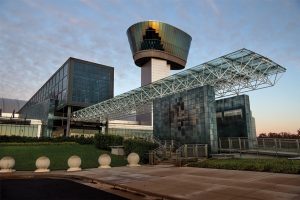
Smithsonian’s National Air and Space Museum Steven F. Udvar-Hazy Center
Courtesy of the Smithsonian
Venture Capitol “From Arlington, you can jump on the Metro and you’re at the Smithsonian in 15 to 20 minutes. You don’t need a car; you just pop over the Potomac. Another fun thing to do is get yourself to the Rosslyn Metro station. Cross over Key Bridge and walk right into Georgetown and go shopping. There are also a lot of galleries. Georgetown’s super fun, especially if you have a teen. Because there are a lot of Georgetown students, there are a ton of stores aimed at that age group.” Far East Feast “My go-to place is Four Sisters Grill. It’s a nice, casual Vietnamese restaurant in the heart of Clarendon. I would like to say I’ve had everything on the menu, but I have not. I know what I like, and I get what I like! Their spring rolls are excellent. I also like those thin vermicelli noodles with pork and fish sauce—it’s outstanding.”
Cycle Through “One of my favorite things about Arlington is how bike-friendly it is. You can take the old railroad line, the W&OD Trail, all the way past Dulles airport. It’s a pretty wide path, and there are some parts that are a little hilly, but it’s not all that challenging. I like to ride from here to Vienna, Virginia, and have a beer at Caboose Brewing, a cute little restaurant off the bike path.”
Steak It Out “I love Lyon Hall. In my mind, they have the best steak frites in the region. It’s my go-to—I’m making myself hungry! Getting a Manhattan and steak frites and sitting outside there sounds lovely, lovely, lovely.”
Sweet Escape “You have to get dessert at Bakeshop. They’re well known for their cupcakes, but I love their homemade ice-cream chipwiches, which are so good and humongous. Huge! There is nothing like a good chipwich. They also have—and there are disagreements among Southerners about this topic—but I believe they have the best banana pudding. It cannot be beat.”
This article appears in the Fall 2024 issue of Southbound.
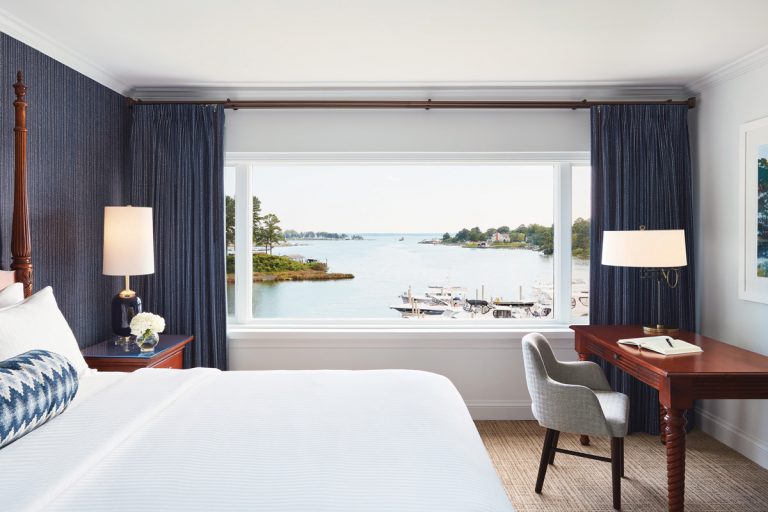
The Tides Inn has welcomed guests looking for a peaceful retreat by the water since opening its doors in 1947. A little over an hour outside of Richmond, Virginia, the 70-room property sits perched on the banks of Carters Creek and the Rappahannock River, a tributary of Chesapeake Bay.
True to its location, much about the resort feels classically nautical—navy blue wallpaper and fabrics, carved mahogany furnishings, and ship-themed decor. Enormous picture windows grant stunning views of the water. But even with 77 years of history, the Tides Inn looks to the future with frequent upgrades. A $3.6 million ecosystem restoration project, completed in 2022, has brought guests closer to the natural surroundings with an 1,800-foot boardwalk and living shoreline that assists oyster repopulation efforts by creating a habitat for the mollusks to flourish and purify the water. This spring, the inn opened its newest restaurant, Salt & Meadow. Many of the dishes incorporate seafood from nearby waterways and fresh produce grown in the property’s gardens.
Guests can get in on sustainability efforts by booking a hands-on beekeeping experience or signing on to help restore oyster habitats. Other activities include watercolor and mimosa cruises, birding tours, afternoon teas by the bay, and pottery classes, not to mention active pursuits like morning yoga, pickleball, and golf. Stays can be customized with a variety of interactive offerings, but plenty of time should be left to soak up the sun on the beach, taking full advantage of the tranquility that has drawn visitors to its shores since the beginning.
A watercolor class at the shoreline
Courtesy of Tides Inn
• • •
Insider Intel
Resident ecologist Will Smiley shares his favorite features of the inn
Intro to Oysters
“I enjoy leading our Chesapeake Gold experience that educates guests about the key significance behind the Eastern oyster and the process of modern aquaculture. At the end, you get to enjoy roasted oysters and prosecco.”
Eastern oysters
Courtesy of Tides Inn
From Land to Sea
“As an avid outdoorsman I like Salt & Meadow’s wild game options, such as the venison or duck breast, along with the changing catch of the day.”
Waterside Walk
“The living shoreline is a beautiful addition to Tides Inn. It’s both a functional filter that improves water quality and a raised walkway providing a trail for the guests.”
This article appears in the Summer 2024 issue of Southbound.