

Photograph courtesy of Atlanta Beltline Inc.
In the summer of 2023, Atlanta Beltline Inc. designers made headlines by promising that a world-class bike park for all ages and skill levels was bound for the city’s largest greenspace, Shirley Clarke Franklin Park, or what used to be called Westside Park. In a couple of weeks, they’ll start making good on that promise, with a goal of creating an outdoor amenity like metro Atlanta’s never seen.
Planned for roughly 45 wooded acres in a northern corner of the 280-acre Westside greenspace, the bike park’s initial phase is almost entirely funded by an $8 million seed grant from the Chestnut Family Foundation, the child-focused charity started by Mailchimp cofounder (and avid mountain biker) Ben Chestnut. Chestnut charged the Beltline with a simple mandate before the grant became public last year: Go big!
“There is not a bike park like this in Atlanta—there’s not one to this caliber in the state,” said Meghan Injaychock, a Beltline senior landscape architect and project manager, during a recent update meeting that detailed plans.
“It’s going to be more of a regional park,” Injaychock continued. “We really don’t have a lot of bike parks of this caliber outside of [mountain-biking mecca] Bentonville, Arkansas. That’s where a lot of our case studies came from—what’s worked, what hasn’t worked. [The question is], how do we incorporate that in an Atlanta way?”
The scenic initial phase of Shirley Clarke Franklin Park opened in 2021, highlighted by a 350-foot-deep reservoir with 2.4 billion gallons of emergency drinking water for the city. The bike park will be next door to that area, connected by trails for both hiking and mountain biking and a paved pathway. The goal is to create a haven for both high-flying, lap-crushing daredevils and little kids just learning to pedal—and everyone in between. Here’s what to expect:
What’s coming?
The majority of the bike park will be built in two phases across a section of the park’s acreage with higher elevation, though some other work may be required. Plans call for 2.25 miles of mountain bike trails overall, roughly equivalent to the distance on the Beltline from Krog Street Tunnel to Piedmont Park.
Those trails will range from beginner greens to expert gravity trails, or routes that start at higher elevations and plummet downward. Wiggling around all of that will be a hikers-only trail where bikers are verboten. (Injaychock noted that underbrush will be cleared near the hiking trail to allow for greater visibility and heightened safety for hikers.)
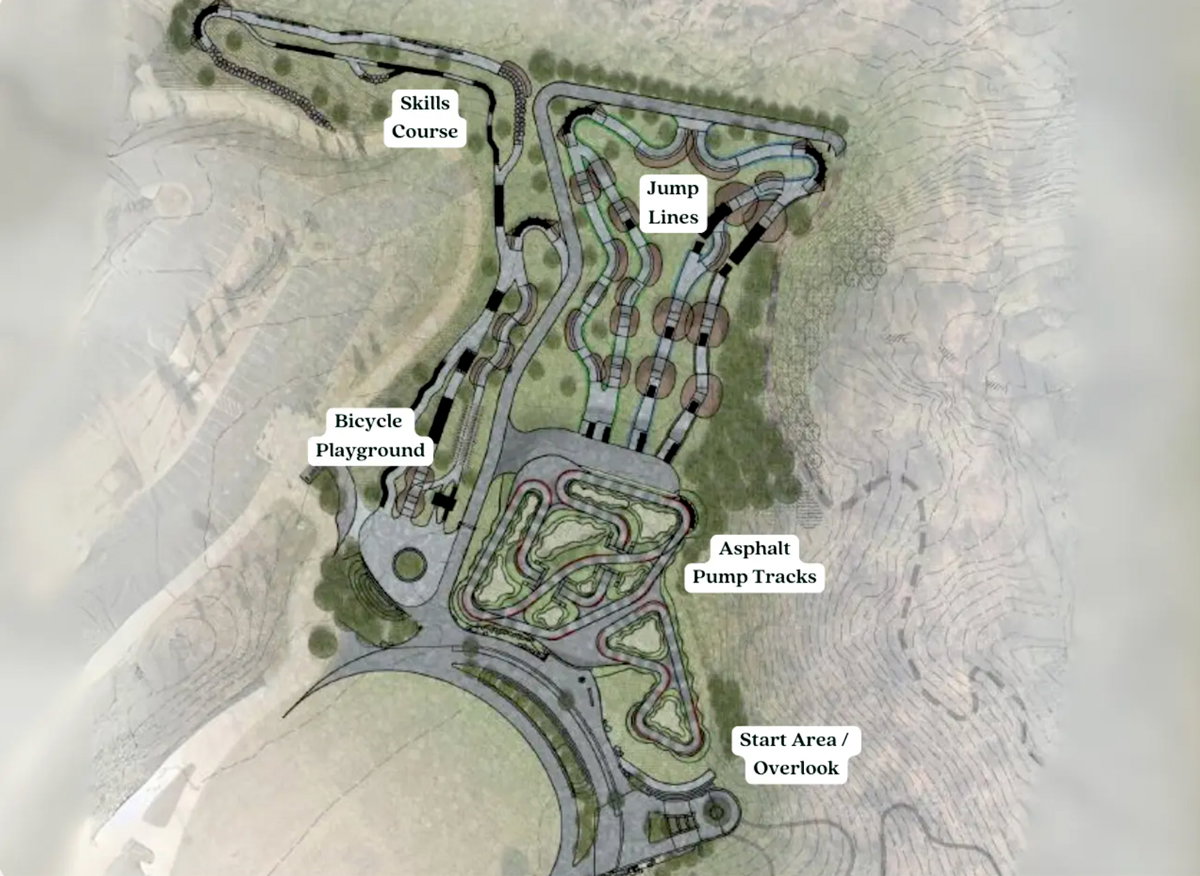
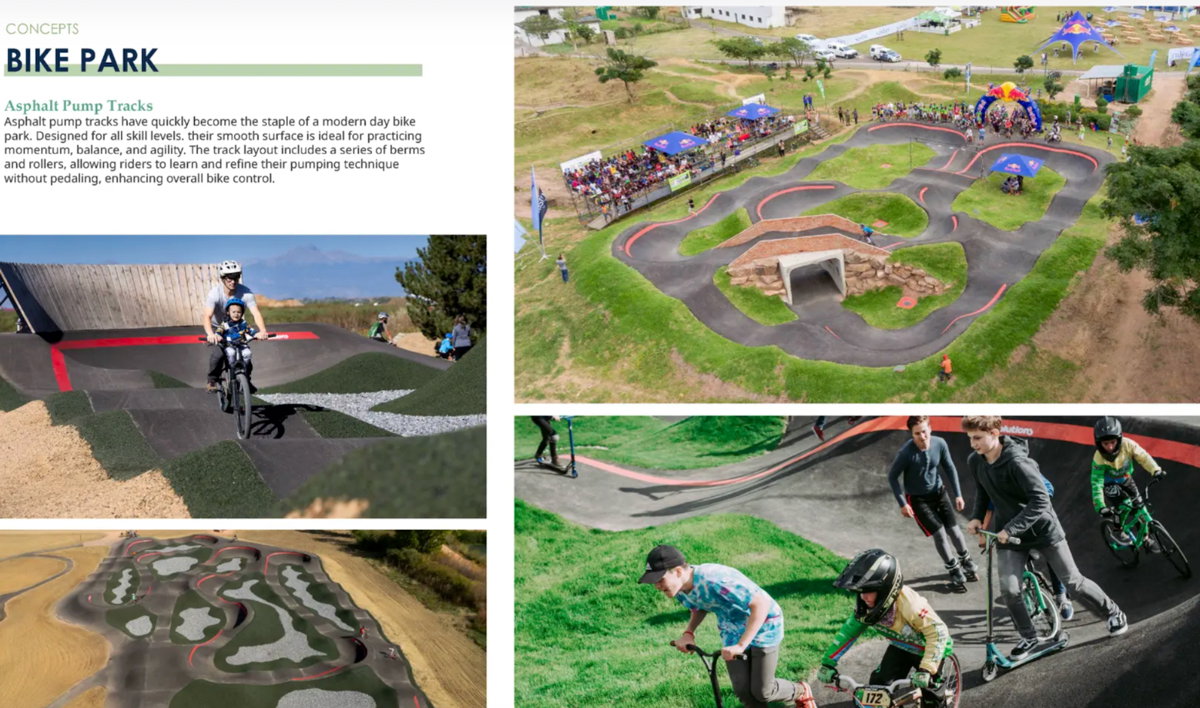
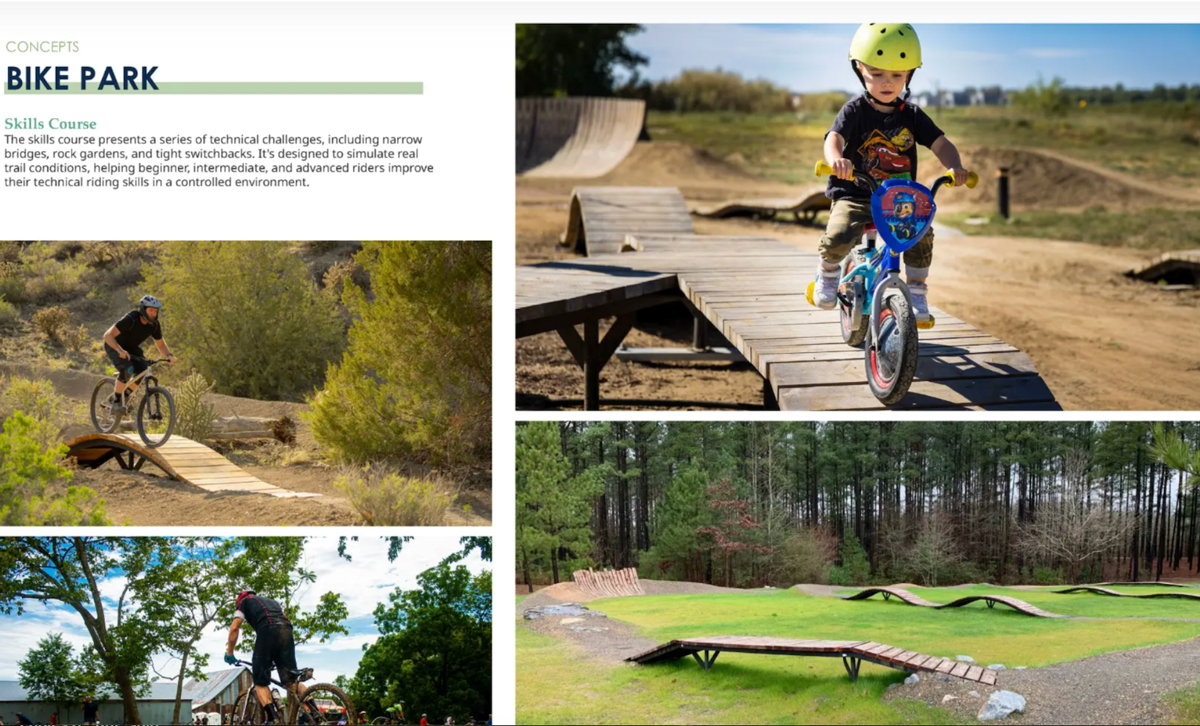
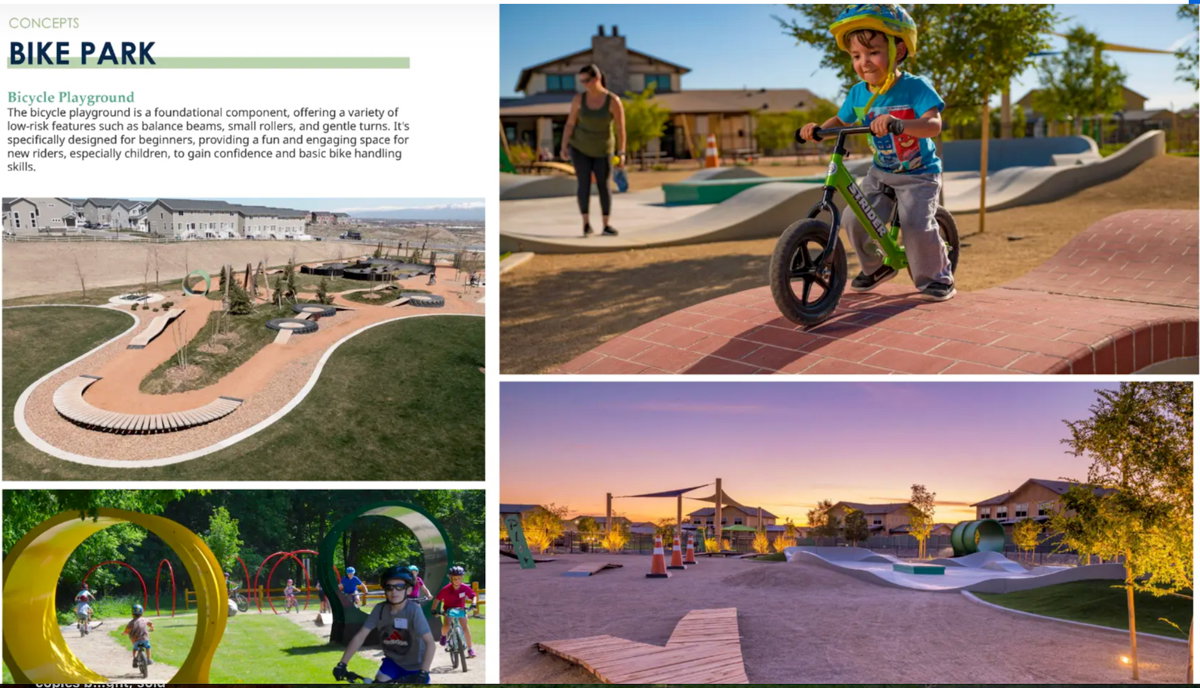
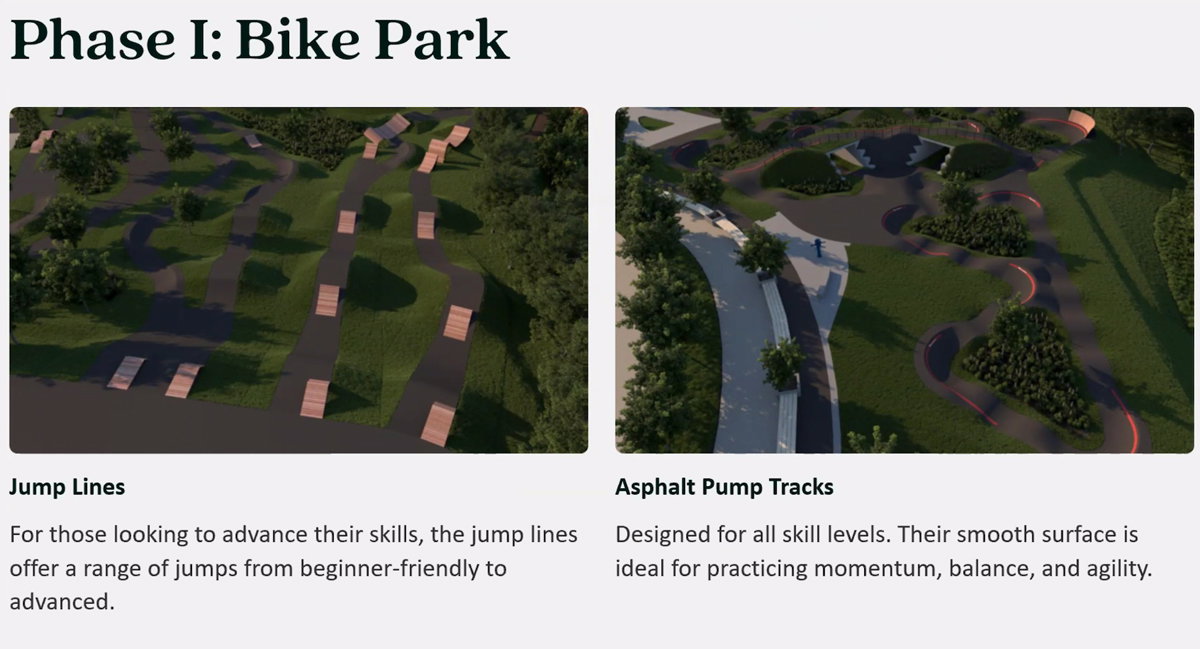
Beyond the woods, in a separate area near an existing parking lot, will be the bicycle equivalent of a skateboard park. That section will house a low-risk bicycle playground, a pump track for honing balance and agility, a section for jumping (including tamer beginner jump lines), and a more technical skills course. “It’s for everyone, beginner to advanced, to learn on pretty much every aspect of the bike park,” said Injaychock. “You don’t have to use a specific bike on every element; some of these [paved] elements are skateable, with skateboards.”
Expect plenty of seating and shade from preserved, mature trees dotted around all of the above, per Injaychock.
Photograph courtesy of Atlanta Beltline Inc.
Photograph courtesy of Atlanta Beltline Inc.
Photograph courtesy of Atlanta Beltline Inc.
Okay, when?
The Beltline has completed a contract with construction company Reeves Young, secured the required $9 million in funding, and as of mid-November all permitting was expected to be in place to begin phase one. The official groundbreaking is set for January 22.
Phase one will include the hiking trail and bike park section, for which specialized builders from The American Ramp Company are coming to Atlanta with plans to stay for months. Injaychock described that company as “one of the top bike park builders in the country.”
Should all go according to schedule, it’ll take roughly a year to finish the initial phase, per Beltline officials.
Photograph courtesy of Atlanta Beltline Inc.
Go take a hike?
Yeah, for sure. Expect about half a mile of natural hiking options in phase one, all weaving through old-growth forest that Atlanta development has never touched.
“It’s really going to be an experience through the park that most people don’t even know exists,” said Injaychock. “We have a lot of really large tree [canopies] in this part of the park . . . Working with city arborists, having to deal with larger root systems, it’s a very delicate balance. We have a plan for where the hiking trail is going to go, in order to avoid disruption for any of these root plates for larger trees.”
Wait—it’s all connected to MARTA?
How’s this for a unique urban amenity: Given the proximity of MARTA’s Bankhead station at the doorstep of Shirley Clarke Franklin Park, mountain biking enthusiasts of Atlanta could very well board a train with a bike at Brookhaven, East Point, Avondale station, or anywhere MARTA rail goes and avoid the hassle of loading up a bike on a car—and getting that car stuck in traffic.
Beltline spokesperson Keona Swindler said the MARTA hub is about a mile and a half from where the bike park will be, via the Proctor Creek Greenway trail that snakes into the park. A good warmup before riding the bike park, in other words. Five bucks, roundtrip.
What about phase two?
The budget for all future bike park phases is roughly $9 million, and Injaychock said the fundraising process has already begun. Every aspect of the park including large plazas has been designed, so those costs are in the rearview. No timeline was available for when the next phase might break ground, or when the full bike park will be finished.
“We’re just waiting on additional funding,” Injaychock said. “We are a different city [than Bentonville], and we want this to look like you’re in Atlanta. We hope we’re delivering a really top, top quality bike park.”
Hat tip to the Mailchimp guy
In a statement to Atlanta magazine, Chestnut said supporting the bike park initiative was especially meaningful because much of his childhood was spent on a bike—and that became a means of discovering new places and building his confidence.
“When kids have an opportunity to explore nature, they develop a sense of independence and self-esteem that leads to later success in life,” Chestnut wrote. “Our hope is that this park opens the door to the sense of adventure for more kids on the Westside and across Atlanta.”