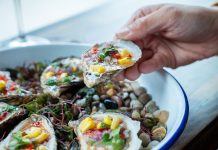



Photograph by Martha Williams
Orange wine finds itself navigating competing identities. Though many consider it a recent fad, orange wine is actually crafted using one of the oldest winemaking methods in existence, an ancestral technique first developed centuries ago in Georgia (the Eastern European country). Propelled by a renewed global interest in low-intervention, low-impact wine practices, which the style often aligns with, orange wine is undergoing a resurgence. And with Atlanta experiencing a natural wine boom, there’s never been a better time to explore it.
Orange is a bit of a misnomer; the style of wine is not made from citrus. Instead, the name refers to a white wine produced using the techniques of a red: White grapes are fermented with skins intact (which is why you’ll also see it called a “skin-contact white”). This process grants orange wine its signature color—with shades ranging from pale apricot to tawny brown—and makes it fuller bodied and more tannic (the bitter taste associated with reds) than a typical white.
Part of orange wine’s appeal is its ability to serve as an accessible entry point into the natural wine world. “As people take a closer look at what they consume, orange wine can be an easy way to browse any wine list and recognize something that fits into those categories,” says Sam Pilch of Vine Fine Wine in downtown Decatur. While not all orange wines are strictly “natural” (a term with no universal definition), it generally refers to bottles made with organically grown grapes and containing minimal chemical additives.
Pilch’s shop, which he co-owns with his wife, Madeline Long, carries plentiful options from biodynamic and ethical producers. “My favorite orange is Marmalade by Breaking Bread Wines,” he says. “It looks and tastes the part: soft, floral, dry, and a little acidic, with tasting notes of stone fruit.”
Elemental Spirits Co. in Poncey-Highland stocks several orange wines. The Spanish-produced Kiki & Juan is a recommended gateway pick; it’s crisp and rich with layers of salted honey and citrus. For a more traditional experience, go for the Nine Oaks Khikhvi, a funkier Georgian orange with a tart, slightly vinegary mouthfeel, somewhat similar to a kombucha. (Heads up: The particles at the bottom are supposed to be there.)
Side Saddle Wine Saloon and Bar, located off the Southside Beltline trail in Boulevard Heights, always has a couple oforange wines on the menu. Get a wine flight, which includes three half pours, to sample what’s available. On a recent visit, the Los Chuchaquis Canelo Albarino, produced in California and bursting with ripe pineapple, was a winner. Pair your selection with the Rodeo fries: crispy sweet potato fries topped with spiced labneh, whipped eggplant, olives, and pickled onions.
A short walk from Piedmont Park, Larakin is a breezy neighborhood bar in Midtown that regularly features orange wine on its daily-changing drink list. Sip a glass on the sun-drenched wooden deck and complement it with an order of tinned seafood, such as sardines marinated in artisanal olive oil or tangy chargrilled mussels.
This article appears in our November 2025 issue.