


Photograph by Steve West
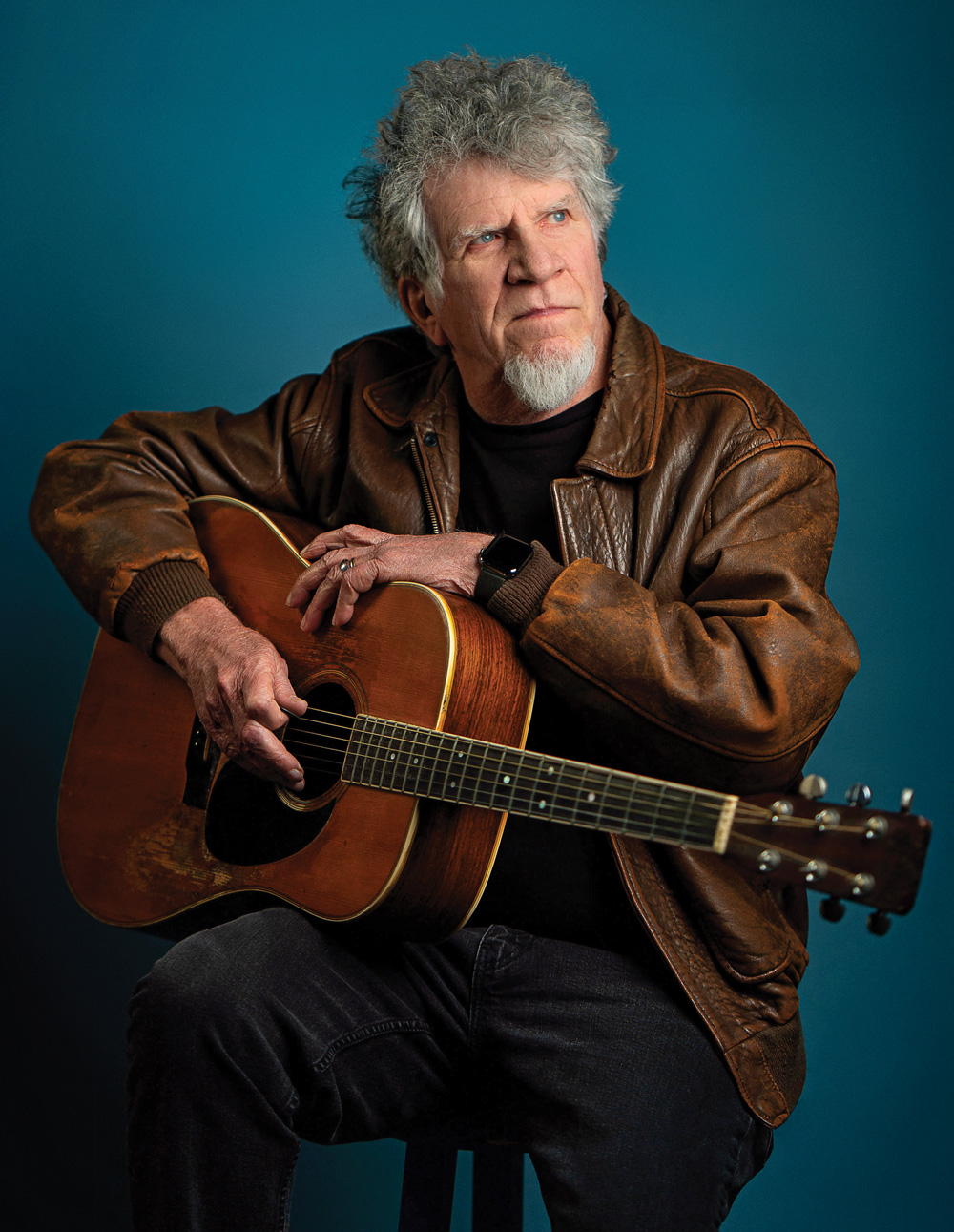
Kodac Harrison is the Renaissance man of Atlanta’s music and poetry scenes. He may be best known for the weekly open mic poetry readings he hosted at Decatur’s Java Monkey coffee shop (now The Reading Room) that began in 2001 and continued until 2016. The readings attracted such luminaries as Jericho Brown, Natasha Trethewey, and Patricia Smith, and five anthology books were published that featured poets who appeared at the readings.
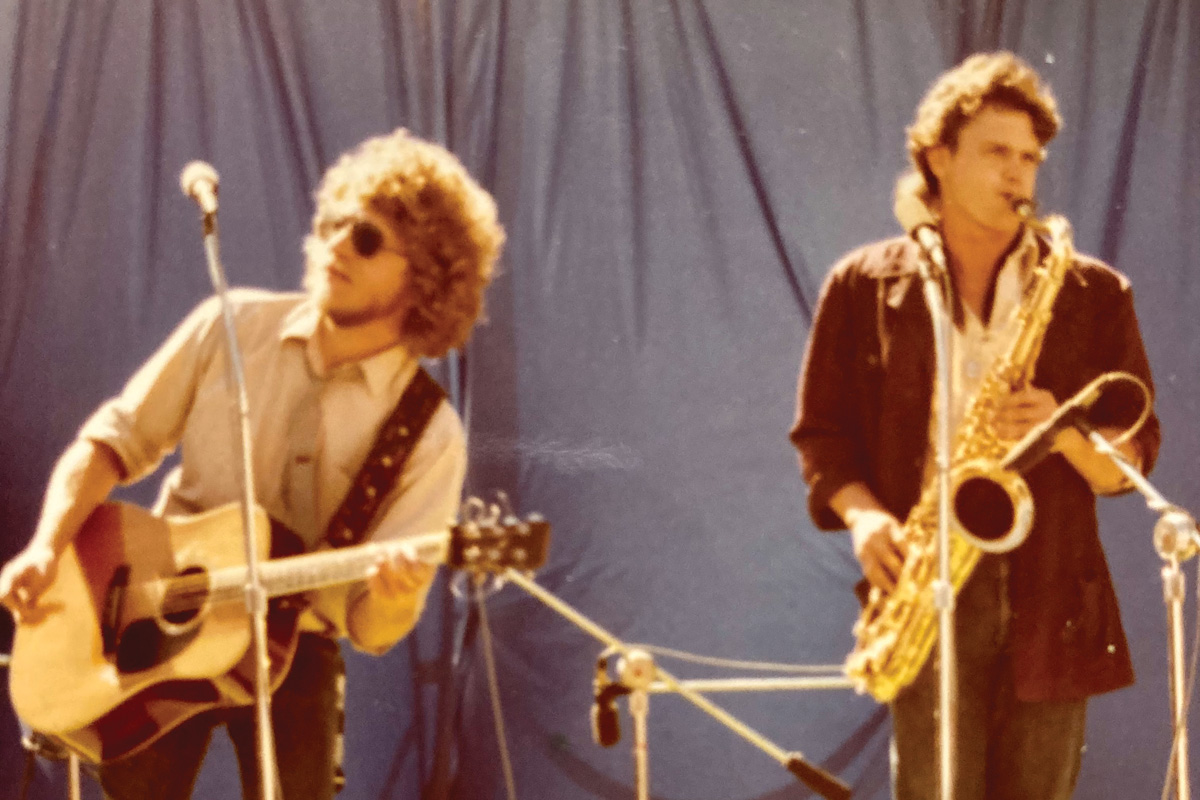
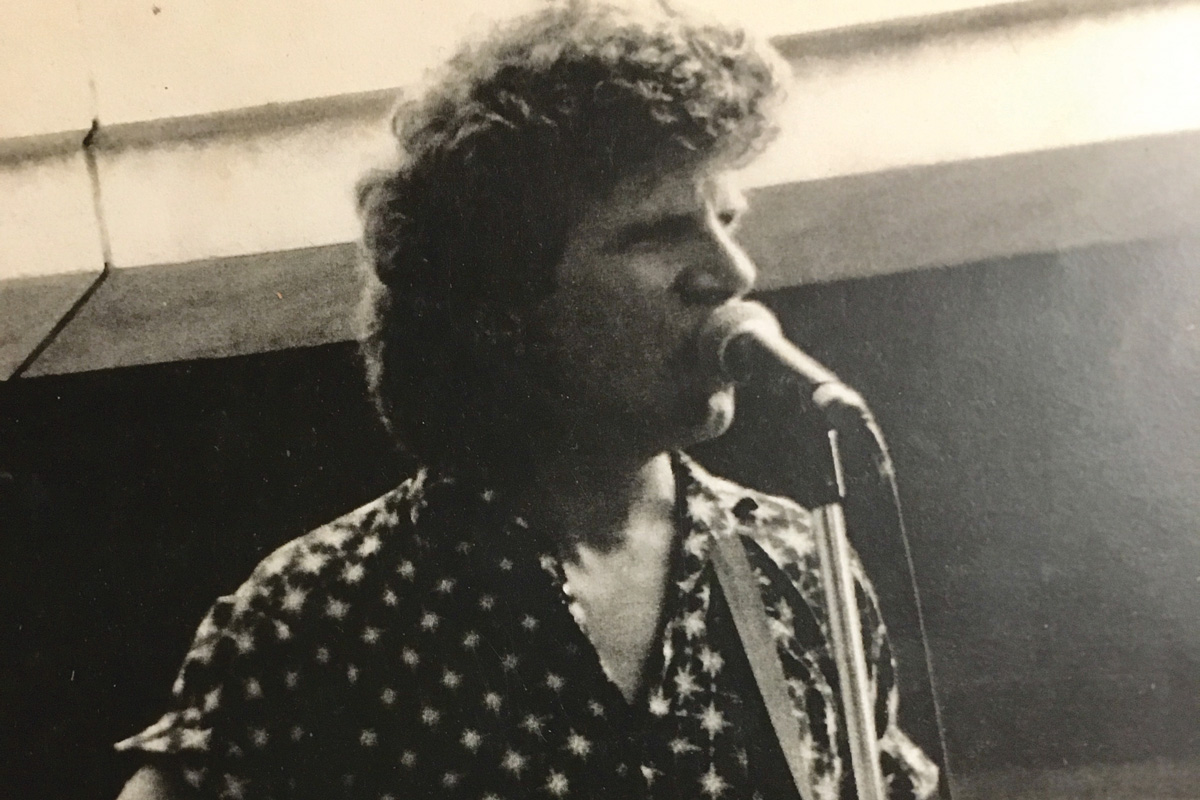
But music has always been his driving force. Harrison grew up in Jackson and graduated from Georgia Tech, then went on to receive a master’s degree in business administration from Tulane University in New Orleans. Afterward, he moved to California to become a musician. “I’ve had to struggle and I’ve been a starving artist, but I’ve been determined to do it,” he says. “By the time I played my first professional gig in 1975, most musicians my age had already put two or three albums out. I knew I was starting late, but I put together a band.”
After playing electric guitar in the band, he decided to go back to acoustic guitar and focus on songwriting. “I moved to Decatur to become part of Eddie Owen’s singer-songwriter scene,” he says. “That basically changed my life.”
Harrison, 76, was a prominent member of the group of musicians who performed for Owen at the Trackside Tavern and then Eddie’s Attic—including the Indigo Girls, Caroline Aiken, Shawn Mullins, and Michelle Malone. Over his five-decade career as an artist, he’s released 20 albums of music and spoken word. He performed at an Andrew Young tribute hosted by Maya Angelou and Harry Belafonte and at The Carter Center for former president Jimmy Carter.
Courtesy of Kodac Harrison
Courtesy of Kodac Harrison
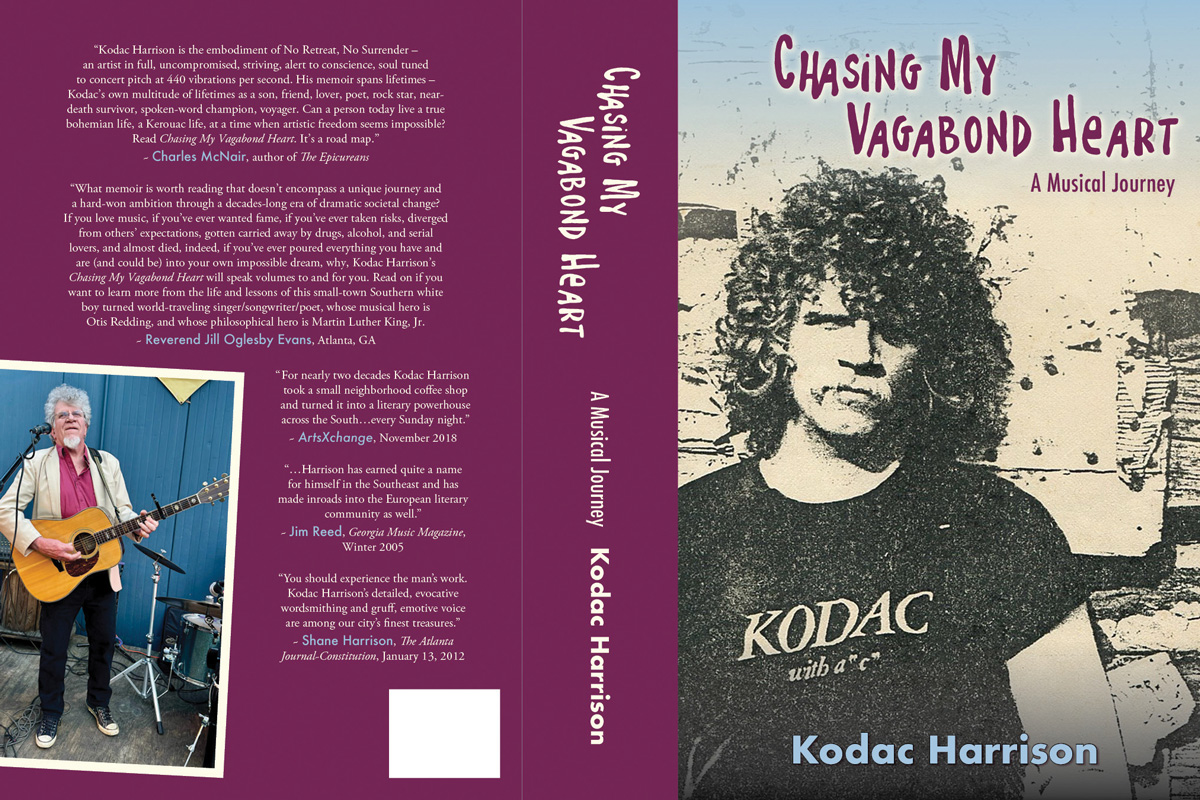
Earlier this year, Harrison released his autobiography, Chasing My Vagabond Heart: A Musical Journey. It chronicles his life, his memories as a performer, and a moment that almost cost him his life. “I was in an accident, if you could call it that, which led to six and a half hours of brain surgery,” Harrison says. “I stepped out of a moving van, and alcohol was a big part of that.” He was rushed to Grady Memorial Hospital and given a 1 in 100 chance of survival. “Twenty years later, I contacted the surgeon. He said, ‘Your recovery was one in a million.’”
Harrison’s latest album is From the Darkness . . . Comes the Light and features several of his friends, including Daniel Brown on violin, Erin Wigger on cello, Dave Webb on bass, and Edd Miller on drums and percussion. He said the album is dark. “It was some of the darker times of my career when I’ve had my heart broken,” he says. “I read the book about Springsteen making Nebraska. I’ve always been a Springsteen fan, and I thought I could do something like that.”
Courtesy of Kodac Harrison
A series of ailments also made it a struggle for Harrison to play guitar. “I have an essential tremor and, more recently, arthritis in my right hand,” he says.
Recently Harrison had deep brain stimulation surgery at Emory Healthcare, which controls the tremor but required surgeons to drill a hole in his head. “You have to be awake to make sure you’ve got the right place, and that is excruciatingly painful,” he says. “It feels like medieval torture.”
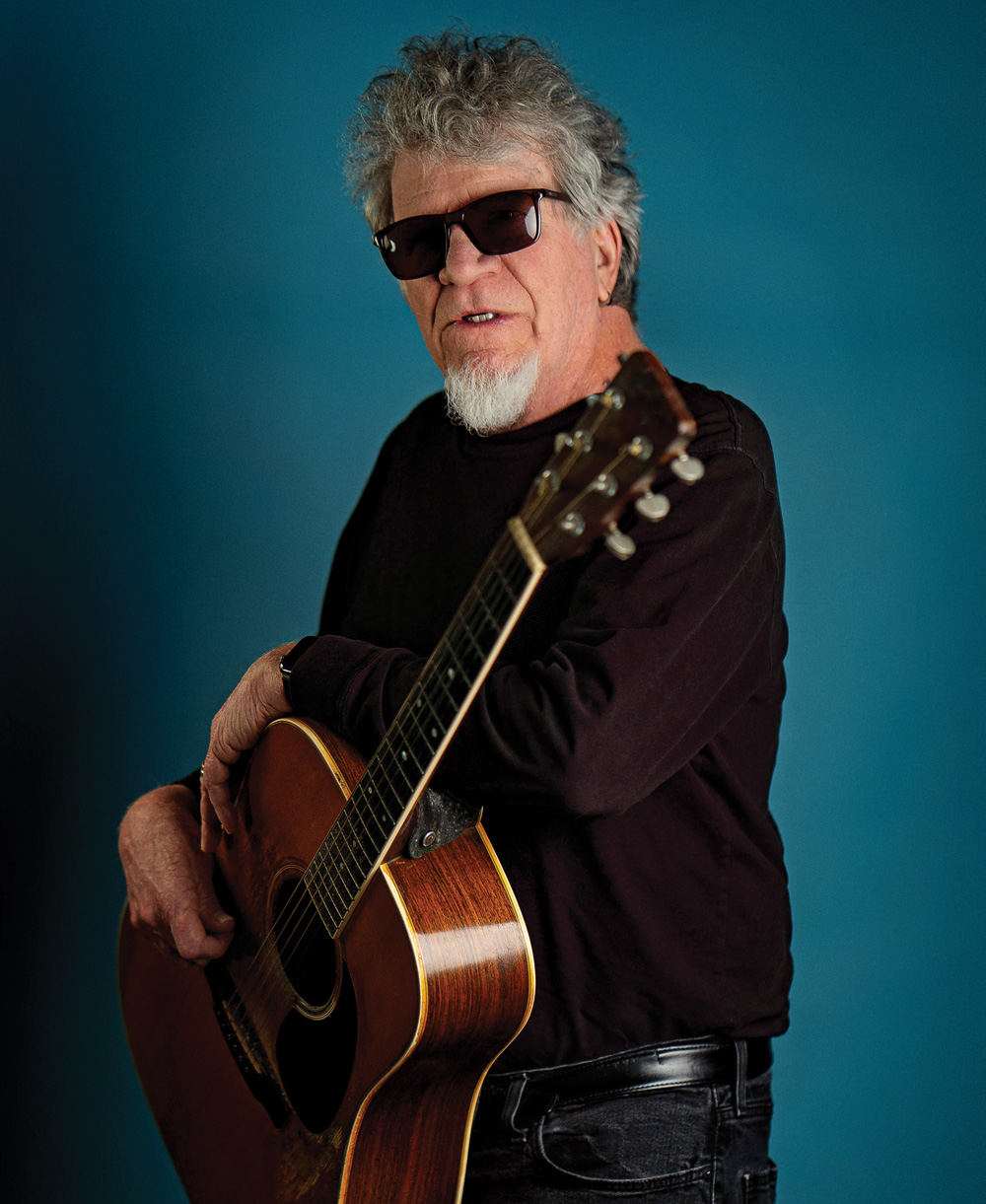
But the surgery has enabled him to play again. Harrison now hosts the Last Thursday of Poetry and Song at Wild Heaven Beer in Avondale Estates. Presented outdoors, if it doesn’t rain, it combines Harrison’s two loves: spoken word and music. Usually, the evening starts with poetry readings; then Harrison will perform a song or two, followed by a full musical set by the headliner. Recent performers have included such Atlanta fixtures as Darryl Rhoades, Aiken, and Heather Luttrell.
“This year was tough because we had three rainouts,” Harrison says. “I don’t like to move it inside. It’s wet and noisy and it’s part of the brewery business in there. But it’s been great to have different people play and read, and I usually do a little of both.”
Photograph by Steve West
He said his upcoming album may be his last. He plans to call it Backstreet Jazz, and it features saxophonist Nick Longo. “I’ve already put it together,” he says. “I wanted to feature saxophone. When I lived in New York City, the only time I spent money on anything other than food and $75 a week living at a hotel was to see Sonny Rollins at The Bottom Line.”
Harrison never expected to be a big star. And he’s comfortable with the niche he’s found as a poet and literary songwriter who sings with a well-worn voice. “I was a big fan of The Allman Brothers Band, and I just wanted to see what I could do with a guitar and vocals,” he says. “I wanted to sing with the soul of Otis Redding and speak with the power of Martin Luther King—not that I could do either one. My favorite quote from Bruce Hampton was ‘It’s okay to fail, man, if you’re reaching for the impossible.’”
This article appears in our January 2026 issue.