


Courtesy of Atlanta Beltline
For the past decade, the Atlanta Beltline Art program has hosted a music and cultural festival that aims to be so powerfully propelling, attendees can’t help but be swept away—driven to groove by sound waves that render tables, chairs, or anything else that anchors folks in place unnecessary. This event is No Tables, No Chairs, founded and led by longtime community musician and Georgia State University music professor Mausiki Scales, and it takes place on Saturday, April 25, on the Westside Trail.
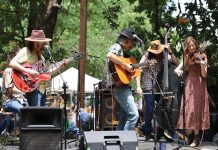
“The name is a reflection of personal experiences being in spaces where the energy elevates you and you just can’t sit down,” says Scales—spaces where “the urge to move comes from within.” For Scales, performing music has been at the center of his life: He grew up playing piano for his grandparents in Indiana and saxophone with his high-school marching band, and he formed a band while studying at Tuskegee University in Alabama. In Atlanta, he helms the band Mausiki Scales and the Common Ground Collective, which is known across the city for musical events Scales calls “long-winded experiences blending funk, soul, hip-hop, and Afrobeat.”
In 2011, Scales heard that the Beltline—about to officially open on the east side—was seeking submissions for art programming events. “I decided I wanted to share my personal experiences exploring the through line [from] the music of West Africa to the music of the diaspora, including interactivity with a [New Orleans–style] second line parade,” he says. Scales himself is well traveled across that diaspora, exploring its music around Senegal, Ghana, Brazil, and the Caribbean, as well as the United States. It’s this through line, celebrating culture across a grand expanse, that marks the music, the art, and the food of his annual festival, which began in 2013 in Old Fourth Ward.
Over the past decade, No Tables, No Chairs has grown to include a range of musical styles and groups, from hip-hop and jazz to marching bands at historically Black colleges and universities. The Atlanta Junkanoo Group brings in elements of Junkanoo Carnival, an elaborately costumed, African-rooted Caribbean street parade tradition. Egbe Sekere, an Atlanta-based percussive band specializing in its namesake gourd instrument, brings the beats, and Mausiki Scales and the Common Ground Collective headline the live concert that culminates the festival’s end. Before that, the other highlight is the FunkLine Parade—a play on “second line”—which blends the New Orleans parade tradition with a celebration of the African musical diaspora.
This year’s event begins around noon, with music from local DJ The Ear Dr. and snacks from food trucks. A marketplace features vendors selling art, essential oils, and crafts, while Funky Fun Stations offer hands-on opportunities to prepare for the afternoon parade: Bahamian-born multimedia artist Lillian Blades will lead workshops to create Junkanoo-style head or shoulder pieces, while musician Kamau Dormer will teach visitors how to craft Afro-Brazilian caxixi—percussion instruments made with gourds and seeds.
Once the marching bands and parade groups get on the move, stilt walkers and participants wearing feather headdresses are visually unmissable—but it’s sound that carries the crowd into the thick of the FunkLine Parade.
The parade weaves through Shirley Clarke Franklin Park, gathering revelers and ending in an open field near the stage. After an interlude emceed by The Ear Dr., the music festival begins and grooves into the night—a journey for ears, minds, and dancing feet.
This article appears in our March 2026 issue.