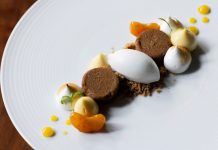



Photograph by Martha Williams
Atlantans have been more adventurous about exploring the diversity of Asian cuisine in recent years, from Vietnamese to Korean and Filipino. However, Indonesian food has been relatively underrepresented. While Georgia has one of the largest Indonesian communities in the Southeast, according to the U.S. Census Bureau—with more than 2,000 Indonesian Americans in metro Atlanta—the number of purely Indonesian restaurants in Atlanta by most counts is less than half a dozen.
A newly opened Buford Highway dessert cafe, Gula, offers the complex flavors of the Southeast Asian country in an approachable format. “We want to elevate Indonesian flavors and presentation, and desserts and snacks are easier for people to understand,” co-owner Gloria Ariesandi says.
Ariesandi says that Gula, which means “sugar” in Indonesian, is the first Indonesian dessert cafe in Atlanta, and perhaps the country. However, it’s not her family’s first foray into the food business. She owns Gula with her sister, Angela Ariesandi, following in the footsteps of their parents, Ninik Sulistijani and Daniel Ariesandi, and their maternal great-grandmother.

Photograph by Martha Williams
The matriarch sold sweet and savory snacks, including pastries, in the street markets of Surabaya, a central Indonesian city, and their mother used to plan road-trip stops around trying foods. “Those experiences taught our mom recipes, a deep love for food, and the joy of cooking for others,” Gloria says.
The family left their country in 2000, two years after violent riots erupted in Jakarta and nationwide. They settled in Philadelphia and then Atlanta, where they owned an Indonesian restaurant and market before selling them in 2014. These days, Ninik can often be found helping her children in Gula’s kitchen. (Daniel passed away a few years ago.)
Passed-down recipes are the foundation of the menu, showing off a labor-intensive cuisine that often incorporates the savory, the sweet, and the spicy in one bite. “There are no substitutes for the ingredients we use and no shortcuts for the complex processes,” Gloria says. Two ingredients form the basis of many desserts: Palm sugar adds a deep richness, while coconut tames any spicy edges and adds a creamy, tropical undertone.
Another ingredient in rotation is pandan, made from a tropical plant, with a subtly nutty flavor similar to vanilla that seems incongruous with its pastel green coloring. Pandan is the basis for the delicate jam filling in Gula’s kaya toast. It’s also the aromatic topper for one of the cafe’s strongest dishes, bubur campur, a colorful warm bowl of black sticky rice, sweet potato and taro dumplings, tapioca jelly, and pandan custard, topped with sweetened coconut milk.

Photograph by Martha Williams
For those who can’t resist a photo op, the es (ice) desserts are piled high with traditional toppings like avocado, jackfruit, durian, and condensed milk, delivering the same “I can’t believe this all works in the same bowl” sentiment as similar Asian desserts like Filipino halo-halo and Taiwanese tshuah-ping.
Prix-fixe tea service ($47.50, before tax and gratuity) is served twice daily (excluding Fridays) in the cheery dining room. There is also a limited weekend brunch menu, which features a rotating selection of dishes such as pandan French toast and Javanese martabak telor (a pancake stuffed with eggs, ground beef, and a dash of curry). A new addition, the Bali Brunch tray, is a cornucopia of small bites, such as cut fruit, martabak telor, and kue-kue (one-bite sweets).
While javaphiles worship Indonesian coffee, some Americans are less familiar with Indonesian tea. Gula serves 19 varieties; highlights include pandan, a roasted green tea with notes of vanilla, and the color-changing asana bleu, made from butterfly pea flower, lemongrass, and ginger.
Don’t miss the bajigur, a coconut milk–based drink that warms you from head to toe. It simmers at Gula for hours, infusing aromatics such as lemongrass and ginger. Gloria says it will cure whatever ails you, and that’s the point: “We want to show our love through our food,” she says.
This article appears in our April 2026 issue.