If you’ve eaten soup dumplings at Kitchen Master in Suwanee, you already know owner-chef Ian Peng’s cooking. Now the restaurateur is aiming higher. Wabi Sabi, an upscale evolution of Kitchen Master, will open in Midtown Union in August or September 2027, near Fleming’s Prime Steakhouse and White Windmill Bakery & Café.
Peng hails from Taiwan. He moved to Suwanee at age 9 and later worked his way up from dishwasher to sushi chef. He launched Kitchen Master in Frisco, Texas, in 2020, with family-style, shareable Asian dishes, and has since debuted locations in Suwanee and Taiwan. Now, he’s ready to branch out.
“I want to take build on what I have. We’ll get more creative with the flavors and ingredients like morels, abalone, and quail,” he says.
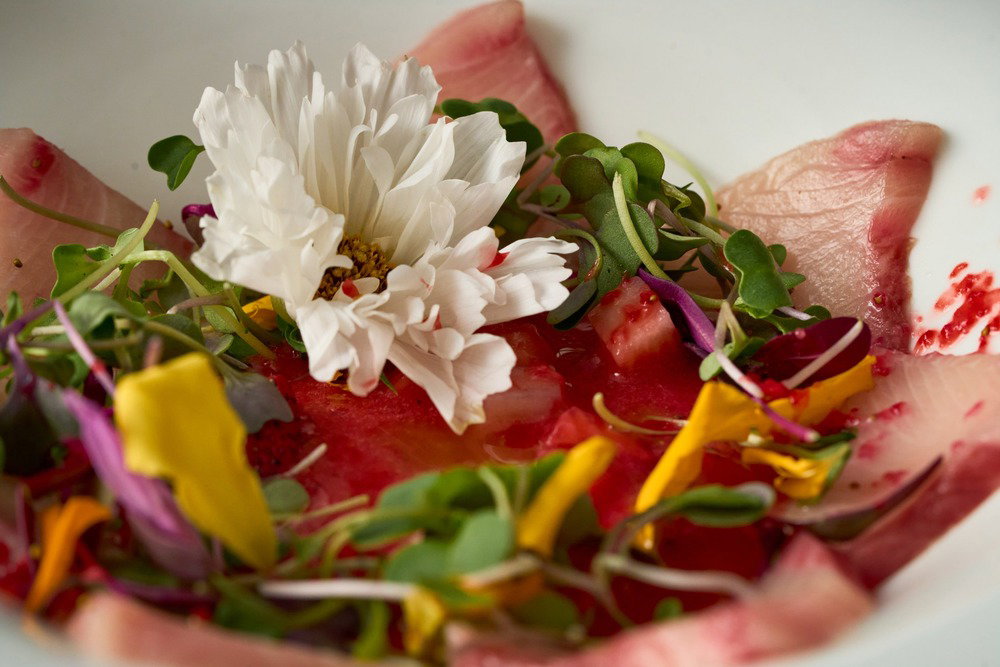
Strawberry hamachi carpaccio with yuzu strawberry vinaigrette
Courtesy of Wabi Sabi
Peng says roughly 40 percent of the menu will be unique to Wabi Sabi with twists on elevated dishes like tea-smoked Peking duck. Expect premium ingredients like Berkshire pork, Japanese A5 Wagyu, Australian MS9 Wagyu, and truffles. Other offerings will feel familiar, like bao, dumplings, noodles, stir-fry and grilled dishes. Soup dumplings get a playful treatment, with flavors drawn from regional Taiwanese and Chinese cooking, including vine peppers known for their numbing effect. For lunch, look for teishoku sets served with rice, soup, and an entrée.
The bar is another place Wabi Sabi will show its creative side, utilizing smoke and clarification techniques. Peng plans to have a dozen craft cocktails made with Asian ingredients and named for zodiac signs. Dessert cocktails may feature Thai tea, Vietnamese coffee, cinnamon bark, or Sichuan pepper.
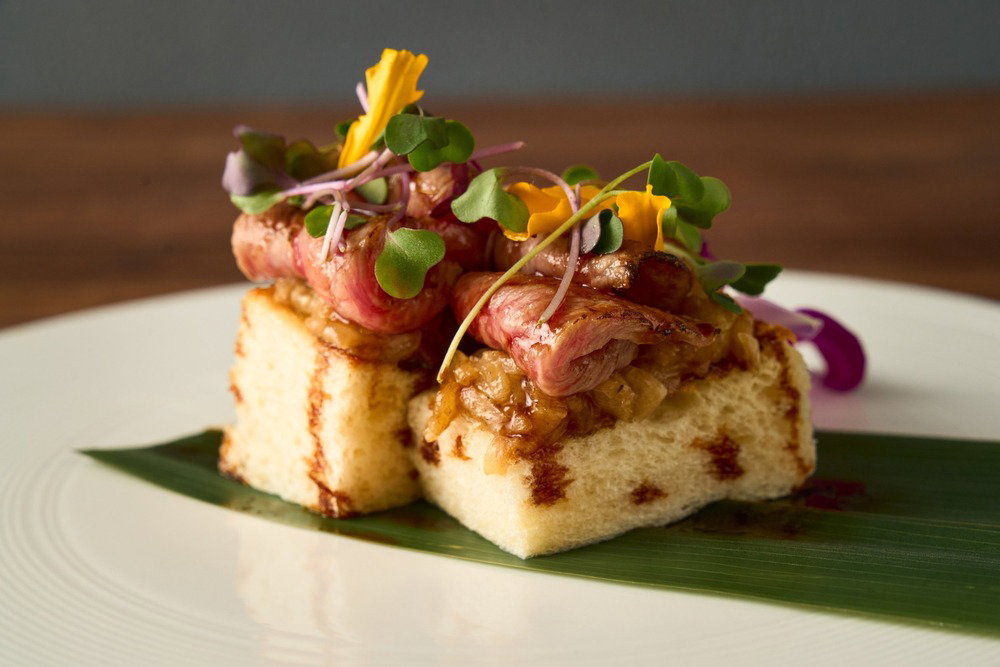
Wagyu Sando (slightly torched A5 Kagoshima Wagyu with miso butter onion and a Japanese tare sauce over toasted Japanese milk bread)
Courtesy of Wabi Sabi
Bottled beers will be primarily Japanese and Taiwanese, plus a few local picks. The sake list will feature 15 to 20 selections, from sweeter to fresh and filtered styles. Wines span New and Old World, both by the bottle and glass.
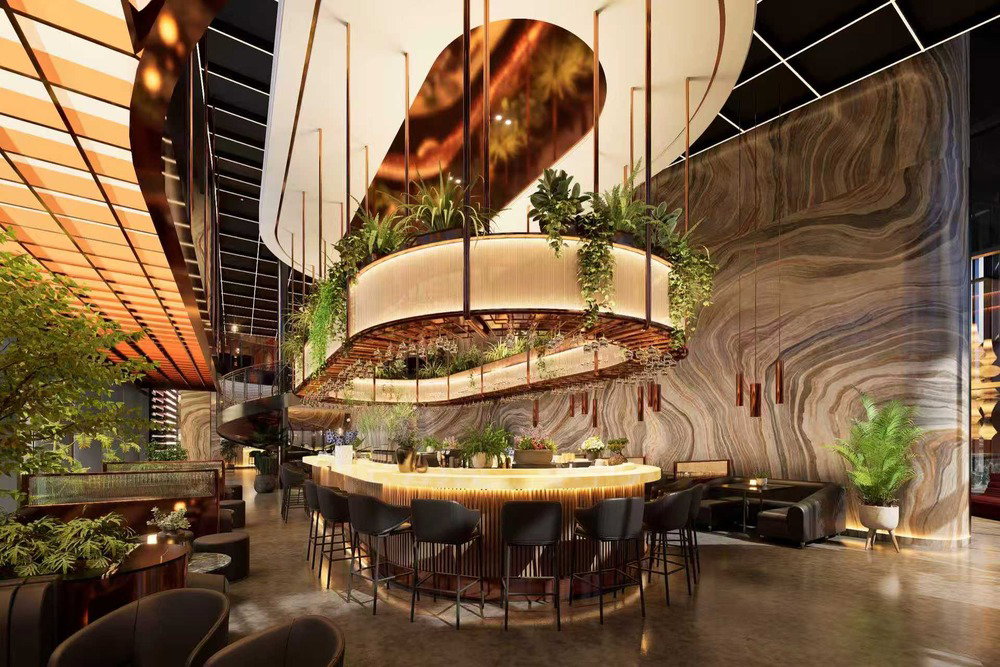
The 11,000-square-foot, dual-floor restaurant takes its name and look from the Japanese philosophy of wabi-sabi, which advises finding simplicity in imperfection, especially in nature. Peng, who studied art in high school, says it was the art form he loved most.
A rendering of the mezzanine
Courtesy of Y Studio
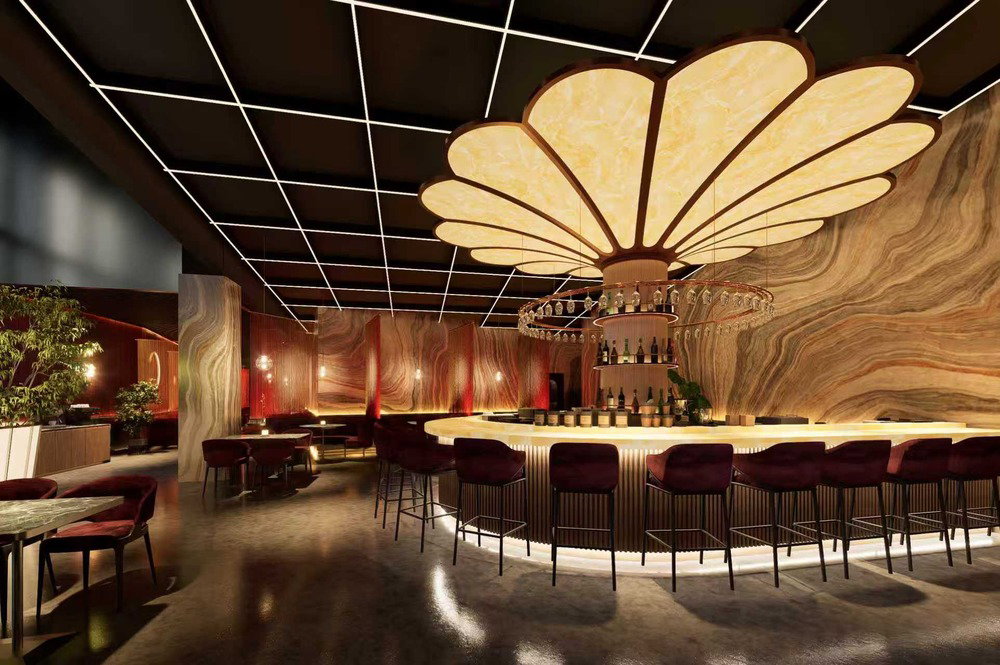
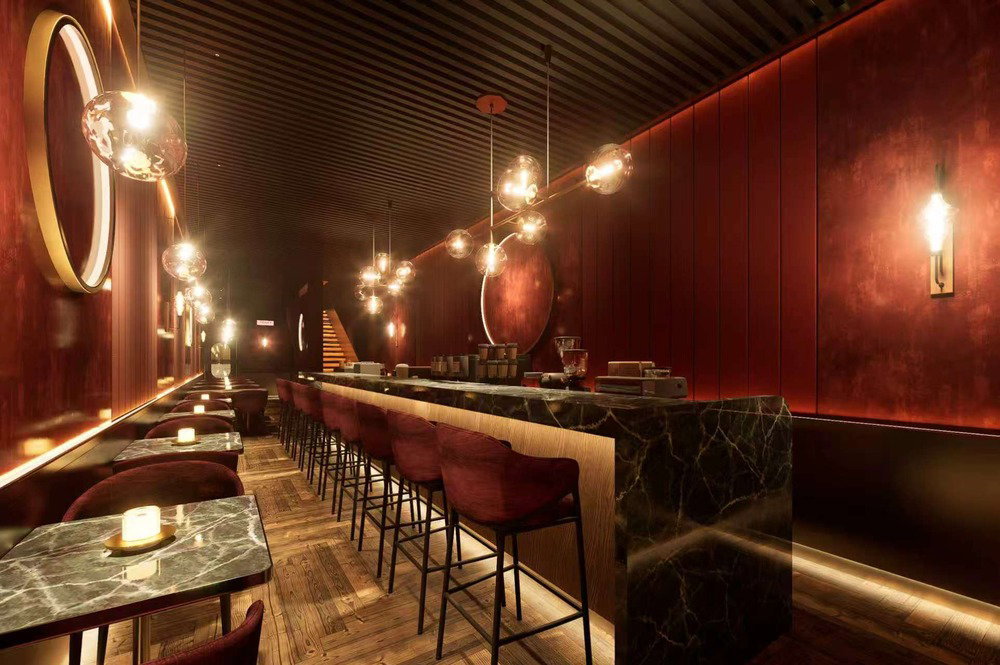
That appreciation for natural simplicity carries into the design. The ground floor houses the dining room, which boasts floor-to-ceiling windows and a 20-foot tree. Upstairs, a mezzanine overlooks the dining room. It’s loungey, lively, and dim with a small menu of finger food and drinks to finish a night. An invite-only speakeasy offers a third place to hang out, with red accents, a mysterious aura, and a chef-driven, tapas-style menu that rotates seasonally.
A rendering of the speakeasy
Courtesy of Y Studio
Peng also has his sights for Wabi Sabi set beyond Atlanta—he’s already looking for a space in Dallas.
Wabi Sabi is located in Midtown Union at 1331 Spring Street NW.
A couple of months—it’s been long and fast at the same time. I’m so grateful for [SCAD founder] Paula Wallace. She had a vision when she started SCAD. Emily in Paris had a bad review in France, but Paula thought it would be part of pop culture. She breaks the rules. When Paula wants something, she makes it happen.
This outfit, Fitoussi said, was her favorite. It has been iconic of the show Emily in Paris. Now it is on view at SCAD Fash as part of a new exhibition of Fitoussi’s costumes.
Photo courtesy of SCAD.
What are some of your favorite costumes on display?
I have a special tenderness for the black gingham outfit worn by Emily in Season One. It’s very simple. It’s this jacket-and-short set in black-and-white gingham with a red beret. This particular costume inspired the most Halloween costumes and fan art! It means something. It has a special resonance with everyone around the world. From Mexico to Minnesota to Atlanta, people could identify with it. It’s timeless. It’s simple. It’s black and white. The red beret became the iconic piece of Emily in Paris.
Lily Collins as Emily in episode 103 of Emily in Paris.
It’s a good balance between niche designers, high-end brands and couture, and one-of-a-kind vintage pieces. We highlight designers from all over the world: French, Korean, Vietnamese; fashion is the international language everyone can understand. It’s joyful, it’s playful—we can do whatever we want. It’s very colorful. It’s an homage to joie de vivre, to be happy, to express ourselves with costume clothes and color. To be free.
Lily Collins as Emily in episode 202 of Emily in Paris.
That was the best and the hardest part. It’s 112 costumes. To decide on those 112, I needed to abandon some that I really loved also. But we needed to make a choice. It’s a dialogue between mannequins too. The way you position a mannequin in front of the other mannequins, it tells a story.
A new exhibition, Emily in Paris: Fashion without Rules – Costumes by Marylin Fitoussi, is now open at SCAD FASH.
Photo courtesy of SCAD.
Talk to us about the exhibition’s name, Fashion Without Rules.
I want to encourage everybody to be their own judge, their own stylist. To free themselves from the rules. When fashion magazines ask me to give rules, I tell them it’s not about rules, it’s about individuality and desire. Some days I don’t feel confident but clothes give me the strength. Find pieces that make you happy and fit your body. If you feel strong, divine, and beautiful, let it be. Until my last breath, I want to encourage people to be whatever they want.
Jean-Christophe Bouvet as Pierre Cadault (left) and Philippine Leroy-Beaulieu as Sylvie Grateau (right) in episode 302 of Emily in Paris.
What about the exhibition do you think will surprise people?
The explosion of colors. We paint the mannequins—every mannequin has a color, every costume is colorful. We’ve created that sensation of freedom, of breathing, of letting everything explode around you. Everything is very joyful.
I also hope they will be excited to see the details. Every shoe is curated, every bag is curated. They all have meaning. There’s a lot you don’t see when you watch the show, like the beauty of a heel. [At the exhibit], you’ll see the magic and hard work that every fashion designer is putting into the pieces. It requires a village: The designer, the embroiderer, the miller, the art departments who are willing to disappear a little bit. You will see what the human mind can do in front of AI. All of these beautiful things were created by human brains and hands. The power of human hands is limitless.
This black and white display of Marylin Fitoussi costumes is now on view at SCAD Fash in Midtown through March 14.
Photo courtesy of SCAD.
The million-dollar question: What defines French style?
It’s a fantasy … Yes we have more messy hair, we avoid looking overdressed with too many colors and too many prints. Just a little makeup, nice eyeliner. We avoid demonstrating that we spent many hours to have the famous je ne sais quoi. We don’t change clothes for the night. It’s more about attitude.
Philippine Leroy-Beaulieu as Sylvie Grateau in episode 410 of Emily in Paris.
The Richard Meier–designed Stent Family Wing at the High
Photograph by Gabriella Valladares
Before the High Museum of Art was shadowed by a forest of office towers and apartment skyrises. Before mentions of the High were ubiquitous selling points for the 140 new Midtown developments that have sprouted like a SimCity creation since the year 2000 alone. Before the museum counted nearly twice as many household memberships as there are people in the city of Decatur, and before its collection welcomed names such as O’Keeffe and Monet. Before any of that, the High was just a donated house far from downtown’s bustle—albeit a grand home among the storied, bygone mansions of Peachtree Street.
The High Museum of Art opened 100 years ago this month as the city’s first art museum, laying the foundation for an institution with global renown today. For Atlanta, the mid-1920s were indeed a roaring era. The city’s commercial and cultural bedrocks—Delta Air Lines, Atlanta History Center, and Hartsfield-Jackson Atlanta International Airport—have recently turned a century old. The High now joins that centennial club, having played no small role in Atlanta’s transformation, both at the museum’s doorstep and far beyond Midtown’s now-cosmopolitan streets.
“This is an institution that grew apace with the times, with the sense of what was important, and I think we’ve evolved,” says Rand Suffolk, the museum’s director since 2015 and the ninth in its history. “We’re also blessed with killer real estate.”
Atlanta newcomers—or longtime residents—may be surprised to learn the High’s name is no reference to high art, high society, or highfalutin anything. It’s a nod to Harriet “Hattie” High and her husband, Joseph M. High, who in early-20th-century Atlanta owned furniture and daily goods stores called J.M. High Company.
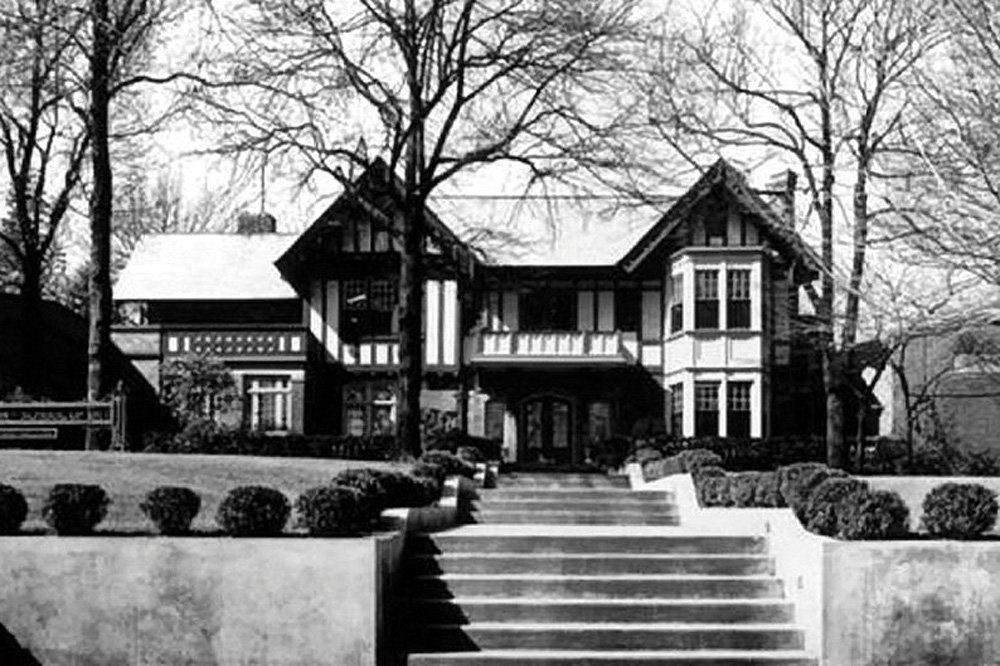
Hattie High wasn’t involved in the Atlanta Art Association, which was founded in 1906, but after her husband died that year, she was inspired by an essay in a Atlanta Chamber of Commerce publication advocating for an Atlanta art museum. In May 1926, she donated a sprawling, 24,000-square-foot Tudor-style residence on Peachtree Street between 15th and 16th streets to serve as that space, where the High’s 12-acre campus stands today.
“The timing was right, and [Hattie High] wanted to do something great in memory of her husband and for her city,” says Julia Forbes, the High’s associate director of institutional research.
In those days, the High was considered to be in the boonies, relatively speaking. Still, some artists made the trek: In 1931, celebrated Black painter Hale Woodruff made the bold move of simply walking in the High’s front door after he’d arrived in town, caught a streetcar, and rode it to “some kind of a museum way out on Peachtree Street.” (Today, several of his murals are on display at the High.)
“There were just a few people living out there in the country,” Forbes says. “I think Midtown grew up around [the High] because, in a lot of senses, the museum came first, and these beautiful neighborhoods . . . were just starting. We’re like a lynchpin.”
The original High on Peachtree
Courtesy of the High Museum
The first dedicated museum building, complete in 1955
Courtesy of the High Museum
Harriet “Hattie” High
Courtesy of the High Museum
The High’s campus grew to include three other estates over time, plus a fourth home converted into an art school just south of the High house. All of those were demolished between 1954 and the early 1960s to make room for new buildings; the first to go up was a museum building that opened along Peachtree Street in 1955.
That was seven years before 106 Atlantans—including much of the city’s arts community leadership—died in the Orly Field plane crash outside Paris following a 27-day European museum tour. Forbes says the tragedy, which has been described as “the day Atlanta wept,” proved a powerful motivator for public fundraising for the High and the Atlanta Arts Association.
Those contributions helped fund development of the landmark Atlanta Memorial Arts Center (now the Woodruff Arts Center), which opened in 1968, complete with Auguste Rodin’s The Shade sculpture, a gift from France. The High, the Alliance Theatre, and the Atlanta Symphony Orchestra were able to operate under one roof, so to speak—forming a true artistic hub.
The High famously leveled up in 1983 when its stand-alone building designed by Richard Meier opened. Now called the Stent Family Wing, the Meier building drew rave reviews, including from TheNew York Times, which called it “a strong and potent work of architecture in itself, yet seems completely to understand and respect the works of art within it.”
In the late 1990s, celebrated Italian architect Renzo Piano was invited to expand the High’s campus. That resulted in three sleek new buildings centered on a piazza and designed under the slogan “A new High for Atlanta.” It debuted in November 2005, tripling the complex to a total of 312,000 square feet, as it stands today.
Suffolk says those landmark additions have stood the test of time as both architectural jewels and dynamite spaces for showcasing art. “Invariably we hear that [international traveling exhibitions] look better at our place,” Suffolk says. “It did scale [the museum] up physically, but it also scaled our ambitions.”
By 2024, Midtown Alliance, a nonprofit organization of leaders in the neighborhood, estimated that 60 new people were moving into the area every week. Suffolk says a goal at the High has been to translate that growth to higher consistent patronage, and it appears to be working: Over the past decade, the number of membership households has ballooned by 80 percent, surpassing 47,000 last year.
An aerial view of the High’s campus in Midtown
Photograph from footage by Alex Gerhardt, courtesy of the High Museum
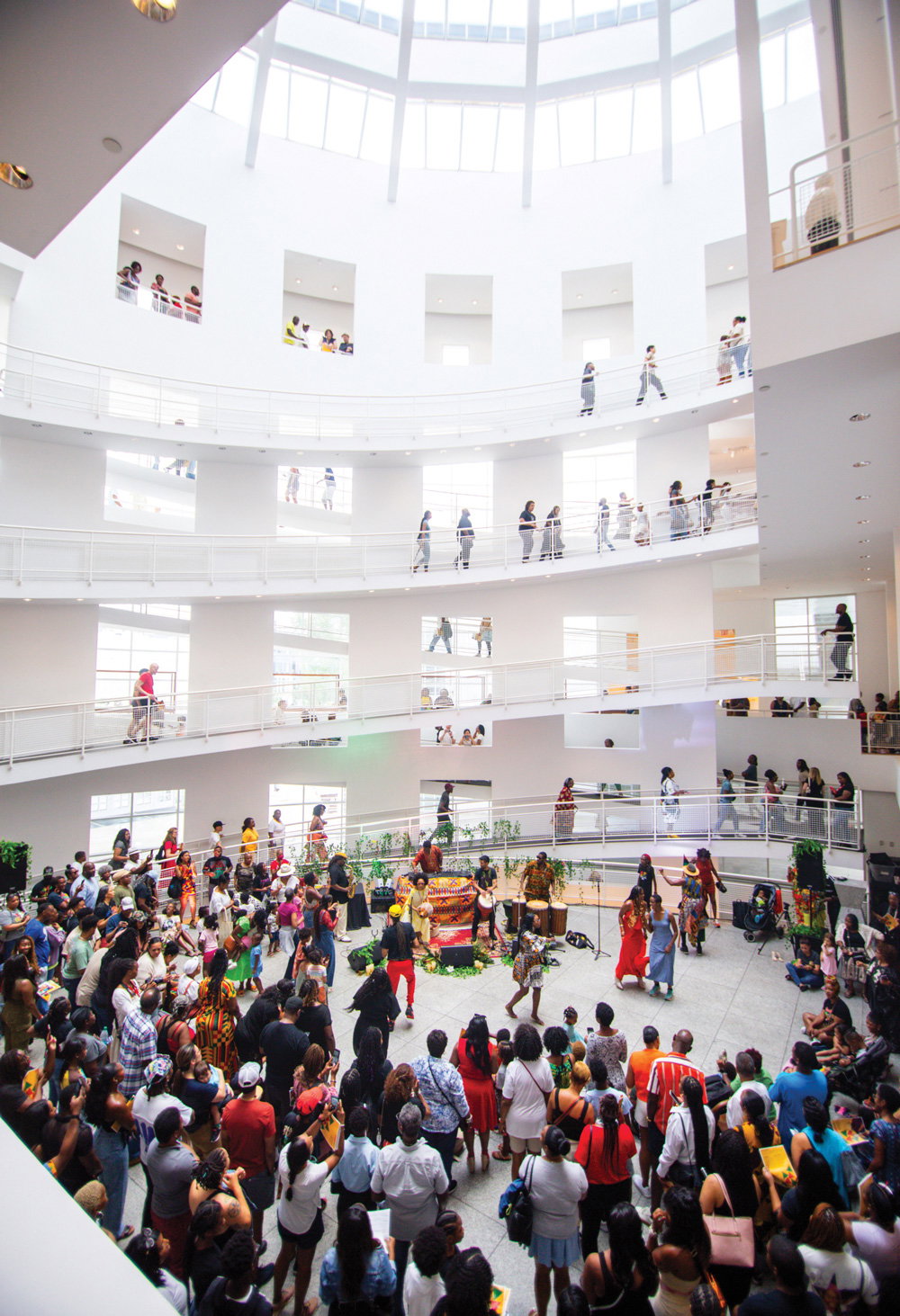
The High’s 1983 construction of the Stent Family Wing was a renowned addition for its four-story skylit atrium in the shape of a quarter circle
Photograph by Alphonso Whitfield
A key to that success, as Suffolk sees it, is a tactical shift during his tenure from more blockbuster exhibitions to ones that dovetail with the interests of Atlanta’s growing, diverse, intown community. Exhibitions this fall include sculptural work from Martin Puryear and photo illustrations from Walter Wick, creator of I Spy. The High has also started to host more than museum visits, with regular events such as High Frequency Fridays (happy hours with a DJ). “My [predecessors’] goal was to build a place physically,” Suffolk says. “What we’ve tried to do is fill the place with extraordinary investments in our collection and by inviting all of Atlanta to come in on a very consistent basis.”
To commemorate the centennial, the High is planning a full season of celebrations immersed in the neighborhood it has helped transform. That includes a block party that will close a section of Peachtree Street (October 18), a day of free admission for all (October 21), a Halloween shindig (October 30), and a Centennial Holiday Market before Thanksgiving (November 20 and 21).
Robin Howell, a High board member for two decades and past chairperson, says Midtown would be an entirely different place if not for the museum. “Midtown would certainly have grown [without the High],” Howell says, “but I don’t think it would have the same identity or energy.”
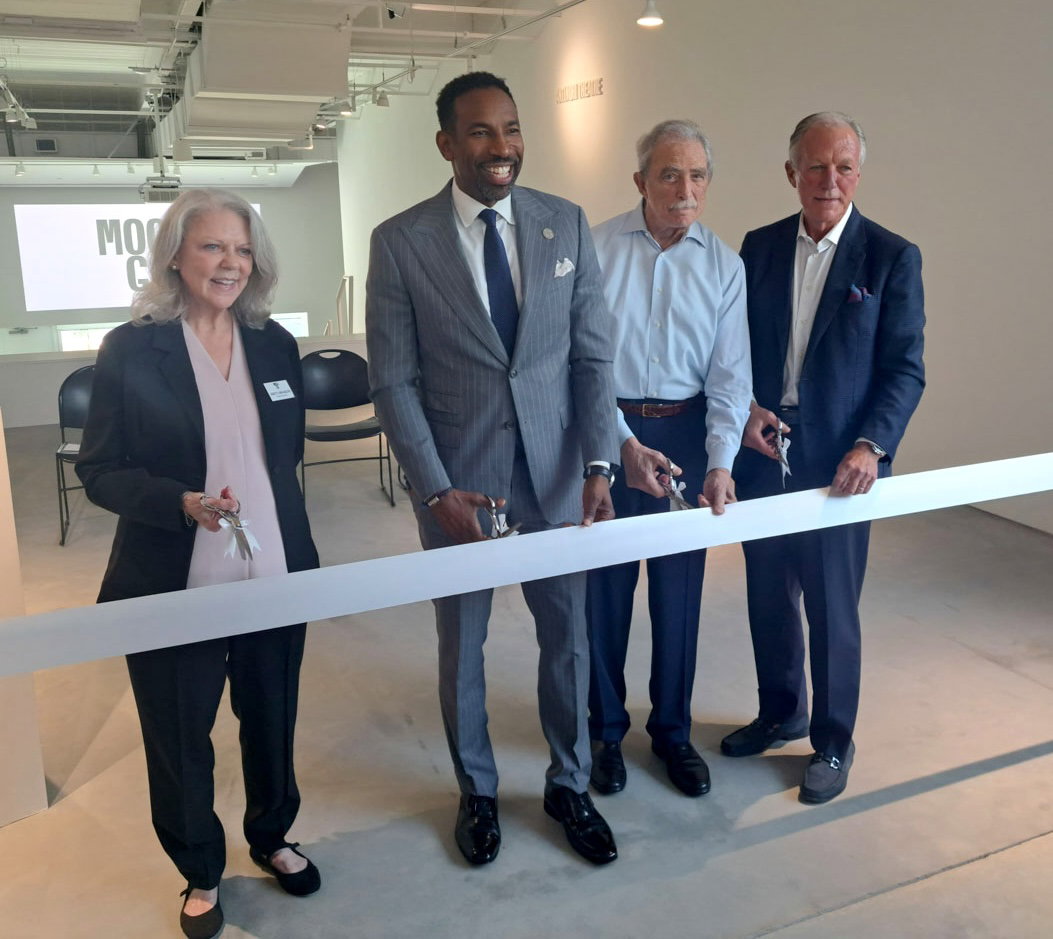
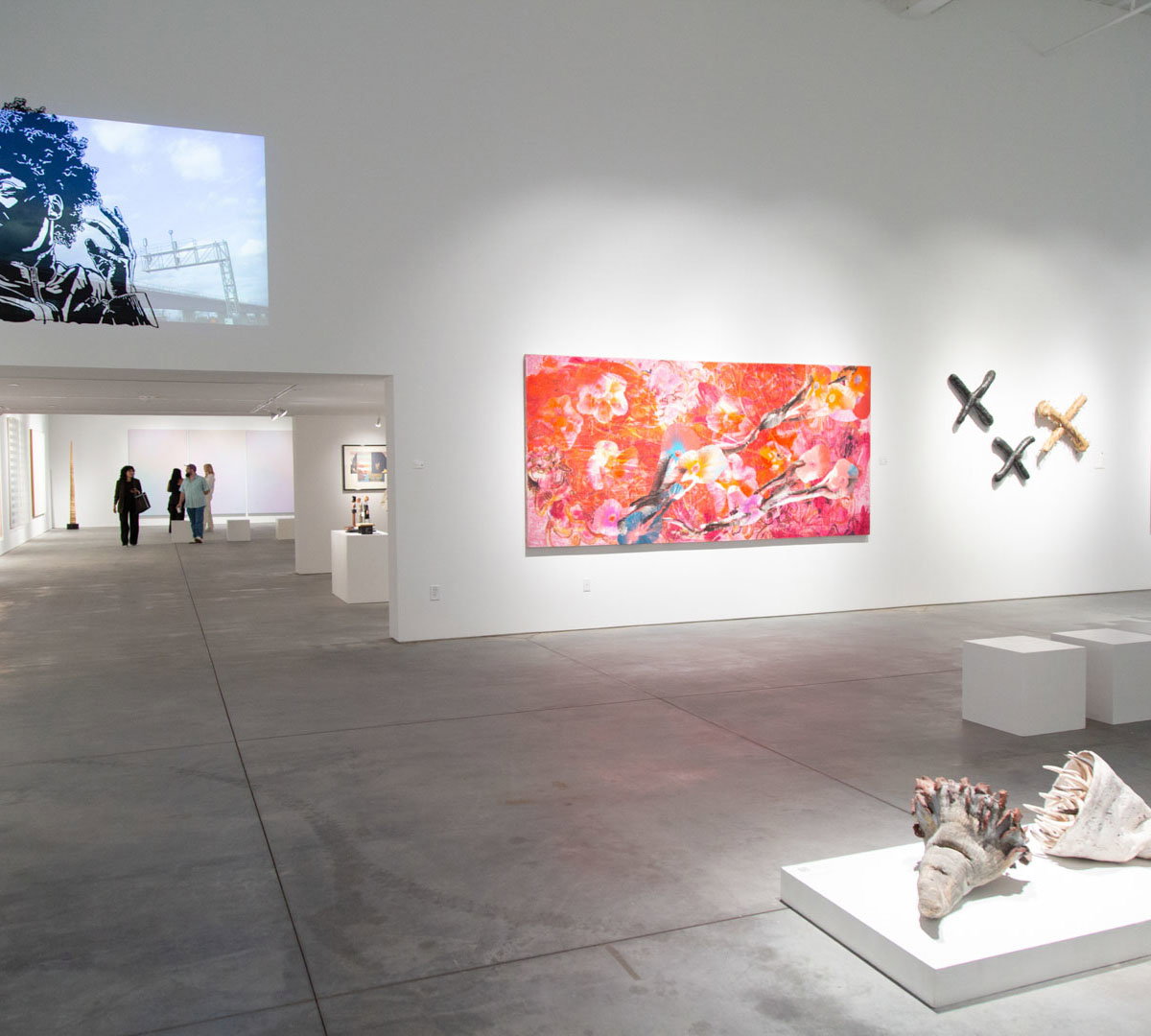
The new MOCA GA opened privately for a VIP reception Monday September 14. Atlanta Mayor Andre Dickens cut the ribbon on the new $16.4 million museum located on the campus of The Goat Farm Arts Center in West Midtown.
Photo by Martha Williams
UPDATE: As of today, October 7, MOCA GA’s new permanent home in Goat Farm Arts Center is open to the public. While the museum opened briefly for a private VIP reception on September 14, as reported below, the general public was asked to wait due to a hold-up with the city. That wait is now over. The general public can visit this week October 7-10 (Wednesday from noon to 5 p.m., Thursday and Friday from noon to 8 p.m. and Saturday from noon to 5 p.m.). The museum will be closed October 13-17. Starting on October 20, the museum will be open for its regular museum hours from noon to 5 p.m. On October 23, from 6 p.m. to 8 p.m., MOCA GA will host the opening reception for its 2025-2026 Working Artist Project Fellow Wilay Méndez Páez’s solo exhibition, La aleatoriedad de los símbolos/The Randomness of the Symbols. More information can be found online at mocaga.org.
—
Mayor Andre Dickens helped cut the ribbon on the new home of the Museum of Contemporary Art of Georgia (MOCA GA) at a private ceremony September 14, marking a milestone for the museum’s long-awaited West Midtown building.
Dickens joined MOCA GA founder and CEO Annette Cone-Skelton, board chair Philip Babb and capital campaign donor Ron Antinori for the 4 p.m. ceremony, which drew roughly 200 people, including artists, donors, the building’s architects, museum supporters and others from Atlanta’s arts community. After the ribbon was cut, guests streamed from the lobby into the museum’s galleries for a first official look at the new space.
Mayor Andre Dickens helped MOCA GA CEO and founder Annette Cone-Skelton cut the ribbon at the VIP opening of the new museum September 14, 2026.
Andrew Alexander
The celebration marked the culmination of more than 26 years of work by Cone-Skelton and the museum’s supporters to create a permanent home for an institution dedicated to Georgia artists.
“This building has been a long time coming,” Cone-Skelton told the crowd. “It’s taken over 26 years to raise the funds, buy the land, create the building, to move in, and here we are.”
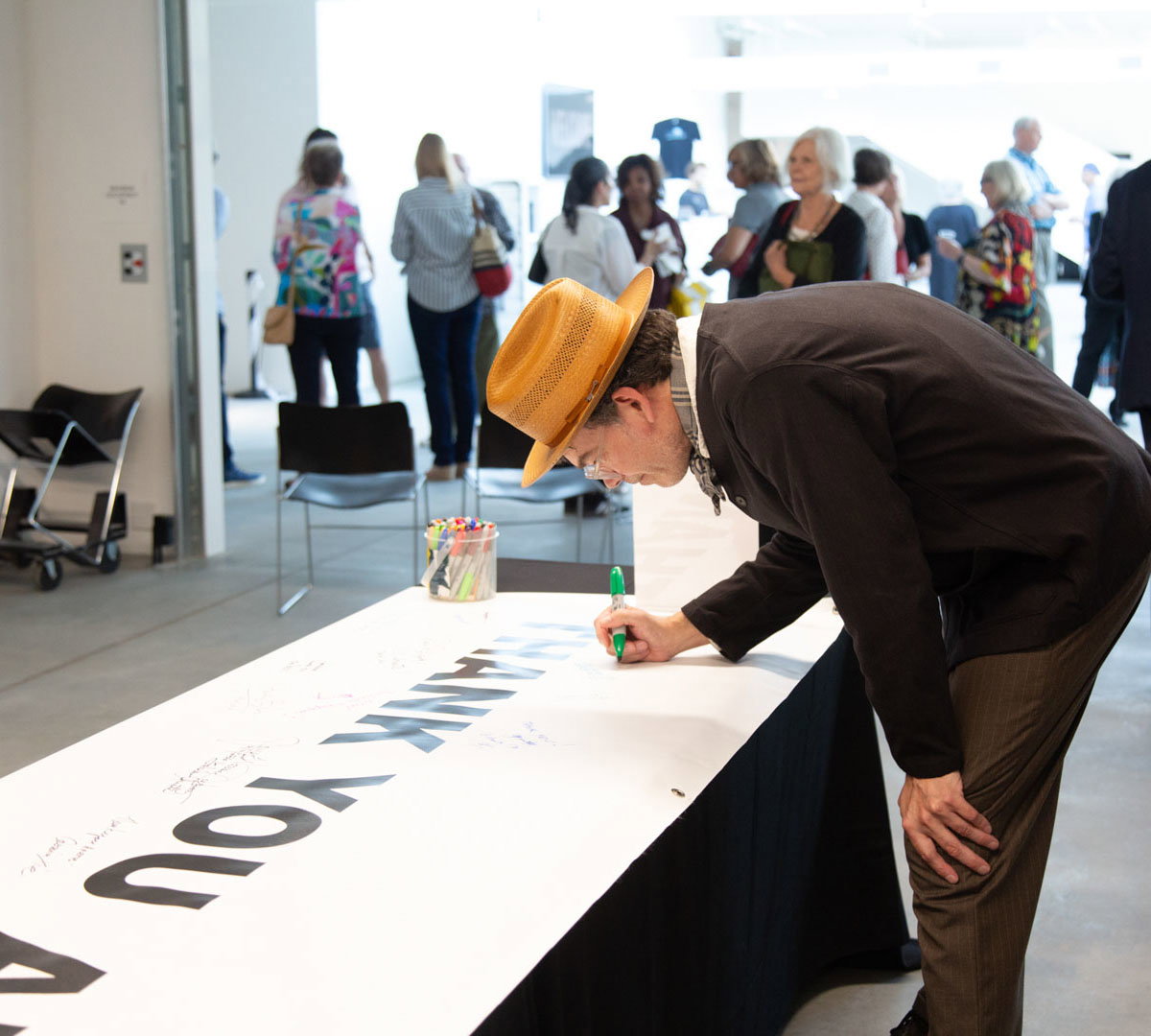
A visitor signs a banner at the VIP reception for the private opening of MOCA GA on September 14, 2026.
Photo by Martha Williams
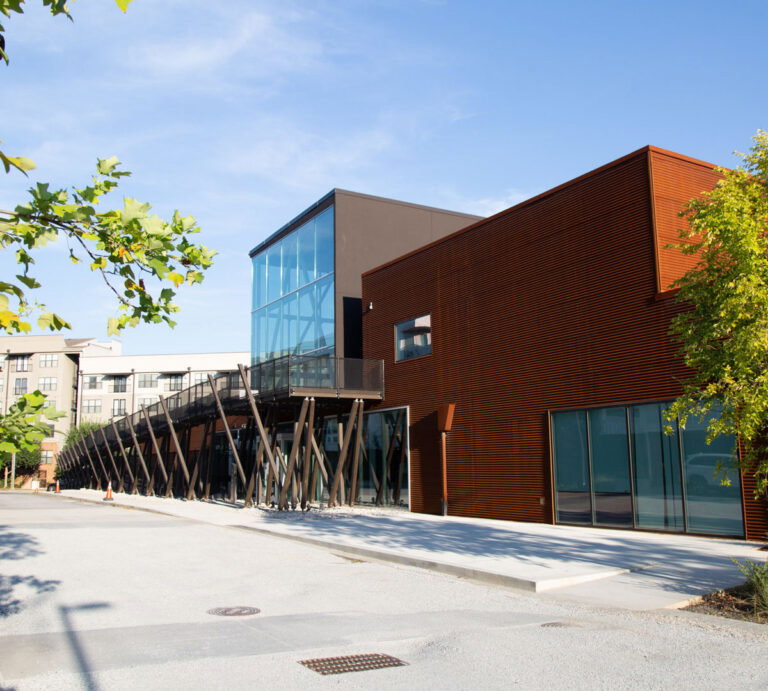
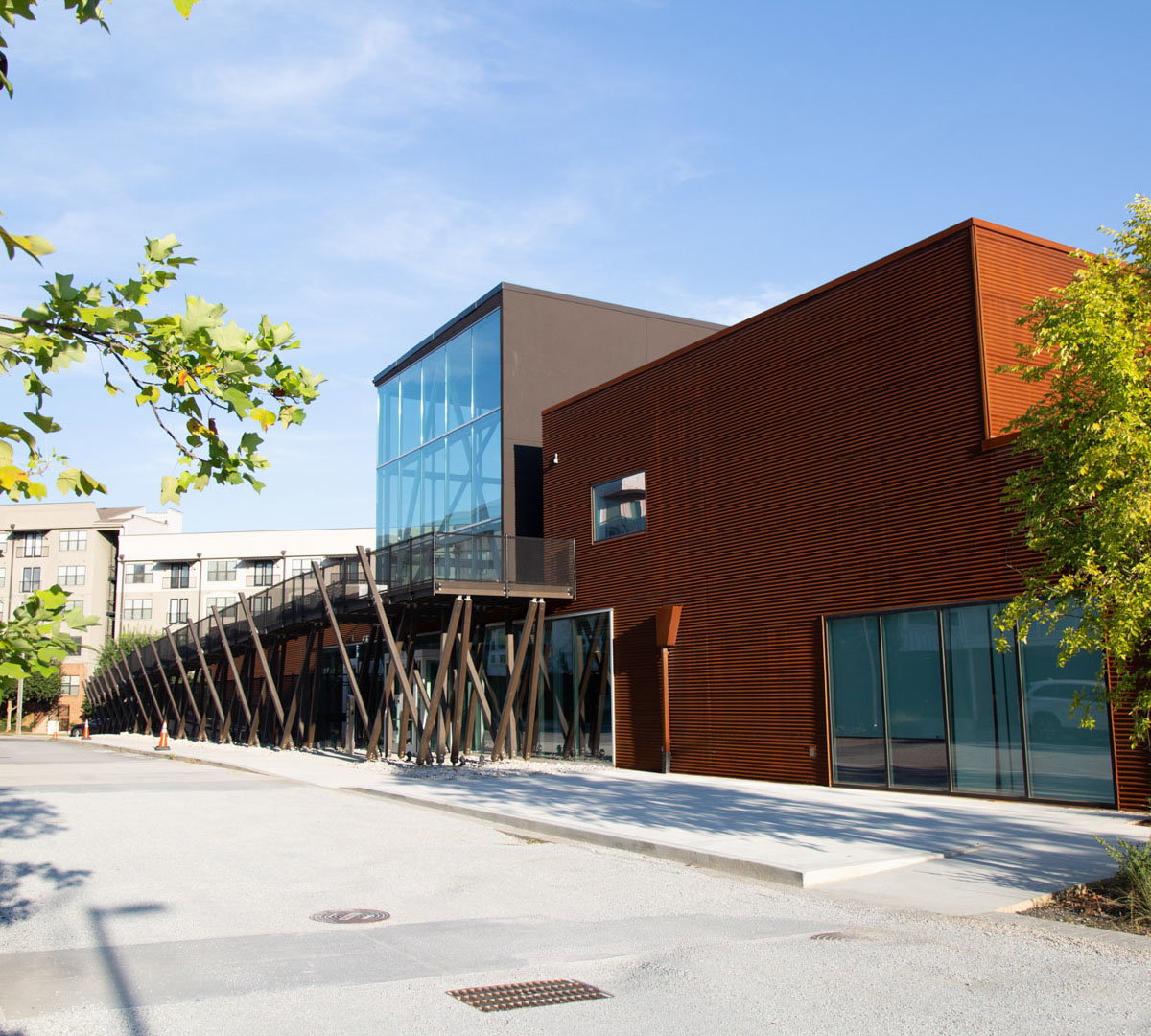
The 26,000-square-foot building, designed by Mack Scogin Merrill Elam Architects, represents a major new chapter for MOCA GA. The $16.4 million project gives the museum five galleries and a permanent home for a collection that has grown from roughly 250 works when the museum was founded in 2000 to more than 1,600 today.
Dickens, who announced a $2 million City of Atlanta contribution to MOCA GA’s capital campaign in 2024, said the investment was about more than a new building. It was about keeping artists in Atlanta and preserving their work for future generations.
“Artists really do something for a city that no one else can do: they record us,” Dickens said. “Long after a building changes or a neighborhood changes, or a generation passes, somebody can look back at the work created here and they will understand something about Atlanta at that very moment in time.”
That idea is at the heart of MOCA GA’s mission. The museum was founded by Cone-Skelton and David Golden in 2000 in part to create an institution dedicated to preserving and exhibiting the work of Georgia artists. Today, its collection includes more than 1,600 works, along with an archive documenting generations of Georgia artists and arts organizations.
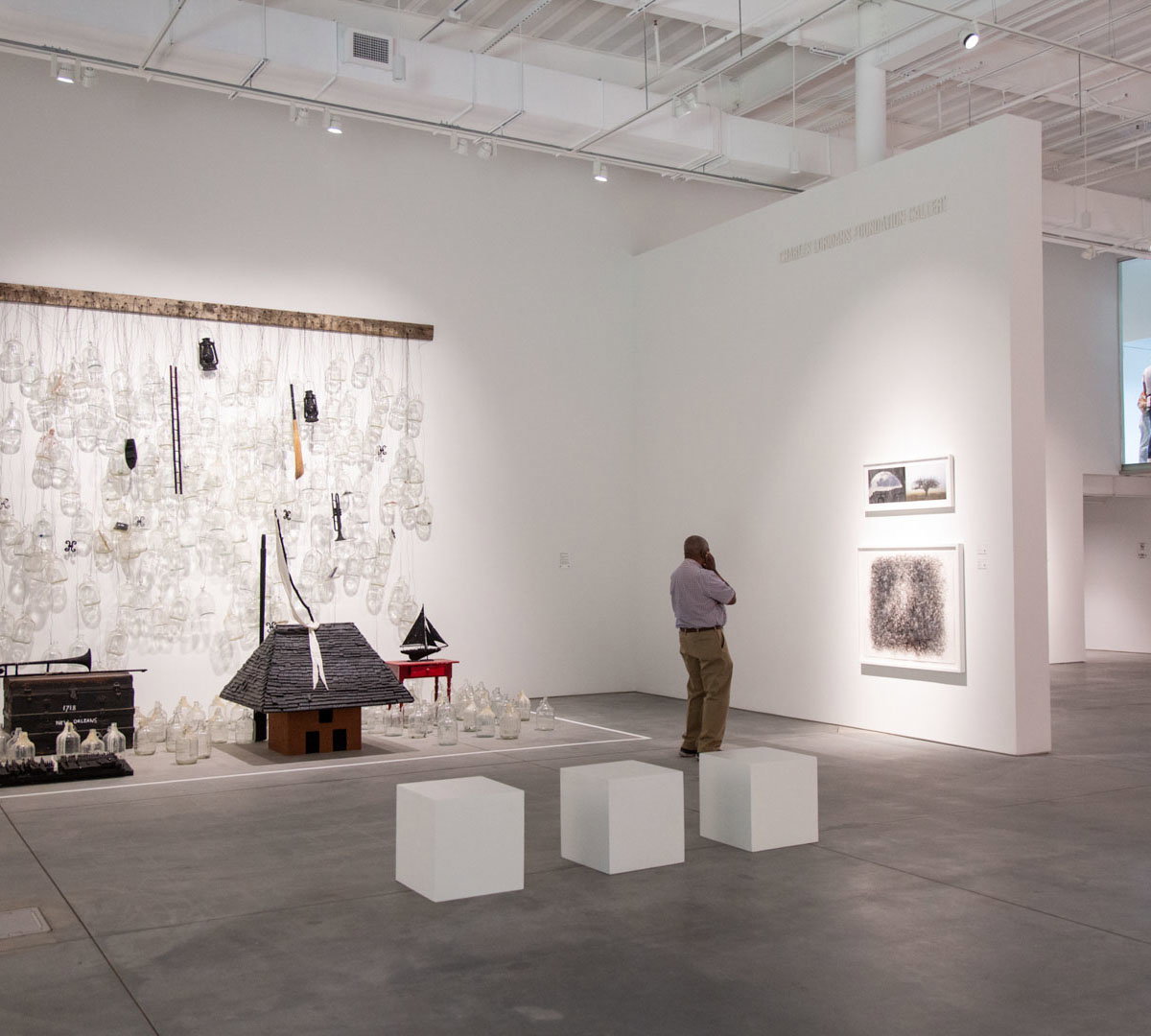
A visitor peruses one of MOCA GA’s five new galleries at the private opening of MOCA GA on September 14, 2026.
Photo by Martha Williams
During the ceremony, Cone-Skelton presented Dickens with a lithograph titled Saguaro Spirits by Larry Walker, the Atlanta artist and longtime Georgia State University professor.
Walker was born in Franklin, Georgia, in 1935 and moved with his mother and siblings to Harlem as a child. He returned to Atlanta in 1983 to become a professor and chair of the art program at Georgia State University, where he remained until his retirement in 2000. He continued making and exhibiting art for decades and was one of the inaugural recipients of MOCA GA’s Working Artist Project award. He passed away in December of 2023.
The particular print presented to Dickens was selected from Walker’s estate by his daughter, the renowned contemporary artist Kara Walker.
Annette Cone-Skelton (left) and Atlanta Mayor Andre Dickens (right) pose for a picture with Larry Walker’s “Saguaro Spirits.”One of the five new gallery spaces at the new MOCA GA, which opened for a private ribbon-cutting reception on September 14.
Photo by Martha Williams
The gift offered a fitting connection between the museum’s mission and Dickens’ remarks about artists preserving the history of a city. Walker spent decades documenting and contributing to Atlanta’s arts community, while MOCA GA has spent more than two decades building an institution devoted to preserving the work of Georgia artists.
After Dickens’ remarks, Cone-Skelton thanked him and the city for supporting MOCA GA and Atlanta’s arts community. “What you said is exactly who we are, what we are, and what we hope to be,” she said.
The ribbon-cutting officially opened the building, but the public will have to wait a little longer. MOCA GA is expected to open to the public later this month, pending final permits.
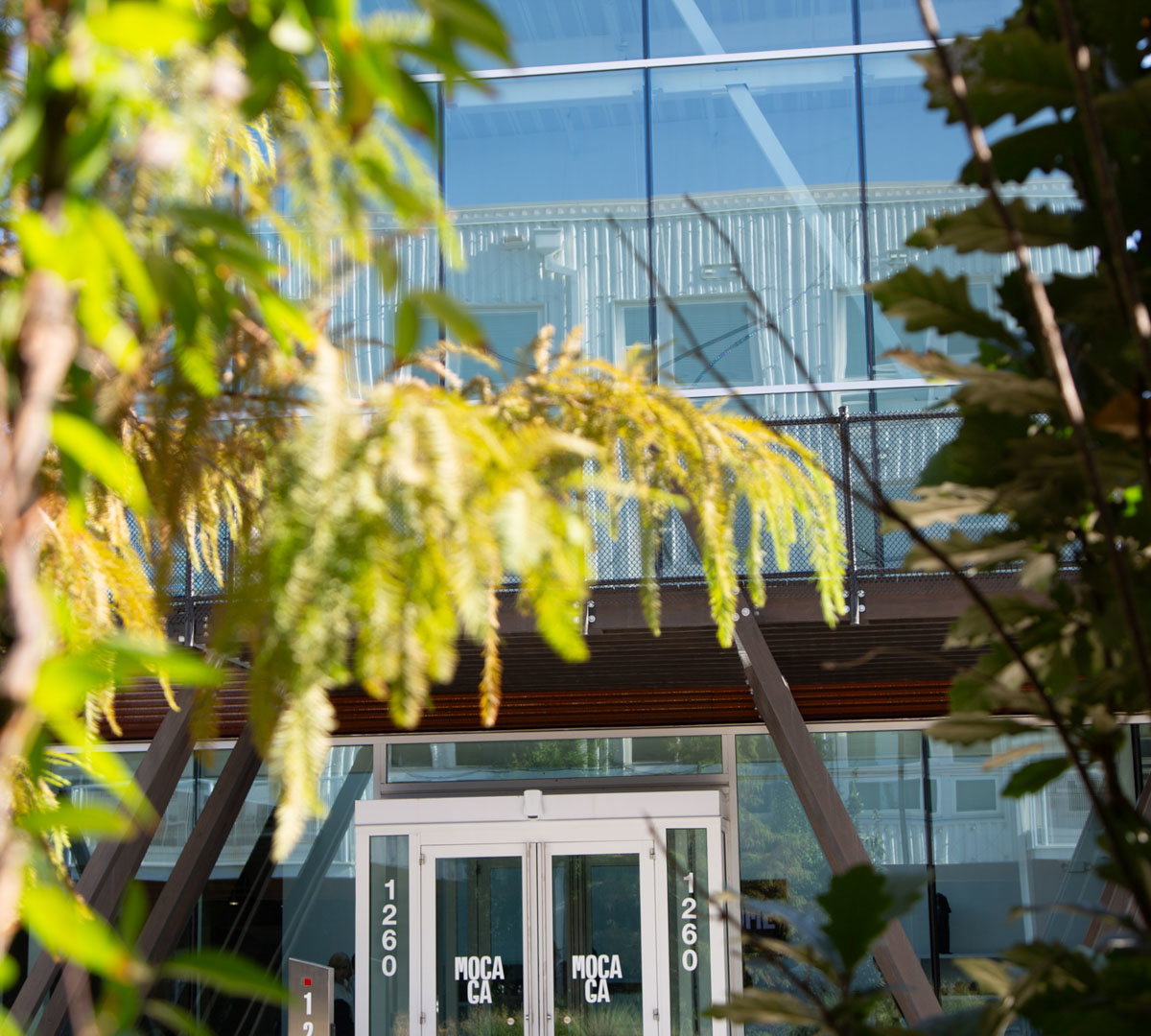
The front entrance of the new $16.4 million MOCA GA. The City of Atlanta gave $2 million toward the project. MOCA GA’s mission is simply to help Georgia artists.
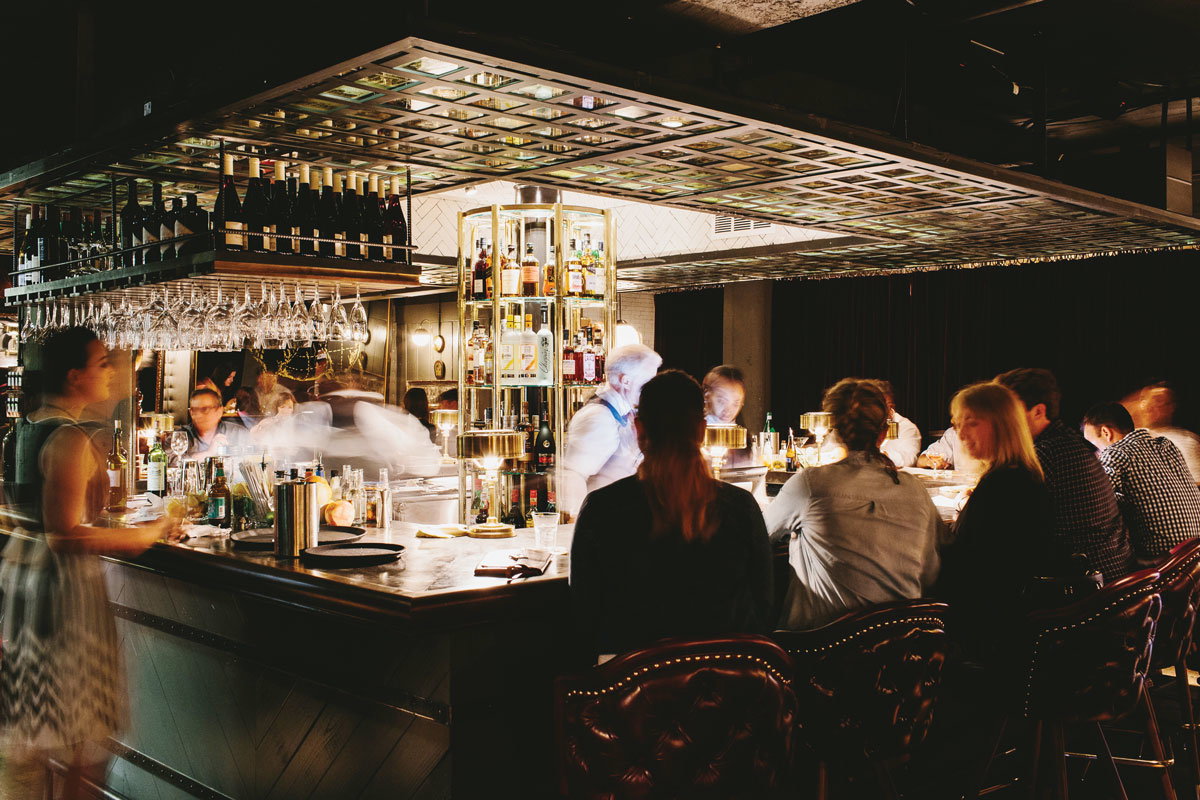
Marcel’s entrance quietly announces itself. A small, cursive neon M reveals its tucked-away location on the second floor of the Westside Provisions District. But once inside, the 1920s-inspired steakhouse is anything but understated, with vest-and-tie service and opulent presentations of French cuisine.
One of the most prominent restaurants in prolific restaurateur Ford Fry’s empire, Marcel opened in 2015 and has remained a Westside fixture. Fry dedicated it to 1940s French boxer Marcel Cerdan, complete with backlit vintage photos of Cerdan that are checkered over the bar.
There are options beyond steak worth a visit, from the escargot served in their shells with rich parsley butter to the crispy and tender chicken paillard with artichokes and lemon butter. Among the steaks, try the Marcel Reserve Cut, a wood-fired, eight-ounce New York strip finished in garlic butter and topped with thyme. A unique and savory addition to any steak is the Perigourdine sauce made with black truffles, veal stock, and brandy.
Marcel’s speakeasy ambience is right for sharing special occasions and also for dining solo at the bar. The staff is attentive and knowledgeable, willing to work with diners on how to best configure the meal. For dessert, a server recommended an off-menu item: a small scoop of ice cream topped with a tiny dollop of caviar, a combination both preposterous and impressive.
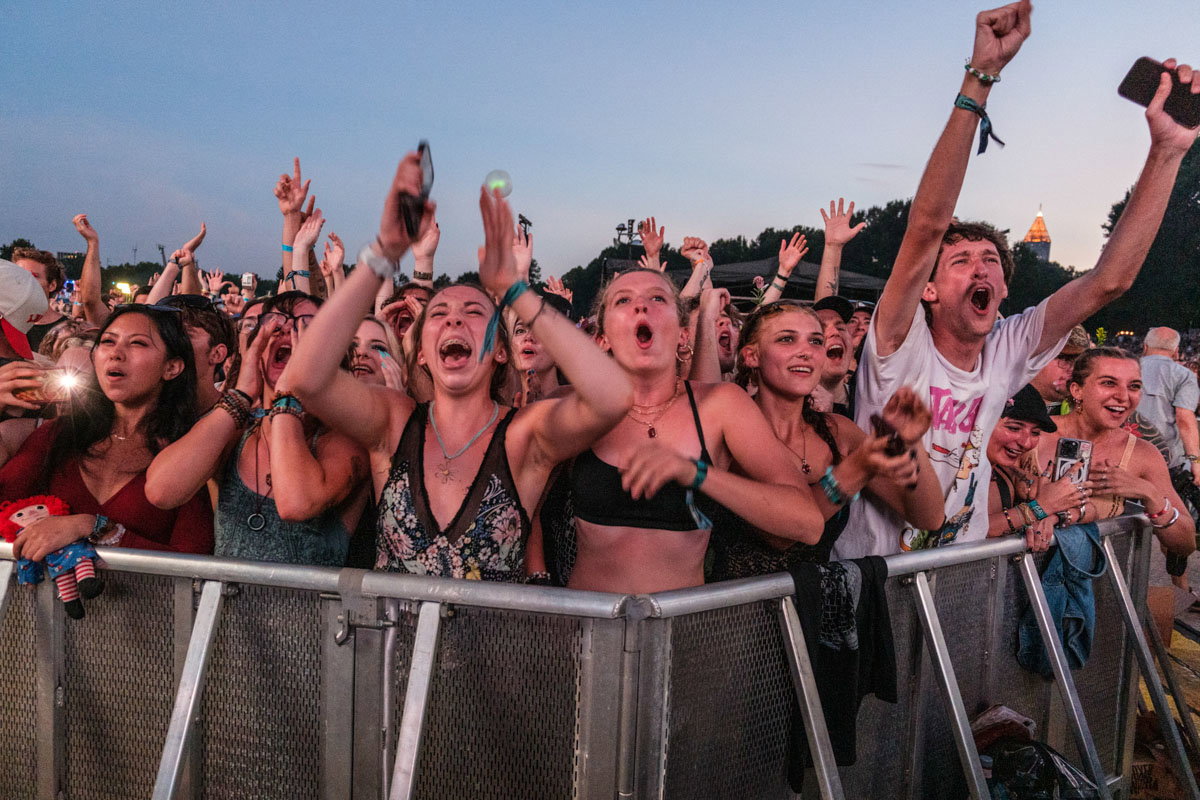
The Shaky Knees crowd on Sunday night in Piedmont Park.
Perry Julien
By now, Shaky Knees devotees know to plan for any weather. Over the last 13 years, the three-day music festival has gone on under skies balmy, stormy, and everything in between. In fact, one might argue you haven’t really done Shaky Knees properly until you’ve huddled under a rapidly failing plastic poncho with a friend or stranger, both of you determined to see a favorite band perform, even as your socks fill with water.
This year, on Saturday night, Mother Nature put to the test both the enthusiasm of fans and the emergency preparedness of festival organizers with an absolute bonanza of a thunderstorm, which dumped buckets of rain across metro Atlanta, in addition to lightning, wind speeds reaching more than 60 mph and, in some places, even hail. The storm forced festival organizers to temporarily evacuate the park, escorting thousands to the exits while waiting for the bad weather to pass.
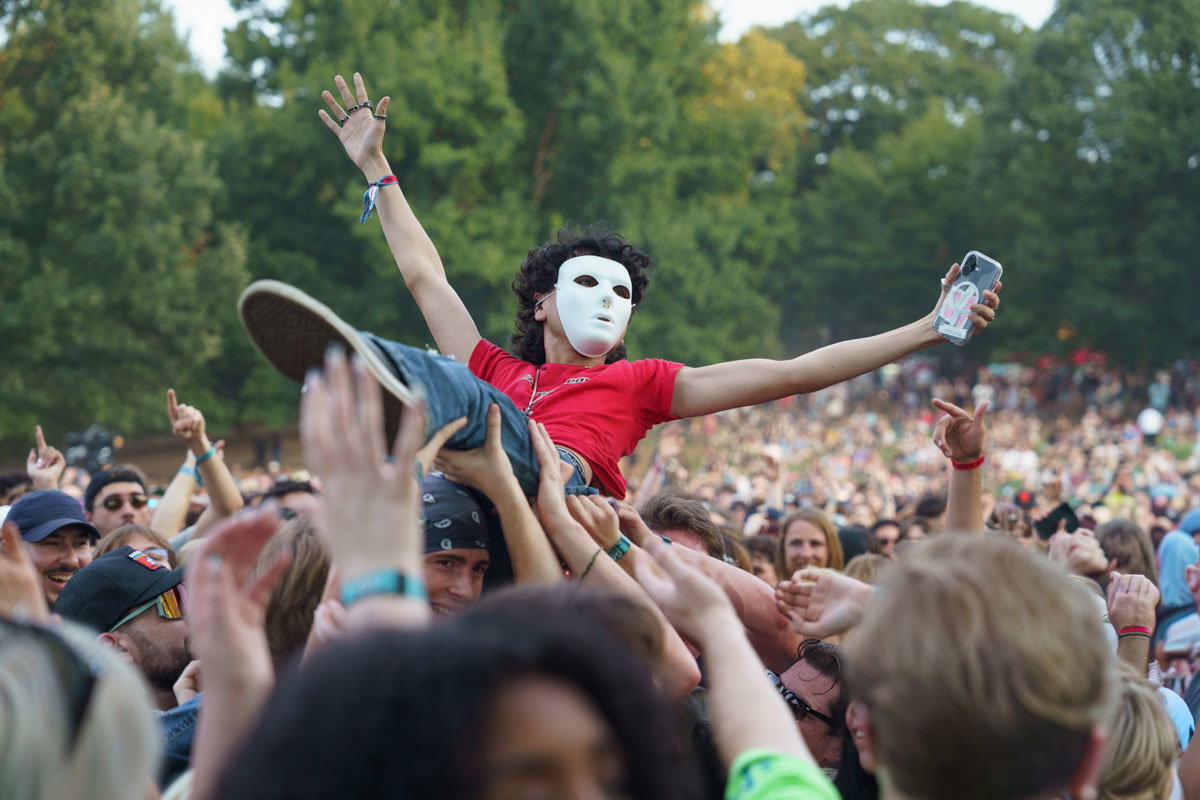
A concertgoer crowdsurfs at the 2026 Shaky Knees music festival in Piedmont Park.
Perry Julien
Luckily, no one was hurt, and by 9:20, the gates had reopened, in time for headliner Twenty One Pilots to close out the night. By the time everyone returned on Sunday, spirits were high again, and the only vestiges of the previous evening’s mayhem were some slick tracks of mud and overheard tales from attendees boasting of the crazy hijinks they’d gotten up to during the festival interlude.
As usual, Atlanta’s team was there to take photos, observe the crowds—and, of course, enjoy three nights of great music. Here’s some of what we saw at the 13th annual Shaky Knees.
Friday
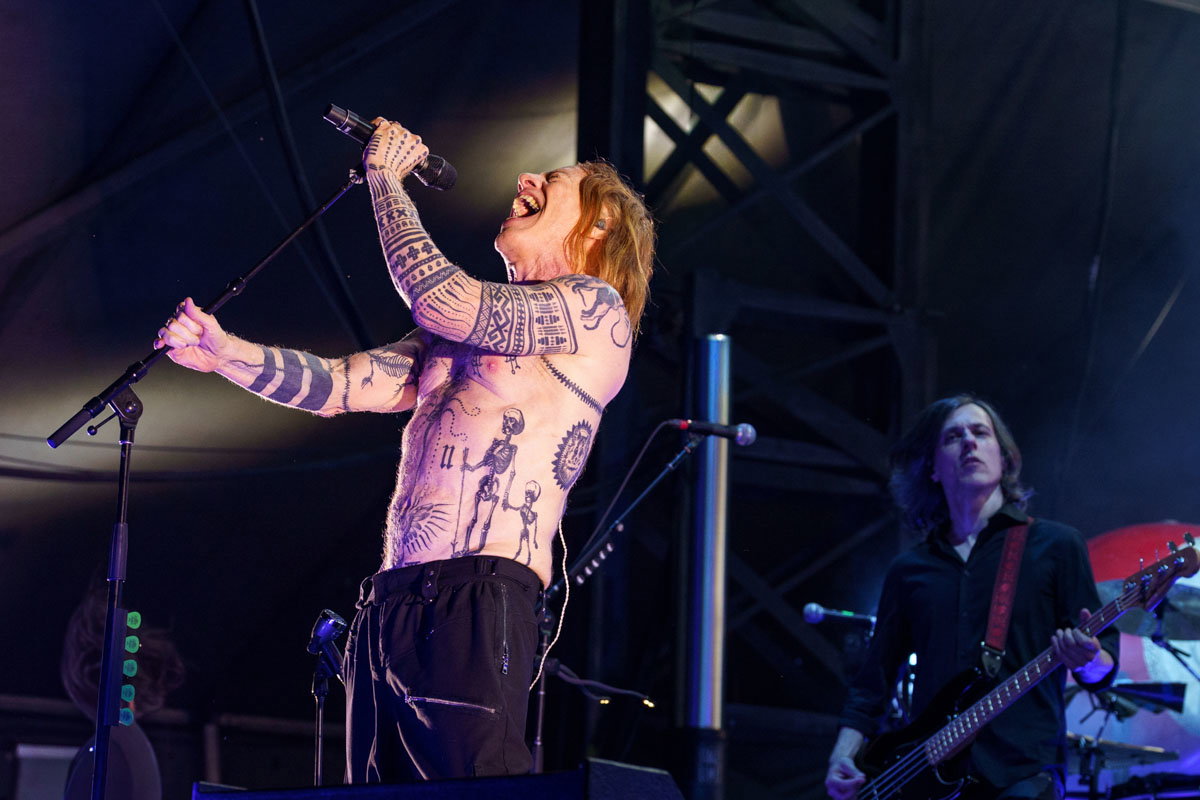
The sun was shining but the weather was scorching when Shaky Knees opened on Friday afternoon. A sizable crowd—if heavy on the indie dads—amassed for Gen-Z rockers Geese, which lit up the Piedmont Stage with popular tracks “2122” and “Crusades.” Over on Ponce De Leon Stage, curious attendees flocked to see Danny Elfman, unsure what to expect from the film composer known for his many Tim Burton collaborations. To the surprise of at least one attendee—but likely many more—Elfman, who is 73, appeared shirtless, bearing a mural of tattoos and a six-pack, to deliver a glam-metal performance featuring screaming electric guitars, a string ensemble, and a chorus of discordant vocalists. It was a solid rock show in its own right, by Elfman made time for some cinematic flair, including an orchestral performance of the Simpsons theme song (perhaps to go with his flame orange-dyed hair) and “This is Halloween” from his Burton collaboration, A Nightmare Before Christmas.
Danny Elfman, 73, not looking his age as he delivered a glam-metal performance on Friday at Shaky Knees.
Perry Julien
At the end of the night, The Strokes gathered most of the day’s attendees together at the Peachtree Stage for a rip-roaring closing act. The consummate indie rock band of the early 2000s, the Strokes, led by a still-crystal clear Julian Casablancas, whipped the crowd into an ebullient frenzy with a string of classics, including “Reptilia,” “Last Nite” and “Selfless.” Casablancas took some unexpected, but charming, liberties with the vocals on “The Adults Are Talking,” and the band skipped an encore due to sound issues, a problem that cropped up during several sets this weekend. Nevertheless, the crowds left tired, sweaty, and happy, ready to return to Piedmont Park the next day.
The Strokes closed out the first night of Shaky Knees festival on Friday.
Perry Julien
Saturday
Weather was the headline for Day Two of Shaky Knees. The day started in sweltering temperatures, reaching the mid 90s in the afternoon with a heat index of 100 degrees. Fans mostly kept to the shade and sat on the hillside of Piedmont Park’s Meadow to take in early performers like the Australian indie rock band Rum Jungle and 2000s favorite Minus the Bear for the end of their 20th anniversary tour. In the evening, stages began to swell for Congress the Band and Peach Pit, whose frontman Neil Smith told the crowd to soak in a moment of shade as clouds began to form.
Blood Orange on stage Saturday.
Perry Julien
Just before 7 p.m., those clouds would mean evacuation en masse. The next sets of Taking Back Sunday and Blood Orange were interrupted a few songs in, with lightning in the area and directions for fans to step away from metal structures. Lightning gave way to downpour, and Shaky Knees announced a weather evacuation. Fans took shelter anywhere and everywhere, first under park trees and then under porches at homes neighboring the park and businesses like Willy’s and Shake Shack on Piedmont Avenue and Larakin on 12th Avenue. As streets flash-flooded in Midtown, a festival-goer shouted, “Shaky Knees? More like Soaky Knees!”
Communication was limited until shortly before 9 p.m. when Shaky Knees announced the show would go on, no matter how wet and tired. Doors reopened at 9:20 p.m. for Twenty One Pilots to perform until curfew at 11 p.m. (Fans took to social media after the announcement to voice their displeasure of the short notice and a lack of refund for the day.) Twenty One Pilots lead singer Tyler Joseph thanked fans for coming back out after the rain, and the band made the most of it with a punchy set list of hits such as “Stressed Out” and “Trees,” complete with live flames onstage.
Josh Dun, drummer for Twenty One Pilots. The band closed out Saturday night at Shaky Knees following thunderstorm delays and an emergency weather evacuation.
Perry Julien
Sunday
Shaky Knees wrapped up the weekend with a banger lineup of Millennial nostalgia and a few sound issues that detracted, but never derailed, from the show. A hiccup at the beginning of the OK GO set turned into a charming moment of improv, when frontman Damian Kulash switched to an acoustic set for two songs while tech crews fixed a sound glitch, singing “Last Leaf” for the rapt crowd that was close enough to hear him. Over on the Peachtree Stage, Santigold, in a billowy white outfit alongside a similarly stylish, white-clad band and dancers, didn’t blink an eye when staff cut the sound to warn attendees to stop rushing the barricades: she’d brought up audience members to dance onstage for “Creator” and the euphoric vibes of everyone involved were enough to carry everyone until the sound came back on.
Crowds swelled for stellar back-to-back performances by Modest Mouse and Wu-Tang Clan, and grew to truly epic proportions by the time LCD Soundsystem took the Peachtree Stage around 8 pm. An absolute sea of people offered up vocal accompaniment—with surprising skill—for the Brooklyn rockers’ hits such as “Home” and “Dance Yourself Clean.” Live music rapture had reached its pinnacle with the closing number, “All My Friends,” but was cut devastatingly short when the band’s enthusiastic performance blew out the speakers, cutting off the music at the apex of the song. Crowd and band finished together, undaunted by the technical mishap.
Wu-Tang Clan performed Sunday at the 2026 Shaky Knees music festival in Piedmont Park.
Perry Julien
On energy alone, LCD Soundsystem’s high-octane performance could have been a festival-closing headliner, but Gorillaz followed with a multimedia, guest-star-studded show worthy of its top billing. Damon Albarn, the human engine of the four-member digital avatar band, wove together the virtual and the live with projections of his animated musicians appearing behind the in-person band, their signature toothy smirks a familiar sight from their early-aughts heyday.
A string of surprise Atlanta guests joined Albarn onstage, including Earthgang, Bootie Brown, and Kara Jackson. Albarn implored attendees to vote in the midterms—“What happens in America affects everyone,” he noted—before jumping back into the all-senses-engaged performances. He rounded out the night with Gorillaz’s biggest hits, including “Clint Eastwood” and “Feel Good, Inc.” As Shaky Knees drew to a close, the lights from the stage and the roar from the crowd reached into the night sky— lightning and thunder of another kind entirely.
Gorillaz put on one of the most engaging performances of the festival, closing out Sunday night.
Somewhat off the beaten path on Myrtle Street, Bon Ton has been serving Cajun-Vietnamese fare and creative cocktails for nearly a decade. The eclectic, energetic restaurant and bar opened in January 2017, more than a year after the previous tenant, moody restaurant and bar Top Flr shuttered. Both were started by Darren Carr, attracted loyal followings, and leaned into nightlife.
Bon Ton began with chef Hieu Pham of Buford Highway’s Crawfish Shack as executive chef and partner, with Matt Floyd in the kitchen, and Eric Simpkins, Carr’s business partner known for the Lawrence, leading the bar program. Atlantans came for the fried seafood, Vietnamese cold noodles, and po’ Boys, and stayed for the hurricanes, frozen Pimm’s Cups, and Mai Tais. Over the years, the concept evolved, leaning more into its New Orleans side. In 2023, Carr and Simpkins launched The Waiting Room, a ’70s-themed cocktail lounge and music venue upstairs.
As of last week, The Waiting Room is now closed, and Bon Ton will follow suit after service on September 30.
“It lived its cycle. I believe restaurants live in five-to-six-year cycles like people’s lives. If it’s the place you had your first date, five or six years later, you’re either married or in a different relationship and stage of life,” Carr explains.
“The Atlanta restaurant environment has been challenging since Covid. We’re squeezed in every direction from labor to product. The old model needs to change to modernize and absorb those costs,” he adds.
Carr says he hopes locals will visit Bon Ton for a final celebration. Toward the end of the month, there will likely be Mardi Gras-style parties and live music, though plans are still on the works.
“We’re going to continue to serve great food and drinks,” he says. “I think people want to come and experience the restaurant for what it was, not a completely different environment.”
As for The Waiting Room, expect it to return in some form in October, with a stronger focus on live music. Downstairs in the Bon Ton space, Carr has something new in the works. He’s just not ready to reveal the specifics yet.
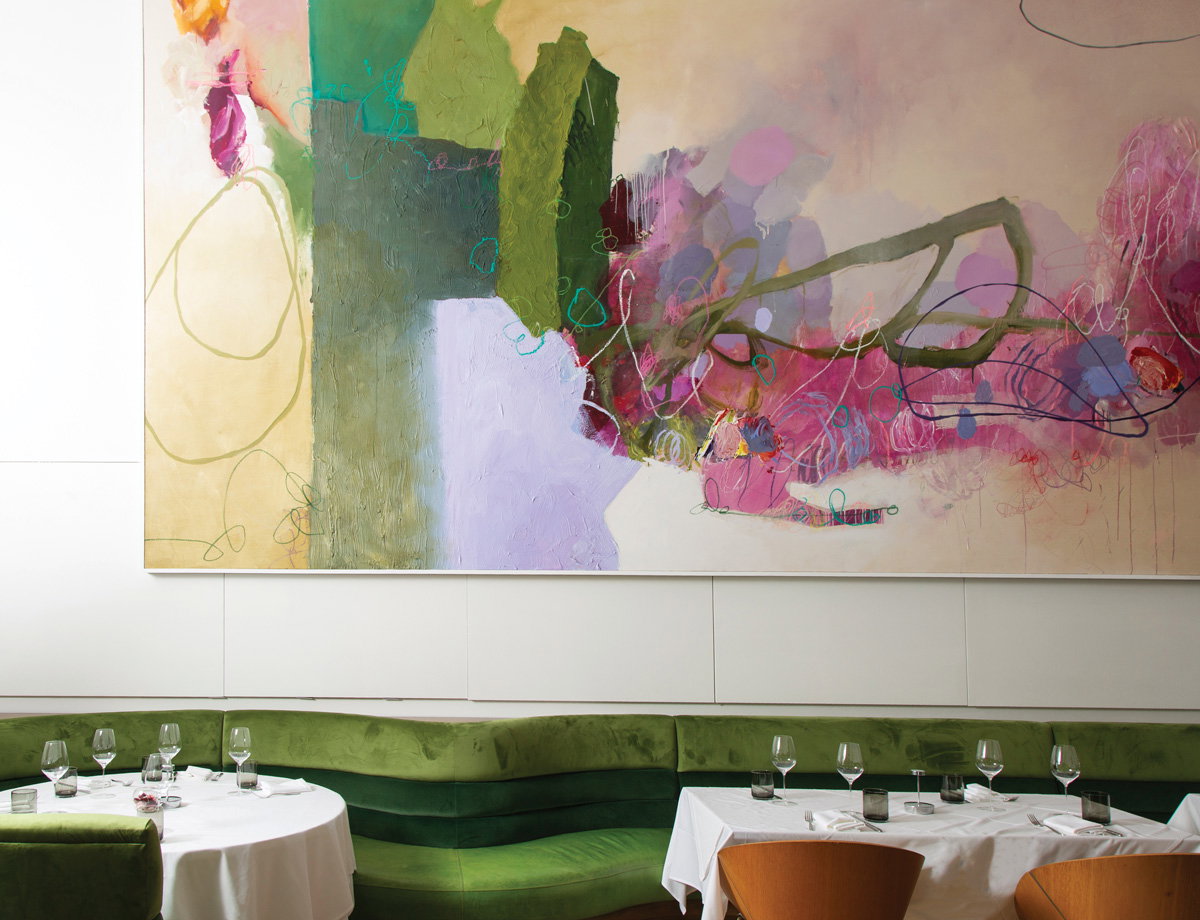
An abstract painting by Tommy Taylor defines the main dining room
Photograph by Martha Williams
As diners and social media consumers, we’ve become accustomed to the culinary theater of smoke, edible glitter, and deconstruction—meals that demand your full attention. So, when you slip into a room that refuses to scream at you, instead offering a gentle, velvet-padded exhale of absolute competence, it feels like a relief.
This is the territory claimed by Elise, the airy, light-drenched second act from Craig Richards, chef-owner of Midtown’s Michelin-recommended Lyla Lila. Housed on the Woodruff Arts Center campus in the former Table 1280 space, Elise functions as a gallery in its own right. Towering windows cast soft light across commissioned artworks, plush banquettes hold you a little longer than you intended to stay, and the hum of jazz is dialed in to match the afternoon. It’s a beautiful place to exist.
Compared with Lyla Lila’s southern European cuisine that emphasizes pasta, Elise maps a slightly different geography, with a broader French-Italian landscape. Across both the lunch and dinner menus, Richards delivers Italian-inspired comfort food executed with the kind of ironclad French technique that ensures every emulsion is seamless and every jus glossy. Nothing leaps off the plate or shocks the palate, but that’s not the point. The kitchen isn’t trying to reinvent the wheel, but to polish it to the sheen of the room’s design. For me, the real highlights belonged to the luxury of a long, stolen lunch.
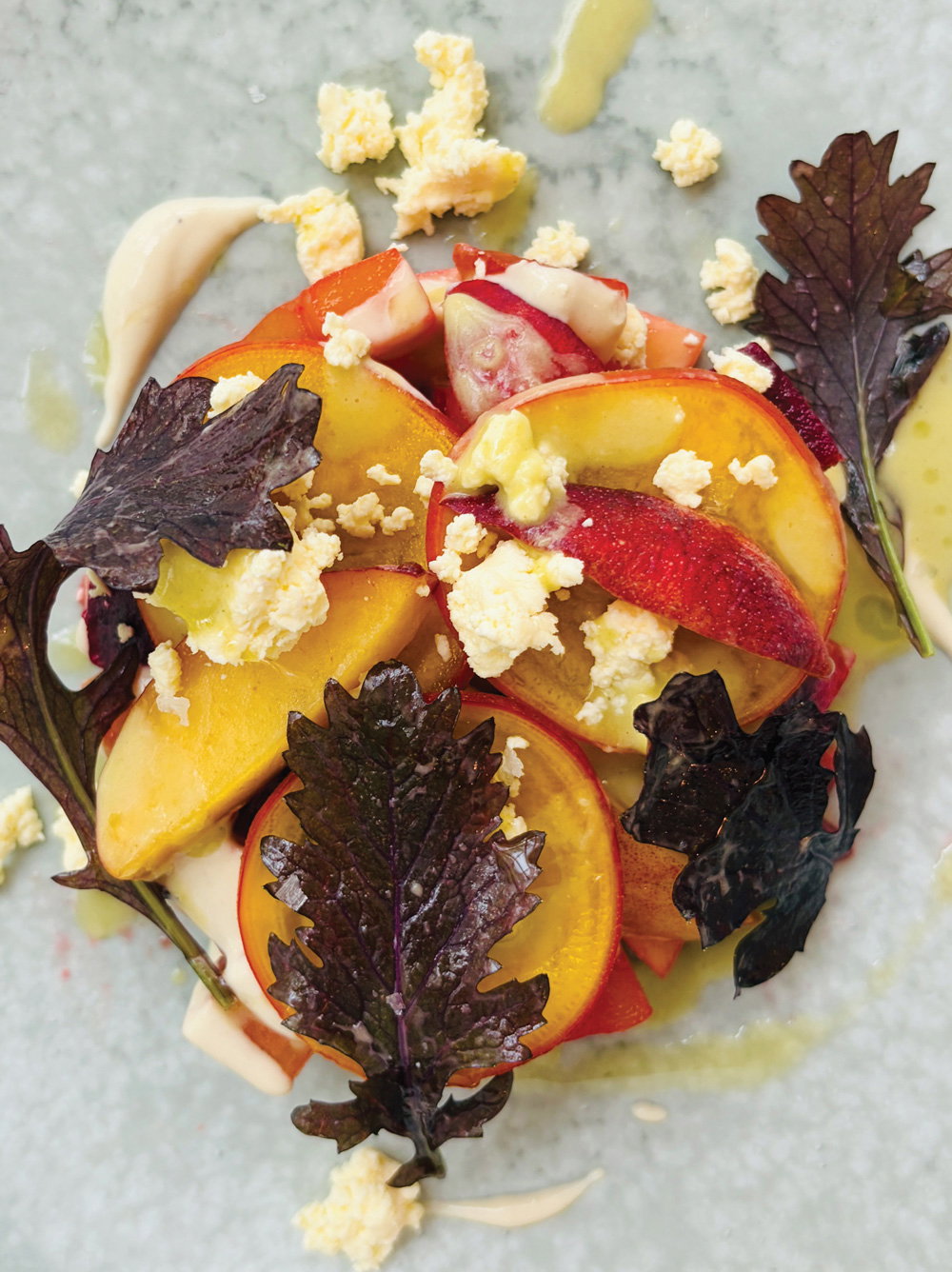
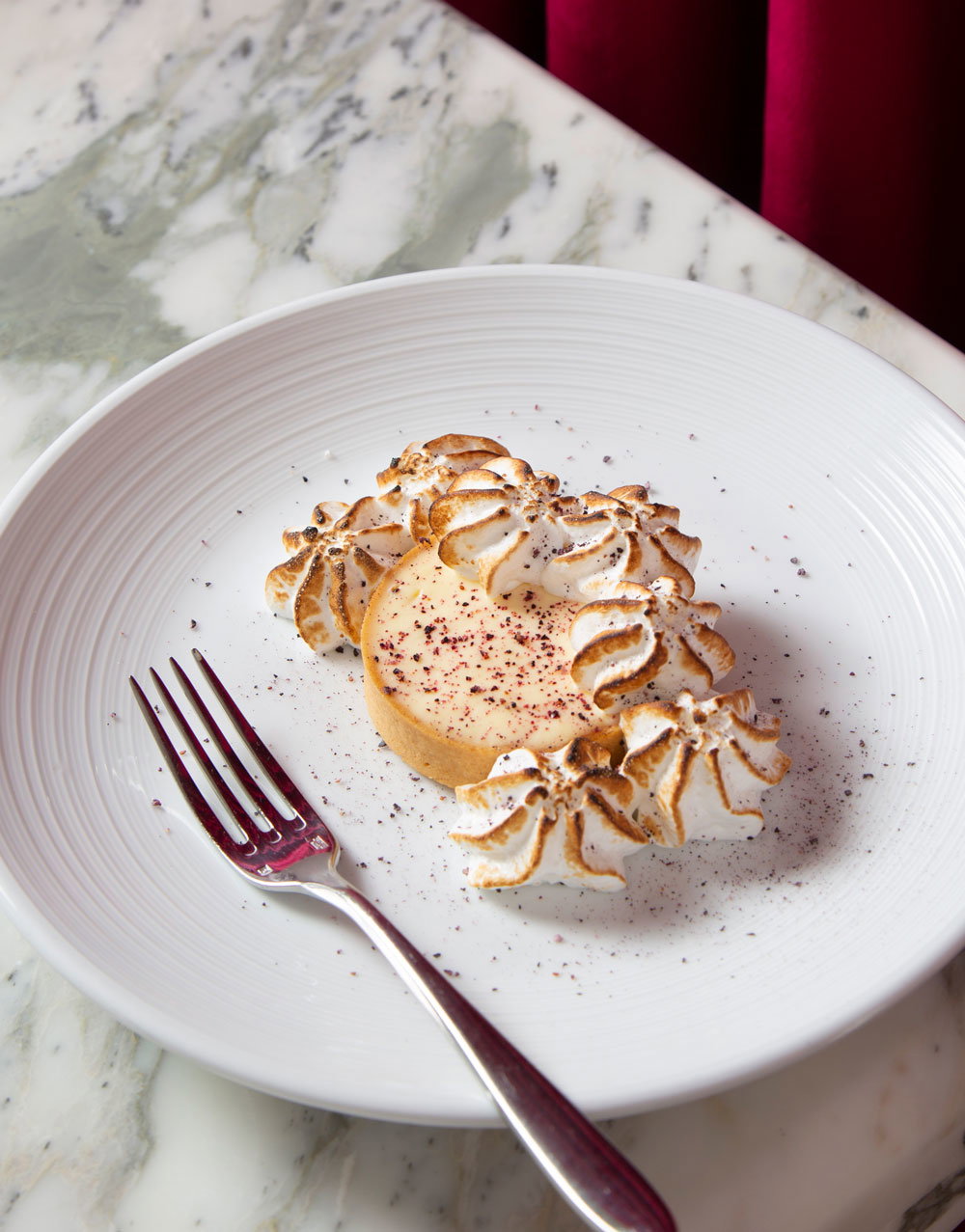
Seated at a white-tablecloth two-top by myself, I started with smoked oysters ($28) with crisp panisse batons (chickpea fritters) and vegetables beautifully transformed into soup ($9) that was punched up with herb oil. A pristine salad ($15) lets local, peppery greens shine with a very light champagne vinaigrette, but it’s the peaches (in season on my visit) that play the starring role. Cutting into shatteringly crisp artichokes ($15) yields a soft interior to dip in a disappointing mint aioli. I would have preferred a vibrant lemon flavor. Don’t let the check arrive without ordering dessert. The chocolate mousse with a waft of Scotch and a touch of olive oil is as worthy as the lemon tart with blueberry-peppercorn dust.
Lunchtime draws solo diners, ladies who lunch, and the business-meeting set. The wine list is heavy on French staples sprinkled with biodynamic curiosities for the adventurous drinker. A suggested Pierre Gerbais extra brut champagne had nectarine aromas and a persistent, patient bubble I watched as closely as the art. The champagne arrived via staff whose hospitality was knowledgeable and free of pretense.
As for dinner, you’ll find a procession of reliable dishes, and menu headings like “A touch of sun” and “To spoon and twirl” read like poetry. A mound of meaty, cool morsels of tuna tartare ($25) with saffron aioli, sumac, and pickled strawberry matched the red dining room. Crispy vegetable tempura turned up tender artichoke hearts, fresh snap peas, and earthy maitake mushrooms in the lightest of batters.
Peaches and beets shine in a seasonal salad
Courtesy of Elise
A lemon tart invites lingering
Photograph by Martha Williams
The housemade pastas carry the requisite al dente snap. Ordering half sizes is a pro move to experience red wine−braised beef and smoked sheep’s milk ricotta tucked side by side into ravioli doppio ($38). The duck breast balances crispy skin with tender meat, rich yet delicate. Roast chicken ($39) is homey, golden, and textbook-perfect with sauteed chanterelles, its pan sauce reason enough to order the housemade sourdough ($7). For the beef bourguignon, Richards uses brisket for a full-bodied flavor that edges toward barbecue smokiness. While I would have preferred a more traditional take, my dinner date thought the brisket made it better. The meat is slow braised into tender bites and served alongside decadent pommes puree.
The cocktail program at the intimate bar is a lesson in restraint: A menu of low-proof vermouth beverages, listed by ingredients only, treats the fortified wine as the protagonist, not an afterthought. My favorite paired Islay Scotch with rich, bitter-leaning Italian vermouth for a savory-smoky profile.
One practical note: Parking can be pricey and is not discounted for diners ($18 at lunch and $25 at dinner), so budget for it, or take MARTA and walk across the street.
In the end, Elise asks to be remembered not for any single dish, but for how a few well-chosen ingredients and intentional design can become something refined. That’s a rarer trick than a revelatory bite, and a harder one to fake.
Three years after it was first announced, chef Fuyuhiko Ito’s long-awaitedSozou has arrived in Midtown. The Japanese restaurant, centered on robatayaki, sushi and shareable plates, is now open on the ground floor of Ten Twenty Spring at Spring Quarter.
The restaurant is the third concept in the building from culinary director Fuyuhiko Ito and his wife, executive pastry chef Lisa Ito, who also operate rooftop lounge Celestia at Terrace and the 16-seat omakase bar ISHIN by Ito. At ISHIN, Ito remains behind the counter, while Celestia is led by executive chef David Martin Garcia. Sozou, however, features a much bigger stage: 3,800 square feet that feel even more spacious thanks to 22-foot ceilings, 120 dining room seats, a sushi bar, traditional bar, and a mezzanine.
Sozou means “to create” or “to imagine.” Ito says the name was inspired by the idea that “imagination and creation can change the world.” Sozou is less formal than ISHIN but still grounded in Japanese technique. “Simple but delicious is the goal,” he says.
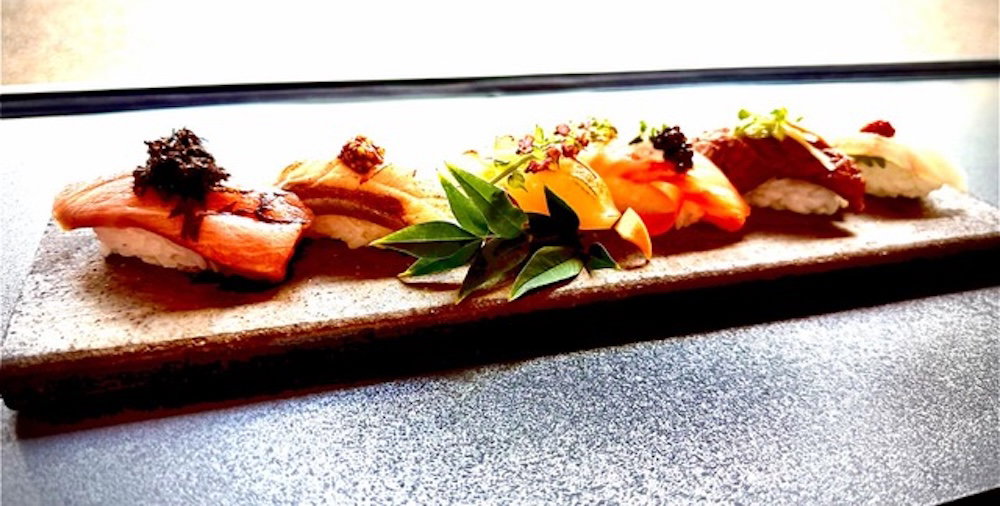
Assorted sousaku nigiri
Courtesy of Sozou
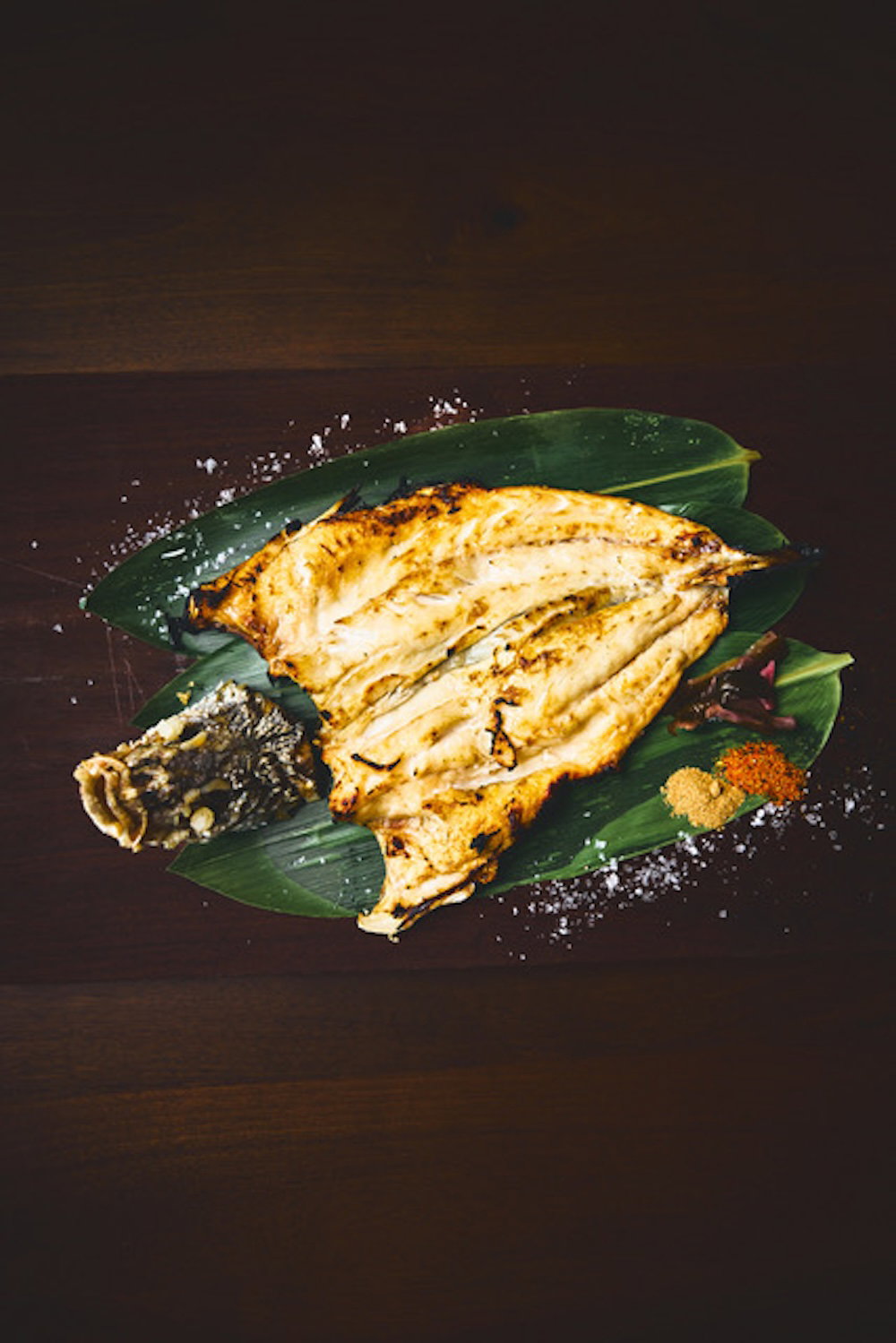
The menu is a la carte with a focus on “traditional Japanese grilling techniques” using a robatayaki to cook fish, meat, and vegetables. Chilean sea bass, black cod, tomahawk steak, and lamb chops anchor the richer side of the menu, while seasonal vegetables—corn, blistered shishito peppers, green beans, asparagus and spring onions brushed with teriyaki—round it out.
On the lighter side, expect nigiri, sashimi and a tight list of rolls, including lobster tempura and spicy tuna, with fish flown in four to five times a week from Tokyo’s Toyosu Fish Market. Nevertheless, Ito insists he doesn’t “want this to be a sushi roll house.” Chef Jey Oh, former owner of Sushi Huku, will lead the sushi program grounded in classical precision.
The kitchen also serves crispy rice, along with caviar and potato chips, shrimp tempura, dressed avocado salad, dashi mussels with Japanese watercress and green onion, hamachi crudo, and whitefish tartare. Ito says he expects the grilled romaine with creamy sesame dressing to be hit.
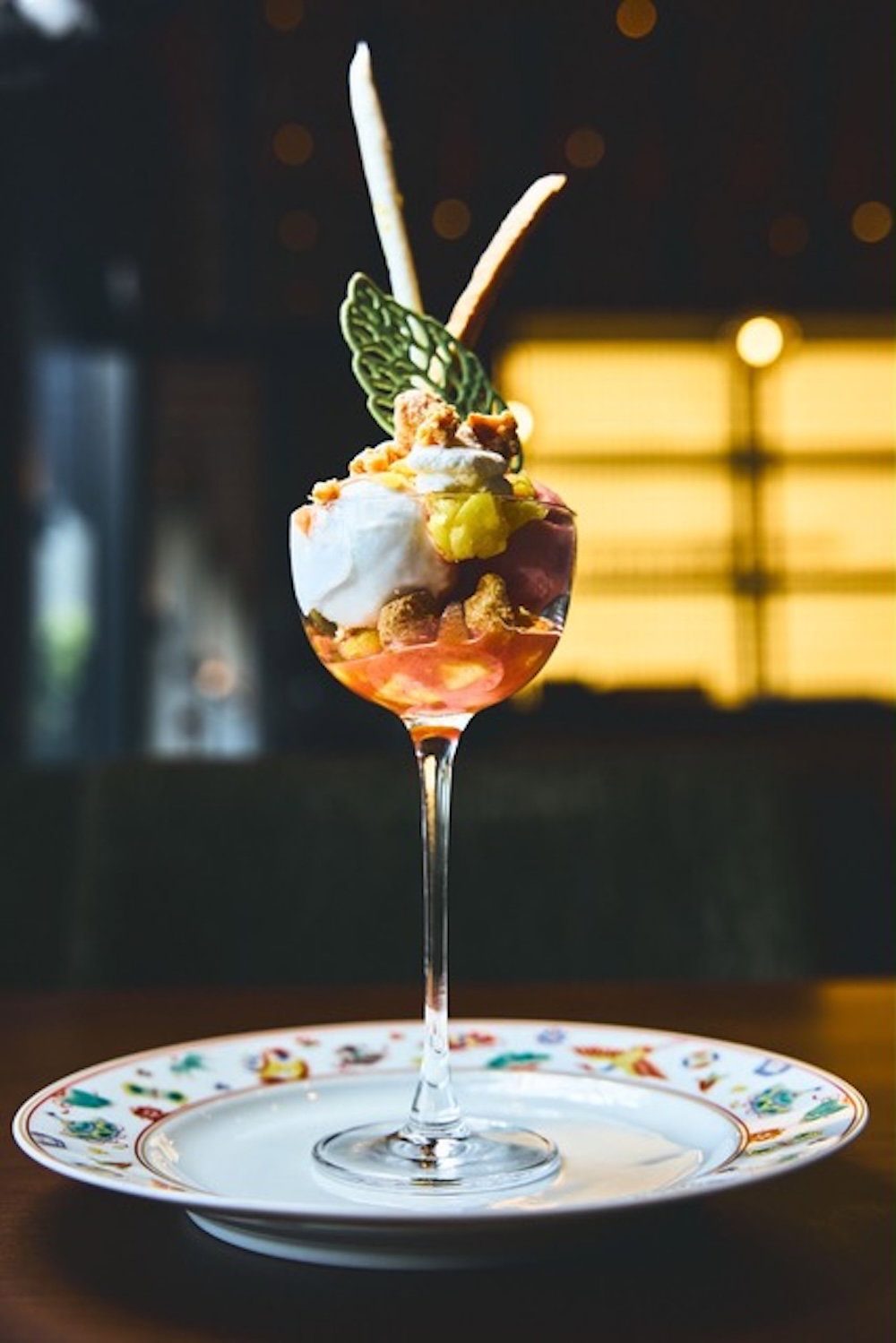
For dessert, offerings include a strawberry soufflé with matcha ice cream, corn ice cream with popcorn crunch inspired by a flavor popular with Japanese children, and a tropical fruit parfait.
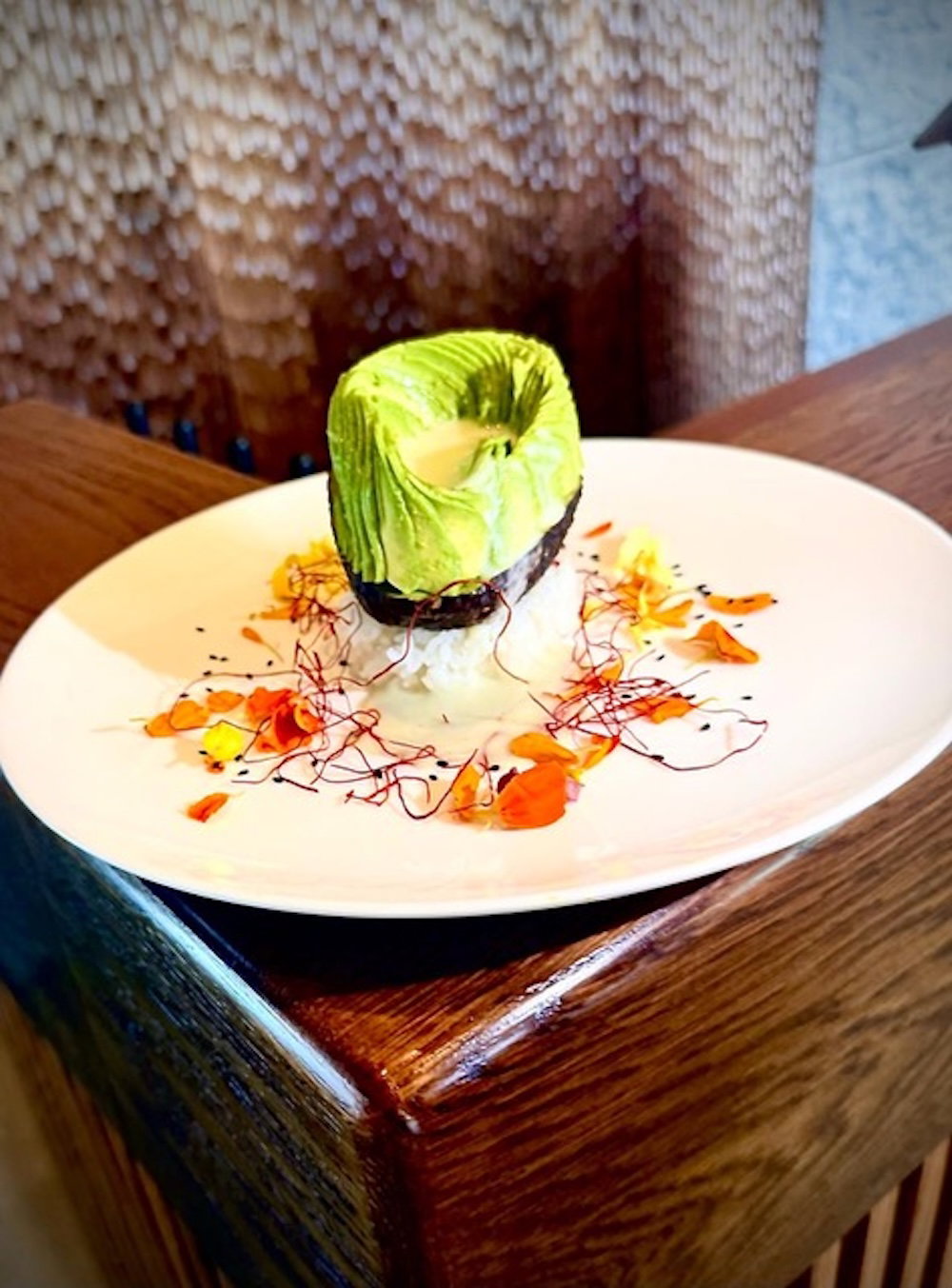
Dressed avocado salad
Courtesy of Sozou
Drinks will play off the same mix of Japanese technique and creative control. The restaurant is awaiting its liquor license. However, the cocktail list will include the Isla Verde, made with coconut oil-washed Toki whisky, green apple cordial, clarified lime, and coconut water, and the Sake Spritz, a delicate, lightly spicy mix of Thai pepper-infused junmai sake, shiso syrup, acid-adjusted honey, and bubbles. Savory flavors show up in No. 4, a martini with black truffle-infused Roku gin, cheese-infused Carpano dry vermouth, mushroom liqueur, and koji rice. Sake and wine lists are available as well.
That balance of polish and ease carries into the Sozou space, designed to feel open and social rather than hushed. Ito describes the decor as modern, with stone, wood, and other natural materials. Large windows provide a view of the development’s landscaped front yard and the historical Patterson House, where Hal’s “The Steakhouse” will open in 2027.
“Sozou is a place to be seen and socialize,” Ito says. “I just want everyone to enjoy themselves.”
The go-to place for ready-to-assemble furniture, Ikea is the world’s largest furniture retailer. Check out Last Chance offers (@IKEA_Atlanta, #LastChance) for clearance items unique to Atlanta. In addition to furnishings, Ikea’s modern Scandinavian style includes storage, lighting, accessories, kitchen appliances, and pet products. Join the Family Loyalty Program for discounts. Stop in to dine—or charge up your Leaf. The Atlanta store installed a solar energy system on the roof and now has four charging stations for electric vehicles.