

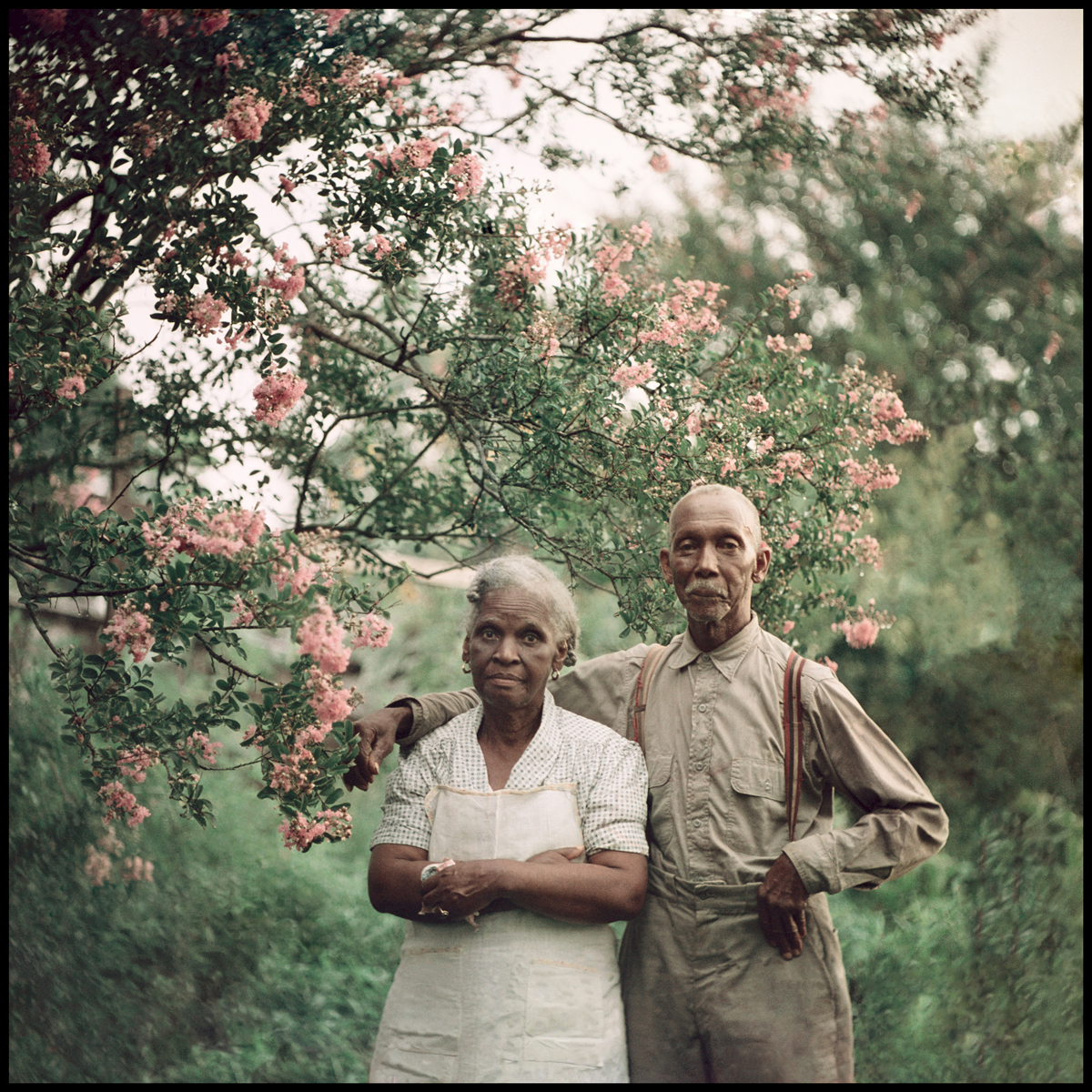
Courtesy of and copyright The Gordon Parks Foundation
Gordon Parks: The South in Color isn’t the first time Anna Walker Skillman has exhibited the work of the iconic photographer at her gallery, Jackson Fine Art. When more than seventy color transparencies from the seminal trip at the base of his epochal 1956 Life magazine photo essay “The Restraints: Open and Hidden” were found at the bottom of an old storage bin in 2011, the Gordon Parks Foundation contacted Skillman and fellow gallery owner friend Arnika Dawkins for the first exhibition of them in 2012. Then in 2015, Skillman dovetailed the celebrated Gordon Parks: Segregation Story exhibition at the High Museum. Over a decade later, Skillman remains intimately involved with Parks’s epic work.
“It still feels very relevant today,” Skillman says of Parks and his work while resting on a lounge chair by the pool as the private party celebrating the exhibition’s public opening winds down. “You look at film, you look at TV shows, they’re using images from Segregation Story to tell these stories again.”
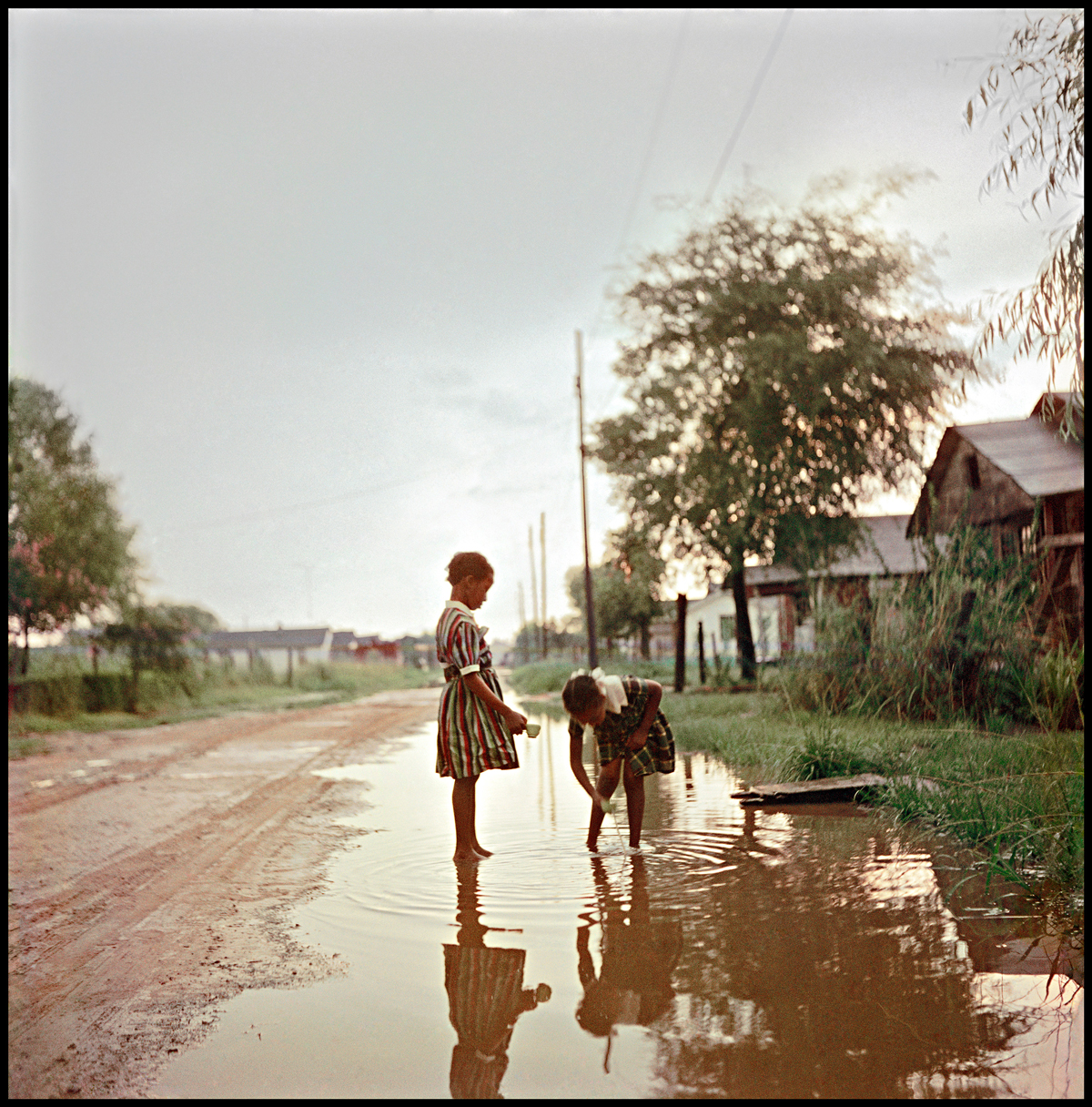
Courtesy of and copyright The Gordon Parks Foundation
That story, primarily centering around the Thornton family in Mobile, Alabama, produced provocative images. The most well-known of them is arguably that of the impeccably dressed Joanne Thornton Wilson and her niece Shirley Anne Kirksey standing underneath a neon “colored entrance” sign in Mobile. For this show, Jackson Fine Art is the only gallery in the South commemorating two important milestones—the 70th anniversary of the landmark publication of Parks’ images of the segregated South in Life magazine and the 20th anniversary of the founding of the Gordon Parks Foundation. The South in Color contains more than 30 photographs from the Parks’s Segregation Story series and debuts a brand-new portfolio published by the Gordon Parks Foundation.
But what makes this third exhibition at Jackson Fine Art truly special, Skillman believes, is the approach taken by acclaimed American photographer and MacArthur Fellow Dawoud Bey, who curated the show. Bey’s decision to showcase all the images in a square format to emphasize Parks’s artistic skill is a major eye-opener for Skillman.
“I think Dawoud’s idea was that these were real artistic pieces of photography, not just documentary black and white. Like when you’re looking in the camera, you have to edit the work and, also, there’s vignetting and dual focus,” she says. “So, there’s a real soft, painterly quality in the color work that I think Gordon thought maybe would appeal to the readers in a way that was different than just straight, black-and-white work.”

Courtesy of and copyright The Gordon Parks Foundation
“These photographs deserve as much consideration for the quality of their making as the mission that brought them into being,” Bey wrote of Gordon Parks’s signature work in his essay titled “The South in Color” from the expanded 2022 edition of Gordon Parks: Segregation Story.
“I think people are drawn to it,” Skillman says of the newly displayed Parks photographs that include images capturing the ebb and flow of life in rural Shady Grove, Alabama. “It’s like a lot of other artists that use beautiful imagery to bring you into a really tough subject. And once you get there and you realize what you’re looking at, then you’re engaged already. So you have no choice but to read about it and understand it. And I think that was the kind of empathy that Gordon wanted to create. [The Thornton family and their extended generational family] were living like everyone else; they were going to church, they were doing laundry.”

Photograph by Terrell Clark

Photograph by Terrell Clark
Skillman is also pleased to share the new exhibit with Parks’s daughter Leslie Parks Bailey, whom she connected with outside of art when Bailey’s artist husband, the late Radcliffe Bailey, became ill. “When he became unwell, Leslie and I became very close,” Skillman shares. “It was such a gift to be able to do this show and have her kind of celebrated here in Atlanta.”
At the party held at a home once owned by Dexter King, Bailey was surrounded by friends, as well as a handful of people who knew her father. “I know people here who have shown up for him, Anna, and me,” she says.
In this era of rediscovering herself, especially approaching three years since her husband passed, Bailey shared her appreciation of being in Atlanta, where she has lived for 11 years. “Honestly, I came here for love,” she says. “It’s been an amazing place for me. I’ve met people who love art, who collect art, who have my father’s art, and who have Radcliffe’s art.”
She is also enthusiastic about the latest exhibition of her father’s work. “I love all the pieces,” she smiles. “It’s really great to see my father’s work in color because he became very popular with black and white, so it’s very nice. When I first saw this work a long time ago, I wasn’t used to seeing his work in color.”
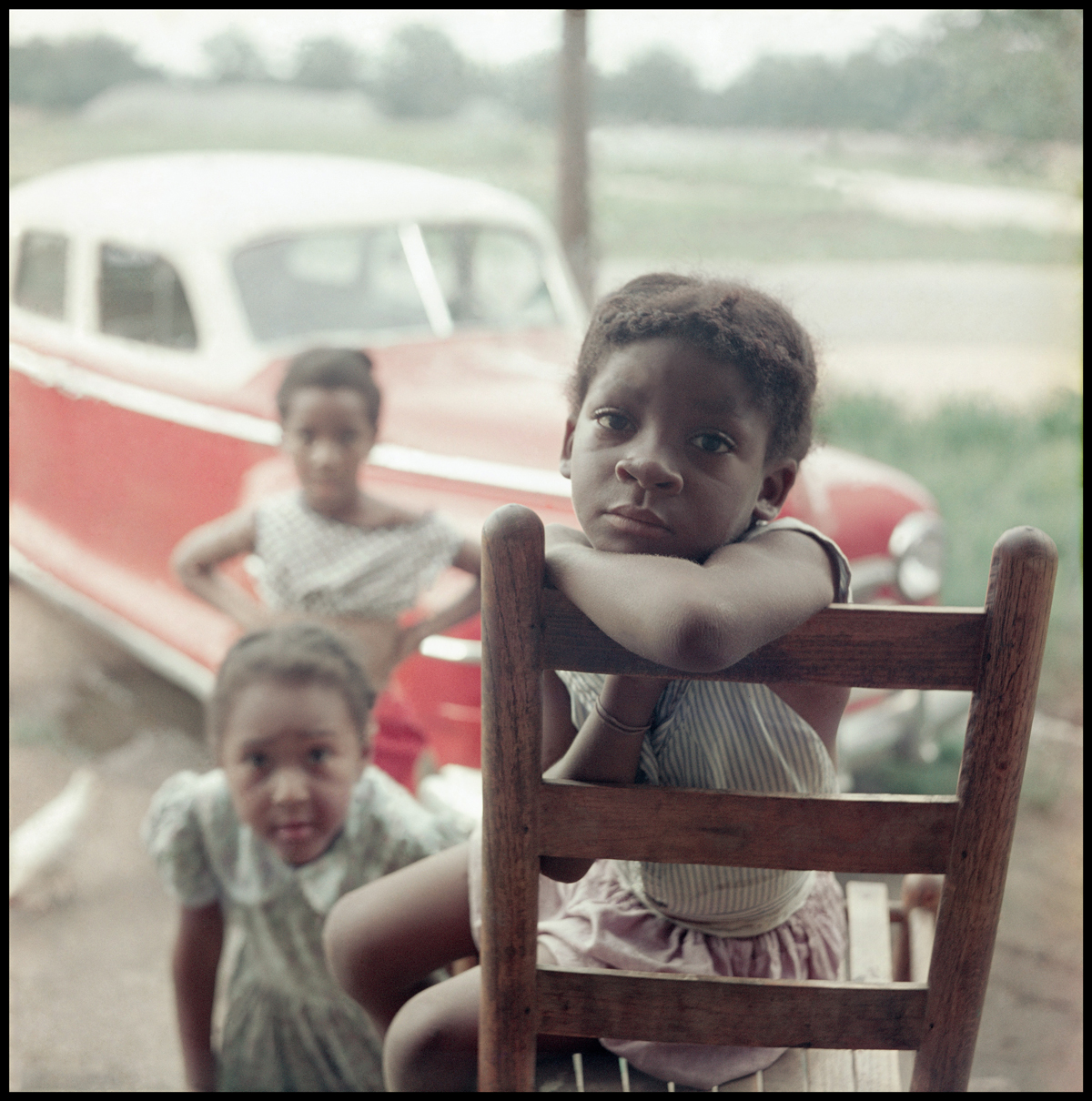
Courtesy of and copyright The Gordon Parks Foundation
At the party, Gordon Parks Foundation executive director Peter W. Kunhardt, Jr., whose grandfather Philip B. Kunhardt worked closely with Parks as the managing editor at Life magazine and co-founded the Gordon Parks Foundation, shared the significance of exhibiting The South in Color in Atlanta.
“The pictures were made in Alabama, which isn’t terribly far,” he says. “It was documenting the racial injustices of the South, and I think having the work be seen in the South is important.”
At the time Life magazine published Gordon Parks’s iconic photo essay, Atlanta wasn’t exempt from the Jim Crow racial segregation its photos largely depicted. Sears & Roebuck on Ponce had “colored” and “white” signs. Black patrons could not enter through the front door of the Fox Theatre to watch movies; instead, they had to climb the stairs on the side of the building to the balcony.
Skillman, piggybacking off Kunhardt, is grateful “to have this show here at this time, and to have it in the gallery to create a very neutral, beautiful space to talk about race and to talk about the community.”