

Photograph by Atlanta Journal-Constitution via AP
On August 5, 1969, just over one month after the Stonewall riots in New York City, an Ansley Mall Mini Cinema screening of Andy Warhol’s Lonesome Cowboys was raided in Midtown Atlanta. Among the film’s flashes of breasts and buttocks, the pop artist’s X-rated campy satire on the American West featured some same-sex kissing cowpokes. Fifteen minutes before the movie’s conclusion, the Atlanta Police Department burst into the theater, confiscated the film reels, and arrested the theater’s projectionist plus some of the 70 patrons. Attendees, including a minister, were photographed.

Photograph by Getty Images
Of his new citywide anti-smut campaign, Fulton County Criminal Court solicitor general Hinson McAuliffe told the Atlanta Journal, “We thought we would look over the photographs and see what percentage of these people [police] could recognize as known homosexuals.” A federal court judge later threw out the case and dismissed the charges.
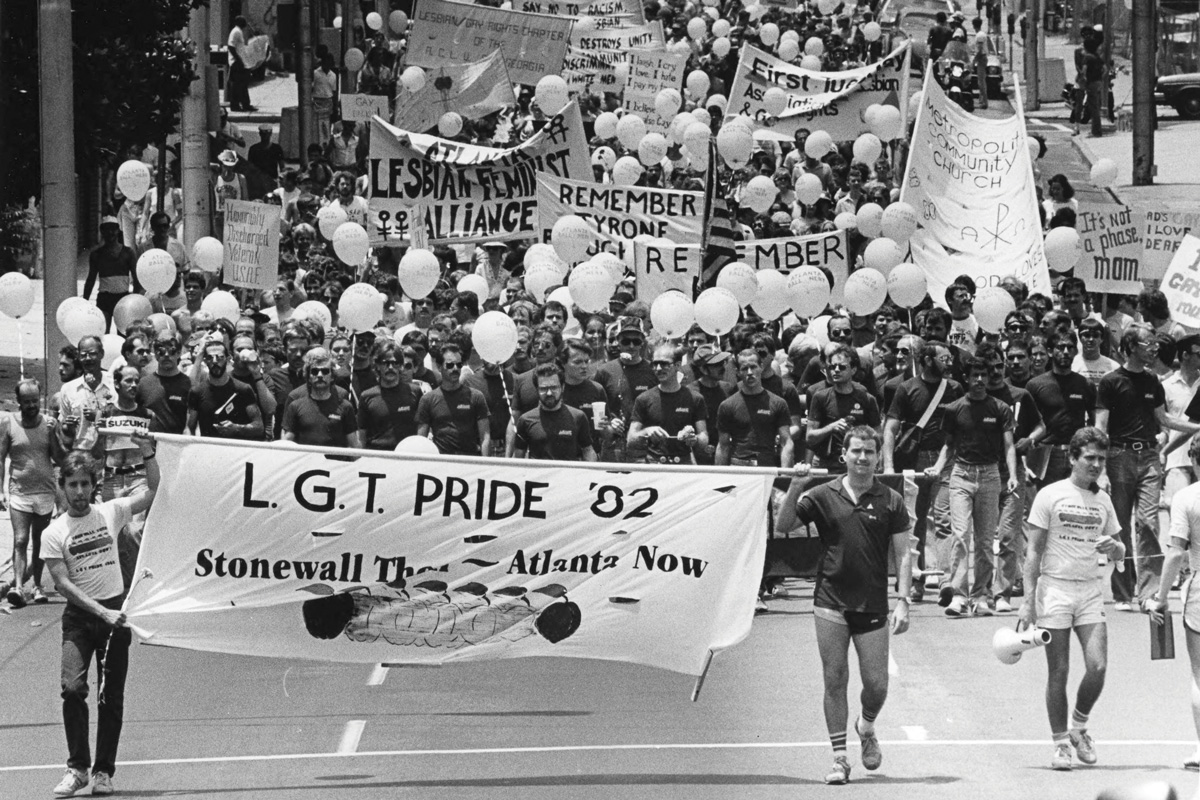
In the aftermath of the Lonesome Cowboys raid, the activist group Georgia’s Gay Liberation Front was born. It immediately began organizing the city’s first Gay Pride rally, held in Piedmont Park in June 1970. This August, for the first time in 55 years, Lonesome Cowboys rode again in Atlanta during a set of screenings at Agnes Scott College. The event was sponsored by the Atlanta Pride committee and Out on Film, the city’s LGBTQ+ film festival.
The timing was not coincidental.
The theme of Atlanta Pride’s 55th annual celebration in Piedmont Park, from October 11 to 12, is “Rooted in Resistance”—a response to the current political climate. Under the gold dome during the state’s 2025 legislative session, conservative lawmakers finally, after a decade of trying, passed a “religious freedom” law. LGBTQ+ Georgians consider it to be legalized discrimination because the law gives individuals and businesses a legal defense to ignore antidiscrimination protections, effectively allowing them to deny services to LGBTQ+ people under the guise of religious beliefs. Legislation restricting trans students from playing sports was also passed.
At the national level, the Trump administration has banned transgender people from serving in the military, and lawmakers in nine states have proposed legislation designed to get a ban on same-sex marriage back in front of the Supreme Court’s current conservative majority. In June, national Pride Month, rainbow flags hanging in front of Blake’s on the Park, an LGBTQ+ bar adjacent to the rainbow crosswalks in Midtown, were vandalized, with four suspects now facing hate-crime charges.
“This year’s theme, ‘Rooted in Resistance,’ emerged as a way to remind people about the grassroots origins of our movement and to create a call to action,” explains Atlanta Pride executive director Chris McCain. “Many in our community are feeling under attack. We wanted to tap back into our origins as a resistance movement, standing up for ourselves and our rights.”
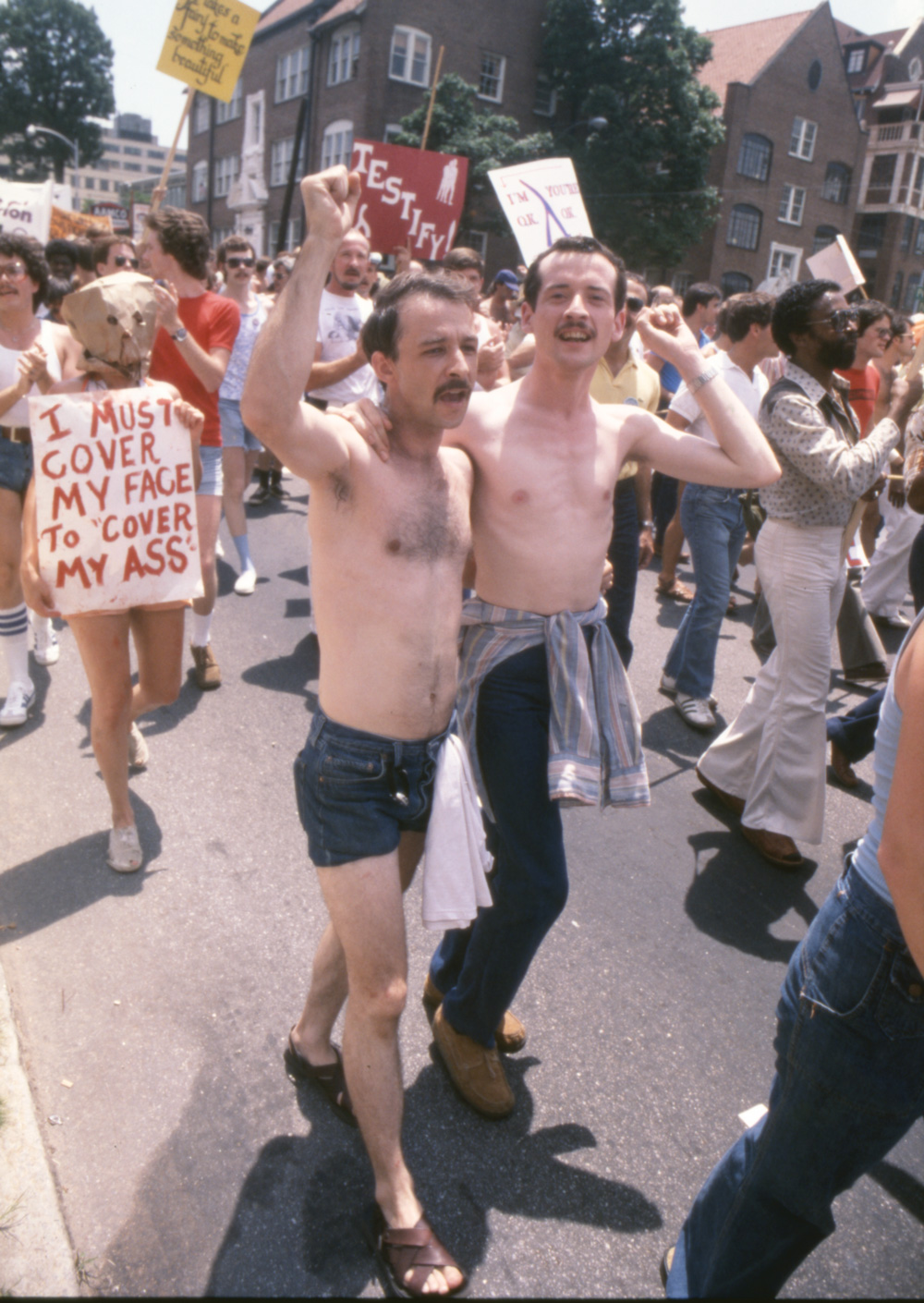
Atlanta Journal-Constitution Photographic Archives, Special Collections and Archives, Georgia State University Library

Atlanta Journal-Constitution Photographic Archives, Special Collections and Archives, Georgia State University Library

Photograph by Getty Images
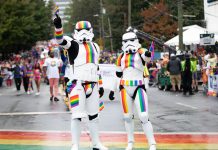
The city’s annual October Pride celebration is the largest in the Southeast and the largest free Pride event in the country. (Atlanta Pride began officially celebrating in October due to a 2008 temporary restriction prohibiting large-scale events at Piedmont Park. The month was chosen to coincide with National Coming Out Day, an annual celebration held on October 11.) McCain says the weekend, which traditionally attracts more than 350,000 people, has an economic impact “now exceeding $86 million,” based on internal estimates.
While corporate America has taken a sizable step back from sponsoring Pride celebrations under the second Trump administration, McCain is optimistic about this year’s corporate sponsorships for Atlanta’s event. “I’m excited that many of our top sponsors, including hometown companies like Delta Air Lines and Coca-Cola, have already recommitted, and some have even increased their support this year,” says McCain.
For Jeff Graham—who, as executive director of the LGBTQ+ advocacy group Georgia Equality, fought a particularly bruising battle this past legislative session—2025 feels akin to his activism 40 years ago, when he was a graduate student and ACT UP member fighting to end the AIDS epidemic. Recalls Graham, “One thing that’s different now? Forty years ago, when I asked my really politically attuned friends to protest with me, in all earnestness, they would ask, ‘Why? Why would I do that?’ They didn’t see it as their fight. Now, LGBTQ issues are so ingrained in the culture that there is no separating them.” Graham points to young people, many of whom are queer and helped start Black Lives Matter and March for Our Lives, as the movement’s new foot soldiers. “This generation of activists, who are now moving from their late 20s into their early 30s, already have a decade of organizing experience behind them.”

Photograph by Renzo Gabriel
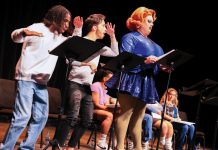
At 74, Lester West—who has been a member of the NAACP since the age of 12 and attended his first gay liberation gathering as a fine-arts student at the University of Illinois a few years after Stonewall—is well-versed in the fight for equality. As Lena Lust, Atlanta’s reigning grande dame of drag, West will be honored as one of the 2025 Atlanta Pride Parade’s grand marshals. Still performing weekly at Blake’s and the Atlanta Eagle, West says, “A lot of the young kids come up to me at work, and they’re real worried right now. I tell them, ‘We went through this before at Stonewall and then in the Reagan era. This too shall pass, but we have to keep strong and unify.’ They’re not just trying to take away gay folks’ rights; it’s anybody who is considered a minority. I tell the kids, ‘One person can’t take on the world, but collectively we all can conquer.’”
After two teens were shot near the Stonewall Inn in June this year following New York City’s Pride celebrations, McCain says Atlanta Pride is working closely with Atlanta police. “Safety is always our top priority,” he says. “Atlanta is a welcoming city and is known as the queer capital of the South for a reason. We want people to come to Atlanta, feel safe, and find community here.”
Even with the challenges the LGBTQ+ community faces, Graham says one thing is essential: “As we lean into our roots as a protest movement and resist the threats against so many segments of our community, we can’t forget to find our joy and celebrate who we are.” Channeling his drag diva, Lena Lust, West adds, “We have to keep the faith. I live in faith. Honey, I refuse to live in fear.”
This article appears in our October 2025 issue.