

Home 2010

Archives

More Under $1000

0
Serenbe: Chattahoochee Hills

The idyllic South Fulton hamlet of Serenbe was founded by foodies, so it’s no surprise it remains a popular destination for food lovers. Steve Nygren, who launched the Peasant restaurants in 1973, and his wife, Marie, whose mother owned and operated Mary Mac’s Tea Room, were the first homeowners here and turned their barn into a bed-and-breakfast before the 1996 Olympics. That B&B grew into the Inn at Serenbe, and Marie now runs its Farmhouse restaurant, which specializes in Southern cuisine using local ingredients—many grown on-site at Serenbe’s own organic farm.

The inn’s Southern Chef Series provides guests with an opportunity to cook side by side with local chefs such as Nathalie Dupree and Linton Hopkins. This month, Virginia Willis—noted cookbook author, former kitchen director for Martha Stewart Living, and onetime executive producer for the Discovery Channel’s Epicurious—will host a session the weekend of October 17 and 18. Hugh Acheson and Jonathan St. Hilaire are coming soon.

For a more hands-off approach to dining, Serenbe also offers the Hil (farm-to-table American classics) and the Blue-Eyed Daisy Bakeshop. The Serenbe Institute for Art, Culture & the Environment—headed by former Woodruff Arts Center president Shelton Stanfill—brings symphony concerts, theater, and resident artists here to provide nonculinary creative opportunities. ($425 per person for Chef Series, includes overnight accommodations, from $169 per additional night, 770-463-2610, serenbeinn.com)

Lakeview at Fontana: Bryson City, North Carolina

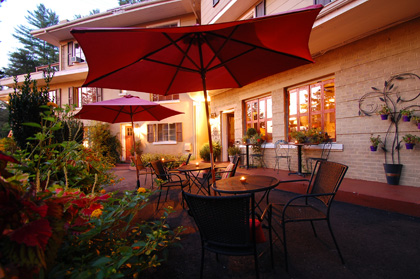
You’ve got to love a spa that claims it’s “refreshingly less fitness-oriented,” especially when it’s also affordable and charmingly unpretentious. Lakeview at Fontana began life as a 1950s highway motel, and traces of its former identity remain. But its Mediterranean makeover—with window boxes of red geraniums, cozy gourmet coffeehouse, pristine bed linens, and cheerful service—makes it seem more like a European pensione than an American throwback.

Tucked into a hillside with a spectacular view of Fontana Lake and the Great Smoky Mountains, this secluded inn tends to serve both outdoor enthusiasts and those seeking a full-service spa retreat. Amenities such as yoga classes, hot stone massages, and complimentary afternoon wine and cheese ensure everyone relaxes. However, adventurers have mountain trails, the lake, and white-water rafting at the Nantahala Outdoor Center nearby—you can even ride the Great Smoky Mountains Railroad directly to NOC from Bryson City. (two-night spa packages from $365 per person, less expensive bed-and-breakfast rates available, 800-742-6492, lakeviewatfontana.com)

Dahlonega

With its bustling town square, historic courthouse, and homespun shops, Dahlonega has always been a pleasant day trip from Atlanta. Quigley’s Rare Books & Antiques is a bibliophile’s nirvana of first editions and rare finds. The Dahlonega General Store offers simple pleasures such as marbles by the cup and five-cent cups of coffee. Kids can pan for gold at historic mines or visit a museum of the nation’s first gold rush, which started here in 1828. Holly Theatre, a restored 1946 theater, offers a wide variety of shows.

However, Dahlonega always lacked luxury accommodations. Montaluce Winery and Estates opened in 2007, making a small dent in that void. Overnight accommodations are available at a Tuscan-style cottage designed by Atlanta architect Bill Harrison. And visitors linger at Le Vigne restaurant, savoring its elegant contemporary decor and outlook over the vineyard, along with the first young vintages. (from $395 per night in October, 706-867-4060, montaluce.com)

Photo courtesy of Lakeview at Fontana Resort and Spa

More Under $500

Amicalola Falls State Park: Dawsonville

Amicalola is Cherokee for “tumbling waters,” and this 729-foot cascade is the highest waterfall (or, more accurately, series of waterfalls) east of the Mississippi. Trails descend from the top and ascend from the bottom, and some are quite challenging, involving hundreds of steps. But the best view, from a bridge spanning the falls, can be reached easily from the West Ridge Trail, a one-third-mile paved path leading from a handicap-accessible parking lot. This state park is also the access point for the 8.5-mile approach trail leading to Springer Mountain, the Southern terminus of the Appalachian Trail.

The park offers a comfortable full-service lodge, simple cottages with stone fireplaces, and campsites. The lodge’s glass walls and verandas afford spectacular views, and its Southern-style buffets keep guests fueled for hiking. A unique alternative is the adjacent Len Foote Hike Inn, a quiet, state-owned retreat accessible only via a five-mile trail.

Complete your fall fix by picking pumpkins at nearby Burt’s Farm (burtsfarm.com). And on the way home, stop by the Ellijay Georgia Apple Festival (georgiaapplefestival.org). (from $105 per night for lodge, 800-573-9656, georgiastateparks.org/amicalolafalls)

Alabama Shakespeare Festival: Montgomery, Alabama

The play’s the thing. Really. Montgomery isn’t a foodie destination (for dining, go to Birmingham), and the hotels are mostly chains. But the ASF (asf.net) is the sixth-largest Shakespeare festival in the world, drawing more than 300,000 visitors annually to its sprawling campus—which NPR described as a “theater junkie’s nirvana.” The twenty-fifth season kicks off with a world premiere coproduced by Atlanta’s Alliance Theatre (through 10/3 before moving to Atlanta 10/20–11/14). Pearl Cleage’s The Nacirema Society Requests the Honor of Your Presence at a Celebration of Their First One Hundred Years stars Atlantan Jasmine Guy. The current ten-show season will reprise three bestselling shows and stage two Shakespeare productions.

Aside from the ASF, Montgomery boasts an unlikely array of museums, including the Montgomery Museum of Fine Arts (mmfa.org) and shrines to Hank Williams, Rosa Parks, and F. Scott and Zelda Fitzgerald. Nearby Capitol Hill is a stop on the state’s vaunted Robert Trent Jones Golf Trail (rtjgolf.com).

Pisgah Inn: Blue Ridge Parkway, Between Mile Markers 408 and 409, North Carolina

This year marks the seventy-fifth anniversary of the Blue Ridge Parkway, a 469-mile scenic byway started during FDR’s New Deal era. The most visited unit of all National Parks, the parkway doesn’t have a grand lodge like the Grand Canyon’s El Tovar or Yellowstone’s Old Faithful Inn. But it does have a nostalgic motel called the Pisgah Inn, located at a dramatic elevation of 5,000 feet, with breathtaking views from the private balconies and porches attached to every room. Its clientele are so loyal that the inn addresses daily dispatches to “Pisgahteers.”

Simple, clean facilities and a full-service restaurant make this an ideal home base for exploring the parkway by car, bicycle, or motorcycle. Well-maintained trails lead in all directions. If you hit a warm fall day, take the kids to the sixty-foot natural waterslide at Sliding Rock. Asheville, Brevard, Waynesville, Cherokee, and Flat Rock are all feasible day trips. The latter is home to Connemara, Carl Sandburg’s long-time residence and a National Historic Site (nps.gov/carl). Though written about Chicago, the poet’s words are an apt description of the Blue Ridge, where the fog also seems to come “on little cat feet.” (from $144 per night in October, 828-235-8228, pisgahinn.com)

Photo courtesy of Georgia Department of Natural Resources

Oxford, MS

Foodies converge on William Faulkner’s hometown each fall to discuss—and taste—regional favorites such as country ham and Dr. Pepper at the Southern Foodways Alliance’s celebrated symposium. The gastronomic party, scheduled for October 22 to 24, is perfect for a town where food and culture rule from the manicured Ole Miss campus to the historic downtown square.
STAY
Book in advance to score a prime room in a cozy residential neighborhood near the square. Front-porch rocking chairs and modern amenities tempt at 5Twelve Bed and Breakfast, ideally situated between the square and campus. Musician-owner George McConnell played guitar for Widespread Panic before turning his attentions to running the 105-year-old property. Another option is the full-service Downtown Inn, steps from boutiques and restaurants. Tip: Thousands of Rebels football fans descend on Oxford for home games, which include righteous tailgate parties on the central campus Grove. Make reservations well in advance to join the festivities, or plan around the football schedule for a quieter trip.
EAT
This town has a seriously sophisticated dining scene. Follow lawyers and professors upstairs for late-afternoon cocktails at City Grocery bar. Patrons might glimpse owner John Currence, the James Beard Foundation’s Best Chef South of 2009, taking a break before heading down to prepare marvels such as red-curry-braised pork belly with sweet peppers, fresh basil, seafood dirty rice, and sesame-grilled asparagus. Don’t miss his newest venture, Snackbar, a bistro-influenced spot hiding just north of the square. Try the glorious, duck-confit-based croque monsieur. The Yocona River Inn, home of Oxford’s best steak, burned last year, but owner Paige Osborn has revived its spirit with Yocona in Exile. Or try Taylor Grocery & Restaurant, a casual place famous for one thing: perfectly fried catfish.
 
DO
The theme of this year’s SFA symposium is the Global South, which will explore the recent influence of international cultures on regional cuisine. Arrive on Thursday to catch a live broadcast of Thacker Mountain Radio. The program showcases this college town’s affection for all things literary and musical, with live bands and readings from luminaries such as former Atlanta contributor Roy Blount Jr. One of three locally owned Square Books stores provides the show’s cozy venue. Another must is William Faulkner’s home, Rowan Oak, with oak-shaded grounds that convey a fitting Southern Gothic mood. Faulkner purchased the antebellum mansion and lived there for more than 30 years. The short drive over along South 11th Street passes some of Oxford’s oldest and most gracious homes.
 
Photograph by Brandall Atkinson

More Under $750

High Hampton Inn & Country Club: Cashiers, North Carolina

The next time you find yourself wistful for the days when kids just ran outside and played, book a room at the High Hampton Inn. The resort is like summer camp for adults and children alike—that is, if camp had a golf course and state-of-the-art spa. Chestnut-paneled guest rooms at this nearly century-old inn are intentionally rustic, without televisions, phones, or even air-conditioning. The pool is a thirty-five-acre lake. However, new furnishings make the bedrooms feel fresh, clean, and inviting. Besides, open windows and cool evening breezes have become rarer amenities than hot tubs.

Recreational opportunities include tetherball, shuffleboard, badminton, and the ever-popular evening bingo. Wander the dahlia garden and snip a few blooms for your room. Take your kids golfing and call in a lunch order from the phone on the eighth tee. Explore miles of mountain trails, and you might even spot the fabled bear-shaped shadow that appears across the face of Whiteside Mountain every October. The most contemporary facility is a new spa and health club, where innovative services range from hoop fitness classes to Ashiatsu massage, provided at a private station set deep in a woodsy laurel thicket.

Buffet-style meals are ridiculously generous and delicious—locavore without the pretense. Men are required to wear coats and ties for dinner, echoing the compound’s Adirondack flavor—established by the poplar- and chestnut-bark exteriors, towering hardwoods, rocking-chair porches, stone fireplaces, and chilly highland temperatures. (from $250 per night in October, double occupancy, includes all meals, 800-334-2551, highhamptoninn.com)

Pirate Festival: Tybee Island
This month, turtles won’t be the only seafarers flocking to Tybee Island’s coast, as thousands of buccaneer wannabes trek to the island’s annual Pirate Fest (10/8–9, tybeeisland.com/piratefest). Swing by the Thieves Market for treasure, or catch doubloons tossed from the swashbuckling parade along Butler Avenue. Enjoy a weekend of dancing and live music headlined Saturday night by seventies star Eddie Money. Children romp in Little Matey’s Cove, a kid-friendly haven with a petting zoo and costume contest.

If you don’t get your fill of grog and grub from the festival’s vendors, head for Sundae Cafe (sundaecafe.com). Don’t let the strip-mall location fool you; the cafe offers sophisticated fare such as stuffed shrimp and pistachio tuna.

After a day of revelry, relax in one of the brightly colored cottages from Mermaid Cottages Vacation Rentals (mermaidcottages.com, from $150 per night plus fees in October). Scattered across the island, the vintage cottages are quintessential cozy beach hideaways. Or check into the DeSoto Beach Hotel (desotobeachhotel.com, from $179.95 per night during Pirate Fest), the island’s only beachfront hotel.

One Ocean Resort Hotel & Spa: Atlantic Beach, Florida
If you’re attending this month’s Georgia versus Florida football game in Jacksonville and want respite from the drunken masses, nearby (and relatively quiet) Atlantic Beach’s One Ocean Resort Hotel & Spa offers a lovely escape. The resort is a brand-new, $37 million renovation of the beloved Sea Turtle Inn, built in 1973—which is how the high-rise escaped this picturesque town’s current thirty-foot height limit. The benefit is that every guest room, the dining room, and the spa have unimpeded views of the white-sand beach. The hotel’s award-winning contemporary decor is in soothing shades of azure, sand, and pearl. Each guest is assigned a “docent” (aka personal butler). Activities range from horseback riding on the beach to championship golf to marine-inspired spa treatments. Amelia Island, Ponte Vedra, and even St. Augustine are easy field trips.

Enter the hotel’s Azurea Restaurant through a pebbled blue tunnel reminiscent of an aquarium, and ask for an intimate table in one of the high-backed circular booths. Enjoy “First Coast” cuisine (a blend of American, Caribbean, and European flavors), which chef Ted Peters recently demonstrated at the James Beard House in New York.

The resort is located in a busy pedestrian village of shops and restaurants. For a nightcap, wander over to Pete’s Bar (petesbar.net), home of twenty-five-cent billiards, founded by a storied bootlegger at the end of Prohibition and a favorite haunt of novelist John Grisham. (from $179 per night in October, 904-249-7402, oneoceanresort.com)

Photo courtesy of tybeeisland.com

Barnsley Gardens, GA

0
In our experience, golf and romance are often mutually exclusive. But Adairsville’s Barnsley Gardens Resort excels at both. The inn capitalizes on the storybook past of a crumbling, vine-covered antebellum mansion. The links capitalize on the verdant, rolling terrain of the North Georgia foothills. Add fine dining, a boutique spa, plush guest cottages, and a little magic from the so-called “fairy godmother”—whose full-time job is quixotic touches such as filling a room with rose petals and tea lights—and you’re sure to find love among these ruins.
STAY
Accommodations are in 37 quaint Gothic-style cottages, arranged along wide lawns to resemble a village green. No two alike, each has a front porch and wood-burning fireplace. Bocce ball, badminton, and croquet sets are scattered about—as are pairs of Adirondack chairs next to fire bowls stacked with fresh logs. The secluded layout keeps the grounds quiet, even when groups are present. Though landscaping is immaculate, noisy power tools are kept at bay. Unless there’s live music in the beer garden, all you’ll hear are chirping birds and insects, or perhaps the distant giggling of kids racing barefoot. Rooms have a charming vintage flavor—12-foot ceilings, pencil post headboards on feather beds, heart pine floors, and bathrooms with honeycomb tile and honest-to-god cast-iron claw-foot tubs.
 
EAT
With dark wood paneling, a towering stone fireplace, and iron lanterns, the “casual” Woodlands Grill is informal in a Tudor castle kind of way. A restful screened porch overlooks the golf course, and there’s a cozy tavern with a billiard table. The seasonally changing menu is fairly predictable—steak, salmon, veal Marsala, etc.—but far superior to typical country club fare. The white-tablecloth dining option, Rice House, is in an 1854 farmhouse moved here from nearby Rome, still bearing the scars of Civil War bullets. Its continental cuisine is a fancier, more selective version of the grill menu—not to mention pricier (and Woodlands isn’t cheap). An outdoor beer garden, which stocks a full bar but keeps several German brews on tap, is a fun place to gather around picnic tables or cuddle next to the fire pit.
 
DO
Explore the Italianate mansion that 19th-century cotton merchant Godfrey Barnsley built for his beloved wife Julia, who died of TB before its completion. (Call the fairy godmother to arrange a fireside dinner for two under the stars here.) Stroll through the formal parterre with its original, 170-year-old boxwoods. Tee off on the award-winning golf course, which winds around lush forests and over surprisingly dramatic elevations. Each well-manicured hole is unique, ending with swift, challenging greens. Relax at the full-service spa, which helped Barnsley garner top ratings by Condé Nast and Zagat. Signature treatments use petals from the gardens’ heirloom roses. As befits a country manor, there are also a sporting clays course, stables, fishing, woodland trails, canoes, and kayaking. Or just chill in a hammock.
 
Photograph courtesy of Barnsley Gardens

Space Coast, FL

0
The oceanfront home of America’s space program stretches more than 70 miles along Florida’s Atlantic coast, from Titusville to south of Melbourne. White sand and ripping surf will always draw beach bums and sun lovers, but an era of spaceflight ends this year. The last two space shuttle launches ever are slated for September and November. Go ready for crowds.

STAY
Titusville has motels galore, but Cocoa Beach’s lodgings are closer to shopping and nightlife. Ron Jon Cape Caribe Resort, named for the world’s largest surf shop a few miles down highway A1A, offers condo-style studios and bedrooms with full kitchens. With a pool, waterslide, lazy river, restaurant, spa, and private access to the beach and nearby Jetty Park (a prime spot to watch a launch), the amenities may tempt you to ignore the rest of the coast. The Inn at Cocoa Beach caters to couples, with romantic balconies, parrot mascots, a beachside private courtyard, and an evening wine and cheese service. In Melbourne, soak up the laid-back atmosphere at a local B&B such as the waterfront Crane Creek Inn, only a two-minute walk from the quaint historic district’s shops and restaurants.

EAT
Watch the launch or celebrate afterward above the surf at the Cocoa Beach Pier’s Mai Tiki Bar, 800 feet out at the boardwalk’s end. At the pier’s 500-foot mark, watch the tide roll beneath you while dining on fresh seafood and tangy Key lime pie at Atlantic Ocean Grille. Later, dance on the beachside deck of Coconuts, the go-to nightspot. Pop into the Pig and Whistle pub (240 North Orlando Avenue, Cocoa Beach, 321-799-0724) for hearty British fare, including the sometimes-on-Friday lobster potpie (call ahead to check). Less-touristy Melbourne lights up its historic district once a month for Friday Fest. Start with a steak and live jazz at the Firehouse, then stroll the shops or join the street party—drum circles and belly dancing may occur.

DO
Anywhere along U.S. 1 in Titusville is prime viewing for a shuttle launch, but the best—unless you have a NASA pass—is Space View Park (Broad Street at the Indian River), less than 15 miles from the shuttle launchpads and one of the few locations that track the countdown and have public restrooms. A short trip south is the Kennedy Space Center’s Astronaut Hall of Fame, with inspiring artifacts such as Gus Grissom’s Mercury space suit and Wally Schirra’s Sigma 7 capsule. The same KSC ticket gets you a second day’s visit, so take a bus tour to the shuttle launch observation gantry and the massive indoor Saturn V exhibit. To really appreciate the beauty of the coast, head north just off the Space Coast map to Ponce Inlet and climb the 203 steps to the top of the tallest lighthouse in Florida.

Photograph courtesy of Ponce de Leon Inlet Lighthouse

Havana, Cuba

Just ninety miles from Key West, Cuba remains undiscovered country to most Americans, thanks to an embargo dating back to 1963. Last year, President Obama lifted restrictions on Cuban Americans’ visits. But the rest of us still need a legal excuse, whether it’s professional, educational, or humanitarian. Still, thousands of Americans go every year without a license, traveling via Mexico or Canada. Technically, they risk six-figure fines. We visited earlier this year, and here’s what we found.

DO
Wander Calle Obispo, a popular walkway in Old Havana, and order a mojito at cafe La Dichosa. It’s a block from the capitol and less touristy than Hemingway’s Bodeguita del Medio, where the daiquiri was invented. Hail a pre-embargo ’57 Chevy convertible taxi for a 30-minute ride to Playa Santa Maria, where beach chairs and cold drinks cost a few pesos. For a small sum, the cabbie will wait and escort you back to Havana in time for a midafternoon Industriales (Cuba’s Yankees) game. Visit the Museo de la Revolución, where Fidel’s version of history is displayed in an old presidential palace, then stop by the Partagas cigar factory—the oldest in Cuba. Buy a Cohiba and smoke it along El Malecón, a wide walkway where Havanans of all ages gaze toward Miami.

STAY
The 80-year-old Hotel Nacional overlooks Havana Bay and El Malecón and boasts a breezy 19th-century veranda for smoking the hotel’s selection of Churchill and Lusitanias cigars—as Buster Keaton, Errol Flynn, and Lucky Luciano did before the revolution. The hotel is luxurious but also somewhat insulated from everyday Cuban life. Closer to the heart of town is the Spanish Colonial Hotel Sevilla along the vibrant Paseo del Prado promenade. It’s cheaper than Hotel Nacional and offers a stunning rooftop bar, where Graham Greene drank rum and penned Our Man in Havana. Have a few sniffs of the Havana Club 15 Year, then, if you’re too soused to walk, grab a pedicab for a slow ride around the crumbling colonial splendor of Old Havana at night.

EAT
Many of the ingredients Miamians use to cook really good Cuban food simply aren’t available, and much of the seafood catch that’s not taken to touristy restaurants is left to rot on the docks. But there are exceptions. Cajitas (meaning “little box”)—sold on the sly out of homes—are full of rice, black beans, salad, plantains, and a sliver of pork and cost about a dollar. Restaurants in Havana are a gamble, but piano bar La Roca serves moderately priced seafood and chicken ($50 for three entrees and a bottle of wine), and nearby La Torre offers overpriced but delicious American entrees on the 33rd floor of a hotel. Dessert? Head back to Calle Obispo for 25-cent strawberry ice cream sold through a window by an old Cuban woman at a little shop called La Copelia.

Photograph courtesy of istockphoto.com

Athens, GA

Rabid sports fans and loyal UGA alums make the 70-mile trek from Atlanta to Athens during football season, braving crazy congestion and peak hotel rates. But for the rest of us, the best time to visit is summer, when a mellower townie vibe prevails. Celebrate the Classic City’s musical legacy during the annual AthFest, which this year takes place June 23–27.

STAY
Just because you’re attending a music festival doesn’t mean you have to endure the grunge of your own college days. Retreat from the crowds at Hotel Indigo Athens. The sleek, modern hotel that opened in 2009 is LEED Gold certified and an easy walk from downtown. Enjoy both grown-up comforts and cutting-edge music at Foundry Park Inn & Spa, a complex that includes 1820s industrial-type buildings and a “game day” motel remodeled with luxury details (Martha Stewart would approve). The grounds include the historic Hoyt House restaurant and the Melting Point, an intimate performance space deemed one of America’s 40 best music venues by Paste magazine.

EAT
As an alternative to critically acclaimed Five and Ten, stop by chef Hugh Acheson’s newer Athens venture, the National. The menu has Mediterranean influences but draws on locally grown and sourced foods. After dinner, walk across the street for a drink and a game of cornhole at Little Kings Shuffle Club (706-369-3144). Speaking of drinks, Athens reportedly has the country’s highest bar-per-capita ratio, and you can choose from more than three dozen in six downtown blocks fronting Broad Street. Or sample local brew Terrapin during a brewery tour. In the morning, fortify yourself with strong coffee and fluffy biscuits at budget-friendly Big City Bread Cafe.

DO
Over AthFest’s five days, more than 200 bands will perform at 20 venues, all available for a $15 wristband. Headliners perform on two main stages (the Pulaski Stage outside legendary 40 Watt Club and the Lumpkin Stage outside the still fire-damaged Georgia Theatre). There will also be an outdoor artists market, screenings of Georgia-produced films and music videos, and kid-friendly activities. During AthFest, you can take the Athens Music History Tour (call 706-208-8687 for reservations), a two-hour bus excursion, or set your own pace on the Athens Music History Walking Tour, following a detailed guide posted online by alt-weekly Flagpole. Gen Xers will be glad to know both tours stop at the railroad trestle featured on the back cover of R.E.M.’s Murmur. Like any college town, downtown Athens also boasts a fine collection of bookstores and boutiques.

Photograph by Jim Diffly

Research Triangle, NC

For food alone, the brain-powered triplet cities of Raleigh, Durham, and Chapel Hill make a tempting weekend escape; Bon Appétit crowned Durham–Chapel Hill “America’s Foodiest Small Town” in 2008. But the region also boasts crackling cultural and music scenes—Durham is home to indie label Merge Records—and gets a jolt next month from the expansion of Raleigh’s North Carolina Museum of Art.

STAY

An easy drive from strategic points Chapel Hill and Carrboro, the Umstead is the region’s most indulgent hotel. It may feel a tad corporate (the five-diamond-rated property was built by the founders of local software colossus SAS), but warmth comes from a coddling staff, lush grounds, and quirky art in public areas. You’ll also find intimacy at its temple-quiet spa, where body treatments such as the Red Flower Hammam Tibetan Ritual are as sensuous as they sound. For rootsier charm, there’s Chapel Hill’s circa-1924 Carolina Inn. Successive renovations have burnished this tasteful property to a warm glow. The inn’s profits—per its founder’s request—still benefit libraries at the University of North Carolina, on whose campus it sits.

DO
With its long-awaited expansion next month, Raleigh’s North Carolina Museum of Art will unveil twenty-nine Rodin sculptures as well as works by Ellsworth Kelly and Roxy Paine. If the weather’s nice, explore the wooded trails of the surrounding art park. Another Saturday must is a stop at the Carrboro Farmers Market. Hint: Farmer’s cheese from Chapel Hill Creamery pairs perfectly with Farmer’s Daughter scones and Little Flying Cows honey. Later, catch what’s-next bands at live-music mecca Local 506, or watch the Tar Heels or Blue Devils play at March Madness mecca Hi5 sports bar.

EAT
At Chapel Hill’s Lantern, Andrea Reusing alchemizes lovingly sourced local ingredients into symphonic Asian plates such as house-made red curry and tofu stew and tea-and-spice-smoked chicken with yang chow pork. In Durham, brightly hued Watts Grocery showcases chef Amy Tornquist’s highly personal locavore takes on staples; think soul-warming shrimp-and-grits cake or molasses barbecued pork ribs over broccoli rabe. The Umstead’s on-site restaurant, Herons (919-447-4200), has charmed local foodies—no mean feat—with a confident, intelligent menu by new executive chef Scott Crawford. You’ll dream about vanilla-poached lobster with parsnip puree and buttered tangerine long after you’ve returned home.

Photograph by Bill Russ, courtesy of NC Tourism

The Artful Dodger: Jonathan Krohn

Child prodigies inspire an unsettling mix of awe, protectiveness, and peevishness in the adults around them. When young Jonathan Krohn delivered his barn-burning speech at last February’s Conservative Political Action Conference, Rush Limbaugh beamed paternally at his new mini-me, while Jon Stewart joked, “I’m not sure there’s a nurple purple enough.”

“I thought Stewart’s routine was quite funny,” Krohn says. “But I declined his invitation to appear on one of his specials.” With the publication this month of his second manifesto, Defining Conservatism: The Principles That Will Bring Our Country Back (Vanguard Press), Krohn is instead expected to make the rounds of tea party protests and join the punditocracy as the boy king of Fox News. His new book has the ambitious aim of helping readers “understand the ideas, principles, and values of Conservatism,” and it expands on the principles spelled out in his first book, Define Conservatism for Past, Present, and Future Generations, self-published in 2008. Homeschooled in Duluth, he is fourteen but looks younger, a downy moppet eerily channeling William F. Buckley. In his book-jacket photo, Krohn sports a navy blazer, a flag pin, and a defiant smirk.

“I have an opinion on absolutely everything,” he says as we chat over hot cocoa at a suburban coffee shop. His mother, Marla, a drama teacher, watches sidelong like a sentry as he launches into the minutiae of tort reform with such rapid-fire, hyperarticulate vehemence that his pubescent voice cracks.

Krohn’s political awakening came at age nine, when he chanced upon a funny-sounding word—filibuster—and began studying it. “Back then, I was like the average young person who doesn’t understand left wing or right wing, but I knew exactly what I believed and what I stood for,” he says, recalling his embryonic self-awareness. “Of course, people say, ‘You’re just a kid; what do you know?’ I read and exchange ideas with people who may or may not agree with me.” He adds magnanimously, “Some liberals are actually nice people who can be pleasant to talk with.” My attempt at a little talking-head byplay—“You’ll find as you get older that they can be fun to party with, too”— is met with a blank stare.

“Look, I’m doing this to help my country,” he says. “I’m not just some cute kid, some anomaly, some traveling sideshow. I know what I’m doing. I hate to sound like some dream crusher, like some angry old conservative, but some people simply do not know what they are doing, and that is the worst thing.”

A sinking suspicion sets in that he could be alluding—justifiably—to me, the interlocutor who earlier, when attempting to get him to discuss life as a kid outside of politics, invoked the “old soul” cliche when he cited Frankie Valli as his favorite musician. He has endured enough little-shaver condescension.

“Age is irrelevant,” says Krohn, who is fielding offers from think tanks. “I want to be judged as any other political analyst. What I write is what I write is what I write.” Asked if he experiments with other forms, such as fiction or poetry, he guffaws. “Poetry? Why would I do that? What would I write—an ode to healthcare reform?”

“Well,” I say, “you never know what you might want to do. You might feel compelled to write a poem someday.” When one of the Palin daughters breaks your heart, I think silently. Then I add, like some hippie-dippie Polonius, “That’s the beauty of being so young—so many possibilities, including opportunities for rebellion.”

He rolls his eyes. “I will rebel against conservatism the day Michael Moore makes a good movie.”

Photograph by Alex Martinez

Follow Us

69,386FansLike
144,836FollowersFollow
493,480FollowersFollow

NEWSLETTERS