
Home 2026

Archives

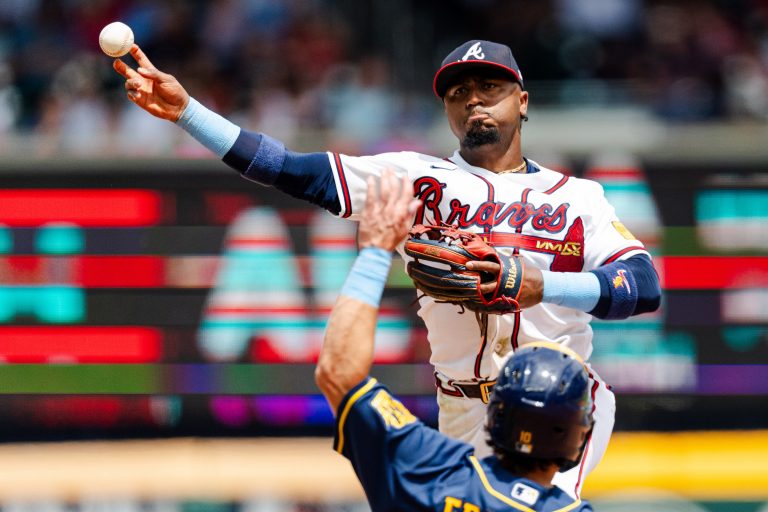
Five Braves Head to the All-Star Game

Chris Sale (Credit – 2026 Jack Casey, Atlanta Braves)

Photo by Jack Casey/Atlanta Braves/Getty Images

It was a glorious spring for the Atlanta Braves. They roared out to a huge lead in the National League East and held the best record in baseball at 40-20. Alas, matters have changed since summer arrived. A June swoon, with injuries and slumps and poor pitching leading to a 9-14 record, and a mediocre July, have returned the team to the pack. That once commanding 13.5-game lead has been whittled to three.

So, the All-Star Game comes at a good time for our home team. The club will welcome the break, but five Braves will venture to Citizens Bank Park, the home of Atlanta’s rivals, the Phillies, for the Midsummer Classic, held Tuesday, July 14.

Raisel Iglesias (Credit – 2026 Jack Casey, Atlanta Braves)

Five Braves were selected, tied for the most in the National League with Los Angeles and host Philadelphia. Two of them, catcher Drake Baldwin and second baseman Ozzie Albies, were voted in as starters. The other three—first baseman Matt Olson and pitchers Chris Sale (starter) and Raisel Iglesias (reliever)—were selected by N.L. manager Dave Roberts.

After winning Rookie of the Year in 2025, Baldwin put up MVP numbers before straining his oblique in mid-May. After missing a month, he has struggled upon return, but he is still the N.L.’s best option behind the plate, with 15 homers despite the injury. He will make his All-Star debut on Tuesday.

Ozzie Albies (Credit – 2026 Matthew Grimes Jr., Atlanta Braves)

The switch-hitting Albies was voted into his fourth All-Star Game, and he has been one of the most consistent Braves in 2026 (along with Michael Harris, who was shunned for the honor). He has 14 homers, 50 RBI, and perhaps most importantly, has played in every game, crucial for an injury-hit club.

Matt Olson (Credit – 2026 Matthew Grimes Jr., Atlanta Braves)

Ozzie’s partner on the right side of the infield, Olson, is a reserve, named to his fourth ASG as well. He not only has also played in every game this season, but in 869 consecutive games, the longest-active streak. The All-Star Game doesn’t count toward that record, but it just shows that Matt will always suit up if a game is being played.

Chris Sale (Credit – 2026 Matthew Grimes Jr., Atlanta Braves)

Sale will appear in his tenth All-Star Game and is in the mix to open the game for the National League. Sale has a 2.10 ERA and 109 strikeouts, both near the top of the pack. It’s possible Sale will be relieved by Iglesias, the Braves closer (2.30 ERA, 18 saves) making his first ASG appearance. Both hurlers will undoubtedly get some work.

Hopefully the guys will represent the Braves with good showings in Philly and use the game as a springboard for a great second half of the season.

Editor’s Journal: Building on a legacy

Jim Townsend.
Jack Lange.
Norman Shavin.
Larry Woods.
Neil Shister.
Lee Walburn.
Rebecca Burns.
Steve Fennessy.
Betsy Riley.
Scott Freeman.

These are the former Atlanta magazine editors on whose shoulders I now stand. I wish I had met Townsend, who launched this magazine in 1961 and came to be called “the Father of City Magazines” by Time. From everything I know about him, he was a king of excess in a time when magazine editors could get away with such things. But he was also a genius who could spot the creativity simmering in a young Anne Rivers Siddons and coax Pat Conroy into processing the searing pain of his divorce on Atlanta’s pages.

Walburn, this magazine’s editor from 1987 to 2002, remains a legend around the office. He trained Kevin Benefield—now editor of our travel ancillary, Southbound—who in turn trained me. Although I’ve never met Walburn (I joined Southbound in 2013), his respect for process, demand for editorial integrity, and laser focus on who our readership is and what they care about has been surgically implanted in my brain.

In the late aughts, when I was a freelance writer trying my best to squeeze a living out of 75 cents a word, I landed an assignment with Atlanta Magazine’s Home (now Georgia Design). The story was about the best ways to care for your leather couch; my editor was Betsy Riley. I’ll never forget the thrill of seeing my byline in an Atlanta magazine–branded publication for the first time. Never mind that I was writing about leather cleaner. Atlanta was, and remains, the pinnacle of magazine journalism in this city. And I was part of it. After I cashed my check, I taped my pay stub to the wall of my home office.

I wish I still had that pay stub. It was lost a couple of years ago during my family’s move from one Brookhaven house to another. But my reverence for this magazine and what it has meant to Atlanta since 1961 remains. Substacks, hyperlocal sites, Instanews sources, and the like have their place, but they mostly cover single prisms in our city’s kaleidoscope. At Atlanta, every page helps readers make sense of the big picture: What’s in style and where can I buy it locally? What’s the hot new Thai restaurant in the Stockyards like? Who has new ideas to help prevent the spread of HIV in Atlanta, known for its high rate of infection? How can I plant azaleas that bloom all the way into summer? You’ll find all of these stories in this issue alone.

I hope you’ll continue to rely on us for quality journalism written by locals, for locals—never regurgitated articles printed in magazines around the country, and never anything generated by artificial intelligence. You might be wondering how the World Cup is going to affect your life this summer. We’re working on that story. Or perhaps you’re trolling for a cool restaurant to impress out-of-town guests. We’ve got you covered. I’m also on the hunt for new, creative voices. The next generation of Anne Rivers Siddonses and Pat Conroys are in our midst, and I want their storytelling magic on our pages.

I am humbled to follow 10 editors who gave everything they had to ensure the magazine that bears this city’s name would continue 65 years and counting. I’ll do my best to honor their legacy, one issue at a time.

This article appears in our April 2026 issue.

Editor’s Journal: Bon voyage, Atlanta magazine

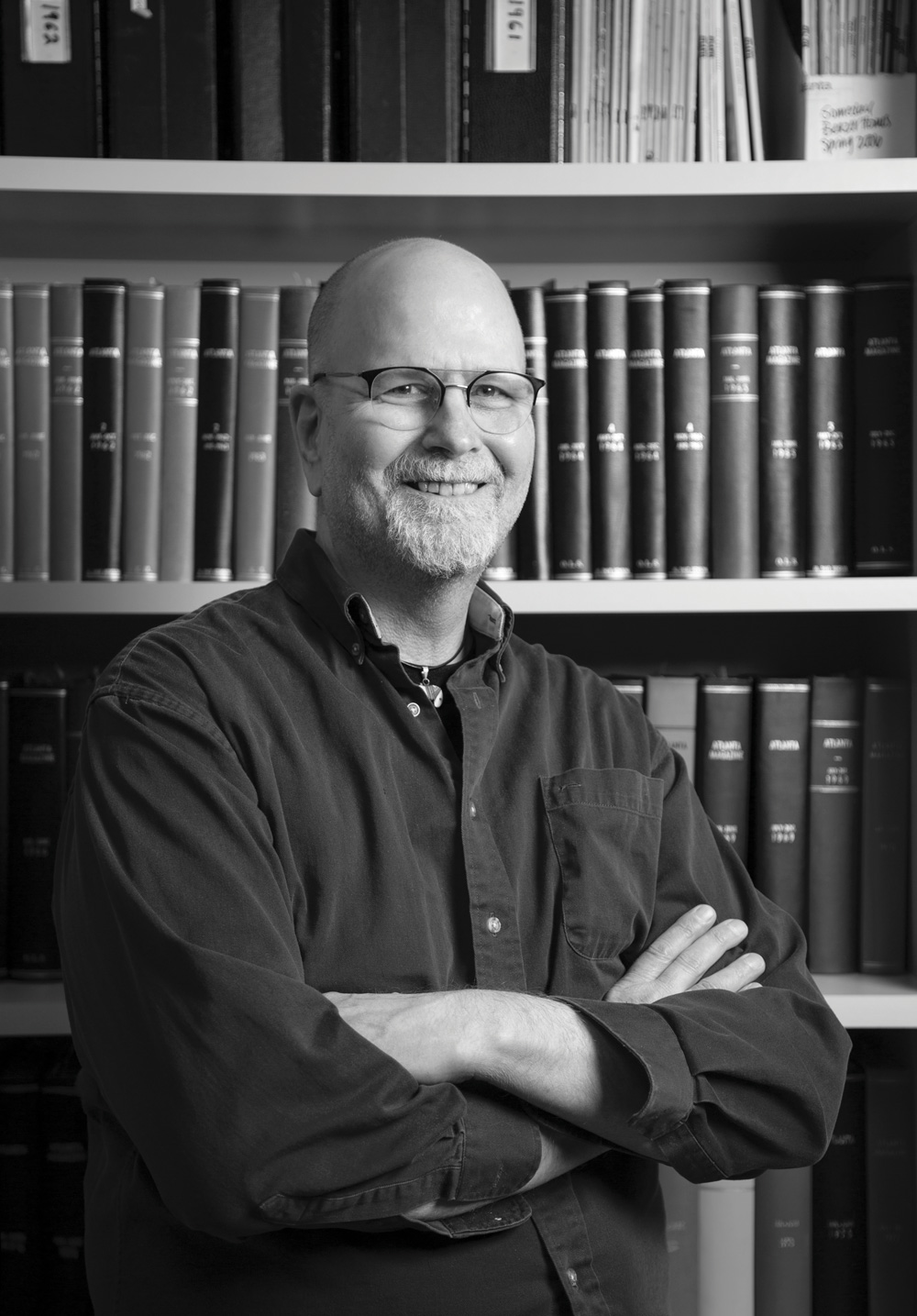
A black and white headshot of Scott Freeman crossing his arms and smiling in front of a bookshelfThis is a bittersweet moment. Atlanta magazine turns 65 years old in May, and I’ve been involved with this publication for about 15 of those, starting as a freelance writer and ending as editor in chief.

There have been adventures along the way. Getting a master class from newly elected Hall of Famer Andruw Jones on playing center field. Getting mooned in the Braves clubhouse by another Hall of Famer from that team, Greg Maddux. Traveling to North Carolina to write about the manhunt for Olympic bomber Eric Robert Rudolph and inadvertently stumbling upon one of his abandoned campsites.

I also gained 20 pounds in a single month when we did a barbecue issue. I’ve been angrily cussed out and tearfully hugged. I wrote a story about being single in Atlanta that a colleague described as a “3,000-word personal ad.” If it was, it worked—I had a long-term relationship with a woman who confessed she’d read it and then sought me out.

I interviewed actor William H. Macy (a Decatur native) next to a roller coaster at Six Flags. I once called a member of The Rolling Stones during a rehearsal; he stopped the song to answer and to tell me he’d call me back. I ghost-wrote the autobiography of Zoo Atlanta’s legendary gorilla Willie B., wrote about singing at the open mic night at Eddie’s Attic, and witnessed the ducks make their daily march through the lobby at the Peabody hotel in Memphis.

This work was always fascinating and gave me a wealth of incredible experiences. It was seldom boring.

But all things must pass. I am retiring and passing the baton to Allison Entrekin, who will become the new editor in chief of Atlanta magazine.

Allison is also a longtime member of the magazine family, most recently as features editor of our Southbound travel publication. Her work has been published in USA Today, Travel + Leisure, Condé Nast Traveler, and Garden & Gun. She’s even written a children’s book: The Goose Who Talked to the Wind.

From founding editor in chief Jim Townsend to Lee Walburn to Rebecca Burns and Betsy Riley, the editor’s chair at Atlanta magazine has carried weight and gravitas. This is where literary journalism lives and thrives. This is where the best stories about Atlanta get told. I’m proud to be a part of that legacy.

But it is time to move into my life’s Act III. I’m grateful for the people I worked with here, the team of editors who are dedicated to publishing a high-quality magazine each month. And I’m also grateful for the writers who grace us with their words.

With this issue, I step out of that coveted chair and hand the seat over to Allison.

Fond adieus, and bon voyage.

This article appears in our March 2026 issue.

Editor’s Journal: Announcing my retirement from Atlanta magazine

0

A black and white headshot of Scott Freeman crossing his arms and smiling in front of a bookshelfIt was well after midnight, and I was a restless five-year-old wide awake with insomnia. I crept to one of my favorite late-night places—my dad’s desk, where he kept his World War II photographs. We’d just watched Battleground, a film about the siege of Bastogne, a battle my father had fought in as a paratrooper with the 101st Airborne Division. A few minutes into the movie, he said it was about his company and a battle he’d been in. “I was there,” he said. I caught the excitement in his voice.

“Dad,” I’d asked, gazing at the soldiers on the television screen, “which one is playing you?”

The photographs made the movie real, with my dad in the starring role. I stayed up late, digging deep into the drawer where he kept them. All these years later, I still vividly remember the moment I came across the photograph: my dad in his Army uniform at a resort town with a woman . . .  a woman who, you know, was not my mom.

It was a tiny black-and-white print, barely bigger than a Zippo lighter. My dad was sharp and dapper. His pants were tucked into his boots, and his garrison cap—with a parachute patch front and center—was tilted stylishly to the right. The woman was beautiful, with high cheekbones and dark, curly hair. There was an unspoken intimacy in the way they leaned into one another. On the back was a name written in feminine script: “Nicole Bernheim.”

I’m certain the biggest shock I ever gave my father was the next morning, when I walked into the kitchen and asked, “Dad, who’s Nicole?” I didn’t know that question would haunt me for decades.

Eventually I learned a kernel of the story: My father said he helped liberate Dachau, and Nicole was one of the prisoners. She memorized his name and wrote him a letter, and they began to correspond. Ten months later, they met in Nice, France, for a two-week holiday. That’s all he would say.

I spent decades trying to find her, only to hit dead end after dead end. Then, last July, the wall finally collapsed. Armed with a fresh clue—the discovery of a postcard Nicole had sent—I found Nicole. She had passed away in 2003. But I discovered that a decade earlier, she’d given two hours of video testimony to the USC Shoah Foundation, which gathers oral histories from Holocaust survivors. It only deepened the mystery when I learned that Nicole was never at Dachau—she had survived Auschwitz and Ravensbrück. Why did my father need that lie? How did they really meet?

Nicole had three daughters and I reached out to the oldest. She was surprised—her mother had never said a word about my father. She suggested a Zoom call, and after saying hello, we both immediately burst into giggles at the absurdity of it all. Then, a little later, this happened: Nearly 80 years after a Holocaust survivor named Nicole mailed a chatty romantic postcard to an American paratrooper named Wilson in 1946, Wilson’s son read it to Nicole’s daughter.

In the spring, I’m going to Europe to retrace their paths and solve those mysteries. Before he died, I conducted interviews with my dad, and we had talked about walking his battlefields in Bastogne, Belgium, together. Now, I’m taking that trip alone but bringing his memories with me. I’m also going to follow Nicole’s journey from Strasbourg, France, to Auschwitz and, thankfully, back. With any luck, you’ll see a book called Finding Nicole in bookstores about two years from now.

I’m retiring as editor in chief of Atlanta magazine after the March issue so I can write this book. It’s been an honor to follow in the footsteps of such towering figures as Jim Townsend and Lee Walburn. Just as it was an honor to succeed Betsy Riley.

As a journalist and editor, I’ve spent my career telling other people’s stories.

This is the one that chose me.

This article appears in our February 2026 issue.

Editor’s Journal: What a Rhode Island classroom taught me about Dr. King’s legacy

0

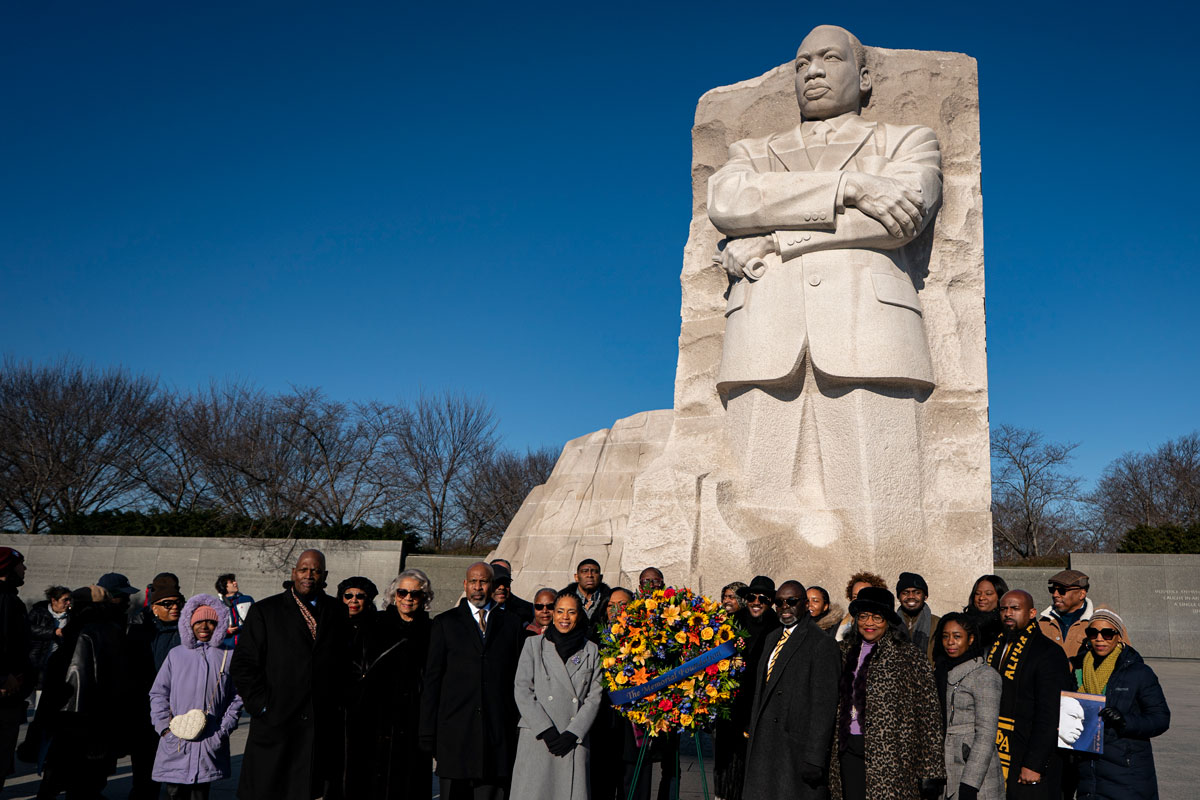
Sen. Angela Alsobrooks (D-MD), in grey coat, and faith leaders lay a wreath during a celebration of Martin Luther King Jr. Day at the Martin Luther King, Jr. Memorial on January 19, 2026 in Washington, DC.

I was shocked by many things when I moved to Rhode Island in 1988 to work at the Providence Journal. “Big hair” (aka “helmet hair”) was the fashion rage for women, a style that required enough hair spray to be a walking hazard to the ozone layer. The local accent was harsh and shrill and muted the letter r in words. The city of Warwick, for example, was pronounced “Waw-wick.” But nothing shocked me more than when I learned Rhode Island had yet to observe the Dr. Martin Luther King Jr. holiday, which was federalized in 1983, with official observance beginning in 1986. In the middle of the liberal bastion of New England, how could that even be possible? It was first observed in Georgia in 1986, thankfully replacing Confederate Memorial Day as an official holiday.

On MLK Day that year, I was assigned to go to a high school in the northern suburbs and write a story about a history teacher who always devoted the holiday to teaching about the civil rights movement. To his 16-year-old students, the ’60s were ancient history, and he wanted to make sure they understood the historical context and why it was still relevant to their lives.

Afterward, we chatted, and I told him about my experiences growing up in the Deep South during the movement. “Can you come back tomorrow and speak to my class?” he said. “They need to hear this.”

The next day, I stood before the class, acutely aware there was not a single Black face in the classroom. I had not been in an all-White classroom since the fourth grade. I started with a question: “How many of you have friends who are Black?” Not a single person raised their hand.

It took me a moment to recalibrate my thoughts—I had not expected that response. I’m from the South, and it’s hard to imagine growing up without Black people around and not having friends of color.

I was seven when my dad integrated the hometown Little League baseball team he coached. After a single player broke the color line that year, half the roster was Black the following season. During a time when there were still separate public water fountains, my teammates and I were drinking from the same plastic water jug during games. Most of them began to regularly come to my house for pickup basketball games. That experience taught me the value of knowing people as individuals rather than embracing stereotypes.

My dad was my elementary school principal when the school system integrated at the beginning of my year in fifth grade. There was one Black kid in my homeroom, Alfred. We became friends and he was quickly accepted by the other kids. Not so much by their parents. When we drew names for Christmas gifts, I drew Alfred’s name and he drew mine. Looking back, I think that might have been arranged to give my dad one less headache from White parents who objected to buying a Christmas gift for a Black kid.

Having those experiences as a kid expanded my world. I saw different perspectives, different ways of looking at things. And it was unsettling to see a de facto segregated high-school class not 30 years removed from the civil rights movement. Those kids wouldn’t have the benefit of interacting with different races and different cultures.

In this issue, we mark the 40th anniversary of the King holiday. The values it celebrates and marks are just as relevant today as they were during the ’60s.

My message to those students was that relationships matter. It’s how we embrace our commonalities and how we bridge divides. I grew to love living in Rhode Island, and though our cultures were different, I made long-lasting friendships there. Forty years after the holiday began, its power lies not only in remembrance, but also in the reminder that equality is built one relationship at a time.

As King said in one of my favorite quotes, “The good neighbor looks beyond the external accidents and discerns those inner qualities that make all men human and, therefore, brothers.”

This article appears in our January 2026 issue.

Editor’s Journal: Plaza Theatre is more than a movie house. It’s a cultural heartbeat.

0

Atlanta coronavirus updates

We were standing in the middle of a line that stretched from the entrance of the Plaza Theatre all the way down to the Majestic Diner for the world premiere of the documentary Basically Frightened: The Musical Madness of Col. Bruce Hampton. I’d seen Bruce perform in local clubs for often meager audiences, so to see the scope of his musical influence on Atlanta reflected in that long line was thrilling. I was excited for my friend and eager to see the final cut of the film that included interviews with such luminaries as Derek Trucks, Warren Haynes, Dave Matthews, and Billy Bob Thornton.

As we stood waiting, the Colonel came strolling up and got in line with us. We talked for a moment, and Bruce mentioned that he hoped he could still buy a ticket to get in. My friend exclaimed, “Colonel, this movie is about you, and you don’t stand in line to see your own movie.” She took him by the arm and marched the three of us up to the front of the line. After they quickly identified him, we were ushered into the theater—he was the guest of honor and they’d been waiting on him.

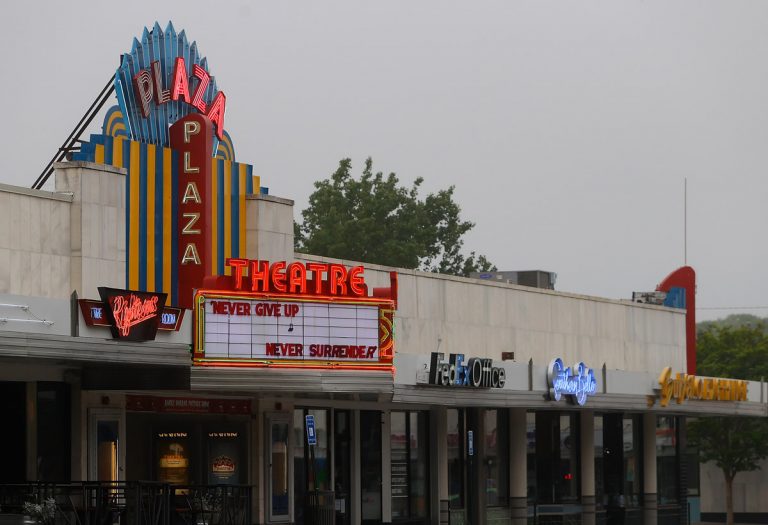
That night reminded me that the Plaza isn’t just a place to see a film: It is a cultural heartbeat, the kind of space where Atlanta’s weird and wonderful converge. The Plaza, honored as one of our “Best of Atlanta” entries in this issue, is one of the most venerable movie houses in the city—and its oldest. The Plaza’s art deco marquee is a landmark at the corner of Ponce de Leon and Highland avenues, and it’s always been the anchor tenant of Briarcliff Plaza, which opened in 1939 as the first Atlanta shopping center with off-street parking.

By the ’70s, the Plaza had diminished to playing porn films. But unlike so many movie houses of that era, it rebounded. George Lefont—who built a local empire of theaters that focused on art-house and repertory films—bought the Plaza in 1983 and made it matter again.

When Basically Frightened premiered there in 2012, the theater was showing its age. The seats were vintage and often frayed around the edges. It had the aura of a room badly in need of a lot of TLC, a place that had embraced the rough-around-the-edges Poncey aesthetic a little too literally.

Still, there wasn’t a more appropriate setting for Basically Frightened. Bruce had watched movies at the Plaza as a kid. “I love that place,” he told me. “I’ve seen thousands of movies there. The Variety Playhouse used to be the Euclid Theatre; I would go there as a kid, and to the Plaza. It cost a dime to get in.” With his usual uniform of casual slacks and a button-up shirt perpetually half tucked in (nearly always with a condiment stain from lunch on the front), the Colonel and his quirky persona fit right in with the rumpled look of the Plaza.

In 2017, the Plaza was purchased by a group led by Christopher Escobar, the executive director of the Atlanta Film Society, and upgrades were made to the facility, such as installing new equipment and turning the balcony into two small auditoriums. When the pandemic hit, the Plaza showed its moxie. It turned into a virtual theater with online showings, hosted a Quarantine Film Festival, and, best of all, turned the back parking lot into a pop-up drive-in theater.

Through the hard times of the pandemic, the Plaza not only survived but also transformed itself into something vital with some of the most creative programming in Atlanta. The mainstay—Friday night screenings of The Rocky Horror Picture Show with shadow-casting by LDOD—is still there, along with its movie series in partnership with Videodrome, the “Trash and Trivia” series, and screenings that include such extras as postfilm Q&As and costume contests.

Atlanta keeps losing the landmarks that give the city its soul, trading them for anonymous apartment blocks. The Plaza Theatre stands as proof that we don’t have to choose between progress and preservation—we can let the past help define the future.

This article appears in our December 2025 issue.

Editor’s Journal: The Atlanta Braves sizzle of 1995

0
David Justice hugs his teammate after game six of the World Series.

Photograph by Rick Stewart /Allsport/Getty Images

Sometimes you’re simply in the right place at the right time.

In the fall of 1995, I was working on a story about Chipper Jones and his rookie season with the Atlanta Braves. The team had six days off between the playoffs and the World Series against Cleveland, and manager Bobby Cox decided to have a live batting practice to keep everyone’s game sharp.

A normal batting practice means stepping into the cage to face one of the coaches throwing pitches at about half the speed of a major league pitcher. A live batting practice meant stepping into the cage to face Greg Maddux, Tom Glavine, and Mark Wohlers throwing at game speed. I strolled up to the batting cage and positioned myself directly behind backup catcher Charlie O’Brien.

O’Brien played in 53 games that season, mostly as Maddux’s personal catcher, and he was talking smack to the hitters as they stepped into the batter’s box. “No hits today,” he’d say. “You’re gonna miss this pitch like you forgot to wear your glasses. You might as well go sit back down now and conserve your energy.”

I was surprised that I was one of only a handful of reporters taking in the batting practice. When would I ever be this close to a Maddux two-seam fastball? Or a Glavine circle changeup? Or a Wohlers fastball?

Looking back, it’s hard to believe that the Atlanta Braves won only one World Championship during the Bobby Cox era. The team set a standard for excellence with a record 14-straight Eastern Division championships and made it to the World Series five times in the 1990s—in 1991, 1992, 1995, 1996, and 1999. There was a lot of bad luck in those World Series: baserunning gaffes, a botched suicide squeeze, and a heartbreakingly lazy slider to the New York Yankees’ Jim Leyritz in 1996.

But it was still a magical time to be a baseball fan in Atlanta. The team was full of future Hall of Famers: Maddux, Glavine, John Smoltz, Chipper, Fred McGriff, and Cox. They were a fun bunch to be around. Once, before a game, Maddux motioned me over to his locker. The Braves had just acquired Ken Caminiti, who took the locker next to Maddux. He was shaking his head. “That locker is cursed,” he said, glancing at it. “Whoever gets that locker is never back the next season.” He listed off the names of the five previous players who’d had the locker; none of them had a second season with Atlanta. Neither did Caminiti.

Watching Maddux pitch that afternoon was an education. His balls dipped and darted, and his fastball was quicker than he was ever given credit for. Glavine worked the corners (and a little “outside” the corners) as he did in games. The Braves hitters looked madly outclassed, but, hey, it was Maddux and Glavine; they spent their careers making batters
look outclassed.

Then came the closer: Wohlers. He threw straight heat, a fastball consistently in the high 90s—he had struck out 90 batters in 64.2 innings pitched that season. I noticed an odd thing with his first pitch: There was an audible sizzle as his fastball sliced through the air. The batters he faced swung like five-year-olds with a plastic bat, then walked out of the cage and laughed at the absurdity of trying to hit a Wohlers’s fastball.

Maddux pitched a two-hit shutout in the first game of the World Series, and Glavine shut down Cleveland to win the second game. After that, the Braves were on their way. With Glavine on the mound hurling a shutout in Game 6, he came into the dugout in the middle of the game and screamed, “Will somebody please score a damned run? Because they’re not.” In the sixth inning, right fielder David Justice lifted a solo home run, and the Braves had their first World Series victory since 1957, when the team was still in Milwaukee.

In this issue—and in an accompanying online oral history—we pay homage to the 30th anniversary of that championship. As memorable as those games were, for me that championship will always be personified not by a sight, but by a sound: sizzle.

This article appears in our November 2025 issue.

Editor’s Journal: My fear of flying has eased, but I hang on to this musical ritual

0

A Delta plane sits on the Atlanta Airport runway, ready to take off

I arrived at the airport in Atlanta jet-lagged and sleep deprived after a long flight from Paris. I was living in Rhode Island at the time and had to catch a connecting flight home. During the layover, I called my parents from a pay phone. Through the large glass window, I could see an ominous-looking thunderstorm to the west, where they lived.

“I can’t talk but a minute,” my dad said. “There’s a heavy storm blowing up. We’ll need to unplug the phones.”

By the time we boarded, that same thunderstorm was moving into Atlanta. I was already a nervous flier, and this wasn’t helping matters. I’m one of those people who stopped swimming in the ocean after Jaws, and when it came to plane crashes, I’d probably seen one too many disaster movies. I buckled into my seat, staring with trepidation out the window, when a cheerful woman sat down beside me and started to chat me up. “Are you nervous about flying?” she asked.

I gestured toward the dark skies. “In this, yes,” I replied.

“Well, you’re in luck,” she said in a voice brimming with confidence. “I’m a psychologist who specializes in treating people who are afraid to fly. What is it about flying that makes you nervous?”

Oh, wonderful, I said to myself. I get on an airplane, and someone wants to give me a therapy session. I pointed out the window again. “Going up in the middle of this storm doesn’t exactly make me feel confident,” I said.

As we taxied to the runway, she was busy giving me a litany of relaxation techniques. But I already had my own routine: During takeoff, I always put on my headphones and listened to the Allman Brothers Band’s “Statesboro Blues.” The song’s intro mimics a jet’s liftoff, with the full band usually kicking in just as the plane accelerates toward the sky. Plus, if I was going to die in a crash, at least I’d die listening to one of my favorite songs.

By now, the airport was in the heart of the storm. Sheets of rain pelted the jet. I wondered how long our delay would be. Instead, to my slight alarm, we began to roll down the runway. There is an inherent trust when you board an airplane, and this was stretching that trust to the limit. It was the bumpiest takeoff I’ve ever experienced. The plane pitched up and down in the air; we were jolted to the left, then back to the right. It felt like I was riding inside a steel ball as it ricocheted through a pinball machine.

I closed my eyes, lost in Duane Allman’s slide guitar. I glanced to my right. The psychologist who specialized in treating people afraid to fly? Her hands had a white-knuckle grip on the arm rests, and her face was pained, as if she were having a panic attack.

She didn’t say a word the rest of the flight. But once we cleared the storm, she quickly downed two stiff cocktails.

I usually fly Delta. It’s part hometown loyalty, but I also miss it when I fly on other airlines. It’s impossible to think of Atlanta without thinking of the airport and Delta Air Lines. Everything here revolves around Hartsfield-Jackson. The world’s busiest airport saw a whopping 108 million passengers last year, with Delta handling 70 percent of the flights in and out. The old joke is that after you pass away, you have to make a stop in Atlanta to connect to your final destination.

In this issue, we explore the century-long symbiotic relationship between Delta and Hartsfield-Jackson with a historical timeline (courtesy of the Atlanta History Center), offer travel tips from Clark Howard, and take readers behind the scenes for a day in the life at the airport.

Over the years, my fear of flying has eased. After I moved back to Atlanta, I lived in College Park—close enough to the runways that I could see planes arriving and departing whenever I walked outside. One afternoon, I realized I had watched thousands of those arrivals and departures over the years, and not once did I ever watch one of those planes crash.

I carry that thought with me whenever I fly. It even works sometimes. But I still listen to “Statesboro Blues” with every takeoff—just to be on the safe side.

This article appears in our October 2025 issue.

Editor’s Journal: Road trip miracles and wonders

0

A man in a kayak riding down a waterfall with rocky terrain around him

A few years back, I was telling my best friend about the most exotic restaurant I’d ever visited. It was inside a glacier on top of the Swiss Alps, and the floor, walls, and ceiling were solid ice. I was 12 years old at the time, and I remember nothing about the food. But I do remember being in awe of my surroundings and astonished when I saw people outside getting ready to ski down a slope, shirtless and in shorts.

My friend is a gay woman and I am a straight man three decades her senior. On the surface, we would seem to have nothing in common. Yet our connection was instantaneous and grew deep. We’ve gone on numerous road trips together, sharing a wanderlust to explore the world around us.

One of our favorite places is Cumberland Island. We’ve always gone in January, when the air is crisp and the beaches empty. I remember sitting by the ocean eating lunch and being swarmed by hungry, hopeful seagulls. We sat there soaking in the moment for more than two hours before we saw another human being. Paradise.

We’ve also gone kayaking on the Etowah River through the pristine Dawson Forest. It is a beautiful daylong journey, and not without the occasional adventure. On one trip, we got caught in a heavy storm and feverishly paddled toward the pickup spot with lightning strikes and thunder booms right on top of us.

Our first time on the Etowah, the driver who took us to the load-in spot warned us that we’d be encountering a Class 4 waterfall. He said when we reached it, we should go to the right side of the river and portage. I assumed that my friend, as a kayaking veteran, knew what portage meant. Well, no. She thought I would know.

We heard the roar of the waterfall before we reached the bend leading to it. But to the right was a spot with a single seven-foot drop. We parked for a moment on top of a boulder to ponder our alternatives. We could pull our kayaks onto the bank and drag them past the rapids, which seemed like too much work. Or we could paddle over the waterfall. We elected to paddle, figuring this was the portage place and that’s what everyone did.

She went first. I counted down 30 seconds in case her kayak had overturned. As I approached the waterfall, I was relieved to see she was safe and sound. Then I had an “Oh, my God” moment; up close, the boulders at the base of the waterfall were menacing and dangerous. But there was no turning back. I grabbed the handles on the sides of the kayak and held on for dear life. What’s that phrase about God taking care of fools and babies?

When the driver picked us up and we casually mentioned that we’d successfully navigated a Class 4 waterfall with the sit-on-top kayaks, his face turned ashen. I later noticed the outfitters had taken all references to portage off their website. Their blurb now read in language a five-year-old could understand: “Pull your kayak out of the water and drag it past the waterfall.”

It was during one of those trips on the Etowah that I reminisced about my lunch inside a glacier. My friend said that was strange: Her father had talked about once going to a restaurant exactly like that.

She asked why I’d been to the Alps. I explained that I was part of a group tour billed as a pilgrimage to the Holy Land, plus seven days in Europe. It was marketed to Atlanta-area churches, and my pastor had chaperoned me.

My friend gasped. That was her grandfather’s company; he was the guide on every trip. At one stop in the Middle East, we all had to double up at a hotel stop. My roommate for the night was the only other kid in our group: the tour leader’s son . . . the future father of my best friend.

Some 40 years later, she and I were sitting by a river in the wilds of Georgia, eating lunch.

Fall is approaching, and perhaps it’s time for another road trip to kayak the Etowah. One never knows what wonders or magic the river has in store.

Oh, and don’t forget to portage.

This article appears in our August 2025 issue.

Editor’s Journal: How I finally got the perfect guitar

0


Sxott Freeman Everett guitar
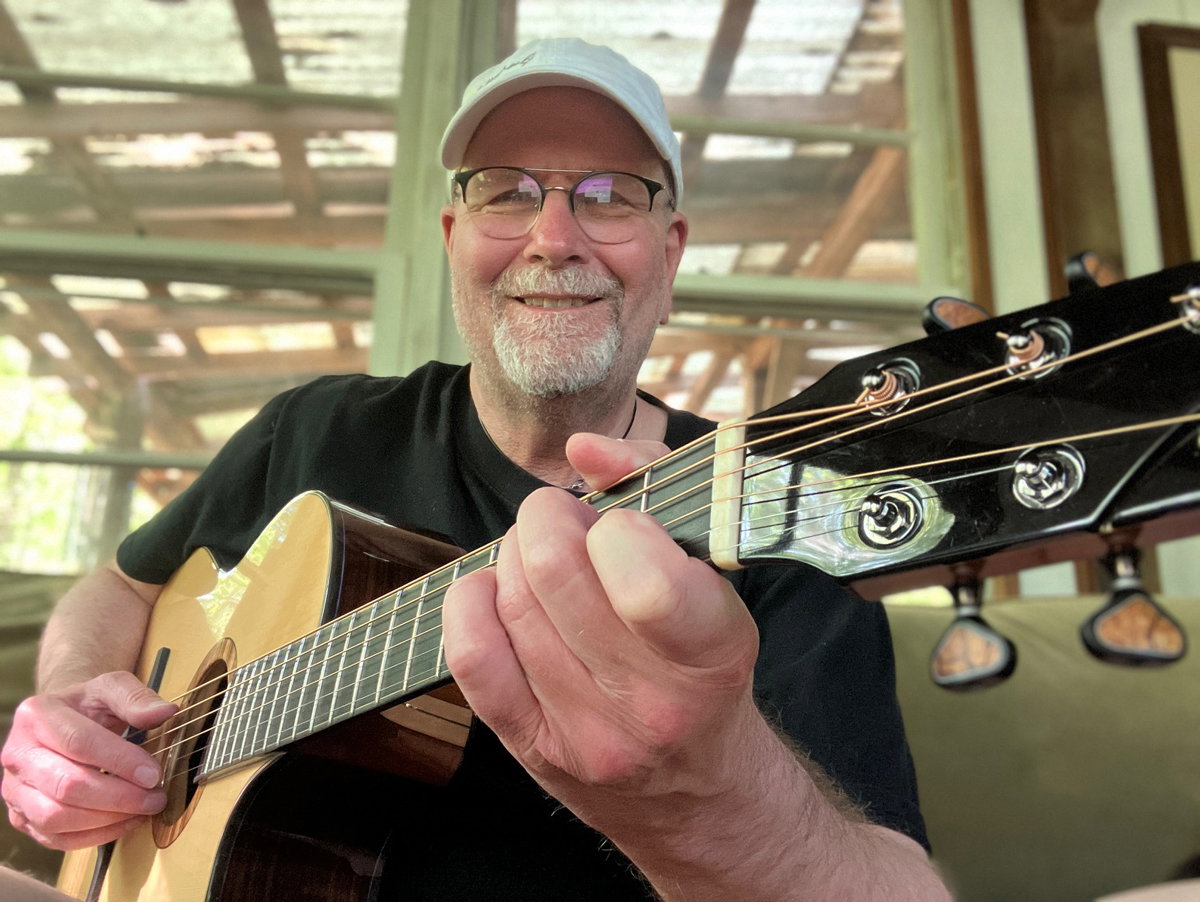
The author with his Everett guitar

Photograph courtesy of Scott Freeman

I remember clearly the first time I cradled an Everett guitar in my hands. When I strummed the strings, I was instantly seduced by the sweetness of the sound. I owned a vintage Gibson acoustic and I’d played a Martin. But they didn’t play like this. Those were made by man with machine; an Everett was all handmade.

Kent Everett is a master craftsman who built his boutique guitars in a crowded workshop in the northern burbs of Atlanta. When I wrote a story about him for the magazine 25 years ago, he was already an acclaimed luthier in guitar circles. Brad Paisley owned an Everett. So did Gregg Allman. The Indigo Girls’ Amy Ray had three.

As I sat in his shop and played that guitar, I heard the call of the Everett. I told myself, I’ve got to have one of these guitars someday.

When I met him, Kent was about to shift into a new phase. He transitioned from building five guitars a month to building 8 to 10 high-end guitars a year, usually commissions. That allowed him to fully explore his artistic aesthetic as he crafted his guitars. And they were so extraordinary that the demand created a five-year wait on orders.

Kent retired a couple of years ago after building a total of 825 Everett guitars. As time passed, the promise I made to myself lingered in the back of my mind. I even set up an alert for Everett guitars on Reverb, the eBay of musical merchandise. Every so often, one would turn up for sale, but always far out of my price range.

Then it happened. An Everett that I could afford appeared. It was one of Kent’s earlier works, guitar number 107, and still in good condition. But there was a caveat: A crack on the top of the guitar had been repaired. That’s why the price was so low.

As I researched the guitar, I came across Kent’s email address. “You probably don’t remember me, but I wrote the Atlanta magazine story about you many years ago,” I told him. He not only remembered me but also had a framed copy of my article hanging in his office.

He steered me away from that particular guitar. A few weeks later, another one turned up. I found six used Everetts for sale in the entire United States, and this one was by far the best. It was Everett number 618, built with lots of artistic flourishes, including two mother-of-pearl inlays depicting, of all things, bumble bees. It was well beyond my price point; still, I put it on my favorites list.

Then I noticed the price had dropped. A couple of weeks later, it dropped again and was tantalizingly within reach. When I looked closely at the blurb, I saw the guitar’s location: exactly 12 miles away from me.

This was one of those moments when the universe seems to be at my back, pushing me in a particular direction to where all the pieces perfectly align. Kent knew the owner and told me that the last time he saw the guitar, it was in pristine condition. He occasionally made videos detailing guitars he was particularly pleased with; Everett number 618 was the subject of one such video. And it turned out the owner and I had several mutual friends; his love for the music of John Prine, Guy Clark, and Blaze Foley matched mine.

My hands trembled when I held that Everett for the first time. I knew immediately that this was it, the guitar. But there was a significant hitch: It was still too expensive.

Then came the moment of truth. I looked at the owner and asked, “What’s the lowest offer you could accept and still leave feeling happy about things?” And I held my breath.

When I got home, I emailed Kent a photo of me playing the guitar. That evening, he posted the photo on the Everett Guitars page on Facebook. “This man, Scott Freeman, wrote an article on me for Atlanta magazine back in 2001,” he said. “Back then he promised himself that one day he would own an Everett. Today is that day. Wahoo!”

I had a dear friend who proudly drove a vintage white Jaguar. “People think I’m crazy and make fun of that car because it’s so expensive to keep up,” she told me once. “But that’s okay. Every time I see that car, I smile.”

I have yet to stop smiling.

This article appears in our July 2025 issue.

Follow Us

69,386FansLike
144,836FollowersFollow
493,480FollowersFollow

NEWSLETTERS