“My daughter and son-in-law asked for a ride to the Peachtree. Well, I didn’t know what a road race was even—why would you want to get up early on the Fourth of July when you have a day off? But we took them to the start line and then met them down at the finish, and as were waiting, I saw all the really good racers go by, the ones in wheelchairs and the professionals, and then the big crowd that’s out there cheering. I thought, Well, maybe I could do that. I ran my first Peachtree at 64 years old.
I was a good runner for about 10 years, and then I would have to stop and walk. I saw race walkers at an event and said, What about just walking rapidly? So I took race walking lessons. Now, I just walk as fast as my little feet will carry me.
The last few races, I’ll pass people who say, Betty, come take a picture! So I go over and do that. That’s all I have to say about that. Why am I celebrity? Just because I am 100? But then it sort of dawns on me—I’m 100 years old! And I’m still going! But I think I did my last race at 99. I don’t think I’m going to do any more. Of course, I say that every year after I finish. And then I sign up again.” —as told to Rachel Garbus
When Rex Rytter, King of Cats, passed away peacefully at the ripe old age of 16, his human, Chantelle Rytter, decided to honor him with a funeral. But this would be no ordinary funeral, because Rytter was no ordinary cat mom: She is the founder of Atlanta’s Lantern Parade series, those magical nighttime spectacles of handmade glowing puppets.
“I had made a puppet of Rex a few years earlier that was in several parades,” says Rytter. “He had a little kitty fan club. So when he passed [in 2021], we invited the neighborhood out for a jazz funeral.”
Rytter had recently moved to Adair Park and was thinking about relocating the original Lantern Parade, held every May, to the westside Beltline from the eastside where things were getting a bit crowded. She wanted to make sure her new neighbors were amenable to hosting the event, which routinely draws crowds of 15,000 or more.
Rex’s funeral proved a good test case. “They really liked it,” says Rytter. “We made a little all-cats altar, and people filled it up with the sweetest kitty pictures.” Ahead of the funeral, Rytter applied for an ELEVATE public art grant from the City of Atlanta to host a puppet-making workshop (Rex template, optional) along with the parade. To her delight, the city approved it. “How cool that our city’s art program would go for a jazz funeral for a cat,” she says. “I love it!”
Rex’s ceremony was inspired by the New Orleans funeral tradition of the second line, during which mourning friends and family are accompanied on their walk to the cemetery by a brass band, followed by members of the community. Rytter credits the Crescent City, where she spent a decade, for her love of parades, which over the years has bloomed into a full-blown career. Her Krewe of the Grateful Gluttons now hosts seven annual events.
“Parades are where a community sees itself,” says Rytter, whose Beltline Lantern Parade celebrates 15 years this May. “We like each other better when we see each other in our playfulness. It just does a body good.”
If Friday or Saturday night finds you near a radio, do yourself a favor and turn the dial to 90.1. There you’ll hear the voice of H. Johnson, warm and gravelly, as he queues up tracks and opines on the meaning of music during his two long-running shows on WABE, Blues Classics (Fridays, 10 p.m. to 2 a.m.) and Jazz Classics (Saturdays, 8 p.m. to 2 a.m.).
Johnson, a transplant from Asbury Park, New Jersey, has been riffing on WABE since 1978, when a manager heard his jazz show on another station, Radio Free Georgia, and offered him a job. “I asked, ‘What’s the difference?’” Johnson recalls. “He said, ‘We’ll pay you!’ The pay was miniscule, but it was something—and I felt like I could get paid for doing what
I love to do.”
He has been hosting that show, Jazz Classics with H. Johnson, continuously for going on 50 years. The show was so popular that in 2013, WABE gave him Blues Classic with H. Johnson, allowing more elbow room for his expansive musical tastes. His long tenure has kept Johnson adapting to the ever-changing technology of radio music.
“I would play vinyl, cassettes—you remember cassettes?—DAT tapes, whatever materials I could find,” Johnson says. “Some stuff you could only find on old reel-to-reel.” For decades, Johnson recorded live, banging around the WABE studios in the wee hours of the weekend, letting his loose, off-the-cuff style inspire his music selections in real time.
“It was musical improvising, just like the artists I was playing,” he says. “When I went down to the studio, I didn’t know what I was going to play.”
The Covid-19 pandemic changed things: WABE set him up with a home studio, and Johnson now lays out his playlists ahead of time and records his sections during the week. His longtime producer, Micah Middleton, sources the songs from wherever she can find, whether vinyl, Spotify, or even YouTube. “People love H. because he’s so relatable, he’s humble,” Middleton says. “He knows what he’s talking about, but he doesn’t push it in your face.”
“I like edumicating people,” Johnson adds goofily; after decades on the air, he has mastered the art of radio-friendly humor. (“I don’t do blue,” he says. “I just find humor in almost everything going on around me.”) With an omnivorous range of favorites, he’s careful not to pander to any one group of jazz or blues fans, instead selecting from a broad spectrum of artists, with a wide audience in mind. “Marian Anderson was a great opera singer, Charley Pride was an award-winning country and Western singer, and Ray Charles—well, Ray Charles did it all.”
Rather than dictate his listeners’ tastes, Johnson likes to explain what he appreciates about a song or an artist and let the music work its own magic. “I feel this way about a piece of music, but if you don’t, let me show you something in the music that you should listen to,” he says. “Nine times out of 10, I’m successful doing it that way.”
Sweet Auburn Curb Market
Fox Theatre
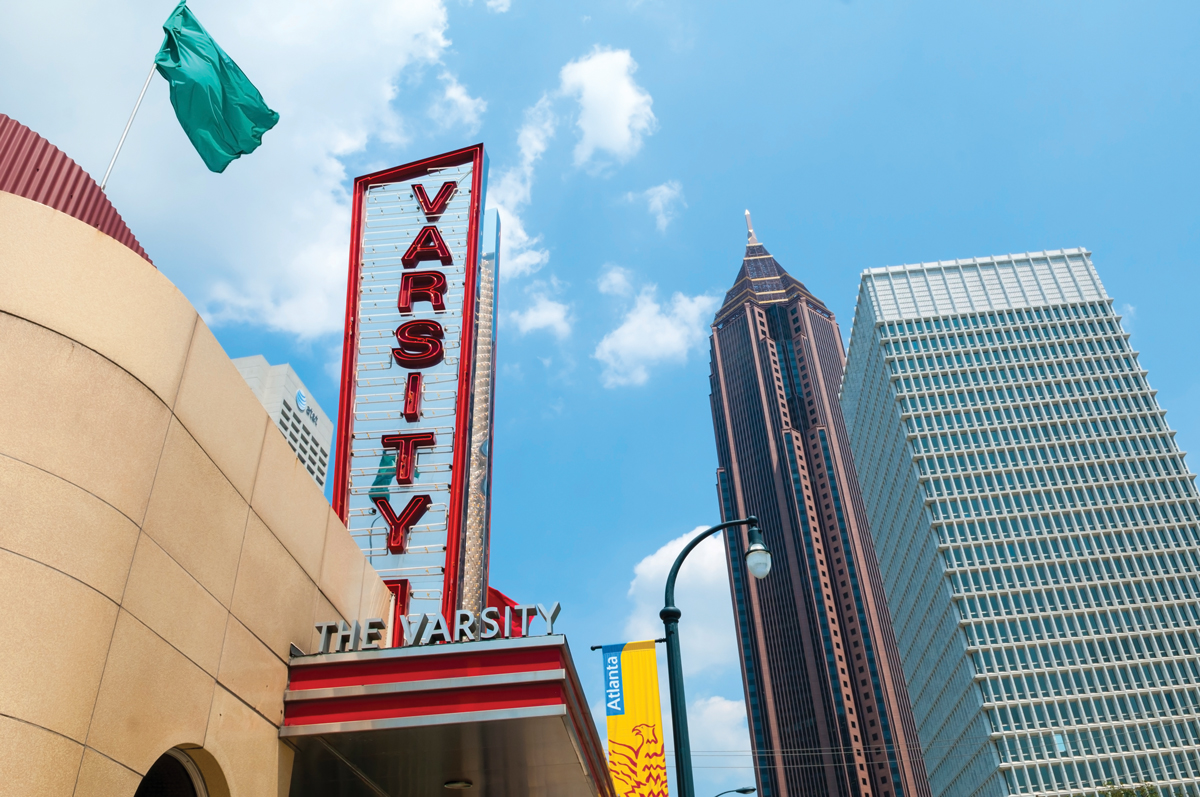
The Varsity
The Majestic
Plaza Theatre
Piedmont Park
Clermont Lounge
The Royal Peacock
Magic City
Northside Tavern
Busy Bee Cafe
Manuel’s Tavern
MLK’s birth home
The Atlanta Eagle
Atkins Park
Hammonds House Museum
Ebenezer Baptist Church
Arabia Mountain
Star Bar
Porch Culture
Mayor Andrew Young
Indigo Girls
Outkast
Atlanta Humane Society
The Atlanta Voice
National Black Arts Festival
Nakato
Atlanta Underground
Bones
Fontaine’s Oyster House
Mary Mac’s
Goldberg’s Deli
Alon’s
Taqueria del Sol
Nino’s
Paschal’s
Eddie’s Attic
Callanwolde Fine Arts Center
South City Kitchen
Blind Willie’s
New
Ponce City Market
Coca-Cola Stage at Alliance Theatre
Ticonderoga Club
Hen Mother Cookhouse
WussyVision
Westside Park
Hotel Clermont
Sister Louisa’s Church of the Living Room & Ping Pong Emporium
V12, Quavo’s club above the BP gas station
Buteco
Twisted Soul Cookhouse and Pours
Ladybird
Beltline Lantern Parade
Future
Monday Night Garage
Adama Gallery
High Museum’s High Frequency Fridays
The Beltline
Our Bar ATL
Coffee Culture
Senator Kim Jackson
Latto
Lil Baby
Lost n’ Found Youth
285 South
Atlanta Art Fair
Mujo
Chaka Khan Hacienda
Marcel
Kimball House
Bomb Biscuit
Emerald City Bagels
Colette Bread and Bakeshop
El Tesoro
Bocca Lupo
Big Daddy’s Kitchen
The Eastern
The Bakery Atlanta
Southern National
Terminal West
We asked, you answered: Here are some of the things you love most about this city
Kevin the Rollerblader
Photograph by David Walter Banks
@only1katy | Eclectic people, a restaurant for every taste, lots of old trees.
@atlanta_houseplants | Atlanta’s vibrant energy and welcoming spirit always make me proud to call this city home. For me, it’s the perfect blend of Southern charm and big-city excitement.
@anabelprince_ | We’re unserious. this city is goofy as hell and i love it.
@literary.lens | The people and the culture. It’s like a city but also a small town. It feels like we’re all in things together.
@reese_mccranie | For me it’s @atlairport because I can GTFO of America with speed and efficiency.
@julianna_chen | All the stuff people clown atlanta for—chicken wing bones everywhere, how every restaurant HAS to feel like the club—is also what i love about atl . . . it’s a city unconcerned with taking itself seriously and it fully owns its most cringe parts.
@granthenryakasisterlouisa | I love that every neighborhood has an authentic soul that coexists with, and complements, its adjacent neighborhoods. Blink twice and it’s changed, just like the weather here.
@paul_brach | It is far enough south that the winter wind doesn’t suck the air out of your lungs and we rarely get snow. When we do get snow, the governor declares a state of emergency and we all just stay home for 3 days until it melts.
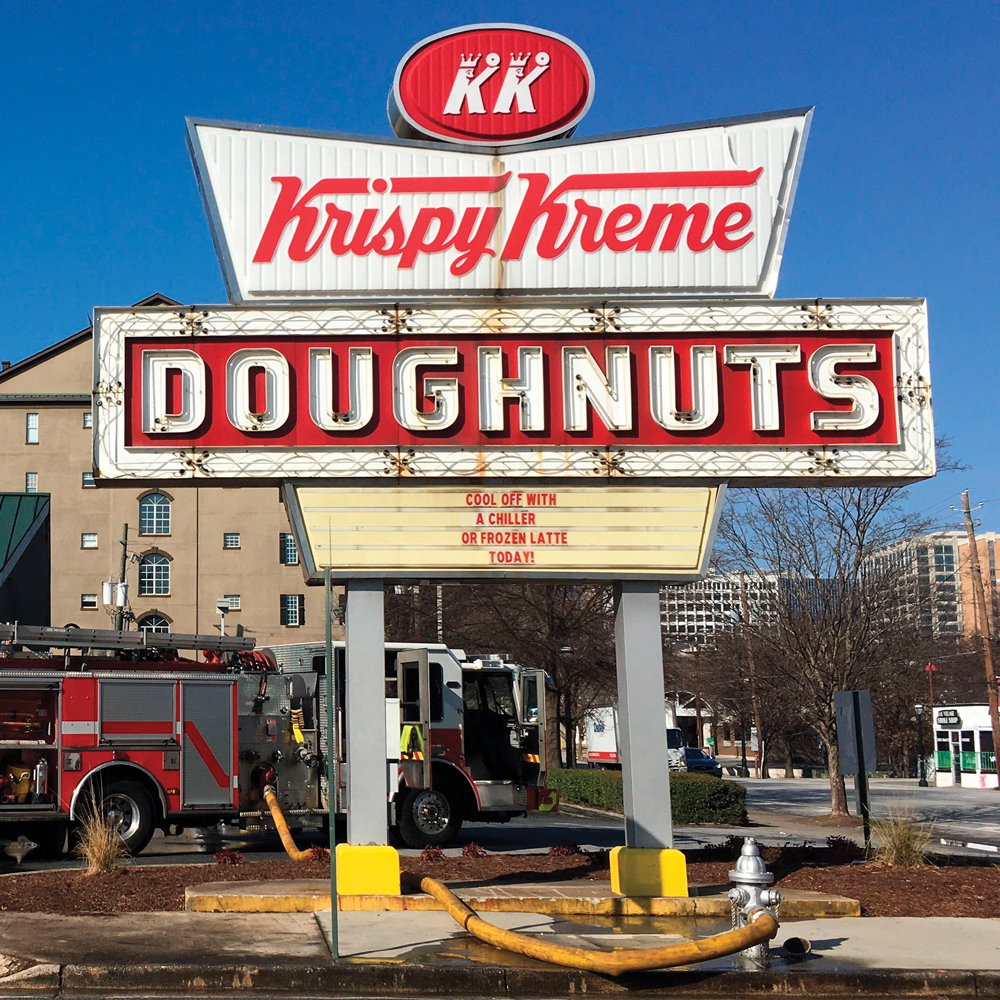
Because you just can’t kill the Krispy Kreme on Ponce de Leon Avenue.
Because after the Marriott Marquis ripped up its iconic carpet, Dragon Con fans formed the “Cult of the Carpet” and incorporated the design into costumes and accessories.
Because the Piedmont Park pool lets dogs swim on the last day of the season.
Just on the cusp of the new millennium, Conan O’Brien agreed to appear as a guest on Space Ghost: Coast to Coast, Cartoon Network’s satirical animation “talk show,” by then in its sixth season. The episode begins with O’Brien’s head, framed by a cartoon TV screen, being slowly lowered to the stage to trumpeted fanfare.
O’Brien looks around with a puzzled expression, waiting for the show to start. Finally, Space Ghost, the cartoon host, floats down to sit behind his desk.
Their conversation meanders into the existential topic of what exactly the name Space Ghost means. Is he literally a spaceman who died and became a space ghost? Space Ghost isn’t forthcoming, so the exchange becomes heated as O’Brien tries to pry out the facts: “Face it, Space Ghost, you’re a spaceman that choked on a muffin!”
But the absurdity doesn’t end there. Abruptly, Space Ghost leaves his chair in the middle of the interview. He notices a tiny ant that bites him, and so he tries to blast it with the laser beam that shoots from his space suit. He misses and begins crawling on the ground as the camera follows him, declaring things like, “For every 300 steps your little ant feet take, I take only one.”
For 11 long minutes, in the style of what the writer of the episode calls “David Lynch times 900,” Space Ghost completely abandons the O’Brien interview for a quest to find and “wreak vengeance” on the ant and its family. The episode ends with the Space Ghost finally encountering the tiny ant’s parents—giant monster ants that chase him away.
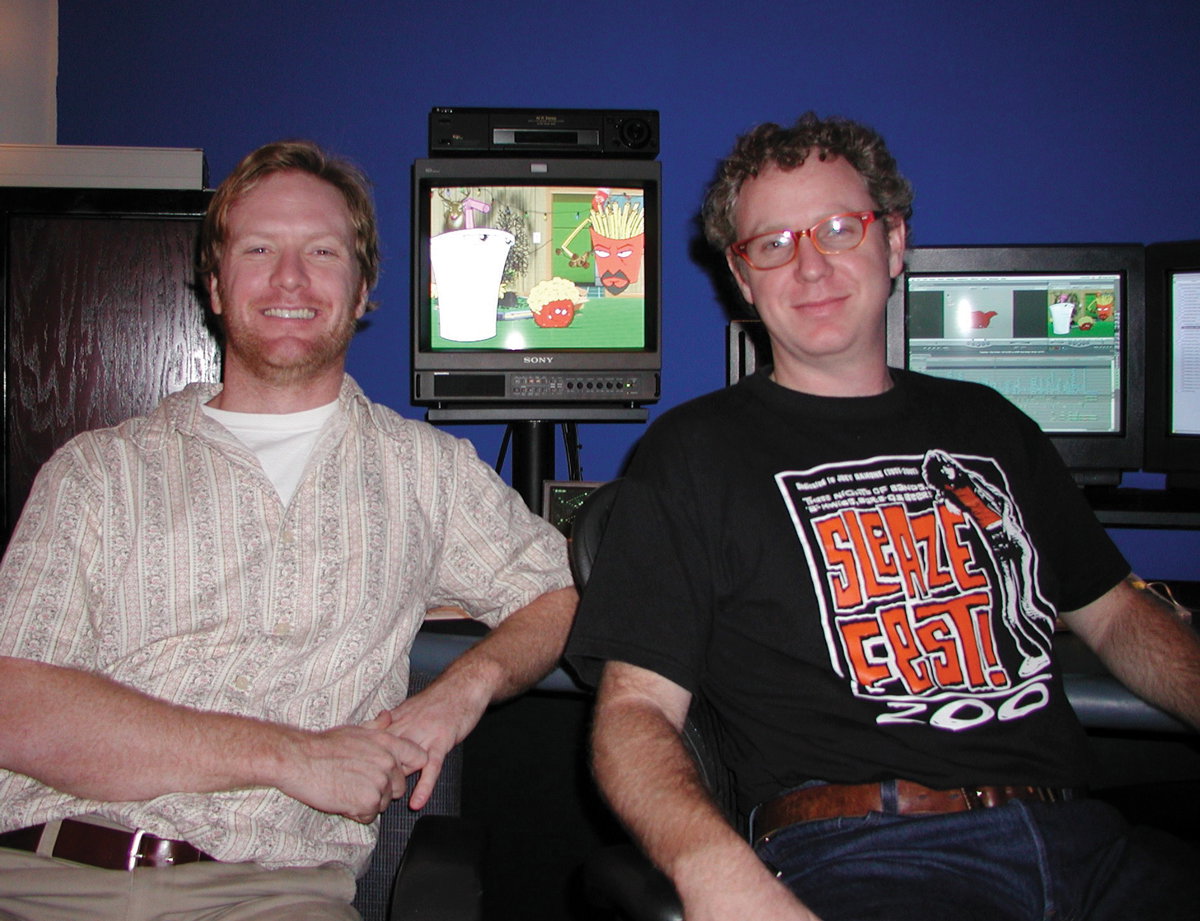
CREATIVE LAUNCHING PAD Space Ghost “was the principal of your high school who thinks he’s being cool but never is,” says Jay Wade Edwards. Edwards went on to edit Aqua Teen Hunger Force, which was cocreated by Dave Willis.
Photograph courtesy of Jay Wade Edwards
“If you tuned into Cartoon Network that Friday night and saw that, you’re like, What am I watching?” says Jay Wade Edwards, who helped edit the episode. “Is this real? Am I on drugs?”
The O’Brien segment was a quintessential example of the absurdist anarchy that Space Ghost: Coast to Coast brought to cable television when it debuted 30 years ago.
The show became a campy cult classic that has spawned an entire generation of adult cartoons. It also convinced Turner Broadcasting System to introduce Adult Swim to its Cartoon Network. That decision ushered in a new era of animated shows—proving that there was an appetite, and a lucrative market, for shows that seemed to know no bounds of programming rules and operated on shoestring budgets with small, guerrilla-style teams.
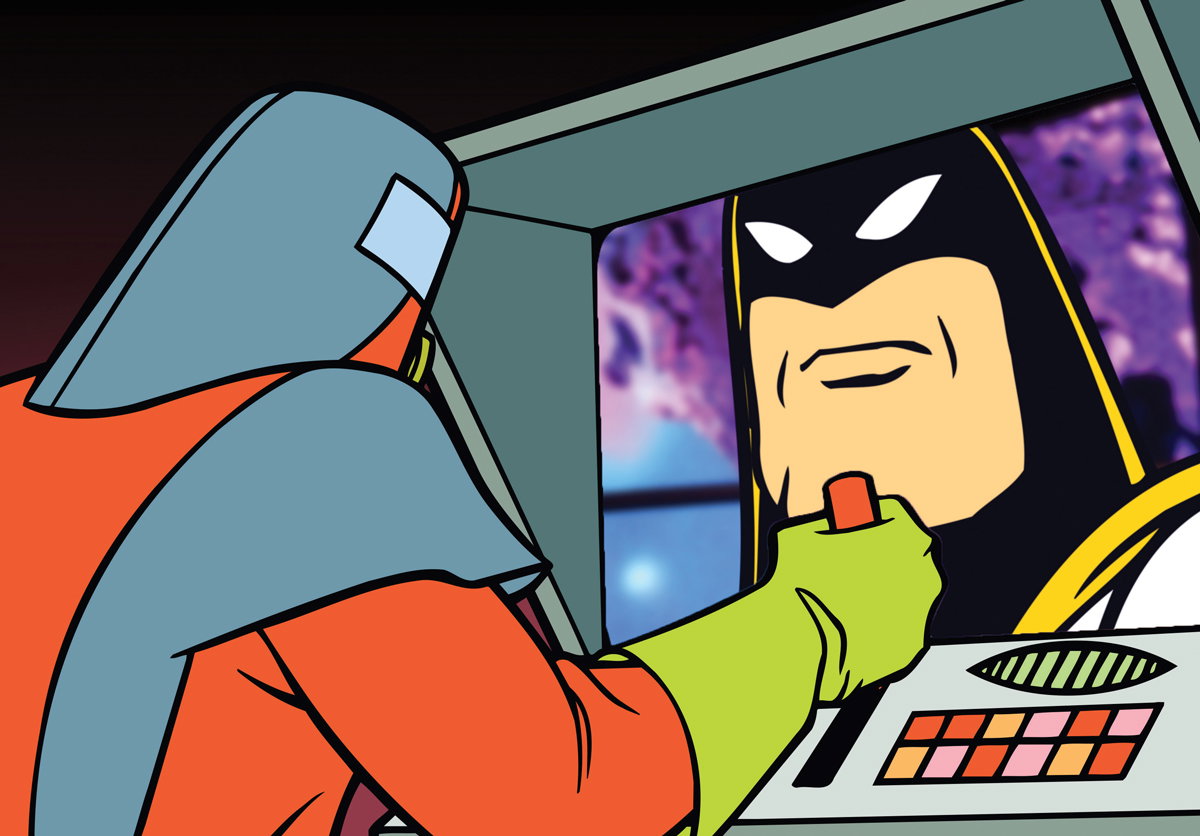
The start of it all was Space Ghost: Coast to Coast, the absurdist, minimalist animated talk show hosted by a long-forgotten 1960s Hanna-Barbera cartoon character, recast with a new actor and transposed to present day.
It set a precedent for other adult cartoons to follow. In other words, Space Ghost floated so that Rick and Morty could fly.
And it put Atlanta on the map as a quirky treasure trove of warped creative minds. “People discovered that there was a certain flavor and taste to all of this concentration of creative people in Atlanta,” says Khaki Jones, a former Cartoon Network and Adult Swim producer who now works at Disney. “That, to me, is the most magical element.”
IN 1991, LOOKING TO ADD TO HIS TELEVISION EMPIRE IN ATLANTA, which already included CNN, TBS, and Turner Classic Movies, Ted Turner bought the cartoon giant Hanna-Barbera. The haul included such iconic shows as Scooby-Doo, Where Are You!, The Jetsons, and The Flintstones and would form the core of Turner’s next big launch: Cartoon Network.
One obscure find from the Hanna-Barbera archives was Space Ghost, with its blink-and-you’ll-miss-it original run from 1966 to 1968, a show about a caped hero who fought bad guys in outer space.
Turner’s intention was to rerun cartoons 24/7. But Mike Lazzo, the first programmer at Cartoon Network, had bigger ambitions. Lazzo, a LaGrange native, had started in the shipping and receiving department of TBS and worked his way up the ladder. He wanted to create original content, which Turner okayed so long as it wouldn’t require additional budget.
Each week, Lazzo would get together to watch and talk about animation with Jones, who had grown up with the Saturday morning high jinks of Bugs and Daffy.
Lazzo first hired Jones as a coordinator in programming, and she would remain at Cartoon Network for two decades, until 2009, executive producing post–Space Ghost shows such as Harvey Birdman, Attorney at Law and The Venture Bros.
As the Space Ghost: Coast to Coast origin story goes, every afternoon, around 3 p.m., Lazzo, Jones, and voice actor and writer Andy Merrill would hold a programming meeting for Cartoon Network—which usually brainstorming ideas for themed cartoon marathons. One particular meeting happened to coincide with the network’s block of Space Ghost reruns.
“FERAL TELEVISION” Space Ghost: Coast to Coast carved a new, more mature direction in cartoons.
Photograph courtesy of Adult Swim
The official credit for who first pitched the idea of Space Ghost as a modern-day talk show depends on who’s telling the story. Jones says it was Merrill, and Merrill says it was Jones, who first uttered the catchy moniker “Space Ghost: Coast to Coast” in an announcer-type voice. But they both agree that it was Lazzo with whom the idea resonated.
“I remember it caught Mike perfectly off guard, and he laughed and said, ‘Oh my God, that’s hilarious. It sounds like a talk show,’” Jones says.
Merrill then threw together a pilot using two VHS players, a $25 microphone from RadioShack, taped reruns of Space Ghost, and an old CNN interview with Denzel Washington.
It was no easy task: He had to splice the video by hand, making fraction-of-a-second edits so Space Ghost’s mouth would look like it was moving.
That pilot has never seen the light of day, since they didn’t have the rights to the Washington interview, but it served as a proof of concept.
The show’s premise was simple: Space Ghost, stuck on “Ghost Planet” and bored to tears because he’s vanquished all his enemies, decides to create his own interview program after he learns about the “talk show wars” on Earth. (David Letterman, having lost out on The Tonight Show gig to Jay Leno after Johnny Carson retired, moved to CBS to directly compete for ratings and clout.)
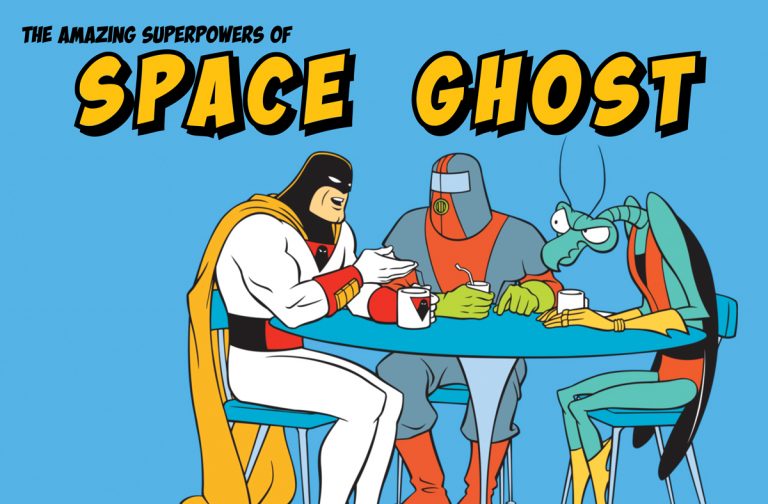
It’s the classic Carson/Letterman/Colbert late-night setup with the host (in this case, Space Ghost) sitting behind a desk, a band leader (Zorak, a giant grasshopper who happens to hate Space Ghost’s guts), and a director running the show (Moltar, a molten-lava man who is held together by a space suit).
As a character, Space Ghost proved to be an ideal late-night host spoof because of his bloviating pomposity. “He was the principal of your high school who thinks he’s being cool but never is,” Edwards says.
If Space Ghost was the perfect host, voice actor George Lowe was a perfect conduit for the new iteration of the character. With a background in radio, Lowe was cast for both his ability to capture the classic announcer-like timbre of mid-20th-century superheroes and his irrepressible, no-holds-barred sense of humor.
Some of the funniest moments in the show were unscripted, when Lowe would just “rant and rant for 20 minutes between takes,” Edwards remembers. In the episode “Fire Drill,” for instance, they wound up keeping a whole chunk of dialogue from Lowe, as Space Ghost, complaining about how he had sent some fruit baskets to a couple of executives and had not gotten a thank-you back.
ONCE THE SHOW GOT THE GREEN LIGHT FROM CARTOON NETWORK, and an initial budget of $35,000 per episode, Lazzo began to put together a team. He and Merrill brought in Clay Martin Croker, who was charged with creating a library of stock animation that they could pull from over and over, rather than spending money on new frames each episode. “It was a couple hundred thousand dollars on animation once, and then you seldom animate anything again,” Edwards says.
A year after it was conceived, the show debuted at the graveyard time slot of 11 p.m. Fridays. With episodes that averaged 5 to 10 minutes, it wasn’t exactly a runaway hit at first—not a surprise to anyone involved. But the crew was undeterred because they were laughing so much. In fact, they often referred to it as “antitelevision.” As Edwards says, “It was more feral. We were feral television.”
Each writer, editor, and voice actor wore multiple hats over the course of the show’s 11 seasons. Croker, with inventive and smart comedy chops, took on the task of shaping Zorak’s cranky persona. Merrill created one of Space Ghost’s most beloved characters, the teenage alien, Brak, who got his own spin-off series, The Brak Show.
“Originally, he would just scream and talk in monotone, and that can only be funny for so long,” Merrill says. “Plus, my voice took a beating. Once Brak became more popular, we kind of dumbed him down a bit and made his voice a little more cartoony. Then the dumber he got, the more lovable he got. He just evolved into this happy idiot.”
Dave Willis (left) with Jay Wade Edwards
Photograph courtesy of Jay Wade Edwards
A couple years in, along came writer and voice actor Dave Willis, who would go on to be a cocreator of the show’s spin-off Aqua Teen Hunger Force. Willis grew up in Conyers and got his start as a production assistant on whatever random shoots he could land in the Atlanta area—including a promo of the Viper ride at Six Flags Over Georgia, for which he worked a smoke machine on a precarious platform.
Through a chance connection with Matt Thompson, who would go on to be the executive producer of Cartoon Network/Adult Swim’s Sealab 2021 and FX’s Archer, Willis landed a job interview with Merrill.
Willis had his sister, who was an elementary-school teacher, ask one of her students to create a reference letter on his behalf, written on construction paper with crayon.
At first, the Space Ghost crew didn’t even rate office space at Turner. Matt Maiellaro, a writer who would also eventually be a cocreator of Aqua Teen, set up an office in a hallway. Editor Michael Cahill had his equipment in a broom closet. “His chair was half in and half out in the hallway,” Maiellaro says.
But in many ways, the lack of funding and stature lent itself to a kind of rebellious quirkiness that defined the show. “We were just born out of a necessity to create something, and there was no money,” Willis says. “Because there was no money, there was no limit to the creativity.”
THE TIMING FOR SPACE GHOST WAS ODDLY PERFECT. Television in the 1990s had seen a rise in scrappy, absurd, offbeat, and often wonderfully uncomfortable humor wrought from such live-action sketch shows as Kids in the Hall, Mr. Show with Bob and David, and The State. There was the bad-movie–skewering, spaceship-set Mystery Science Theater 3000.
But that kind of absurdist bent was only starting to touch animation, and the boundary-breaking cartoons of the 1990s were in their nascence. Mike Judge’s Beavis and Butt-Head on MTV debuted only a year before Space Ghost: Coast to Coast.
The familiar format, combined with cheap animation, whip-smart scriptwriting, and gloriously unhinged vocal performances—and often baffled or angry interviewees—made it unlike anything else on TV.
Space Ghost would chat with (or torture, depending on your perspective) celebrity guests (mostly from the B and C lists), peppering them with questions: “What are your superpowers?” “Are you getting enough oxygen?”
As momentum grew, the guest stars rose in stature, from early episodes with comedian Bobcat Goldthwait and cast members from Gilligan’s Island to, eventually, Björk (who gamely played Space Ghost’s wife), Thom Yorke, and Metallica.
The Space Ghost celebrity alumni list is long and varied: Weird Al Yankovic, William Shatner, the Ramones, David Byrne, Michael Stipe, “Macho Man” Randy Savage, Carol Channing, Willie Nelson—and even psychedelic-drug advocate Timothy Leary (“No one seems to know how or why he came on that show,” says Jones.)
Access to CNN’s satellite offices and equipment was a help with remote interviews from Los Angeles to Atlanta. “They’d come on like a deer in headlights, and we’re asking them if they ever fought this beast on this planet?” says Maiellaro. Staff members would conduct the interviews, then Maiellaro would manually transcribe the conversation, highlighting when a celebrity gave a funny look or reacted with surprise or befuddlement.
Infamously, Paul Westerberg of the Replacements stormed out when one of the silly questions got to be too much. Willis, who conducted that interview, says he was excited to talk to the singer of one of his favorite bands.
“He did not understand why he was doing this, did not get it, did not care for it,” Willis says. Finally, Westerberg “looked at me for a beat, then took his lapel mic off and threw it down,” Willis says, adding that as Westerberg stormed out, “you can faintly hear me in the background going, ‘Okay! I love your music!’”
By the time the show had been around for a few seasons, of course, many guests were in on the joke—which sometimes meant they “would try to bring their schtick to it,” which diminished the funniness, Willis says.
Consistently, the main criteria for whether something made it to the final cut was whether it made the team—especially Lazzo—laugh.
By all accounts, Lazzo had exacting standards, and if something wasn’t funny enough, he’d readily push the schedule back. “He was the type of person who was like, ‘I want to see something I haven’t seen before,’” Willis says. “At the end of the season, you would have five episodes instead of 24, but the five episodes would be really good.”
“It never came together until the very last minute,” Jones says. “You would always be convinced, ‘Well, we don’t have anything in this one, so we’re sorry. We’re going to pack it up and leave.’ But there would always be something in the last few hours—a thread that you could play with. And they did that beautifully.”
IN 1995, SPACE GHOST: COAST TO COAST LAUNCHED A SPIN-OFF called Cartoon Planet that was conceptualized as a variety show hosted by Space Ghost, Zorak, and Brak.
By the end of the decade, the cult following that Space Ghost had accrued, and the show’s credibility among comedy and animation nerds, would lead to the launch of not only spin-off shows, but also a spin-off network, Adult Swim, which debuted in 2001.
Adult Swim, named for the block of time at the pool when kids have to exit the water at a public pool, ladled up a late-night stew of cartoons, Claymation, and even live-action sketch shows. The writing centered around themes and jokes that were decidedly mature.
The year it launched, Adult Swim debuted Aqua Teen Hunger Force, a Space Ghost spin-off helmed by Willis and Maiellaro about three anthropomorphic fast-food items (a milkshake, a box of fries, and a ball of meat) that understandably went in even stranger directions.
Aqua Teen wound up going viral before there was even a term for that.
“When we made the Aqua Teen pilot, I sent it to a manager in Los Angeles, and he called me and said, ‘I don’t know how to make any money off of you,’” Maiellaro says. “A year later, he’s staring at a billboard for the show outside his window.”
“We were just born out of a necessity to create something, and there was no money. Because there was no money, there was no limit to the creativity.”
Aqua Teen ran for 11 seasons and was even adapted into a feature film.
The cascade of shows continued: Robot Chicken, a stop-motion variety show cocreated by Seth Green; The Venture Bros., a satire of 1960s space-adventure cartoons; Metalocalypse, a musical animated series about fictional death metal band Dethklok; and Squidbillies, about a family of anthropomorphic “Appalachian mud squids” living in the Georgia mountains. The series Rick and Morty won two Emmy Awards for Outstanding Animated Program.
Adult Swim also launched the careers of comedy duo Eric Wareheim and Tim Heidecker, who became popular with their Tim and Eric Awesome Show, Great Job!, which debuted in 2007 and has been credited with helping to change the landscape of subversive television comedy. The New York Times said the show’s sketches were “like outtakes from a public-access channel that’s broadcast only in hell.”
Space Ghost’s influence is most resounding in Adult Swim’s The Eric Andre Show, a talk show hosted by cringe comic Eric Andre, who eagerly picked up the squeamish and wild interview mantle and carried it to even ickier pinnacles with his deranged approach to celebrity interviews.
Space Ghost certainly affected Atlanta-based artists’ career trajectories, even those who didn’t necessarily start at Adult Swim. That was the case for puppeteer, writer, and producer Raymond Carr, who says Space Ghost helped shape his early sense of humor and taste in pop culture when he was an avid teenage fan of the show.
In a full-circle moment, Carr worked on a Disney+ show with the Jim Henson Company called Earth to Ned. It was a short-lived alien-hosted talk show that debuted in 2020 and featured an animatronic puppet that asked its guests crazy questions—something that wouldn’t have been possible if not for Space Ghost: Coast to Coast.
Carr remembers how, as teenagers, he and his brother, Jon Carr, now executive producer at Dad’s Garage Theatre Company, would grab every chance they could to go over to their friend’s house to watch Space Ghost on VHS tapes.
Space Ghost instilled the “acceptance of being weird,” Carr says. But it was also a beguiling mystery. “I was just curious about the production aspect. I’m like, ‘Wait, is this a practical joke? How did they get someone to let them make this?’”
SPACE GHOST: COAST TO COAST AIRED 11 SEASONS; the final episode was in 2008. With the advent of social media, streaming, and mergers upon mergers, Cartoon Network and Adult Swim have changed drastically—as have the lives and careers of those who helped forge them.
Lazzo retired in 2019.
Several years ago, Lowe, now living in Florida, began to have serious heart problems, which have required multiple surgeries and follow-up visits to the hospital. “If they ever do a calendar of folks who’ve suffered heart ailments, I could be January,” Lowe jokes.
His most recent procedure in September prevented him from traveling back to Atlanta for Dragon Con—something Lowe has always looked forward to. It’s a place that has provided a nurturing home for Lowe, especially during tough times. In particular, he remembers the generous contribution that Dragon Con made toward his mother’s funeral in 2018, which left him sobbing. “It was incredible,” he says. “I’ll always have a warm spot for all of them.”
Lowe has carved out a successful second career as an artist, with exhibits at the High Museum of Art in Atlanta and the American Visionary Art Museum in Baltimore.
Merrill was laid off from Cartoon Network about a decade ago. Now living in his hometown of Newark, New Jersey, Merrill says life post–Adult Swim can be surreal sometimes, and he sees the animation side of television right now as really unstable, to the point where he had to take a part-time job doing Amazon deliveries for health insurance. “It’s just an uphill bloody scratching climb, and it’s frustrating,” he says.
Yet he still regularly gets requests to appear as Brak. He also remains active as Brak on social media. He quips that for one post, “I found myself at a local park here with my phone on a tripod shooting the Brak puppet wearing a hot dog T-shirt, singing a song about being a wiener. Halfway through, I think, I’m 57 years old.”
Croker died in 2016, four years after joining forces with Merrill again to do a 20-year reunion of Cartoon Planet as their signature characters, Brak and Zorak.
Merrill read about Croker’s passing on Facebook, but the enormity of the news of his friend and colleague’s death didn’t hit him until later: standing in line outside a Hello Kitty pop-up cafe in Los Angeles with his daughter.
“We were in line to get cupcakes and stuff, and I was just kind of doubled over on my knees, going, ‘Oh no, oh no,’” he says. “My daughter’s like, ‘Why is he crying?’” He stops and adds, “I think Clay would have thought that was funny.”
¡Olé! Marianela “Malita” Belloso, producer and artistic director of Caló Theatre Company, at her Kirkwood studio
Photograph by The Sintoses
It’s January: a month to reset, reflect, and renew—or just veg out in your comfy clothes and savor the last of your holiday treats. Who are we to judge? The new year offers a fresh opportunity to get out of your comfort zone and experience new things.
To help you out, we’ve compiled a list of 25 ways in Atlanta to get moving, get creative, or just get started on a new hobby. You don’t have to change your whole life to kick-start something amazing in 2025: A new pet friend, a ballroom dance class, or a volunteer gardening project could be just the spark you need to make this a year to remember.
1. Get back in the saddle with a bike repair workshop
No need to reinvent the wheel; just get the same ones rolling. Free-Flite Bicycles offers a Maintenance 101 class once a month. Learn the basics of bike care—including lubrication and the removal and installation of wheels—and get a discount on cycle equipment. Classes are free at all three locations (Marietta, East Cobb, and Sandy Springs), and you don’t even need to bring a bike. Starter Bikes, a co-op through Georgia Tech, offers public bike repair every Friday at the Campus Recreation Center parking deck. Tools and parts are available, and a knowledgeable volunteer will help you get back on your bike. Plus, you can become a volunteer yourself.
2. Do more with less at Atlo
To combat waste created by single-use cleaning supplies—and to make eco-friendly cleaning products a little more fun—Grace Moore and Avery Lain founded Atlo. With locations in the West End and Avondale Estates, Atlo is a “refillery” where you can bring your own containers and fill up on laundry soap, dishwasher tablets, and even shampoo and conditioner, among other products. The name Atlo, a truncated version of até logo, or “see you later” in Portuguese, is a cheeky invitation to come back again and again to stock up.
3. Indulge ethically with Xocolatl
The only thing better than chocolate is responsibly produced chocolate. Married duo Elaine Read and Matt Weyandt fell in love with Costa Rican cacao while visiting the country. In 2014, they founded Xocolatl, which produces chocolate bars using cacao sourced directly from farmers and cooperatives in Nicaragua, Peru, Tanzania, and Uganda. At their microfactory in Krog Street Market, they turn this high-quality, direct-trade cacao into dark-chocolate bars and hazelnut spread. To experience their chocolate in its purest form, try one of the single-origin bars, all of which are made with dark chocolate. But don’t overlook the bars with added elements, such as the Wide-Eyed Espresso chocolate bar, made with espresso and coffee beans.
Yes chef! Chef Za of Zaza’s Kitchen teaching a class at The Cook’s Warehouse
Photograph by The Sintoses
4. Hone your cooking skills
You can never know too much about cooking. Whether you’re a beginner struggling to boil noodles or a gourmand refining your bechamel sauce, learning from an expert can help you upgrade your kitchen game.
The Cook’s Warehouse in Midtown has long been a go-to spot, not only for cooking utensils and cookware, but also for its cooking school, complete with state-of-the-art Sub-Zero and Wolf kitchen appliances. Upcoming classes include Extreme Chocolate Desserts, Indian Cooking Made Easy, and Valentine’s at the French Laundry, which features chef Thomas Keller’s risotto recipe. Popular chef Nzali Scales—aka Chef Za of Zaza’s Kitchen—also teaches out of the Cook’s Warehouse, offering lessons in pasta making, farm-to-table cooking, and steak menus.
Two other culinary gems are Vino Venue in Dunwoody and Tuscany at Your Table in Virginia-Highland. Both noteworthy spots host small-group cooking classes, which include tips on wine pairing and entertaining. Roll up your sleeves as you perfect Spanish tapas, Italian meatballs, and more.
If you want to go whole hog, Pine Street Market in Avondale Estates offers instruction in whole animal butchery. Classes are held at a nearby brewery so you can celebrate craft beer and craft butchery at the same time.
5. Get crafty with an art class
Taking the time for creative expression reduces stress and improves mental health; sometimes, the best therapy is doing something with our hands. Whether you do it solo, with a partner, or as part of a group, participating in an art class or getting involved with an artists’ group such as ATL Art Pals encourages playfulness and builds community. Many local institutions and nonprofits—such as Museum of Design Atlanta (MODA), Scraplanta, and the Bakery Atlanta—offer affordable workshops that include supplies.
6. Get into composting
Food that lands in the trash turns into methane gas—a lot of it. You can reduce waste, lower climate-heating emissions, and save space in your garbage bins by composting your food scraps. Anyone with a backyard can buy a compost bin and make their own premium-grade soil. If you can’t compost at home, the Raleigh-based company CompostNow offers door-to-door service: It provides the bin, picks it up at your door weekly or biweekly, and swaps it out with a clean one.
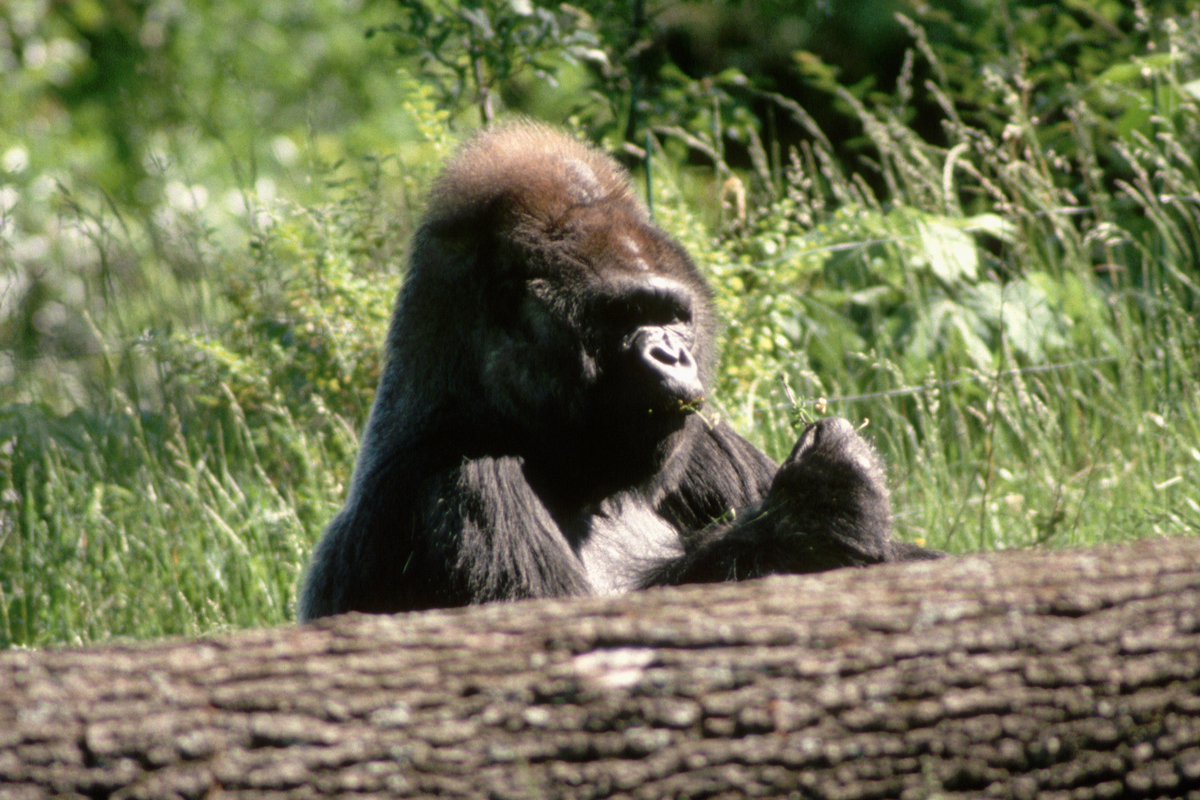
Famous Gorilla “Willie B” at Atlanta Zoo
Photograph by Getty Images
7. Spend an hour with your gorilla neighbors
There is something grounding and meditative about taking an afternoon to commune with our primate cousins. Zoo Atlanta is home to one of the largest populations of gorillas in North America and has won prestigious awards for its spacious enclosures and superlative treatment of its western lowland gorillas. The zoo’s longtime star silverback, Willie B., passed away in 2000 at the age of 42, but he is survived by his children, their offspring, and a lively mix of newer arrivals, who eat, play, or sit in silent contemplation. If you can’t make it to the zoo, you can catch the gorillas from anywhere on the live Gorilla Cam.
8. THRIVE TIP: Detox from screen time
First, get a sense for how much time you are spending on screens, and then set reasonable expectations for reducing that time. Make sure to plan screen-free activities that are enjoyable, and remind yourself why doing those things are important, whether it’s health, connecting with friends and/or family, or being a good role model.
– Justine Welsh, MD, director of Addiction Services for Emory Healthcare
Grant Park Farmers Market
Photograph by The Sintoses
Grant Park Farmers Market
Photograph by The Sintoses
9. Eat your veggies close to home
While many farmers markets are open seasonally, you might be surprised how many operate all through winter. From November to March, local farmers may have less variety on offer, but you’ll find plenty of healthy and delicious produce, including root vegetables, such as turnips and yams, and leafy greens, from kale to collards and spinach. Here are a few local farmers markets that operate year-round:
Silver Magnolias: From left, Mary Lynn Hemphill, LuAnn Jinks, Jennifer Smith, and Deborah Reissig, dedicated volunteers at Oakland Cemetery
Photograph by The Sintoses
10. Get your hands dirty: Volunteer for outdoor spaces
In the words of Canadian novelist and poet Margaret Atwood, “In spring, at the end of the day, you should smell like dirt.” Her oft-quoted line underscores the benefits of horticulture therapy or, to put it more plainly, digging in the dirt. Atlanta, often called the “City in the Forest,” provides a glorious canopy and green spaces worth preserving. To that end, volunteer opportunities abound.
The nonprofit organization Trees Atlanta is always open to individuals eager to dig in and help with tree planting, tree care, weeding, mulching, or reforestation projects. Saturday and weekday projects are available.
The Atlanta Botanical Garden has a wide range of volunteer opportunities throughout the year. Sign up for its quarterly “Digging In” newsletter to learn more about finding the right task for you, be it pruning in the garden, helping maintain flower exhibitions, or working in the greenhouses.
Oakland Cemetery welcomes newbies to volunteer and join efforts to preserve the historic gardens and grounds. Duties vary: They may include flower planting and tending to areas around headstones and markers. While you’re making new friends in the sunshine, you may spot the volunteer team known as the Silver Magnolias, a passionate group of ladies who focus on maintaining the African American grounds.
11. Get into the team spirit with a social sport league
You don’t have to hit the gym to stay active: An Emory University study showed that adults who participated in recreational sport leagues gained significant physical and mental health benefits. If you’re looking for a fun team sport to get exercise, try Atlanta Sport and Social Club, which hosts recreational sports leagues in flag football, pickleball, Ultimate Frisbee, and more, at parks across metro Atlanta. You can sign up as a team, join an existing one with a group of friends, or meet new friends as a solo entry. If you’re part of the LGBTQ+ community or an ally, consider Stonewall Sports, which offers a range of queer-friendly team leagues, such as kickball, bowling, and tennis, with many playing year-round.
12. Unwind with a day at Jeju Sauna
Treat yourself to the luxurious experience of Jeju Sauna, the eternally popular 24-hour Korean spa in Duluth. A flat fee gives you access to a bevy of saunas, pools, and cardio rooms, with additional a la carte options for purchase, such as a body shampoo and an acupressure massage. Later, grab some bibimbap at the spa cafeteria. It’s winter. It’s cold. You deserve it.
13. Keep a sketchbook for your doodles
MODA recently hosted New York Times bestselling illustrator Mike Lowery for a presentation titled “How Keeping a Sketchbook Changed My Life.” Lowery, a Decatur resident, told the gathering he carries a sketchbook with him everywhere he goes. He noted some benefits of doing so: “It helps you keep track of your days on this planet, declutters your brain, and helps you reach a meditative state.” Meetup opportunities abound, online and in-person, for drawing enthusiasts; we recommend Sketchbook Saturdays at the Center for Puppetry Arts, where participants draw inspiration from a selected item in the center’s magical collection of characters and props. Paper and pencils are provided.
Atlanta Run Club
Photograph by Mar Arrington
Atlanta Run Club
Photograph by Mar Arrington
14. Lace up your shoes and join a run club
Gen Z’s new preferred “dating app”—according to a summer 2024 TikTok trend—is run clubs, which are thriving in Atlanta. Of course, you don’t have to be on the prowl to enjoy a social running experience: Joining a run club is a great way to get exercise, meet friends, and enjoy a drink or snack after your workout. Plus, they’re free to join, with no sign-up necessary.
The Atlanta Run Club offers various distances at different paces and meets three times a week across three locations: Saturday mornings at Piedmont Park, Sunday mornings at Peoples Town Coffee Bar, and—the largest gathering—Monday nights at Ponce
City Market.
Beltline Run Club welcomes walkers and runners and meets every Thursday evening at restaurants and breweries on the Eastside and Westside trails.
Big Peach Running Co. hosts group runs throughout the week from several store locations around the metro Atlanta area.
15. THRIVE TIP: You can recycle—not trash—all that Styrofoam
At Live Thrive’sCenters for Hard to Recycle Materials, Styrofoam is repurposed into home insulation. In 2024, we repurposed more than 300,000 pounds—and that’s not all! We also accept mattresses, cooking oil, electronics, paint, household chemicals, tires, and much more.
– Peggy Whitlow Ratcliffe, founder and executive director of Live Thrive
16. Plan a luxurious outdoor getaway
Get back to nature while keeping creature comforts at these beautiful stays, all just a short drive from Atlanta.
At North Georgia’s Chateau Elan, visitors can choose from outdoor activities such as golf, tennis, and biking on the property’s 3,500 acres—or explore the sprawling winery and its recently opened tasting room.
Cloudland Lodge at McLemore Resort, located in Northwest Georgia, offers breathtaking views and plenty of family-friendly indoor and outdoor activities. The hotel’s elegant interior is almost as beautiful as the wild surroundings.
Situated near the Chattahoochee-Oconee National Forest and North Georgia’s mountains, Amicalola Falls State Park & Lodge is more than the namesake 729-foot waterfall. Try archery, hiking and hatchet-throwing, and to continue your adventure, stay overnight in a cozy lodge room, a private cabin, or an accessorized safari tent.
A rustic experience awaits at the Len Foote Hike Inn, named for conservationist Leonard E. Foote. Hike five scenic miles to Amicalola Falls and back, then unwind with other guests in the Sunrise Room or on the wraparound porch. To encourage unplugging, the inn doesn’t have electrical outlets in the rooms, so phones are best left in the car.
17. Let your frustrations out in a rage room
Feeling furious? Book a session at Spin Art Nation, Atlanta’s combined paint studio and rage room. You can connect your own music via Bluetooth (we recommend Alice in Chains), invite up to five friends (or enemies), and gear up under the blacklights to fling paint and smash CDs, glasses, and other satisfyingly breakable stuff. Choose from the 30-minute “Short Fuse” package or the 60-minute “Mood Swing” package.
The sweet outdoors: Exploring Sweetwater Creek State Park
Photograph by The Sintoses
Model: Kellyn Archambeau/Ursula Wiedmann Models
18. Get a sweet taste of nature
Sweetwater Creek State Park may be only a short drive on I-20 from downtown, but it seems half a world away. There’s a 215-acre lake surrounded by forest, along with 15 miles of hiking trails and 10 yurts available for overnight rental. But the real treasure is Sweetwater Creek itself, and the beauty of the water’s rolling rapids. The main trail follows the creek and goes past the ruins of a textile mill that burned during the Civil War. Fans of The Hunger Games will recognize it as the spot where Katniss and Gale share a comforting moment and soak in the tranquility of the river. Take their cue.
High Museum of Art
Photograph by Cat Max Photography
19. Hang out with your friends . . . and your kids
Friendships change when kids come along (especially when one friend has kids and the others don’t), but maintaining those friendships is important. Picking a place to hang out, kids included, doesn’t have to be a challenge. Here are some ideas:
Breweries such as Monday Night Garage in the West End and Round Trip Brewing Co. in Underwood Hills offer ample space to spread out and outdoor areas for kids to play in. Monday Night Garage sells wood-fired pizzas—a crowd-pleaser for all ages.
At the High Museum of Art, hang out in the kids’ play area for a bit before checking out one or two of the exhibits. Afterward, grab a caffeinated beverage and a pastry from Refuge Coffee Co. and enjoy it in the Woodruff Arts Center courtyard, where there’s plenty of room for kids to run.
At The Works, a brightly repurposed industrial complex in Upper Westside, kids can burn some energy at the Camp, a one-acre park with seating and play areas. Afterward, head to nearby Fox Bros Bar-B-Q for brunch or lunch on the patio.
Get out and go on a group hike. You don’t have to go far to enjoy nature in Atlanta, and everyone, especially kids, can benefit from spending time outside with friends. Try going for a hike up Arabia Mountain near Lithonia, stroll the East Palisades Trail along the Chattahoochee River, or try a scenic loop at the Kennesaw Mountain Environment Trail.
20. Stretch your spirit and body at DDP Yoga
It might seem counterintuitive that a hot new yoga program was devised by a 6-foot-5 former professional wrestler, but DDP Yoga is a powerful workout that has low impact on the joints and raises a serious sweat. “Diamond” Dallas Page is a three-time WCW World Heavyweight champion who sustained numerous injuries during his career, making traditional workouts a challenge. Page teamed up with Dr. Craig S. Aaron, a sports chiropractor, to create a workout program that draws from traditional yoga, sports rehab therapy, and dynamic resistance. You can follow the fitness program with the DDPY app or book a class with a certified private instructor.
21. Treat your ears to a chamber music feast
The Emory Chamber Music Society of Atlanta is in its 32nd year of presenting free classical music concerts. Feed your soul with the Cooke Noontime series at the Carlos Museum and Emerson Concert Hall, free and open to the public. The concerts, always beginning at 12 p.m., feature both local and national musicians playing work by Dvorak, Mozart, Tchaikovsky, and more, as well as by contemporary composers.
22. THRIVE TIP: Say goodbye to all that clutter
It’s okay to let go of stuff! Give yourself permission to donate things that no longer serve you. Try asking yourself whether you want to keep something and not whether you should. Banishing guilt from the decluttering process makes it easier to just start.
Learn from the pros: Marianela “Malita” Belloso instructs student Marina Freudzon at the Caló Dance Studio in Kirkwood.
Photograph by The Sintoses
23. Take a spin with dance lessons
Learning a new genre of dance or developing basic skills isn’t just a survival trick for parties and weekends. Regular cardiovascular exercise has tremendous physical and mental benefits, including better sleep, increased brain health, reduced anxiety, and improved cognitive functions such as memory and problem-solving. And no offense to other workouts, but dancing is one of the funnest ways to break a sweat.
City Dance and Music offers dance cards that let you attend various classes over time, ranging from ballet and jazz to hip-hop, salsa, and bachata: a 10-class card for three months ($150) and a 20-class card for six months ($280).
Want something more specific? Try line and country dancing at Heretic with DanceOut Atlanta, community dance classes at Manga African Dance, or flamenco lessons at Caló Gitano. Or brush up on your ballroom-dancing skills at Academy Ballroom Atlanta, where you can take five classes for $65.
24. Learn your local history
Atlanta is chock-full of history—good, bad, and ugly. You can soak up the stories of the city in all kinds of formats. For a deep listening dive, try Archive Atlanta, a podcast hosted by Victoria Lemos, which explores the places, people, and events that shaped Atlanta. Or join a walking tour from Unexpected Atlanta, a company founded by historian Akila McConnell that introduces visitors to Atlanta’s history through its vibrant culinary scene. For short bites of fascinating history, follow Anecdotal ATL on Instagram: The brainchild of Briton-turned-ATLien Will Edmonds, these snappy videos jump into some of the city’s most unique corners and surprising stories.
LifeLine Animal Project
Photograph courtesy of LifeLine Animal Project
25. Foster a pet for the weekend . . . or foster-fail and adopt one for good
Fostering or volunteering with a local animal rescue such as your local Humane Society or LifeLine Animal Project is one of the easiest ways you can save lives while enriching your own. It’s also an introductory course for anyone considering adopting a pet.
Don’t have the space to foster? There are plenty of ways to volunteer with your local animal rescue, from walking dogs and cleaning animal stalls to writing pet profiles.
To see Bill Curry is to feel time standing still. He looks decades younger than his age, 81. His face remains vibrant. The same goes for the rest of his frame, which gives you the impression he was somebody’s tight end, and not so long ago. Instead, he was a celebrated NFL center who stood 6 foot 3, weighed 235 pounds (today’s offensive linemen are seldom less than 300 pounds), and played for two different championship franchises.
In addition to his playing days in high school, college, and the NFL, there was his head coaching career, followed by a long stint as a college football analyst for ESPN and his ongoing role as a motivational speaker.
He has more than a few pieces of memorabilia from his career, so much that it overwhelmed the Curry home in Buckhead. “Carolyn [Curry’s wife] kept a lot of it in boxes,” he says. Then Pete Wellborn got involved. He was a U.S. Presidential Scholar at Georgia Tech, where he spent four seasons under Coach Curry as a linebacker and backup quarterback.
Wellborn now has an Atlanta law firm, and he built a locker room inside his offices to display Curry’s jerseys, helmets, and team pictures. “It is a virtual museum,” Curry says. “I had no idea he was doing it.”
Wellborn did it to mark how much Curry did for 55 years.
Those 55 years include Curry’s coaching life as the head football guy at Georgia Tech, Alabama, Kentucky, and Georgia State.
Curry has built a legendary football legacy. But his footprint on the world goes deeper, and into unexpected places. Let’s start with his spiritual vision, which begins with the New International Version of Proverbs 1:8: “Listen, my son, to your father’s instruction and do not forsake your mother’s teaching.”
The father, the mother, and the others in Curry’s young world of growing up in Georgia were products of their time, so they gave their son Bible Belt instruction and teachings influenced by the Jim Crow South. He listened, he obeyed, but he also did something else.
He evolved.
Curry became an unlikely force in the civil rights movement in the ’60s.
Curry has led multiple lives. The first of those lives was as a highly active youth, when he played everything—almost literally—while growing up in College Park. “I remember vividly during my junior year in high school that I spent a day without a practice to go to, and I had no idea what to do,” says Curry, who excelled in football, basketball, and baseball during his high school days. “I don’t know how the coaches screwed up and let that particular day get away from them. I went to the rec center and shot basketball. What else would you do?”
Curry was tall and strapping, a good enough athlete that he received a football scholarship offer to play center for his beloved Bulldogs at the University of Georgia. He turned it down to join the hometown Georgia Tech football program. He wished to stay close to Carolyn Newton, his grammar-school sweetheart, who had decided to attend Agnes Scott College. “I got a map, and I discovered that, unlike Georgia Tech, the University of Georgia is not the closest college to Agnes Scott College,” Curry says. Carolyn became his wife of 62 years and counting.
Carolyn Curry followed her husband to college head coaching jobs across the Southeast, from Georgia Tech to Alabama to Kentucky and finally home to Georgia State. Curry was a Coach of the Year three times at Georgia Tech and Alabama, but compiled an overall record of 93–128–4.
Photograph by Associated Press
With a master’s and a PhD from Georgia State University, she is an accomplished author, historian, and founder and director of a nonprofit organization called Women Alone Together. It’s designed for women of all ages who are “single for a portion of their adult lives . . . because of divorce, death of spouse, single by choice, or alone in a marriage because of physical separation, disease, or estrangement.”
Curry speaks of his soulmate with joy in his voice and his eyes: “What I do these days is, I help Carolyn with her things, and I travel with her. She’s now working on her third book, and I work with her on the research. When she completes her books, I go with her on the book-selling tour. We have a dog and pony show. You remember the old organ grinder and the monkey with the tin cup? I’m the monkey with the tin cup and the change. She’s the organ grinder. For 55 years, she followed me around, so now I follow her around, and it’s a wonderful chance for me to pay her back a little bit.”
Curry began his nomadic coaching career in 1976 as the offensive line coach for his alma mater. He spent the next three years in that same role for the Green Bay Packers under head coach Bart Starr, the former ace quarterback and teammate of Curry’s with the franchise. Curry then headed back to Georgia Tech before the 1980 season for his first head coaching job.
Homer Rice, then the school’s athletics director, was hired barely three weeks after Curry took over one of the worst football programs in the country. Rice walked up to Curry a few days into his tenure. “Homer said, ‘I watched your first spring practice, and I called my wife and told her not to unpack,’” Curry says, laughing. Rice wasn’t exaggerating—Curry opened his head coaching career with a pair of one-win seasons.
Curry built the Georgia Tech football program back to respectability, though it finished with a lackluster 5–5–2 record in 1986. That offseason, Alabama head coach Ray Perkins—after four seasons of thanklessly trying to live up to the legend he’d replaced, Paul “Bear” Bryant—left to become head coach of the NFL’s Tampa Bay Buccaneers. Curry was brought in as head coach. He had three seasons of goodness (7–5, 9–3, 10–2) at Alabama and received the Bobby Dodd Coach of the Year Award. But for Alabama, goodness was not good enough. When Curry didn’t like the new low-ball contract Alabama offered, he left.
Curry then spent seven seasons as Kentucky’s head football coach. Though he led the team to its first bowl game in nearly a decade, he never had a winning season there. Not that many folks around the commonwealth noticed. Rick Pitino and basketball were the rage during most of that stretch. “Actually, basketball was a positive for us,” Curry says. “For our football program, we got visits from guys only because they were going to get to go to Rupp Arena and watch the Wildcats play basketball. In the end, I got fired simply because we didn’t win enough games.”
Following Curry’s last season at Kentucky, in 1996, he had a 10-season stint at ESPN. “For eight consecutive years, I was forced to go to Maui to cover the Hula Bowl,” Curry says with a chuckle. “Carolyn wasn’t excited about going to any of the other schools I was broadcasting from, but she decided she could make that trip.”
After Curry left ESPN and moved back home to Atlanta, he was offered a job as the first head football coach at Georgia State, which launched its program in 2010. It was an easy sell for his wife. “She loves Georgia State,” Curry says. “When they said they were starting a football program, I told her that I was one of the candidates, and she said, ‘Well, let’s see. It’s my school. I love that school. I don’t have to move. Let’s do it.’ It took about that long.”
Following seasons that ended 6–5, 3–8, and 1–10 with a Georgia State program that lacked a stadium, opponents, and even chinstraps when Curry took over, he retired his whistle to begin yet another one of his lives.
“I still had a desire then, and I still have a desire now, to have an impact on teams, institutions, and leaders, to emphasize the lessons I’ve learned through some of the great men I’ve met in my life: James Harvey and Bart Starr and Vince Lombardi and Don Shula and Johnny Unitas and Willie Davis and John Mackey,” Curry says, rattling off a list of his mentors. “Now I can do those things. I’ve written a couple of books. I can make speeches. I can sit down one on one with leaders, and sometimes I get a call to do that. The Covid years have cut down on the volume and the number of things to do. But I’m 81 years old, so I don’t need a lot of things to do.”
Curry’s playing life was spent snapping footballs between his legs for teams coached by and quarterbacked by bigger-than-life folks. He had three seasons through 1964 excelling as a center under Georgia Tech’s Bobby Dodd, a College Football Hall of Famer who scared Curry into doing the right thing without ever saying a curse word. “I had no idea that he intended for me to go to every single class,” Curry says. “The reason I’m so devoted to Coach Dodd is because I cut one class, and they ran me up and down the west stands until I couldn’t stand up. I decided chemistry at eight in the morning was a terrific thing.”
Then came Curry’s NFL decade. It began with Vince Lombardi, the legendary Green Bay Packers head coach. In contrast to Dodd, the man who had the Super Bowl trophy named after him was noted for uttering a naughty word or three. The same went for Don Shula, who later joined Lombardi in the Pro Football Hall of Fame.
After a 1967 trade to the Baltimore Colts, Curry went from sharing a huddle with the Packers’ Bart Starr to sharing one with the Colts’ Johnny Unitas. Curry was a three-time NFL champion, played in three of the first five Super Bowl games (winning two), and was named to the Pro Bowl twice.
Curry was best friends with John Mackey (left), and they were plaintiffs in a federal lawsuit that ended the Rozelle Rule and opened up free agency in the NFL.
Photograph by Associated Press
But Curry played another important role in the NFL, as an activist for change. He became close with his Colts teammate John Mackey, a Hall of Fame tight end. Mackey became the first president of the NFL Players Association (NFLPA), in 1970. Curry succeeded Mackey as the union’s president in 1972.
The Curry–Mackey connection showcased Curry’s contradictory life. Curry was a White Southerner from the Atlanta area when it was mostly a Georgia hick town with a few tall buildings; Mackey was a Black Northerner who grew up on Long Island, near the bright lights of New York City. Yet the two men were nearly inseparable, as were their wives, who kept each other company on road trips during Curry’s six seasons with the Colts.
The couples huddled often throughout those NFLPA days. But decades later, there was big, fast, and mighty Mackey’s stunning new reality after a diagnosis of dementia due to too many blows to the head while wearing a football helmet. That’s when the empathetic and spiritual lives of Curry surfaced in significant ways. He sighs before recalling Mackey on September 17, 2002, at Unitas’s funeral in Baltimore. “So there was John, unable to find his seat after apparently getting up to go to the restroom, and everybody just froze,” says Curry.
Mackey moved up and down the church aisles, in search of nothing in particular, while the priest continued with the eulogy. Curry sighs again. “It was a nightmare,” he says.
Four years later, Sylvia Mackey sent a letter to then NFL commissioner Paul Tagliabue about her husband’s condition. With Curry heavily in the mix, Tagliabue urged league officials to collaborate with the players’ union to form the “88 Plan” in honor of Mackey’s jersey number. Through the plan, families of former NFL players suffering from dementia received as much as $88,000 per year for nursing home care. Mackey died at 69, in 2011, but the 88 Plan continued to live, and it was a forerunner to a $1 billion settlement more than a decade later between the league and retired players over NFL-related head injuries.
Before Mackey, in Green Bay, there was Curry’s “encourager.”
In the summer of 1965, Curry drove 14 hours from Georgia to Wisconsin after he was picked in the 20th (and last) round of that year’s NFL draft. He was trying to make the squad of the Packers during training camp, and for a skinny offensive lineman who went from high school through college with only White teammates, the encourager was a shocker because it was Willie Davis, a Black man.
Davis was intimidating, a team captain and future Pro Football Hall of Fame defensive end for that Packers bunch that ranked among the greatest NFL teams ever. Yet one night after practice, Davis called over the White Southern rookie center. He told Curry that he thought Curry had a chance to make the team. But he knew Curry would be getting crushed during practice by all-everything linebacker Ray Nitschke, and having his ears scorched from the flame-throwing tongue of Lombardi. Davis told Curry to find him for inspiration and encouragement whenever that happened. Curry often did, and a deep friendship blossomed.
NFL ICON Curry was an All-Pro for the Baltimore Colts and best friends with Black teammate John Mackey
Photograph by Associated Press
Three years after he accepted Davis as his encourager, in April 1968—against the wishes of some family members and several friends—Bill and Carolyn Curry ignored the threats of violence in their hometown to walk the Atlanta streets during the funeral procession of fellow Atlantan Martin Luther King Jr.
“The huddle is a metaphor for our country,” Curry says in a soft tone, recalling his message in the video. “There are a lot of times when we should be hugging, but we aren’t. That’s what I believe. So that’s what I try to teach a thousand different ways. Suck it up and talk to the guy. He doesn’t look like you, and he doesn’t vote like you, and he doesn’t go to church like you, but that’s your teammate. He’s all you got. After a while, I don’t care how racist you are. Sweat smells the same way on everybody. And in football, you can’t get dressed by yourself. You need a buddy to pull the jersey over your shoulder pads. So we need each other like that in our country, and we have forgotten that lesson.”
Curry was a son of the south, from a time when firehoses, attack dogs, and Bull Connor ruled Dixie, to the delight of anybody as White as a Ku Klux Klan hood. “We were all racists,” says Curry. “I would have told you I wasn’t, but I didn’t know what it meant to not be a racist.”
His parents taught him not to hate, but he was surrounded by the language and culture of the Jim Crow South. “I was in deep trouble when it came to relationships with people who were different than me,” says Curry. “So was virtually everybody else around me. Maybe there were some I didn’t know who were more tolerant and more loving than I was. I hope so, but I didn’t know about that. But it seems like at every turn, somebody showed up and did something that left me no choice but to respond [in a nonracist way].”
The first example of somebody surfacing for Curry was during the late 1950s, when he played American Legion Baseball. His coach was a Delta Airlines pilot, and the coach’s son was one of his best friends. “The coach’s name was Mr. [Bob] Scruggs, and he had some investments in apartments going up off Interstate 85,” says Curry. He was among the coach’s players who agreed to help build the apartments for $1 per hour.
Curry and his teammates were instructed by their coach to follow orders from the foreman. “Mr. Scruggs didn’t tell us anything else about the foreman,” says Curry. The foreman turned out to be James Harvey, who had large overalls, an ill-fitting baseball cap, and the darkest of skin. In Curry’s mind, this couldn’t be the same man that Mr. Scruggs told his players to trust and obey. In the 1950s South, putting a Black man in charge of White workers was simply not done.
“At 16 years old, I thought to myself, This can’t be. There’s no way this guy is the boss, but he was,” Curry says. “I called Mr. Scruggs. He said, ‘I already told you. Listen to what James says. You’ll be fine. Pay close attention, and do everything he tells you to do.’ When I asked Mr. Scruggs about it later, he just said he knew that James was a great leader.”
Curry’s voice begins to choke up as he tells a story that he says he’ll remember if he lives to a thousand years old. It again involves James Harvey, and a bunch of “White guys out of central casting,” including a preacher who constantly hurled the N-word while carrying the Bible.
“We’re standing up on the floor where the boards are being hammered into place, and one of the guys is up on a ladder,” says Curry. “James, with these big, powerful forearms, is standing over next to the water bucket, and one of those White guys came up to him and said, ‘Hey, boy. Get me some water.’ There were two actual boys up on the deck—a guy named Bob and me—but he wasn’t talking to us, and everybody knew it.”
Harvey didn’t budge, didn’t smile, didn’t move those “big, powerful forearms” away from the folded position across his chest. Then Curry heard the same White guy say, “Boy, didn’t you hear me?”
In a controlled fashion, Harvey smiled and responded, “How old does a man have to be before he’s not a boy?”
There wasn’t a sound from anybody.
“It was just like out of a Western movie, when the cowboy walks into the saloon and the piano stops playing,” Curry says. “Everybody is staring at this carpenter who made those remarks, and they’re staring at James, who never stopped smiling. I remember the guy looking at his hammer, then at James’s forearms, and then the carpenter said, ‘I’m sorry, James. I’ll get my own water.’”
A shocked Curry started walking with Harvey back across the red, hard-baked clay and asked him if those men were going to hurt him. “James said to me, ‘We don’t worry none about it. We just go ahead on,’” says Curry. “Nobody, nobody called him a boy the rest of the summer.”
Bill Curry
Photograph by Ben Rollins
If that wasn’t enough for Curry to become the unlikeliest of leaders for a Black man’s fan club during those times, there was this: After Curry made a mistake on the job, one of the top bosses on the construction site told Harvey that “the Curry kid is worthless.” The top boss, who was White, wanted Curry gone. But Harvey was the foreman, and he disagreed: “Curry is a damn good worker, and we need to keep him around here.”
That’s when Curry learned you have to stand up for folks when they stand up for you.
Curry was changed forever. With his voice cracking nearly seven decades later, he says, “I could not miss that message even if I tried. I went back home and told my parents about what James did for me. They talked about how great James was and how he did the right thing and how I needed to stand up for him, but that never became necessary. In 1959, things could have gone very differently.”
After a pause, Curry says, “I don’t know if I could have responded the way I did to Willie Davis when he offered to help me with the Packers if it hadn’t been for James Harvey six years earlier. It was a gift from God for me.”
Since its 1985 arrival in the downtown skyline, and given its unique shape, many Atlantans tell visitors who are seeking directions to look for the “pregnant building.” But for movie fans around the world, the late architect John Portman’s 52-story, 1,663-room atrium hotel is also known for its starring role in such movies as the Hunger Games series and the 2024 miniseries A Man in Full, plus a bevy of Marvel offerings, from Spider-Man: Homecoming to Ms. Marvel to Loki. The hotel’s suites were also featured in Denzel Washington’s 2012 set-in-Atlanta thriller, Flight.
So how does a nearly 40-year-old hotel score so many close-ups in Hollywood films and TV projects? According to Marquis director of sales and marketing Paul Buff, it’s a combination of Portman’s iconic futuristic architecture and a seasoned senior sales executive who keeps a close eye on upcoming productions in Georgia.
“Our architecture lends itself to a unique view for the camera lens,” says Buff. “Because of Mr. Portman’s vision and design, our hotel has been portrayed in both current times as well as into the future.”
As one of the host hotels for Dragon Con, the annual Labor Day weekend science fiction, fantasy, and comic fan festival, it doesn’t hurt the hotel’s street cred that the Marquis doubles as both the Tribute Center in The Hunger Games and as the Time Variance Authority in Loki.
Movie fan or not, anyone who has ever stepped inside the hotel’s lobby can attest to its visual majesty. Says Buff: “On any given day, our hotel guests can be found looking up into our 52-story atrium while pulling out their phones to take photos.”