
Home 2025

Archives

21 Reasons We Love Atlanta: Because Evergreen Butcher & Baker’s burgers are so popular that a scalper set up shop outside

0

Evergreen Butcher Baker burger

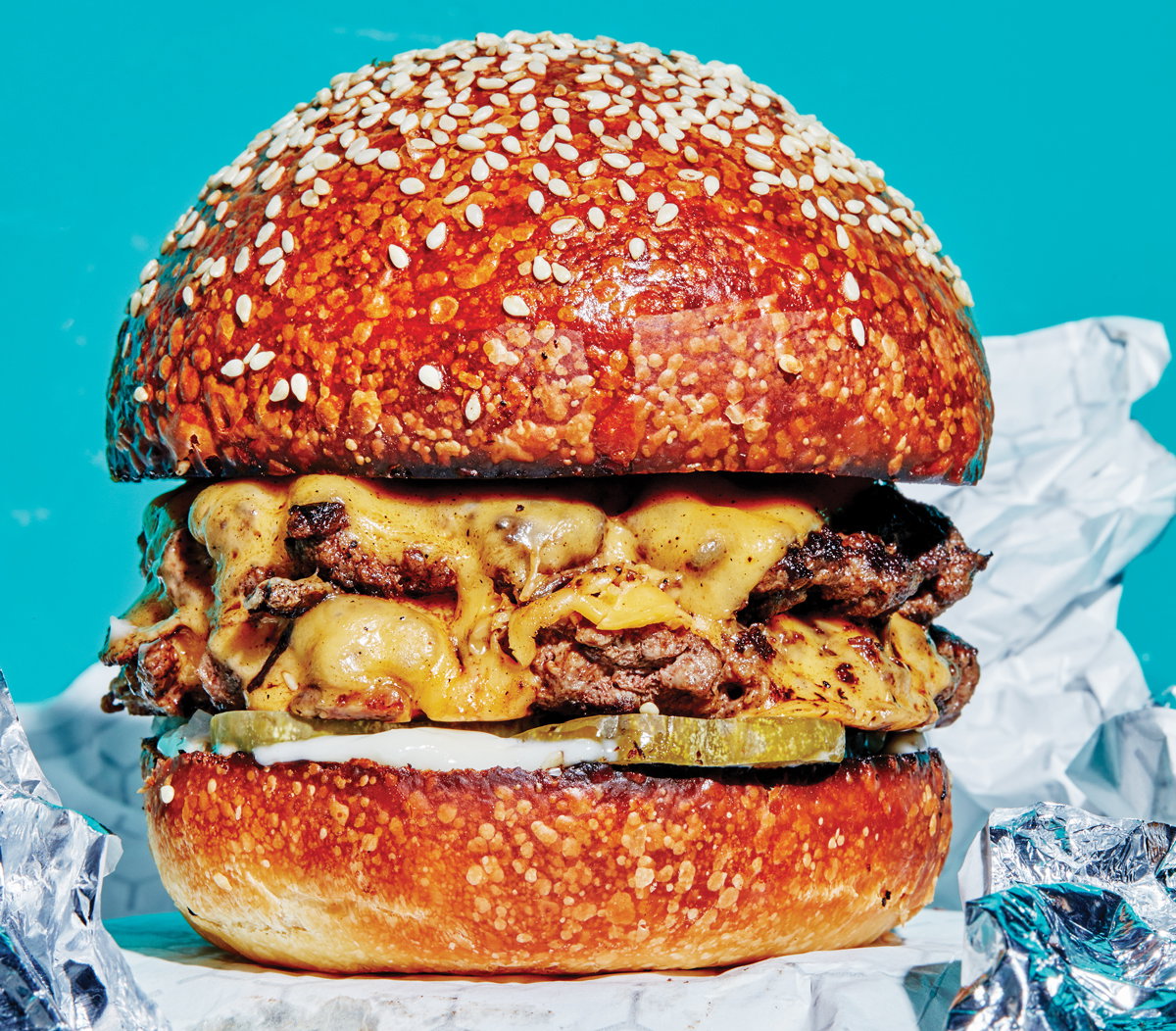
Around January last year, while living in Kirkwood, I noticed a line of people had begun gathering on Hosea Williams Drive every Sunday like a church congregation. Nothing piques human curiosity more than a line, so I got in it. Our communion? Evergreen Butcher and Baker’s burger.

The congregation advanced slowly. At the hour mark, I passed from the line outside to the line inside. Evergreen staff announced that they were running low and instructed us to pass the word back. I did so and began doing mental math, which I reserve for moments of desperation. At the time, customers were allowed a maximum purchase of three burgers, and seven people were ahead of me. Worst-case scenario: There were 21 burgers left, and everyone was hungry. At the pearly gates, it was my Judgment Day: “I’m sorry. We’re sold out.” Upset, I jogged back to my apartment, muttering bitter nothings to myself. I ate a Pop-Tart for lunch.

During the pandemic, Evergreen owners Sean and Emma Schacke made a decision that has brought them success and scandal. Business was slow on Sundays, so they used leftover beef to make burgers for lunch. Evergreen’s burger is simple: two thick patties with grilled onions, garlic aioli, housemade pickles, and American cheese, all between a sesame bun. They started with 50 burgers, and their regulars loved it. Soon, word spread on social media and demand surged to an extreme. Over time, Evergreen stepped it up to 170 burgers and still sold out within the hour.

One Sunday last June, a customer alerted the Schackes that someone was scalping two burgers outside, at an upcharge: $40 for the pair (they retail inside at $16 apiece). When Sean stepped out to confront the burger hustler, he peeled off in a Porsche SUV. Evergreen posted on Instagram to give customers a heads up on the perp; the reseller then shot back with a Google review days later saying, “Apparently this enraged a grown man, after I had already done business with him.”

The controversy increased demand, so much so that Evergreen had to pause the entire operation in late July, after other businesses on the block began complaining about the line. Last fall, they quietly resumed burger operations, with some safeguards in place—including a limit of one burger per customer, to avoid scalpers. “We actually make as many as possible,” says Sean. “But I understand people who get here, wait in line, and don’t get one. I’d be upset too.”

Weeks after my first debacle, I returned, this time 30 minutes earlier and with a level head. Instead of mental math, I manifested a burger in my hands. This time, my wait at Evergreen came with a reward, made even juicier after an hour in line. Satisfied, I strolled back to my apartment, devouring the burger on the way.

Back to 21 Reasons We Love Atlanta.

This article appears in our February 2025 issue.

21 Reasons We Love Atlanta: Because one of our TikTok stars is the lesbian Mr. Rogers

0

Jere Chang

Jere Chang describes her experience joining TikTok as typical: It was fall 2020 and she was stuck at home when she downloaded the app on a whim. An Atlanta public school teacher, Chang soon found herself on “TeacherTok” and decided to start creating her own classroom-themed videos. Six months later, she had reached 190,000 followers and secured her first brand deal. Today, she has 3 million followers across TikTok, YouTube, Instagram, and Facebook.

Chang does her best to show how much fun teaching is, but the Sugar Hill, Georgia, native says her mission isn’t to recruit young teachers; it’s to be the teacher and the queer representation she needed as a child. Earlier in her career, Chang got a master’s degree in university administration but got bored working at the collegiate level and went back for a master’s in teaching English to speakers of other languages. She then found a job at a local elementary school that she felt matched her vibe.

“A lot of people think that queer teachers are angry and angsty, but it’s quite the opposite,” she says. “I’m a fun teacher, always celebrating kids and being goofy and fun with them. I call myself the lesbian Mr. Rogers because I’m positive and try to be a role model—but I’m also gay. And those things can go hand in hand.”

Most of Chang’s content is lighthearted, humorous skits based on stories from her classroom. She portrays a range of archetypal student characters, using names based on her own history and family. The adults she portrays in her skits are all Clue characters; Chang recently introduced Mr. Plum, “an outdated principal who is out of touch with happenings in the classroom.”

Occasionally, Chang’s wife and two sons appear in a video or behind the scenes, as in the series Lunch Prank, in which Chang’s wife packs something unexpected in her Friday lunch. “I do teacher life and mom life,” Chang says.

Around the school where she teaches, Chang is a bit of a celebrity: Even the kindergartners refer to her as “the YouTube lady.” Public speaking engagements are ramping up as well; this year, she’ll speak to teachers in Austin and Nashville.

“This has spiraled into so many things and opened so many opportunities,” Chang says. “The internet is a beautiful place. For anyone who wants to get on social media, I tell them to have fun. That’s most important.”

Back to 21 Reasons We Love Atlanta.

This article appears in our February 2025 issue.
21 Reasons We Love Atlanta: Because when car booting became an epidemic, the Boot Girls of Buckhead created a cure

0

The Boot Girls

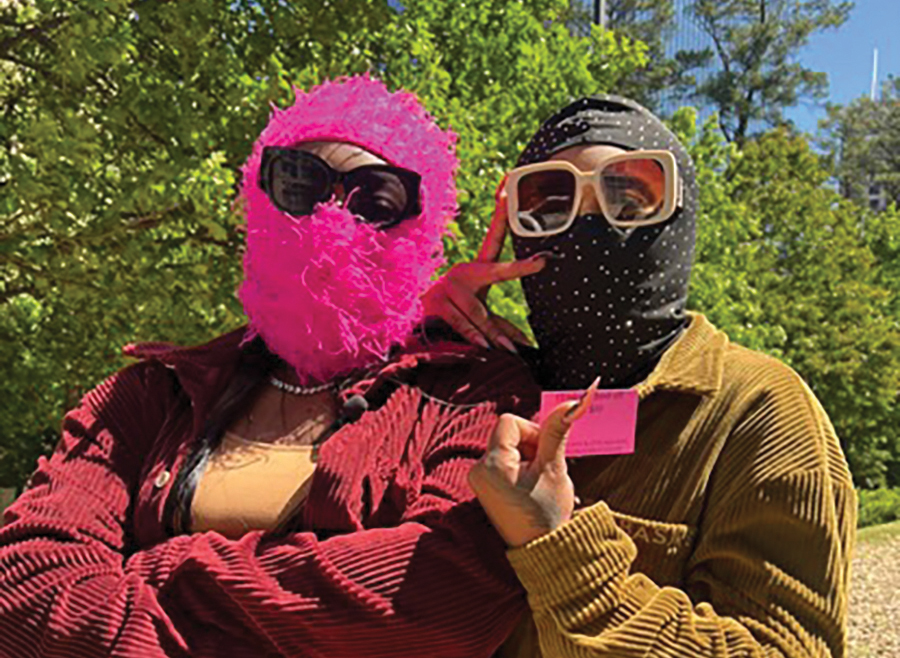
By some estimates, approximately 100,000 boots are placed on cars in Georgia each year, rendering them immobile until a fine is paid. At $75 per day, these fines add up quickly. So, in 2023, two entrepreneurial women created a workaround. The Boot Girls, as they are called, drive around Atlanta—primarily Buckhead—and remove metal boots for a $50 flat fee (paid in cash or via Cash App). Due to the nature of their work, they prefer to remain anonymous, donning bedazzled ski masks and going by the aliases Shiesty and Baby.

Previously beauticians, they’re best friends and business partners, unlocking boots by day and dancing in a strip club by night. They came up with the idea for their business in 2023 after Shiesty got booted in the apartment complex Cyan on Peachtree, where Baby lived. Shiesty later bought a copy of the key from the man who freed her car. She and Baby filmed a TikTok of them taking off a boot for $50, and business blew up.

Those in need of boot removal need only directly message @bootgirlsinbuckhead on Instagram, and the Boot Girls come to their rescue—often long before the private boot company arrives. They leave the boot intact and undamaged on a curb nearby. When they spy booted cars around the city, they drop a business card on the windshield. They’ve even lent their talents to celebrities such as rapper Yung Joc and hip-hop artist Kodie Shane. “We don’t got no beef with the people that put boots on the cars,” Shiesty told a Vice documentary crew last year. “But we gonna take it off.”

Back to 21 Reasons We Love Atlanta.

This article appears in our February 2025 issue.

21 Reasons We Love Atlanta: Because lemon pepper wet is still the king of wings

0
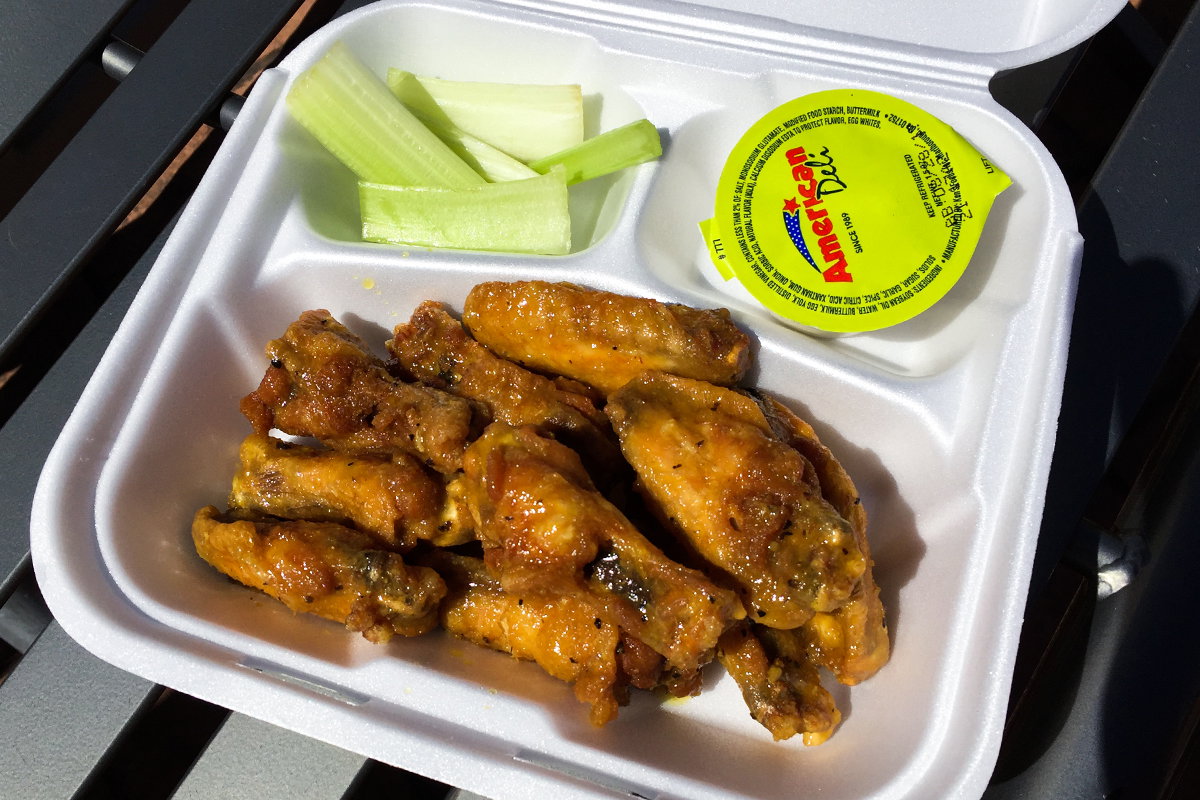
Lemon Pepper Wet from American Deli

Photograph by Matt Walljasper

It’s kinda funny how something like lemon pepper wet chicken wings are as synonymous with Atlanta as the Braves, Tyler Perry, or CNN. The flavorful bites have been the subject of rap songs like “Lemon Pepper Freestyle” by Lizzo and Rick Ross—and who can forget the classic scene from Atlanta when Paper Boi gets the wings hookup at J.R. Crickets with the off-menu item. It had people across the nation asking, “What the heck is lemon pepper wet?”

Since then, content creators, foodies, and visitors have sought out the hometown creation that cements Atlanta as the culture capital of America. As a bona fide Grady baby, I’ve been chowing on this flavor most of my adult life.

It was summer in the early ’90s. My roommate and I were shopping at our local Kmart on Bankhead Highway. Normally we’d grab a fish plate from the spot next door, but that day we decided to eat at J.R. Crickets across the street. Three-Mile Island was my favorite flavor at the time, but as we walked up, people were ordering the special, so I had to try it too. When my boat of wings was placed on the counter, I was hit with this new sensation: a perfect blend of tangy hot Buffalo sauce and zesty lemon pepper.

Eating lemon pepper wet wings across Atlanta, you realize the recipes are as varied as the restaurants and bars that feature them. At American Deli, for example, the wet sauce combines melted butter, lemon-pepper seasoning, and lemon juice. Dugan’s and Three Dollar Cafe both offer a more traditional sauce of melted butter mixed with lemon-pepper seasoning, while J.R. Crickets cranks up the heat with a sauce made of Buffalo wing sauce and lemon-pepper seasoning.

I guess you can say, to paraphrase a hot sauce tagline, “We put that (bleep) on er’thang!” When it comes to Atlanta, lemon pepper wet is not just a flavor; it’s an experience.

Back to 21 Reasons We Love Atlanta.

This article appears in our February 2025 issue.

21 Reasons We Love Atlanta: Because The Colonnade, 98, will live to sling fried chicken another day

0

Colonnade restaurant sign

Atlantans panicked last summer, when The Colonnade, the city’s second-longest running restaurant, went up for sale. After many decades, owners Jodi and David Stallings had decided to retire. The beloved 98-year-old Cheshire Bridge Road institution, famed for its meat-and-threes, had just crept out of the pandemic when a pair of road closures caused by bridge fires threatened to collapse the iconic eatery’s business for good.

There was a collective sigh of relief, then, when longtime regulars and partners Lewis Jeffries—a third-generation Atlantan who has eaten there for 60 years—and Paul Donahue announced they would purchase their favorite restaurant. They wasted no time bringing back customer favorites, including the prime rib.

Here, Jeffries, Donahue, and some of The Colonnade’s dedicated staffers explain why the restaurant, which opened in 1927, is such an enduring Atlanta institution.

Paul Donahue (left) and Lewis Jeffries

Photograph by Andrew Thomas Lee

Lewis Jeffries, new owner, regular for 60 years: I’ve been coming here since I was six years old. We own Lingering Shade on the Beltline, and we were in the market to open another bar. I was minding my own business eating dinner one night when Jodi and David stopped by my table and asked, “Would you guys be interested in buying it?”

Paul Donahue, new owner, regular for 30 years: The whole deal was done in less than 48 hours. They wanted the new owners to keep The Colonnade The Colonnade. Jodi and David knew us. We’ve been coming here for decades. We just wanted to continue to eat here every Thursday night, and we love all of the people who work here. Some have worked here for 30 or 50 years, and that’s hugely important. There aren’t many places with that kind of history.

Rhea Merritt
Rhea Merritt

Photograph by Andrew Thomas Lee

Rhea Merritt, front of house, 52 years: Some of our regulars have been coming in since they were kids, coming in with their parents, back in the 1940s and 1950s.

Jay Skinner
Jay Skinner

Photograph by Andrew Thomas Lee

Jay Skinner, bartender, 27 years: We have customers who come in every day. They’ll tell us in advance if they’re not. We know a lot of their phone numbers. If they don’t show up, we’ll call them.

Merritt: Just to make sure they’re okay.

Randell Stenson, server, 37 years: You have to be a people person to work here. It’s easy committing orders to memory, like for our regulars Dan and George. George will always order something different, but Dan wants his chopped sirloin and a salad. I make sure his beets are on the side, so George can eat them.

Sonya Newton, kitchen manager, 42 years: Definitely it’s the fried chicken, the collards, the yeast rolls, and the macaroni and cheese that keep people coming back. We probably go through four or five cases of chicken a day. The key is the way we do our batter. That’s all I’ll say. No double-dipping either, just a single pass. And folks would have a fit if we didn’t have the tomato aspic.

Sonya Newton
Sonya Newton

Photograph by Andrew Thomas Lee

Merritt: The tomato aspic has been on the menu as long as I’ve been here. I don’t eat it.

Skinner: Neither do I. It’s like the pears and cheese. If you went to school here, school cafeterias served that at lunch.

Merritt: Since we don’t take reservations, the waitlist can get long, but it doesn’t bother me. I know they’re not going anywhere until they eat.

Skinner: Thanksgiving and New Year’s Day are usually our biggest days.

Merritt: Those waits can get into an hour or even an hour and a half. Those are hard days.

Skinner: People bring lawn chairs and tailgate out in the parking lot. One year a guy set up a TV in the back of his van. He and some of the other regulars were out there watching football until their tables were ready.

Randell Stenson
Randell Stenson

Photograph by Andrew Thomas Lee

Stenson: No disrespect, but working on Thanksgiving for so many years has put me off turkey. One year we served 1,800 orders of it in nine hours. Sometimes, I’ll be in my bed at two o’clock in the morning and have nightmares about turkey.

Newton: When I started, it was a family-owned business, so the people I worked with became like family. It’s just something I like doing, going on 42 years now. I feel good about feeding so many people each day.

Stenson: The key is having patience and kindness, but the kindness comes right after the patience. It’s a real family affair here. There isn’t another place like this. It’s the quality of the food, the people, and the service. The Colonnade is like a country club—without the dues.

Jeffries: We didn’t want anything to happen to this place. I feel like The Colonnade is a part of my family.

Donahue: We want to make small improvements, like updating the equipment behind the bar, making the website brighter, and having a social presence on social media. The old girl is about to turn 100, and she needs a new party dress. The Colonnade serves the kind of food we all love and we all need.

Fried chicken, collard greens, and macaroni and cheese at the Colonnade

Back to 21 Reasons We Love Atlanta.

This article appears in our February 2025 issue.

21 Reasons We Love Atlanta: Because Blondie can still crush beer cans and write poetry

0

Blondie

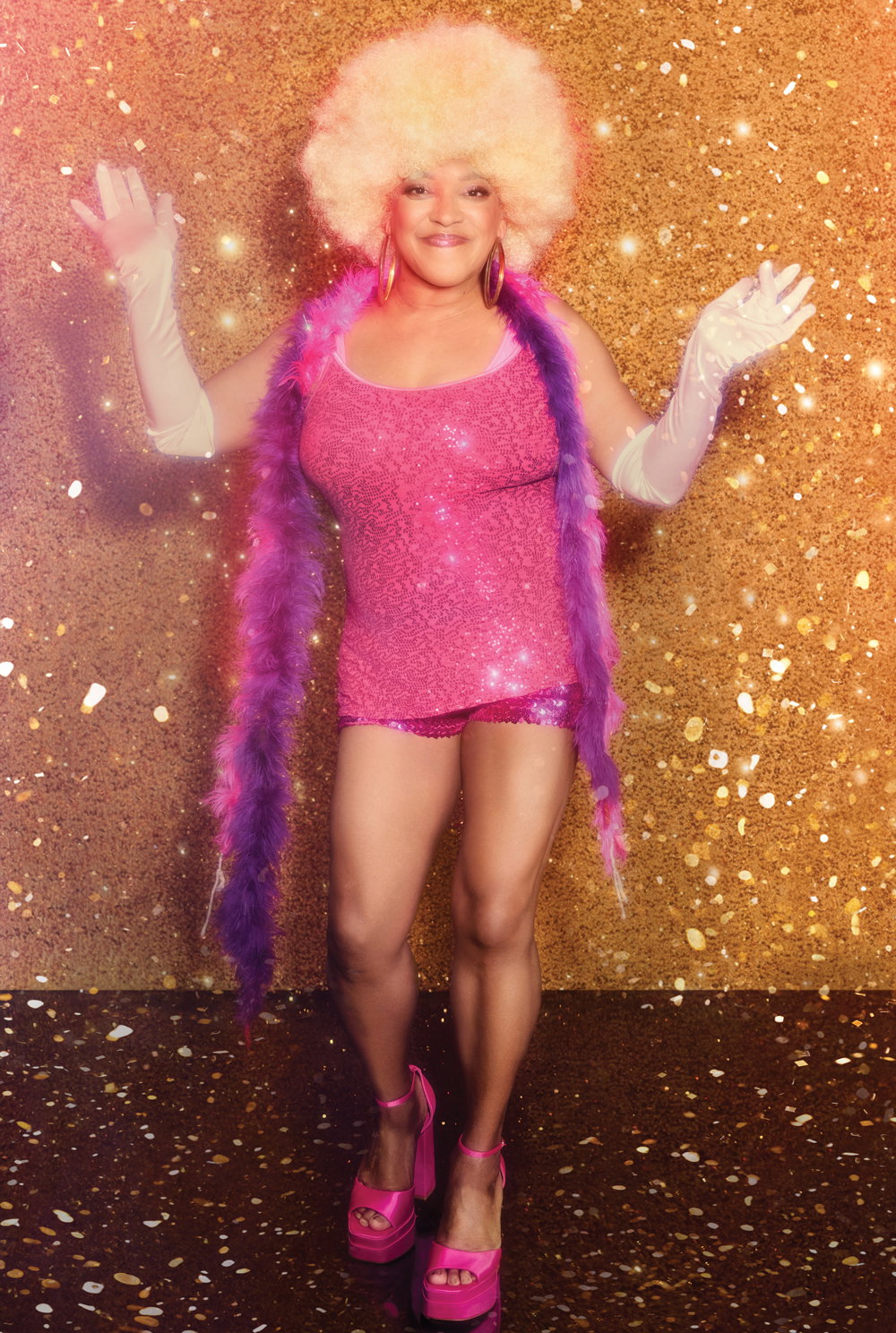
Speaking with famed stripper Blondie (real name: Anita Rae Strange) is a ride: You have to hang on, but you can’t wait to hear what she says next. When we chat by phone, she’s in her hotel room in Decatur. Blondie recently had to find a new place to live, but she remains unfazed. “I got on my T-shirt that says, ‘Pray about everything, worry about nothing,’” says Blondie. “It’s my favorite T-shirt because that’s what I do. I don’t worry about nothing.”

The 67-year-old Blondie is best known for her supreme ability to crush beer cans with her breasts. She’s been doing it since 1979 at Clermont Lounge, where she still dances a few nights a week. “I’ve gotten bruises on my breasts from doing certain cans, so I only do Pabst Blue Ribbon now,” says Blondie. But she also taps into another creative side: that of a poet.

Blondie took writing classes at Emory University in the ’90s, where she dipped her toes into all sorts of writing formats: articles, shorts stories, and more. She even wrote op-eds for a long-gone magazine called Sideshow. In one from the ’90s, she ruminates on gay pride (some may say it still rings true today): “I don’t care who they sleep with, just run our country. What’s the problem to me is that the politicians committing adultery and accepting bribes are the same politicians who won’t allow same-sex marriages.”

It was poetry, however, that really resonated with Blondie. She taps into everything, including giving thanks to “different things that have happened in my life.” Blondie even wrote a poem about Mick Jagger, who gave her a shout-out at a concert at the Mercedes-Benz Stadium in 2021 (sadly, she was home sick with a cold). On our call, she reads me a poem, a sweet musing on Thanksgiving:

We gathered together on this holiday
to give thanks to the Lord for the good that has come our way
lest we forget to help others as well,
but they are not able to provide for themselves
friends and family and those
we love dear
will celebrate this occasion
from far and near.

These days, Blondie doesn’t dedicate as much time to poetry as she used to. Instead, she focuses on her prayer, which she does first thing in the morning for about three hours a day. She prays for everyone and everything: friends, the local KFC, enemies. She even added me to her list. Things aren’t easy for the stripper laureate, but she’s unflappable.

“You can’t stop me from just keeping on keeping on,” says Blondie. “I’ve never had Covid and I did more drugs than everybody, so I’m just very blessed.”

Back to 21 Reasons We Love Atlanta.

This article appears in our February 2025 issue.
21 Reasons We Love Atlanta: Because Spiller Park Coffee is honoring one of Atlanta’s oldest buildings in South Downtown

0

Spiller Park Coffee

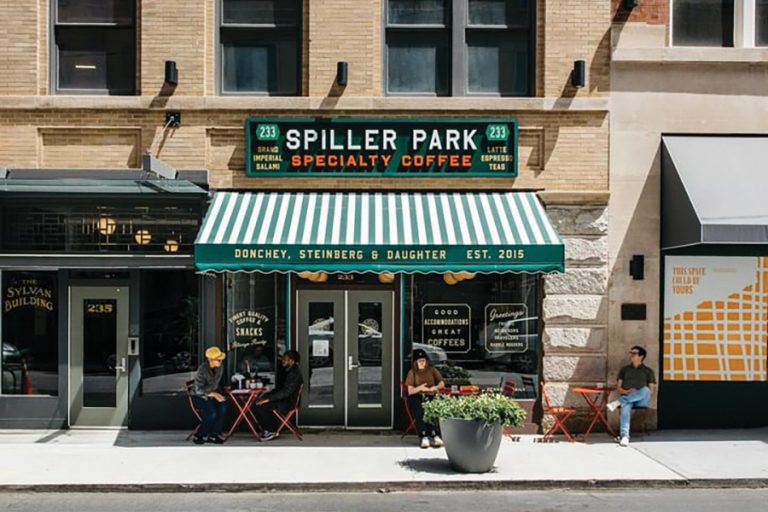
Amid the relentless razing and redefining of Atlanta’s never-ending transformation, a few glimpses of the past remain intact thanks to history enthusiasts and preservationist-minded business owners. This includes Dale Donchey, owner of Spiller Park Coffee, whose respect for old Atlanta is reflected in Spiller Park Coffee No. 4 on Mitchell Street downtown.

The coffee shop is in The Sylvan Building, part of Atlanta’s Hotel Row, a historic block of early-20th-century commercial buildings listed on the National Register of Historic Places. The three- and four-story structures were once businesses and hotels with street-level retail shops catering to commuters, all within walking distance of Terminal Station, then the city’s largest rail station.

Spiller Park Coffee No. 4 is among a handful of new tenants drawing visitors to the long-beleaguered South Downtown neighborhood, which is currently undergoing an ambitious revitalization. On a recent morning visit, a few tourists were spotted taking selfies outside the retro storefront, which features photogenic neon letter signage and a green-and-white–striped awning. The site was once home to Imperial Cafe, owned by the Imperial Fruit Company. The original cafe logo remains intact, deftly worked into the tile floor.

When Donchey, who’s been in Atlanta’s coffee scene for 22 years, took over the space at 233 Mitchell Street, he couldn’t stand the idea of losing the original tin ceiling, penny tile floors, and molded metal walls. After some fresh paint and touch-ups, he and designer Gavin Bernard added complementary flourishes, such as globe lamp pendants, to bring the look together. Charming details nod to Duchey’s love of baseball—Spiller Park is where Atlanta’s minor-league team, the Crackers, used to play—including photos of local baseball greats, Hank Aaron among them, on the back wall.

“My idea was not to mess with it,” Donchey says of his renovation of the historic space. “Just build it back better.”

Back to 21 Reasons We Love Atlanta.

This article appears in our February 2025 issue.

21 Reasons We Love Atlanta: Because when The Sistah Shop was in peril, a flash mob rescued it

0
Aisha Taylor Issah
The Sistah Shop owner Aisha Taylor Issah

Photograph by Stephanie Eley

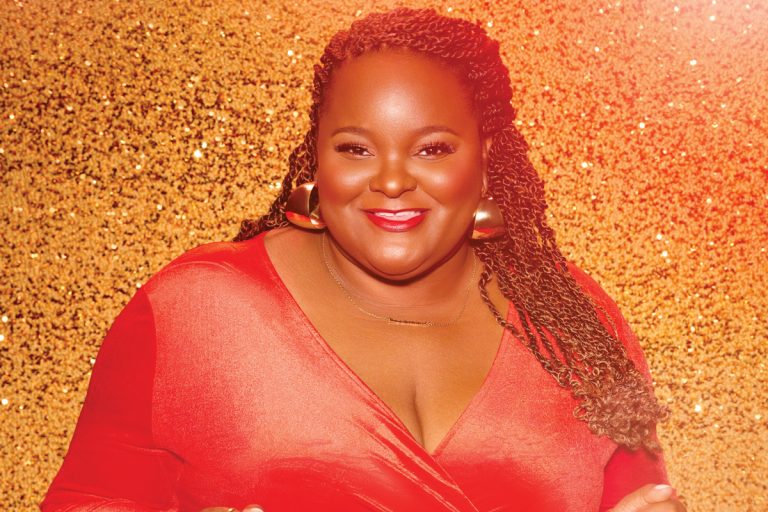
In June 2024, The Sistah Shop, a local retailer in Atlantic Station that features more than 100 Black woman–owned brands, issued an alarm call on social media. The store, which had opened two years prior, was close to shuttering. “While it’s been an incredible run, these past months have been incredibly difficult, and we’ve been barely staying afloat,” Aisha Taylor Issah, The Sistah Shop’s owner and CEO of the Sistahs in Business Expo, said in an Instagram video, where she announced a fundraising campaign to try to save the shop. “I don’t believe God brought us this far just to bring us this far. This is my last chance to keep us open and alive.”

It was the chance The Sistah Shop needed. Issah’s plea caught the attention of two local business leaders: entrepreneur Nehemiah Davis and podcaster and influencer David Shands. Together with several other influencers, they galvanized their hundreds of thousands of Instagram followers to save The Sistah Shop from the brink, organizing a surprise flash mob of more than 150 people who descended on the store on September 8. Thanks to their shopping spree, Issah—who had no idea of what Davis and Shands had planned—had her best day in sales, making close to $12,000 in just a few hours. The viral publicity was its own financial boon, bringing in new shoppers and fundraising dollars.

“Every single person who had a hand in making today happen . . . it was the most beautiful display of cooperative economics and Black support that I have ever seen in my life,” Issah said in a follow-up video.

Having given The Sistah Shop a boost, Shands and Davis have stayed connected with Issah to provide business advice. “They have continued to check on us and provide support,” she says. The retail industry is still uneven, but for now, the company has been holding. The Sistah Shop has doubled its pledge to incubate and provide space for up-and-coming Black-owned businesses.

For many, it’s a reminder that Atlanta is the Black Mecca, where opportunities abound and the ability to be Black without parameters exists. It’s been the city’s driving force for over a century and continues today; there’s no place like it.

Back to 21 Reasons We Love Atlanta.

This article appears in our February 2025 issue.
21 Reasons We Love Atlanta: Because the Hawks’ head coach is also a style icon

0

Atlanta Hawks head coach Quin Snyder

If you’ve caught a Hawks game recently, you’ve probably seen Trae Young delivering deft assists or heard announcers say Frenchman’s Zaccharie Risacher’s name with an exaggerated French twang only Americans possess. You’ve also probably caught Quin Snyder, the head coach of Atlanta’s NBA team, and his hard-to-miss glasses. Snyder’s raspberry-colored Warby Parker frames (Percey style) provide a vibrant red pop from the sidelines. When asked about his sartorial choice, Snyder told Jameelah Johnson, who runs a Hawks fan account on X, “I guess I had a few options, but I wanted to match the Hawks. Plus,” he added, “it’s easier to find and not lose them.”

Snyder, who is in his second year with the team, is known throughout the league as an innovative basketball mind with diverse schemes on offense and defense. His eclectic persona translates to his appearance, which has earned an NBA reputation as both proud and elevated. GQ deemed him well above his coaching peers in an October 2023 story, claiming, “Quin Snyder is single-handedly reviving NBA coach fashion.”

On game days this year, Snyder has been opting for a simple, all-black Hawks button-down shirt and slacks, but his accessory game still shines. For a matchup last November against the Charlotte Hornets, Snyder sported on his left wrist a luxury Panerai Luminor with a thick silver band; on his right, a sterling silver cuff bracelet. He’s also been spotted courtside wearing a Rolex Hulk Submariner and a Louis Vuitton Tambour Bijou.

The luxury watches may rotate, but the simple raspberry Warby Parker frames are a staple of Snyder’s game ensemble, glinting from the sidelines as he attempts to lead a youthful Hawks squad to a bounce-back year.

Back to 21 Reasons We Love Atlanta.

This article appears in our February 2025 issue.

21 Reasons We Love Atlanta: Because Betty Lindberg, 100, still runs the Peachtree Road Race

0

Betty Lindberg

“My daughter and son-in-law asked for a ride to the Peachtree. Well, I didn’t know what a road race was even—why would you want to get up early on the Fourth of July when you have a day off? But we took them to the start line and then met them down at the finish, and as were waiting, I saw all the really good racers go by, the ones in wheelchairs and the professionals, and then the big crowd that’s out there cheering. I thought, Well, maybe I could do that. I ran my first Peachtree at 64 years old.

I was a good runner for about 10 years, and then I would have to stop and walk. I saw race walkers at an event and said, What about just walking rapidly? So I took race walking lessons. Now, I just walk as fast as my little feet will carry me.

The last few races, I’ll pass people who say, Betty, come take a picture! So I go over and do that. That’s all I have to say about that. Why am I celebrity? Just because I am 100? But then it sort of dawns on me—I’m 100 years old! And I’m still going! But I think I did my last race at 99. I don’t think I’m going to do any more. Of course, I say that every year after I finish. And then I sign up again.” —as told to Rachel Garbus

Back to 21 Reasons We Love Atlanta.

This article appears in our February 2025 issue.

Follow Us

69,386FansLike
144,836FollowersFollow
493,480FollowersFollow

NEWSLETTERS