AngelRae Robinson, founder of ZAH by AngelRae, is a certified Reiki Master. She often plays sound bowls in her sessions for clients, but wanted to create something bigger that could truly help people unplug. “A lot of times, people say they’re going to go home and kick their feet up and relax, and they end up on their phone,” she says. “I wanted to create a place vulnerable enough to rest.”
Last year, she landed on the idea of a floating sound bath, combining the soothing properties of water and the meditative, releasing experience of being immersed in sound for a one-two relaxation punch. “When you add water to [a sound bath], it’s a different type of relaxation,” she says. She acknowledges that meditating and releasing everything can be hard for clients. She wanted to create something more tactile to help their minds wander less.
Some gyms and yoga studios have similar offerings, but she’s made it more of a holistic experience. Hers is a three-hour float session that starts at sunset. There are mindfulness and releasing exercises before anyone even gets in the water. (There’s also an option to stay on land and participate.) Twenty to 25 participants lay on floats in a pool, covered with blankets and eye masks. Scents and soft lighting help transform a regular backyard pool into a place of relaxation. For 45 minutes, Robinson works her magic at the sound bowls.
Floating sound baths are the latest social media wellness trend
Photograph courtesy of AngelRae Robinson
Robinson holds her sound baths in the suburbs where she finds peace. “There are lots of trees and not a lot of noise around the pools I select. They’re in more secluded areas, so you don’t get the hustle and bustle of the city,” she says.
Recently, ZAH by AngelRae has gone viral on social media. Robinson is sold out for general floats through October, but still has private sessions available to book at her facilities or in-home pools and will be adding more group floats soon to help more people deeply relax. “This is an organic experience for people to start their human journey,” she says. “ I have created a safe space for people to come and do that.”
Founders Katie Wetzel and Erin McDevitt opened Gain Gym in Reynoldstown last month as a women-only fitness space, driven by their experience with Atlanta’s competitive gym scene. “We realized women want a place to feel welcome, invited, safe, and where they can learn to lift without feeling judged,” says Wetzel.
So far, Gain has welcomed women of all ages, from teenagers to those over 65. The class sizes are limited to 10 women, creating an intimate setting that allows them to have a more hands-on experience. It’s also one that has fostered genuine community connections.
“There’s been a lot of really cool connections made between women who are in the same time of life, like all commiserating about perimenopause,” says Wetzel. “They hold each other accountable when they come in, and they push each other towards new thresholds of fitness they didn’t think possible based on where they are in life,” she says.
Each class follows a structured format. There’s a warm-up with foundational circuits including core and balance work, power lifts like deadlifts and squats, accessory lifts, heart-rate-raising activity, and cool-down. The pace is intentionally lively but not back-breaking.
“Whether it’s returning from injury and trying to get confidence and strength back, or our clients who are in their 60s trying to stay in shape for their grandkids, there’s really something for everyone,” Wetzel explains.
The female-focused environment allows the trainers to address their clients’ unique needs. McDevitt gives an example: When it comes to hormones and fat loss, men and women could follow identical protocols, but men typically see results ten times faster. “It’s because of our [menstrual] cycle changes and hormone phases. We don’t have the energy, strength, or the endurance to complete a workout, but men can go hard and hit the same every single time,” she explains. “It makes a difference having a woman [trainer] who comes in with compassion and understanding.”
Many women have ended up at Gain because they’ve been told they need to strength train, but they have been intimidated by a typical gym experience. The community aspect is the cherry on top. “We want you to feel a part of our community and support you in reaching your goals,” says McDevitt.
Pictured left to right: Greg Mike – Known for his large-scale, vibrant street art and murals, including his iconic Larry Loudmouf character, Mike’s work can be seen throughout the city, including at ABV Gallery in East Atlanta Village. Ryan Breshears, PhD, ABPP – A board-certified clinical psychologist, Dr. Breshears is Chief Behavioral Health Officer and Leader of Clinician Well-Being at Wellstar Health System.
Greg Mike: Why is it critical for men to start having more open conversations about their mental health?
Dr. Ryan Breshears: That’s a great question. Men tend to delay seeking help more than women. Frankly, it’s a mortality issue. Men have higher suicide rates than women and tend to have a higher prevalence of substance abuse disorders. Anything we can do to get men talking is important.
Greg: Got it. Then, what are some early signs of stress-related mental health issues in adults that we should be aware of?
Dr. Breshears: Increased irritability, changes in mood, decreased interest in social engagement, and insomnia—both the inability to fall asleep and waking up mid-sleep—are all important signals that a mental health problem might be emerging.
Greg: That makes sense. So, how does treating your whole health play a role in supporting mental well-being?
Dr. Breshears: I think the days of talking about physical problems versus mental problems are over. We have a body of research and decades of science that shows the interplay between the physical and the emotional.
Greg: How is Wellstar addressing that?
Dr. Breshears: We’re making a concerted effort to remove barriers to access. So, for example, bringing behavioral health into primary care, cardiac care, pediatrics, women’s health …
We want to strategically integrate wherever patients are receiving care.
Greg: Now, what can workplaces do to create a culture where employees feel safe to seek mental health support?
Dr. Breshears: First, I think we have to pay attention to what’s causing stress to our employees and commit to resolving those issues. Secondly, we need to establish clear pathways so people can access support without all the stumbling blocks and delays they often run into.
Greg: How can we prioritize behavioral health as a key component of overall well-being?
Dr. Breshears: The answer lies in commitment and understanding. It’s the employer’s responsibility to promote a culture in which people can accomplish the aims of the business without compromising the physical, emotional, or spiritual well-being of their employees.
Greg: As a leader, I’m constantly learning. I’m trying to be more understanding, more compassionate, and a better communicator with my team.
Dr. Breshears: Yes. It starts with understanding an individual’s needs. What works for me is not necessarily going to work for you, but there are some common denominators. We’re social creatures, so having environments where people come in and feel good about their day-to-day interactions is important.
Greg: People spend so much of their lives working, you want it to be something that they’re inspired by and that they enjoy.
Dr. Breshears: So, how do you handle that work/life balance that everyone strives for?
Greg: I wish I could say that I was better at it. I’m very obsessive-compulsive and I’m always on; I don’t have an off switch. I’m trying to learn to set boundaries because I realize that it is important, and you can get burnout.
Dr. Breshears: How does that manifest for you?
Greg: It’s a lot about physical health, like you said. I’ll start getting sick and worn down and feeling lethargic and depressed. It means I’ve got to stop or slow down.
Dr. Breshears: So, how do you keep your energy levels up?
Greg: I try to stay physical. If I’m out on a golf course in nature doing something active, that helps. Running is huge. I feel like the goalpost is constantly moving and that’s something I struggle with. I’m trying to take the time to appreciate my accomplishments.
Dr. Breshears: When you were younger, what kind of thoughts were you battling?
Greg: I come from a divorced family, which was a big trigger. Art has always been therapy for me. It’s something that listens to me when no one else is around. In the beginning, a lot of what I drew was very dark; there were things in my head that I needed to get out.
Dr. Breshears: And how did your style change from dark to a positive light?
Greg: When I started painting murals around the world, my heart started to shift. I felt like I should paint something positive. The more I put color and brightness and positivity out there, the more I saw people react, which made me feel better. It was kind of like a positive snowball effect for me.
Dr. Breshears: Out of all your work, what piece best conveys your advocacy for behavioral health awareness?
Greg: Honestly, my Larry Loudmouf character. I was drawing this giant mouth all over and I had an idea: What if I put it on social media and see what’s on everyone else’s mind? It’s turned into this “Loudmouf says” project; the character is now the voice of something larger than me.
Dr. Breshears: Is there a correlation between how you’re feeling and what shows up in your art?
Greg: Color is very powerful when it comes to murals. It brings people a lot of happiness and positivity when you’re driving down a city street that’s all gray buildings and you turn a corner and get blasted with color. Just create what’s in your head and bring it to life.
Dr. Nicholas Church opened his concierge practice, Somerset Medical, this year.
Photograph courtesy of Nicholas Church
Many people dread a trip to the doctor’s office thanks to long wait times, inefficiencies, and Byzantine billing processes. Concierge medicine, a newer style of healthcare, is on the rise, with many Atlanta practices switching to the model to benefit the patient-doctor relationship.
Craig Peters, MD, a concierge internist with Piedmont Internal Medicine, made the switch in April to the concierge model. One doctor in his practice had already switched, which encouraged the remaining doctors to do so. “The model is transformative, enabling unrushed visits with time to address not just urgent issues, but focus on preventative health and longevity,” he says, which is not possible in a traditional model.
Dr. Peters says that, according to recent research, the average wait time in Atlanta to see a physician in a traditional practice is 45 days, and in-office wait times can be 20 to 30 minutes for a 15-minute appointment. Piedmont Internal Medicine has people who answer the phone immediately and appointments are available the same or next day. “Our appointments are leisurely, 30 minutes on average for routine matters, and 60 minutes for the annual comprehensive assessment.”
Nicholas Church, MD, opened his concierge practice, Somerset Medical, this year. Originally from Somerset, England, he began his career in American healthcare at Emory Healthcare in 2007 as a general internist. “I saw the doctor-patient relationship get squeezed and compromised. There was so much red tape; I’d get up at 5 a.m. and spend three hours on paperwork before even seeing a patient,” he said.
His practice also gives access to wellness offerings such as IV therapy and advanced cancer screenings in addition to regular membership services. He’s even been able to meet a patient in the emergency room and guide them through the admissions process, and check up on them. “The real advantage is access,” he says. “This is a personal relationship. In my last role, I had 5,000 patients. Concierge doctors typically have about 200 patients.”
Concierge models can be cost-prohibitive, with average practice membership ranging from $2,000 to $5,000, and in some parts of the country, up to $10,000. While expensive, it helps the practices keep their patient pool smaller, allowing the doctors to devote more time.
There are also ethical implications to the trend. According to Dorothy Leone-Glasser, the executive director of the nonprofit Advocates for Responsible Care (ARxC), this creates even more disparity and lack of equity. “We already have a shortage of physicians in Georgia, especially primary care physicians, and choosing patients based on the ability to pay limits access,” she says. “Physicians take an oath and have a moral obligation to serve all patients, so this raises concerns about neglecting their duty of care.” She says one way that concierge practices can counter this impact is by giving back to underserved communities.
Mandy Smith worked as an oncology nurse before becoming a certified family nurse practitioner.
Photograph by Bonnie Heath
Mandy Smith, a certified family nurse practitioner, has had their share of difficulties as a queer person working in healthcare. Although Smith, who is nonbinary and uses they/them pronouns, has never experienced any overt hostility, they felt for a long time that being fully true to themselves might compromise their sense of safety at work. Throughout nursing school and later, working in various hospitals, Smith always felt the need to “perform” in front of patients and colleagues.
“That’s been a really interesting part of starting [All Y’all],” Smith says. “Providing affirming care to other people . . . It’s been so affirming for me. I get to show up at work every day as exactly who I am, not holding anything back.”
All Y’all, which opened last September, is one of Atlanta’s first queer-run primary care providers that specializes in gender-affirming care such as gender transition support. While the practice is open to all adult patients, Smith is most passionate about ensuring that transgender individuals have a safe space to receive healthcare.
About 46 percent of All Y’all patients are transgender or gender expansive, and Smith believes that as a nonbinary person themself, they are uniquely well suited to be those patients’ practitioner. “There’s just something about knowing that the person across from you has walked some of the same road you’ve walked,” Smith says. “I think it helps to foster trust and a sense of safety, and for a lot of patients, it’s the first time they’re really getting to experience that in a healthcare setting.”
Since All Y’all launched last year, Smith has built a loyal patient base from neighborhood word of mouth and small community events they have organized. Smith hosts a regular series called “TEA on Tuesday,” where people can learn more about testosterone and estrogen administration (hence the “tea”), view demonstrations, and use practice pads to learn how to inject the hormones. In the long run, Smith hopes to establish a scholarship fund that will support queer-identifying people pursuing careers in healthcare, to help foster the next generation of affirming providers.
While All Y’all will continue providing specialized resources for LGBTQ+ individuals, Smith welcomes all kinds of patients. “A lot of people—regardless of who they are, where they come from—have had traumatizing medical experiences,” they say. “That’s truly where the name [All Y’all] came from. I’m really passionate about taking care of my queer community, but I want to take care of everyone. Everyone deserves to be affirmed.”
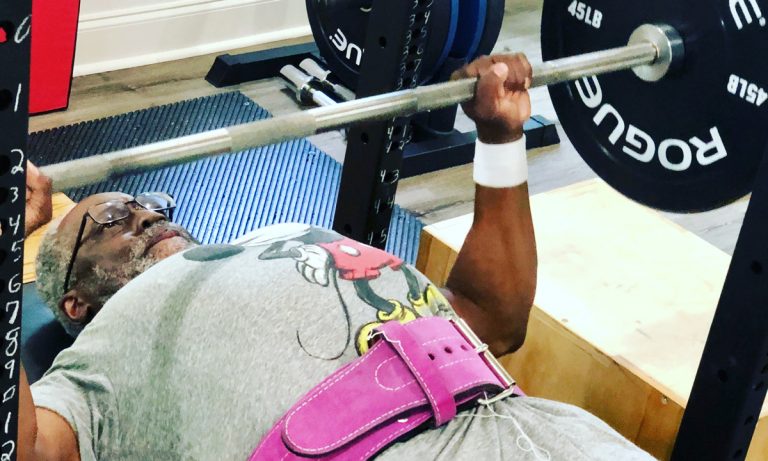
As we age, muscle mass naturally declines, accelerating after age 50. This can lead to decreased endurance, strength, and flexibility, all of which are important for daily functions like balance, stability, and coordination. That’s something Alex Mitchell, the founder of Stronger Now Gym in Sandy Springs, wants to change for his clients.
Mitchell started in traditional fitness, working as a personal training manager for brands like Crunch and L.A. Fitness. “All my trainers wanted to work with the same kind of client, someone between 15 and 45 who was generally healthy and had specific goals,” he says. No one wanted to work out with older clients, but Mitchell loved them. “They had great stories, were generally easy to work with, and stayed consistent,” he says.
That experience led him to believe that there was a need for a gym just for these clients. He opened in 2020, exclusively catering to an over-50 crowd. Stronger Now Gym offers personal training sessions and group training sessions where clients can get stronger with dedicated support from trained professionals who understand their unique needs, whether it’s to pick up a heavy grandchild in a supported way or meet a swimming goal at their local gym.
“In exercise, you have to walk the line between doing enough to make the change so that you’re better and stronger, but overdoing it can cause injury or acute soreness. That line is thick and easy to walk when you’re in your 20s, and it gets thinner as you age,” he says.
While Mitchell and his team train everyone individually, there’s a common thread. “Our clients come to us because they have noticed their bodies are losing capacity that they’re not willing to go without,” he says. He and his team of certified professional barbell coaches, exercise physiologists, biomedical physiologists, and lifestyle medicine practitioners help them get stronger to retain those abilities under unique supervision where trainers can take into account things like medical history and previous injury.
One of the most important parts of Stronger Now Gym is the social aspect. “We know we need to exercise, eat healthy, and be social [to age well],” he says. “The social part of this gym has taken off. Our clients are all in a similar stage of life, so it’s easy for them to make friends, something that’s incredibly important for this population.”
Atlantan Yanni Hufnagel has made the lowly lemon his business. Before founding Lemon Perfect, a lemon beverage company, he was a collegiate basketball coach for the University of Nevada, Reno. A chance encounter led him to discover how many nutrition fanatics were starting their days with water with a squeeze of lemon for the potential dietary and wellness benefits.
He was sold on the product, but not the strategy. “Lemon water became a part of my morning routine, but it sucked,” he says. “You have to buy the lemons, cut them, and squeeze the juice. It’s bland, it’s horrifying. I had a moment where I was like, ‘Can we make this taste good?’”
Yanni Hufnagel
Today, his eight-year-old company Lemon Perfect is valued at $200 million and has investors including Beyoncé behind it. They have sold over 120 million bottles of lemon water, which comes in flavors such as peach, lime, and sunshine tea. It has 10 calories and zero sugar, making it an attractive beverage in today’s health-conscious world.
“Lemon water is a great hydration boost, and it encourages people to drink more water. It’s a great source of vitamin C, which is an antioxidant that supports immune function, skin health, and digestion,” he says. There’s some evidence to back up Hufnagel’s claims: vitamin C has been shown to contribute to a healthy heart and aid in digestion, and people tend to drink more water when it tastes better, too.
Hufnagel moved his company to Atlanta in 2021, purely as a business decision, when the company first began working with Publix. “Atlanta is wonderful, but it’s more than just being around other beverage brands. It’s a great place for start-up culture and entrepreneurs. You can’t beat the cost of living, the climate, the culture, the talent, and of course the airport,” he says.
If you’re feeling stressed lately, you’re not alone: A recent WalletHub study found that 77 percent of adults are stressed, and that Georgia is one of the most stressed states in the country, with factors such as health, family relationships, finances, and work considered. While therapy and medication are two of the most prevalent ways to reduce stress and anxiety, there is one often underutilized method that’s been scientifically proven to reduce stress quickly: tapping, or Emotional Freedom Technique.
The technique combines acupressure and psychology to balance the body and reduce stress, often immediately. Melissa Lester, LCSW, is a Sandy Springs-based psychotherapist who uses tapping in her private practice, as well as in her work with the U.S. Department of Veterans Affairs, Georgia School Counselors Association, and Emory University’s Winship Cancer Institute, among other organizations.
“Tapping activates the 10 largest energy channels in the body where Western science has proven that energy travels fastest,” she explains. “By tapping, you can quickly process what hasn’t been processed, such as trauma or stress, and bring the nervous system back into a natural state of calm and relaxation, going from activation to deactivation.” According to Lester, tapping can help reduce blood pressure, cortisol, anxiety, and physical pain severity.
While Lester and other professionals incorporate it into their practices, it can be done anytime, anywhere, with the help of free resources like apps and videos online. To do it, sit comfortably and close your eyes. Then, gently tap points across the face and body as guided by an instructional video, such as the eyebrows, under the eyes, and collarbone, while listening to and repeating affirmations. Online tapping resources will guide you where to tap and when, and some sessions can last as few as three minutes.
Lester uses it clinically to help with things such as interrupting cravings for substance abuse patients or intercepting panic attacks, or those suffering from PTSD. But she is adamant that it can be done anywhere by anybody in times of need. “You can do it in a parking lot or bathroom stall at work, anywhere you need to slow down your nervous system,” she says.
After the pandemic, many people chose to reevaluate their relationship to alcohol. Reframe, a neuroscience- and psychiatry-based app, was launched in 2020 to help people cut back or quit drinking altogether. The startup was founded by Vedant Pradeep and Ziyi Gao, two Georgia Tech graduates who realized there was no middle ground to help those who didn’t have a clinical problem with alcohol but wanted to change their habits.
“We were fascinated by the idea of the peak human condition, where someone is the best version of themselves mentally, physically, and emotionally,” Pradeep explains. He acknowledges that was a bit esoteric, so they looked into solving a targeted problem. Pradeep has Obsessive Compulsive Disorder, and the pair of engineers set about trying to help those with similar conditions. “We began talking to people with OCD and realized that a lot of them were using alcohol as a way to self-medicate,” he says.
They switched gears, and now Reframe focuses solely on a user’s relationship with alcohol. The app uses science to help users develop coping strategies. “Alcohol is not the problem itself; it’s a symptom. It’s a bad coping strategy,” he says. “We help users figure out what the real problem is and how to cope in a healthier fashion.”
Paid users get personalized programs that can help with individual goals, monitoring progress, meditations, dream tracking, and more. Everything is science-based and vetted by medical professionals, including three Emory University doctors on the medical advisory board. There are lessons, exercises, and content that take about 10 minutes a day to do, with the hope of changing behavior patterns over time. There’s also a community aspect, where users can talk directly with each other and lend accountability and support 24/7, and one-on-one coaching for anyone looking for extra help.
To date, Reframe has helped over one million people change their relationship with alcohol and has raised over $27 million in funds through three rounds, including $14 million from David Cummings of Atlanta Ventures, who was the app’s first investor.
“We’ve found that the real way to help someone cut back is to help them not need alcohol in the first place. To do that, you need to help them manage their emotions and build healthier habits,” Pradeep says.
Any Atlantan who suffers from allergies knows that spring and fall can be brutal, and it doesn’t feel good to allergy sufferers to see that the city keeps breaking its own pollen count records. It can be even worse for children, though, who aren’t as good at identifying symptoms and communicating their discomfort.
Atlanta’s allergy season can feel like it lasts all year, and that’s because it kind of does, depending on what you are allergic to. Dr. Sofia Edwards-Salmon, an allergist with Chacko Allergy, says tree pollen kicks off in February and goes until April, then grass pollen hits around May and June. High summer offers slight relief before weed pollen stirs up around September to October. It’s the price we pay for living in the “City in the Forest,” as lush surroundings mean more opportunities for irritation.
According to Dr. Edwards-Salmon, children can develop environmental allergies after age two. The mean age is 10, and it is uncommon for seasonal allergies to appear in infants and toddlers under age two. “There are a lot of theories as to why allergies develop, including things like an increased length of pollen seasons and lifestyle changes, like less vitamin D and less parasite exposure [to help train the immune system],” she says.
While avoidance is the first line of defense, Dr. Edwards-Salmon knows how that can be difficult for children and family life in general. She suggests going outside during specific times. “Mornings tend to have lower pollen counts than the afternoons and evenings,” she says. She also suggests rinsing off and changing clothes after coming inside, as well as wiping down pets who might track in pollen. If an older child is amenable, wearing a mask can be a good idea.
Interestingly, the management of seasonal allergies hasn’t changed all that much, with antihistamines offering the most effective relief. Some parents might want to reach for Benadryl (diphenhydramine), but Dr. Edwards-Salmon suggests other options for children, as chronic Benadryl use is now associated with more side effects than newer first-generation antihistamines like cetirizine (Zyrtec), fenxofanadine (Allegra) and loratidine (Claritin), all of which come in children’s versions. “My go-to is a nasal spray over an oral medication since they deliver medication directly to the most affected areas. They are more effective if used regularly and correctly,” she says.
To do so, have your child look at their feet when spraying into their noses, spray away from the middle of their nose, and have them breathe normally, she says. If symptoms persist and feel chronic, she recommends you book your child an allergy test to get more specific therapy, including allergy shots, which expose the immune system to the allergens in increasing amounts to build up tolerance.