Home 2025

Archives

Family chiropractic care is on the rise

Family chiropractic care is on the rise

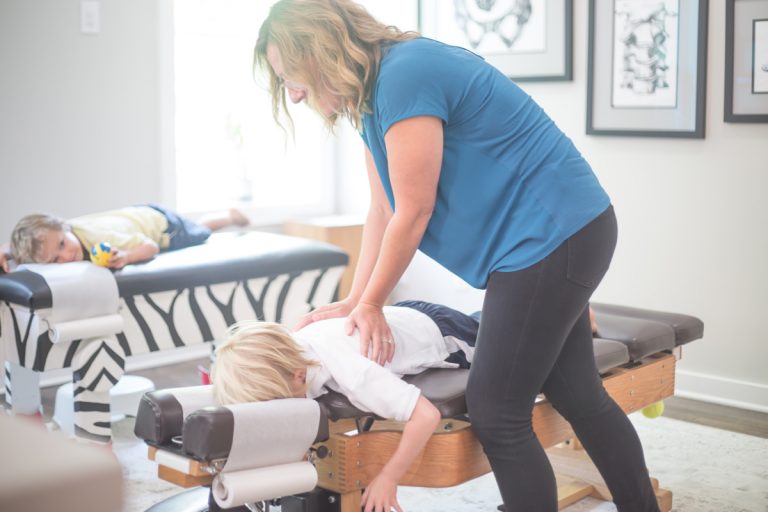
Chiropractic care has become more prevalent over the last few decades as people seek alternatives to traditional Western medicine, says Dr. Danielle Drobbin, owner and chiropractor at Midtown Family Wellness. There are currently 70,000 chiropractors in the country, according to the National Board of Chiropractic Examiners. “More and more people are becoming discouraged with our current healthcare system. People are looking for alternatives,” she says. That includes chiropractic services for pregnant women and the parents of children looking for relief or help, many of whom are discovering the option on social media sites like TikTok.

Misalignments, which cause muscle tightening and pain, become more complex when treating these populations, she says. To treat them, chiropractors can receive additional schooling and certifications, including the Webster Technique, a gentle approach focused on pregnant bodies. Specific pregnancy and postpartum conditions such as sciatica, nausea, acid reflux, mastitis, and breastfeeding latching issues could all potentially be helped through chiropractic care as can pediatric issues such as colic, torticollis, reflux, and ear infections. (Dr. Drobbin has six peer-reviewed case studies under her belt in for these conditions.)

Like Western medicine, there’s no one-size-fits-all approach for specialized chiropractic care. Depending on a patient’s situation and body, it could be only a few sessions before they feel relief or it could be much longer, with proactive preventative care an essential part of the chiropractic process. “Just like you get your teeth cleaned to prevent cavities, it’s important to take care of the bones that house the nerves of your central nervous system to prevent future degeneration of discs and the health of the nerves,” she says.

However, she says that she has better results when pregnant women come to her at the beginning of their motherhood journey. “People come to me as a last resort,” she says. Those that come early in the process have little to no pregnancy symptoms, better births, better postpartum recovery, and few or no issues with their babies, she says.

From her perspective, her services aren’t in competition with traditional medicine but rather a complement, and one people seek out in a healthcare system that has issues. “We believe in a foundation of a strong, healthy spine, immune system, and nervous system,” she says. “Go to a medical doctor if you need to, and or come see us. Options are power.”

To find a practitioner specializing in pregnancy and pediatric care, she recommends visiting icpa4kids.org.

Atlanta’s only postpartum retreat opens in Midtown

Haven Postnatal Retreat

Photograph by Bodie Orman

Postpartum retreats are popular in Asian countries where there is more emphasis on caring for mothers after birth than in the U.S. But today, these facilities are beginning to gain traction here.

“In Asian countries, and some European ones, there is more of an understanding that postpartum care is healthcare,” says Brittany Starobin, the founder of Haven Postnatal Retreat located at the Four Seasons Atlanta.

When combined with Georgia’s abysmal maternal mortality rates and the fact that Northside Hospital Atlanta delivers more babies per year than any other hospital in the country, Starobin, who suffered from postpartum depression with three of her four children, felt it was the right time to launch such a concept in Atlanta.

“We are a safe space for moms to come as they transition into motherhood,” she says. “Postpartum is never the same experience, whether this is your first child or not, and we wanted to meet moms where they are with compassionate care and a customized plan.”

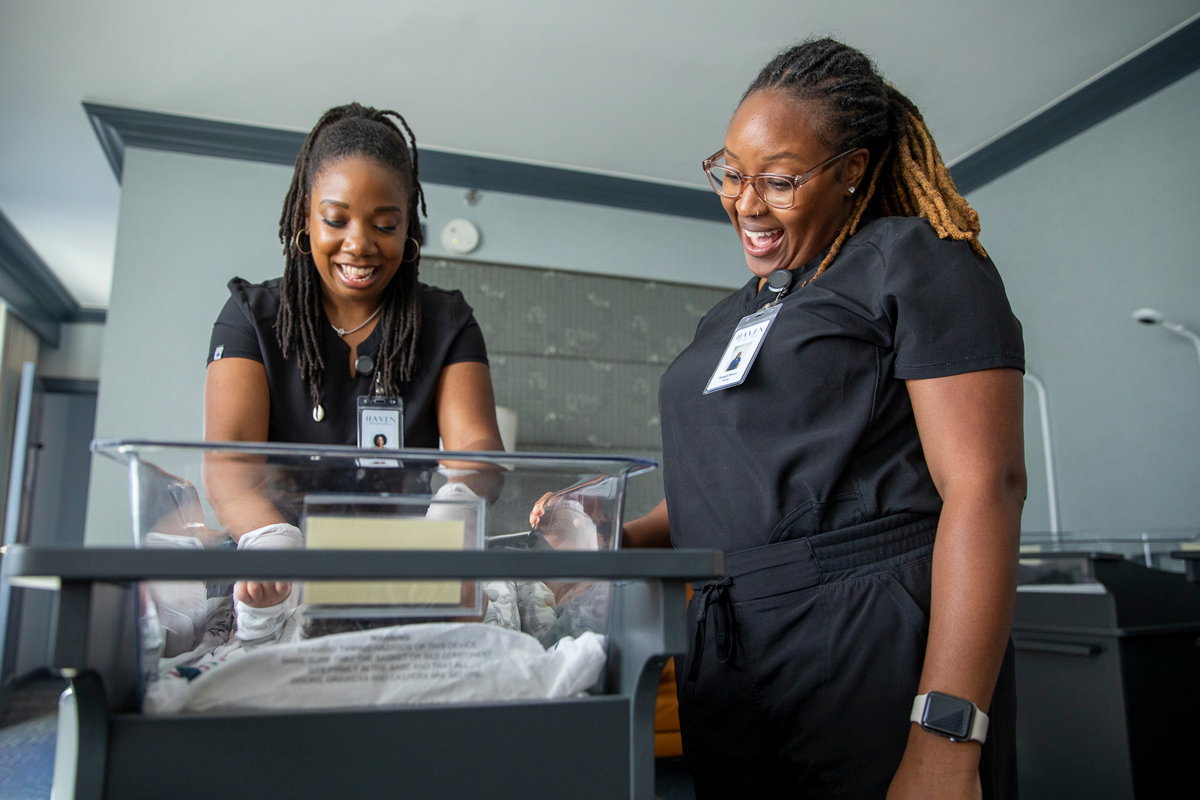
New moms can go to Haven Postnatal Retreat up to 12 weeks postpartum—a period that is often referred to as the fourth trimester—to relax, learn, and bond with their new baby.

That might mean handing their newborn over to a dedicated round-the-clock infant care team composed of nurses, doulas, and infant care specialists or keeping the infant in the room. “This is such a vulnerable population, and we don’t impose anything on them. We offer to take the baby so they can take a nap or a shower, but the moms have a choice,” she says.

Haven Postnatal Retreat

Photograph by Diego's Photography

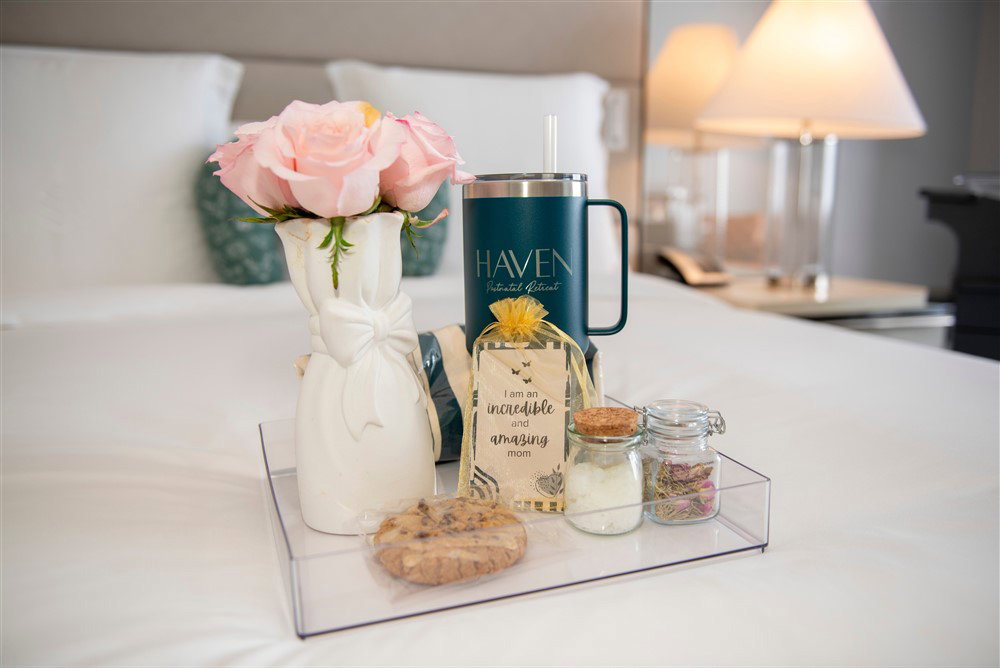
A typical day could include lactation support if the mother is breastfeeding, mental health support, in-room treatments, and workshops such as infant CPR or newborn care basics. The day is dotted with nutrient-dense meals. Every stay gets a postpartum massage and stays longer than five days include pelvic floor therapy. The minimum stay is three nights, but Starobin says the sweet spot is five nights to take advantage of the offerings.

Starobin acknowledges that this care, which starts at $790 a night, is expensive, especially since most postpartum care is not covered by insurance. But for her, it’s more than just recovery—it’s a priceless experience. “We’re where rest meets transformation, with every detail designed to honor you and your baby with unparalleled care. You’re being nurtured, empowered, and celebrated in your journey into motherhood,” she says.

In Chamblee, a new mental health urgent care facility is one of only a few in the U.S.

In Chamblee, a new mental health urgent care facility is one of only a few in the U.S.

A national shortage of psychiatrists has created an environment where wait times to be seen by a professional can be long and billing can be Byzantine. This can spell disaster for some who have mental health issues that need urgent addressing.

Recognizing this issue, psychiatrist Dr. Asad Mehdi and emergency physician Dr. Sophia Khan co-founded UrgentPsych, a new mental health urgent care facility in Chamblee that opened earlier this year. It is one of only a few of its kind in the country and the first of its kind in Georgia. “We are trying to decrease barriers and open up access to mental health services,” Kahn says.

She notes that one in four people will have some sort of mental health disorder or illness. When combined with the fact that Georgia has ranked 48th out of 50 in terms of access to mental health resources, it can be a grim landscape, but one that UrgentPsych hopes to change.

In Chamblee, a new mental health urgent care facility is one of only a few in the U.S.
Inside UrgentPsych

Photograph courtesy of UrgentPsych

The staff can treat everything from new-onset depression to medication adjustments to care for those who may be contemplating suicide. UrgentPsych takes all major insurance including Medicare and Medicaid. “We even take patients who don’t have insurance and put them on a sliding scale,” Khan says. No appointment is necessary to see a doctor, and they treat patients age 5 and up.“Half of who we see are pediatric patients,” says Khan, who says the issues seen in adult psychiatry are tenfold in pediatrics.

There’s an in-house laboratory for bloodwork to confirm that someone is experiencing a mental health crisis and not another medical condition, and the environment is more welcoming than clinical-style urgent care facilities. There are recliners, iPads, snacks, respite rooms, sensory rooms, and even a space for yoga to make an intimidating experience more comfortable. “This is the evolution of mental healthcare,” she says.

In an emergency room setting, it could take up to 24 hours for a patient to be placed in an inpatient psychiatric unit. UrgentPsych can do it within 6 hours, says Dr. Khan. “We have a relationship with psychiatric facilities for inpatient medicine so that we can transfer and transport if someone does need to be admitted.”

In addition to the Chamblee location, the duo plans on opening five more facilities around metro Atlanta.

Free from dyes and additives, Atlanta-based Genexa offers clean medicine for adults and kids

0
Genexa CEO David Johnson

Photo courtesy of Genexa

Eight years ago, two Los Angelenos, David Johnson and Max Spielberg, found themselves confused over cold and flu medicine for their children. “We saw unpronounceable ingredients on the side of every package, and it was kind of an ‘a-ha’ moment for the two of us,” says Johnson.

The duo decided to do things differently and founded Genexa, the world’s first clean medicine company.

Genexa

Photo courtesy of Genexa

The brand, which is now based in Atlanta, includes over 35 items ranging from a kid’s pain and fever medicine to a kids’ allergy medicine to an adult antacid. All products are made with active ingredients included in other medications such as acetaminophen and dextromethorphan, but without any additives, preservatives, or dyes.

The line is certified gluten-free, non-GMO verified, and free from common allergens and uses ingredients like organic blueberries to sweeten the children’s medications instead of artificial blueberry flavoring. Genexa sits on the shelves at most major retailers.

For Johnson, who has no prior pharmaceutical experience, it made sense as a business idea. “Every other industry was shifting towards clean and better-for-you ingredients from makeup to food and beverages, but no one was taking on the massive category of drugs,” he says.

Since launching, the brand has successfully raised $60 million. It has notable investors, including Gwenyth Paltrow and Donald Glover to Unilever Ventures. Johnson is proud to be Atlanta-based, the place he and his wife decided to call home during the pandemic. “Now that I’ve come to Atlanta, I wouldn’t go anywhere else,” he says. “It offers great consumer packaged goods companies to pull talent from, and it’s a melting pot. The pharmaceutical belt is on this side of the country. It’s easier operationally to be based here.”

NAD+ might be a key in the never-ending search for a fountain of youth

0
Daniela Ezratty

Photo by Rebecca Morales

Nicotinamide Adenine Dinucleotide (NAD+) is a coenzyme lighting up the wellness world, popping up in everything from supplements to skincare products. It plays a crucial role in cellular metabolism, energy production, and other biological processes.

While you can get it naturally through such foods as beef, eggs, and salmon, many have turned to professional help to unlock its benefits. Daniela Ezratty, MSN, ACNP-BC, is the owner of Virginia-Highland–based medical aesthetics and wellness practice Ezratty Integrative Aesthetics. She’s prescribed NAD+ to her patients for over five years.

Daniela Ezratty

Photo by Rebecca Morales

Ezratty says to imagine your body is a car, and NAD+ is the battery that keeps it running smoothly. “Without it, your engine (cells) wouldn’t have the power to function and eventually things would start breaking down,” she says. “By the time you hit 40, your NAD+ levels have dropped by nearly 50 percent.” She says this can leave you feeling sluggish and foggy and can potentially speed up the aging process.

NAD+ has a long list of benefits: It boosts collagen, reduces wrinkles, enhances hydration, boosts energy, improves memory, activates anti-aging enzymes, supports immune health, and boosts metabolism. It can also help with muscle fatigue, chronic inflammation, anxiety and stress, improved sleep cycles, and increased dopamine levels. Ezratty even says it works just as well for weight loss and fat burning.

Besides eating certain foods, you can get the coenzyme orally, subcutaneously, or intravenously. “NAD+ is not as easily absorbed when taken orally, such as in a supplement,” Ezratty explains, although those under 30 might be successful if they can stay consistent and take it daily.

She prefers to give her patients IV NAD+ therapy, which bypasses digestion and enters the bloodstream immediately. The protocol is three to five initial IVs spaced a week apart, and then quarterly thereafter.

“It’s the most potent method for rapidly increasing NAD+ levels,” she says, noting that it is more expensive and time-consuming than other methods and does require professional administration. Anyone who is an active cancer patient, pregnant, breastfeeding, or who has severe cardiac disease is likely not a candidate for NAD+ therapy, but speak to a medical professional first.

An Atlanta-based pediatric specialist creates device to help congested kids breathe easy

0
Dr. Noze Best

Photo courtesy of Dr. Noze Best

Cold and flu season is difficult for everyone, especially parents who can’t stand to see their children in a bad way. An Atlanta parent who happens to be a physician has created a line of products to help kids navigate the season.

Dr. Steven Goudy is a pediatric ear, nose, and throat surgeon who is the division chief of Otolaryngology at Children’s Healthcare of Atlanta and a professor at Emory University School of Medicine. A parent himself, he knows the struggles firsthand. “When kids get a bad cold, they can’t eat or sleep,” he says. “Everyone’s miserable.”

After being sent home from the hospital with the ubiquitous blue suction bulb aspirator, Goudy’s wife suggested he create something better. Working with Georgia Tech students in 2021, he created the NozeBot, a hospital-grade snot sucker that would be available to everyday families.

Goudy then founded a company, Dr. Noze Best, to put his NozeBot on the market.

Portable and rechargeable, it’s specifically fitted for a child’s nasal passages and has a two-finger patented grip to turn snot-sucking into a one-person job. “It makes a parent’s life easier,” he says.

The brand also has its BreatheEZ Humidifier, a smart appliance designed to create optimal humidity (50 percent) in a child’s room using nebulizer technology. “If the humidity is too low and your airways are dry, you have a cough and feel sore,” he says. “If it’s too high, then you run the risk of mold.”

Dr. Goudy treats many children with Down Syndrome as they are more prone to congestion and ear, nose, and throat issues because of their narrower nasal passages. “We wanted to serve this population [with our products],” he says. Dr. Noze Best donates a portion of its sales to the National Down Syndrome Congress.

Dr. Noze Best

Photo courtesy of Dr. Noze Best

Bye, bye Botox

Artisan Beaute

New year, new you, new face: while some are booking Botox appointments, others are turning to alternative ways to tighten and sculpt their faces. The treatment goes by a host of names such as sculptural facials, face massage, facial lymphatic drainage, buccal massage, and more. But what they share in common is that these procedures fall under the umbrella of manual, non-invasive treatments that could potentially have the same anti-aging effects as commonplace neurotoxins Dysport and Botox or dermal fillers Restylane and Juvaderm.

“An increasing number of clients are turning to a more holistic approach,” says Susan Gonzalez, the lead esthetician at Kindred Studio in Grant Park. These procedures feel similar to a massage but reach the bones, muscles, fascia, lymph fluid, nerves, and circulatory system where tension can be held.

“Manipulation of the structures beneath the skin can give a more youthful and open appearance to the face,” she says. Professionals can work to release the tension and ultimately sculpt, lift, or relax the face for results. Here’s where to find treatments:

Modern Holistic Skin

Practitioner and founder Jamie Leigh of this Roswell-based spa offers a variety of treatments including a Gua Sha facial ($255), connective tissue facial ($300), sculptural lift facial ($425), and buccal structural massage ($325) to help lift and tighten.

Artisan Beauté

The Sculptural Facial ($425) at the Westside Provisions location has aesthetician Meaghan Kimble manually sculpting cheeks, lips, jaws, and more, plus a 10-minute buccal massage to target the inside of the mouth.

Kindred Studio

Photo courtesy of Susan Gonzalez

Kindred Studio

Trained by master facial masseuse Yakov Gershkovish, Gonzalez manipulates all 42 facial muscles to clear emotional blockage and stress in the Sculptural Facial Lift ($305). She also uses nerve stimulation to coax patients into a deep relaxed state to help release the tension that causes wrinkles.

K Beauty Spa

A straightforward lifting and buccal massage ($125) by Tucker-based Kary Chen includes lymphatic drainage as well as buccal, scalp, and face massage.

East Point’s Oyun Botanical stresses horticultural therapy community gardening

Yennenga Adanya

In the last year, Yennenga Adanya has taken ownership of a two-acre garden in East Point that has served the community for almost two decades. She rechristened it as Oyun Botanical Gardens and it operates as an extension of Oyun Ministries, which focuses on holistic well-being. (“Oyun” is a Yoruba word that means “ready to be birthed or born.”)

Adanya, or Queen Yenn as she is known, has restructured and formalized it into an eco-therapeutic garden and experience. Guests can partake in community gardening, tours, grounding and meditation sessions, farm-to-table dining experiences, a fresh product market, yoga, and more.

Oyun Botanical Gardens

She says that any therapy in nature can be called eco-therapy, such as forest bathing, walking, or gardening. “Ecotherapy, or the act of just being in nature, can regulate the heart, bring down inflammation, and reduce stress,” she says. “By setting foot here, you’re engaging in eco-therapy.”

Horticultural therapy falls under that umbrella. She chose to bring on horticultural therapist Carol Hunter for more formal offerings in small group and one-on-one settings. Not a new discipline, horticultural therapy, or using gardening activities to improve physical, mental, and emotional well-being, has been around since the 1940s. “It’s used in mental health facilities, prison systems, and senior centers,” says Hunter. “Hospitals have found that when people look at nature outside of a window, their recovery rate is faster than those who look at concrete.”

She says the therapy uses nature to bring about change. Think of it as a mind-body-nature connection. That might mean transporting a plant and Hunter having her patient be mindful about separating the roots. “From a mindfulness standpoint, I can then ask, ‘What are these things you are trying to unravel in your life?’” she says.

That could also mean having someone with cognitive issues separating seeds to improve motor function, or helping autistic children find stillness. “At Oyun, we focus on the health and wellness of the mind, body, and spirit,” she says.

Jen Mazer, the Queen of Manifestation, on how to think about this popular practice differently

Jen Mazer

Photo by Elyse Cosgrove

To some, January means breaking out magazines to start vision boarding. For Jen Mazer, a manifestation coach and published author, it’s not necessarily the right approach to moving the needle. “Vision boarding is like preschool for manifesting,” she says. “It’s just scratching the surface.”

Mazer, a Cobb County resident, was nicknamed the Queen of Manifestation by her friends due to her ability to manifest some fairly outlandish-seeming things: living rent-free in Manhattan for 10 years, marrying a Grammy-nominated musician, having artwork in the New York Times, and getting a book deal with her dream publisher, just to name a few.

Mazer is naturally intuitive and found her work as an artist allowed her visualize things and physically create them, helping her hone in on her craft as a manifestation master. Her version of the practice is more about tuning in, receiving, and tapping into intuition and less about forcing something to happen via positive thinking. “Manifestation is about understanding that your imagination is how you tap into your intuition,” she says.

It’s not magic or woo-woo delusions, nor is it the ability to force things to happen via over-efforting. Mazer explains that neuroscience and quantum physics are involved in manifestation, but the practice can be boiled down to a few simple ideas.

First, ask yourself three key questions: “What do I want? How will I feel when I have this thing I want? And how can I feel that way now? The last part puts out the frequency that matches your desire,” she says. “Focus on what expands.” She also advises changing thought patterns from “I have to” to “I get to,” and practicing daily gratitude.

Finally, she follows the acronym BEAM—Belief plus Expectation plus Action equals Manifestation. Ideas and desires are intuitions, but the action has to happen from a place of expectation. “Manifestation comes from a feeling place. Ask yourself ‘How can I?’ while simultaneously believing that it will happen. It detaches you from the outcome,” she explains.

Follow Us

69,386FansLike
144,836FollowersFollow
493,480FollowersFollow

NEWSLETTERS